Why Solid State EV Batteries Matter — and Why You're Still Buying Lithium-Ion Today
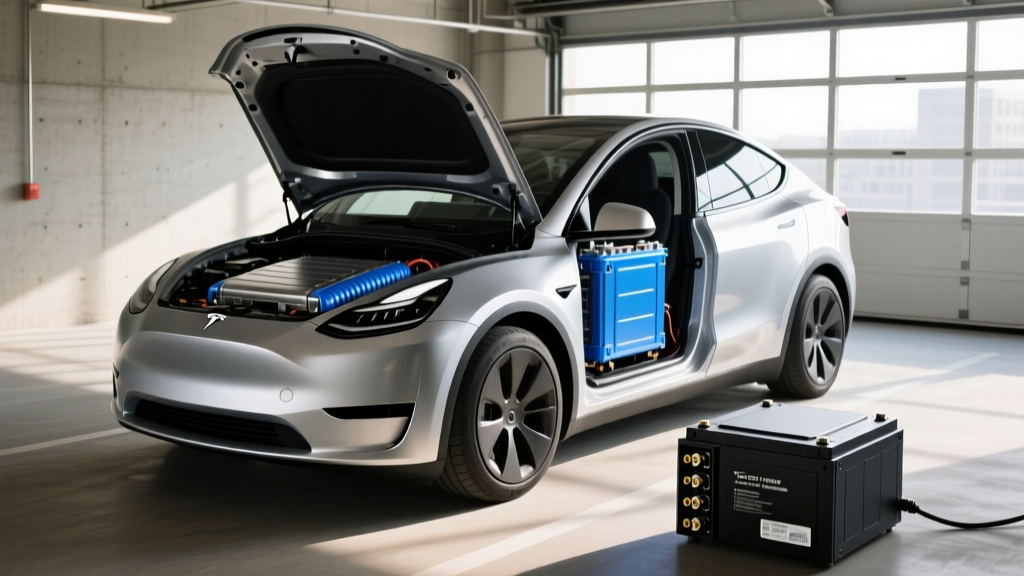
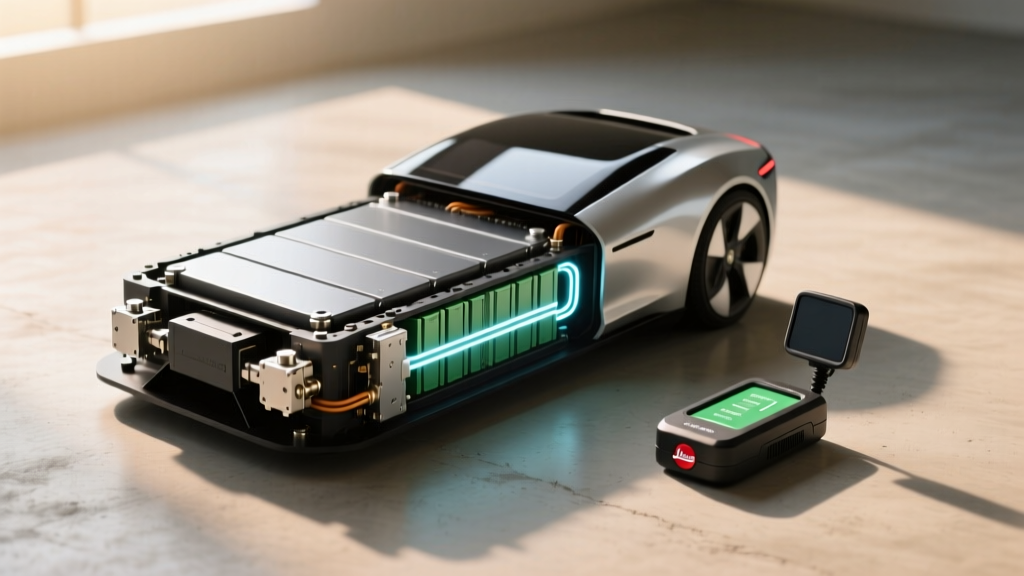
If you've been following EV news, you've seen the headlines: solid state EV batteries promise 500+ miles of range, 10-minute fast charging, and near-zero fire risk. Toyota, Nissan, and Samsung SDI have all announced pilot production lines, and low-volume solid-state-equipped vehicles are beginning to appear in limited markets for the 2026–2027 model years. But for the overwhelming majority of buyers shopping right now, the battery in your next EV will be a lithium-ion pack using either NMC (nickel-manganese-cobalt), NCA (nickel-cobalt-aluminum), or LFP (lithium iron phosphate) chemistry.
That's not a compromise — it's a mature, well-understood technology with predictable degradation, robust warranties, and replacement costs that have dropped significantly over the past decade. This guide breaks down exactly what's in today's EV batteries, how long they last, what it costs if something goes wrong, and where solid-state and silicon-anode technologies realistically fit into the timeline.
Today's Battery Chemistries: LFP vs NMC vs NCA
Every EV battery sold in the US market in 2026 falls into one of two broad families: NMC/NCA (nickel-rich cathodes optimized for energy density) or LFP (lithium iron phosphate, optimized for longevity and cost). The choice between them affects your range, charging habits, cold-weather performance, and long-term durability.
| Attribute | LFP (Lithium Iron Phosphate) | NMC / NCA (Nickel-Rich) |
|---|---|---|
| Energy Density (cell-level) | ~160–180 Wh/kg | ~220–300 Wh/kg |
| Typical Pack Size | 60–82 kWh | 72–120+ kWh |
| Cycle Life | 2,000–5,000+ cycles to 80% SoH | 1,000–2,000 cycles to 80% SoH |
| Cold-Weather Performance | Moderate; ~25–35% range loss at 20°F | Better thermal tolerance; ~20–30% loss at 20°F |
| Recommended Daily SoC | Up to 100% (no degradation penalty) | 80% daily; 100% only for trips |
| Cost per kWh (pack-level) | ~$90–$110 | ~$120–$145 |
| Cobalt Content | None | Low to moderate (NCA: minimal) |
| Common In | Tesla Model 3/Y RWD, Ford Mustang Mach-E Select, Rivian Standard | Tesla Long Range, Hyundai Ioniq 5, BMW iX, GMC Sierra EV |
The trade-off is straightforward: NMC/NCA gives you more range per kilogram, which matters in larger or heavier vehicles. LFP gives you a battery you can charge to 100% every day without guilt, with a cycle life that will almost certainly outlast the vehicle itself. Tesla's shift to LFP in its Standard Range models and Ford's adoption of LFP in the Mach-E Select reflect a market consensus that for most daily drivers, LFP's longevity and cost advantages outweigh NMC's energy-density edge.
How Long Do EV Batteries Actually Last?
The short answer: almost certainly longer than you'll own the car. Real-world fleet data from sources like fueleconomy.gov and long-term owner tracking consistently show that modern liquid-cooled EV batteries lose roughly 1–2% of capacity per year under normal use. That translates to approximately 8–15% total degradation over 10 years or 150,000 miles.
Typical EV Battery Degradation Curve (Liquid-Cooled NMC Pack)
| Age / Mileage | Average Capacity Retained | Range Impact (300-mi EPA pack) |
|---|---|---|
| Year 1 / 15,000 mi | ~97–98% | ~293–294 mi |
| Year 3 / 45,000 mi | ~94–96% | ~282–288 mi |
| Year 5 / 75,000 mi | ~91–94% | ~273–282 mi |
| Year 8 / 120,000 mi | ~87–91% | ~261–273 mi |
| Year 10 / 150,000 mi | ~85–89% | ~255–267 mi |
Note: Data compiled from fleet averages. Individual results vary based on climate, charging habits, and thermal management system quality. LFP packs often show slower mid-life degradation but may exhibit slightly steeper initial loss.
The critical insight is that degradation is non-linear. Most batteries experience a steeper drop in the first 10,000–20,000 miles (roughly 2–3%), then settle into a slow, linear decline for the remainder of their life. Catastrophic failure — where a battery suddenly becomes unusable — is extremely rare in liquid-cooled packs and is typically covered under warranty.
What the Battery Warranty Actually Covers
Federal law mandates a minimum battery warranty of 8 years / 100,000 miles for all EVs sold in the US. Many manufacturers exceed this baseline. The warranty guarantees that the battery will retain a specified percentage of its original capacity — typically 70% — for the warranty period. If your battery degrades below that threshold, the manufacturer must repair or replace it at no cost.
| Manufacturer | Warranty Period | Capacity Retention Guarantee | Notes |
|---|---|---|---|
| Tesla (Model 3/Y LFP) | 8 yr / 100,000 mi | ≥70% | Covers defects + degradation below threshold |
| Tesla (Long Range/AWD) | 8 yr / 120,000 mi | ≥70% | Higher mileage cap on larger packs |
| Hyundai / Kia | 10 yr / 100,000 mi | ≥70% | Industry-leading duration |
| Ford (Mach-E, F-150 Lightning) | 8 yr / 100,000 mi | ≥70% | Covers battery components + capacity |
| Rivian | 8 yr / 175,000 mi | ≥70% | Highest mileage cap in market |
| GM (Ultium platform) | 8 yr / 100,000 mi | ≥70% (60% on some commercial) | Varies by model; check specific terms |
| BMW | 8 yr / 100,000 mi | ≥70% | Includes thermal management system |
Important nuance: the warranty covers the battery when capacity falls below the threshold — not gradual, normal degradation above it. A battery at 72% capacity at year 7 is functioning within spec, even though you've lost 28% of your original range. In practice, very few liquid-cooled EV batteries hit the 70% threshold within the warranty period under normal ownership. According to IRS §30D guidelines, the battery must also meet critical-mineral and component-sourcing requirements for the vehicle to qualify for the federal tax credit — a separate consideration from the warranty itself.
EV Battery Replacement Cost: What You'd Actually Pay
This is the question that generates the most anxiety, and it deserves honest context. Most EV batteries never need replacement. The pack is designed to outlast the vehicle's economic life. But if a battery does fail outside warranty — due to physical damage, manufacturing defect discovered late, or extreme degradation in a poorly maintained pack — here's what replacement looks like in 2026:
| Vehicle / Pack Size | Battery Chemistry | Replacement Cost (Parts + Labor) | Typical Need Scenario |
|---|---|---|---|
| Tesla Model 3 RWD (60 kWh) | LFP | $10,000–$13,000 | Collision damage; rare degradation |
| Tesla Model Y LR (82 kWh) | NMC | $13,000–$16,000 | Out-of-warranty failure; flood damage |
| Hyundai Ioniq 5 (77.4 kWh) | NMC | $12,000–$15,000 | Manufacturing defect post-warranty |
| Ford F-150 Lightning Ext. Range (131 kWh) | NMC | $20,000–$28,000 | Large pack; highest cost in market |
| Chevrolet Bolt EV (65 kWh) | NMC | $9,000–$12,000 | Smaller pack; lower absolute cost |
| Rivian R1T (128 kWh Max) | NMC | $18,000–$24,000 | Large pack; modular replacement may reduce cost |
Two factors are driving replacement costs down: first, pack-level prices have fallen below $130/kWh for NMC and under $100/kWh for LFP at the cell level. Second, many manufacturers are moving toward modular pack designs (GM's Ultium, Rivian's pack architecture) where individual modules can be replaced rather than the entire battery. A single module replacement might cost $2,000–$4,000 instead of a full pack swap.
The realistic scenario where you'd face a full replacement cost is collision or environmental damage (flooding, fire from external source) that your auto insurance covers. Degradation-driven replacements under normal ownership are vanishingly rare.
What Kills an EV Battery — and How to Maximize Its Life
Modern EV batteries are managed by sophisticated thermal management systems that protect against most abuse. But certain habits accelerate degradation measurably. Here's the hierarchy of battery stressors, ranked by impact:
Battery Care Best Practices
- Avoid sustained 100% SoC (NMC/NCA only): Store your NMC-based EV at 80% or below for daily use. Charge to 100% only when you'll drive immediately. LFP owners can charge to 100% daily without penalty — and Tesla recommends periodic 100% charges for LFP calibration.
- Minimize DC fast charging above 150 kW when possible: Frequent use of 250–350 kW chargers generates sustained high heat. Occasional road-trip fast charging is fine; daily reliance on it accelerates degradation by roughly 1–2% additional over 5 years vs. Level 2 home charging.
- Precondition before fast charging: Every modern EV with DC fast charging preconditions the battery when you navigate to a charger. If your car doesn't auto-precondition, initiate it manually. Charging a cold battery at high power causes lithium plating — permanent capacity loss.
- Don't let the battery sit at 0% or 100% for extended periods: If storing the vehicle for weeks, set the charge limit to 50–60%. Both extremes stress the cathode and electrolyte.
- Extreme heat is worse than extreme cold: Sustained ambient temperatures above 95°F with a high SoC accelerate electrolyte decomposition. Garage parking in hot climates measurably extends battery life. Cold temperatures reduce range temporarily but don't cause permanent damage in liquid-cooled packs.
- Use regenerative braking moderately in extreme cold: In sub-freezing temperatures, aggressive regen can stress a cold battery. Most EVs automatically limit regen when the battery is cold — let the system manage this.
The single highest-impact habit is home Level 2 charging at 7–11 kW for daily use, reserving DC fast charging for road trips. Owners who follow this pattern consistently see degradation rates at the lower end of the 1–2% per year range.
How to Check Your Battery's State of Health
State of Health (SoH) is the percentage of your battery's original capacity that remains usable. Monitoring it helps you track degradation and provides documentation if you ever need a warranty claim.
Built-in vehicle tools: Most 2026 EVs display battery health in the settings menu. Tesla shows a range-based estimate under Settings → Software → Battery Health. Hyundai/Kia provides a battery conditioning status screen. BMW's iDrive includes a battery health readout. These are useful but approximate — they're calculated from charge/discharge data, not a direct measurement.
OBD-II diagnostic tools: For more precision, devices like the OBDLink SX or Carista adapter paired with apps like Leaf Spy (Nissan), TeslaFi, or manufacturer-specific diagnostic software can read the battery management system's (BMS) actual capacity calculation. This gives a more accurate SoH figure, typically within ±1% of reality.
Dealer diagnostics: If you suspect abnormal degradation, any authorized dealer can run a full battery health report that measures individual cell group voltages, internal resistance, and total usable capacity. This is the gold standard for warranty claims and is typically free during scheduled service.
What to watch for: A sudden drop in displayed range that doesn't recover after a full charge cycle, or a noticeable difference between your displayed range at 100% and what you experienced when the car was new (adjusted for normal degradation). If your 300-mile EPA vehicle is showing 210 miles at 100% with 60,000 miles on the odometer, that's roughly 70% SoH — time to visit the dealer for a warranty assessment.
Solid State EV Batteries and Emerging Tech: A Realistic Timeline
Solid state EV batteries replace the liquid electrolyte in today's lithium-ion cells with a solid material — typically a ceramic, sulfide glass, or polymer. The theoretical advantages are substantial:
- Energy density: 350–500 Wh/kg at the cell level (vs. 220–300 for today's NMC), enabling 500+ mile ranges in mid-size vehicles
- Charging speed: Potential for 10–15 minute 10–80% charges due to higher C-rates without lithium plating risk
- Safety: No flammable liquid electrolyte, dramatically reducing thermal runaway risk
- Longevity: Projected 3,000–5,000+ cycles with minimal degradation
But the gap between laboratory results and mass production remains significant. As of early 2026, Toyota has announced limited production of solid-state-equipped vehicles for the Japanese market in 2027–2028, with US availability projected for 2029–2030 at the earliest. Samsung SDI is targeting 2027 for initial production, and QuantumScape continues to work through manufacturing scale-up challenges with its Volkswagen partnership.
The cost barrier is steep: early solid-state cells are estimated at $200–$350 per kWh — roughly double today's NMC packs. Manufacturing yield, material supply chains (particularly for sulfide-based electrolytes), and the need for entirely new production lines mean solid-state batteries will debut in premium, low-volume applications before reaching mainstream price points.
Silicon-anode batteries are a nearer-term improvement. By replacing graphite anodes with silicon-dominant composites, companies like Sila Nanotechnologies and Group14 are achieving 20–40% energy density improvements within existing lithium-ion manufacturing infrastructure. Mercedes-Benz's partnership with Sila has produced cells for the G-Class EV, and broader adoption is expected across 2027–2028 model-year vehicles. Silicon anodes offer a meaningful range boost without the manufacturing revolution that solid-state requires.
The practical takeaway: if you're buying an EV in 2026, you're buying lithium-ion. And that's fine — today's packs are durable, well-warrantied, and cost-effective. Solid state will arrive, but not in time for your current purchase decision. Don't delay a purchase waiting for it.
Frequently Asked Questions
How long do EV batteries last in years and miles?
Based on fleet data across major manufacturers, modern liquid-cooled EV batteries retain approximately 85–90% of their original capacity at 10 years or 150,000 miles under normal use. The battery will continue to function beyond this point with gradually reduced range. Many early Nissan Leaf and Tesla Model S vehicles from 2012–2014 are still operational with their original packs at over 200,000 miles, though with 15–25% degradation. For most owners, the battery will outlast the vehicle's useful economic life.
How much does an EV battery cost to replace in 2026?
Full pack replacement costs range from approximately $9,000 for a Chevrolet Bolt (65 kWh) to $28,000 for a Ford F-150 Lightning Extended Range (131 kWh), including parts and labor. However, most replacements never happen — batteries are engineered to last the vehicle's lifetime. When replacements do occur, they're typically due to collision damage (covered by insurance) or are performed under the 8-year/100,000-mile federal warranty mandate. Modular pack designs from GM and Rivian may allow individual module replacement for $2,000–$4,000 per module rather than a full pack swap.
What does the EV battery warranty cover?
Federal law requires all EV manufacturers to warranty the battery for at least 8 years or 100,000 miles (whichever comes first). The warranty covers capacity loss below a specified threshold — typically 70% of original capacity — as well as manufacturing defects and component failures within the battery system (BMS, thermal management, contactors). It does not cover damage from collisions, flooding, or aftermarket modifications. Some manufacturers like Hyundai/Kia extend coverage to 10 years, and Rivian covers up to 175,000 miles. Check your specific vehicle's warranty documentation for exact terms.
LFP vs NMC — which battery chemistry is better for me?
Choose LFP if you want maximum cycle life, can charge to 100% daily without worry, don't need the absolute longest range, and live in a moderate climate. LFP is ideal for daily commuters and drivers who home-charge consistently. Choose NMC/NCA if you need the longest possible range per charge, frequently drive in very cold climates, or need the fastest DC charging speeds. NMC requires more careful SoC management (80% daily limit) but delivers superior energy density. Neither is universally "better" — the right choice depends on your driving pattern.
How do I check my EV battery's State of Health?
Start with your vehicle's built-in battery health display in the settings menu — most 2026 EVs show an estimated SoH percentage or range-based health indicator. For more precision, use an OBD-II adapter (OBDLink SX, Carista) with compatible diagnostic software to read the BMS-reported capacity. For the most authoritative reading, request a battery health report from your dealer during scheduled service. Track your 100% displayed range over time — a consistent, gradual decline of 1–2% per year is normal; a sudden drop warrants professional assessment.
Will solid state EV batteries be available soon?
Limited production of solid-state-equipped vehicles is beginning in Japan and select markets for 2027–2028. US consumer availability at scale is not expected before 2029–2030, with mainstream pricing likely arriving after 2032. Early solid-state packs will carry a significant cost premium. Silicon-anode batteries, which improve energy density within existing lithium-ion manufacturing, are arriving sooner — expect them in select 2027–2028 model-year vehicles. For current buyers, today's lithium-ion technology is mature, reliable, and the right choice.
Sources: US Department of Energy / fueleconomy.gov, manufacturer warranty documentation (Tesla, Hyundai, Ford, Rivian, GM, BMW), IRS §30D Clean Vehicle Credit guidelines.