Why Everyone Is Searching for a Solid State Battery Tesla
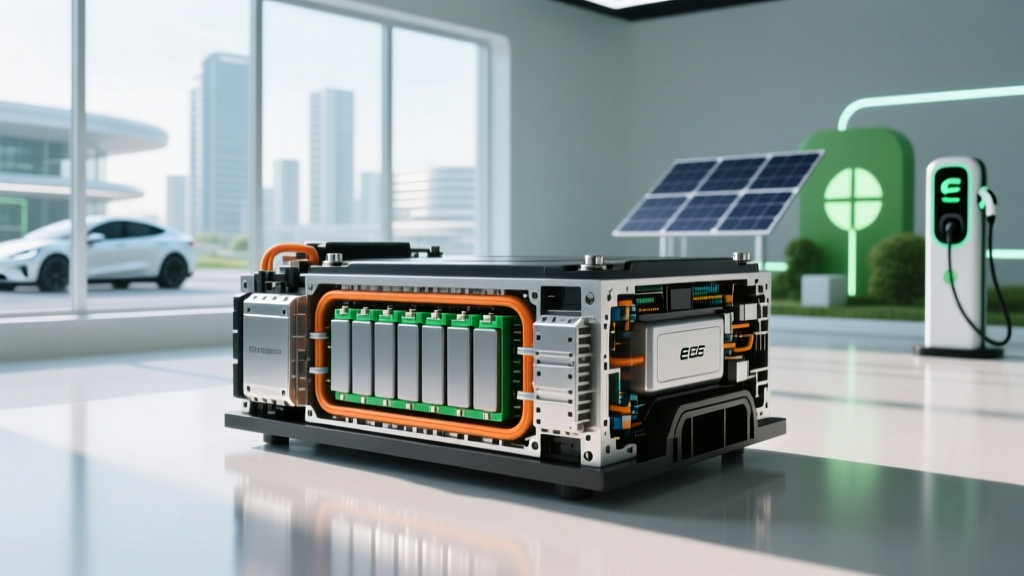
Search interest in a solid state battery Tesla has climbed steadily as legacy automakers announce pilot programs and startups promise 600-mile ranges. The appeal is obvious: solid-state cells replace the flammable liquid electrolyte in today's lithium-ion packs with a solid ceramic, glass, or polymer conductor. In theory, that delivers higher energy density (potentially 400–500 Wh/kg at the cell level vs ~270 Wh/kg for current NMC), faster charging without lithium-plating risk, and improved safety.
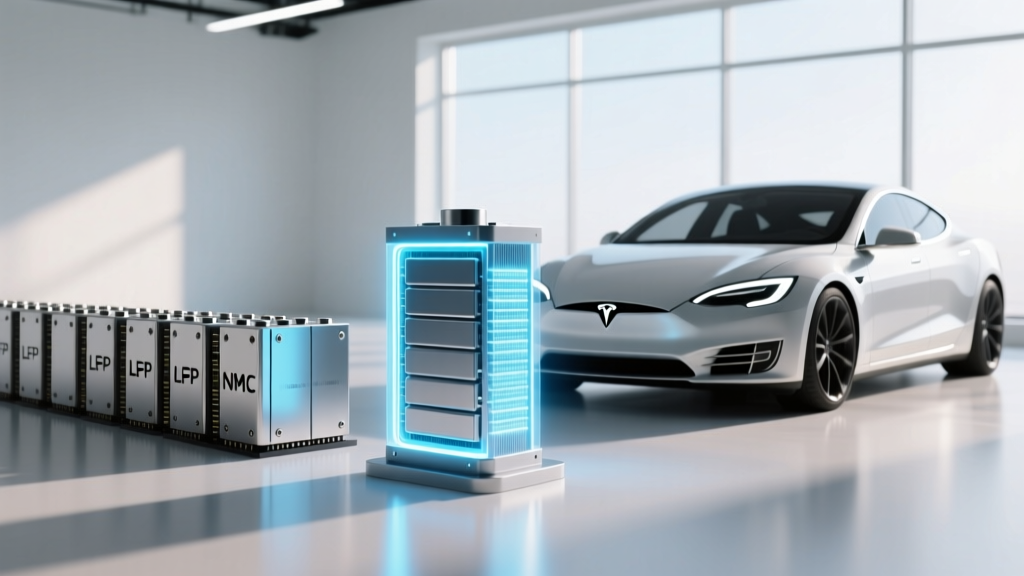
But as of 2026, no production Tesla — Model 3, Model Y, Cybertruck, or any variant — uses solid-state cells. Tesla's current lineup relies on two proven chemistries: lithium iron phosphate (LFP) for standard-range models and nickel manganese cobalt (NMC) / nickel cobalt aluminum (NCA) for long-range and performance trims. Understanding what you can actually buy today, how those batteries age, and when solid-state might realistically arrive is essential before you delay a purchase waiting for a breakthrough that remains years away.
Current Tesla Battery Chemistries: LFP vs NMC/NCA
Tesla sources cells from CATL (LFP), Panasonic (NCA/NMC), LG Energy Solution (NMC), and BYD (LFP for some markets). The chemistry in your car depends on the trim you choose, and each has distinct trade-offs that affect daily ownership.
| Attribute | LFP (Standard Range) | NMC / NCA (Long Range / Performance) |
|---|---|---|
| Energy Density (cell-level) | ~160–180 Wh/kg | ~250–270 Wh/kg |
| Typical Pack Size (usable) | 57–60 kWh (Model 3 SR) | 75–82 kWh (Model 3/Y LR) |
| EPA Range Example | 272 mi (Model 3 SR) | 341 mi (Model 3 LR AWD) |
| Cycle Life | 3,000–5,000+ cycles | 1,000–2,000 cycles |
| Cold-Weather Range Loss | ~30–40% at 20°F | ~20–30% at 20°F (heat pump helps) |
| Recommended Daily SoC | 100% (charge fully at least weekly) | 80% daily; 100% for trips only |
| Cobalt / Critical Minerals | Zero cobalt, zero nickel | Contains cobalt and nickel |
| Cost (cell-level, est.) | ~$90–110/kWh | ~$120–145/kWh |
Which is better? It depends on your use case. LFP wins on longevity, cost, and ethical sourcing — Tesla recommends charging LFP packs to 100% regularly, which simplifies ownership. NMC/NCA wins on energy density and cold-weather performance, making it the right pick for road-trippers and northern-climate drivers who need maximum range. Neither chemistry is "better" universally; they solve different problems.
How Long Do EV Batteries Actually Last?
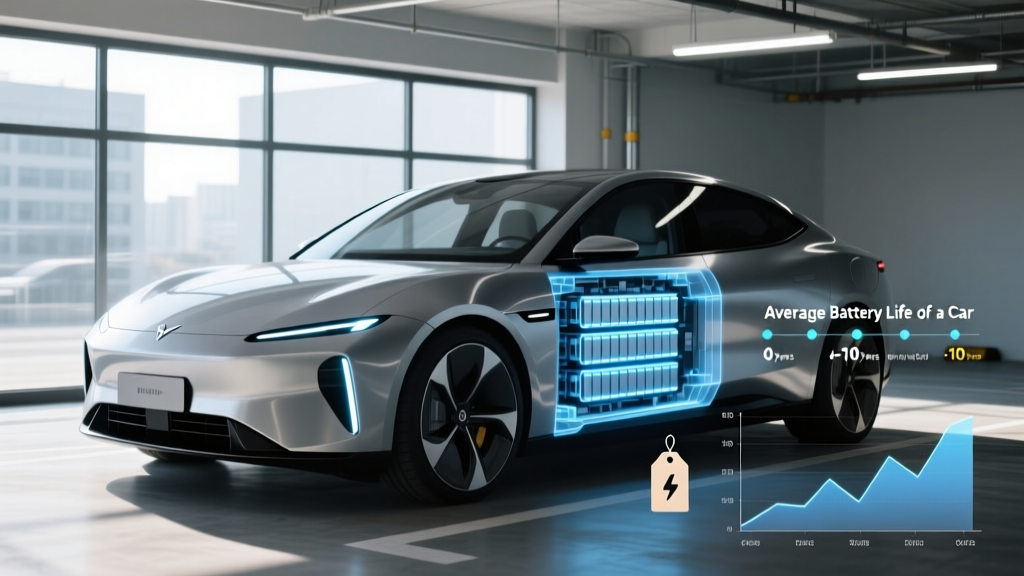
The fear that EV batteries need frequent replacement is one of the most persistent myths in the transition to electric. Real-world fleet data tells a different story.
- Year 1 / 15,000 mi: ~3–5% capacity loss (initial formation drop)
- Year 3 / 45,000 mi: ~6–8% total loss
- Year 5 / 75,000 mi: ~8–10% total loss
- Year 8 / 120,000 mi: ~10–13% total loss
- Year 10+ / 150,000+ mi: ~12–17% total loss (varies by usage)
Source: Tesla 2024 Impact Report fleet data; Recurrent Auto battery degradation study. LFP packs typically show even slower degradation due to higher cycle-life tolerance.
At a 10–13% loss over 8 years, a Model 3 Long Range originally rated at 341 miles EPA would still deliver roughly 297–307 miles of EPA-equivalent range. For most owners, that's still more than adequate for daily driving. The vast majority of Tesla battery packs outlast the vehicles they're installed in — total battery failure before 150,000 miles is rare and typically covered under warranty.
What the Tesla Battery Warranty Actually Covers
Tesla's battery warranty is one of the stronger guarantees in the industry, but the details matter. Here's exactly what you get by model:
| Model / Trim | Warranty Period | Mileage Cap | Minimum Capacity Retention |
|---|---|---|---|
| Model 3 / Model Y RWD (LFP) | 8 years | 100,000 miles | 70% |
| Model 3 / Model Y Long Range & Performance | 8 years | 120,000 miles | 70% |
| Model S / Model X | 8 years | 150,000 miles | 70% |
| Cybertruck AWD / Cyberbeast | 8 years | 120,000 miles | 70% |
The 70% retention threshold is the key number: if your pack drops below 70% of its original capacity within the warranty window, Tesla will repair or replace it at no cost. In practice, fleet data shows very few packs breach this threshold under normal use — the warranty is a safety net that most owners never need.
EV Battery Replacement Cost: What to Budget (and When)
Out-of-warranty battery replacement is the single biggest cost fear among prospective EV buyers. Here are realistic 2026 figures based on service-center reports and third-party repair data:
| Model | Pack Size | Estimated Cost (Parts + Labor) | Typical Replacement Trigger |
|---|---|---|---|
| Model 3 Standard Range (LFP) | ~57–60 kWh | $8,000–$12,000 | Rare before 200k+ mi |
| Model 3/Y Long Range (NMC) | ~75–82 kWh | $12,000–$16,000 | Rare before 180k+ mi |
| Model S / Model X | ~90–100 kWh | $14,000–$22,000 | Some early packs at 120k–160k mi |
| Cybertruck | ~123 kWh (est.) | $18,000–$25,000 | Insufficient long-term data |
Context matters here. According to fueleconomy.gov, a comparable gas vehicle will spend $8,000–$12,000 on fuel alone over 120,000 miles at 2026 average gas prices. Many EV owners come out ahead on total operating costs even if they eventually need a battery replacement — and most won't. The median age of a scrapped passenger vehicle in the U.S. is around 15 years; most Tesla packs are projected to retain 80%+ capacity at that point under normal use.
Factors That Accelerate (or Preserve) Battery Life
Battery degradation isn't purely a function of time — your habits matter. Here's what moves the needle most, based on electrochemistry fundamentals and fleet-telemetry data from sources like Recurrent Auto:
- Limit DC fast charging to road trips. Frequent use of 150–250 kW DCFC raises cell temperature and stresses the anode. Occasional use is fine; daily fast-charging accelerates degradation by an estimated 1–3% over the pack's life.
- Avoid sitting at 100% SoC. For NMC/NCA packs, prolonged storage at full charge promotes electrolyte oxidation. Charge to 100% only when you'll drive within a few hours. (LFP is exempt — Tesla recommends periodic 100% charges for LFP calibration.)
- Don't let the pack sit near 0%. Deep discharge can trigger copper dissolution in the anode current collector. If storing the car, set charge limit to ~50%.
- Use scheduled charging and preconditioning. Tesla's built-in scheduled departure feature warms the battery before you drive, reducing the energy wasted on cold-start inefficiency and minimizing regen-limitation warnings in winter.
- Park in shade or a garage when possible. Sustained high battery temperatures (above 104°F / 40°C ambient) accelerate calendar aging. Tesla's thermal management system actively cools the pack, but reducing heat soak helps.
- Keep tire pressure at spec. Under-inflated tires increase rolling resistance, forcing the battery to work harder and generate more heat per mile.
How to Check Your Tesla's Battery Health (SoH)
Tesla doesn't display a dedicated "State of Health" percentage in the vehicle UI the way some competitors do, but you can estimate it:
- In-car method: Charge to 100% (for NMC, do this only for the test). Note the displayed range. Compare to the original EPA rating for your trim. A Model 3 LR that originally showed 341 mi at 100% but now shows 310 mi has approximately 91% SoH. Account for temperature — cold readings will understate capacity.
- Tesla app: The app displays estimated range at full charge, which you can track over time.
- Third-party tools: Apps like TeslaFi or Stats log charge sessions and can calculate SoH by comparing energy added during a known 10–90% charge to the pack's original usable capacity.
- Service center diagnostic: Tesla service can run a full battery health report. Request one if you suspect abnormal degradation or before purchasing a used Tesla.
Solid-State Batteries: What Tesla Owners Should Actually Expect
Solid-state technology represents a genuine generational improvement — but the gap between lab demonstrations and mass production at automotive scale is enormous. Here's where things stand in 2026:
- Toyota has announced a 2027–2028 target for limited solid-state EV production, initially in small volumes for premium models. Projected specs: ~750 km (466 mi) range, 10-minute 10–80% charge.
- Samsung SDI is piloting solid-state cells with select automaker partners, targeting 2027 production.
- QuantumScape (backed by Volkswagen) continues testing its solid-state cells but has pushed commercial timelines to 2028+.
- Tesla has not publicly committed to solid-state. Its 4680 cell program focuses on manufacturing cost reduction (dry-electrode process), and the company has invested heavily in LFP supply chains. Tesla's approach has historically been to iterate on proven chemistry at scale rather than adopt unproven tech early.
If you're deciding whether to buy a Tesla now or wait for solid-state: the technology is unlikely to appear in a Tesla vehicle before 2030 at the earliest, and initial solid-state EVs will carry significant price premiums. Today's LFP and NMC packs already deliver 270–340+ miles of EPA range, 15–25 minute DC fast-charge sessions (10–80%), and demonstrated 200,000+ mile lifespans with manageable degradation.
Frequently Asked Questions
How long do Tesla batteries last in real-world use?
Based on fleet data, most Tesla NMC/NCA packs retain 87–90% of original capacity at 100,000 miles and 80–85% at 200,000 miles. LFP packs show even slower degradation. At typical U.S. driving rates (~13,500 miles/year), that's 15+ years of usable service life before capacity drops to levels most owners would find limiting.
How much does it cost to replace a Tesla battery out of warranty?
Between $8,000 and $25,000 depending on the model and pack size. Model 3 Standard Range (LFP) packs run $8,000–$12,000; Model 3/Y Long Range packs run $12,000–$16,000; Model S/X packs can reach $14,000–$22,000. However, full pack replacement is uncommon — many out-of-warranty issues involve individual module repairs at a fraction of the cost.
Does the Tesla battery warranty cover degradation?
Yes, but only if capacity drops below 70% of original within the warranty period (8 years / 100,000–150,000 miles depending on model). Normal gradual degradation above 70% is not covered. Tesla will repair or replace the pack to bring it above the 70% threshold.
LFP vs NMC — which should I choose?
Choose LFP if you prioritize lower cost, longer cycle life, cobalt-free sourcing, and mostly commute-range driving. Choose NMC/NCA if you need maximum range for road trips, live in a cold climate (better low-temperature performance), or want Performance-trim acceleration. Both chemistries are proven and reliable.
Will solid-state batteries be available in Tesla vehicles soon?
Not in the near term. Tesla has not announced a solid-state battery program. Industry-wide, solid-state EVs are expected to debut in limited luxury models around 2027–2029, with mainstream availability and pricing likely not arriving until 2030–2032. Current Tesla batteries already offer strong range, fast charging, and proven longevity.
Does frequent Supercharging damage my Tesla battery?
Exclusive reliance on DC fast charging (150–250 kW) will accelerate degradation modestly — studies suggest an extra 1–3% capacity loss over the pack's lifetime compared to primarily Level 2 home charging. Occasional Supercharging on road trips has negligible impact. For daily charging, a home Level 2 charger (7–11 kW) is ideal for long-term battery health.
How do I maximize my Tesla battery's lifespan?
For NMC/NCA: set daily charge limit to 80%, avoid leaving the car at 100% or near 0% for extended periods, use scheduled charging, and rely on Level 2 home charging for daily needs. For LFP: charge to 100% at least once per week for BMS calibration, and follow the same temperature and storage best practices.