The State of EV Batteries in 2026: Lithium-Ion Today, Solid-State Tomorrow
Electric vehicle batteries have quietly become one of the most reliable components in modern cars. Data from fueleconomy.gov and long-term fleet studies show that most EV traction batteries retain 85–95% of their original capacity after 100,000 miles. Yet buyer anxiety persists — driven by replacement-cost headlines and hype around next-generation chemistries. This guide breaks down the real numbers behind today's lithium-ion packs, the chemistry trade-offs you'll face at the dealership, and where advances in solid-state battery technology 2025 actually leave us heading into the 2026 model year.
Let's start with the battery you can buy today, then look forward to what's coming.
LFP vs NMC/NCA: Understanding Battery Chemistry Trade-Offs
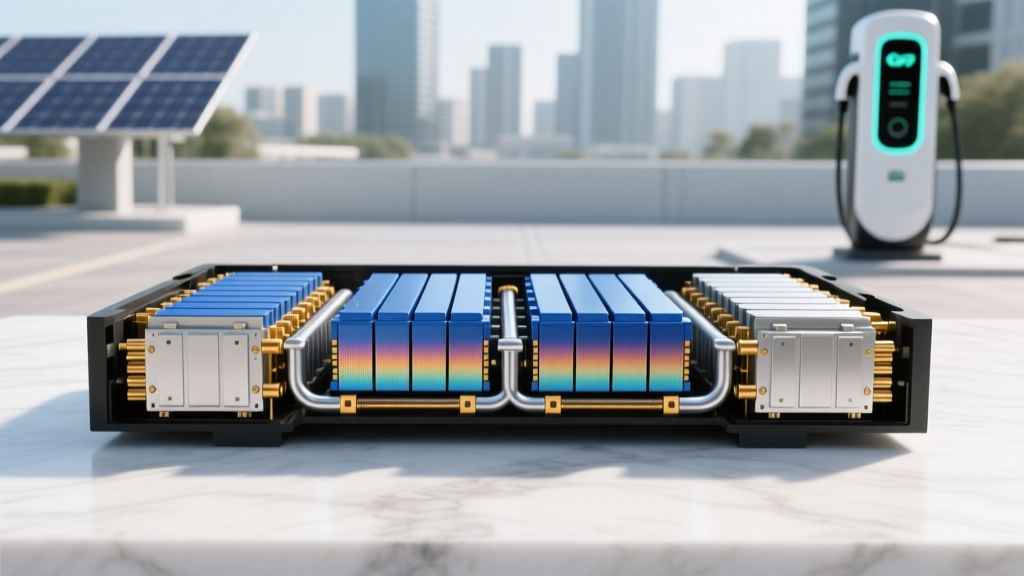
Every EV sold in the US in 2026 uses one of two dominant cathode chemistries in its high-voltage traction battery: lithium iron phosphate (LFP) or nickel manganese cobalt / nickel cobalt aluminum (NMC/NCA). The chemistry determines range, longevity, cold-weather behavior, and price.
| Attribute | LFP (Lithium Iron Phosphate) | NMC / NCA (Nickel-Based) |
|---|---|---|
| Energy Density | ~160–180 Wh/kg (cell level) | ~220–260 Wh/kg (cell level) |
| Cycle Life | 3,000–5,000+ cycles to 80% SoH | 1,000–2,000 cycles to 80% SoH |
| Cold-Weather Performance | Greater range loss below 32°F; slower DC charging in cold | Better low-temp conductivity; less range penalty |
| Peak DC Fast Charge Rate | Typically 150–170 kW; curve holds flatter | Typically 200–350 kW; steeper taper above 80% |
| Recommended Daily SoC | Can charge to 100% daily without accelerated degradation | Best kept at 80% daily; 100% only for trips |
| Cost per kWh (pack level) | ~$100–$115/kWh | ~$130–$155/kWh |
| Thermal Stability | Excellent — higher runaway threshold (~270°C) | Good — lower runaway threshold (~210°C) |
| Common In 2026 Models | Tesla Model 3/Y RWD, Ford Mustang Mach-E Select, Rivian Standard | Hyundai Ioniq 5/6, Kia EV6/EV9, Chevy Equinox EV, BMW iX, most long-range trims |
Which is better? Neither is universally superior. LFP wins on longevity and cost — ideal for daily commuters who charge at home and don't need maximum range. NMC wins on energy density, making it the choice for long-range trims, heavy SUVs, and cold-climate drivers who need every mile in winter. If you're buying a Tesla Model 3 RWD with LFP, you can set your charge limit to 100% and not worry. If you're buying an Ioniq 5 Long Range with NMC, set the daily limit to 80% and save 100% for road trips.
How Long Do EV Batteries Last? Real Degradation Data
EV batteries don't "die" suddenly — they gradually lose capacity over time and charge cycles. The metric that matters is State of Health (SoH), expressed as the percentage of original capacity remaining.
Typical Degradation Curve (Aggregated Fleet Data):
- Year 1 / 15,000 mi: 2–5% loss (initial formation drop)
- Year 3 / 45,000 mi: 5–8% cumulative loss
- Year 5 / 75,000 mi: 7–12% cumulative loss
- Year 8 / 120,000 mi: 10–17% cumulative loss
- Year 10 / 150,000 mi: 12–20% cumulative loss
Sources: Recurrent Auto fleet data (2024–2025), Geotab long-term EV battery study, manufacturer warranty thresholds.
Key takeaway: the steepest degradation happens in the first year or two, then the curve flattens significantly. A 2022 Tesla Model 3 Long Range (NMC, 82 kWh usable) with 60,000 miles today likely retains 90–93% SoH — meaning roughly 275 miles of real-world range instead of the original 310 EPA miles. That's a noticeable but manageable difference.
LFP batteries in Tesla's RWD models have shown even flatter degradation curves, with some fleet vehicles retaining 95%+ SoH past 100,000 miles, according to Recurrent Auto's published datasets.
What Does the Battery Warranty Cover?
Federal law mandates a minimum 8-year / 100,000-mile warranty on EV battery packs for emissions-related compliance, but most manufacturers match or exceed this voluntarily. The critical detail is the capacity retention threshold — the SoH level below which the manufacturer will repair or replace the pack.
| Manufacturer / Model | Warranty Term | Capacity Threshold |
|---|---|---|
| Tesla Model 3 / Model Y | 8 yr / 120,000 mi (Long Range, AWD); 8 yr / 100,000 mi (RWD) | 70% SoH |
| Hyundai Ioniq 5 / Ioniq 6 | 10 yr / 100,000 mi | 70% SoH |
| Kia EV6 / EV9 | 10 yr / 100,000 mi | 70% SoH |
| Ford Mustang Mach-E / F-150 Lightning | 8 yr / 100,000 mi | 70% SoH |
| Chevrolet Equinox EV / Blazer EV | 8 yr / 100,000 mi | 70% SoH (60% for Bolt-era packs, updated for Ultium) |
| Rivian R1T / R1S | 8 yr / 120,000 mi | 70% SoH |
| BMW i4 / iX | 8 yr / 80,000 mi | 70% SoH |
The 70% threshold is industry-standard. In practice, very few packs drop below 70% within the warranty period under normal use. Warranty claims are more commonly triggered by cell defects or module failures — not gradual capacity loss. Note that warranties typically exclude damage from collisions, flooding, or unauthorized modifications, and some require adherence to manufacturer charging guidelines.
EV Battery Replacement Costs: When and How Much
Replacement cost is the number-one fear for prospective EV buyers. Here's the reality: most EV batteries outlive the vehicle they're installed in. Full-pack replacements under normal ownership are rare. When they do occur — typically after a collision, extreme abuse, or beyond 150,000+ miles — costs vary significantly by pack size and model.
| Model (Approx. Pack Size) | Battery Cost (Parts) | Labor | Total Estimate |
|---|---|---|---|
| Tesla Model 3 RWD (60 kWh, LFP) | $8,000–$10,000 | $1,500–$2,500 | $9,500–$12,500 |
| Tesla Model Y Long Range (82 kWh, NMC) | $12,000–$15,000 | $1,500–$2,500 | $13,500–$17,500 |
| Hyundai Ioniq 5 (77.4 kWh, NMC) | $11,000–$14,000 | $2,000–$3,000 | $13,000–$17,000 |
| Ford F-150 Lightning Extended (131 kWh, NMC) | $18,000–$24,000 | $2,500–$4,000 | $20,500–$28,000 |
| Chevrolet Equinox EV (85 kWh, NMC) | $10,000–$13,000 | $2,000–$3,000 | $12,000–$16,000 |
| Rivian R1T Large Pack (135 kWh, NMC) | $20,000–$26,000 | $3,000–$4,500 | $23,000–$30,500 |
These are out-of-pocket estimates for 2026. Several trends are pushing costs down: pack-level prices have fallen from ~$180/kWh in 2020 to roughly $120–$140/kWh in 2025–2026. Additionally, many shops now perform module-level repairs — replacing only the degraded or faulty modules within the pack rather than the entire unit — which can cut costs by 40–60%. Always get a diagnostic scan before authorizing a full replacement.
Factors That Accelerate Battery Degradation (And How to Avoid Them)
Battery longevity isn't just about time and miles — how you charge, drive, and store your EV matters. Here are the biggest factors, ranked by impact:
Battery Care Best Practices
- Avoid sustained high SoC (NMC only): Keeping an NMC battery at 100% for days accelerates calendar degradation. Set daily charge limits to 80%. LFP batteries can be charged to 100% daily — Tesla recommends this for LFP-equipped vehicles.
- Minimize DC fast charging frequency: Occasional DCFC is fine. But if you're fast-charging daily (especially at 150+ kW), expect 1–3% additional degradation over 100,000 miles compared to primarily Level 2 home charging. The heat generated during high-C-rate charging stresses cells.
- Precondition before fast charging: Most modern EVs automatically precondition the battery when you navigate to a DC fast charger. This warms the cells to the optimal ~35–40°C for accepting charge, reducing lithium plating risk and improving charge speed. If your EV doesn't auto-precondition, use the nav-to-charger feature or manually precondition.
- Avoid extreme SoC in extreme heat: Storing an EV at 100% SoC in 100°F+ ambient temperatures is the worst-case scenario for calendar degradation. If parking in summer heat for extended periods, leave SoC at 50–60%.
- Don't baby it too much: Storing at very low SoC (below 10%) for weeks is equally harmful. If leaving the car for a vacation, set charge limit to 50% and leave it plugged in to a Level 1 or Level 2 charger so the BMS can maintain the buffer.
- Use regenerative braking normally: Regen doesn't meaningfully harm the battery — the BMS manages charge acceptance. Don't avoid regen to "save" the battery.
How to Check and Monitor Your Battery's State of Health
Most EVs don't display SoH directly on the dashboard, but there are reliable ways to check it:
- In-car energy app: Compare your current estimated full-charge range to the original EPA-rated range. A 2023 Ioniq 5 that originally showed 303 miles at 100% but now shows 278 miles has roughly 92% SoH (adjusted for temperature and driving style).
- OBD-II diagnostic tools: Devices like the OBDLink SX paired with apps such as ABRP (A Better Route Planner) or Car Scanner can read the BMS-reported SoH percentage directly on many models.
- Manufacturer service centers: Request a battery health report during routine service. Tesla, Hyundai, and Ford can all pull detailed SoH data including per-module voltage variance.
- Third-party services: Companies like Recurrent Auto offer free battery health reports for participating owners, tracking SoH over time with fleet-comparison benchmarks.
- Charging data analysis: If you use a smart Level 2 charger (ChargePoint, Emporia, Wallbox), track kWh delivered per full charge over time. A declining kWh total for 10–100% charges indicates capacity loss.
Solid-State Batteries and Emerging Tech: Realistic Timelines
The advances in solid-state battery technology 2025 generated significant headlines — and for good reason. Solid-state batteries replace the liquid electrolyte in conventional lithium-ion cells with a solid material (ceramic, sulfide, or polymer), promising higher energy density, faster charging, improved safety, and longer cycle life. But the gap between lab demonstrations and mass production remains substantial.
Here's where things stand as of early 2026:
- Toyota: Continues to lead in solid-state patent filings. Announced a production timeline of 2027–2028 for a first-generation solid-state EV with a targeted 466-mile (750 km) range and 10-minute 10–80% DC fast charge capability. These are preliminary manufacturer claims and have not been independently verified in production vehicles. Initial deployment will likely be limited to the Japanese market.
- Samsung SDI: Began pilot production of all-solid-state cells in 2025, targeting automotive customers for 2027 sample validation. Energy density target: 900 Wh/L (cell level), roughly 40% higher than current NMC cells.
- QuantumScape: Continued shipping prototype cells to automotive partners through 2025. Their anode-free lithium-metal design showed promising cycle-life data in third-party testing, but manufacturing scale-up remains the primary challenge. No confirmed vehicle integration date.
- Nissan: Announced a solid-state pilot plant in Yokohama operational by 2025, with a production vehicle targeted for fiscal year 2028.
Silicon anode batteries represent a nearer-term bridge technology. Companies like Sila Nanotechnologies and Group14 Technologies have begun supplying silicon-dominant anode materials to battery manufacturers. These increase energy density by 15–25% over conventional graphite anodes and are expected in select 2026–2027 model-year vehicles. Mercedes-Benz's partnership with Sila for the G-Class EV is one confirmed application.
Semi-solid-state batteries — which use a hybrid solid/liquid electrolyte — are closer to production. NIO's 150 kWh semi-solid pack (available in China for the ET7 sedan) demonstrated over 620 miles of range in real-world testing. However, this pack costs roughly as much as the car itself and remains a battery-rental option, not a mainstream purchase.
The honest timeline: expect solid-state EVs in limited, premium-market production by 2028–2029, with meaningful volume and competitive pricing not arriving until the early 2030s. Today's lithium-ion packs — especially LFP — are already remarkably durable and cost-effective. Don't delay an EV purchase waiting for solid-state.
Frequently Asked Questions
How long do EV batteries last in years and miles?
Based on fleet data from Recurrent Auto and Geotab, most modern EV batteries retain 80–90% of original capacity at 150,000 miles and 10+ years. Many will outlast the vehicle's useful life. LFP chemistry batteries tend to show even lower degradation over equivalent mileage.
How much does an EV battery cost to replace?
Out-of-warranty replacement costs range from roughly $9,500 for a compact pack (60 kWh LFP) to $28,000+ for a large truck pack (131 kWh NMC). However, most replacements are covered under the 8-year/100,000-mile federal minimum warranty, and module-level repairs can significantly reduce out-of-pocket costs when the warranty has expired.
What does the EV battery warranty actually cover?
Manufacturer warranties cover capacity loss below a defined threshold (typically 70% SoH) and defects in materials or workmanship. They generally do not cover damage from accidents, flooding, improper charging equipment, or unauthorized modifications. Check your specific owner's manual for exclusions.
How do I check my EV battery's State of Health?
Monitor the full-charge range estimate vs. the original EPA rating, use an OBD-II scanner with BMS-compatible software, request a health report from your dealer, or enroll in a fleet-tracking service like Recurrent. Tracking kWh delivered per full charge session over time also reveals degradation trends.
LFP vs NMC — which battery chemistry should I choose?
Choose LFP if you prioritize longevity, lower cost, and the convenience of daily 100% charging — and you don't need maximum range or live in an extremely cold climate. Choose NMC if you need long range (300+ miles), frequently drive in cold weather, or want the fastest DC charging speeds. Both chemistries are proven and well-supported in 2026 model-year vehicles.
Will solid-state batteries make today's EVs obsolete?
Not in the near term. Solid-state production vehicles are not expected in meaningful US-market volume before 2029–2030. Today's lithium-ion and LFP batteries already offer 250–350 miles of range, 20–30 minute fast charging, and 150,000+ mile lifespans. The incremental gains from solid-state will be significant for the industry but won't retroactively diminish the value of current EVs.