Today's EV Batteries vs. Tomorrow's: Why Chemistry Still Matters Most
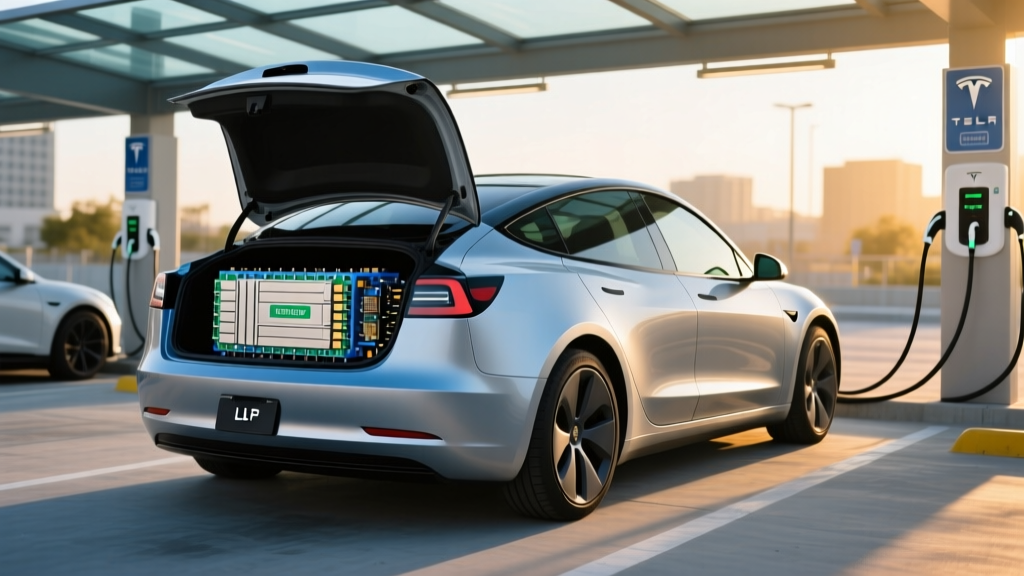
Every EV on sale in 2026 runs on lithium-ion cells using one of two dominant cathode chemistries: NMC (nickel manganese cobalt) or LFP (lithium iron phosphate). Solid-state batteries — the technology that solid state battery suppliers like QuantumScape, Toyota, Samsung SDI, and Solid Power are racing to commercialize — remain in limited pilot or pre-production stages. They are not available in any vehicle you can buy today.
That makes understanding current battery technology critical for anyone shopping for an EV right now. Chemistry determines your real-world range, charging speed, long-term degradation, cold-weather performance, and ultimately whether you'll ever face a five-figure replacement bill. Below, we break down the data that matters.
LFP vs. NMC/NCA: The Chemistry Comparison That Defines Your EV
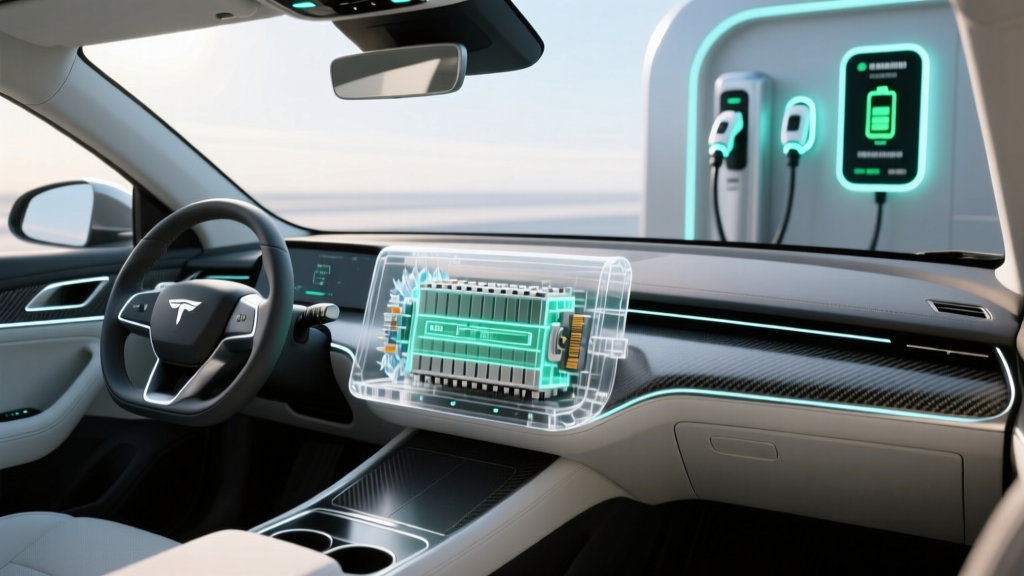
The cathode chemistry inside your EV's high-voltage traction battery is the single biggest factor in how it behaves over a decade of ownership. Here's how the two dominant types stack up across the metrics that matter.
| Attribute | NMC / NCA (Nickel-based) | LFP (Lithium Iron Phosphate) |
|---|---|---|
| Energy Density | 200–260 Wh/kg (cell-level) — enables 300+ mi EPA range in mid-size SUVs | 140–180 Wh/kg — heavier pack for same range, better suited to sedans/compact SUVs |
| Cycle Life | ~1,000–2,000 full equivalent cycles before 80% capacity | ~3,000–5,000+ full equivalent cycles — significantly longer calendar life |
| Cold-Weather Performance | Better low-temp conductivity; ~20–30% range loss at 20°F | More resistive in cold; ~30–40% range loss at 20°F without active thermal preconditioning |
| Fast-Charging Tolerance | Handles high C-rates well; peak 250+ kW common | Improving (CATL Shenxing cells target 4C); generally peaks 150–200 kW in current packs |
| Cost per kWh | ~$110–$140/kWh (pack-level, 2025–2026) | ~$75–$100/kWh — no cobalt or nickel, cheaper raw materials |
| Optimal Daily SoC | Charge to 80% daily; 100% only for road trips | Can charge to 100% regularly — LFP tolerates full SoC without accelerated degradation |
| Common in (2026 models) | Tesla Model Y LR, Hyundai Ioniq 5, BMW iX, Ford F-150 Lightning Extended | Tesla Model 3 RWD, Model Y RWD, Ford Mustang Mach-E Select, Rivian Standard |
The bottom line: NMC wins on range and cold-weather capability. LFP wins on longevity, cost, and daily-charging convenience. If you plan to keep your EV 10+ years and can accept slightly less range, LFP is increasingly the smarter pick.
How Long Do EV Batteries Actually Last? Degradation Data
The fear that EV batteries "die" after a few years is not supported by fleet data. Most modern packs are engineered to outlast the vehicle's economic life. Here's what real-world degradation looks like.
- Year 1: ~2–3% capacity loss (initial formation loss)
- Years 2–4: ~1% per year (linear phase)
- Years 5–8: ~0.5–1% per year (plateau phase)
- Expected SoH at 100,000 miles: ~88–93% (source: Geotab fleet study, 2024 data across 10,000+ EVs)
- Expected SoH at 200,000 miles: ~80–87%
Tesla's own impact report (2024) states that Model 3/Y batteries retain approximately 85% capacity after 200,000 miles. Hyundai and Kia have reported similar figures for their E-GMP platform vehicles. Early Nissan Leaf models (passive air-cooled, 24 kWh packs) degraded far faster — losing 20–30% within 5 years — but that was a thermal-management failure, not an inherent battery limitation.
LFP packs show even slower degradation. Tesla's LFP-equipped Model 3 RWD vehicles have demonstrated less than 5% loss over 100,000 miles in owner-reported data, consistent with LFP's 3,000+ cycle-life rating.
EV Battery Warranty Terms: What's Actually Covered
Federal law mandates a minimum 8-year/100,000-mile warranty on EV battery packs (10 years/150,000 miles in California and states that follow CARB standards). Most manufacturers meet or exceed this floor. Here's how major brands structure coverage:
| Manufacturer | Warranty Term | Capacity Retention Threshold | Notes |
|---|---|---|---|
| Tesla | 8 yr / 120,000 mi (Model 3/Y); 8 yr / 150,000 mi (Model S/X) | 70% minimum SoH | Covers defects and excessive degradation below threshold |
| Hyundai / Kia | 10 yr / 100,000 mi | 70% minimum SoH | Among the longest coverage terms in the U.S. market |
| Ford | 8 yr / 100,000 mi | 70% minimum SoH | Applies to Mustang Mach-E, F-150 Lightning |
| BMW | 8 yr / 100,000 mi | 70% minimum SoH | Transferable to subsequent owners |
| Rivian | 8 yr / 175,000 mi (R1T/R1S) | 70% minimum SoH | Higher mileage cap reflects truck use case |
What triggers a warranty claim: If your battery's State of Health drops below the stated threshold (typically 70% of original capacity) within the warranty period, the manufacturer will repair or replace modules — or the full pack — at no cost. Most claims involve individual module replacement, not full-pack swaps.
EV Battery Replacement Cost: The Real Numbers
Out-of-warranty battery replacement is the single biggest ownership fear. The cost is substantial, but context matters: the vast majority of EV batteries never need replacement during the vehicle's useful life.
| Vehicle (example) | Pack Size (usable kWh) | Estimated Replacement Cost | When Typically Needed |
|---|---|---|---|
| Tesla Model 3 RWD (LFP) | 57 kWh | $7,000–$10,000 | Rarely; 300,000+ mi projected cycle life |
| Tesla Model Y Long Range (NMC) | 75 kWh | $12,000–$16,000 | 200,000+ mi if at all |
| Hyundai Ioniq 5 (NMC) | 77.4 kWh | $11,000–$15,000 | 200,000+ mi |
| Ford F-150 Lightning Ext. Range | 131 kWh | $20,000–$28,000 | 200,000+ mi; large pack degrades more slowly in % terms |
| Chevrolet Bolt EV (older NMC) | 65 kWh | $14,000–$17,000 | Earlier-gen chemistry; recall replacements covered by GM |
These are full-pack replacement figures. In practice, many degradation or fault issues can be resolved by replacing individual modules for $1,500–$4,000, depending on the pack architecture. As pack prices continue declining — BloombergNEF reports average pack prices fell below $130/kWh in 2025 — replacement costs will track downward as well.
What Solid State Battery Suppliers Are Promising (and When It Might Matter)
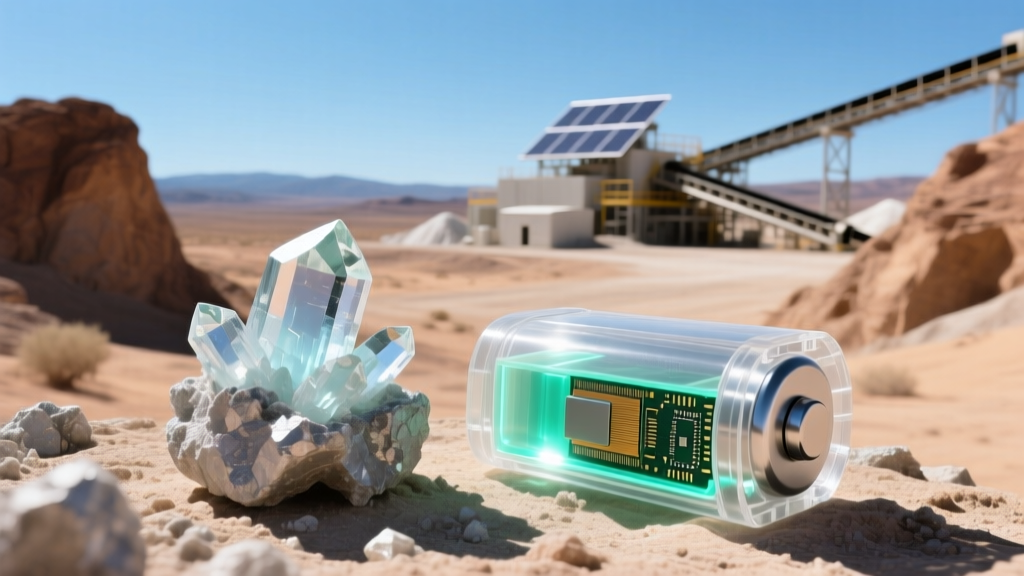
The term "solid state battery" refers to cells that replace the liquid electrolyte in conventional lithium-ion batteries with a solid material — ceramic, sulfide glass, or polymer. The theoretical advantages are significant:
- Energy density: 350–500 Wh/kg at the cell level (vs. 200–260 for today's NMC), enabling 500+ mile ranges without larger packs
- Charging speed: Potential for 10–80% in under 10 minutes due to reduced dendrite risk
- Safety: No flammable liquid electrolyte — lower thermal runaway risk
- Longevity: Projected 5,000+ cycle life with minimal degradation
Here's where the major solid state battery suppliers stand as of early 2026:
- Toyota: Announced limited production of solid-state-equipped EVs for 2027–2028, initially in Japan. Claims 745 km (463 mi) WLTP range and 10-minute 10–80% charging. U.S. availability not confirmed.
- QuantumScape: Supplying prototype cells to Volkswagen's PowerCo division for testing. No production vehicle announced. Manufacturing scale-up remains the primary challenge.
- Samsung SDI: Targeting 2027 mass production with a sulfide-based solid electrolyte. Supplying test samples to Hyundai Motor Group and Stellantis.
- Solid Power: Partnered with BMW and Ford for prototype cell evaluation. Focused on a sulfide-electrolyte approach compatible with existing manufacturing lines.
- CATL: Announced a condensed-matter battery (semi-solid-state hybrid) with 500 Wh/kg, targeting aviation first. Automotive applications projected for 2028+.
Realistic timeline for U.S. buyers: Expect solid-state EVs to appear in limited, premium-segment models no earlier than 2028–2029, with broad market availability likely 2030+. If you're buying an EV in the next 3–4 years, you'll be choosing between today's proven NMC and LFP chemistries.
Factors That Accelerate (or Slow) Battery Degradation
Your battery's lifespan isn't fixed — it's heavily influenced by how you charge and drive. Research from the National Renewable Energy Laboratory (NREL) and fleet telematics data identify these key factors:
- ✅ Limit DC fast charging to road trips. Daily Level 2 home charging (7–11 kW) generates far less heat stress than repeated 150+ kW DC sessions. One or two fast charges per week is fine; daily is not ideal.
- ✅ Avoid sustained 100% SoC (NMC packs). Set your daily charge limit to 80%. Charge to 100% only when you'll drive immediately. LFP packs are the exception — charge to 100% regularly for accurate BMS calibration.
- ✅ Don't let SoC sit at 0% for extended periods. If storing the vehicle, leave it at ~50% SoC.
- ✅ Use preconditioning. Most EVs let you precondition the battery before fast charging or departure. This warms the cells to optimal temperature (roughly 70–95°F), reducing charge-induced stress and improving charge speed.
- ✅ Park in shade or a garage during extreme heat. Sustained ambient temperatures above 100°F accelerate calendar degradation, especially at high SoC. Active thermal management helps but isn't a complete solution.
- ✅ Don't obsess over cold-weather range loss. Temporary range reduction in winter (20–40%) is a physics reality, not damage. Range recovers when temperatures rise.
- ❌ Avoid leaving the car at 100% SoC in hot weather for days. This is the single worst combination for long-term NMC degradation.
How to Check Your EV Battery's State of Health
State of Health (SoH) is the percentage of original capacity your battery retains. A new pack is 100% SoH; a pack that held 75 kWh when new and now holds 67.5 kWh is at 90% SoH.
How to check SoH by brand:
- Tesla: The infotainment "Service" menu (or the Tesla app on newer software) shows estimated range at 100%, which you can compare to the original EPA figure. Third-party tools like TeslaFi or Scan My Tesla (via OBD-II) pull precise SoH from the BMS.
- Hyundai/Kia: The EV dashboard in the infotainment system displays battery conditioning status. Dealers can pull a full SoH report via the KDS diagnostic tool.
- Ford: The FordPass app shows estimated range. For a precise SoH figure, request a battery health report from a Ford EV-certified service center.
- Universal OBD-II method: Apps like Car Scanner, ABRP (A Better Route Planner with OBD integration), or LeafSpy (Nissan-specific) read the BMS directly for an accurate SoH percentage.
When to be concerned: If your SoH drops below 85% within the first 50,000 miles, or below the warranty threshold (typically 70%) at any point during the warranty period, contact your dealer for a diagnostic evaluation.
Frequently Asked Questions
How long do EV batteries last in years and miles?
Modern liquid-cooled EV batteries are designed to last 15–20 years or 200,000–300,000 miles before reaching 70–80% of original capacity. LFP packs may exceed 300,000 miles. Fleet data from Geotab and manufacturer reports consistently show that most EV batteries outlast the vehicle's economic life. The era of rapid degradation was largely confined to early passive-cooled packs like the first-generation Nissan Leaf.
How much does an EV battery cost to replace?
Full-pack replacement ranges from $7,000 for a small LFP pack to $28,000 for a large NMC pack (e.g., F-150 Lightning Extended Range). However, most out-of-warranty issues involve individual module replacement at $1,500–$4,000. Full replacement is rare and typically only needed after physical damage (collision, flood) or extreme defect — not normal degradation.
What does the EV battery warranty actually cover?
The standard warranty covers defects and capacity loss below a specified threshold (usually 70% SoH) for 8 years/100,000 miles minimum (10/100,000 for Hyundai/Kia, 8/175,000 for Rivian). It does not cover damage from collisions, modifications, or improper charging equipment. The warranty is typically transferable to second owners, which supports EV resale values.
LFP vs. NMC — which battery chemistry is better for me?
Choose LFP if: you want maximum longevity, lower cost, can accept slightly less range, live in a mild climate, and prefer charging to 100% daily without worry. Choose NMC/NCA if: you need maximum range (300+ mi EPA), frequently drive in cold weather, want the fastest DC charging speeds, or tow heavy loads. Both chemistries are proven and reliable — the "better" choice depends on your driving pattern.
Will solid-state batteries make my current EV obsolete?
Not for years. Even optimistic projections from solid state battery suppliers place broad commercial availability at 2029–2030+ for the U.S. market. When they arrive, solid-state EVs will likely debut at premium price points ($70,000+). Today's EVs with NMC or LFP packs will remain practical, cost-effective transportation for well over a decade. The depreciation impact of solid-state introduction will be gradual, not sudden — similar to how smartphones didn't instantly make feature phones worthless.
Does frequent DC fast charging damage the battery?
Exclusively relying on DC fast charging accelerates degradation compared to predominantly using Level 2 home charging, but the effect is smaller than many fear. Tesla data shows vehicles that fast-charge more than 90% of the time still retain approximately 85% SoH at 150,000 miles — only a few percentage points behind home-charging-only vehicles. The key mitigating factor is active thermal management, which all modern EVs have. That said, for maximum longevity, default to Level 2 and reserve DCFC for road trips.