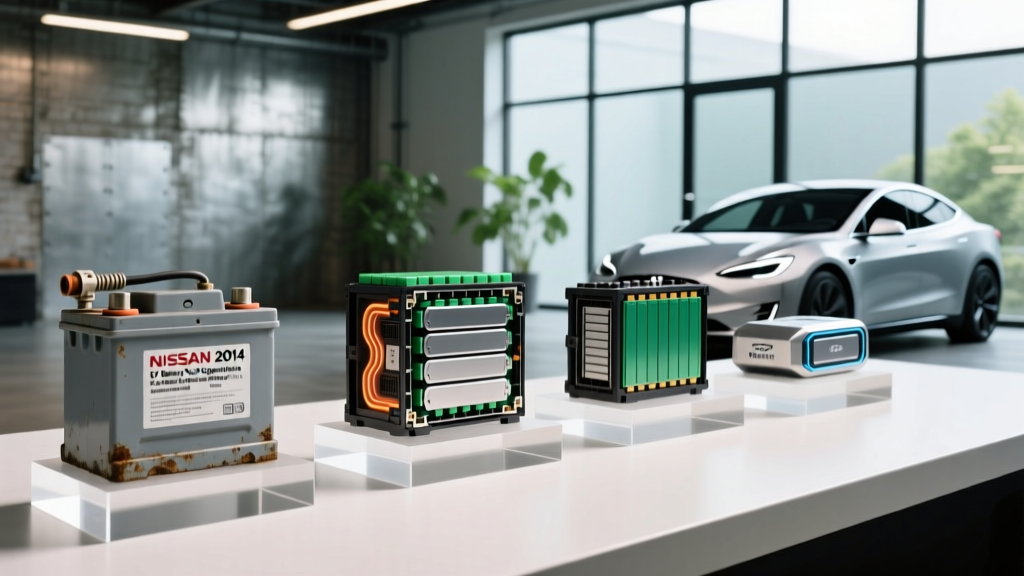
The Solid-State Promise vs. Today's Battery Reality
If you follow EV news, you've seen the headlines: a solid state battery manufacturer claims 600-mile range, 10-minute charging, and a cell that never catches fire. Toyota, QuantumScape, Samsung SDI, and Solid Power are all racing to commercialize solid-state cells that replace the liquid electrolyte in today's lithium-ion packs with a solid ceramic, sulfide, or polymer layer.
The promise is real. Solid-state cells theoretically deliver higher energy density (potentially 400–500 Wh/kg at the cell level versus ~250–300 Wh/kg for today's best NMC), faster charging without lithium plating risk, and inherent thermal stability that reduces fire risk. But as of 2026, no mass-market EV sold in the United States uses a fully solid-state traction battery. The vehicles you can buy today — from a Tesla Model 3 to a Hyundai Ioniq 5 to a Ford F-150 Lightning — run on liquid-electrolyte lithium-ion cells in either NMC/NCA or LFP chemistry.
That makes understanding today's battery landscape essential. The solid state battery manufacturer that eventually ships at scale will be building on decades of lithium-ion refinement. Here's what you need to know about current chemistries, real degradation data, warranty protections, replacement economics, and where the next-generation technology actually stands.
Today's Chemistries: LFP vs. NMC vs. NCA
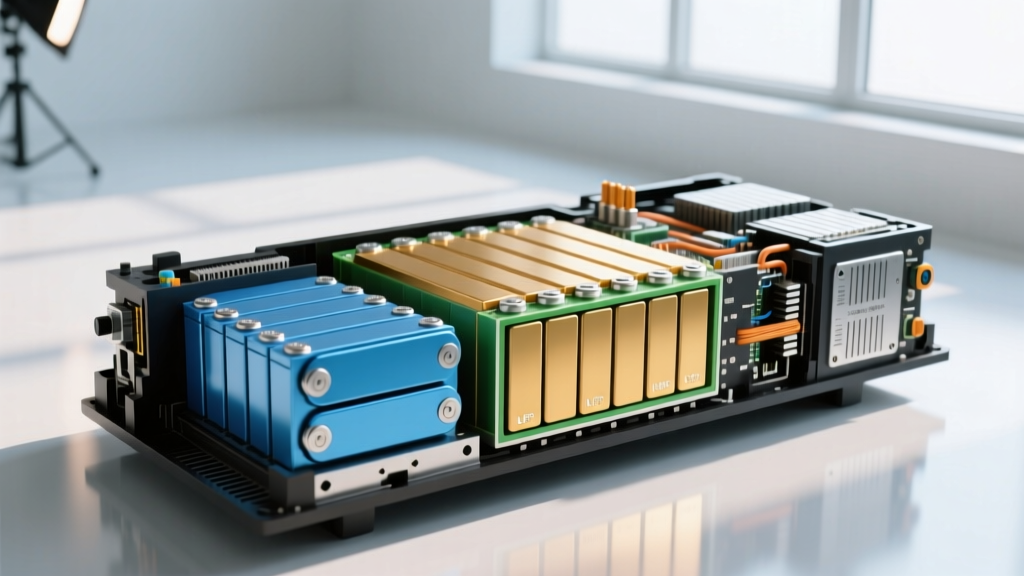
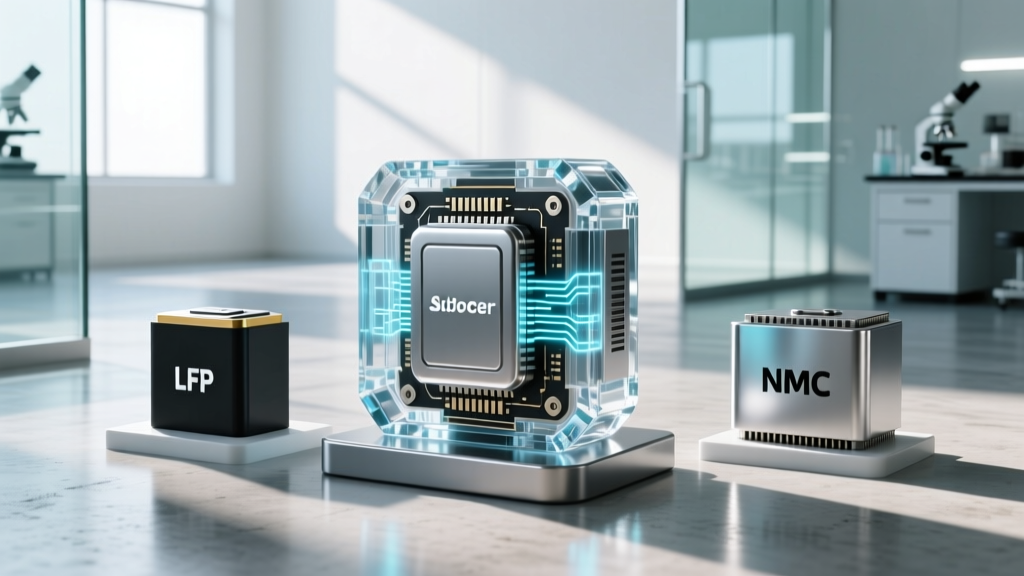
Every EV sold in the U.S. in 2026 uses one of three cathode chemistries: lithium iron phosphate (LFP), nickel manganese cobalt (NMC), or nickel cobalt aluminum (NCA). Tesla uses LFP in standard-range Model 3 and Model Y vehicles and NCA in Long Range and Performance trims. Hyundai and Kia favor NMC across the Ioniq 5, Ioniq 6, and EV6. Ford uses LFP in the Mustang Mach-E Select and NMC in GT and Extended Range trims. Rivian uses NMC/NCA in its R1T and R1S packs.
Each chemistry involves genuine engineering trade-offs. There is no universally "better" option — only the right option for a given vehicle's price point, range target, and use case.
| Attribute | LFP (LiFePO₄) | NMC (Nickel Manganese Cobalt) | NCA (Nickel Cobalt Aluminum) |
|---|---|---|---|
| Energy Density (cell-level) | ~160–180 Wh/kg | ~230–280 Wh/kg | ~250–300 Wh/kg |
| Typical Cycle Life | 3,000–6,000+ cycles | 1,000–2,000 cycles | 800–1,500 cycles |
| Cold-Weather Performance | Moderate; slower charge below 32°F | Better low-temp charge acceptance | Better low-temp charge acceptance |
| Thermal Stability | Excellent; ~270°C onset | Moderate; ~210°C onset | Lower; ~150°C onset |
| Cobalt/Critical Mineral Content | Zero cobalt, zero nickel | Contains cobalt and nickel | Contains cobalt and nickel |
| Cost per kWh (pack-level, 2026) | ~$90–$110 | ~$120–$145 | ~$125–$150 |
| Typical Use Case | Standard-range, fleet, budget EVs | Long-range, premium, SUVs/trucks | High-performance, long-range |
| Notable 2026 Vehicles | Tesla Model 3 RWD, Ford Mach-E Select, Chevy Bolt EV | Hyundai Ioniq 5, Kia EV6, BMW i4 | Tesla Model S/X, Rivian R1T |
LFP vs. NMC — Which Is Better and Why?
If your priority is maximum range per dollar and you drive in a moderate climate, LFP is the pragmatic choice. LFP cells tolerate being held at 100% state of charge (SoC) without significant calendar degradation — Tesla actually recommends periodic 100% charges for LFP packs to keep the battery management system (BMS) calibrated. The trade-off is lower energy density, meaning a heavier, physically larger pack for the same range, and slower DC fast charging in cold weather without thorough preconditioning.
If you need 300+ miles of EPA range, tow frequently, or regularly drive in sub-freezing conditions, NMC/NCA delivers better energy density and cold-weather charge acceptance. The trade-off is a higher cost per kWh and a recommendation to keep daily SoC between 20–80% to maximize cycle life. According to fueleconomy.gov, NMC-based packs in vehicles like the Ioniq 5 achieve 303–360 miles of EPA range depending on trim, while LFP-equipped vehicles like the base Model 3 RWD deliver 272 miles from a smaller, lighter pack.
How Long Do EV Batteries Last? Real Degradation Data
The most persistent EV ownership fear is that the traction battery will fail prematurely and require a replacement costing more than the car is worth. The data tells a different story.
Modern liquid-cooled EV batteries are engineered for 1,000–3,000+ full charge cycles before reaching 70–80% of original capacity. For a vehicle with 250 miles of range, 1,500 cycles translates to 375,000 miles before significant degradation. Most owners will sell or trade the vehicle long before the battery reaches end-of-life.
Typical Degradation Curve (Fleet & Owner Data)
| Vehicle / Sample | Chemistry | Time / Mileage | Average Capacity Retained | Source |
|---|---|---|---|---|
| Tesla Model 3/Y (fleet average) | NCA/NMC | 100,000 mi (~4 yr) | ~90–92% | Tesla Impact Report 2024 |
| Tesla Model 3/Y (fleet average) | NCA/NMC | 200,000 mi (~7 yr) | ~85–88% | Tesla Impact Report 2024 |
| Nissan Leaf (2013–2017, air-cooled) | NMC/LMO | 100,000 mi (~6 yr) | ~75–82% | Owner surveys, Recurrent Auto |
| Chevy Bolt EV (liquid-cooled) | NMC | 80,000 mi (~4 yr) | ~93–96% | Recurrent Auto fleet data |
| Hyundai Kona Electric | NMC | 60,000 mi (~3 yr) | ~94–97% | Owner reports, Recurrent |
| Tesla Model 3 LFP (SR+) | LFP | 80,000 mi (~3 yr) | ~95–98% | Fleet operator data |
Note: Degradation is non-linear. Most packs lose 2–5% in the first year (initial "break-in" loss), then settle to roughly 1–2% per year or per 15,000–20,000 miles. Air-cooled packs (early Nissan Leaf) degrade faster, especially in hot climates.
What Does the Battery Warranty Cover?
Federal regulations mandate that EV manufacturers warrant the high-voltage traction battery for a minimum of 8 years or 100,000 miles, whichever comes first. California Air Resources Board (CARB) states extend this to 10 years / 150,000 miles. Most automakers meet or exceed these minimums.
The critical detail is the capacity retention threshold. Most warranties guarantee the battery will retain at least 70% of its original usable capacity during the warranty period. If your 75 kWh pack drops below 52.5 kWh of usable capacity within 8 years / 100,000 miles, the manufacturer is obligated to repair or replace it.
| Manufacturer | Warranty Period | Mileage Limit | Capacity Threshold | Notable Details |
|---|---|---|---|---|
| Tesla (Model 3/Y RWD, LFP) | 8 years | 100,000 mi | 70% | Module-level replacement when possible |
| Tesla (Long Range/Performance) | 8 years | 120,000 mi | 70% | Higher mileage limit on larger packs |
| Hyundai / Kia | 10 years | 100,000 mi | 70% | Among the longest time-based coverage |
| Ford (Mach-E, F-150 Lightning) | 8 years | 100,000 mi | 70% | Covers battery and hybrid/electric components |
| GM (Ultium-based) | 8 years | 100,000 mi | 70% | Modular pack allows partial replacement |
| BMW | 8 years | 100,000 mi | 70% | Transferable to second owner |
| Rivian | 8 years | 175,000 mi | 70% | Highest mileage threshold in the market |
Important: the warranty covers capacity degradation below the threshold and manufacturing defects. It does not cover damage from accidents, flooding, or unauthorized modifications. It also does not cover the 12V auxiliary battery, which is a standard lead-acid or lithium 12V unit covered under the basic vehicle warranty (typically 3 years / 36,000 miles).
EV Battery Replacement Cost: What to Expect
If a battery fails outside of warranty — or if you're buying an older used EV and want to budget for a worst-case scenario — replacement costs are significant but declining.
| Vehicle | Battery Capacity | Chemistry | Estimated Pack Cost | Labor & Misc. | Total Estimate |
|---|---|---|---|---|---|
| Chevy Bolt EV | 65 kWh | NMC | $7,500–$9,500 | $2,000–$3,000 | $9,500–$12,500 |
| Tesla Model 3 (LFP) | 60 kWh | LFP | $6,500–$8,500 | $2,000–$3,500 | $8,500–$12,000 |
| Tesla Model Y (NCA) | 75 kWh | NCA | $9,000–$12,000 | $2,500–$3,500 | $11,500–$15,500 |
| Hyundai Ioniq 5 | 77.4 kWh | NMC | $10,000–$13,000 | $2,500–$3,500 | $12,500–$16,500 |
| Ford F-150 Lightning (Ext.) | 131 kWh | NMC | $18,000–$24,000 | $3,500–$5,000 | $21,500–$29,000 |
| GMC Hummer EV | ~212 kWh | NMC | $28,000–$38,000 | $5,000–$7,000 | $33,000–$45,000 |
Sources: Manufacturer service bulletins, independent EV repair shops, and Recurrent Auto cost analyses. Prices vary by region and are expected to continue declining 5–8% annually as pack-level costs fall.
When Is Replacement Actually Needed?
Based on fleet data, the vast majority of liquid-cooled EV batteries do not require full replacement within the vehicle's normal lifespan. Catastrophic failures (sudden cell short, BMS failure) are rare and usually covered by warranty. Gradual degradation to 70% capacity typically takes 15–20+ years for liquid-cooled packs driven under normal conditions. The vehicles most at risk for mid-life battery replacement are early air-cooled models (2011–2017 Nissan Leaf) operated in hot climates with frequent DC fast charging.
Factors That Affect EV Battery Life
Not all miles and charge cycles are equal. The following factors have measurable impacts on long-term State of Health (SoH):
Battery Longevity Checklist
- Daily SoC range: For NMC/NCA packs, keep daily charging between 20–80%. LFP packs can safely sit at 100% but benefit from occasional discharge cycles. Avoid leaving any pack at 100% SoC for days in hot weather.
- DC fast charging frequency: Occasional DCFC (road trips, 2–4 times per month) has minimal impact. Daily DCFC at 150+ kW, especially without preconditioning, accelerates degradation by an estimated 1–3% over 100,000 miles compared to Level 2 home charging.
- Temperature extremes: Sustained exposure to ambient temperatures above 95°F (35°C) accelerates calendar aging. Parking in shade or a garage in summer meaningfully extends pack life. Extreme cold (<10°F) doesn't damage cells but temporarily reduces usable capacity and charge acceptance.
- Preconditioning: Always use your vehicle's navigation-based battery preconditioning when routing to a DC fast charger. This warms the pack to the optimal 25–35°C window, enabling faster charging and reducing lithium plating risk.
- Storage: If storing an EV for 2+ weeks, set SoC to 50–60% and keep the vehicle plugged in (the BMS will manage vampire drain). Never store at 100% or below 10%.
- Regen braking settings: Moderate regen is fine; maximum regen in cold weather without preconditioning can stress cells. Most vehicles automatically limit regen when the pack is cold.
How to Check and Monitor Battery Health (SoH)
State of Health (SoH) is the percentage of original usable capacity your battery retains. A new pack is 100% SoH; a pack at 85% SoH holds 85% of its original kWh.
Built-In Vehicle Tools
Most 2026 EVs display battery health information in the infotainment system or mobile app, though the level of detail varies. Tesla shows estimated range at 100% charge but does not natively display a SoH percentage. Hyundai and Kia include a battery health indicator in the EV settings menu. BMW's iDrive provides a battery condition report accessible through the service menu.
Third-Party Diagnostics
- OBD-II apps: Tools like Leaf Spy (Nissan), Scan My Tesla, and ABRP-linked OBD dongles can read cell-level voltage, pack temperature, and estimated SoH directly from the BMS.
- Recurrent Auto: This free service (for participating owners) tracks your battery health over time and compares it to a fleet average, providing a SoH estimate based on actual driving and charging data.
- Dealer diagnostic: Any authorized service center can run a full pack health report, typically showing individual module capacity and resistance. Request this when buying a used EV.
The Solid State Battery Manufacturer Race: Where Things Stand
Solid-state batteries represent the most significant potential leap in EV energy storage since the transition from lead-acid to lithium-ion. By replacing the flammable liquid electrolyte with a solid material (ceramic, sulfide-based glass, or polymer), these cells promise:
- Energy density of 400–500 Wh/kg at the cell level (roughly 60–80% improvement over today's NMC)
- DC fast charging from 10–80% in under 10 minutes without lithium plating
- Inherent thermal stability (no thermal runaway propagation)
- Potentially longer cycle life (3,000+ cycles with minimal degradation)
Key Players and Timelines (Forward-Looking)
Toyota holds the largest portfolio of solid-state battery patents globally. The company has announced a solid-state battery for a limited-production EV targeted for 2027–2028, with a goal of 750 km (~466 miles) of range and 10-minute 10–80% charging. Toyota is also developing a "bipolar" NiMH and LFP variant for near-term hybrid applications. Mass production at scale is not expected before 2030.
QuantumScape (backed by Volkswagen Group) has demonstrated prototype cells with an anode-free lithium-metal design and a ceramic solid electrolyte. VW's PowerCo division has tested QuantumScape cells through 1,000+ charge cycles with >95% capacity retention. Volkswagen has signaled a potential production vehicle integration in the 2028–2030 timeframe, contingent on manufacturing yield and cost targets.
Samsung SDI is developing a sulfide-based solid-state cell targeting 900 Wh/L volumetric energy density. The company has announced pilot production lines and a commercialization target of 2027 for premium applications, likely beginning with Hyundai Motor Group or BMW vehicles.
Solid Power (partnered with BMW and Ford) uses a sulfide-based solid electrolyte and silicon-anode technology. BMW has received prototype cells for testing and has announced a solid-state demonstrator vehicle for 2025, with production intentions in the late 2020s.
Silicon anode technology — a complementary advancement — is already entering production. Companies like Sila Nanotechnologies and Group14 Technologies are supplying silicon-dominant anode materials that boost energy density by 20–40% in conventional liquid-electrolyte cells. Mercedes-Benz's upcoming G-Class EV is expected to feature silicon-anode cells from Sila, and this technology is likely to proliferate across premium EVs through 2026–2028.
Reality check: No solid state battery manufacturer has demonstrated mass production at automotive scale with acceptable cost ($/kWh) and yield rates. The gap between a lab prototype and a cell produced at 100+ GWh/year with <1% defect rate is enormous. Expect solid-state batteries to appear first in low-volume, premium vehicles in the 2028–2030 window, with mainstream adoption not likely before 2032–2035. Today's LFP and NMC chemistries will remain dominant through at least the end of this decade.
Frequently Asked Questions
How long do EV batteries last in years and miles?
Modern liquid-cooled EV batteries are designed to last 15–20+ years or 200,000–300,000+ miles before degrading to 70–80% of original capacity. Fleet data from Tesla, Recurrent Auto, and independent researchers shows that well-maintained NMC and LFP packs routinely exceed 150,000 miles with 85–92% capacity retention. Most EV batteries will outlast the vehicle's body, suspension, and interior.
How much does an EV battery cost to replace?
Out-of-warranty replacement costs range from approximately $8,500 for a Tesla Model 3 LFP pack to $29,000+ for a Ford F-150 Lightning Extended Range pack, including parts and labor. The cost per kWh at the pack level has dropped from ~$400 in 2015 to roughly $110–$145 in 2026, and replacement costs continue to decline. However, full replacements are rare — most warranty claims involve module-level repairs rather than full pack swaps.
What does the EV battery warranty actually cover?
Federal law requires a minimum 8-year / 100,000-mile warranty on the high-voltage traction battery. Most manufacturers guarantee the battery will retain at least 70% of its original usable capacity during this period. The warranty covers manufacturing defects and abnormal degradation but not accident damage, flood damage, or unauthorized modifications. CARB states (California, New York, and others) extend the requirement to 10 years / 150,000 miles.
How do I check my EV battery's State of Health?
Check your vehicle's built-in battery health display (availability varies by brand), use an OBD-II diagnostic app like Scan My Tesla or Leaf Spy for cell-level detail, or enroll in a free monitoring service like Recurrent Auto. For a pre-purchase inspection on a used EV, request a full battery health report from an authorized dealer, which will show individual module capacity and internal resistance.
LFP vs. NMC — which battery chemistry should I choose?
Choose LFP if you want maximum longevity, lower cost, cobalt-free sourcing, and don't mind slightly less range. LFP is ideal for daily commuting, standard-range vehicles, and owners who prefer charging to 100% without worry. Choose NMC/NCA if you need 300+ miles of EPA range, tow regularly, drive in very cold climates, or want the lightest possible pack. NMC requires more careful SoC management (20–80% daily) but delivers superior energy density and cold-weather performance.
Will solid-state batteries be available in mainstream EVs soon?
Not imminently. As of 2026, no solid state battery manufacturer has achieved mass production at automotive scale. Toyota targets limited production in 2027–2028; Volkswagen/QuantumScape aims for 2028–2030; Samsung SDI and Solid Power target the late 2020s. Expect solid-state cells to debut in premium, low-volume vehicles first, with mainstream cost-competitive adoption likely in the 2032–2035 timeframe. If you're buying an EV in the next 3–5 years, you'll be choosing between LFP and NMC/NCA — both of which are proven, well-warrantied, and continuously improving.
Does frequent DC fast charging damage my battery?
Occasional DC fast charging (2–4 sessions per month, as on road trips) has negligible impact on long-term health. Daily DCFC at high power (150–350 kW) without preconditioning can accelerate degradation by 1–3% over 100,000 miles. Always use your vehicle's navigation-based preconditioning when routing to a charger, and rely on Level 2 home charging (7–19 kW) as your primary charging method for optimal battery longevity.
For official battery warranty terms, always consult your vehicle's owner's manual and the manufacturer's warranty documentation. For federal tax credit eligibility related to battery sourcing requirements under IRS §30D, consult a tax professional. Range and efficiency data sourced from fueleconomy.gov and manufacturer specifications.