Search for "cars with solid state battery" and you'll find a cascade of headlines promising a revolution just around the corner. Toyota says 2027–2028. Nissan has a pilot line. Samsung SDI targets 2027 production. But as of the 2026 model year, no mass-market EV sold in the United States uses a solid-state traction battery. Every EV you can buy today — from a $30,000 Chevrolet Equinox EV to a $130,000 Lucid Air — relies on lithium-ion cells with liquid or gel electrolytes, using either NMC (nickel manganese cobalt) or LFP (lithium iron phosphate) cathode chemistry.
That's not a knock on the technology. Solid-state batteries genuinely promise higher energy density, faster charging, and reduced fire risk. But the gap between lab cells and automotive-grade, high-volume production is enormous. This guide explains where solid-state EVs actually stand, then gives you the practical battery knowledge you need to buy and own an EV today — chemistry trade-offs, real degradation data, warranty terms, replacement costs, and how to maximize the pack you have.
Where Solid-State Battery Cars Actually Stand in 2026
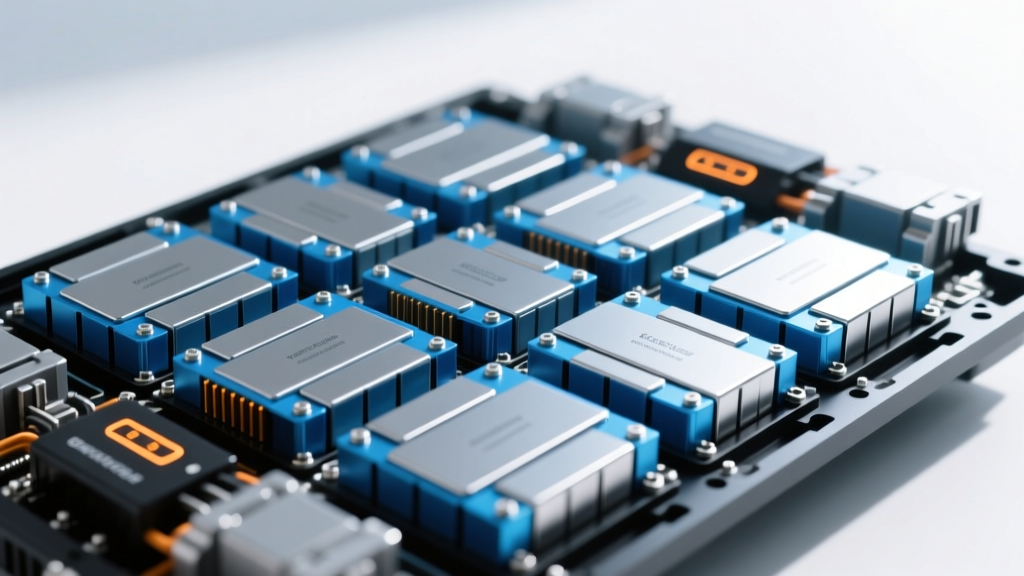
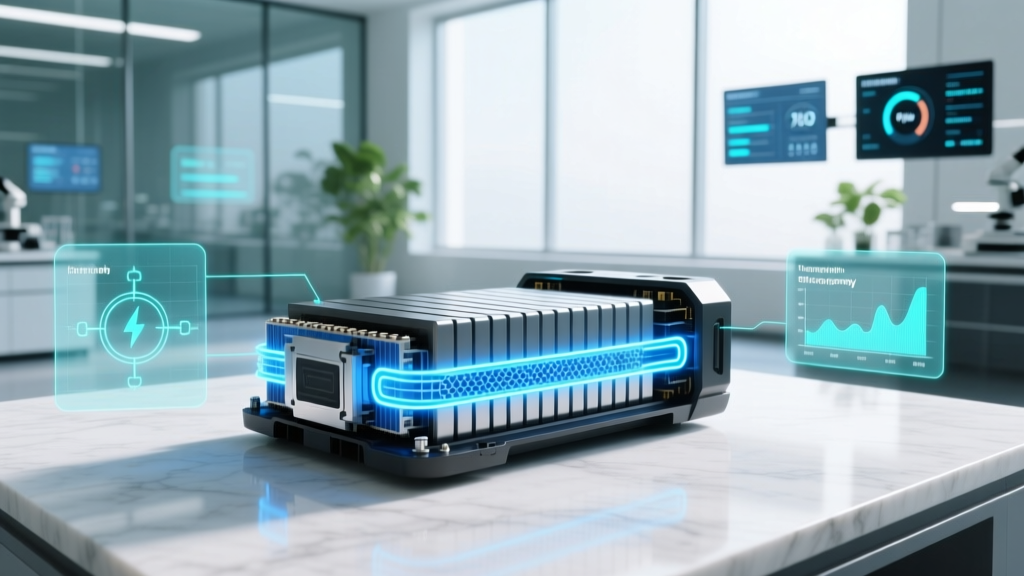
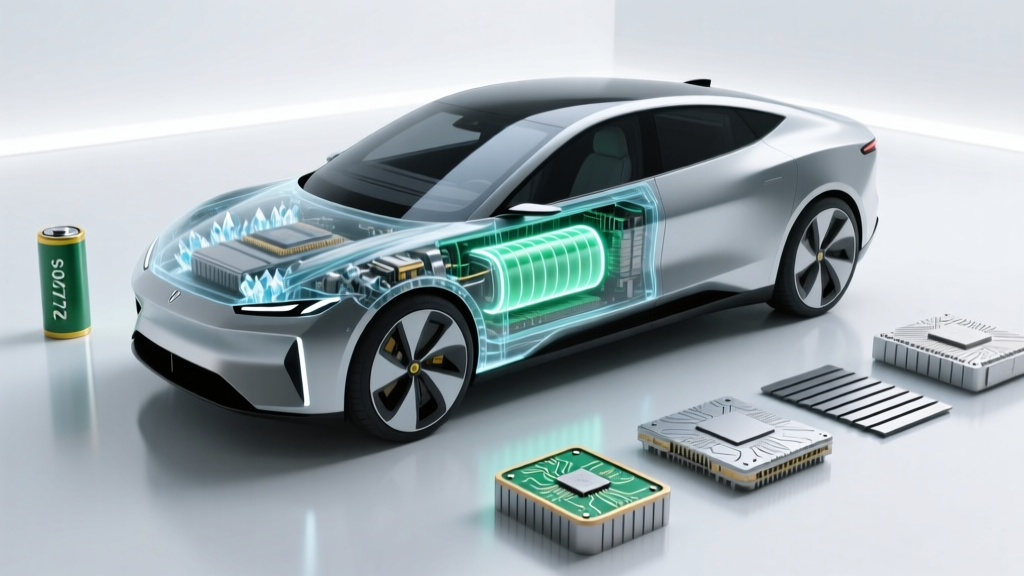
A solid-state battery replaces the liquid electrolyte in a conventional lithium-ion cell with a solid material — typically a ceramic, sulfide glass, or polymer. The potential advantages are significant: energy density of 400–500 Wh/kg at the cell level (versus roughly 250–300 Wh/kg for today's best NMC cells), charge times under 10 minutes from 10–80%, and inherently lower thermal runaway risk because there's no flammable liquid electrolyte.
But manufacturing challenges remain substantial. Solid electrolytes are brittle, require precise pressure and temperature control during production, and suffer from interface degradation between the electrolyte and electrodes over repeated charge cycles. Scaling from lab pouch cells to automotive modules with thousands of cells — at a cost competitive with mature lithium-ion production — is the core bottleneck.
- Toyota: Announced 2027–2028 production start for a limited-run EV with a sulfide-based solid-state battery, targeting 750 km (~466 miles) of range. Low-volume, Japan-market initially. Not available for purchase.
- Samsung SDI: Targeting 2027 mass production of all-solid-state cells, with Hyundai Motor Group as a likely early customer. Prototype cells demonstrated, no vehicle announced.
- Nissan: Pilot production line operational in Yokohama as of 2025; targeting a production vehicle by fiscal year 2028. No model confirmed.
- QuantumScape: Continues to ship prototype cells to automotive partners (Volkswagen group among them). No commercial vehicle on sale.
Bottom line: Expect the first limited-production solid-state EVs to reach select markets in 2028–2029 at the earliest. Meaningful U.S. availability at mainstream pricing is unlikely before 2030–2032.
For any buyer making a decision now, the battery in your next EV will be a liquid-electrolyte lithium-ion pack. Understanding what's inside it matters far more than waiting for solid-state.
LFP vs NMC: The Chemistry Decision You Actually Face
Every current EV battery uses one of two dominant cathode chemistries: NMC (nickel manganese cobalt, sometimes NCA — nickel cobalt aluminum) or LFP (lithium iron phosphate). The choice affects your range, charging speed, long-term durability, cold-weather performance, and price.
| Attribute | LFP (Lithium Iron Phosphate) | NMC / NCA (Nickel-Based) |
|---|---|---|
| Cell-level energy density | ~160–200 Wh/kg | ~250–300 Wh/kg |
| Typical cycle life (to 80% SoH) | 3,000–5,000+ cycles | 1,500–2,500 cycles |
| Cold-weather range retention (20°F) | ~60–70% of rated range | ~70–80% of rated range |
| Recommended daily SoC limit | 100% (benefits from periodic full charges) | 80–90% for daily use |
| DC fast-charge speed (typical peak) | Moderate (150–200 kW peak, taper earlier) | High (200–350 kW peak, sustained longer) |
| Cost per kWh (cell level) | Lower (~$75–95/kWh) | Higher (~$100–135/kWh) |
| Cobalt content | None | Present (supply-chain and ethical concerns) |
| Common in (2026 models) | Tesla Model 3/Y RWD, Ford Mustang Mach-E Select (some), BYD models, Rivian Standard | Hyundai Ioniq 5/6, Kia EV6/EV9, Tesla Long Range, BMW iX, Lucid Air, most premium EVs |
Choose LFP if: You want maximum cycle life, plan to own the car 10+ years, mostly charge at home (where slower peak DC speed is irrelevant), and don't need the absolute longest single-charge range. LFP also lets you charge to 100% daily without the degradation penalty NMC faces at high SoC.
Choose NMC if: You need the longest possible range in a given battery volume, regularly DC fast-charge on road trips (NMC's higher peak and sustained charge rates cut stops by minutes), frequently drive in cold climates, or are buying a larger/heavier vehicle where energy density matters for packaging.
How Long Do EV Batteries Actually Last?
The fear that EV batteries will need a $20,000 replacement at 80,000 miles is not supported by data from the current generation of liquid-cooled packs. Most modern EV batteries are engineered to outlast the vehicle's economic life.
Here's what real-world degradation looks like based on fleet data, owner-reported measurements, and testing by organizations like Recurrent Auto:
- Year 1 / 15,000 miles: 2–5% capacity loss (initial formation loss; steepest part of the curve)
- Year 3 / 45,000 miles: 5–8% total loss
- Year 5 / 75,000 miles: 7–12% total loss
- Year 8 / 120,000 miles: 10–18% total loss (majority of packs retain >80% SoH)
- Year 10 / 150,000 miles: 12–22% total loss (LFP packs typically lower end; NMC higher end)
Sources: Recurrent Auto fleet data (2024–2025), Geotab fleet study, manufacturer warranty thresholds.
Key takeaway: degradation is not linear. The largest capacity drop occurs in the first year, then the curve flattens considerably. A well-maintained 2023 Tesla Model Y with an NMC pack at 60,000 miles typically shows 92–95% State of Health — meaning 285–295 miles of real range from an EPA-rated 310-mile pack. An LFP Model 3 RWD in the same condition often shows 94–97% SoH.
The vehicles most likely to need a battery replacement within a normal ownership cycle are high-mileage fleet vehicles (taxis, rideshare) that accumulate 40,000+ miles per year with frequent DC fast-charging. For a personal-use driver covering 12,000–15,000 miles annually, the battery will almost certainly outlast the car's body, suspension, and interior.
What the Battery Warranty Actually Covers
Federal law mandates a minimum 8-year/100,000-mile battery warranty for EVs sold in the U.S. (California Air Resources Board states extend this to 10 years/150,000 miles). But the details — specifically the capacity retention threshold — matter enormously.
| Manufacturer | Warranty Term | Capacity Retention Threshold | Notes |
|---|---|---|---|
| Tesla (Model 3/Y RWD — LFP) | 8 yr / 100,000 mi | 70% | Shorter term for RWD; Long Range/Performance is 8yr/120,000mi |
| Tesla (Model 3/Y LR & Perf.) | 8 yr / 120,000 mi | 70% | NMC packs |
| Hyundai / Kia | 10 yr / 100,000 mi | 70% | Among the longest terms |
| Ford | 8 yr / 100,000 mi | 70% | Mustang Mach-E, F-150 Lightning |
| Chevrolet | 8 yr / 100,000 mi | 60% (Bolt); 70% (Ultium) | Ultium-platform vehicles have the higher threshold |
| BMW | 8 yr / 100,000 mi | 70% | i4, iX, i7 |
| Rivian | 8 yr / 175,000 mi | 70% | Highest mileage threshold in the market |
The critical number is the capacity retention threshold — typically 70% of original capacity. If your 84 kWh (usable) battery degrades to below 58.8 kWh within the warranty period, the manufacturer must repair or replace it at no cost. In practice, very few personal-use EVs breach this threshold within 8 years. The warranty functions primarily as a safety net for manufacturing defects (bad cells, BMS failures, coolant leaks into the pack) rather than gradual degradation.
EV Battery Replacement Cost: When and How Much
Out-of-warranty battery replacement is the single biggest cost anxiety for prospective EV buyers. Here's what it actually costs in 2026 — and when it's typically needed.
| Vehicle / Pack Size | Battery Cost (Parts) | Labor | Total Estimate | Typical Need Timeline |
|---|---|---|---|---|
| Chevrolet Bolt EV/EUV (~65 kWh, NMC) | $9,000–$12,000 | $1,500–$2,500 | $10,500–$14,500 | Rarely needed; 200,000+ mi |
| Tesla Model 3 RWD (~60 kWh, LFP) | $7,500–$10,000 | $1,500–$2,000 | $9,000–$12,000 | Rarely needed; LFP cycle life exceeds 3,000 cycles |
| Tesla Model Y LR (~75 kWh, NMC) | $10,000–$14,000 | $1,500–$2,500 | $11,500–$16,500 | 150,000–250,000 mi if at all |
| Hyundai Ioniq 5 (~77 kWh, NMC) | $11,000–$15,000 | $2,000–$3,000 | $13,000–$18,000 | 150,000–250,000 mi |
| Ford F-150 Lightning Ext. Range (~131 kWh, NMC) | $18,000–$25,000 | $2,500–$4,000 | $20,500–$29,000 | 150,000–200,000+ mi |
| Lucid Air Grand Touring (~112 kWh, NMC) | $20,000–$28,000 | $2,000–$3,500 | $22,000–$31,500 | 150,000+ mi |
Two important context points. First, module-level repair is increasingly common. Most packs are composed of multiple modules (e.g., the Tesla Model Y pack has 4–5 modules; GM's Ultium packs have 24 modules). If a single module develops a bad cell group, many service centers can replace just that module for $2,000–$5,000 rather than swapping the entire pack. Second, battery prices continue to fall — cell-level costs have dropped roughly 10–15% per year over the past three years, so a replacement in 2034 will cost meaningfully less than today's estimates.
For comparison, a gasoline vehicle's powertrain — engine, transmission, timing chain, catalytic converter — can easily require $5,000–$12,000 in repairs between 100,000 and 180,000 miles. The EV battery replacement fear is real but statistically unlikely to materialize during typical ownership.
What Actually Kills an EV Battery (and What Doesn't)
Not all miles are equal for battery longevity. These are the factors that measurably accelerate degradation, ranked by impact:
- Limit DC fast-charging frequency. Occasional road-trip fast-charging is fine. Daily DC fast-charging (especially at 150+ kW) accelerates degradation by 1–3% over 5 years compared to Level 2 home charging. If you can install a Level 2 charger at home, do it.
- Avoid sustained high SoC on NMC packs. For NMC/NCA batteries, set your daily charge limit to 80%. Charging to 100% is fine before a road trip, but don't leave the car sitting at 100% for days. LFP packs are the exception — they benefit from regular 100% charges for cell balancing and BMS calibration.
- Avoid sustained low SoC. Letting any lithium-ion pack sit below 10% for extended periods (weeks) stresses the anode. If you're traveling and leaving the car, set it to 50% SoC.
- Precondition before fast-charging in cold weather. Most modern EVs do this automatically when you navigate to a charger, but if your car has a manual preconditioning toggle, use it. Charging a cold battery (below ~40°F) at high power causes lithium plating on the anode, which is permanent capacity loss.
- Extreme heat is worse than extreme cold for longevity. Sustained ambient temperatures above 95°F with frequent high-SoC operation accelerates electrolyte decomposition. If you live in Phoenix or Houston, garage parking and avoiding 100% SoC in summer meaningfully extends pack life.
- Don't obsess over regen settings. Aggressive regenerative braking does not measurably harm the battery. The BMS manages charge acceptance rates to stay within safe C-rates.
What doesn't significantly harm modern EV batteries: occasional 100% charges, Level 2 charging at any amperage (16A to 48A), regenerative braking at any setting, or driving in rain or through puddles (the pack is sealed to IP67 or higher). The thermal management systems in 2024–2026 EVs are vastly superior to early-generation packs like the 2011–2017 Nissan Leaf, which lacked active cooling and degraded rapidly in hot climates.
How to Check Your Battery's State of Health
State of Health (SoH) is the percentage of original capacity your battery can still hold. A new 84 kWh pack at 95% SoH can store ~79.8 kWh. Monitoring SoH is essential for understanding your real-world range, planning for warranty claims, and assessing resale value.
Method 1: In-vehicle diagnostics. Some manufacturers provide SoH readouts directly. Tesla displays battery health percentage in the Service menu (Software 2025.24+). Hyundai/Kia provides a battery health check through the dealer diagnostic tool, accessible on request. BMW includes a battery health report in iDrive.
Method 2: OBD-II apps. Third-party apps like Scan My Tesla, LeafSpy (for Nissan), and ABRP (A Better Route Planner) OBD can read the battery management system's SoH estimate via an OBD-II dongle (~$30–50 for the hardware). These readings pull directly from the BMS and are generally accurate within 1–2%.
Method 3: Manual calculation. Charge the battery to 100% (or a known SoC like 90%), note the displayed range, then divide by the EPA-rated range at 100%. This gives a rough SoH proxy, though it's affected by temperature, driving style, and the vehicle's range-estimation algorithm. It's a useful trend tracker over months, not a precise measurement.
Method 4: Dealer or third-party inspection. Before buying a used EV, request a battery health report from the selling dealer or an independent EV service center. Many will perform a controlled discharge test for $50–$150. This is the most reliable method and should be standard practice for any used EV purchase.
Silicon Anodes and Other Near-Term Battery Upgrades
While solid-state batteries remain years from mass production, incremental chemistry improvements are already shipping in 2026 vehicles:
Silicon-dominant anodes: Traditional lithium-ion cells use graphite anodes. Replacing some or all of the graphite with silicon can boost energy density by 20–40% at the cell level. Sila Nanotechnologies (a supplier backed by Mercedes-Benz) began shipping silicon-anode cells for the Mercedes G-Class EV. Group14 Technologies supplies silicon-carbon anode material to battery makers including SK On. Expect silicon-anode cells to appear in more premium EVs through 2027–2028, gradually trickling down to mainstream models.
Sodium-ion batteries: CATL began mass-producing sodium-ion cells in 2025, and they're appearing in some Chinese-market EVs. Sodium-ion is cheaper and more abundant than lithium but has lower energy density (~140–160 Wh/kg). It's a strong candidate for budget city EVs and stationary storage but unlikely to appear in U.S.-market vehicles before 2028–2029.
LMFP (lithium manganese iron phosphate): An evolution of LFP that adds manganese to boost energy density by ~15–20% while retaining LFP's cost and safety advantages. CATL and BYD are both producing LMFP cells. Watch for these in mid-range EVs beginning in 2027.
None of these technologies require waiting. They represent continuous improvement in a maturing industry, not a reason to delay an EV purchase.
Frequently Asked Questions
Are there any cars with solid state batteries available to buy in 2026?
No. As of 2026, no production vehicle sold in the United States uses a solid-state traction battery. All available EVs use lithium-ion cells with liquid or gel electrolytes. The earliest limited-production solid-state EVs are expected from Toyota and Samsung SDI-partnered automakers in 2027–2028, with meaningful U.S. availability unlikely before 2030.
How long do EV batteries last in years and miles?
Modern liquid-cooled EV batteries (2020 and newer) typically retain 80–90% of original capacity after 8 years or 120,000 miles. Many will exceed 200,000 miles before dropping below 70% capacity. LFP chemistry generally outlasts NMC in cycle count, though NMC retains range better in cold climates.
How much does it cost to replace an EV battery?
Full pack replacement ranges from roughly $9,000–$14,000 for a compact EV (60–65 kWh) to $20,000–$31,000 for a large-pack vehicle (110–131 kWh) including labor. However, most replacements are module-level repairs at $2,000–$5,000. Full pack replacement is rare during typical ownership and usually covered under the 8-year/100,000-mile federal warranty.
What does the EV battery warranty cover?
Federal law requires a minimum 8-year/100,000-mile warranty covering defects and capacity loss below a specified threshold (typically 70% of original capacity). This covers manufacturing defects, cell failures, BMS malfunctions, and coolant intrusion. It does not cover damage from accidents, improper modifications, or use outside manufacturer specifications.
Is LFP or NMC better for my EV?
Neither is universally better — it depends on your use case. LFP offers longer cycle life (3,000–5,000 cycles vs. 1,500–2,500), lower cost, cobalt-free sourcing, and the ability to charge to 100% daily. NMC offers higher energy density (more range in the same volume), faster DC charging speeds, and better cold-weather range retention. For a daily commuter who charges at home, LFP is often the better choice. For a road-tripper or cold-climate driver, NMC has practical advantages.
Does fast charging damage my EV battery?
Occasional DC fast charging does not meaningfully harm modern EV batteries. Daily DC fast-charging at high power (150+ kW) can accelerate degradation by 1–3% over 5 years compared to exclusive Level 2 charging. The bigger risk is fast-charging a cold battery without preconditioning, which can cause lithium plating — permanent capacity loss. Always ensure your vehicle's battery preconditioning is active before a fast-charge session in cold weather.
Sources: Recurrent Auto Battery Degradation Data, EPA Fuel Economy, manufacturer warranty documentation (Tesla, Hyundai, Ford, Rivian), IRS §30D Clean Vehicle Credit.