Why Everyone Is Talking About Solid-State Battery EVs
If you have browsed EV forums or headlines in the past year, you have seen the promise: a solid-state battery EV that charges in 10 minutes, runs 600 miles, and never degrades. Toyota, Nissan, Samsung SDI, and QuantumScape have all announced pilot production or limited fleet deployments slated for the late 2020s. But for a buyer choosing a car today, the relevant question is different — how do the lithium-ion chemistries actually on sale (LFP and NMC/NCA) hold up over a decade, what does replacement really cost, and when — if ever — should you wait for solid-state?
This guide walks through the data we have right now: measured degradation curves from high-mileage fleets, warranty fine print from every major OEM, out-of-warranty replacement invoices, and the chemistry trade-offs that determine whether your pack is optimized for range, longevity, or price. The goal is a decision framework, not hype.
LFP vs NMC vs NCA: The Chemistry Decision You Actually Make
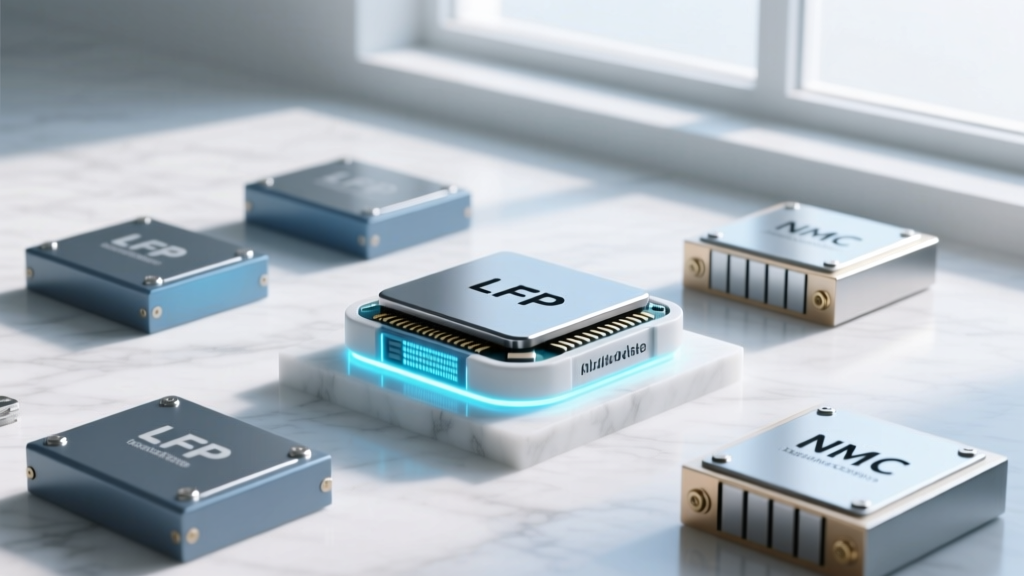
Almost every EV sold in the U.S. in 2026 uses one of three cathode chemistries in its high-voltage traction battery:
- LFP (lithium iron phosphate) — used in Tesla Model 3/Y RWD, base Ford Mustang Mach-E Select, and many Chinese-market imports.
- NMC (nickel manganese cobalt) — used in Hyundai Ioniq 5/6, BMW iX, VW ID.4, Ford F-150 Lightning extended-range, and most long-range trims.
- NCA (nickel cobalt aluminum) — primarily Tesla Long Range and Performance variants.
Each chemistry is a bundle of trade-offs. Energy density (kWh per kilogram) dictates how far you go per pound of battery. Cycle life determines how many full charge-discharge cycles the pack survives before hitting 80% capacity. Cold performance affects how much range you lose below freezing. Cost per kWh drives the sticker price.
| Attribute | LFP | NMC (811/622) | NCA |
|---|---|---|---|
| Energy density (cell-level) | ~160–180 Wh/kg | ~230–280 Wh/kg | ~250–290 Wh/kg |
| Typical cycle life to 80% SoH | 2,500–4,000 cycles | 1,000–2,000 cycles | 1,000–1,500 cycles |
| Cold-weather range loss (20°F) | ~30–40% | ~20–30% (with heat pump) | ~20–30% (with heat pump) |
| Cell cost ($/kWh, 2026 est.) | ~$70–85 | ~$100–125 | ~$105–130 |
| Recommended daily SoC | 100% OK | 80% for daily | 80% for daily |
| Thermal runaway risk | Lowest | Moderate | Moderate |
| Cobalt content | None | Low (5–10%) | Low (~5%) |
The short version: LFP wins on cycle life, safety, and cost but gives up ~15–20% range per pound and suffers more in deep cold. NMC/NCA wins on range and cold performance but costs more and degrades faster if routinely charged to 100%. For a commuter who charges nightly at home, LFP is increasingly the rational choice. For a road-tripper in Minnesota, NMC with a heat pump still earns its premium.
How Long Do EV Batteries Actually Last?
The fear that an EV battery will "die" at 100,000 miles is not supported by fleet data. Geotab's analysis of 10,000+ EVs across multiple model years shows an average capacity loss of about 2.3% per year in the first few years, tapering as the pack ages. A typical 2022–2024 NMC pack at 100,000 miles sits around 88–92% State of Health (SoH). LFP packs in similar duty cycles often read 94–97% SoH at the same mileage.
Observed degradation trajectories (fleet averages):
- Year 1: 1–3% loss (initial formation loss, steeper in NMC/NCA)
- Years 2–4: ~1–1.5% per year, roughly linear
- Years 5–8: ~0.5–1% per year, curve flattens
- Year 10 projection: 85–92% SoH for NMC; 90–96% SoH for LFP
These figures assume mixed Level 2 home charging with occasional DC fast charging. Heavy DCFC use (3+ times per week) and chronic 100% SoC storage push losses toward the higher end.
Practically, a 300-mile EPA-rated NMC EV with 88% SoH at year eight still delivers ~264 miles — enough for almost every daily use case. The car is more likely to be retired for collision, corrosion, or electronics failure than for a worn-out traction battery.
What the Battery Warranty Actually Covers
Federal law effectively sets the floor: the EPA and CARB-influenced standards push OEMs to warrant the traction battery for at least 8 years / 100,000 miles, and many go longer. The trigger is capacity retention — usually 70% of original, though Hyundai/Kia and Tesla have used slightly different thresholds over the years.
| OEM | Term | Retention Threshold | Notes |
|---|---|---|---|
| Tesla (Model 3/Y LFP) | 8 yr / 120,000 mi | 70% | Covers modules, BMS, cooling |
| Tesla (LR/Perf NCA) | 8 yr / 120,000 mi | 70% | Same terms |
| Hyundai / Kia | 10 yr / 100,000 mi | 70% | Longest calendar term |
| Ford (Lightning, Mach-E) | 8 yr / 100,000 mi | 70% | Includes battery cooling system |
| GM (Ultium platform) | 8 yr / 100,000 mi | 70% | Transferable to second owner |
| VW (ID.4) | 8 yr / 100,000 mi | 70% | Modules replaceable individually |
| BMW (iX, i4) | 8 yr / 100,000 mi | 70% | Includes power electronics |
Read the fine print: warranties cover capacity below the threshold, not cosmetic range loss. If your 300-mile pack reads 215 miles (71.7%) in year seven, you are not covered. If it reads 205 miles (68.3%), you likely are — subject to a dealer diagnostic confirming SoH via the BMS, not a single drive-cycle guess. Abuse exclusions (track use, salvage title, flood damage, improper charging equipment) are standard and enforceable.
EV Battery Replacement Cost: The Real Invoices
Out-of-warranty traction battery replacement is genuinely expensive, but it is also genuinely rare. Most packs outlive the economic life of the vehicle. When replacement does happen — typically after collision damage, coolant intrusion, or a manufacturing defect that slipped past warranty — here is what owners and insurers are paying in 2026:
| Model / Pack Size | Chemistry | Typical Cost Range |
|---|---|---|
| Tesla Model 3 RWD (~60 kWh) | LFP | $9,000 – $13,000 |
| Tesla Model Y LR (~82 kWh) | NCA | $13,000 – $18,000 |
| Hyundai Ioniq 5 (77.4 kWh) | NMC | $12,000 – $16,000 |
| Ford F-150 Lightning ER (~131 kWh) | NMC | $20,000 – $28,000 |
| Chevy Silverado EV (~200 kWh) | NMC | $28,000 – $38,000 |
| BMW iX xDrive50 (~111 kWh) | NMC | $18,000 – $25,000 |
Two important caveats. First, module-level repair is increasingly available: VW, BMW, and GM's Ultium platform allow individual module replacement for $2,000–$6,000 when only a subset of cells has failed. Second, the IRS used-EV credit and a growing remanufactured-pack market are pushing effective costs down. If you buy a 6-year-old EV, the battery is statistically likely to outlast your ownership.
Five Factors That Actually Determine Battery Life
Chemistry sets the ceiling, but owner behavior determines where you land on the curve. These are the variables with measurable impact:
- State of charge habits: For NMC/NCA, hold daily SoC between 20–80%. For LFP, periodic 100% charges are fine and actually help the BMS recalibrate cell balance. Chronic storage at 100% SoC in hot climates is the single worst thing you can do to an NMC pack.
- DC fast-charging frequency: Occasional road-trip DCFC is harmless. Daily 150–350 kW sessions, especially without preconditioning, accelerate degradation by roughly 0.3–0.5% per year versus Level 2-only charging, per Geotab fleet data.
- Thermal management: Cars with active liquid cooling (Tesla, Hyundai E-GMP, GM Ultium, Ford) degrade far slower than early passive-cooled packs (Nissan Leaf). In Phoenix or Dubai, this matters enormously.
- Extreme cold charging: Plugging into DCFC with a sub-freezing battery without preconditioning can cause lithium plating on the anode — permanent capacity loss. Always precondition when navigating to a charger.
- Calendar aging: Even a parked EV loses capacity. A pack stored at 50% SoC in a cool garage ages slower than one stored at 90% in a hot driveway. If you travel for a month, leave it at ~50%.
How to Check and Monitor State of Health (SoH)
State of Health is the percentage of original usable capacity your pack still holds. You have several ways to check it, in increasing order of rigor:
- In-car energy screen: Most modern EVs (Tesla, Hyundai, BMW, Rivian) display a "battery health" or "projected range at 100%" figure. Compare to the original EPA number — divide current 100% range by original EPA range for a rough SoH estimate.
- OBD-II + app: Tools like OBDeleven, Leaf Spy (Nissan), or manufacturer-specific apps read the BMS-reported SoH directly. This is the most accessible accurate method.
- Dealer diagnostic: A service center can pull a full BMS report with cell-level voltage deltas, internal resistance, and logged SoH over time. Request this before buying a used EV out of warranty.
- Full charge-discharge test: The gold standard — charge to 100%, drive to near 0%, measure kWh consumed vs. original usable capacity. Tedious but definitive.
For a used-EV purchase, insist on seeing a recent BMS SoH report. A 4-year-old Model 3 showing 93% SoH is unremarkable; one showing 84% is a negotiation point or walk-away.
Solid-State Battery EVs: What Is Real, What Is Hype, and When
A true solid-state battery replaces the liquid electrolyte in today's lithium-ion cells with a solid ceramic, sulfide, or polymer conductor. The theoretical benefits are substantial: 40–60% higher energy density (enabling 500+ mile packs at today's weight), 10-minute 10–80% DC fast charging without lithium plating, and dramatically lower fire risk. The engineering challenges — interfacial resistance, dendrite formation at the solid electrolyte, manufacturing yield at automotive scale — are also substantial.
Here is where the major programs stand as of 2026:
- Toyota: Has demonstrated pilot cells and announced a 2027–2028 limited production target, likely in a low-volume Lexus. Volume deployment across the lineup is not expected before 2030.
- Nissan: Pilot line running in Yokohama; production intent for 2028–2029, initially in a flagship model.
- Samsung SDI: Showing prototype cells to OEMs with a 2027 SOP (start of production) target, but no announced vehicle program on sale.
- QuantumScape: Continuing to ship prototype cells to Volkswagen Group for validation; volume production timelines remain uncommitted.
- Chinese OEMs (BYD, CATL, NIO): Shipping "semi-solid-state" packs (hybrid solid/liquid electrolyte) in limited Chinese-market models like the NIO ET7 150 kWh pack. These are real products but do not deliver the full solid-state performance promise and are not U.S.-available.
The honest buyer's framework: If you need a car in the next 3–5 years, solid-state is not a reason to wait. The first vehicles using it will be low-volume, high-priced flagships, and the cost premium over a mature LFP pack will be significant. The chemistries on sale today — particularly LFP with proper care — will deliver 15+ years and 200,000+ miles of usable service. Buy for the car you want now, not the cell chemistry of 2032.
Silicon Anodes, Sodium-Ion, and Other Near-Term Upgrades
Before solid-state arrives at scale, two incremental technologies are already shipping:
- Silicon-dominant anodes: Companies like Sila Nanotechnologies and Group14 are supplying silicon-blend anodes that boost energy density 10–20% within existing NMC cells. Expect these in 2026–2028 model-year premium EVs first.
- Sodium-ion: CATL and BYD are producing sodium-ion cells for low-cost, short-range city EVs in China. Energy density is ~30% below LFP, but raw-material cost is dramatically lower. U.S. availability depends on tariff and sourcing policy, not technology.
Neither technology requires you to wait. They will appear as spec-sheet improvements in future model years, not as a reason to delay a purchase today.
Frequently Asked Questions
How long do EV batteries last in real-world use?
Fleet data from Geotab and OEM warranty claims show most modern NMC packs retain 85–92% capacity at 100,000 miles and 8 years. LFP packs typically retain 90–97% over the same period. Full pack failure before 150,000 miles is statistically rare outside of manufacturing defects covered under warranty.
How much does it cost to replace an EV battery?
Out-of-warranty full-pack replacement ranges from roughly $9,000 for a small LFP pack (Tesla Model 3 RWD) to $28,000–$38,000 for a large NMC pack (Ford F-150 Lightning ER, Chevy Silverado EV). Module-level repair, where available, costs $2,000–$6,000. Most packs outlive the vehicle's economic life, so replacement is uncommon.
What does the EV battery warranty actually cover?
Typical terms are 8 years / 100,000 miles (Hyundai/Kia extend to 10 years / 100,000 miles) with a 70% capacity-retention threshold. Coverage includes the cells, battery management system, and cooling hardware. Exclusions include salvage titles, flood damage, track use, and improper charging equipment. Capacity loss above the threshold (e.g., 72% SoH) is considered normal wear.
How do I check my EV battery's health?
Use the in-car energy screen to compare current 100% range to the original EPA figure, or plug in an OBD-II reader with a compatible app to pull a BMS-reported State of Health percentage. For a used-EV purchase, request a dealer diagnostic report with cell-level voltage deltas and logged SoH history.
LFP vs NMC — which chemistry should I choose?
Choose LFP if you charge mostly at home, want maximum cycle life, live in a mild climate, and can accept ~15% less range per pound. Choose NMC/NCA if you need maximum range, regularly drive in sub-freezing temperatures, or take frequent road trips where energy density matters. Both chemistries will outlast a typical ownership period with proper care.
Should I wait for a solid-state battery EV?
Not unless you plan to buy a low-volume flagship in the 2029–2032 timeframe. Solid-state cells are still in pilot production, with Toyota, Nissan, and Samsung SDI targeting limited deployments around 2027–2029. Volume, cost-competitive solid-state EVs are unlikely before the early 2030s. Today's LFP and NMC packs, properly maintained, will serve reliably for 15+ years.
Does frequent DC fast charging ruin the battery?
Occasional DCFC on road trips has negligible impact. Daily 150–350 kW sessions, especially without preconditioning in cold weather, can add 0.3–0.5% extra annual degradation versus Level 2-only charging. If DCFC is your primary charging method, precondition the pack before every session and avoid charging above 80% SoC unless necessary.
Sources: Geotab EV Battery Health Study, fueleconomy.gov for EPA range and MPGe figures, IRS Used Clean Vehicle Credit for incentive context. OEM warranty terms verified against 2026 model-year owner's manuals.