The promise of solid-state batteries has hovered over the EV industry for a decade. Headlines cycle through breakthrough announcements, pilot programs, and revised timelines with clockwork regularity. For EV buyers and owners in 2026, the practical question isn't whether solid-state technology will eventually arrive in production vehicles — it's what the actual data says about its readiness, and more importantly, how today's lithium-ion batteries (both LFP and NMC chemistries) are holding up in real-world use.
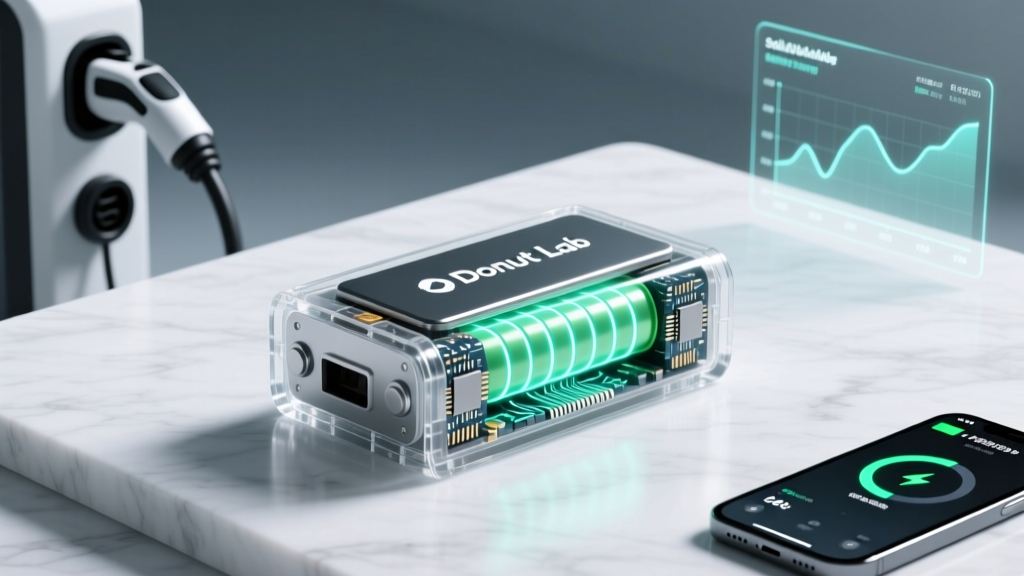
Independent testing groups, including those whose solid-state battery data has been highlighted by outlets like Donut Lab, have begun publishing early-cycle results on prototype solid-state cells. Those results are genuinely interesting — but they also underscore how far the technology remains from your driveway. This guide breaks down what that emerging data means alongside everything you need to know about the EV batteries you can actually buy today: chemistry trade-offs, degradation curves, warranty coverage, replacement costs, and the habits that maximize battery longevity.
Today's EV Battery Chemistries: LFP vs NMC vs NCA
Every EV sold in the United States in 2026 uses one of three lithium-ion chemistries in its high-voltage traction battery: lithium iron phosphate (LFP), nickel manganese cobalt (NMC), or nickel cobalt aluminum (NCA). Understanding the differences is foundational to evaluating any future technology like solid-state cells.
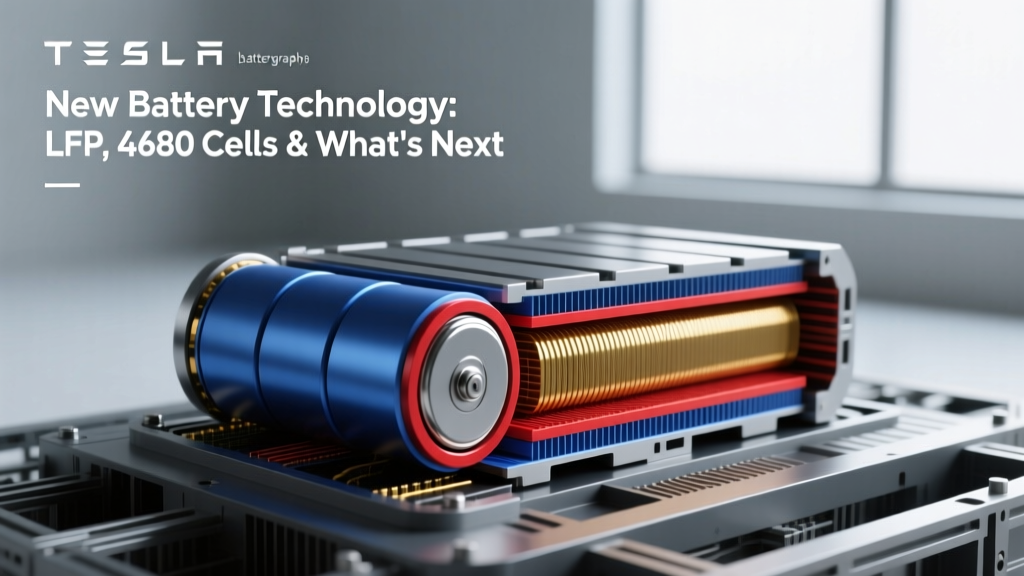
LFP (Lithium Iron Phosphate) uses iron and phosphate in its cathode. It sacrifices some energy density for superior cycle life, thermal stability, and lower raw-material cost. Tesla's standard-range Model 3 and Model Y, the base Ford Mustang Mach-E Select, and most BYD models use LFP. These packs tolerate repeated charging to 100% state of charge (SoC) far better than NMC, which is why Tesla explicitly recommends periodic 100% charges for LFP-equipped vehicles to keep the battery management system (BMS) calibrated.
NMC (Nickel Manganese Cobalt) and NCA (Nickel Cobalt Aluminum) prioritize energy density — more kWh in a lighter, smaller pack. This makes them the default for long-range and performance variants: the Hyundai Ioniq 5 Long Range (84 kWh usable, NMC), the Chevrolet Silverado EV (200+ kWh, NMC), and most Porsche and BMW EVs. The trade-off is a more pronounced degradation curve and sensitivity to sustained high-SoC storage and extreme temperatures.
| Attribute | LFP | NMC / NCA |
|---|---|---|
| Energy density (cell-level) | ~160–180 Wh/kg | ~220–300 Wh/kg |
| Typical cycle life (to 80% SoH) | 3,000–5,000+ cycles | 1,000–2,500 cycles |
| Cold-weather performance | More range loss below 32°F; slower charge acceptance | Better low-temp charge acceptance; still loses 20–30% range at 20°F |
| Thermal stability | Excellent — higher onset temp for thermal runaway | Good but requires more active thermal management |
| 100% SoC storage tolerance | High — manufacturers recommend periodic 100% charges | Low — sustained 100% storage accelerates degradation |
| Relative cost (per kWh, 2026) | ~$90–$110 | ~$120–$150 |
| Notable 2026 vehicles | Tesla Model 3 RWD, Model Y RWD, Ford Mach-E Select, Rivian Standard | Hyundai Ioniq 5 LR, Chevy Equinox EV, BMW iX, Porsche Taycan |
Neither chemistry is universally "better." LFP wins on longevity, cost, and daily-driver resilience. NMC wins on range-per-kilogram, enabling longer-range vehicles or lighter packs for the same range. Your optimal choice depends on your driving pattern, climate, and how long you plan to keep the vehicle.
How Long Do EV Batteries Actually Last? Real Degradation Data
The most common fear among prospective EV buyers is that the traction battery will fail prematurely, leaving them with a five-figure replacement bill. The data tells a more reassuring story — but with important nuance.
According to aggregated fleet data published by Geotab, which tracks over 10,000 EVs in real-world operation, the average EV battery loses approximately 1.8% of its original capacity per year under typical use conditions. That translates to roughly 10–15% total degradation over eight years — well within the warranty threshold most manufacturers guarantee.
However, averages obscure variance. Key data points from multiple sources:
- Tesla Model 3/Y (NMC, 2019–2022): ~4–5% loss in the first 25,000 miles, then a slower linear decline. Tesla's own 2024 Impact Report cited an average of ~12% degradation at 200,000 miles across the fleet.
- Tesla Model 3/Y (LFP, 2021–2025): Noticeably flatter curve. Multiple owner datasets show 3–5% total loss at 100,000 miles, with many packs retaining 93–95% State of Health (SoH) at that point.
- Chevrolet Bolt EV/EUV (NMC, 2017–2023): Early 2017–2018 models saw higher-than-average degradation (~10% at 60,000 miles in some cases), partly attributable to the battery recall and replacement program. Post-recall packs with updated chemistry and software show markedly improved retention.
- Hyundai/Kia (NMC, 2019–2025): Ioniq 5 and EV6 packs show roughly 5–8% degradation at 80,000 miles based on owner-reported SoH data from diagnostic apps.
- Nissan Leaf (LMO/NMC, passively cooled): Historically the worst-case scenario for degradation. The 24 kWh and 40 kWh packs, lacking active liquid cooling, can lose 15–25% capacity in hot climates over 5–7 years. This is the clearest evidence that thermal management matters enormously.
The takeaway: modern liquid-cooled EV batteries from major manufacturers are lasting well, and most will outlive the vehicle's first ownership cycle. The Nissan Leaf's passive cooling is the cautionary outlier that proves the rule — active thermal management is non-negotiable for longevity.
What the Solid-State Battery Data from Donut Lab and Others Actually Shows
Solid-state batteries replace the liquid electrolyte in conventional lithium-ion cells with a solid material — ceramic, sulfide-based, or polymer. The theoretical advantages are significant: higher energy density (potentially 400–500 Wh/kg at the cell level, roughly double today's NMC), faster charging without lithium plating risk, and dramatically improved thermal stability.
Independent testing labs and research groups — whose work has been referenced in EV community discussions, including analyses colloquially associated with Donut Lab data reviews — have published early-cycle results on prototype solid-state cells from suppliers like QuantumScape, Samsung SDI, and Toyota's in-house program. Key findings circulating in 2025–2026:
- Cycle life: Some sulfide-based solid-state prototypes have demonstrated 800–1,000 charge cycles at laboratory scale before reaching 80% SoH. This is promising but still below mature NMC cells (1,500–2,500 cycles) and far below LFP (3,000+). Scaling from coin cells to production-format pouch or prismatic cells introduces new failure modes.
- Energy density: Prototype cells have achieved 350–400 Wh/kg in controlled settings. For context, today's best NMC cells sit around 280–300 Wh/kg. A production pack at 400 Wh/kg could push a midsize sedan past 500 miles of EPA range without increasing pack weight.
- Charge speed: Solid-state cells theoretically accept charge faster because the solid electrolyte resists lithium dendrite formation. Toyota and QuantumScape have both demonstrated 10–80% charges in under 10 minutes at the cell level. Sustaining this at pack level, with thermal management and charge-curve taper, is an unsolved engineering challenge.
- Cost: This is the critical bottleneck. Solid-state electrolyte materials and the dry-room manufacturing requirements currently push projected cell costs above $200/kWh — roughly double today's NMC pricing. Until costs converge, solid-state packs will be confined to premium or performance applications.
Realistic timeline for US-market vehicles: Toyota has announced a 2027–2028 target for limited production in a flagship model. Nissan and Honda have cited 2028–2030 windows. Samsung SDI targets 2027 for initial automotive customer sampling. Volume production at prices competitive with today's NMC is unlikely before 2030–2032 based on current trajectories. These dates have slipped multiple times already — treat all pre-production timelines as preliminary.
For anyone buying an EV in 2026, solid-state technology is not a reason to wait. Today's lithium-ion chemistries, particularly LFP, already deliver battery lifespans that exceed typical vehicle ownership periods.
EV Battery Warranty Coverage: What's Protected and for How Long
Federal law mandates that EV batteries sold in the United States carry a minimum warranty of 8 years or 100,000 miles (10 years/150,000 miles in California Air Resources Board states). Most major manufacturers meet or slightly exceed this floor. Here's how the coverage breaks down:
| Manufacturer | Warranty Term | Capacity Threshold | Notes |
|---|---|---|---|
| Tesla (Model 3/Y LFP) | 8 years / 120,000 miles | 70% retention | Longer mileage than NMC variants |
| Tesla (Model 3/Y NMC LR/Perf) | 8 years / 120,000 miles | 70% retention | — |
| Tesla (Model S/X) | 8 years / 150,000 miles | 70% retention | — |
| Hyundai / Kia | 10 years / 100,000 miles | 70% retention | Among the longest terms |
| GM (Chevy, Cadillac, GMC EVs) | 8 years / 100,000 miles | 70% retention (60% on Bolt) | Ultium platform standard |
| Ford | 8 years / 100,000 miles | 70% retention | — |
| Rivian | 8 years / 175,000 miles | 70% retention | Highest mileage cap in class |
| BMW | 8 years / 100,000 miles | 70% retention | — |
| Volkswagen (ID.4) | 8 years / 100,000 miles | 70% retention | — |
A critical detail often missed: the warranty covers the battery dropping below the stated threshold, not any specific amount of degradation. If your pack retains 72% of its original capacity at year eight, you're within spec and the manufacturer owes you nothing. In practice, most liquid-cooled packs from major automakers retain 80–88% at the 8-year mark under normal use, so warranty claims remain relatively rare.
The warranty covers defects and excessive degradation. It does not cover damage from accidents, flooding, improper modifications, or use of non-approved charging equipment. Read your specific warranty booklet — the exclusions matter.
EV Battery Replacement Costs: The Numbers and When It's Needed
This is where fear tends to outpace reality. Yes, EV battery replacements are expensive. But the context most headlines omit is that the vast majority of EV batteries never need replacement during the vehicle's useful life.
That said, for out-of-warranty vehicles or catastrophic damage scenarios, here are approximate replacement costs as of 2026:
| Vehicle | Battery Size (usable kWh) | Chemistry | Approx. Replacement Cost |
|---|---|---|---|
| Tesla Model 3 RWD | 57.5 kWh | LFP | $8,000–$12,000 |
| Tesla Model Y Long Range | 75 kWh | NMC | $12,000–$16,000 |
| Chevrolet Equinox EV | 85 kWh | NMC (Ultium) | $14,000–$18,000 |
| Hyundai Ioniq 5 Long Range | 84 kWh | NMC | $13,000–$17,000 |
| Ford F-150 Lightning (Extended) | 131 kWh | NMC | $20,000–$30,000 |
| GMC Hummer EV | ~200 kWh | NMC (Ultium) | $30,000–$40,000 |
| Rivian R1T (Large Pack) | 128 kWh | NMC | $18,000–$25,000 |
| BMW iX xDrive50 | 105.2 kWh | NMC | $20,000–$28,000 |
These figures include the battery module assembly and labor but can vary significantly by region, dealership vs. independent shop, and whether a new, refurbished, or salvaged pack is used. Third-party battery refurbishment and module-level repair is a growing segment — replacing individual degraded modules within a pack can cost $2,000–$5,000 instead of the full pack price.
The critical context: according to data from Consumer Reports and warranty claim statistics, fewer than 2–3% of EV batteries require replacement within the first 10 years of service. Most packs are outlasting the vehicles around them.
Factors That Accelerate (or Preserve) Battery Life
Battery degradation is not purely a function of time or mileage. How you use and store your EV has a measurable impact on its State of Health over years. The physics is well understood:
Factors that accelerate degradation:
- Sustained high SoC storage: Storing an NMC battery at 100% for days or weeks, especially in heat, accelerates electrolyte decomposition and cathode structural fatigue. For NMC, the sweet spot for daily use is 20–80% SoC.
- Frequent DC fast charging at peak rates: Repeatedly charging at 150–350 kW generates significant internal heat. While modern BMS systems manage this well, daily DCFC use does measurably increase degradation versus predominantly Level 2 home charging. A 2023 study by the Idaho National Laboratory found that vehicles charged primarily via DCFC showed roughly 2–3% additional degradation at 50,000 miles compared to L2-only charging — meaningful but not catastrophic.
- Extreme heat exposure: Ambient temperatures above 95°F, combined with high SoC, is the worst-case scenario for lithium-ion degradation. Garage parking matters in hot climates.
- Deep discharge cycles: Routinely running the battery below 10% SoC stresses the cells. The bottom buffer (typically 2–5% of gross capacity) protects against true zero, but repeated low-SoC operation still accelerates wear.
- Track use / sustained high-discharge: Repeated high-power discharge (launch control, track days) generates internal temperatures that exceed normal operating parameters.
Habits that maximize longevity:
- For NMC vehicles: set daily charge limit to 80%. Charge to 100% only for road trips.
- For LFP vehicles: follow manufacturer guidance (most recommend periodic 100% charges for BMS calibration).
- Prioritize Level 2 home charging (7–11.5 kW) for daily use. Reserve DCFC for road trips.
- Use preconditioning before fast charging — most EVs do this automatically when a charger is set as your navigation destination.
- In extreme heat, park in shade or a garage when possible, and avoid storing the vehicle at high SoC.
- In extreme cold, plug in when parked to allow the thermal management system to maintain battery temperature using grid power rather than battery energy.
- Keep tire pressure at spec and minimize unnecessary weight — these reduce energy consumption and indirectly reduce charge-cycle frequency.
How to Monitor Your EV's Battery Health (State of Health)
State of Health (SoH) is the percentage of your battery's original usable capacity that remains available. A pack that originally held 84 kWh usable and now holds 78 kWh has an SoH of approximately 92.9%.
Most EVs do not surface a direct SoH percentage in the dashboard infotainment system. Here's how owners can check it:
- OBD-II diagnostic apps: Devices like the OBDLink MX+ paired with apps such as Car Scanner, EVNotify, or LeafSpy (for Nissan Leaf) can read the BMS-reported SoH directly. This is the most accessible method for most owners.
- Manufacturer service departments: Any authorized dealer can pull a battery health report during a service visit. Some manufacturers (Hyundai, BMW) include periodic battery health checks in scheduled maintenance.
- Third-party services: Companies like Recurrent Auto offer battery health reports that compare your pack's degradation against a fleet of identical vehicles. Some insurers and used-EV marketplaces now integrate these reports.
- Manual calculation: Track your actual energy consumption and range over a known-distance route at a consistent SoC window. If your 80% charge consistently delivers 220 miles when it used to deliver 245, you can approximate your degradation percentage. This is imprecise due to temperature and driving-style variables, but it provides a directional read.
For prospective used-EV buyers, obtaining a battery health report before purchase is strongly recommended. A pack showing 90%+ SoH at 50,000 miles suggests gentle use and many years of remaining life. Anything below 85% at that mileage warrants scrutiny and should factor into the purchase price.
Beyond Solid-State: Silicon Anodes and Other Near-Term Advances
While solid-state batteries dominate headlines, incremental advances in conventional lithium-ion chemistry are delivering meaningful gains right now:
Silicon-dominant anodes: Companies like Sila Nanotechnologies and Group14 Technologies are shipping silicon-blend anode materials that increase cell energy density by 15–25% without the manufacturing challenges of solid-state electrolytes. These are entering production in 2025–2026 in select applications. The Mercedes-Benz G-Class EV (announced) is expected to use a silicon-anode pack. This technology is closer to scale than solid-state and offers a substantial fraction of the energy-density benefit.
LFP improvements: CATL's second-generation LFP cells (branded "Shenxing") support 4C charging rates — theoretically enabling 10–80% charges in roughly 15 minutes on compatible platforms. These cells are entering production vehicles in China in 2025–2026 and are expected in US-market vehicles by 2027.
Sodium-ion batteries: CATL and BYD are producing sodium-ion cells for lower-cost, lower-range applications. Energy density is roughly 140–160 Wh/kg — below LFP — but the raw materials are abundant and inexpensive. These are unlikely to appear in US-market passenger vehicles before 2028 but could power entry-level EVs and stationary storage.
None of these technologies invalidate today's EVs. They represent continued improvement in an already mature product category — much like the incremental efficiency gains in internal combustion engines over decades.
Frequently Asked Questions
How long do EV batteries last in years and miles?
Based on aggregated fleet data, modern liquid-cooled EV batteries typically retain 80–90% of their original capacity after 8–10 years or 150,000–200,000 miles. LFP chemistries tend toward the higher end of that range. Most packs outlast the vehicle's first ownership cycle and are not a routine replacement item.
How much does it cost to replace an EV battery?
Full pack replacement costs range from approximately $8,000 for a compact LFP pack (Tesla Model 3 RWD) to $30,000–$40,000 for the largest packs (GMC Hummer EV, Ford F-150 Lightning Extended Range). However, fewer than 3% of EV batteries require replacement within 10 years. Module-level repairs can cost $2,000–$5,000 for localized cell failures.
What does the EV battery warranty actually cover?
Federal law requires a minimum of 8 years/100,000 miles of coverage (10/150,000 in CARB states). The warranty guarantees the battery will retain at least 70% of its original capacity (some manufacturers specify 60% for older models). It covers defects and excessive degradation but not accident damage, flooding, or unauthorized modifications.
How do I check my EV battery's health?
Use an OBD-II adapter with apps like Car Scanner or EVNotify to read the BMS-reported State of Health percentage. Dealers can also generate battery health reports during service visits. Third-party services like Recurrent Auto offer comparative fleet-data reports. For used-EV purchases, always obtain a health report before committing.
LFP vs NMC — which battery chemistry is better for me?
Choose LFP if you prioritize longevity, plan to keep the vehicle 8+ years, charge primarily at home, and don't need maximum range. Choose NMC if you need the longest possible range per charge, live in a cold climate where NMC's better low-temperature charge acceptance matters, or drive a performance-oriented model. Neither is universally superior — they optimize for different priorities.
Will solid-state batteries make today's EVs obsolete?
Not in any near-term timeframe you should factor into a purchasing decision. Based on current solid-state battery data from testing labs and manufacturer timelines, volume production of solid-state EVs in the US market is unlikely before 2030–2032. Today's lithium-ion batteries, particularly LFP, already deliver lifespans exceeding typical vehicle ownership periods. Waiting for solid-state is not a rational strategy for anyone who needs a vehicle now.
Does fast charging damage my EV battery?
Exclusively relying on DC fast charging does measurably increase degradation — approximately 2–3% more capacity loss at 50,000 miles compared to Level 2 home charging, per Idaho National Laboratory research. However, this is a modest difference, not a catastrophic one. Using DCFC for road trips while relying on Level 2 for daily charging is the optimal balance.
The EV battery landscape in 2026 is one of mature, well-understood technology coexisting with promising but unproven next-generation alternatives. The solid-state battery data emerging from testing labs and research groups — including analyses referenced by Donut Lab and similar independent reviewers — confirms that the technology works at the cell level but remains years away from affordable, high-volume automotive deployment. For today's EV buyer, the practical path is clear: choose the chemistry that fits your use case, follow basic SoC and thermal management best practices, and trust the warranty-backed longevity that modern lithium-ion packs deliver.