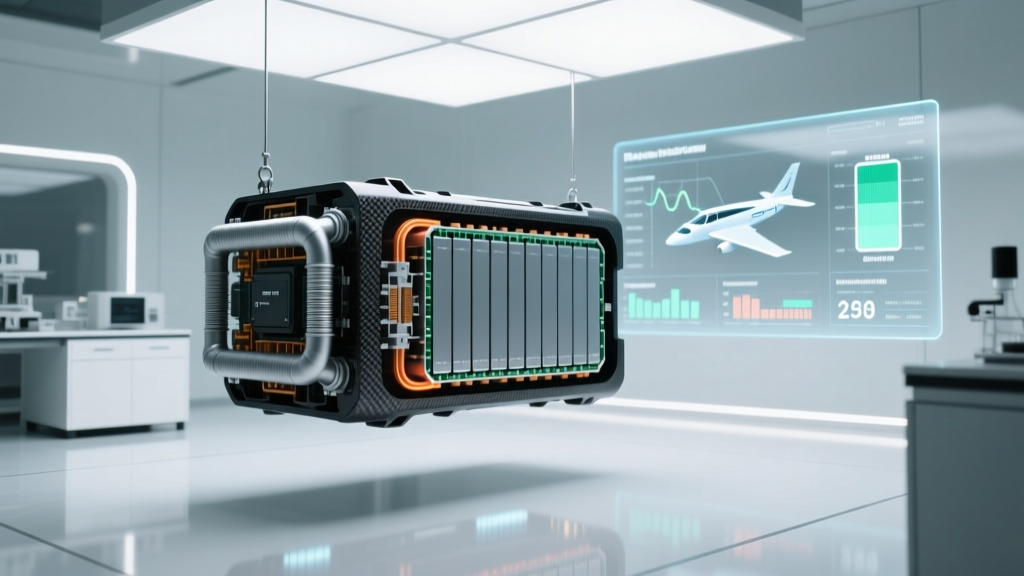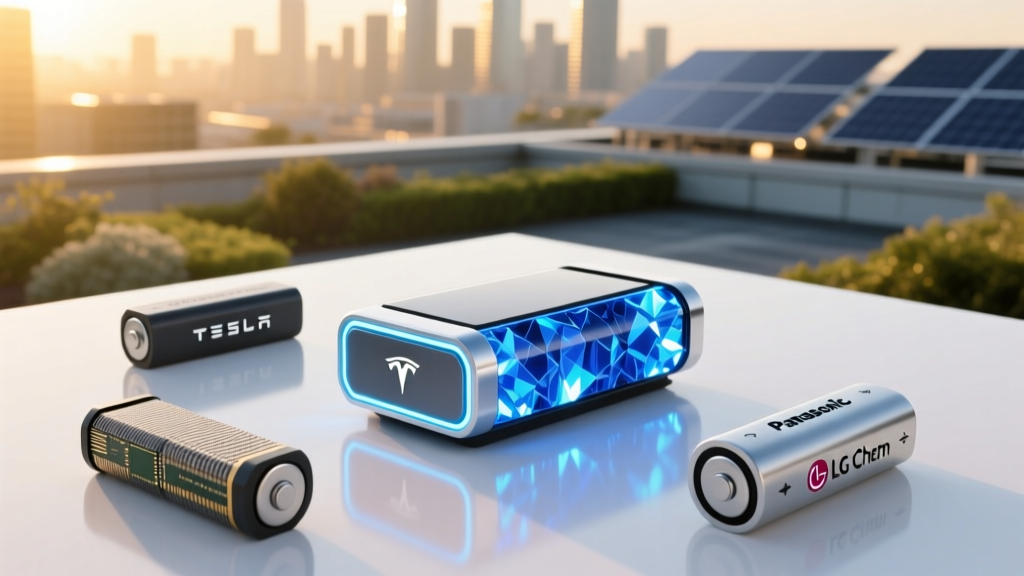
Today's EV Batteries vs. the Solid-State Promise
Every major automaker and a growing roster of solid-state battery companies — Toyota, QuantumScape, Samsung SDI, Solid Power, CATL — promise a leap in energy density, faster charging, and longer lifespans. But for anyone buying an EV in 2026, the chemistry inside the pack is still overwhelmingly lithium-ion with liquid electrolyte: either NMC/NCA (nickel-manganese-cobalt / nickel-cobalt-aluminum) or LFP (lithium iron phosphate). Solid-state cells remain in pilot production and limited fleet testing, not in any vehicle you can order today.
This guide breaks down what's actually in your EV right now, how long it lasts, what it costs if something goes wrong, and where the solid-state pipeline realistically lands over the next few years.
LFP vs. NMC/NCA: The Chemistry Trade-Off Matrix
Choosing between LFP and NMC isn't about which is "better" — it's about which fits your driving pattern. Here's how they stack up on the metrics that matter:
| Attribute | LFP (Lithium Iron Phosphate) | NMC / NCA (Nickel-based) |
|---|---|---|
| Energy Density | ~160–180 Wh/kg (cell level) | ~220–260 Wh/kg (cell level) |
| Typical Pack Size | 60–75 kWh (heavier for same range) | 75–100+ kWh (lighter, more range) |
| Cycle Life | 3,000–5,000+ cycles to 80% SoH | 1,500–2,500 cycles to 80% SoH |
| Cold-Weather Performance | Weaker; ~30–40% range loss below 20°F | Better; ~20–30% range loss below 20°F |
| Fast-Charging Tolerance | Excellent; handles frequent DCFC well | Moderate; frequent DCFC accelerates degradation |
| Recommended Daily SoC | 100% is fine (BMS manages top balance) | 80% daily; 100% only for trips |
| Cost per kWh (2026) | ~$85–$105 | ~$110–$140 |
| Common In 2026 Models | Tesla Model 3 RWD, Model Y RWD, Ford Mustang Mach-E Select (LFP option), BYD, Rivian Standard | Tesla Long Range, Hyundai Ioniq 5/6, Ford Mach-E Extended, GM Ultium, BMW iX |
How Long Do EV Batteries Actually Last?
The fear that EV batteries need replacing like phone batteries is not supported by fleet data. Here's what real-world degradation looks like across chemistries and timeframes:
| Milestone | NMC/NCA Avg. Capacity Retention | LFP Avg. Capacity Retention | Source / Context |
|---|---|---|---|
| 1 year / 15,000 mi | ~96–98% | ~98–99% | Tesla Impact Report 2024; Recurrent fleet data |
| 3 years / 45,000 mi | ~91–94% | ~95–97% | Geotab fleet study; Recurrent |
| 5 years / 75,000 mi | ~86–90% | ~92–95% | Geotab 6,300-vehicle longitudinal study |
| 8 years / 120,000 mi | ~80–86% | ~88–93% | Warranty threshold; real-world fleets trending above |
| 10 years / 150,000 mi | ~75–82% | ~85–91% | Projected from cycle-life models; limited field data |
Key insight: degradation is non-linear. Most packs lose 2–5% in the first year (initial SEI layer formation), then settle into a slow, nearly linear decline of ~1–2% per year. According to Geotab's long-term fleet analysis, the average EV retains about 88% of its original capacity after 5 years — well above the warranty floor.
What Does the Battery Warranty Actually Cover?
Federal law (via EPA/CARB alignment) effectively mandates that manufacturers warrant the battery for 8 years / 100,000 miles (10 years / 150,000 miles in CARB states like California, New York, and others adopting ACC II). Here's how major OEMs structure coverage:
| Manufacturer | Warranty Period | Capacity Threshold | Notes |
|---|---|---|---|
| Tesla (Model 3/Y LFP) | 8 yr / 120,000 mi | 70% retention | Long Range/Performance: 8yr/120k mi |
| Hyundai / Kia (E-GMP) | 10 yr / 100,000 mi | 70% retention | Among the most generous in the industry |
| Ford (Mach-E, F-150 Lightning) | 8 yr / 100,000 mi | 70% retention | Covers battery and hybrid/electric components |
| GM (Ultium platform) | 8 yr / 100,000 mi | 70% retention (some trims 60%) | Verify trim-specific terms at purchase |
| Rivian | 8 yr / 175,000 mi | 70% retention | Higher mileage cap reflects truck use case |
| BMW (iX, i4, i7) | 8 yr / 100,000 mi | 70% retention | Includes battery conditioning system |
What triggers a warranty claim? If your battery's State of Health (SoH) drops below the stated threshold (usually 70%) within the warranty window, the OEM must repair or replace it — typically with a refurbished or new module set, not necessarily a brand-new full pack. The warranty does not cover damage from accidents, flooding, improper charging equipment, or aftermarket modifications.
EV Battery Replacement Cost: What the Numbers Say
Out-of-warranty battery replacement is rare before 150,000+ miles, but it's the single biggest cost fear for EV shoppers. Here's what replacement actually costs in 2026:
| Vehicle / Pack Size | Parts Cost (Battery) | Labor | Total Estimated Range | Typical Replacement Trigger |
|---|---|---|---|---|
| Tesla Model 3 RWD (~60 kWh LFP) | $8,000–$11,000 | $1,500–$2,500 | $9,500–$13,500 | Module failure or >30% degradation |
| Hyundai Ioniq 5 (77.4 kWh NMC) | $12,000–$16,000 | $2,000–$3,000 | $14,000–$19,000 | Rare; usually module-level repair |
| Ford F-150 Lightning Ext. (131 kWh) | $18,000–$25,000 | $3,000–$4,500 | $21,000–$29,500 | Fleet high-mileage; not typical consumer scenario |
| Chevrolet Bolt EV (65 kWh NMC) | $9,000–$13,000 | $1,500–$2,500 | $10,500–$15,500 | Post-recall replacement packs are updated chemistry |
| BMW iX xDrive50 (111.5 kWh) | $17,000–$22,000 | $2,500–$4,000 | $19,500–$26,000 | Very rare; modular repair preferred |
Important context: Most modern packs are modular. A single degraded or failed module can often be replaced for $2,000–$5,000 rather than swapping the entire pack. According to Recurrent's 2025 fleet data, fewer than 2% of EVs in their 10,000-vehicle study required a full battery replacement — and the vast majority of those were covered under warranty. The realistic scenario for a well-maintained EV is that the battery outlasts the vehicle's economic life.
What Kills an EV Battery Faster (and What Doesn't)
Not all miles are equal for battery wear. Here are the factors that measurably accelerate degradation, ranked by impact:
- Extreme heat exposure (high impact): Sustained ambient temps above 95°F combined with high SoC (>90%) cause electrolyte decomposition. Garage parking matters in Phoenix, Las Vegas, and the Gulf Coast.
- Frequent DC fast charging above 150 kW (moderate-high impact): Occasional road-trip DCFC is fine. Daily fast-charging at 250+ kW without preconditioning accelerates lithium plating on the anode, especially in NMC cells. Tesla's own data shows vehicles that DCFC >90% of the time degrade ~1.5x faster.
- Storing at 100% SoC for days (moderate impact for NMC): LFP tolerates 100% storage well. NMC cells held at full charge at elevated temperatures experience accelerated calendar aging. Set your charge limit to 80% for daily use.
- Deep discharges to 0% (moderate impact): Dropping below ~5% SoC stresses the copper current collector. The BMS buffer (typically 2–5 kWh hidden below the displayed 0%) protects against true deep discharge, but habitually running the pack to empty isn't ideal.
- Cold-weather charging without preconditioning (moderate impact): Charging a cold NMC or LFP pack below 32°F without thermal preconditioning causes lithium plating. Most 2026 EVs precondition automatically when you navigate to a charger — use this feature.
- High-mileage driving (low impact): Cycle count matters, but modern NMC cells handle 1,500+ full cycles and LFP handles 3,000+ before hitting 80% SoH. That translates to 300,000–500,000+ miles for most drivers.
What doesn't meaningfully hurt battery life: Regen braking, one-pedal driving, and normal highway driving have negligible impact compared to thermal and SoC factors.
How to Monitor Your Battery's State of Health (SoH)
Most 2026 EVs don't expose a precise SoH percentage on the dash, but you have several ways to track it:
OEM Apps and In-Car Displays
Hyundai/Kia's Bluelink, BMW's Connected app, and GM's myChevrolet/myCadillac apps display estimated range that adjusts based on observed degradation. Tesla's app shows "typical range" which, when compared to the original EPA figure, gives a rough SoH proxy. For example, if your Model 3 Long Range originally showed 330 EPA miles at 100% and now shows 305, your SoH is approximately 92%.
Third-Party Diagnostics
Services like Recurrent, AVILOO, and some dealer scan tools can read the BMS-reported SoH directly. A certified OBD-II EV scanner (such as the OBDeleven or dedicated EV tools) can pull cell-level voltage variance data, which reveals module imbalance — an early sign of degradation.
The Manual Check
Charge to 100% (on an LFP pack) or 90% (on NMC), note the displayed range, and compare it to the same SoC reading from when the car was new. Track this quarterly. A drop of more than 3–4% in a single year warrants a dealer diagnostic check.
Where Solid-State Battery Companies Stand in 2026
The term "solid-state battery" refers to cells that replace the liquid electrolyte with a solid material (sulfide, oxide, or polymer), enabling lithium-metal anodes, higher energy density (~350–500 Wh/kg at the cell level), faster charging, and reduced fire risk. Here's where the leading solid-state battery companies actually stand as of early 2026:
| Company | Status (2026) | Target OEM Partners | Realistic Consumer Vehicle Timeline |
|---|---|---|---|
| Toyota / Prime Planet | Pilot production line operational; limited fleet testing in Japan | Toyota (internal) | 2027–2028 (limited luxury/flagship models) |
| QuantumScape | B-sample cells delivered to VW/PowerCo; multi-layer cells passing cycle-life tests | Volkswagen Group | 2028–2030 (likely premium VW/Porsche/Audi first) |
| Samsung SDI | Prototype all-solid-state cells demonstrated; scaling challenges remain | Hyundai Motor Group, BMW | 2028–2030 |
| Solid Power | Sulfide-based cells in A/B-sample phase; pilot line in Colorado | BMW, Ford | 2029–2031 |
| CATL | "Condensed matter" semi-solid cells in limited production (aviation focus); full solid-state in R&D | Multiple Chinese OEMs, Tesla (supply) | 2027–2029 (semi-solid in premium Chinese EVs) |
| Nissan | In-house solid-state pilot line in Yokohama; targeting cost parity | Nissan (internal) | 2028–2030 |
The honest timeline: Solid-state cells will appear in limited, high-end production vehicles around 2027–2028 (likely Toyota's luxury lineup and possibly a Porsche or Audi flagship). Mass-market solid-state EVs at price parity with today's NMC packs remain a 2030+ proposition. Manufacturing yield, dry-room requirements, and interface stability between the solid electrolyte and lithium-metal anode are unsolved at scale.
Meanwhile, silicon-anode batteries (used in limited form in the Porsche Taycan and GM's Ultium cells) are the more immediate incremental improvement — boosting energy density 10–20% over graphite anodes without the manufacturing upheaval of full solid-state.
Frequently Asked Questions
How long do EV batteries last in years and miles?
Based on fleet data from Geotab and Recurrent, the average EV battery retains 86–93% of its original capacity after 8 years. Most NMC packs are engineered for 1,500–2,500 full charge cycles (roughly 300,000–500,000 miles) before dropping to 80% SoH. LFP packs can exceed 3,000–5,000 cycles. In practical terms, the battery will likely outlast the rest of the vehicle.
How much does it cost to replace an EV battery?
Full pack replacement ranges from ~$10,000 for a smaller pack (Tesla Model 3, Chevrolet Bolt) to $25,000+ for large truck packs (F-150 Lightning, Hummer EV). However, most failures involve a single module, repairable for $2,000–$5,000. Fewer than 2% of EVs require full replacement, and most of those are covered under the 8-year/100,000-mile warranty.
What does the EV battery warranty cover?
All major OEMs warrant the high-voltage traction battery for at least 8 years / 100,000 miles against capacity loss below 70% of original. In CARB-adopting states (CA, NY, MA, WA, and others), coverage extends to 10 years / 150,000 miles. The warranty covers defects and abnormal degradation but not accident damage, improper charging, or aftermarket tampering.
How do I check and maximize my EV battery health?
Monitor SoH by comparing your 100% (LFP) or 90% (NMC) displayed range to the original EPA figure quarterly. To maximize lifespan: charge NMC to 80% daily (100% is fine for LFP), avoid frequent DC fast charging above 150 kW, precondition the battery before cold-weather charging, avoid storing the car at 100% or below 10% SoC for extended periods, and park in shade or a garage during extreme heat.
LFP vs. NMC — which battery chemistry is better?
Neither is universally better. LFP wins on cycle life (3,000–5,000 cycles vs. 1,500–2,500), cost (~$85–105/kWh vs. $110–140/kWh), and daily convenience (charge to 100% freely). NMC wins on energy density (more range in a lighter pack), cold-weather performance (~10–15% less range loss in freezing temps), and fast-charging speed on road trips. Choose LFP for commuting and home charging; choose NMC for road trips, cold climates, and maximum range.
When will solid-state batteries be available in consumer EVs?
Limited production in high-end models is expected around 2027–2028 from Toyota and possibly Volkswagen Group. Mass-market solid-state EVs at competitive pricing remain a 2030+ reality. If you're buying in 2026, today's LFP and NMC chemistries are mature, well-warranted, and will serve you reliably for the life of the vehicle.
Sources: Geotab EV Battery Degradation Study, Recurrent Battery Longevity Data, EPA Fuel Economy / EV Range Data, manufacturer warranty documentation (Tesla, Hyundai, Ford, GM, BMW, Rivian).