If you've followed EV battery news at any point in the last three years, you've seen the promises: solid-state batteries that charge in 10 minutes, deliver 600 miles of range, and never catch fire. As we move through 2026, the gap between laboratory breakthroughs and showroom availability remains substantial. This guide breaks down exactly where solid-state technology stands today, what you can actually buy right now, and the practical battery science every EV shopper needs to understand before signing a purchase agreement.
Today's EV Battery Chemistry: LFP vs. NMC in 2026
Before evaluating what's coming next, you need to understand what's powering the EVs on dealer lots today. Nearly every battery electric vehicle sold in the U.S. uses one of two lithium-ion chemistries: Lithium Iron Phosphate (LFP) or Nickel Manganese Cobalt / Nickel Cobalt Aluminum (NMC/NCA). Both are mature, mass-produced technologies — and neither is going anywhere soon.
| Attribute | LFP (Lithium Iron Phosphate) | NMC / NCA (Nickel-based) |
|---|---|---|
| Energy Density | Lower (~160-180 Wh/kg cell-level) | Higher (~230-290 Wh/kg cell-level) |
| Cycle Life | 3,000-5,000+ cycles | 1,000-2,000 cycles typical |
| Cold-Weather Performance | Weaker — greater range loss below 32°F | Better low-temperature discharge |
| Thermal Stability | Excellent — very low fire risk | Good, but requires more active thermal management |
| Cost per kWh | Lower (no cobalt or nickel) | Higher (commodity-linked metals) |
| Recommended Daily Charge Limit | 100% SoC is fine | 80% SoC for daily use, 100% for trips |
| Notable 2026 Vehicles | Tesla Model 3/Y RWD, Ford Mustang Mach-E Select (base), Rivian Standard | Hyundai Ioniq 5/6, Chevy Equinox EV, BMW iX, most long-range trims |
The trade-off is straightforward: NMC gives you more range in a smaller, lighter pack — which is why it dominates long-range and performance trims. LFP gives you longer cycle life, lower cost, and the simplicity of charging to 100% daily without degradation anxiety. Tesla's shift to LFP for its base Model 3 and Model Y RWD trims signaled a broader industry recognition that most buyers don't need 330+ miles of EPA range if it means paying $5,000-$8,000 more for the battery alone.
Neither chemistry is universally "better." If your commute is under 60 miles round-trip and you have reliable home charging, LFP's longevity and cost advantage make it the pragmatic pick. If you road-trip frequently or live in a region with harsh winters, NMC's energy density and cold-weather edge justify the premium.
How Long Do EV Batteries Actually Last?
This is the single most consequential question in EV ownership, and the answer is more reassuring than most buyers expect. Based on aggregated fleet data from sources including fueleconomy.gov and long-term studies by Recurrent Auto, the average modern EV battery retains approximately 90-95% of its original capacity after 5 years / 75,000 miles, and roughly 85-90% after 8 years / 100,000 miles.
Let's put that in context. A 2024 Tesla Model Y Long Range with an EPA-estimated 310 miles of range at 100% State of Health (SoH) would still deliver approximately 265-280 miles of real-world range at the 8-year mark — more than enough for most daily driving. Battery degradation is not linear: the steepest drop occurs in the first 1-2 years (typically 3-5%), then the curve flattens significantly.
Typical Degradation Curve (NMC 811, liquid-cooled pack):
- Year 1 / 15,000 mi: ~96-97% SoH (initial formation loss)
- Year 3 / 45,000 mi: ~93-95% SoH
- Year 5 / 75,000 mi: ~90-93% SoH
- Year 8 / 120,000 mi: ~85-90% SoH
- Year 10 / 150,000 mi: ~80-87% SoH (estimated)
LFP packs show a flatter degradation profile, with many fleet vehicles retaining 92-95% SoH at the 5-year mark. Data sourced from Recurrent Auto fleet analytics and OEM warranty claim rates.
The critical takeaway: battery "death" is rarely a cliff. Most packs lose range gradually, and a battery at 75-80% SoH is still perfectly functional — it just means your 310-mile EPA vehicle now delivers ~235-250 miles. For the vast majority of owners, the battery will outlast the vehicle's useful economic life.
What the Battery Warranty Actually Covers
Federal law mandates that EV batteries carry a minimum warranty of 8 years / 100,000 miles. California Air Resources Board (CARB) states extend this to 10 years / 150,000 miles for vehicles certified to CARB standards. But the details matter enormously.
| Manufacturer | Warranty Period | Mileage Limit | Capacity Threshold | Coverage Type |
|---|---|---|---|---|
| Tesla (Model 3/Y LFP) | 8 years | 100,000 mi | 70% retention | Repair or replace |
| Tesla (Model 3/Y LR/Perf) | 8 years | 120,000 mi | 70% retention | Repair or replace |
| Hyundai / Kia | 10 years | 100,000 mi | 70% retention | Repair or replace |
| Ford (Mach-E, F-150 Lightning) | 8 years | 100,000 mi | 70% retention | Repair or replace |
| GM (Ultium-based) | 8 years | 100,000 mi | 70% retention | Repair or replace |
| Rivian | 8 years | 120,000 mi | 70% retention | Repair or replace |
| BMW (i4, iX, i7) | 8 years | 100,000 mi | 70% retention | Repair or replace |
The industry-standard threshold is 70% capacity retention. If your battery drops below 70% of its original kWh capacity within the warranty window, the manufacturer will repair or replace it at no cost. In practice, very few owners hit this threshold under normal use — the degradation data above shows most packs stay well above 80% even at 100,000 miles.
Important caveat: warranties cover defects and abnormal degradation, not damage from accidents, flooding, or unauthorized modifications. Some manufacturers also exclude degradation caused by leaving the vehicle at 100% SoC for extended periods (particularly for NMC packs) or repeated DC fast-charging in extreme heat without preconditioning.
EV Battery Replacement Costs: The Real Numbers
Out-of-warranty battery replacement is the scenario that generates the most fear — and the most misleading headlines. Here's what the data actually shows for 2025-2026 model-year vehicles:
| Vehicle | Battery Size (usable kWh) | Chemistry | Estimated Replacement Cost | When Typically Needed |
|---|---|---|---|---|
| Tesla Model 3 RWD | 57.5 kWh | LFP | $10,000 - $13,000 | 200,000+ mi (rare) |
| Tesla Model Y Long Range | 75 kWh | NMC | $13,000 - $16,000 | 200,000+ mi (rare) |
| Hyundai Ioniq 5 | 77.4 kWh | NMC | $14,000 - $18,000 | 200,000+ mi (rare) |
| Ford F-150 Lightning Ext. Range | 131 kWh | NMC | $22,000 - $30,000 | 200,000+ mi (rare) |
| Chevrolet Equinox EV | 85 kWh | NMC (Ultium) | $14,000 - $17,000 | 200,000+ mi (rare) |
| BMW iX xDrive50 | 105.2 kWh | NMC | $20,000 - $28,000 | 200,000+ mi (rare) |
These figures include the battery pack and labor but vary by region and service center. The critical context that headlines omit: full battery replacement is extremely rare. Most out-of-warranty service involves replacing individual modules within the pack, which costs $2,000-$6,000 depending on the vehicle. A complete pack swap typically only occurs after severe physical damage, manufacturing defects discovered late, or — in a very small number of cases — degradation below functional thresholds at 200,000+ miles.
For perspective, a conventional vehicle's engine or transmission replacement at 150,000+ miles routinely costs $4,000-$8,000 and is considered a normal ownership risk. EV battery replacement at 200,000+ miles is a comparable event, not a catastrophic one.
Factors That Accelerate Battery Degradation
Battery longevity isn't just about time and mileage — how you use and charge the pack has a measurable impact on its State of Health over the long term. Here are the primary degradation accelerators, ranked by impact:
- Extreme State of Charge (high impact): Regularly holding an NMC battery at 100% SoC or letting it sit below 10% for days accelerates calendar aging. For NMC, target 20-80% for daily use. LFP is more tolerant — 100% daily is acceptable and often recommended for calibration.
- High-temperature exposure (high impact): Sustained battery temperatures above 95°F (35°C) — whether from hot-climate parking, repeated DC fast charging without preconditioning, or aggressive track driving — degrade the electrolyte and cathode. Vehicles with active liquid cooling (Tesla, Hyundai E-GMP, GM Ultium) manage this far better than passive-air-cooled packs.
- Exclusive DC fast charging (moderate impact): Daily reliance on DC fast charging (50-350 kW) generates more heat and lithium-plating risk than Level 2 charging. Owners who DC fast-charge 3+ times per week may see 2-4% additional degradation over 5 years compared to primarily Level 2 charging. Occasional road-trip fast charging has negligible impact.
- Cold-weather fast charging without preconditioning (moderate impact): Charging a cold battery at high power causes lithium plating on the anode — permanent capacity loss. Always use your vehicle's navigation-based preconditioning (e.g., navigate to a charger via the Tesla or Hyundai app) to warm the pack before DC charging in sub-40°F conditions.
- Deep discharge cycles (low-moderate impact): Regularly driving the battery to 0% stresses cell chemistry. Occasional near-empty runs are fine; habitual deep discharges shorten cycle life.
- Time / calendar aging (low, unavoidable): Even a garage-kept EV with zero miles will lose 1-2% capacity per year from chemical processes alone. This is normal and factored into degradation projections.
How to Monitor and Maximize Battery Health
Most modern EVs provide at least basic State of Health (SoH) data, though the depth of information varies by manufacturer:
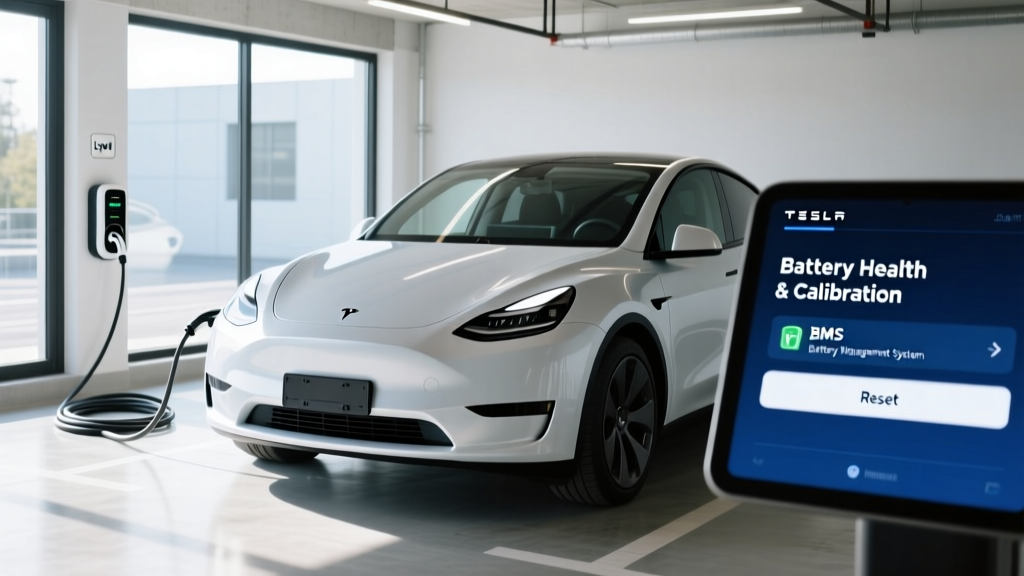
Built-in tools: Tesla's app displays estimated range at 100% — comparing this to the original EPA figure gives a rough SoH proxy. Hyundai/Kia's infotainment includes a battery health indicator in the EV menu. BMW provides SoH percentage in the iDrive system. Nissan Leaf owners can access detailed SoH via the LeafSpy third-party app and an OBD-II dongle.
Third-party diagnostics: Services like Recurrent Auto offer battery health reports that compare your pack's degradation against a fleet of identical vehicles — useful for peace of mind and essential if you're buying a used EV. Some dealerships can pull detailed cell-level voltage data during service visits.
Practical maximization steps:
- Set your daily charge limit to 80% (NMC) or 100% (LFP) and only charge to full before road trips
- Use Level 2 home charging as your primary routine — reserve DC fast charging for travel
- Enable preconditioning when navigating to DC fast chargers, especially in cold weather
- Avoid leaving the vehicle at 0% or 100% SoC for more than 24-48 hours
- Park in shade or a garage during extreme summer heat when possible
- Keep your vehicle's software updated — OEMs periodically refine thermal management and charge algorithms
Solid-State Batteries in 2026: Commercialization Status
This is where the rubber meets the road for the keyword on every EV enthusiast's mind. As of early 2026, no mass-market vehicle sold in the United States uses a true solid-state battery. Here's the honest landscape:
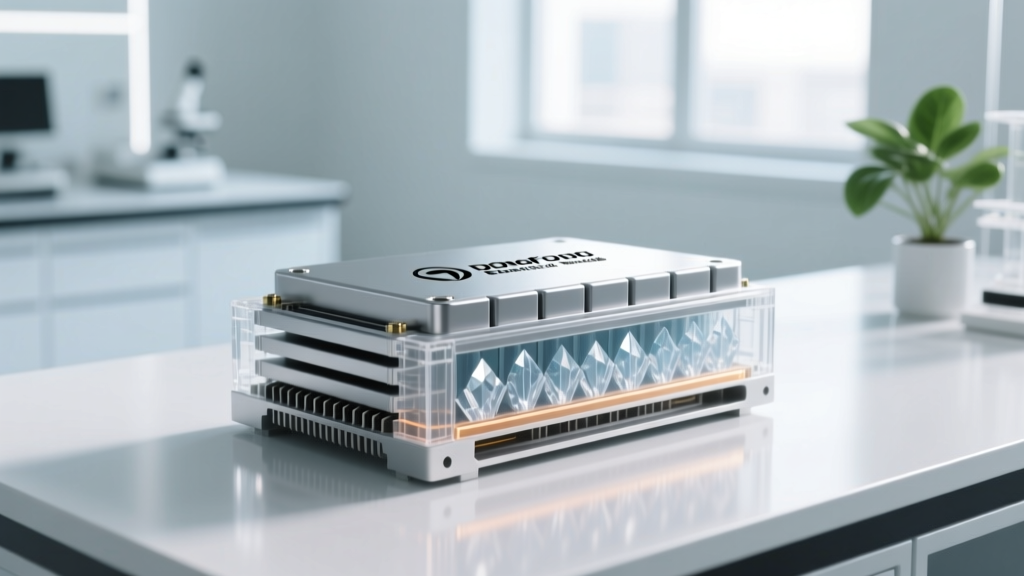
What solid-state promises: Replacing the liquid electrolyte in current lithium-ion cells with a solid material (ceramic, sulfide, or polymer) theoretically enables higher energy density (potentially 400-500 Wh/kg at the cell level vs. ~250-290 Wh/kg for today's best NMC), faster charging (10-80% in under 10 minutes), improved safety (no flammable liquid electrolyte), and longer cycle life.
Where things actually stand:
- Toyota: Has announced a solid-state battery target for a 2027-2028 production vehicle, claiming 750 km (~465 mi) range and 10-minute fast charging. As of 2026, Toyota has produced limited prototype cells but has not confirmed a specific vehicle or pricing. The company has pushed back its solid-state timeline multiple times since 2021.
- Samsung SDI: Has demonstrated all-solid-state prototype cells with 900+ Wh/L volumetric energy density and targets 2027 pilot production. No confirmed OEM vehicle integration yet.
- QuantumScape: The Volkswagen-backed startup has delivered prototype cells to automotive partners and reported positive test results, but mass production remains projected for 2028-2029 at the earliest. Cell manufacturing yield and cost remain unsolved challenges.
- Nissan: Announced a solid-state pilot production line in Yokohama, targeting a 2028-2029 vehicle launch. Prototype cells have been built, but not at automotive scale or cost.
- Solid Power (BMW/Ford-backed): Has delivered prototype cells to partners and is scaling its Colorado pilot line. Production vehicles are not expected before 2029-2030.
The manufacturing challenge: The gap between a lab-produced solid-state cell and millions of affordable, reliable packs is enormous. Key obstacles include: solid electrolyte material costs (10-100x current liquid electrolytes), manufacturing processes that don't yet exist at scale, interface degradation between the solid electrolyte and electrodes during charge cycles, and the need to achieve cost parity with today's continuously improving liquid lithium-ion cells. Every year that liquid lithium-ion gets cheaper and more energy-dense, the bar for solid-state commercial viability gets higher.
What IS available now that's "solid-state adjacent": Some manufacturers have introduced semi-solid-state or hybrid electrolyte cells. NIO in China has offered a 150 kWh semi-solid-state pack (by WeLion) as a rental option for its ET7 sedan, achieving ~620 miles of CLTC range. However, this pack costs approximately $40,000 — making it a technology demonstration, not a commercial product. It is not available in the U.S. market.
Near-Term Battery Innovations You Can Actually Buy
While solid-state remains a 2028-2032 prospect for U.S. consumers, several meaningful battery improvements are already in production:
Silicon-dominant anodes: Companies like Sila Nanotechnologies and Group14 Technologies are supplying silicon-enhanced anode materials that increase energy density by 15-20% over conventional graphite anodes. The Mercedes-Benz G-Class Electric (2025) uses a Sila silicon-anode battery, and more vehicles are expected to adopt this technology through 2026-2027. This is the most impactful near-term improvement already on the road.
Sodium-ion batteries: CATL and BYD have begun mass-producing sodium-ion cells for lower-cost, shorter-range EVs. These trade energy density for dramatically lower material costs and excellent cold-weather performance. While primarily targeted at the Chinese market's micro-EV segment, sodium-ion could appear in U.S.-market base trims or fleet vehicles by 2027-2028.
Continued LFP improvements: CATL's second-generation LFP cells and BYD's Blade Battery 2.0 have pushed LFP energy density closer to NMC territory, narrowing the range gap while maintaining LFP's cost and longevity advantages. Expect more U.S.-market vehicles to adopt LFP across additional trims through 2026-2027.
The Bottom Line for 2026 EV Buyers
If you're shopping for an EV today, the decision framework is clear: buy based on the proven chemistry that fits your driving pattern (LFP for cost/longevity, NMC for range/cold-weather), rely on the robust 8-year/100,000-mile warranty, and don't delay your purchase waiting for solid-state. That technology is genuinely promising but remains 2-4 years from limited production and likely 5-7 years from mainstream affordability.
The batteries in today's EVs are not a liability — they're one of the most durable components in the vehicle, backed by extensive warranties and supported by a decade of real-world fleet data showing that the vast majority of packs will serve their owners well for 150,000-200,000+ miles. The smart money in 2026 is on the chemistry and warranty that's here now, not the press release that's five years away.
Frequently Asked Questions
How long do EV batteries last in years and miles?
Based on fleet data, most modern EV batteries retain 85-90% capacity at 8 years / 100,000 miles and remain functional well beyond 150,000-200,000 miles. Complete failure is rare; gradual range loss is the norm. LFP chemistries tend to degrade more slowly than NMC.
How much does it cost to replace an EV battery out of warranty?
Full pack replacement ranges from approximately $10,000 for a Tesla Model 3 RWD (57.5 kWh LFP) to $22,000-$30,000 for a large-pack vehicle like the Ford F-150 Lightning Extended Range (131 kWh NMC). However, full replacements are extremely rare — most out-of-warranty service involves individual module replacement at $2,000-$6,000.
What does the EV battery warranty cover?
Federal minimum is 8 years / 100,000 miles (10 years / 150,000 miles in CARB states). Coverage triggers when capacity drops below 70% of original. Warranties cover defects and abnormal degradation but exclude accident damage, flooding, and in some cases, abuse patterns like sustained 100% SoC storage on NMC packs.
How do I check my EV battery's State of Health?
Most vehicles show estimated range at 100% (compare to original EPA figure) or a dedicated battery health indicator. Third-party services like Recurrent Auto provide detailed fleet-comparison reports. For used-EV purchases, a dealership diagnostic scan can provide cell-level voltage data.
LFP vs NMC — which chemistry should I choose?
Choose LFP if you prioritize lower cost, longer cycle life, and the convenience of daily 100% charging, and your typical daily driving is under 60-80 miles. Choose NMC if you need maximum range for road trips, live in a cold climate where NMC's low-temperature performance matters, or are buying a long-range trim. Both are proven, reliable chemistries.
When will solid-state batteries be available in U.S. vehicles?
No U.S.-market vehicle currently uses a true solid-state battery. Toyota targets 2027-2028 for a limited production vehicle. Samsung SDI, QuantumScape, Nissan, and Solid Power all project 2028-2030 for initial production. Mainstream affordability is likely a 2030+ prospect. Liquid lithium-ion technology continues to improve and reduce costs, raising the commercial bar for solid-state entry.
Does frequent DC fast charging damage my battery?
Occasional DC fast charging on road trips has negligible impact. Daily reliance on DC fast charging (3+ times per week) can add 2-4% additional degradation over 5 years compared to primarily Level 2 charging, primarily due to heat generation. Always precondition the battery before fast charging in cold weather to minimize lithium plating risk.