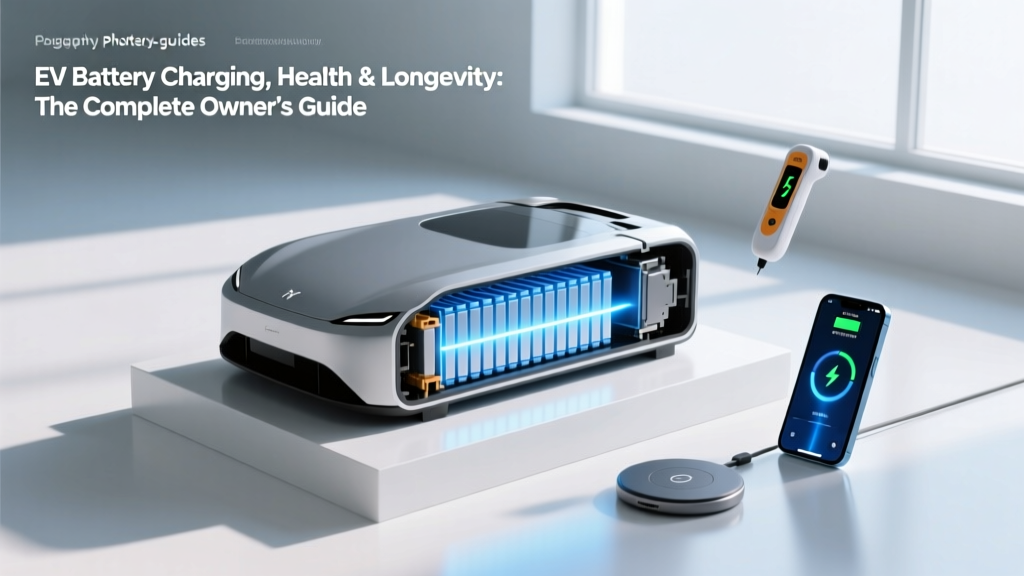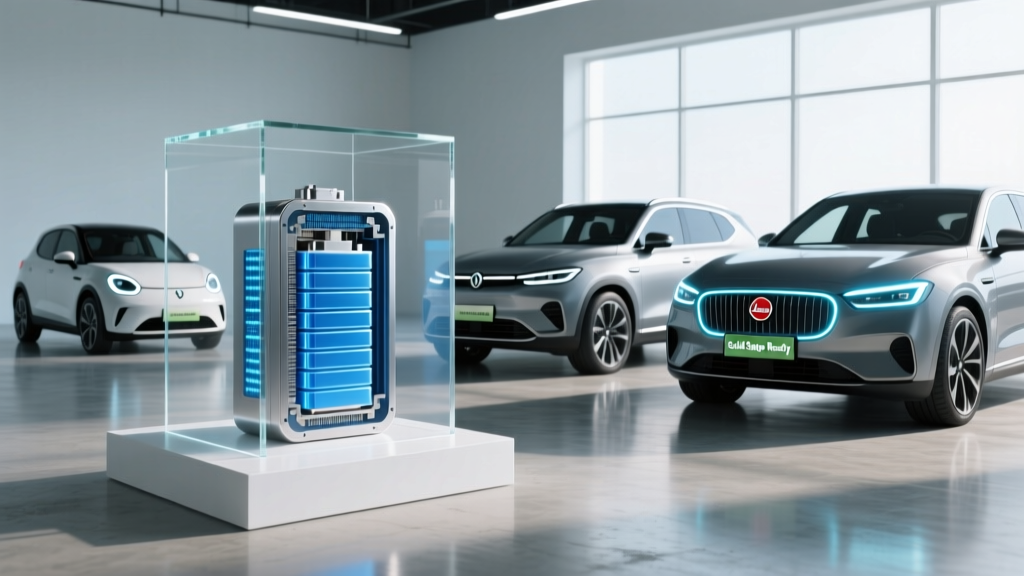
If you've been following EV news, you've probably seen headlines promising that solid-state battery cars will make range anxiety and battery degradation a thing of the past. The reality in 2026 is more nuanced: today's lithium-ion EV batteries already outlast most owners' time with the vehicle, while solid-state technology remains in limited, pre-production testing with mass-market availability still years away.
This guide covers what actually matters for your purchase decision right now — current battery chemistries, real degradation data, warranty coverage, replacement costs, and care habits — while giving you an honest timeline on what solid-state and silicon-anode batteries might deliver down the road.
How Long Do EV Batteries Actually Last?
The short answer: almost certainly longer than you'll own the car. Data aggregated from fleet operators, manufacturer warranty claims, and independent testing bodies like Geotab's long-term EV battery study shows that the average EV battery loses roughly 1.8% to 2.3% of capacity per year under normal use. That translates to approximately 82–90% State of Health (SoH) at the 8-year mark — well above the 70% threshold most manufacturers use for warranty coverage.
Real-world data points from high-mileage vehicles tell a consistent story:
- Tesla Model 3/Y (NMC/NCA): Tesla's 2025 Impact Report cites an average degradation of ~12% after 150,000 miles, leaving roughly 88% SoH.
- Chevrolet Bolt EV/EUV (NMC): Fleet data shows approximately 8–10% loss over 100,000 miles with mixed charging habits.
- BYD and Tesla LFP packs: Lithium iron phosphate (LFP) chemistry demonstrates even slower degradation curves, with some fleet vehicles showing less than 8% loss at 120,000 miles.
- Hyundai Ioniq 5 / Kia EV6 (NMC): Owner-reported data clusters around 5–7% loss at 60,000 miles, consistent with the ~2%/year average.
The key insight is that degradation is non-linear. Most batteries lose 2–4% in the first year as the cells settle, then the curve flattens significantly. You're not heading toward a cliff — you're looking at a long, slow taper.
LFP vs NMC vs NCA: Which Battery Chemistry Is Right for You?
Not all EV batteries are the same. The two dominant chemistries in 2026 are LFP (lithium iron phosphate) and NMC (nickel manganese cobalt), with Tesla also using NCA (nickel cobalt aluminum) in some long-range models. The choice involves real trade-offs — not a simple "better or worse" answer.
| Factor | LFP (Lithium Iron Phosphate) | NMC / NCA (Nickel-based) |
|---|---|---|
| Energy Density | Lower (~160–180 Wh/kg cell-level) | Higher (~220–260 Wh/kg cell-level) |
| Typical Use | Standard Range trims (Tesla Model 3 RWD, BYD Dolphin, base Ford Mustang Mach-E Select) | Long Range / Performance trims (Model 3 LR, Ioniq 5 LR, EV6 GT-Line) |
| Cycle Life | 3,000–5,000+ cycles to 80% SoH | 1,000–2,000 cycles to 80% SoH |
| Cold-Weather Performance | More range loss in freezing temps (~35–40% reduction at 20°F) | Better cold retention (~25–30% reduction at 20°F) |
| Charging to 100% | Recommended regularly (helps BMS calibration) | Best kept 20–80% daily; 100% only for trips |
| Cost | ~15–25% cheaper per kWh to manufacture | Higher cost due to nickel/cobalt |
| Thermal Stability | Excellent — very low thermal runaway risk | Good — requires more robust thermal management |
| Best For | Daily commuters, warm climates, high-mileage drivers, budget-focused buyers | Road-trippers, cold-climate drivers, maximum range seekers, performance buyers |
The practical takeaway: If you drive under 250 miles daily in a moderate or warm climate, LFP is arguably the smarter long-term play — you get more charge cycles, lower cost, and can charge to 100% without worry. If you regularly take 300+ mile road trips or live where winters are harsh, NMC/NCA gives you the energy density and cold-weather buffer you need.
What Does the EV Battery Warranty Actually Cover?
Federal law mandates a minimum of 8 years / 100,000 miles for EV battery warranties (10 years / 150,000 miles in California and states that follow CARB rules). But the details matter — not every warranty is identical.
| Manufacturer | Duration | Mileage | Capacity Threshold | Notes |
|---|---|---|---|---|
| Tesla (Model 3/Y LFP) | 8 years | 100,000 mi | 70% SoH | Standard Range; 120k mi for LR/AWD |
| Tesla (Model 3/Y NMC/NCA) | 8 years | 120,000 mi | 70% SoH | Long Range & Performance |
| Hyundai / Kia | 10 years | 100,000 mi | 70% SoH | Among the longest coverage |
| Ford (Mach-E, F-150 Lightning) | 8 years | 100,000 mi | 70% SoH | Covers battery & hybrid-specific components |
| GM (Ultium-based: Equinox EV, Blazer EV, Silverado EV) | 8 years | 100,000 mi | 70% SoH | Some fleet/commercial trims vary |
| BMW (i4, iX, i7) | 8 years | 100,000 mi | 70% SoH | Transferable to second owner |
| Rivian (R1T, R1S) | 8 years | 175,000 mi | 70% SoH | Higher mileage cap reflects adventure use |
What "70% SoH" means in practice: If your 75 kWh (usable) battery drops below 52.5 kWh of usable capacity within the warranty period, the manufacturer must repair or replace it — typically with a refurbished pack, not necessarily brand-new. In reality, warranty claims are rare. The vast majority of EVs retain well above 80% SoH at the 8-year mark under normal use.
What's NOT covered: Damage from accidents, improper modifications, using non-approved charging equipment that causes electrical damage, or neglecting coolant service on liquid-cooled packs. Read your owner's manual — skipping scheduled thermal-management fluid changes can void coverage.
How Much Does an EV Battery Replacement Cost?
This is the question that generates the most anxiety — and the most misleading headlines. Yes, a full battery pack replacement is expensive. But it's also extremely uncommon under normal ownership, and the landscape is shifting.
| Vehicle | Battery Size (Usable kWh) | Estimated Pack Cost | Typical When Needed |
|---|---|---|---|
| Tesla Model 3 Standard Range (LFP) | ~57 kWh | $8,000–$12,000 | 200,000+ mi / 15+ years (if ever) |
| Tesla Model Y Long Range (NMC) | ~75 kWh | $12,000–$16,000 | 200,000+ mi / 15+ years |
| Hyundai Ioniq 5 / Kia EV6 (NMC) | ~72.6 kWh | $11,000–$15,000 | 200,000+ mi |
| Ford F-150 Lightning Extended Range | ~131 kWh | $18,000–$28,000 | 200,000+ mi; large pack = high cost |
| Chevrolet Equinox EV | ~85 kWh | $12,000–$17,000 | 200,000+ mi |
| BMW iX xDrive50 | ~105 kWh | $18,000–$25,000 | 200,000+ mi |
Critical context most coverage omits:
- Module-level repair is increasingly common. Many packs allow individual module replacement rather than a full swap. A single failed module might cost $1,500–$4,000 to replace, restoring the pack to functional health.
- Battery prices continue to fall. Pack-level pricing has dropped from ~$200/kWh in 2020 to roughly $110–$130/kWh in 2026, per BloombergNEF data. A replacement in 2035 will cost significantly less than today's estimates.
- Most EVs are scrapped for other reasons before the battery fails. Accident damage, body rust, suspension wear, and electronic failures total-out or retire vehicles long before the traction battery reaches end-of-life.
- The 12V auxiliary battery is a separate, cheaper concern. Like any car, EVs have a small 12V battery for computers and accessories. Expect to replace it every 4–6 years for $150–$300. This is not the high-voltage traction battery.
What Affects EV Battery Life — and How to Maximize It
Battery degradation isn't random. It's driven by a handful of well-understood stressors. Here's what actually moves the needle:
The Big Four Degradation Factors
- Extreme State of Charge (SoC): Sitting at 100% or below 10% for extended periods accelerates chemical aging. For NMC/NCA batteries, daily use between 20–80% minimizes stress. LFP batteries tolerate 100% better and actually benefit from periodic full charges for cell balancing.
- High-Temperature Exposure: Battery chemistry degrades faster above 95°F ambient, especially when combined with high SoC. Liquid-cooled packs (standard on most 2026 EVs) mitigate this significantly, but parking in shade or a garage in Phoenix still helps.
- Frequent DC Fast Charging at High Power: Repeatedly pulling 150–350 kW generates significant heat. Occasional fast charging is fine — Idaho National Laboratory testing showed only a ~2–3% additional loss over 50,000 miles for vehicles that fast-charged exclusively vs. Level 2 only. But if you have home charging, there's no reason to DC fast-charge daily.
- Cold Charging Without Preconditioning: Plugging into a DC fast charger with a cold battery (below 40°F) without preconditioning forces lithium ions to plate on the anode surface rather than intercalate properly. This causes permanent capacity loss. Always use your vehicle's navigation-based preconditioning feature when routing to a charger.
Battery Care Checklist for Maximum Longevity
- ✅ Set daily charge limit to 80% (NMC/NCA) or 100% (LFP) via the vehicle's app
- ✅ Plug in regularly — batteries prefer shallow, frequent cycles over deep discharges
- ✅ Use Level 2 home charging as your primary method (6–11.5 kW; gentle on cells)
- ✅ Enable battery preconditioning when navigating to DC fast chargers
- ✅ Avoid leaving the vehicle at 100% SoC for more than 24 hours
- ✅ Park in shade or a garage during extreme summer heat when possible
- ✅ Keep up with scheduled coolant/thermal-management fluid service
- ✅ Don't let the battery sit below 10% SoC for more than a few days
- ❌ Avoid daily DC fast charging if you have reliable home Level 2 access
- ❌ Don't store the vehicle at 100% or 0% SoC for extended periods (vacations, etc.)
How to Check Your EV Battery's State of Health (SoH)
State of Health is expressed as a percentage — 100% being a brand-new battery, with degradation reducing that figure over time. Here's how to monitor it:
- In-vehicle displays: Tesla shows estimated range vs. original, which you can convert to SoH. The Hyundai/Kia EV suite includes a battery health indicator in the infotainment system under EV settings. BMW's iDrive provides SoH percentage directly.
- Manufacturer apps: The Tesla app, FordPass, Hyundai Bluelink, and myChevrolet all surface battery health data or estimated range metrics that serve as proxies.
- OBD-II diagnostic tools: Devices like the OBDLink MX+ paired with apps such as Leaf Spy (Nissan), Scan My Tesla, or Car Scanner ELM OBD2 can read detailed cell-level voltage data, pack SoH, and degradation curves.
- Dealer diagnostic reports: Request a battery health printout during service visits. Most manufacturers can provide a detailed SoH report with individual module voltage readings.
When to be concerned: If your SoH drops more than 3–4% in a single year after the initial break-in period, or if you notice sudden range cliffs (e.g., losing 10% of range in a month), schedule a diagnostic. This could indicate a failing module or thermal management issue rather than normal degradation.
Solid-State Battery Cars: What's Real and What's Hype?
Solid-state batteries replace the liquid electrolyte in current lithium-ion cells with a solid material (ceramic, sulfide, or polymer). The theoretical benefits are significant: 30–50% higher energy density, faster charging, improved safety (no flammable electrolyte), and potentially longer cycle life.
But as of 2026, no mass-production solid-state battery car is available for purchase. Here's where the major players stand:
- Toyota: Has announced a solid-state battery targeting 2027–2028 production in limited volumes, initially in a next-generation EV with a claimed 750+ km (~465 mi) range. This is a pilot-scale rollout, not mass availability. Toyota holds the most solid-state patents globally but has pushed its timeline back multiple times.
- Nissan: Plans a solid-state pilot production line by 2028, with a target of bringing a vehicle to market by 2029–2030.
- Samsung SDI: Supplying solid-state cells for prototype testing; targeting 2027 for initial automotive applications in partnership with select OEMs.
- QuantumScape: The VW-backed startup continues to ship prototype cells to automotive partners. Its cells have demonstrated strong lab performance, but scaling manufacturing to automotive volumes remains the central challenge. Commercial availability is not expected before 2028–2029 at the earliest.
- BMW / Solid Power: Testing solid-state cells in prototype vehicles; no production timeline announced before 2030.
Silicon-anode batteries are a nearer-term evolution. Companies like Sila Nanotechnologies and Group14 Technologies are supplying silicon-dominant anode materials that boost energy density by 15–20% within existing lithium-ion manufacturing. These are already appearing in limited applications (Mercedes-Benz's G 580 with EQ Technology uses a silicon-anode pack from Sila) and will become more common through the late 2020s.
Bottom line on solid-state: The technology is real and the engineering progress is genuine, but the gap between lab prototypes and affordable, mass-produced battery packs that can be built at millions of units per year is enormous. If you're buying an EV in the next 3–5 years, you'll be buying a lithium-ion vehicle — and that's fine, because today's packs are already good enough to outlast your ownership.
Frequently Asked Questions
How long do EV batteries last in years and miles?
Based on fleet data and manufacturer reports, most EV batteries retain 80–90% of original capacity at 8 years / 100,000 miles. At 15 years / 200,000 miles, many packs still hold 70–80% SoH. Catastrophic failure (sudden death rather than gradual degradation) is extremely rare in liquid-cooled packs from major manufacturers.
How much does it cost to replace an EV battery?
Full pack replacement ranges from roughly $8,000 for a smaller LFP pack (Tesla Model 3 RWD) to $25,000+ for a large NMC pack (F-150 Lightning Extended Range, BMW iX). However, most replacements are covered under the 8-year/100,000-mile warranty, and module-level repairs ($1,500–$4,000) are increasingly common as an alternative to full swaps. Battery costs continue to decline ~8–10% annually.
What does the EV battery warranty cover?
The standard warranty guarantees the battery will retain at least 70% of its original capacity for 8 years / 100,000 miles (10 years / 150,000 miles in CARB states). If SoH drops below the threshold, the manufacturer repairs or replaces the pack. Warranties do not cover accident damage, unauthorized modifications, or neglect of thermal-management service. Per fueleconomy.gov, battery warranties are among the most robust component guarantees in the auto industry.
How do I check and maximize my battery's health?
Monitor SoH through your vehicle's app, infotainment system, or an OBD-II scanner with EV-specific software. To maximize longevity: charge to 80% daily (NMC) or 100% (LFP), use Level 2 home charging as your primary method, precondition before DC fast charging, avoid extreme SoC storage, and keep up with coolant service. See the battery care checklist above for a complete list.
LFP vs NMC — which is better?
Neither is universally better. LFP wins on cycle life (3,000–5,000+ cycles), cost (~15–25% cheaper per kWh), thermal safety, and tolerance for 100% daily charging. NMC/NCA wins on energy density (more range in a smaller pack), cold-weather performance (~10% less range loss in freezing temps), and suitability for long-range and performance trims. Choose LFP for daily commuting and warm climates; choose NMC for road trips and cold winters.
Should I wait for solid-state battery cars before buying an EV?
No — unless you plan to buy in 2030 or later. Solid-state batteries remain in prototype and limited pilot production as of 2026, with no mass-market vehicle available. Even when they arrive, initial pricing will be at a premium, limited to flagship models. Today's lithium-ion batteries (both LFP and NMC) offer proven longevity, strong warranty coverage, and declining costs. Waiting for solid-state means delaying EV ownership by at minimum 4–5 years, during which you'll continue paying for gasoline and missing out on current federal EV tax credits under IRS §30D.