The Promise of Solid-State Batteries — and Why You're Still Waiting
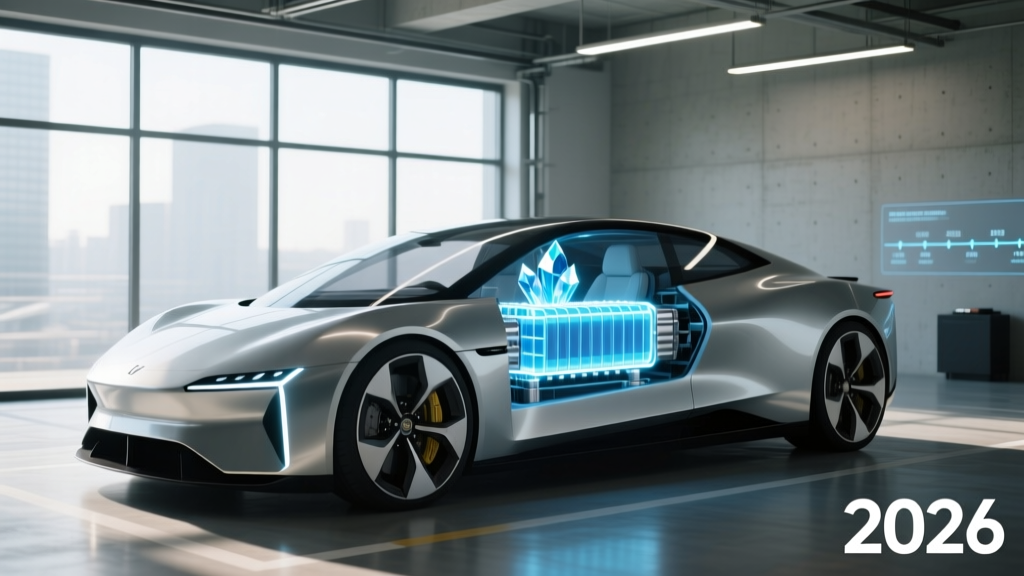
If you've been following EV news, you've probably seen the headlines: solid-state batteries will deliver 600+ miles of range, charge in 10 minutes, and eliminate fire risk. The question every EV shopper eventually asks is when will solid-state battery cars be available at a dealership near them — not just in a press release or a lab prototype.
The honest answer from a 2026 perspective: limited-production solid-state EVs are beginning to appear in select markets, but affordable, mass-market solid-state battery cars remain several years away. Meanwhile, today's lithium-ion batteries — in both LFP and NMC/NCA chemistries — have improved dramatically in longevity, cost, and energy density. For the vast majority of buyers, the battery in a 2026 EV is already good enough to outlast the vehicle itself.
This guide covers where solid-state technology actually stands, what's available right now, and everything you need to know about current EV battery health, degradation, warranties, and replacement costs.
Current EV Battery Chemistries: LFP vs NMC/NCA Explained
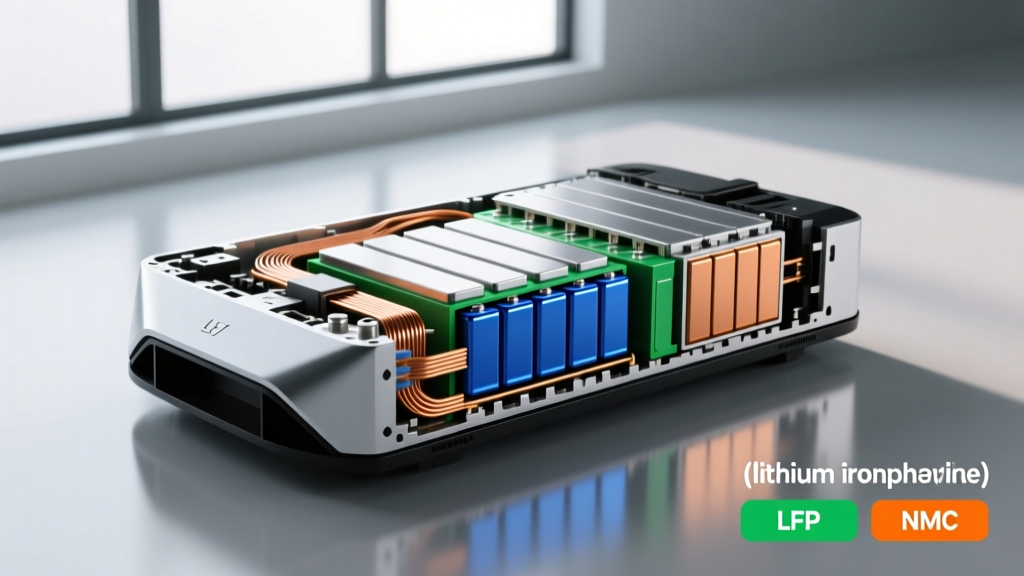
Before looking ahead, it's essential to understand what's powering today's EVs. Nearly every battery electric vehicle on the road uses one of two lithium-ion cathode chemistries, each with distinct trade-offs.
| Attribute | LFP (Lithium Iron Phosphate) | NMC/NCA (Nickel Manganese Cobalt / Nickel Cobalt Aluminum) |
|---|---|---|
| Energy Density | Lower (~160–180 Wh/kg cell-level) | Higher (~250–300 Wh/kg cell-level) |
| Typical Range per Pack Size | Shorter for same kWh; used in standard-range trims | Longer range; used in extended-range and performance trims |
| Cycle Life | 3,000–5,000+ full cycles | 1,500–2,500 full cycles |
| Cold-Weather Performance | Greater range loss in freezing temps (~30–40%) | Better cold-weather retention (~20–30% loss) |
| Charging to 100% SoC | Recommended periodically for BMS calibration; tolerates high SoC well | Best kept 20–80% for daily use; 100% only before long trips |
| Cost | Lower — no cobalt or nickel | Higher — dependent on nickel and cobalt commodity prices |
| Thermal Stability | Excellent — very low thermal runaway risk | Good — requires more active thermal management |
| Notable 2026 Applications | Tesla Model 3/Y RWD, Ford Mustang Mach-E Select (LFP option), BYD models, Rivian Standard | Hyundai Ioniq 5/6 Long Range, Tesla Model 3/Y Long Range & Performance, BMW iX, Porsche Taycan, GM Ultium-based models |
Which Is Better — LFP or NMC?
Neither is universally superior. Choose LFP if you prioritize longevity, lower cost, and don't need maximum range. LFP cells degrade more slowly and tolerate being held at 100% state of charge (SoC) far better than NMC. Choose NMC/NCA if you need the longest possible range, frequently drive in cold climates, or want faster DC charging speeds. Most automakers now offer both chemistries across their lineups, letting buyers pick based on their driving patterns.
How Long Do EV Batteries Actually Last?
The fear that an EV battery will need a costly replacement after a few years is largely a myth perpetuated by early-generation EVs. Modern thermal management systems, improved cell chemistries, and larger buffers have extended battery lifespans substantially.
Real-World Degradation Data Points
- Tesla Model 3/Y (NMC, 2020–2024 fleet data): Average capacity loss of approximately 10–12% after 150,000 miles, with most degradation occurring in the first 20,000–30,000 miles before leveling off. Source: Tesla Impact Reports and independent fleet analyses.
- Tesla Model 3 RWD (LFP, 2022–2025): Early fleet data suggests less than 5% degradation at 60,000 miles, consistent with LFP's superior cycle life.
- Nissan Leaf (passive air cooling, 2013–2017): Notorious for 20–30%+ capacity loss over 8 years due to lack of active thermal management — a cautionary tale that drove the industry toward liquid cooling.
- Hyundai/Kia E-GMP platform (Ioniq 5, EV6): Owner-reported degradation of 4–7% over the first 50,000 miles, with the battery management system (BMS) maintaining a generous buffer.
- Chevrolet Bolt EV/EUV (NMC, 2017–2023): Recall-related battery replacements aside, non-recalled packs showed roughly 6–8% loss at 80,000 miles.
The general pattern: expect 5–10% capacity loss in the first 3–5 years (or 50,000–100,000 miles), with the degradation curve flattening significantly afterward. Most modern EV batteries should retain 80–85%+ of original capacity at 150,000 miles.
Factors That Accelerate Degradation
- Frequent DC fast charging: Occasional fast charging is fine, but daily use of 150+ kW DC chargers generates sustained heat that accelerates cell wear. Studies suggest heavy fast-charging use can add 1–3% additional degradation over 100,000 miles compared to predominantly Level 2 charging.
- Extreme temperatures: Prolonged exposure to ambient temperatures above 95°F or below 10°F stresses cells. Vehicles with active liquid cooling (most 2026 EVs) mitigate this significantly.
- Sustained high or low SoC: For NMC batteries, storing the vehicle at 100% SoC for days or weeks accelerates calendar aging. LFP is more tolerant but still benefits from varied SoC.
- High discharge rates: Repeated hard acceleration and track use generate internal cell heat. This is a minor factor for normal drivers.
What Does the EV Battery Warranty Cover?
Federal law in the United States mandates that EV batteries carry a minimum warranty of 8 years or 100,000 miles (whichever comes first). In California Air Resources Board (CARB) states, that requirement extends to 10 years or 150,000 miles for certain components. Most manufacturers meet or exceed these minimums.
| Manufacturer | Warranty Period | Capacity Retention Threshold |
|---|---|---|
| Tesla (Model 3/Y RWD — LFP) | 8 years / 100,000 miles | 70% minimum retention |
| Tesla (Model 3/Y Long Range/Performance) | 8 years / 120,000 miles | 70% minimum retention |
| Hyundai / Kia (E-GMP platform) | 10 years / 100,000 miles | 70% minimum retention |
| GM (Ultium-based: Equinox EV, Blazer EV, Silverado EV) | 8 years / 100,000 miles | 70% minimum retention |
| Ford (Mustang Mach-E, F-150 Lightning) | 8 years / 100,000 miles | 70% minimum retention |
| Rivian (R1T, R1S) | 8 years / 120,000 miles | 70% minimum retention |
| BMW (iX, i4, i7) | 8 years / 100,000 miles | 70% minimum retention |
Key detail: The warranty threshold — typically 70% — means the manufacturer will repair or replace the battery only if its capacity falls below that level within the warranty period. A battery retaining 72% of original capacity at year 7 is functioning within warranty specifications, even though you've lost roughly 80+ miles of range on a 300-mile vehicle. In practice, very few modern EV batteries breach this threshold under normal use.
How Much Does an EV Battery Cost to Replace?
This is the question that generates the most anxiety — and the most misinformation. Yes, an out-of-warranty battery replacement is expensive. But context matters enormously.
| Vehicle / Pack Size | Battery Capacity | Estimated Replacement Cost (Parts + Labor) |
|---|---|---|
| Tesla Model 3 RWD (LFP) | ~57 kWh | $10,000 – $14,000 |
| Tesla Model Y Long Range | ~75 kWh | $13,000 – $18,000 |
| Hyundai Ioniq 5 Long Range | ~77.4 kWh | $14,000 – $19,000 |
| Ford F-150 Lightning Extended Range | ~131 kWh | $22,000 – $32,000 |
| GMC Hummer EV | ~212 kWh | $35,000 – $45,000 |
| Chevrolet Equinox EV | ~85 kWh | $14,000 – $18,000 |
When is replacement actually needed? For the vast majority of owners, it isn't. Data from fueleconomy.gov and manufacturer fleet reports indicate that fewer than 2–3% of modern EV batteries require replacement within the first 10 years of service — and most of those replacements occur under warranty due to manufacturing defects, not degradation. Battery cell costs continue to decline, with industry averages falling below $120/kWh at the pack level in 2026, down from over $200/kWh just four years prior.
Additionally, module-level repair is increasingly available. Rather than replacing an entire pack, many shops and dealerships can identify and swap individual degraded modules for $2,000–$5,000, depending on the vehicle. This option is particularly viable on platforms like the GM Ultium and Hyundai E-GMP, which were designed with modular serviceability in mind.
How to Check and Maximize Your EV Battery Health
Monitoring your battery's State of Health (SoH) and adopting smart charging habits can meaningfully extend its useful life.
Checking State of Health (SoH)
- In-vehicle displays: Many 2026 EVs — including Tesla, Hyundai/Kia, BMW, and Rivian — display a battery health percentage or estimated current capacity in the vehicle settings menu or companion app.
- OBD-II diagnostic tools: Third-party apps like EV Bat Health or Scan My Tesla (for Tesla vehicles) can read SoH data directly from the battery management system via the OBD-II port.
- Dealer diagnostic reports: Request a battery health report during scheduled service. Most dealerships can pull a detailed SoH readout showing individual cell group voltages and overall capacity.
- Third-party inspections: Services like Recurrent (now integrated into several OEM apps) provide battery health reports based on telemetry data, useful for used-EV buyers.
Battery Care Best Practices
- Daily charging limit (NMC): Set to 80% for daily driving; charge to 100% only before long road trips and drive immediately.
- Daily charging limit (LFP): Charge to 100% at least once per week to allow the BMS to calibrate cell balancing.
- Avoid prolonged storage at extremes: If storing the vehicle for weeks, leave it at 50–60% SoC, plugged in if possible.
- Precondition before fast charging: Use the vehicle's navigation-to-charger feature (available on Tesla, Hyundai, Ford, and others) to warm the battery before arriving at a DC fast charger. This improves charge speed and reduces stress.
- Favor Level 2 home charging: For daily use, a 7–11 kW Level 2 home charger is gentler on the battery than repeated DC fast charging.
- Park in shade or a garage in hot climates: Reducing ambient heat exposure slows calendar aging, especially for vehicles without active battery cooling while parked.
- Don't obsess over it: Modern battery management systems are sophisticated. The biggest longevity gains come from avoiding the worst habits (daily 100% SoC on NMC, frequent 350 kW charging, leaving the car at 0% for weeks) — not from micromanaging every percentage point.
When Will Solid-State Battery Cars Be Available? The Realistic Timeline
Solid-state batteries replace the liquid electrolyte in current lithium-ion cells with a solid material — typically a ceramic, sulfide, or polymer compound. The theoretical benefits are substantial: higher energy density (potentially 400+ Wh/kg at the cell level), faster charging without lithium plating risk, improved thermal stability, and longer cycle life.
Where Things Stand in 2026
Several manufacturers have moved solid-state technology from the lab into limited pilot production:
- Toyota: Has announced a solid-state battery pilot in a limited-production EV expected for 2027–2028, with claims of 750+ km (~465 miles) of range and a 10-minute 10–80% charge. However, Toyota has revised its solid-state timeline multiple times, and initial production volumes are expected to be very small — likely a premium-priced, limited-availability model, not a mass-market vehicle.
- Samsung SDI: Has begun sample production of all-solid-state cells targeting 2027 mass production, with customers including BMW and Stellantis. The stated energy density target is ~900 Wh/L (volumetric).
- QuantumScape: The Volkswagen-backed startup has delivered prototype cells to automotive partners and announced initial commercial production targeted for 2027–2028. Independent validation of long-term cycle life at scale remains pending.
- Nissan: Has announced a solid-state pilot production line, with a production vehicle targeted for 2028–2029.
- CATL: China's dominant battery supplier has announced a condensed-matter battery (a semi-solid-state approach) with energy density up to 500 Wh/kg, currently in limited aviation and premium automotive applications. True all-solid-state production is targeted for 2028+.
The Honest Timeline
Based on current trajectories, here is a realistic framework:
- 2026–2027: Pilot production and limited-run vehicles. Expect a handful of premium or demonstration vehicles, primarily in Japan, South Korea, and China. Not available to most US consumers.
- 2028–2030: Initial commercial production in premium segments. Think flagship sedans and SUVs priced above $80,000. Volumes will be in the tens of thousands globally, not millions.
- 2031–2035: Broader availability in mid-market vehicles, assuming manufacturing yields improve and costs decline to compete with mature lithium-ion production lines. This is when solid-state could meaningfully impact the average EV buyer.
The manufacturing challenge is the real bottleneck. Producing solid-state cells at the scale, yield rate, and cost parity of existing lithium-ion gigafactories is an unsolved engineering problem. Current lithium-ion production lines produce billions of cells per year at under $120/kWh. Solid-state must approach this cost to be competitive — and that requires years of factory optimization, even after the chemistry is proven.
Silicon Anode: The Bridge Technology
While waiting for full solid-state batteries, a more incremental improvement is already arriving: silicon-dominant anodes. Traditional lithium-ion cells use graphite anodes; replacing some or all of that graphite with silicon can boost energy density by 20–40% without requiring a new electrolyte system.
Companies like Sila Nanotechnologies (partnered with Mercedes-Benz and Panasonic) and Group14 Technologies (supplying Porsche and other OEMs) are bringing silicon-anode cells to production vehicles in 2026–2027. The Mercedes G-Class electric SUV is expected to feature a silicon-anode battery, and Porsche has confirmed silicon-anode cells in upcoming Taycan variants. These represent a meaningful step forward in range and charge speed — available years before full solid-state.
Should You Wait for Solid-State or Buy Now?
If you need an EV in the next 1–3 years, waiting for solid-state is not a practical strategy. The technology will debut in low-volume, high-priced vehicles and won't reach mainstream pricing until the early-to-mid 2030s at the earliest.
Today's EV batteries are remarkably durable. An LFP-equipped Tesla Model 3, Hyundai Ioniq 5, or Chevrolet Equinox EV purchased in 2026 will very likely retain 80%+ of its battery capacity after 150,000 miles and a decade of service. Combined with robust federal warranty requirements and declining replacement costs, the battery risk that once deterred EV buyers has diminished substantially.
If range and charging speed are your primary concerns, the more impactful near-term developments are the continued expansion of 350 kW DC fast-charging infrastructure (Tesla Supercharger V4, Electrify America Ultra-Fast), improved heat pump efficiency for cold-weather range, and silicon-anode cells entering premium models in 2026–2027.
Frequently Asked Questions
How long do EV batteries last in years and miles?
Most modern EV batteries are designed to last 15–20 years or 150,000–200,000+ miles while retaining at least 70–80% of their original capacity. Real-world fleet data from Tesla, Hyundai, and GM shows typical degradation of 8–12% over the first 150,000 miles. The battery will usually outlast other major vehicle components.
How much does an EV battery cost to replace in 2026?
Out-of-warranty replacement costs range from approximately $10,000 for a smaller pack (57 kWh, Tesla Model 3 RWD) to $30,000+ for very large packs (131+ kWh, F-150 Lightning Extended Range). However, fewer than 3% of modern EV batteries require replacement within 10 years, and most failures are covered under the 8-year/100,000-mile federal warranty. Module-level repairs offer a lower-cost alternative at $2,000–$5,000.
What does the EV battery warranty actually cover?
Federal law requires a minimum 8-year/100,000-mile warranty on EV batteries (10 years/150,000 miles in CARB states). The warranty covers capacity loss below a specified threshold — typically 70% of original capacity — as well as manufacturing defects. It does not cover damage from accidents, misuse, or unauthorized modifications. Check your specific manufacturer's terms, as some offer longer coverage.
Is LFP or NMC better for long-term battery health?
LFP (lithium iron phosphate) offers superior cycle life (3,000–5,000 cycles vs 1,500–2,500 for NMC) and better tolerance for high state-of-charge storage, making it the better choice for longevity-focused buyers. NMC/NCA offers higher energy density, better cold-weather performance, and faster DC charging — better for buyers who need maximum range. Both chemistries in 2026 vehicles are highly durable with proper care.
When will solid-state battery cars be available to regular buyers?
Limited-production solid-state EVs are expected from Toyota, Samsung SDI partners, and QuantumScape partners between 2027–2029, but these will be premium-priced and low-volume. Mass-market solid-state EVs at competitive prices are not realistically expected until 2031–2035. For most buyers, current lithium-ion technology is the practical choice for the foreseeable future.
How do I check my EV battery's State of Health?
Most 2026 EVs display battery health information in the vehicle settings or companion app. You can also use OBD-II diagnostic tools (such as Scan My Tesla or EV Bat Health), request a dealer diagnostic report, or use third-party services like Recurrent for telemetry-based health reports. Monitoring SoH annually is sufficient for most owners.
Does frequent DC fast charging damage my EV battery?
Occasional DC fast charging has minimal impact. However, exclusive reliance on 150+ kW DC fast charging — particularly without battery preconditioning — can add 1–3% additional capacity loss over 100,000 miles compared to predominantly Level 2 home charging. For daily use, a 7–11 kW Level 2 home charger is the best balance of convenience and battery longevity.