Why Toyota's Solid-State Battery Promises Matter to Every EV Shopper
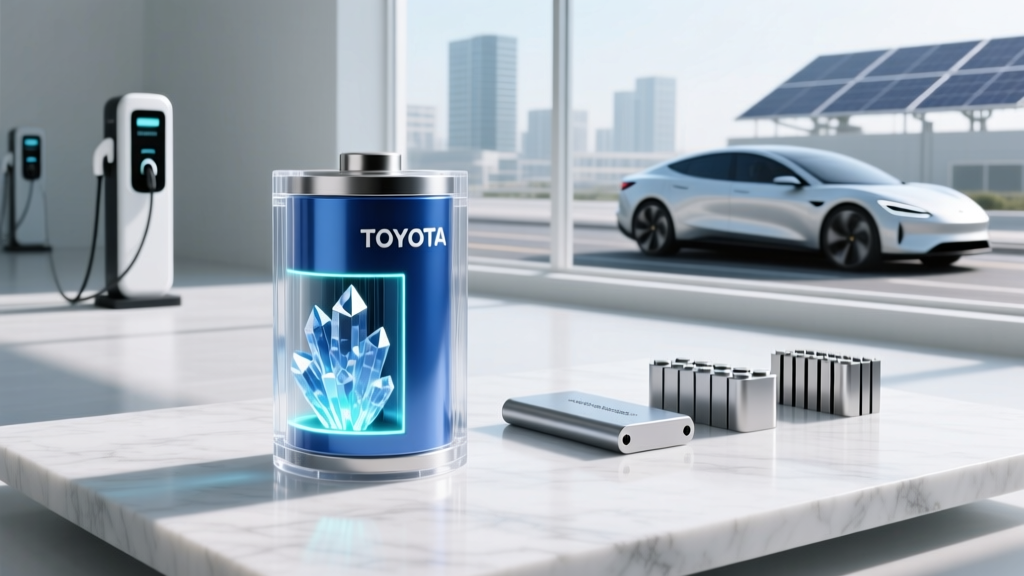
Toyota has spent years positioning itself as the company that will "leapfrog" the current lithium-ion era with solid-state batteries. As of early 2026, the automaker continues to refine its timeline — most recently signaling a limited production rollout around 2027–2028, initially in low volumes and likely in a premium or hybrid application first. The promise is tantalizing: 750+ km (roughly 465 miles) of range, a 10-minute 10–80% DC fast charge, and dramatically improved safety from a non-flammable solid electrolyte.
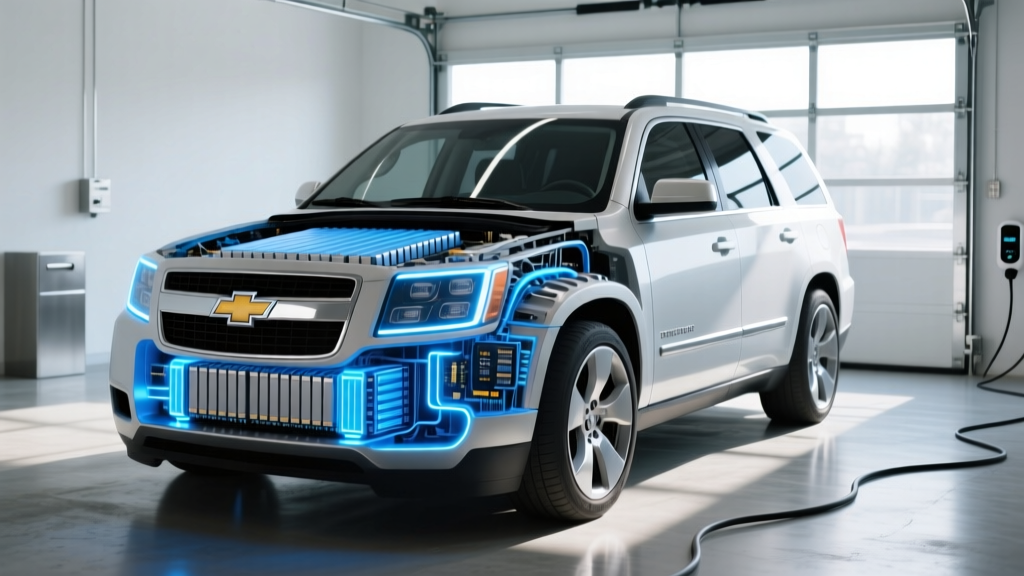
But if you're shopping for an EV today — or even in the next two to three model years — you are buying a vehicle powered by one of two proven lithium-ion chemistries: NMC (nickel manganese cobalt) or LFP (lithium iron phosphate). Understanding what's on the market now, how those batteries age, and what solid-state actually changes is essential to making a smart purchase decision. This guide breaks down the real numbers.
Current EV Battery Chemistry: LFP vs NMC/NCA Explained
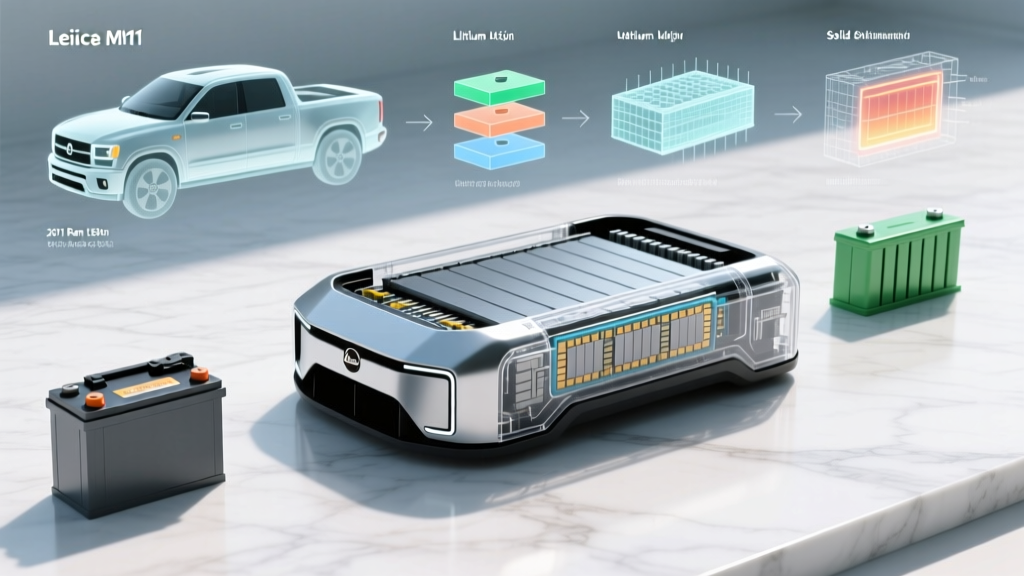
Every mainstream EV sold in the US in 2026 uses a lithium-ion traction battery with either an NMC/NCA cathode or an LFP cathode. The anode is typically graphite, though silicon-doped anodes are beginning to appear in higher-energy applications. Here is how the two dominant chemistries compare on the metrics that matter to owners:
| Attribute | LFP (Lithium Iron Phosphate) | NMC / NCA (Nickel-based) |
|---|---|---|
| Energy Density (cell-level) | ~160–180 Wh/kg | ~220–260 Wh/kg |
| Typical Cycle Life | 3,000–5,000+ cycles to 80% SoH | 1,500–2,500 cycles to 80% SoH |
| Cold-Weather Performance | Moderate — slower charge acceptance below 32°F, ~20–30% range loss in deep cold | Better low-temp conductivity, ~15–25% range loss in deep cold |
| Thermal Runaway Risk | Very low — oxygen-stable cathode | Higher — requires robust BMS and thermal management |
| Cost (per kWh, pack-level) | ~$90–$110 | ~$120–$150 |
| Recommended Daily Charge Limit | 100% (LFP benefits from periodic full charges for cell balancing) | 80% for daily use; 100% only before long trips |
| Notable 2026 US Models Using | Tesla Model 3/Y RWD, Ford Mustang Mach-E Select (LFP variant), BYD (where available) | Hyundai Ioniq 5/6, Kia EV6/EV9, Tesla Model 3/Y Long Range, Rivian R1T/R1S, BMW iX |
The trade-off in plain terms: NMC/NCA gives you more range in a lighter, more compact pack — critical for long-range AWD models and larger SUVs. LFP gives you a cheaper, longer-lasting, safer battery that's fine for standard-range daily drivers where weight and volume are less constrained. Neither is universally "better." Your commute distance and climate should drive the choice.
Choose LFP if: Your daily driving is under 80 miles round-trip, you live in a mild-to-warm climate, you want to charge to 100% without worry, and you plan to keep the vehicle 8+ years.
Choose NMC/NCA if: You need 300+ miles of EPA range, you regularly drive in sub-freezing weather, you tow or carry heavy loads, or you frequently road-trip and need maximum usable energy.
How Long Do EV Batteries Actually Last?
The short answer: longer than most buyers assume. Data aggregated from fleet operators, manufacturer warranty claims, and independent testing bodies like Geotab's long-term battery health study shows that the average modern EV battery loses roughly 1.5% to 2.5% of its original capacity per year under typical use. That translates to the following real-world degradation trajectory:
- Year 1–2: ~2–4% total capacity loss (initial formation loss, then stabilization)
- Year 3–5: ~1.5–2% loss per year (steady-state linear degradation)
- Year 6–8: ~1–1.5% loss per year (continued gradual decline)
- Year 10 (projected): Most packs retain 78–88% of original capacity
- Year 15 (projected): Most packs retain 70–82% of original capacity
For a vehicle with an original EPA range of 310 miles, 85% retention at year 10 means roughly 263 miles of range — still very usable for most drivers. LFP packs tend to cluster at the higher end of these retention figures; NMC packs with frequent DC fast charging and high SoC storage tend toward the lower end.
Critical context: Battery degradation is not linear. You typically see a steeper drop in the first 12–18 months as the solid electrolyte interphase (SEI) layer forms, then the curve flattens considerably. Most EVs will not need a battery replacement during a typical first- or second-owner lifecycle.
What the Battery Warranty Actually Covers
Federal law mandates a minimum 8-year/100,000-mile warranty on EV battery packs for emissions-related compliance, and virtually every automaker matches or exceeds this baseline. California Air Resources Board (CARB) states extend this to 10 years/150,000 miles. Here is how the major manufacturers structure coverage as of 2026:
| Manufacturer | Warranty Period | Mileage Cap | Capacity Retention Threshold |
|---|---|---|---|
| Tesla (Model 3/Y LWD) | 8 years | 100,000 miles | 70% minimum |
| Tesla (Model 3/Y LR/Perf, S/X) | 8 years | 120,000–150,000 miles | 70% minimum |
| Hyundai / Kia | 10 years | 100,000 miles | 70% minimum |
| Ford | 8 years | 100,000 miles | 70% minimum |
| Rivian | 8 years | 175,000 miles | 70% minimum |
| BMW | 8 years | 100,000 miles | 70% minimum |
| GM (Ultium platform) | 8 years | 100,000 miles | 70% minimum (60% on some commercial) |
What "70% retention" means in practice: If your 82 kWh (usable) battery drops below 57.4 kWh of usable capacity within the warranty window, the manufacturer is obligated to repair or replace it — typically by swapping in a refurbished pack with equivalent capacity, not necessarily a brand-new unit. The warranty covers defects and abnormal degradation, not damage from accidents, flooding, or unauthorized modifications.
EV Battery Replacement Costs: The Real Numbers
This is where fear often outpaces reality. Yes, a full battery pack replacement is expensive. But the data shows that fewer than 2–3% of EV batteries are replaced under warranty, and the vast majority of those are due to manufacturing defects in the first 2–3 years — not end-of-life wear. Here is what out-of-warranty replacement actually costs in 2026:
| Vehicle / Pack Size | Battery Capacity (usable) | Estimated Replacement Cost | Typical Replacement Trigger |
|---|---|---|---|
| Tesla Model 3 RWD (LFP) | ~57 kWh | $10,000–$14,000 | Physical damage; rare wear-out |
| Tesla Model Y Long Range | ~75 kWh | $14,000–$18,000 | Defect or collision damage |
| Hyundai Ioniq 5 | ~77.4 kWh | $14,000–$19,000 | Defect or collision damage |
| Ford F-150 Lightning Ext. Range | ~131 kWh | $22,000–$30,000 | Collision; extreme use degradation |
| Rivian R1T (Large Pack) | ~128 kWh | $20,000–$28,000 | Collision; off-road damage |
| Chevrolet Bolt EV/EUV (legacy) | ~65 kWh | $9,000–$14,000 | Post-recall module replacement |
When is replacement actually needed? Almost never for normal aging. A battery that retains 70% capacity at year 12 still provides 200+ miles of range in most vehicles — adequate for daily use. Replacement becomes relevant only when: (1) a manufacturing defect causes cell imbalance or failure, (2) physical damage from a collision compromises the pack enclosure, or (3) the vehicle is kept 15–20+ years and range drops below the owner's practical threshold. The third scenario is rare because most vehicles are retired for other reasons before the battery fails.
Factors That Accelerate Battery Degradation
Not all miles are created equal when it comes to battery wear. Research from the National Renewable Energy Laboratory (NREL) and real-world fleet data consistently identify these high-impact factors:
- Frequent DC fast charging above 150 kW: Occasional road-trip fast charging is fine. But daily reliance on 150–350 kW DCFC without preconditioning accelerates SEI growth and lithium plating. Expect ~1–2% additional annual loss if DCFC is your primary charge method.
- Sustained high State of Charge (SoC): Storing an NMC battery at 100% SoC for days at a time — especially in hot weather — stresses cathode structure. LFP is far more tolerant of 100% storage.
- Deep discharges below 10%: Repeatedly draining below 10% SoC stresses the anode. Try to keep daily use between 20–80% for NMC; LFP is more flexible on the low end.
- Extreme heat exposure: Ambient temperatures above 95°F combined with high SoC is the single worst combination for lithium-ion longevity. Garage parking and preconditioning help significantly.
- Cold-weather fast charging without preconditioning: Charging a cold battery at high power causes lithium plating on the anode — an irreversible capacity loss mechanism. Always use your vehicle's navigation-to-charger preconditioning feature.
- High-mileage, high-C-rate driving: Frequent hard acceleration and sustained high-speed driving (>85 mph) generates internal pack heat that accelerates degradation over time.
Monitoring Your Battery's State of Health (SoH)
Most 2026 EVs provide at least a basic battery health indicator in the infotainment system or companion app. Here is how to check and interpret SoH across major platforms:
Tesla: No native SoH percentage in the app. Use the "range at 100%" method — charge to 100%, note the displayed range, and compare to the original EPA figure. A drop from 330 to 290 miles displayed equals roughly 88% SoH. Third-party tools like TeslaFi or Tessie can estimate SoH from charge logs.
Hyundai/Kia: The infotainment EV menu includes a battery health screen showing estimated SoH percentage and individual cell voltage variance. Cell variance above 0.15V between modules may indicate an imbalance worth servicing.
Ford: The FordPass app and SYNC screen show a battery health status indicator. Ford also provides a "battery health report" through dealers upon request.
General approach for any EV: Track your "miles at full charge" over time. Log it monthly. A consistent decline of more than 3% per year after the first year warrants a dealer diagnostic check. OBD-II dongles paired with apps like ABRP (A Better Route Planner) or Car Scanner can pull BMS-reported SoH data on many models.
Solid-State Batteries and Toyota's Roadmap: What's Real vs. Speculative
Toyota has been the most vocal legacy automaker in pursuing solid-state battery technology for EVs. The company holds over 1,300 patents related to solid-state cells and has partnered with Idemitsu Kosan for solid electrolyte material supply. Here is where the program stands as of 2026:
Announced timeline: Toyota has targeted a 2027–2028 initial production deployment, with first applications likely in a limited-run vehicle — potentially a Lexus model or a next-generation bZ-series EV. Volume production sufficient to meaningfully impact the market is not expected before 2030.
Claimed specifications (preliminary, unverified in production):
- Energy density: ~400–500 Wh/kg at cell level (roughly 2x current NMC)
- Range: Up to 750–1,000 km (465–620 miles) on a single charge in a mid-size sedan
- Charging: 10–80% in approximately 10 minutes at a compatible high-power charger
- Safety: Non-flammable solid electrolyte eliminates thermal runaway risk
- Lifespan: Claimed reduced degradation due to absence of liquid electrolyte decomposition
The reality check: Solid-state batteries face well-documented manufacturing challenges — maintaining uniform pressure across the solid electrolyte interface, managing dendrite formation at the lithium metal anode, and scaling production to automotive volumes at competitive cost. Toyota itself has revised its timeline multiple times. Competitors like Samsung SDI, QuantumScape (with VW backing), and Nissan are pursuing parallel programs with similarly cautious timelines.
What this means for buyers: If you need an EV in the 2026–2029 window, solid-state technology will not be a factor in your purchase. The current generation of LFP and NMC batteries is mature, well-warrantied, and proven to outlast most ownership cycles. Waiting for solid-state means waiting at minimum until 2029–2030 for limited availability, likely at a significant price premium, and only in select models.
Other near-term battery advances are more immediately relevant: silicon-dominant anodes (Group14, Sila Nanotechnologies) promise 15–20% energy density gains within current form factors, and CATL's Shenxing LFP cells already deliver 4C charging (10–80% in ~10 minutes) in Chinese-market vehicles — technology expected to reach US-market models by 2027–2028 without requiring a solid-state revolution.
Frequently Asked Questions
How long do EV batteries last in years and miles?
Most modern EV batteries are engineered to retain 70–85% of their original capacity after 10–15 years or 150,000–200,000 miles of typical use. Fleet data from sources like Geotab confirms average annual degradation of 1.5–2.5%. Many packs will outlast the vehicle's body, suspension, and electronics.
How much does it cost to replace an EV battery?
Out-of-warranty replacement costs range from approximately $9,000 for a smaller pack (Chevrolet Bolt, ~65 kWh) to $30,000 for the largest packs (Ford F-150 Lightning Extended Range, ~131 kWh). However, fewer than 3% of EV batteries require replacement, and the vast majority of replacements occur under the manufacturer's 8-year/100,000-mile warranty at no cost to the owner.
What does the EV battery warranty cover?
Manufacturer warranties guarantee that the battery will retain at least 70% of its original usable capacity for 8 years/100,000 miles (or 10 years/150,000 miles in CARB states). Coverage includes defects and abnormal degradation. It does not cover physical damage from collisions, flooding, or unauthorized modifications. Warranty service typically involves replacing the pack with a refurbished unit of equivalent capacity.
How do I check and maximize my EV battery health?
Monitor your displayed range at 100% charge monthly and log the trend. For NMC batteries, keep daily SoC between 20–80%, avoid storing at 100%, use preconditioning before DC fast charging, and minimize frequent use of 150+ kW chargers. For LFP batteries, periodic 100% charges are recommended for cell balancing. Garage parking in extreme heat and cold provides measurable longevity benefits.
LFP vs NMC — which chemistry is better for me?
LFP is better if you prioritize longevity, safety, lower cost, and you drive under 200 miles daily in a moderate climate — you can charge to 100% without concern. NMC/NCA is better if you need maximum range (300+ miles), frequently drive in cold weather, tow, or road-trip often. Neither chemistry is universally superior; the right choice depends on your driving pattern and climate. See the comparison table above for detailed trade-offs.
Will Toyota's solid-state batteries be available soon?
Toyota has announced a target of 2027–2028 for initial limited production of solid-state battery EVs, with meaningful volume production not expected before 2030. The technology is not available in any production vehicle as of 2026. Buyers shopping in the near term should evaluate current LFP and NMC options based on their proven track records rather than waiting for solid-state availability.