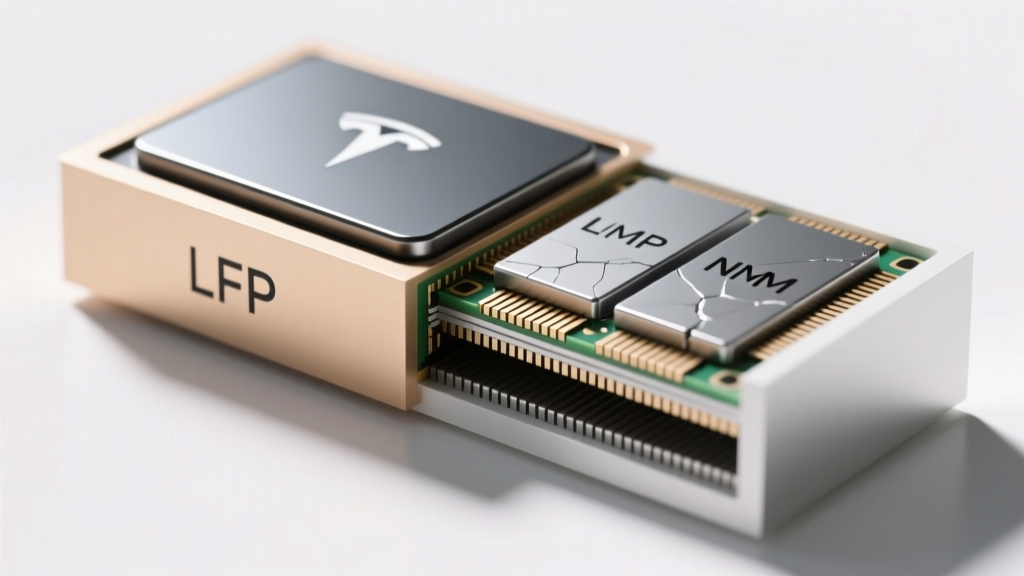
Search "solid state batteries Tesla" and you'll find a decade of hype promising a revolution just around the corner. As of 2026, Tesla still equips its vehicles with lithium-ion cells using either lithium iron phosphate (LFP) or nickel-based (NMC/NCA) chemistries — not solid-state. But that doesn't mean the conversation is irrelevant. Understanding where today's batteries stand, what's actually degrading in your pack, and when solid-state might realistically arrive is essential for anyone buying or owning an EV right now.
This guide covers the chemistry powering Tesla's 2026 lineup, real-world degradation data, warranty specifics, replacement costs, and the honest timeline for solid-state and silicon-anode technology.
LFP vs NMC vs NCA: The Chemistry Powering Tesla in 2026
Tesla currently uses two primary cell chemistries across its fleet, and the choice between them affects range, longevity, charging behavior, and cost. Here's the breakdown:
| Attribute | LFP (Lithium Iron Phosphate) | NMC/NCA (Nickel-based) |
|---|---|---|
| Used In (2026 Tesla) | Model 3 RWD, Model Y RWD | Model 3/Y Long Range & Performance, Model S, Model X, Cybertruck |
| Energy Density | Lower (~160-180 Wh/kg cell-level) | Higher (~250-300 Wh/kg cell-level) |
| Typical Pack Size | ~60 kWh usable | ~75-100+ kWh usable |
| Cycle Life | 3,000-5,000+ cycles to 80% SoH | 1,000-2,000 cycles to 80% SoH |
| Cold-Weather Performance | Reduced range, slower charging in cold | Better low-temp performance, preconditioning helps |
| Recommended Daily SoC | 100% (Tesla recommends periodic full charges for calibration) | 80-90% daily; 100% for trips only |
| Cost Advantage | No cobalt or nickel — cheaper to produce | Higher material cost |
| Thermal Stability | Excellent — less prone to thermal runaway | Good, but requires more active thermal management |
Which is better? Neither is universally superior. LFP wins on cycle life, cost, and safety — ideal for standard-range daily drivers who charge at home and don't need maximum range. NMC/NCA wins on energy density, enabling the 330+ mile EPA ratings on Long Range models. If you regularly drive 200+ miles between charges or live in a cold climate, NMC/NCA's energy density and cold performance matter. If you commute 30 miles and charge nightly, LFP's longevity advantage is significant.
How Long Do EV Batteries Actually Last?
The short answer: almost certainly longer than you'll own the car. But the data matters more than reassurance.
Tesla's 2025 Impact Report (the most recent published dataset) showed that Model 3 and Model Y packs retain approximately 85% of original capacity after 200,000 miles — which corresponds to roughly 13-15 years of average US driving (14,263 miles/year per FHWA data). Earlier Model S/X data showed packs retaining about 88% after 150,000 miles.
Independent fleet data from Recurrent Auto (a battery analytics firm tracking over 15,000 EVs) found that the median Tesla battery at 100,000 miles retains 90-93% State of Health (SoH), with the degradation curve flattening significantly after the initial 10-15% loss in the first 20,000-30,000 miles.
This initial drop is normal across lithium-ion chemistries: formation cycling and SEI (solid electrolyte interphase) layer buildup consume some lithium inventory early, then degradation slows to roughly 1-2% per year under typical use.
What this means practically: A 2026 Model Y Long Range with an EPA-rated 320 miles and a 78 kWh usable pack will likely still deliver ~275-285 miles of real-world range at 150,000 miles. That's still more than adequate for most daily driving and road trips.
Tesla Battery Warranty: What's Covered and What Isn't
| Model | Warranty Period | Mileage Limit | Minimum Capacity Retention |
|---|---|---|---|
| Model 3 RWD (LFP) | 8 years | 100,000 miles | 70% |
| Model 3 Long Range / Performance | 8 years | 120,000 miles | 70% |
| Model Y (all trims) | 8 years | 120,000 miles | 70% |
| Model S / Model X | 8 years | 150,000 miles | 70% |
| Cybertruck | 8 years | 150,000 miles | 70% |
The warranty guarantees that the high-voltage traction battery will retain at least 70% of its original capacity within the stated period or mileage (whichever comes first). If it drops below that threshold, Tesla will repair or replace the pack at no cost.
What's not covered: Damage from accidents, flooding, or improper modifications. Gradual degradation above 70% is considered normal wear. The warranty also doesn't cover range reduction from software-limited charging or accessory power draw. Note: this is the traction battery warranty — the 12V auxiliary battery (which powers electronics, not propulsion) has a separate, shorter warranty typically around 4 years/50,000 miles.
In practice, warranty claims for Tesla battery degradation are rare. The 70% threshold is a conservative floor that very few packs actually reach within the warranty window based on current fleet data.
EV Battery Replacement Cost: When and How Much
Most EV batteries will never need replacement during typical ownership. But for buyers of used EVs, high-mileage vehicles, or those planning 15+ year ownership, knowing the cost landscape matters.
| Model | Pack Size (usable) | Chemistry | Estimated Replacement Cost |
|---|---|---|---|
| Model 3 RWD | ~60 kWh | LFP | $10,000 - $14,000 |
| Model 3/Y Long Range | ~78 kWh | NMC | $14,000 - $18,000 |
| Model S / X | ~100 kWh | NMC/NCA | $18,000 - $25,000 |
| Cybertruck | ~123 kWh | NMC (4680 cells) | $20,000 - $28,000 |
These figures include parts and labor at Tesla Service Centers. Independent EV shops may offer refurbished pack swaps for 20-30% less. Costs have trended downward as cell prices fall — Bloomberg NEF reports average lithium-ion pack prices at roughly $115/kWh in 2025, down from $140/kWh in 2023.
When is replacement typically needed? Based on current degradation curves, most Tesla packs won't fall below 70% SoH until 250,000-300,000+ miles — well beyond average ownership periods. The vehicles most likely to need replacement are high-mileage fleet vehicles, salvaged-title cars with damaged packs, or early Model S examples from 2012-2015 with less robust thermal management.
What Actually Kills an EV Battery Faster
Lithium-ion degradation isn't random. Specific behaviors accelerate it, and understanding these helps you maximize pack life:
- Avoid sustained 100% SoC (NMC/NCA only): Store and daily-drive at 80-90%. Reserve 100% for road trips. LFP owners: Tesla recommends charging to 100% at least weekly for BMS calibration — this chemistry tolerates full charge well.
- Minimize DC fast charging frequency: Occasional Supercharging is fine. Daily DCFC sessions at 150-250 kW generate sustained heat that accelerates electrolyte decomposition. If you can Level 2 charge at home (7-11 kW), do so for daily use.
- Precondition before fast charging: Tesla's navigation-based preconditioning warms the pack to ~35-40°C for optimal charge acceptance. Charging a cold pack at high power causes lithium plating — permanent capacity loss.
- Avoid extreme SoC + extreme heat: A pack sitting at 100% SoC in 100°F+ ambient temperatures experiences the fastest calendar degradation. If storing, leave at ~50% SoC in shade or garage.
- Don't baby it too much: The difference between charging to 80% vs 90% daily is marginal over 100,000 miles. Use the car normally. The BMS and thermal management system are designed to protect the pack within wide operating windows.
How to Check Your Tesla's Battery Health (SoH)
Tesla doesn't display a direct State of Health percentage in the vehicle UI, but there are reliable ways to assess pack condition:
Method 1: Range comparison. Charge to 100% (on LFP) or note the projected range at your typical SoC. Compare the displayed rated range to the original EPA figure. A 2026 Model Y Long Range showing 290 rated miles at 100% after 50,000 miles suggests ~90% SoH (original EPA: 320 miles).
Method 2: Third-party apps. Tools like TeslaFi, Tessie, or Recurrent's battery health reports pull data from Tesla's API to track energy throughput, average SoC, and estimated degradation curves over time. These provide more granular SoH estimates than the in-car display.
Method 3: Service diagnostic. Tesla Service can run a battery health test that reports actual vs. nominal capacity. Request this if you're evaluating a used Tesla purchase or suspect abnormal degradation.
Solid-State Batteries and Tesla: The Realistic Timeline
Solid-state batteries replace the liquid electrolyte in current lithium-ion cells with a solid material (ceramic, sulfide, or polymer). The theoretical advantages are significant: higher energy density (potentially 400+ Wh/kg at the cell level), faster charging, improved safety (no flammable electrolyte), and longer cycle life.
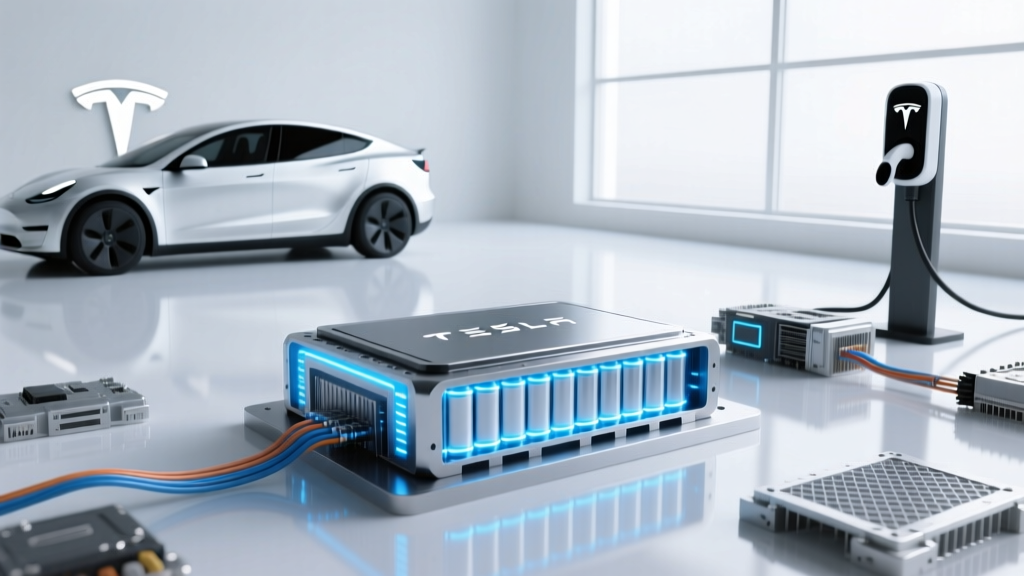
Where does Tesla stand? As of 2026, Tesla has not announced a production vehicle with solid-state cells. The company's battery strategy centers on its 4680 form-factor cells (used in Cybertruck and some Model Y variants), which improve energy density and reduce cost through structural pack design and dry electrode manufacturing — but these remain conventional lithium-ion chemistry with liquid electrolyte.
Industry context: Toyota has announced solid-state battery production targeting 2027-2028 for limited EV models, claiming 750 km (~466 miles) range and 10-minute fast charging. Nissan and Samsung SDI have similar 2028-2030 timelines. QuantumScape (backed by Volkswagen) continues prototype validation but has not reached mass production. None of these have been integrated into a Tesla product.
Silicon-anode technology — a nearer-term advancement — replaces graphite anodes with silicon-dominant materials to boost energy density by 20-40%. Companies like Sila Nanotechnologies and Amprius are shipping silicon-anode cells in limited applications, and Tesla's 4680 roadmap has referenced silicon-rich anode development. Expect incremental adoption in 2026-2028 model years, not a sudden switch.
The honest assessment: Solid-state batteries will likely appear in limited production vehicles from 2028-2030, initially at premium price points. Mass-market adoption at cost parity with current lithium-ion is more realistically a 2032+ proposition. If you're buying an EV in 2026, waiting for solid-state means waiting 4-6+ years — during which today's batteries already deliver 300+ mile range, 15-20 year lifespans, and fast-charging capability that covers real-world road trips.
Frequently Asked Questions
How long do Tesla batteries last in years and miles?
Based on Tesla's fleet data and independent tracking, expect 85-90% capacity retention at 200,000 miles (roughly 14-16 years of average driving). Most packs will outlast the vehicle's useful economic life. The 8-year/100,000-150,000 mile warranty (depending on model) guarantees at least 70% retention, but very few packs actually require warranty service.
How much does it cost to replace a Tesla battery?
Between $10,000 and $28,000 depending on model and pack size, including labor at a Tesla Service Center. Model 3 RWD (LFP, ~60 kWh) sits at the lower end; Cybertruck (~123 kWh) at the higher end. Independent shops may offer refurbished packs for 20-30% less. However, replacement is rarely needed — most packs retain 80%+ capacity beyond 200,000 miles.
What does the Tesla battery warranty actually cover?
Tesla warrants the high-voltage traction battery against defects and excessive degradation (below 70% capacity) for 8 years and 100,000-150,000 miles depending on the model. It does not cover damage from accidents, misuse, or environmental factors. The 12V auxiliary battery has a separate, shorter warranty. See Tesla's official warranty page for full terms.
LFP vs NMC: which Tesla battery chemistry should I choose?
Choose LFP (Model 3/Y RWD) if you prioritize longevity, lower cost, and daily home charging — it handles 100% SoC well and offers 3,000+ cycle life. Choose NMC/NCA (Long Range/Performance) if you need maximum range (320+ miles EPA), better cold-weather performance, or frequent road-trip capability. Neither is objectively "better" — the right choice depends on your driving pattern.
Will solid-state batteries make my current Tesla obsolete?
Not for years. Solid-state production is targeted for 2028-2030 at the earliest, initially in limited, premium vehicles. Mass-market cost parity is a 2032+ expectation. Current lithium-ion batteries (both LFP and NMC) already deliver 300+ mile range, 15-20 year lifespans, and adequate fast-charging speeds. Your 2026 Tesla won't be "obsolete" — it will be a proven, depreciated asset with a functional battery long after solid-state vehicles debut.
Does frequent Supercharging damage my Tesla battery?
Occasional DC fast charging has minimal impact. Daily Supercharging at 150-250 kW does accelerate degradation slightly due to sustained heat exposure, but Tesla's thermal management system actively cools the pack during charging. Real-world data shows heavy Supercharger users might see 2-5% additional degradation over 100,000 miles compared to exclusive Level 2 home chargers. If home charging is available, use it for daily needs and reserve Supercharging for road trips.