The Honest Answer: Are Solid-State Batteries Real?
Yes — solid-state batteries are real, but not in the way most headlines suggest. As of 2026, solid-state cells exist in laboratory settings, limited pilot programs, and low-volume production runs in Asia. Toyota has demonstrated prototype cells and announced plans for commercialization by the late 2020s. Nissan and Samsung SDI have shown similar timelines. But you cannot walk into a dealership today and buy a mass-market EV with a solid-state pack.
What you can buy right now are EVs with mature, well-understood lithium-ion batteries that, when properly cared for, routinely outlast the vehicles they power. This guide cuts through the hype to give you exact numbers on today's battery chemistries (LFP and NMC/NCA), real-world degradation data, warranty protections, replacement costs, and what solid-state and silicon-anode technology actually means for buyers in the near term.
LFP vs NMC/NCA: Today's Two Dominant Chemistries
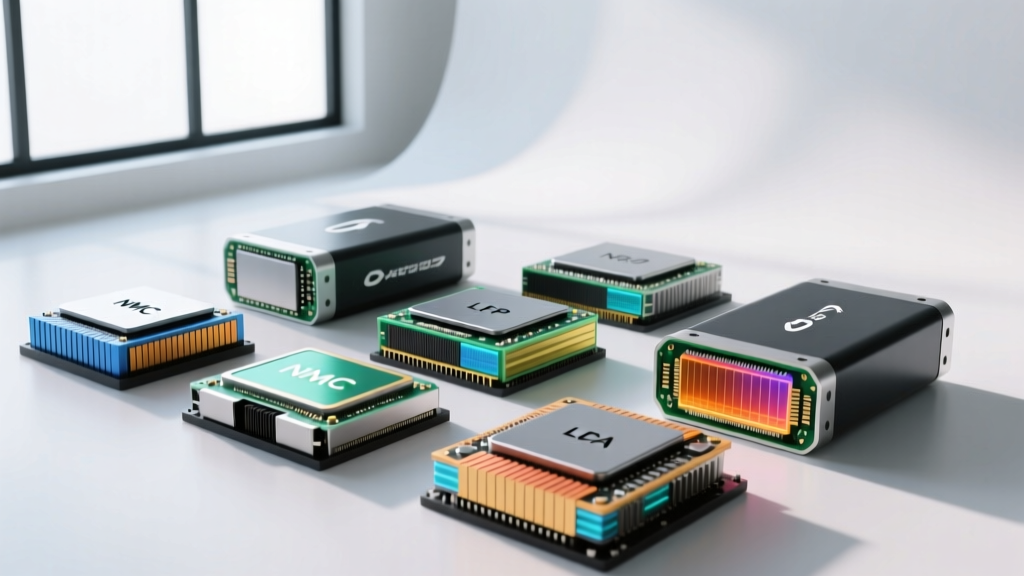
Every mainstream EV sold in the US in 2026 uses one of two lithium-ion cathode chemistries: LFP (lithium iron phosphate) or NMC/NCA (nickel manganese cobalt / nickel cobalt aluminum). The chemistry determines energy density, charging behavior, lifespan, cold-weather performance, and cost. Here's how they stack up:
| Attribute | LFP (Lithium Iron Phosphate) | NMC / NCA (Nickel-Based) |
|---|---|---|
| Energy Density | ~160–180 Wh/kg (cell level) | ~220–300 Wh/kg (cell level) |
| Typical Pack Size | 50–75 kWh | 75–100+ kWh |
| Cycle Life | 3,000–5,000+ cycles to 80% SoH | 1,500–2,500 cycles to 80% SoH |
| Calendar Life | Excellent — less degradation at high SoC | Good — more sensitive to sustained high SoC |
| Cold-Weather Performance | More range loss in freezing temps (~30–40%) | Better cold retention (~20–30% loss) |
| Recommended Daily Charge Limit | 100% (charge to full regularly) | 80% for daily use, 100% only for trips |
| DC Fast-Charging Tolerance | Handles frequent fast charging well | More stress from frequent fast charging |
| Cost per kWh | ~$80–$100 (cell level) | ~$110–$140 (cell level) |
| Critical Minerals | No cobalt or nickel | Requires cobalt and/or nickel |
| Example Vehicles (2026) | Tesla Model 3 RWD, Model Y RWD, base Ford Mustang Mach-E Select | Tesla Model 3 LR, Hyundai Ioniq 5 LR, Rivian R1T, Porsche Taycan |
Which is better?
Neither is universally superior — the right choice depends on your driving pattern:
- Choose LFP if: You mostly drive locally, charge at home nightly, want the longest possible battery lifespan, and don't need maximum range. LFP's ability to sit at 100% SoC daily without accelerated degradation makes it ideal for commuters who can top off every night. The lower cost also helps keep vehicle MSRPs down.
- Choose NMC/NCA if: You regularly take long road trips, need maximum EPA range (300+ miles), live in a cold climate, or want faster DC fast-charging speeds. NMC packs store more energy per kilogram, enabling longer-range vehicles without excessive weight.
How Long Do EV Batteries Actually Last?
This is the question that drives more EV purchase hesitation than any other. The data, however, is reassuring. Modern EV traction batteries are engineered to last the life of the vehicle — typically 150,000–200,000+ miles — with manageable degradation.
Real-World Degradation Data
Based on fleet data from Geotab's analysis of over 10,000 EVs, Tesla owner-reported data, and manufacturer testing, here's what degradation looks like in practice:
- Year 1: ~2–3% capacity loss (initial formation loss)
- Years 2–4: ~1% per year (linear, slow degradation)
- Years 5–8: ~0.5–1% per year
- At 8 years / 100,000 miles: Most packs retain 85–92% of original capacity
- At 150,000 miles: Average retention ~80–88%
- At 200,000 miles: Average retention ~75–85%
LFP packs generally show slower degradation, with many retaining 90%+ at 100,000 miles due to the chemistry's inherent stability and tolerance for full-charge cycles.
Context: A Model 3 Long Range with an EPA range of 341 miles that degrades to 85% capacity at 100,000 miles still delivers ~290 miles of range. That's more than adequate for virtually all daily driving and most road trips with a single DC fast-charge stop.
When is replacement typically needed?
For the vast majority of owners: never. Battery replacement is typically only necessary if a pack suffers a manufacturing defect (covered under warranty), physical damage from a collision, or — in rare cases — reaches end-of-life after 200,000+ miles. Most EVs are retired for other reasons (body damage, electronics failure, owner preference) before the battery becomes unusable.
What Does the Battery Warranty Actually Cover?
Federal law mandates a minimum 8-year/100,000-mile warranty on EV battery packs for emissions-related compliance, and nearly every manufacturer meets or exceeds this standard. Here's how the major warranties compare:
| Manufacturer | Warranty Period | Mileage Limit | Capacity Retention Threshold | Notes |
|---|---|---|---|---|
| Tesla (Model 3/Y RWD – LFP) | 8 years | 100,000 miles | 70% | Whichever comes first |
| Tesla (Model 3/Y LR – NMC) | 8 years | 120,000 miles | 70% | Longer mileage on LR/AWD |
| Hyundai / Kia | 10 years | 100,000 miles | 70% | Among the longest time coverage |
| Ford (Mustang Mach-E) | 8 years | 100,000 miles | 70% | Standard across trims |
| GM (Chevrolet, Cadillac) | 8 years | 100,000 miles | 60–70% | Varies by model; Ultium packs |
| Rivian | 8 years | 175,000 miles | 70% | Higher mileage cap for truck use |
| Volkswagen (ID.4) | 8 years | 100,000 miles | 70% | Transferable to second owner |
What's covered: Defects in materials or workmanship, and capacity loss below the stated threshold (typically 70% of original capacity). If your 82 kWh pack drops below ~57.4 kWh usable capacity within the warranty window, the manufacturer must repair or replace it — usually with a refurbished pack of equivalent capacity.
What's not covered: Damage from accidents, flooding, or unauthorized modifications. Some warranties exclude degradation caused by consistently ignoring charge-limit recommendations (e.g., leaving an NMC pack at 100% for weeks), though this is difficult for manufacturers to enforce and rarely litigated.
How Much Does an EV Battery Replacement Cost?
If you're outside the warranty window and need a replacement — a scenario that applies to a small fraction of owners — here are current out-of-pocket costs based on manufacturer service data and third-party repair shops:
| Vehicle | Battery Size | Chemistry | Estimated Replacement Cost | Notes |
|---|---|---|---|---|
| Tesla Model 3 RWD | ~60 kWh | LFP | $8,000–$12,000 | Prices declining as LFP costs drop |
| Tesla Model 3 Long Range | ~82 kWh | NMC | $12,000–$16,000 | Refurbished packs available at lower cost |
| Hyundai Ioniq 5 | ~77.4 kWh | NMC | $11,000–$15,000 | Module-level repair sometimes possible |
| Ford Mustang Mach-E ER | ~91 kWh | NMC | $14,000–$18,000 | Larger pack = higher cost |
| Chevrolet Bolt EV/EUV | ~65 kWh | NMC | $9,000–$14,000 | Post-recall packs are improved design |
| Rivian R1T / R1S | ~128 kWh (Large) | NMC | $18,000–$25,000 | Large pack; modular replacement may reduce cost |
| Porsche Taycan | ~93.4 kWh | NMC | $20,000–$28,000 | Premium pricing; performance-oriented cells |
Important context: These are worst-case, full-pack replacement figures. In practice, many battery issues involve a single faulty module or a BMS (battery management system) fault that can be repaired for $1,000–$4,000. Additionally, the third-party EV battery repair market is growing, with independent shops offering module-level replacements at 40–60% lower cost than OEM full-pack swaps. Cell prices continue to decline year over year — the average lithium-ion cell price fell below $100/kWh in 2025, meaning replacement costs will be lower in 2030 than they are today.
Factors That Affect Battery Longevity
Not all miles are created equal. A battery's lifespan depends heavily on how it's used and what conditions it endures. Here are the primary factors, ranked by impact:
1. Extreme State of Charge (SoC) Habits
For NMC/NCA packs, sitting at 100% SoC for extended periods accelerates electrolyte decomposition and cathode degradation. Similarly, regularly draining below 10% stresses the anode. The ideal daily range for NMC is 20–80%. LFP packs are far more tolerant and manufacturers like Tesla and BYD recommend charging LFP to 100% at least once per week for accurate BMS calibration.
2. Temperature Extremes
Battery cells degrade faster when consistently exposed to high temperatures (above 95°F / 35°C). This is why liquid-cooled thermal management systems — standard on virtually every 2026 EV — are critical. In hot climates like Arizona or Texas, garage parking meaningfully extends battery life. Extreme cold doesn't cause permanent degradation but does reduce available range temporarily and can cause lithium plating if fast-charging without preconditioning.
3. DC Fast-Charging Frequency
DC fast charging (50–350 kW) generates significant heat within cells. Occasional fast charging on road trips has negligible impact, but daily fast-charging — especially at 250+ kW without adequate thermal management — accelerates degradation. A study of Tesla fleet data showed vehicles that fast-charged more than 90% of the time experienced roughly 2–3% more degradation over 100,000 miles compared to those primarily using Level 2 home charging.
4. Depth of Discharge (DoD)
Shallow cycles (e.g., using 30% of the battery and recharging) are gentler than deep cycles (using 80–90% before recharging). This is why having more battery capacity than you need daily is beneficial — a 300-mile range EV driven 40 miles per day experiences very shallow cycles.
- ✅ Set daily charge limit to 80% for NMC; 100% for LFP
- ✅ Use Level 2 home charging as your primary method
- ✅ Precondition the battery before DC fast charging (most EVs do this automatically when you navigate to a charger)
- ✅ Avoid leaving the car at 100% SoC for more than a few hours
- ✅ Park in shade or a garage in hot climates when possible
- ✅ Don't let the car sit below 10% SoC for extended periods (especially in cold weather)
- ✅ Use the vehicle's built-in scheduled charging feature to finish charging right before you drive
- ❌ Avoid daily 350 kW ultra-fast charging unless necessary
- ❌ Don't store the vehicle at 0% or 100% SoC for weeks — aim for ~50% for long-term storage
How to Monitor Your Battery's State of Health (SoH)
State of Health (SoH) is the percentage of original capacity your battery retains. A new pack is 100% SoH; a pack that held 82 kWh when new and now holds 73.8 kWh is at 90% SoH. Here's how to check it:
Built-In Vehicle Displays
Most 2026 EVs show battery health information in the infotainment or mobile app. Tesla's app displays "Battery Health" as a percentage under the vehicle specifications. Hyundai/Kia's Bluelink app shows similar data. GM's Ultium-based vehicles provide SoH through the myChevrolet/myCadillac apps.
OBD-II Diagnostic Tools
Third-party OBD-II readers like the OBDLink SX paired with apps such as EV Health or LeafSpy (for Nissan) can read the BMS-reported SoH directly. These tools typically cost $30–$100 and provide more granular data than the built-in displays, including individual cell voltage variance and pack temperature.
Manual Range Calculation
A rough but practical method: charge to 100% (on LFP) or your normal limit and note the displayed range. Compare it to the EPA rating adjusted for your charge limit. If your Model 3 LR (EPA 341 miles at 100%) shows 290 miles at 100% after 50,000 miles, your SoH is approximately 85%. This method is less precise than BMS data but requires no extra equipment.
Professional Assessment
For used EV buyers, services like Recurrent Auto (now part of battery health reporting) offer verified battery health reports that show historical range data and SoH trends. Many dealerships can also pull a detailed battery health report during a pre-purchase inspection.
Solid-State and Silicon-Anode Batteries: What's Realistic?
Solid-state batteries replace the liquid electrolyte in current lithium-ion cells with a solid material (ceramic, glass, or polymer). The theoretical advantages are significant: higher energy density (potentially 400–500 Wh/kg at the cell level), faster charging, improved safety (no flammable liquid electrolyte), and longer cycle life. But translating lab results to mass production at automotive scale is an enormous engineering and economic challenge.
Current Status (2026)
- Toyota: Has demonstrated prototype solid-state cells and announced plans for limited commercialization around 2027–2028, initially in low-volume hybrid applications before full EV deployment. Timeline has shifted multiple times.
- Nissan: Operating a solid-state pilot production line in Yokohama, targeting 2028–2029 for first vehicles.
- Samsung SDI: Showing samples to automakers with a stated 2027 production target, but volume and cost remain unproven.
- QuantumScape: Has shipped prototype cells to automotive partners (including Volkswagen's PowerCo) for testing. Multi-layer cells have demonstrated 800+ cycles with less than 10% degradation. Production timeline remains uncertain.
- Chinese manufacturers (BYD, CATL): Pursuing semi-solid-state designs as an intermediate step, with CATL announcing a "condensed matter" battery for aviation and premium EVs.
Silicon-Anode Technology: The Near-Term Upgrade
While solid-state gets the headlines, silicon-anode batteries are the more immediate improvement. By replacing graphite anodes with silicon-dominant materials, cells can store 20–40% more energy at the same weight. Companies like Sila Nanotechnologies (partnered with Mercedes-Benz for the G-Class EV) and Group14 (backed by Porsche) have begun commercial production of silicon-anode materials. Expect silicon-anode cells in premium EVs by 2027–2028, with mainstream adoption by the early 2030s.
Frequently Asked Questions
How long do EV batteries last in years and miles?
Based on fleet data, most modern EV batteries retain 80–90% of original capacity at 150,000 miles and 8–10 years of use. Many packs reach 200,000+ miles before dropping to 70–80% capacity. With proper care (Level 2 charging, moderate SoC habits, thermal management), outlasting 15 years and 200,000 miles is common. The vehicle's body, suspension, or electronics typically need replacement before the battery does.
How much does an EV battery cost to replace in 2026?
Full-pack replacements range from ~$8,000 for a smaller LFP pack (Tesla Model 3 RWD, ~60 kWh) to $25,000+ for large premium packs (Rivian R1T Large Pack, Porsche Taycan). However, most issues involve individual modules or BMS faults repairable for $1,000–$4,000. Cell prices continue to decline, so replacement costs in 2030 will likely be 20–30% lower than today.
What does the battery warranty cover?
All major manufacturers cover defects and capacity loss below 70% (some at 60%) for a minimum of 8 years/100,000 miles. Hyundai and Kia extend this to 10 years. If your battery degrades below the threshold within the warranty period, the manufacturer replaces or refurbishes it at no cost. Warranties are typically transferable to second owners, which supports used EV resale values.
How do I check and maximize my EV battery health?
Check SoH through your vehicle's app, an OBD-II reader, or by comparing 100%-charge displayed range to the original EPA figure. Maximize lifespan by charging primarily on Level 2, setting daily limits to 80% (NMC) or 100% (LFP), preconditioning before DC fast charging, avoiding extreme SoC storage, and parking in shade in hot climates.
LFP vs NMC — which chemistry should I choose?
Choose LFP for maximum longevity, lower cost, and tolerance for daily 100% charging — ideal for commuters with home charging and daily drives under 100 miles. Choose NMC/NCA for maximum range, better cold-weather performance, and faster DC charging — ideal for road-trippers and cold-climate drivers. Both chemistries will comfortably last the life of the vehicle with proper care.
Should I wait for solid-state batteries before buying an EV?
No. Solid-state batteries remain in prototype and pilot stages as of 2026, with the earliest commercial availability expected around 2028–2030 in limited, premium applications. Mass-market solid-state EVs at competitive prices are unlikely before the early-to-mid 2030s. Today's lithium-ion batteries are proven, warrantied for 8–10 years, and declining in cost. Waiting 5–8 years for speculative technology means missing years of fuel savings, lower maintenance costs, and available federal tax credits under IRS §30D.