The promise of solid-state batteries for EVs dominates headlines: 600-mile range, 10-minute charging, no fire risk. But if you're shopping for an EV today—or planning to in the next few years—the battery in your driveway will almost certainly use a liquid electrolyte. Understanding what's real now versus what's on the horizon is the single most important factor in making a confident EV purchase.
This guide covers the current state of EV battery technology in 2026, from the LFP and NMC chemistries powering today's models to the solid-state and silicon-anode breakthroughs arriving later this decade. We'll also break down degradation data, warranty terms, replacement costs, and exactly how to maximize your battery's lifespan.
Current EV Battery Chemistry: LFP vs NMC vs NCA
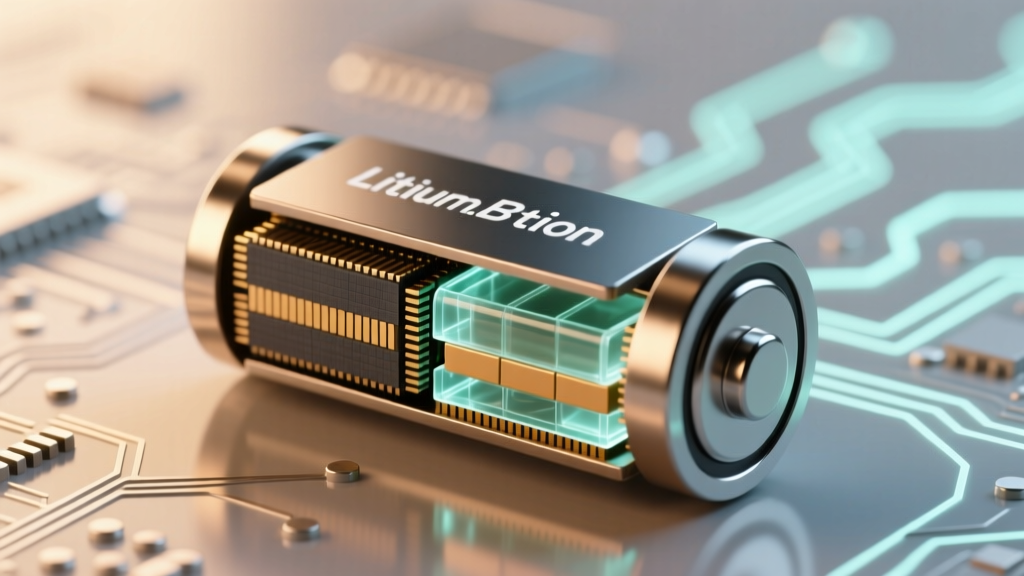
Every EV sold in the US today uses a lithium-ion traction battery with one of two dominant cathode chemistries: lithium iron phosphate (LFP) or nickel manganese cobalt (NMC), with nickel cobalt aluminum (NCA) appearing in some Tesla and legacy applications. The chemistry determines your range, charging behavior, longevity, and even how you should charge at home.
NMC/NCA batteries offer higher energy density—meaning more miles per kilogram of battery weight. This is why long-range vehicles like the Hyundai Ioniq 6 (84 kWh usable, NMC, EPA 361 miles) and the Rivian R1T Dual-Motor (149 kWh, NMC, EPA 352 miles) rely on nickel-rich chemistries. The trade-off: NMC cells degrade slightly faster over time, are more sensitive to sustained high states of charge, and carry higher raw-material costs due to cobalt and nickel content.
LFP batteries use iron and phosphate—abundant, inexpensive materials with no cobalt or nickel. They're heavier per kWh, which limits their use in ultra-long-range vehicles, but they offer dramatically longer cycle life, tolerate daily 100% charging, and resist thermal runaway far better. Tesla's Model 3 Standard Range, the Ford Mustang Mach-E Select (base trims), and most BYD models use LFP. Manufacturers increasingly recommend charging LFP batteries to 100% at least weekly to keep the battery management system (BMS) calibrated.
| Attribute | LFP (Lithium Iron Phosphate) | NMC / NCA (Nickel-based) |
|---|---|---|
| Energy Density | ~160–180 Wh/kg (cell-level) | ~250–300 Wh/kg (cell-level) |
| Typical Cycle Life | 3,000–5,000+ cycles to 80% SoH | 1,000–2,000 cycles to 80% SoH |
| Cold-Weather Performance | Greater range loss below 32°F; slower cold charging | Better low-temp conductivity; less winter range penalty |
| Daily Charging Recommendation | 100% OK; manufacturers recommend periodic full charges | 80% daily limit recommended; 100% for trips only |
| Thermal Stability | Excellent; very resistant to thermal runaway | Good; requires robust BMS and cooling systems |
| Cost per kWh (2026) | ~$80–100/kWh (cell-level) | ~$110–140/kWh (cell-level) |
| Common In Vehicles | Tesla Model 3 RWD, Ford Mach-E Select, BYD models | Hyundai Ioniq 5/6 LR, Rivian R1T/S, BMW iX, Tesla LR/Perf |
How Long Do EV Batteries Last? Real Degradation Data
The question every prospective EV buyer asks: how long will the battery last? The answer, backed by fleet data and manufacturer testing, is almost always longer than the car itself.
According to data compiled by Recurrent Auto, which tracks over 15,000 EVs in real-world conditions, the average EV battery loses approximately 5–8% of its original capacity over the first 100,000 miles (roughly 8–10 years of average driving). Degradation follows a characteristic curve: a steeper initial drop of 2–4% in the first 20,000–30,000 miles, followed by a long, slow linear decline.
Typical EV Battery Degradation Curve (NMC, liquid-cooled):
- Year 1 / 15,000 mi: ~97–98% State of Health (SoH) — initial formation loss
- Year 3 / 45,000 mi: ~94–96% SoH
- Year 5 / 75,000 mi: ~92–94% SoH
- Year 8 / 120,000 mi: ~89–92% SoH
- Year 10 / 150,000 mi: ~86–90% SoH
LFP batteries typically show even slower degradation, with many retaining 93–95% SoH at 100,000 miles. Tesla's 2025 Impact Report states that Model 3/Y batteries retain an average of 88% capacity at 200,000 miles.
At 90% SoH, a vehicle with an original EPA range of 320 miles still delivers ~288 miles—well within daily usability. The battery isn't "dead" at the warranty threshold; it simply holds less energy. Most EV batteries will outlast the vehicle's body, interior, and suspension components.
What Does the EV Battery Warranty Actually Cover?
Federal law mandates a minimum 8-year / 100,000-mile battery warranty for all EVs sold in the US. California Air Resources Board (CARB) states extend this to 10 years / 150,000 miles. But the details matter enormously.
| Manufacturer | Warranty Period | Mileage Limit | Capacity Retention Threshold |
|---|---|---|---|
| Tesla (Model 3/Y RWD, LFP) | 8 years | 100,000 miles | 70% minimum SoH |
| Tesla (Model 3/Y LR/Perf) | 8 years | 120,000 miles | 70% minimum SoH |
| Hyundai / Kia | 10 years | 100,000 miles | 70% minimum SoH |
| Ford (Mach-E, F-150 Lightning) | 8 years | 100,000 miles | 70% minimum SoH |
| GM (Ultium-based) | 8 years | 100,000 miles | 70% minimum SoH (60% for Bolt EV legacy) |
| BMW | 8 years | 100,000 miles | 70% minimum SoH |
| Rivian | 8 years | 175,000 miles (Max pack) | 70% minimum SoH |
The critical number is the capacity retention threshold—almost universally set at 70%. This means the manufacturer will repair or replace the battery only if its State of Health drops below 70% within the warranty period. Given the degradation data above, hitting 70% SoH under normal use within 8 years is extremely rare. Warranties cover manufacturing defects and abnormal degradation, not damage from accidents, flooding, or improper modifications.
If a warranty replacement is needed, manufacturers typically replace failed modules rather than the entire pack, reducing cost and downtime. Full pack replacements are reserved for catastrophic damage or widespread cell failure.
EV Battery Replacement Cost: What You'd Actually Pay
Out-of-warranty battery replacement is the nightmare scenario EV skeptics cite. The costs are real—but the context matters more. Most EV batteries never need replacement during the vehicle's useful life. When they do, it's typically due to collision damage, manufacturing defect (covered by warranty), or extreme high-mileage use well beyond 200,000 miles.
| Vehicle | Battery Size | Chemistry | Estimated Pack Cost | Labor + Installation | Total Range |
|---|---|---|---|---|---|
| Tesla Model 3 RWD | 60 kWh | LFP | $5,500–$7,500 | $1,500–$2,500 | $7,000–$10,000 |
| Tesla Model Y Long Range | 82 kWh | NMC | $9,000–$12,000 | $2,000–$3,000 | $11,000–$15,000 |
| Hyundai Ioniq 5 Long Range | 84 kWh | NMC | $9,500–$13,000 | $2,000–$3,500 | $11,500–$16,500 |
| Ford F-150 Lightning Ext. Range | 131 kWh | NMC | $15,000–$20,000 | $3,000–$4,500 | $18,000–$24,500 |
| Rivian R1T Max Pack | 149 kWh | NMC | $16,000–$22,000 | $3,000–$5,000 | $19,000–$27,000 |
| Chevrolet Equinox EV | 85 kWh | NMC (Ultium) | $8,500–$12,000 | $2,000–$3,000 | $10,500–$15,000 |
Cell-level costs have dropped from over $1,000/kWh in 2010 to roughly $90–140/kWh in 2026, according to BloombergNEF tracking. As pack designs improve and cell prices continue declining, replacement costs will trend lower. It's also worth noting that a refurbished or remanufactured pack (using cells from decommissioned EVs) can reduce costs by 30–40% for older vehicles.
The honest framing: an out-of-warranty battery replacement is comparable to a major engine or transmission rebuild on a gas car—expensive, but rare, and typically occurring at mileages where the vehicle's residual value is already low.
Factors That Accelerate EV Battery Degradation
Not all EV miles are created equal. How you charge, drive, and store your vehicle has a measurable impact on long-term battery health. Here are the primary degradation accelerants, ranked by impact:
- Sustained high State of Charge (NMC): Storing an NMC battery at 100% SoC for days or weeks stresses the cathode. Daily charging to 80% and only using 100% for road trips can add years of useful life. LFP batteries are exempt from this concern.
- Frequent DC fast charging: Regular use of 150+ kW DC fast charging generates heat that accelerates electrolyte breakdown. Occasional road-trip fast charging is fine; daily reliance on DCFC (instead of Level 2 home charging) can increase degradation by 1–3% over 100,000 miles. Preconditioning the battery before fast charging—built into most modern EVs—mitigates this significantly.
- Extreme heat exposure: Parking in direct sun in 100°F+ climates without thermal management active accelerates calendar aging. Vehicles with active liquid cooling (Tesla, Hyundai E-GMP, GM Ultium, Rivian) handle this far better than passively cooled packs.
- Extreme cold charging: Charging an ice-cold battery—especially at high power—can cause lithium plating on the anode, permanently reducing capacity. Battery preconditioning (automatic when you navigate to a charger in most EVs) prevents this.
- Deep discharge cycles: Regularly driving the battery below 10% SoC stresses cells. Most EVs have a buffer (typically 2–5 kWh below the displayed 0%) to protect against this, but habitually running the pack near empty isn't ideal.
- High-mileage rapid cycling: Fleet vehicles that charge and discharge 1–2 full cycles daily will degrade faster than a commuter car cycling 20–30% per day. Partial cycles are gentler on lithium-ion chemistry.
How to Check and Monitor Your EV Battery Health
Knowing your battery's State of Health (SoH) gives you confidence in your remaining range and resale value. Here's how to check it:
Manufacturer apps and in-car displays: Tesla provides a battery health estimate in the service menu. Hyundai/Kia's Bluelink and Ford's FordPass display SoH metrics. BMW's iDrive includes a battery health report. These are convenient but sometimes approximate.
OBD-II diagnostic tools: Devices like the OBDLink SX paired with apps such as LeafSpy (Nissan Leaf) or Scan My Tesla can read detailed BMS data, including individual cell voltages, pack capacity in kWh, and calculated SoH percentage. This is the most granular data available to owners.
Third-party services: Recurrent offers a free battery health report that connects to your vehicle's telematics and provides a SoH estimate benchmarked against their fleet data. This is increasingly used by EV buyers in the used-car market to verify battery condition before purchase.
Manual range tracking: Charge to 100% (LFP) or your known full-charge display value (NMC), then compare the displayed range to the original EPA sticker adjusted for your typical conditions. A consistent, gradual decline is normal; a sudden drop suggests a cell imbalance or module issue worth investigating under warranty.
Solid State Batteries for EVs: What They Are and When They're Coming
Solid-state batteries replace the flammable liquid electrolyte in current lithium-ion cells with a solid material—typically a ceramic, sulfide glass, or polymer. This change unlocks several theoretical advantages:
- Higher energy density: Solid electrolytes enable lithium-metal anodes, potentially reaching 400–500 Wh/kg at the cell level (vs. 250–300 Wh/kg for today's NMC). That translates to 500+ mile ranges in sedan-sized battery packs.
- Faster charging: Solid-state cells can theoretically accept higher charge rates without lithium plating, enabling 10–80% charges in under 10 minutes.
- Improved safety: No flammable liquid electrolyte means dramatically reduced thermal runaway risk.
- Better cold performance: Solid electrolytes maintain ionic conductivity at lower temperatures more effectively than liquids.
So why can't you buy one today? Manufacturing solid-state cells at automotive scale remains unsolved. Challenges include maintaining consistent contact between the solid electrolyte and electrodes during charge/discharge expansion cycles, dendrite formation in lithium-metal anodes, and production costs that are currently 3–5x higher than conventional lithium-ion.
Realistic timeline (announced/preliminary):
- Toyota: Has announced a solid-state battery targeting 2027–2028 production, claiming 750 km (466 miles) of range and 10-minute fast charging. Limited initial deployment in a single model, with scale production not expected before 2030. These are preliminary, manufacturer-announced figures.
- Samsung SDI: Targeting 2027 pilot production with a sulfide-based solid electrolyte, aiming for 900 Wh/L volumetric energy density. Automotive availability estimated 2028–2029 at earliest.
- QuantumScape: The VW-backed startup has delivered prototype cells to automotive partners and announced a target of 2026–2027 for initial low-volume production. Real-world vehicle availability remains unconfirmed and should be considered forward-looking.
- Nissan: Announced a solid-state pilot plant and a 2028 target for production vehicles, with cost targets of $75/kWh at scale.
The honest assessment: solid-state batteries will likely appear in limited, premium vehicles starting around 2028–2029, with mainstream affordability arriving in the early 2030s. If you're buying an EV between now and 2029, you'll be using liquid-electrolyte technology—and that's fine, because today's batteries are already good enough for 200,000+ miles of reliable service.
Silicon-anode batteries represent a nearer-term incremental improvement. Companies like Sila Nanotechnologies and Group14 are replacing graphite anodes with silicon composites, boosting energy density by 20–40% without the manufacturing challenges of full solid-state. These are beginning to appear in 2025–2026 model-year vehicles and represent a practical bridge technology.
Maximizing Your EV Battery's Lifespan: A Practical Framework
Based on the data and chemistry fundamentals above, here's how to get 200,000+ miles from your EV battery with minimal degradation:
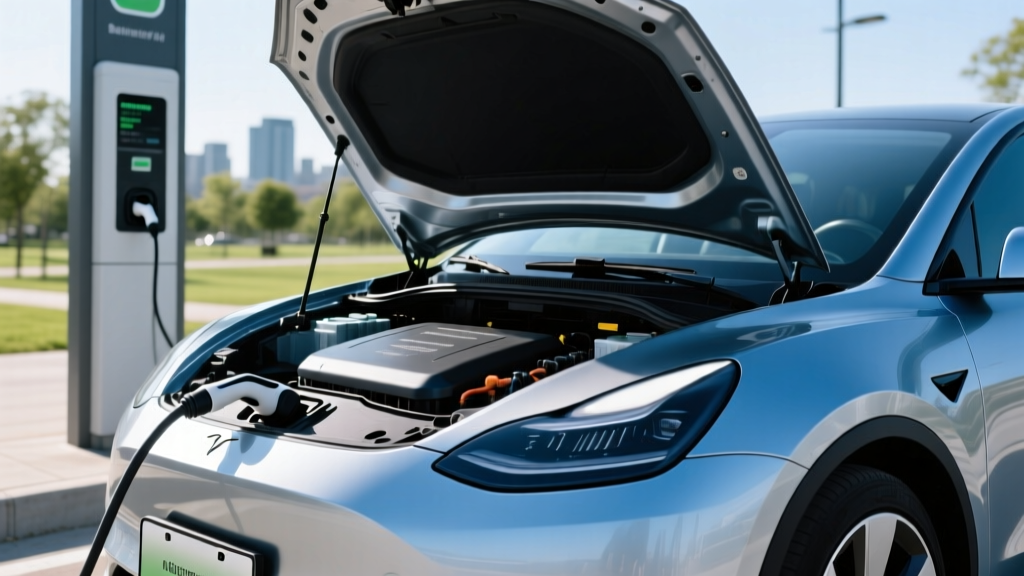
- Charge at home on Level 2 whenever possible. A 7–11 kW Level 2 charger adds 25–40 miles per hour of charging and generates far less heat than DC fast charging. Home charging is the single biggest factor in long-term battery health.
- Set charge limits appropriate to your chemistry. NMC: 80% daily, 100% for trips. LFP: 100% at least weekly for BMS calibration.
- Use preconditioning. When navigating to a DC fast charger, your EV will preheat or precool the battery to the optimal temperature (typically 85–95°F). This protects the cells and enables peak charge rates.
- Avoid parking at extreme SoC in heat. If you're leaving your EV at the airport for a week in July, set the charge limit to 50–60% rather than 100%.
- Don't baby it excessively. Modern BMS systems are sophisticated. Occasional fast charging, 100% charges, and cold-weather driving won't destroy your battery—they're designed for real-world use. The goal is consistent good habits, not anxiety-driven optimization.
Frequently Asked Questions
How long do EV batteries last in years and miles?
Based on fleet data from Recurrent Auto and manufacturer reports, most EV batteries retain 86–92% of original capacity at 150,000 miles (approximately 10–12 years of average US driving). With proper care, reaching 200,000+ miles with 80%+ SoH is common. The battery typically outlasts other vehicle components.
How much does an EV battery cost to replace out of warranty?
Replacement costs range from approximately $7,000–$10,000 for smaller packs (60 kWh, LFP) to $18,000–$27,000 for large packs (130–150 kWh, NMC). However, most batteries never require replacement during the vehicle's useful life. Costs continue declining as cell prices fall and refurbished pack options expand.
What does the federal battery warranty cover?
All US-market EVs carry a minimum 8-year/100,000-mile battery warranty (10 years/150,000 miles in CARB states). Coverage applies if the battery's State of Health drops below the manufacturer's threshold—typically 70%—due to manufacturing defects or abnormal degradation. Damage from accidents, flooding, or unauthorized modifications is excluded.
LFP vs NMC — which battery chemistry is better?
Neither is universally better; the right choice depends on your priorities. Choose LFP if you want maximum longevity, lower cost, daily 100% charging convenience, and don't need the absolute longest range. Choose NMC if you need maximum range (300+ miles), better cold-weather performance, or are buying a larger vehicle where energy density matters for weight and packaging.
How do I check my EV's battery State of Health?
Most manufacturers provide SoH data through their connected-car apps or in-vehicle service menus. For more granular data, an OBD-II scanner with EV-specific software can read individual cell voltages and precise SoH percentages. Third-party services like Recurrent also offer free battery health reports using telematics data.
Are solid state batteries for EVs available now?
No. As of 2026, solid-state batteries remain in prototype and pilot-production stages. Toyota, Samsung SDI, QuantumScape, and Nissan have announced targets between 2027–2030 for initial limited production, but mainstream availability at competitive pricing is not expected until the early 2030s. All currently available EVs use liquid-electrolyte lithium-ion batteries with LFP or NMC/NCA chemistry.
Does frequent DC fast charging damage my battery?
Occasional DC fast charging on road trips has negligible impact. However, daily reliance on DCFC (150+ kW) instead of Level 2 home charging can increase long-term degradation by 1–3% over 100,000 miles due to sustained heat generation. Always use battery preconditioning when navigating to a fast charger to minimize stress.