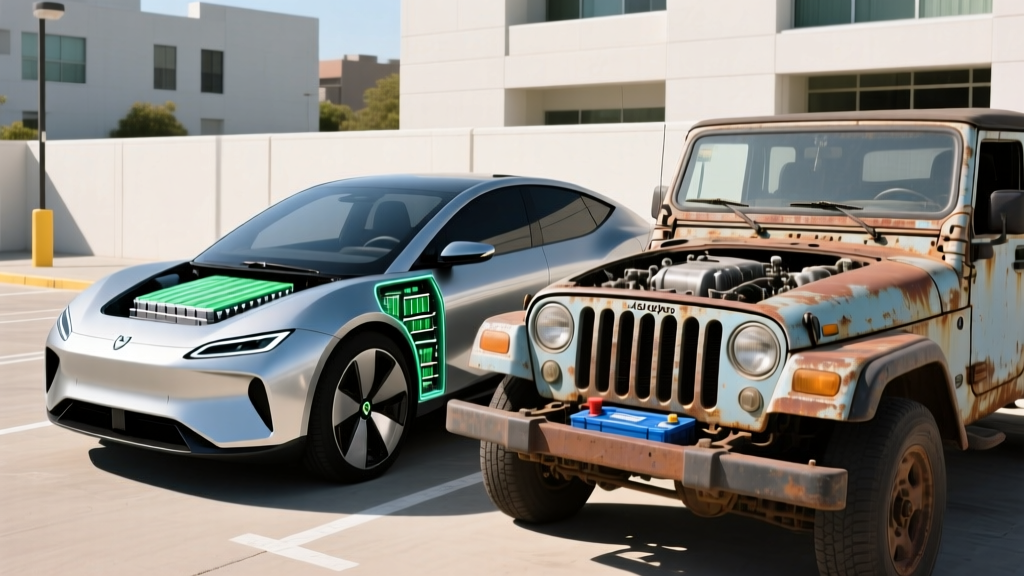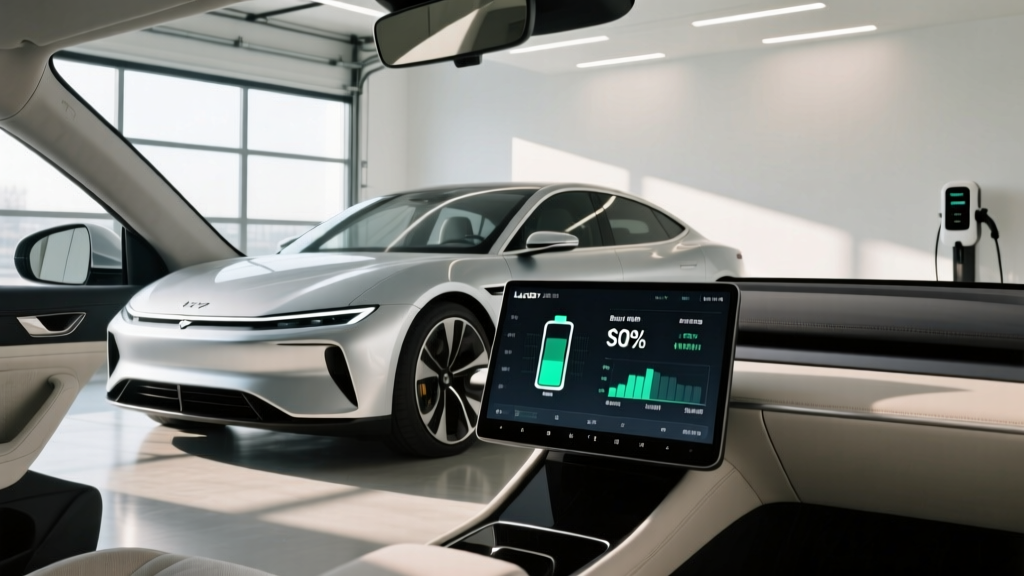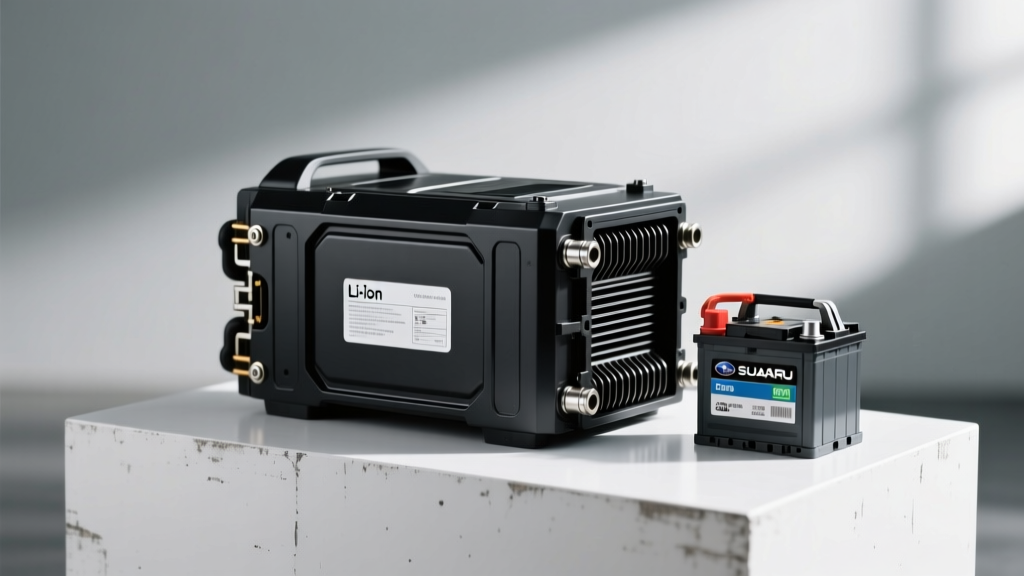
If you follow EV news, you have likely seen headlines promising that solid-state batteries will revolutionize electric vehicles with doubled range, ultra-fast charging, and near-zero degradation. As of 2026, those batteries remain largely in pilot production and limited fleet testing — not in any vehicle you can walk into a dealership and buy. Meanwhile, today's lithium-ion packs using LFP and NMC chemistries continue to improve incrementally, offering 200,000+ mile lifespans and robust warranty coverage.
This guide separates the solid-state hype from the engineering reality, then gives you the data you actually need to evaluate today's EV batteries: chemistry trade-offs, real-world degradation figures, warranty terms, replacement costs, and how to maximize the pack you already have.
What Solid-State Batteries Are — and Why They Aren't Here Yet
A solid-state battery replaces the liquid electrolyte in a conventional lithium-ion cell with a solid material (ceramic, sulfide glass, or polymer). The theoretical advantages are significant:
- Higher energy density: Solid electrolytes can enable lithium-metal anodes, potentially pushing cell-level energy density from today's ~250–300 Wh/kg to 400–500 Wh/kg.
- Faster charging: Some prototypes demonstrate 10–80% charges in under 10 minutes, thanks to improved ion transport and thermal stability.
- Safety: No flammable liquid electrolyte means reduced thermal runaway risk.
- Longer cycle life: Solid interfaces may resist dendrite formation better, though this remains unproven at scale.
So why can't you buy one? The manufacturing challenges are substantial. Solid electrolyte materials are brittle and difficult to process at the speed and consistency required for automotive-scale production. Interface resistance between the solid electrolyte and the electrodes degrades performance over charge cycles. And the cost per kWh remains multiples higher than mature lithium-ion processes.
The Realistic Solid-State Batteries Commercialization Timeline: 2026 Through 2030
Here is where major players stand as of early 2026, based on public disclosures and industry reporting:
| Company | Status (2026) | Targeted Volume Production | Notes |
|---|---|---|---|
| Toyota | Pilot production line operational; limited fleet testing | 2027–2028 (announced) | Targeting ~750 km (466 mi) range; initial deployment likely in limited-run models |
| Samsung SDI | Sample production for automaker evaluation | 2027 (announced) | Sulfide-based electrolyte; partnering with multiple OEMs |
| QuantumScape | Beta prototype cells delivered to automotive partners | 2028–2030 (estimated) | Ceramic separator; backed by VW Group; no confirmed vehicle program yet |
| Solid Power | Pilot line producing cells for partner testing | 2028–2030 (estimated) | Sulfide electrolyte; partnerships with BMW and Ford |
| Nissan | In-house solid-state pilot facility | 2028–2029 (announced) | Targeting cost parity with current lithium-ion by 2030 |
Today's Battery Chemistry: LFP vs NMC vs NCA
While solid-state remains on the horizon, today's EVs use two dominant cathode chemistries, each with distinct trade-offs. Understanding these is essential for choosing the right EV for your driving pattern.
| Attribute | LFP (Lithium Iron Phosphate) | NMC/NCA (Nickel Manganese Cobalt / Nickel Cobalt Aluminum) |
|---|---|---|
| Energy density | ~160–180 Wh/kg (cell level) | ~220–300 Wh/kg (cell level) |
| Typical range | Moderate; heavier pack for same kWh | Higher range per kg of battery |
| Cycle life | 3,000–5,000+ cycles to 80% capacity | 1,000–2,000 cycles to 80% capacity |
| Cold-weather performance | Weaker; more range loss below 32°F (0°C) | Better low-temp conductivity |
| Charging speed | Generally slower peak kW; tolerates 100% SoC daily | Faster peak DC charging; best kept 20–80% daily |
| Cost | Lower; no cobalt or nickel | Higher; commodity-priced metals |
| Thermal stability | Excellent; very low thermal runaway risk | Good but requires more active thermal management |
| Common in | Tesla Model 3/Y Standard Range, Ford Mustang Mach-E Select (some trims), BYD models | Long-range and performance trims across most brands |
Which is better? Neither is universally superior. LFP wins on longevity, cost, and safety — ideal for daily commuters who charge at home and don't need maximum range. NMC/NCA wins on energy density and cold-weather usability — essential for long-range models and buyers in northern climates. If you drive 30–50 miles daily and charge overnight, LFP is arguably the smarter long-term pick. If you regularly road-trip 250+ miles or live where winters are harsh, NMC/NCA's density and cold performance justify the trade-off.
How Long Do EV Batteries Last? Degradation Data by the Numbers
The single most persistent myth in EV ownership is that the battery will need replacement like a smartphone battery — every few years. The data tells a very different story.
According to fleet data aggregated by Recurrent, an EV battery analytics firm tracking over 15,000 vehicles, typical degradation looks like this:
- Year 1: 1–3% capacity loss (initial formation loss)
- Years 2–4: ~0.5–1% per year (gradual, linear decline)
- Years 5–8: ~0.5% per year (continued gradual decline)
- Typical 8-year capacity retention: 88–93% for liquid-cooled packs
Real-world examples from Recurrent's published datasets:
- Tesla Model 3 (NMC, 2018–2022): Average 92% capacity at 80,000 miles
- Chevrolet Bolt EV (NMC, 2017–2023): Average 94% capacity at 60,000 miles (post-recall replacement packs performing well)
- Nissan Leaf (passive air-cooled, 2013–2018): Average 80–85% capacity at 80,000 miles — a cautionary example of inadequate thermal management
- Tesla Model 3 (LFP, 2021–present): Early data suggests 95%+ at 50,000 miles, consistent with LFP's superior cycle life
What Does the Battery Warranty Actually Cover?
Federal law mandates that EV batteries carry a minimum warranty of 8 years / 100,000 miles (in California Air Resources Board states, it extends to 10 years / 150,000 miles). Most manufacturers meet or exceed these minimums.
| Manufacturer | Warranty Term | Capacity Retention Threshold | Notes |
|---|---|---|---|
| Tesla (Model 3/Y LFP) | 8 yr / 100,000 mi | 70% | Standard Range models |
| Tesla (Model 3/Y Long Range) | 8 yr / 120,000 mi | 70% | NMC packs |
| Hyundai / Kia | 10 yr / 100,000 mi | 70% | Among the longest terms |
| Ford (Mustang Mach-E, F-150 Lightning) | 8 yr / 100,000 mi | 70% | Applies to traction battery components |
| Chevrolet (Equinox EV, Blazer EV) | 8 yr / 100,000 mi | 60–70% (varies by model) | Check specific model terms |
| Volkswagen (ID.4) | 8 yr / 100,000 mi | 70% | Transferable to second owner |
| BMW (i4, iX) | 8 yr / 100,000 mi | 70% | Includes battery management system |
The capacity threshold matters: if your pack drops below the stated percentage within the warranty period, the manufacturer must repair or replace it at no cost. In practice, very few packs breach the 70% threshold within 8 years unless there is a manufacturing defect — which is what the warranty is really designed to catch.
How Much Does an EV Battery Replacement Cost?
Out-of-warranty battery replacement is the nightmare scenario EV shoppers fear. Here are the actual numbers, drawn from manufacturer service bulletins and third-party repair estimates:
| Vehicle | Battery Size | Estimated Replacement Cost (2026) | Context |
|---|---|---|---|
| Tesla Model 3 Standard Range | ~57 kWh (LFP) | $10,000–$13,000 | CATL-supplied; module-level repair may reduce cost |
| Tesla Model Y Long Range | ~75 kWh (NMC) | $13,000–$16,000 | Structural pack; often requires full replacement |
| Hyundai Ioniq 5 | ~77.4 kWh (NMC) | $14,000–$18,000 | Module-level repair available at some dealers |
| Ford Mustang Mach-E Extended Range | ~91 kWh (NMC) | $16,000–$22,000 | Large pack; labor-intensive removal |
| Chevrolet Bolt EV | ~65 kWh (NMC) | $14,000–$16,000 | Post-recall replacement packs; older inventory |
| Ford F-150 Lightning Extended Range | ~131 kWh (NMC) | $22,000–$30,000 | Largest consumer pack on market |
When is replacement actually needed? Almost never during normal ownership. The scenarios where it occurs:
- Manufacturing defect causing premature cell failure (covered under warranty)
- Physical damage from a collision or ground strike (covered by insurance)
- Extreme degradation beyond the warranty threshold at high mileage (200,000+ miles; rare)
For context, the average age of a vehicle scrapped in the US is approximately 15 years, and the average vehicle is driven ~13,500 miles per year according to the Federal Highway Administration. Most EVs will be retired or sold long before the battery requires out-of-pocket replacement.
Factors That Accelerate (or Preserve) Battery Life
Not all miles are equal when it comes to battery wear. Here is what the data shows actually moves the needle on degradation:
- Limit DC fast charging to road trips. Frequent use of 150+ kW DC charging generates sustained high heat. Occasional use is fine; daily use accelerates degradation by an estimated 1–3% over the pack's life. Level 2 home charging (7–11 kW) is gentler.
- Avoid storing at 100% or 0% SoC. For NMC/NCA packs, the sweet spot is 20–80% for daily use. Charge to 100% only before a long trip. LFP packs are an exception — manufacturers like Tesla recommend periodic 100% charges for accurate BMS calibration.
- Precondition before fast charging. Most modern EVs automatically precondition the battery when you navigate to a DC charger. This brings the cells to optimal temperature (~77–95°F), enabling faster charging and reducing thermal stress. If your EV has manual preconditioning, use it.
- Minimize prolonged exposure to extreme heat. Parking in direct sun for weeks in 110°F+ climates (Arizona, Nevada) with a high SoC accelerates calendar aging. A garage or shaded spot meaningfully helps.
- Don't baby it excessively. Modern battery management systems (BMS) actively protect the pack — buffering the top and bottom of the charge window, managing thermal loads. Normal use, including occasional fast charging and full charges, will not destroy your battery.
Cold Weather: Performance Loss vs. Permanent Damage
It is critical to distinguish temporary range loss from permanent degradation. In freezing temperatures (below 32°F), EVs typically lose 20–35% of range due to increased cabin heating demand and reduced electrochemical efficiency. This is entirely reversible when temperatures rise. Cold weather does not permanently damage the battery — the BMS limits charging speed and power output to protect the cells until they warm up.
How to Check Your Battery's State of Health (SoH)
State of Health (SoH) is expressed as a percentage of the battery's original usable capacity. A new pack is 100% SoH; a pack that has degraded to hold 90% of its original kWh is at 90% SoH.
Methods for checking SoH:
- In-vehicle displays: Some EVs (notably Tesla via the service menu, and certain Hyundai/Kia models) display estimated battery health. Tesla's approach shows rated range compared to the original EPA figure — a useful proxy for SoH.
- OBD-II diagnostic tools: Devices like the OBDLink SX paired with apps such as EV Battery Health or LeafSpy (for Nissan Leaf) can read the BMS-reported SoH directly. Cost: $30–$60 for the adapter.
- Dealer diagnostics: Any authorized service center can run a battery health report. Request this during routine service visits, especially before and after the warranty period.
- Third-party services: Companies like Recurrent offer battery health reports that compare your pack's degradation to a fleet of identical vehicles. Some are free; others charge a subscription.
- Manual calculation: Fully charge to 100% (on an NMC pack, do this occasionally, not daily), note the displayed range, and compare it to the original EPA-rated range. A 2023 Model 3 Long Range that originally displayed 341 miles at 100% but now shows 315 miles has approximately 92% SoH (accounting for the buffer, this is a reasonable estimate).
Silicon Anode Batteries: The Other Emerging Technology
While solid-state gets the headlines, silicon anode technology is arguably closer to commercial impact. By replacing graphite anodes partially or fully with silicon, manufacturers can increase energy density by 20–40% using largely existing production lines. Companies like Sila Nanotechnologies and Group14 Technologies are supplying silicon-dominant anode materials to battery manufacturers, with initial automotive deployments expected in 2027–2028. This technology may arrive in consumer EVs before full solid-state cells, offering a meaningful but incremental range improvement rather than a step-change revolution.
Frequently Asked Questions
How long do EV batteries last in years and miles?
Modern liquid-cooled EV batteries typically last 15–20 years or 200,000+ miles before degrading to 70–80% of original capacity. Fleet data from Recurrent and fueleconomy.gov confirms that most packs outlive the vehicle's economic life. The 8-year/100,000-mile federal warranty minimum is a floor, not a ceiling.
How much does an EV battery cost to replace?
Out-of-warranty replacement costs range from approximately $10,000 for a 57 kWh LFP pack (Tesla Model 3 Standard Range) to $30,000 for a 131 kWh NMC pack (F-150 Lightning Extended Range). However, replacement is rarely needed — manufacturing defects are covered under warranty, and physical damage is covered by insurance. The vast majority of EV owners will never pay for a battery replacement.
What does the battery warranty cover?
EV battery warranties cover defects in materials and workmanship, plus capacity loss below a stated threshold (typically 70% of original capacity) within the warranty period (8 years/100,000 miles minimum, 10 years/150,000 miles in CARB states). The warranty does not cover damage from accidents, misuse, or unauthorized modifications. Check your specific manufacturer's terms — details vary.
How do I check and maximize battery health?
Check SoH via the vehicle's built-in diagnostics, an OBD-II adapter with an EV app, or a dealer service report. Maximize longevity by favoring Level 2 home charging over frequent DC fast charging, keeping NMC packs between 20–80% for daily use (LFP packs can tolerate regular 100% charges), preconditioning before fast charging, and avoiding prolonged storage at extreme SoC levels in high heat.
LFP vs NMC — which is better and why?
Neither chemistry is universally better. LFP excels in cycle life (3,000–5,000+ cycles vs. 1,000–2,000), cost, and thermal safety — making it ideal for daily commuters who charge at home and don't need maximum range. NMC/NCA excels in energy density (220–300 Wh/kg vs. 160–180 Wh/kg) and cold-weather performance — making it the right choice for long-range vehicles and cold-climate buyers. Your driving pattern and climate should dictate the choice, not marketing.
Should I wait for solid-state batteries before buying an EV?
No. The solid-state batteries commercialization timeline for affordable, widely available consumer EVs is realistically 2029–2032 based on current manufacturer roadmaps. Even when they arrive, initial production will be limited to premium or low-volume models at higher prices. Today's lithium-ion batteries — both LFP and NMC — are mature, well-warranted, and proven to last 200,000+ miles. Waiting 3–6 years for solid-state means 3–6 more years of gasoline expenses and missed EV incentives.