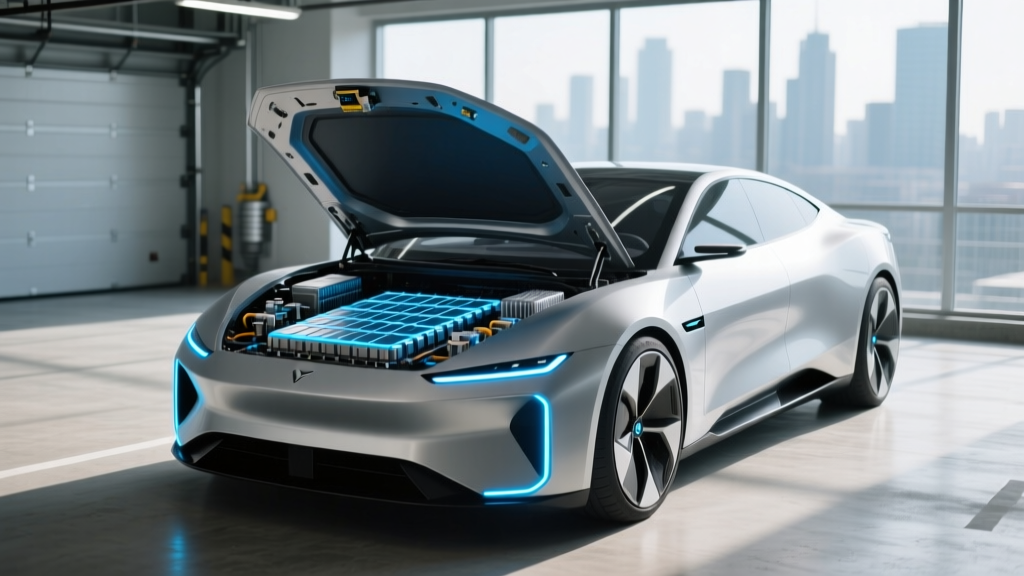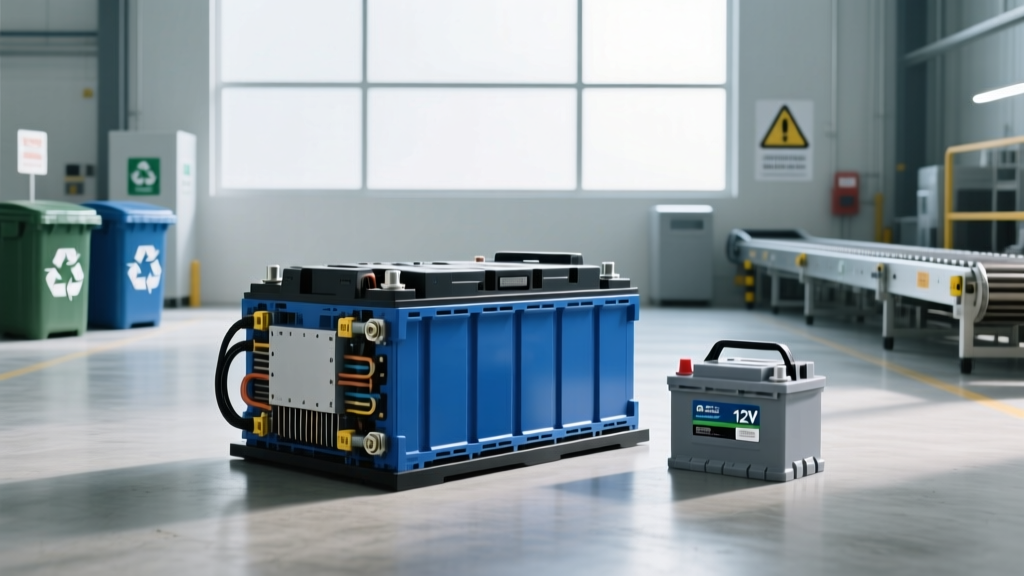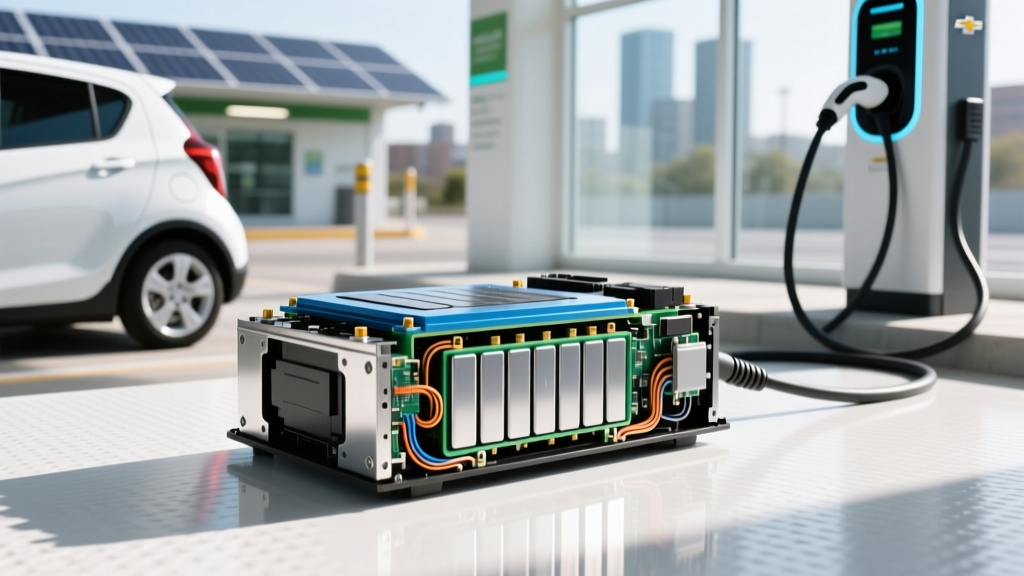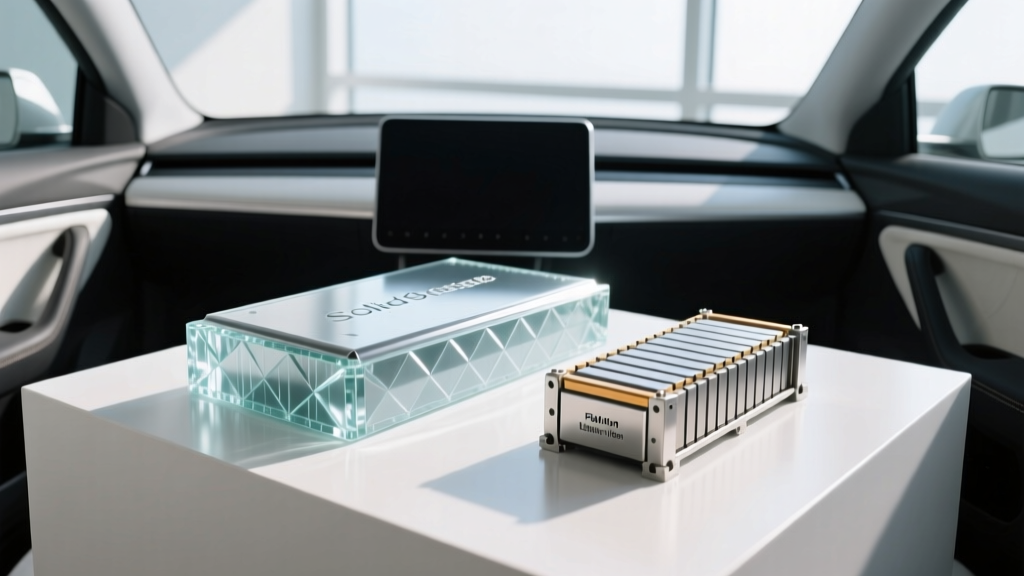
The phrase solid lithium battery has become shorthand for the next generation of electric-vehicle energy storage — a technology promising higher energy density, faster charging, and reduced fire risk. But as of 2026, the EVs in showrooms still rely on liquid-electrolyte lithium-ion cells, predominantly in two flavors: NMC (nickel manganese cobalt) and LFP (lithium iron phosphate). Understanding what you actually buy today, how long it lasts, and when solid-state cells might reach your driveway is essential before signing a purchase agreement.
This guide breaks down current battery chemistries with hard data, walks through degradation curves and warranty protections, and gives you a practical framework for maximizing battery health over a decade of ownership.
LFP vs. NMC: The Chemistry Trade-Off That Defines Your EV
Every mainstream EV sold in the US in 2026 uses one of two cathode chemistries. The choice affects range, longevity, cold-weather behavior, and price.
| Attribute | LFP (Lithium Iron Phosphate) | NMC / NCA (Nickel-based) |
|---|---|---|
| Energy density (cell-level) | 160–180 Wh/kg | 230–280 Wh/kg |
| Typical pack size (usable) | 50–75 kWh | 75–120 kWh |
| Cycle life to 80% SoH | 3,000–5,000+ cycles | 1,500–2,500 cycles |
| Cold-weather range retention (0°F) | ~55–65% of EPA | ~60–70% of EPA |
| Cost per kWh (pack-level, 2026) | ~$80–$95 | ~$105–$130 |
| Thermal runaway risk | Very low | Low (with BMS safeguards) |
| Optimal daily SoC target | 100% (no penalty) | 80% (reduces degradation) |
| Notable 2026 applications | Tesla Model 3 RWD, Ford Mustang Mach-E Select (Standard Range), Rivian R1S Standard | Tesla Model Y Long Range, Hyundai Ioniq 5 (Long Range), Chevrolet Silverado EV |
The practical takeaway: If you commute under 60 miles daily and want a battery that can tolerate nightly 100% charging without accelerated wear, LFP is the durability play. If you need 300+ miles of EPA range and tow occasionally, NMC's energy density is still the only option. Neither chemistry is universally "better" — the right choice depends on your driving profile.
How Long Do EV Batteries Actually Last?
Manufacturer warranties set a floor, but fleet data from high-mileage EVs tells a more complete story. Based on aggregated telemetry from Tesla fleet reports, Geotab fleet studies, and owner-collected data on platforms like Recurrent Auto, here is what degradation looks like in practice:
- Year 1 / 15,000 miles: 2–4% capacity loss (initial settling)
- Year 3 / 45,000 miles: 5–8% total loss
- Year 5 / 75,000 miles: 8–12% total loss
- Year 8 / 120,000 miles: 12–18% total loss (most packs still above 80% SoH)
- Year 10 / 150,000 miles: 15–22% total loss (varies heavily by chemistry and charging habits)
LFP packs consistently outperform NMC in cycle-life tests. Tesla's 2025 Impact Report noted that Model 3 RWD vehicles (LFP) retained an average of 92% capacity at 100,000 miles, compared to approximately 88% for Long Range (NMC) variants at the same mileage. According to fueleconomy.gov, modern thermal management systems have significantly reduced degradation rates compared to early-2010s EVs like the Nissan Leaf (passively cooled).
For context, the average US driver covers 13,500 miles per year (FHWA data). At that rate, most EV batteries will retain 80–85% of original capacity at the 10-year mark — well past the point where many owners have moved on to a new vehicle.
What Does the Battery Warranty Actually Cover?
Federal law mandates a minimum 8-year / 100,000-mile warranty on EV battery packs for emissions-related compliance, and every major automaker meets or exceeds this baseline. Here is how the leading manufacturers structure coverage in 2026:
| Manufacturer | Duration | Mileage | Capacity Threshold | Chemistry Notes |
|---|---|---|---|---|
| Tesla (Model 3/Y RWD, LFP) | 8 years | 100,000 mi | 70% retention | LFP — 100% SoC daily OK |
| Tesla (Model 3/Y LR, NMC) | 8 years | 120,000 mi | 70% retention | NMC — 80% daily recommended |
| Hyundai / Kia | 10 years | 100,000 mi | 70% retention | NMC, Ioniq 5/6/EV6/EV9 |
| Ford (Mach-E, F-150 Lightning) | 8 years | 100,000 mi | 70% retention | LFP (Standard Range) / NMC (Extended) |
| GM (Ultium platform) | 8 years | 100,000 mi | 70% retention | NMC — Silverado EV, Blazer EV, Equinox EV |
| Rivian (R1S/R1T) | 8 years | 175,000 mi | 70% retention | NMC (Large/Max packs) |
Critical nuance: The warranty covers capacity below the threshold, not gradual degradation above it. If your pack drops to 69% State of Health (SoH) at year 7, the manufacturer replaces or refurbishes it — often with a remanufactured pack of equivalent or better capacity. If it sits at 72%, you own the remaining risk. Some automakers, notably Hyundai, have offered goodwill replacements above threshold in documented cases of abnormal degradation.
EV Battery Replacement Cost: What You Might Actually Pay
Out-of-warranty battery replacement is the single biggest fear among prospective EV buyers. Here are real-world figures from 2025–2026 service invoices and manufacturer parts pricing:
| Vehicle / Pack Size | Battery Cost (parts) | Labor | Total Estimated |
|---|---|---|---|
| Tesla Model 3 RWD (50 kWh LFP) | $5,500–$7,000 | $1,500–$2,500 | $7,000–$9,500 |
| Tesla Model Y LR (82 kWh NMC) | $10,000–$13,000 | $2,000–$3,000 | $12,000–$16,000 |
| Hyundai Ioniq 5 (77.4 kWh NMC) | $9,500–$12,000 | $2,000–$3,000 | $11,500–$15,000 |
| Ford F-150 Lightning Extended (131 kWh NMC) | $18,000–$22,000 | $3,000–$4,500 | $21,000–$26,500 |
| Chevrolet Bolt EV/EUV (65 kWh NMC) | $7,000–$9,000 | $1,500–$2,500 | $8,500–$11,500 |
When is replacement typically needed? Based on current degradation data, rarely before 150,000–200,000 miles for liquid-cooled packs. Module-level repair (replacing individual cell groups rather than the entire pack) is increasingly offered by independent EV shops for $2,000–$5,000, addressing localized cell failure without a full swap. Most EVs will be retired or traded before a full pack replacement is necessary.
Five Factors That Accelerate Battery Degradation
Not all miles age a battery equally. The following variables have the largest measurable impact on long-term State of Health:
- Charging to 100% on NMC cells: Sustained high SoC increases cathode stress. NMC owners who charge to 80% daily and only hit 100% before road trips see 3–5% less degradation at 100K miles versus those who charge to full nightly. LFP cells do not share this vulnerability.
- Frequent DC fast charging above 150 kW: Occasional Supercharging or Electrify America sessions are fine. But vehicles that DC fast-charge daily (e.g., ride-hail fleets) show 2–4% additional capacity loss at 100K miles versus home-charged counterparts, per Geotab fleet data.
- Extreme heat exposure: Ambient temperatures above 95°F combined with high SoC accelerate electrolyte decomposition. Vehicles in Phoenix and Las Vegas show 1–3% more degradation at 5 years than identical models in Seattle or Boston.
- Deep discharge cycles: Regularly driving below 10% SoC stresses cells. Most BMS systems maintain a hidden bottom buffer (~2–4 kWh), but habitually arriving at 0% still correlates with faster wear.
- Cold-weather fast charging without preconditioning: Charging a cold NMC pack at high kW can cause lithium plating on the anode — a permanent capacity loss mechanism. Always use your vehicle's navigation-based preconditioning (Tesla, Rivian, Hyundai all offer this) when routing to a DC fast charger in sub-40°F weather.
- NMC: Set daily charge limit to 80%; charge to 100% only when departing on a trip
- LFP: Charge to 100% at least once per week to allow BMS cell-balancing
- Precondition before DC fast charging in cold weather (use nav routing)
- Avoid leaving the vehicle at 0% or 100% SoC for extended periods (48+ hours)
- Use Level 2 home charging as your primary method — it is gentler on cells
- Monitor SoH quarterly via your vehicle's app or third-party OBD tools
How to Check Your EV Battery's State of Health
State of Health (SoH) is the percentage of original capacity your pack can still store. A new battery is 100% SoH; a degraded pack at 85% SoH holds 85% of its original kWh. Here is how to monitor it:
- In-vehicle displays: Tesla shows estimated range vs. original in the app. Hyundai/Kia's infotainment includes an EV battery health indicator under Settings → EV → Battery. Rivian provides SoH in the service menu.
- OBD-II diagnostic tools: Devices like the OBDLink SX paired with apps such as ABRP (A Better Route Planner) or Scan My Tesla can read BMS-reported SoH, cell voltage variance, and pack temperature. Cost: $30–$60 for hardware.
- Dealer diagnostics: Any authorized service center can pull a full battery health report. Request this during routine service or before purchasing a used EV.
- Third-party services: Companies like Recurrent Auto offer free battery health reports that compare your pack's degradation to a fleet of identical vehicles. You share anonymized telemetry; they return a percentile ranking.
What to watch for: Cell voltage variance above 50 mV between modules can indicate an imbalanced pack that may need service before overall SoH drops below warranty threshold. A sudden range drop of 10+ miles not explained by temperature is worth a diagnostic visit.
Solid Lithium Battery and Solid-State: The Next-Generation Promise
A solid lithium battery — more precisely called a solid-state battery (SSB) — replaces the liquid electrolyte in current lithium-ion cells with a solid ceramic, glass, or polymer conductor. The theoretical advantages are significant:
- Energy density: 350–500 Wh/kg at the cell level (vs. 230–280 for NMC), enabling 400–600 miles of range in a sedan-sized pack
- Charge speed: Potential for 10–80% in under 10 minutes, as solid electrolytes tolerate higher C-rates without lithium plating
- Safety: No flammable liquid electrolyte — thermal runaway risk drops dramatically
- Longevity: Lab tests show 10,000+ cycles to 80% SoH for some solid-state prototypes
Realistic timeline: Toyota has announced solid-state battery production for a limited-run EV in 2027–2028, initially in small volumes at premium pricing. Samsung SDI and QuantumScape are targeting 2028–2030 for broader automotive deployment. Nissan and Honda have pilot lines running but have not committed to specific model timelines. According to U.S. Department of Energy projections, solid-state cells are expected to reach cost parity with NMC around 2032–2035, assuming current R&D trajectories.
What this means for today's buyer: Do not delay an EV purchase waiting for solid-state. Current LFP and NMC batteries already deliver 200,000+ mile lifespans with manageable degradation. Solid-state will debut in luxury and performance segments first, with mainstream adoption still 8–10 years away. The vehicle you buy today will likely be retired before SSB becomes a cost-competitive option in the mass market.
Related emerging technologies closer to production include silicon-dominant anodes (Sila Nanotechnologies, Group14), which boost energy density 15–20% within existing NMC cell formats. These are expected in select 2027–2028 model-year vehicles and represent a more incremental but nearer-term improvement than full solid-state architectures.
Frequently Asked Questions
How long do EV batteries last in years and miles?
Based on fleet data, most liquid-cooled EV batteries retain 80–85% of original capacity at 10 years / 150,000 miles. LFP chemistries typically outlast NMC by 3–5% at equivalent mileage. Many packs will exceed 200,000 miles before dropping below the 70% warranty threshold.
How much does an EV battery cost to replace out of warranty?
Between $7,000 and $26,500 depending on pack size and vehicle. A Tesla Model 3 RWD (50 kWh LFP) runs approximately $7,000–$9,500 total; a Ford F-150 Lightning Extended Range (131 kWh) can exceed $21,000. Module-level repairs at independent shops cost $2,000–$5,000 for localized failures.
What does the federal battery warranty cover?
All 2026 EVs carry a minimum 8-year / 100,000-mile warranty guaranteeing the pack stays above 70% of original capacity. Hyundai and Kia extend this to 10 years / 100,000 miles. The warranty covers defects and abnormal degradation — not damage from accidents, flooding, or unauthorized modifications.
LFP vs NMC — which battery chemistry should I choose?
Choose LFP if you prioritize cycle life, can accept 220–270 miles of EPA range, and want to charge to 100% daily without concern. Choose NMC if you need 300+ miles of range, tow frequently, or regularly drive in extreme cold (NMC retains slightly more range at 0°F). Both chemistries are proven and well-supported by 2026 model offerings.
Will a solid lithium battery be available in an affordable EV soon?
Not within the next 3–4 years. Solid-state batteries are targeted for limited production in premium vehicles around 2027–2028 (Toyota), with broader availability and cost parity projected for 2032–2035. Today's LFP and NMC batteries remain the practical choice with proven longevity data.
Can I check my EV battery health myself?
Yes. Use your vehicle's built-in battery health display, an OBD-II adapter with a compatible app ($30–$60), or a free service like Recurrent Auto that compares your degradation to a fleet baseline. Request a dealer diagnostic report before buying any used EV.