As electric vehicle adoption accelerates through 2026, the battery pack remains the single most expensive and consequential component in any EV. Among the suppliers gaining attention in battery-integration circles is Sofoda, a company specializing in battery management systems (BMS) and pack integration that works alongside cell manufacturers to deliver finished battery systems to automakers. Understanding what a Sofoda battery brings to the table — and how it compares to other pack architectures — requires a solid grasp of EV battery fundamentals.
This guide breaks down the chemistry, degradation realities, warranty structures, replacement economics, and care practices that apply to Sofoda-equipped vehicles and modern EV batteries broadly. Whether you are evaluating a new purchase or optimizing ownership of a current EV, the data here will help you make informed decisions.
Understanding EV Battery Chemistry: LFP vs NMC/NCA
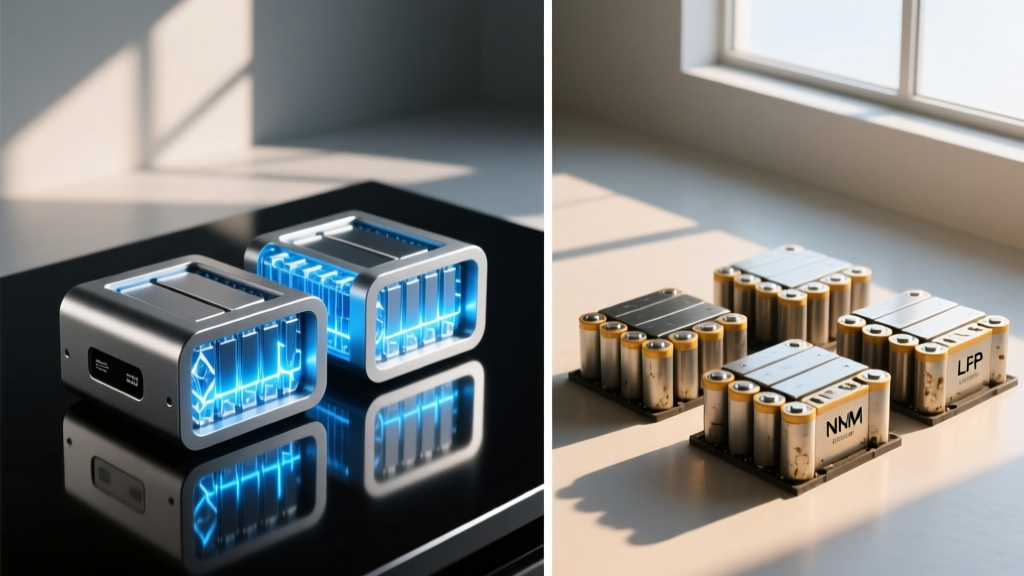
Every EV battery pack is built from individual lithium-ion cells, but the cathode chemistry inside those cells determines the pack's fundamental trade-offs. Sofoda's BMS platforms are designed to manage multiple chemistries, meaning the specific cell type depends on the automaker's priorities for a given model. The two dominant chemistries in 2026 are Lithium Iron Phosphate (LFP) and Nickel Manganese Cobalt / Nickel Cobalt Aluminum (NMC/NCA).
| Attribute | LFP (Lithium Iron Phosphate) | NMC / NCA (Nickel-based) |
|---|---|---|
| Energy Density | ~160–180 Wh/kg (cell level) | ~230–300 Wh/kg (cell level) |
| Typical Cycle Life | 3,000–5,000+ cycles to 80% SoH | 1,000–2,000 cycles to 80% SoH |
| Cold-Weather Performance | Moderate; greater range loss below 32°F | Better low-temp conductivity |
| Thermal Stability | Excellent; higher onset temp for thermal runaway | Good; requires more robust BMS monitoring |
| Cobalt Content | None | Varies; NCA low, NMC moderate |
| Cost per kWh (2026) | ~$90–$110 | ~$115–$145 |
| State-of-Charge Recommendation | Can charge to 100% daily | Best kept 20–80% for daily use |
| Common Applications | Standard-range sedans, fleet vehicles, urban EVs | Long-range, performance, AWD models |
Which is better? There is no universal winner. LFP excels in longevity, safety, and cost — making it ideal for standard-range models where daily charging to 100% is convenient and maximum energy density is less critical. NMC/NCA delivers more range per kilogram, which matters for long-range and performance trims where pack weight and volume are at a premium. Sofoda's BMS systems calibrate charge algorithms, thermal management triggers, and cell-balancing routines to the specific chemistry, which is why the same Sofoda platform might manage a 60 kWh LFP pack in one model and a 100 kWh NMC pack in another.
How Long Do EV Batteries Actually Last?
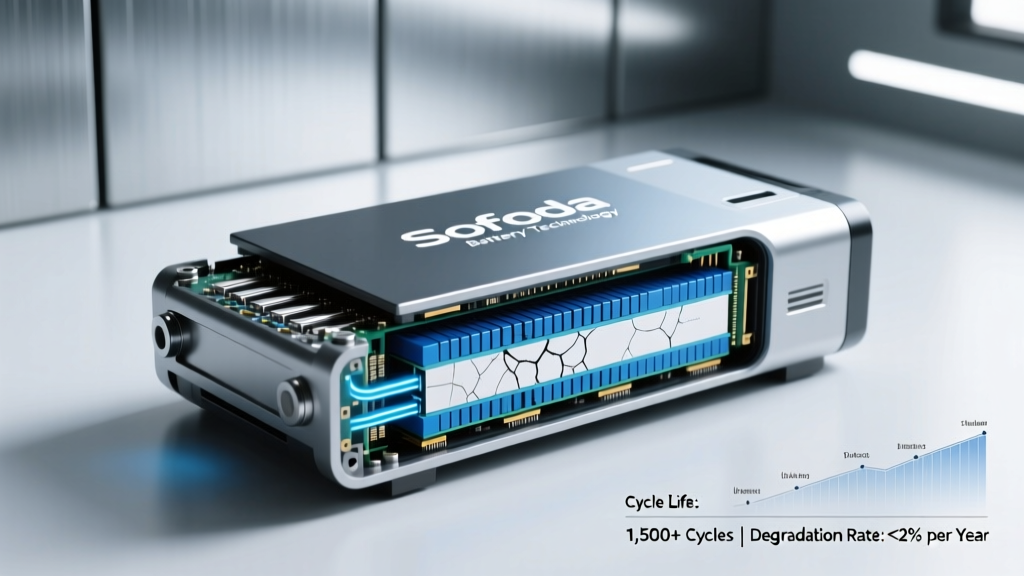
The most common question from prospective EV buyers is lifespan — and the data is reassuring. Modern liquid-cooled battery packs, including those managed by Sofoda BMS platforms, are engineered to outlast the typical ownership cycle of the vehicle itself.
Typical EV Battery Degradation Curve (Real-World Data)
Based on aggregated fleet data from sources including Geotab's long-term EV battery study and manufacturer warranty claims, here is what degradation looks like in practice:
- Year 1 (~12,000 miles): 1.5–3% capacity loss — most of this is initial formation stabilization
- Year 3 (~36,000 miles): 4–7% total loss — degradation curve flattens significantly after year one
- Year 5 (~60,000 miles): 6–10% total loss — most packs retain 90–94% State of Health (SoH)
- Year 8 (~96,000 miles): 8–15% total loss — packs with active thermal management typically retain 85–92% SoH
- Year 10 (~120,000 miles): 10–20% total loss — many packs still above the 70% warranty threshold
The key insight: degradation is non-linear. The steepest loss occurs in the first 12–18 months, after which the curve flattens dramatically. A pack that retains 93% SoH at year three is likely to retain 87–90% at year eight, not continue losing at the initial rate.
For Sofoda-managed packs specifically, the BMS plays a direct role in longevity. Active cell balancing ensures no individual cell is over-stressed, and the thermal management integration keeps cells within the optimal 68–95°F (20–35°C) operating window during both charging and discharging. Packs with these features consistently sit at the lower end of the degradation ranges above.
What Does the EV Battery Warranty Cover?
Federal law in the United States mandates that EV battery packs carry a minimum warranty of 8 years or 100,000 miles (whichever comes first). In California Air Resources Board (CARB) states, the requirement extends to 10 years or 150,000 miles. Most automakers exceed these minimums, and Sofoda-equipped vehicles are no exception.
| Coverage Element | Standard (Federal) | CARB States | What It Covers |
|---|---|---|---|
| Duration | 8 years / 100,000 mi | 10 years / 150,000 mi | Whichever comes first |
| Capacity Retention Threshold | 70% of original capacity | 70% of original capacity | If SoH drops below this, warranty claim is valid |
| Defect Coverage | Full duration | Full duration | Manufacturing defects, BMS failures, cell faults |
| What's Excluded | Varies by OEM | Damage from accidents, flooding, unauthorized modifications, extreme abuse (e.g., sustained 100% SoC in hot climate for NMC) | |
The 70% threshold is the critical number. A pack that started with 80 kWh of usable capacity would need to drop below 56 kWh usable to trigger a warranty replacement. Given the degradation data above, reaching this threshold within the warranty period is uncommon for liquid-cooled packs — it typically requires either a manufacturing defect or severe operating conditions.
According to fueleconomy.gov, the U.S. Department of Energy's EV technology resource, battery warranty claims remain a small fraction of total EV service events, reinforcing that modern packs are highly durable when properly managed.
EV Battery Replacement Cost: What to Expect
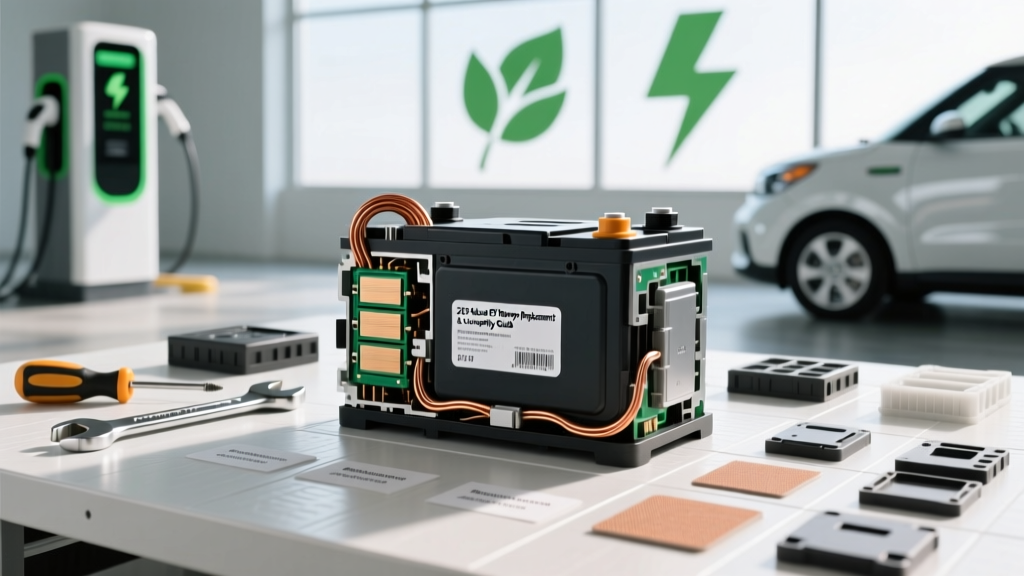
While most EV batteries outlive the vehicle's useful life, understanding replacement economics matters — especially for used-EV buyers or fleet operators planning beyond the warranty window.
| Battery Size | Chemistry | Cell Cost (est.) | Full Pack Replacement (parts + labor) | Typical Vehicle Segment |
|---|---|---|---|---|
| 40–55 kWh | LFP | $3,600–$5,500 | $6,000–$9,000 | Compact sedans, urban EVs |
| 60–75 kWh | NMC | $6,900–$10,500 | $10,000–$15,000 | Mid-size crossovers, standard-range SUVs |
| 80–100 kWh | NMC/NCA | $9,200–$14,500 | $14,000–$22,000 | Long-range sedans, large SUVs, trucks |
| 100–130+ kWh | NMC | $11,500–$18,000 | $18,000–$30,000+ | Heavy-duty trucks, luxury flagship EVs |
Important context: these are full pack replacement figures. In practice, many out-of-warranty battery issues involve individual module or cell failures, which can be repaired for $1,500–$4,000 depending on pack architecture. Sofoda's modular BMS design in many applications allows technicians to identify and replace faulty modules rather than the entire pack, significantly reducing out-of-pocket costs.
Cell pricing has declined roughly 10–15% year-over-year through 2025–2026, driven by LFP scale-up and manufacturing efficiency gains. By the time most current EVs need an out-of-warranty replacement (year 12–15+), costs are projected to be substantially lower than today's figures.
Factors That Affect EV Battery Lifespan
Not all miles are created equal when it comes to battery wear. The following factors have the most measurable impact on long-term State of Health:
Battery Care Best Practices
- Avoid sustained high State of Charge (NMC/NCA): For nickel-based chemistries, daily charging to 80% rather than 100% can reduce annual degradation by 1–2 percentage points. LFP packs tolerate 100% daily charging without meaningful penalty.
- Minimize DC fast charging frequency: Occasional fast charging (1–2 times per week) has negligible impact. Daily DCFC sessions, especially at peak rates above 150 kW without preconditioning, accelerate degradation by an estimated 0.5–1% per year compared to Level 2 charging.
- Precondition before fast charging: Most Sofoda-managed BMS platforms initiate thermal preconditioning when a DC fast charger is set as a navigation destination. This brings cells to optimal temperature (typically 86–95°F), reducing lithium plating risk and improving charge acceptance.
- Avoid extreme temperature storage at high SoC: Parking an NMC vehicle at 100% SoC in 100°F+ heat for extended periods accelerates calendar degradation. If storing, aim for 50–60% SoC.
- Use Level 2 home charging as your primary method: A 7–11 kW Level 2 charger adds roughly 25–44 miles of range per hour and generates far less thermal stress than DC fast charging.
- Don't baby it excessively: Modern BMS systems maintain top and bottom buffers (typically 5–10% of gross capacity is hidden). The car protects the battery more than most owners realize.
The single highest-impact habit for NMC owners is the 20–80% daily charge window. For LFP owners, the chemistry is more forgiving, and the priority shifts to occasional 100% charges (which help the BMS recalibrate cell balancing) and avoiding extreme cold without preconditioning.
How to Check and Monitor Battery Health (SoH)
State of Health (SoH) is expressed as a percentage of the battery's original usable capacity. A new pack reads 100% SoH; a pack that has degraded to hold 90% of its original energy reads 90% SoH. Monitoring this metric is essential for used-EV purchases and long-term ownership planning.
Methods to Check SoH
In-vehicle displays: Many 2024–2026 EVs include a battery health indicator in the infotainment or driver settings menu. Sofoda-integrated systems often provide a granular SoH readout alongside cell voltage deviation data, which reveals whether individual cells are aging unevenly.
OBD-II diagnostic tools: Devices like the OBDLink SX or dedicated EV scanners (e.g., from ABRP-compatible tools) can read the BMS-reported SoH directly. This is the most reliable method for used-car inspections and typically takes under five minutes.
Dealer diagnostic reports: Authorized service centers can pull a full battery health report that includes SoH, individual cell voltages, internal resistance measurements, and historical charge/discharge cycle counts. Request this report when purchasing a used EV — it is the battery equivalent of a vehicle history report.
Charging data analysis: Comparing the energy dispensed during a known 10–100% Level 2 charge session against the pack's rated capacity provides a rough SoH estimate. If a 75 kWh pack accepts only 66 kWh from 10% to 100% (accounting for ~5% charging losses), the SoH is approximately 92%. This method is less precise but requires no special equipment.
Emerging Battery Technologies: What's on the Horizon
While Sofoda's current platforms manage proven lithium-ion chemistries, the broader battery industry is advancing several next-generation technologies. It is important to separate what is available now from what remains in development.
Solid-State Batteries
Solid-state batteries replace the liquid electrolyte with a solid material (ceramic, sulfide, or polymer), promising higher energy density (~400–500 Wh/kg at cell level), faster charging, and improved safety. As of 2026, solid-state cells are in limited pilot production — Toyota has announced small-volume deployment in select models, and Samsung SDI is targeting 2027 for broader automotive production. Widespread availability at competitive pricing remains a 2028–2030+ prospect for mainstream EVs. Sofoda has indicated that its next-generation BMS architecture is being designed to accommodate solid-state cell characteristics, but no production vehicles with Sofoda-managed solid-state packs are currently on sale.
Silicon Anode Technology
Replacing graphite anodes with silicon-dominant materials can boost energy density by 20–40%. Companies like Sila Nanotechnologies and Group14 have begun supplying silicon anode materials for limited applications. Expect this technology to appear incrementally in premium EV packs through 2027–2028, with cost parity taking longer. This is an evolution of current lithium-ion, not a replacement — meaning existing BMS platforms like Sofoda's can adapt with software and calibration updates.
Sodium-Ion Batteries
Sodium-ion cells eliminate lithium entirely, offering lower cost and excellent cold performance at the expense of energy density (~120–150 Wh/kg). CATL and other manufacturers have begun production for light EVs and energy storage. For the U.S. passenger EV market, sodium-ion is likely a 2027+ technology, best suited for budget urban vehicles where range requirements are modest.
All of these technologies are forward-looking and not yet widely available in consumer EVs as of 2026. Current buyers should base decisions on proven LFP and NMC/NCA packs, which offer excellent longevity and well-understood performance characteristics.
Frequently Asked Questions
How long do EV batteries last in years and miles?
Modern liquid-cooled EV batteries, including those managed by Sofoda BMS systems, typically retain 85–92% of their original capacity at 8 years / 100,000 miles. Many packs reach 150,000–200,000 miles before dropping to the 70% capacity threshold that triggers a warranty claim. In practical terms, the battery will likely outlast other major vehicle components like suspension, interior trim, and infotainment hardware.
How much does an EV battery cost to replace?
Full pack replacement ranges from approximately $6,000 for a small LFP pack to $22,000+ for a large NMC pack in a long-range SUV or truck (parts and labor). However, full replacements are rare — most out-of-warranty issues involve individual module repairs costing $1,500–$4,000. Cell costs continue to decline, and by the time current EVs need replacement, prices are expected to be significantly lower.
What does the battery warranty actually cover?
The federal minimum is 8 years / 100,000 miles with a 70% capacity retention threshold. CARB states extend this to 10 years / 150,000 miles. Coverage includes manufacturing defects, cell failures, and BMS malfunctions. It does not cover damage from accidents, unauthorized modifications, or extreme abuse. Always review the specific warranty terms in your vehicle's documentation, as OEM policies vary.
How do I check my EV battery's State of Health?
The most accessible methods are: (1) your vehicle's built-in battery health display in the settings menu, (2) an OBD-II scanner that reads BMS data directly, (3) a dealer diagnostic report, or (4) comparing kWh accepted during a full Level 2 charge against the pack's rated capacity. For used-EV purchases, always request a dealer diagnostic report before committing.
LFP vs NMC — which battery chemistry should I choose?
Choose LFP if you prioritize longevity, lower cost, cobalt-free sourcing, and the convenience of daily 100% charging — it is ideal for standard-range models and urban driving. Choose NMC/NCA if you need maximum range per charge, better cold-weather performance, or are buying a long-range/performance trim. Neither is universally "better" — the right choice depends on your driving patterns, charging access, and budget.
Does frequent DC fast charging damage the battery?
Occasional DC fast charging has minimal impact on battery health. Studies show that daily fast charging without preconditioning can accelerate degradation by roughly 0.5–1% per year compared to Level 2 charging. The key mitigations are: use preconditioning (set the charger as a nav destination), avoid charging above 80% on DCFC when possible (the charge curve tapers significantly above 80% anyway), and rely on Level 2 home charging as your primary method.
Can extreme temperatures permanently damage an EV battery?
Short-term exposure to extreme heat or cold reduces range temporarily but does not cause permanent damage if the BMS thermal management system is functioning. The risk comes from sustained exposure to high temperatures (above 104°F / 40°C) at high State of Charge — this accelerates calendar degradation. Sofoda-managed BMS platforms actively cool and heat the pack to maintain the optimal operating window, which is why liquid-cooled packs significantly outlast passively cooled designs.
For authoritative information on EV battery technology and efficiency ratings, consult fueleconomy.gov. For tax credit eligibility related to EV purchases, review current rules at IRS.gov's clean vehicle credits page, noting that §30D credit eligibility depends on MSRP caps, buyer income limits, and battery sourcing requirements that vary by model year.