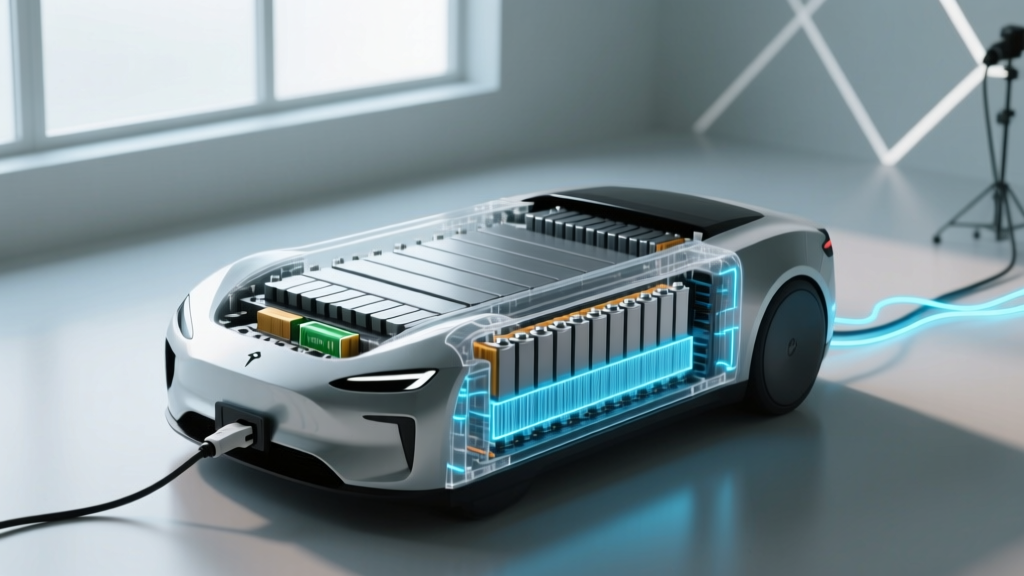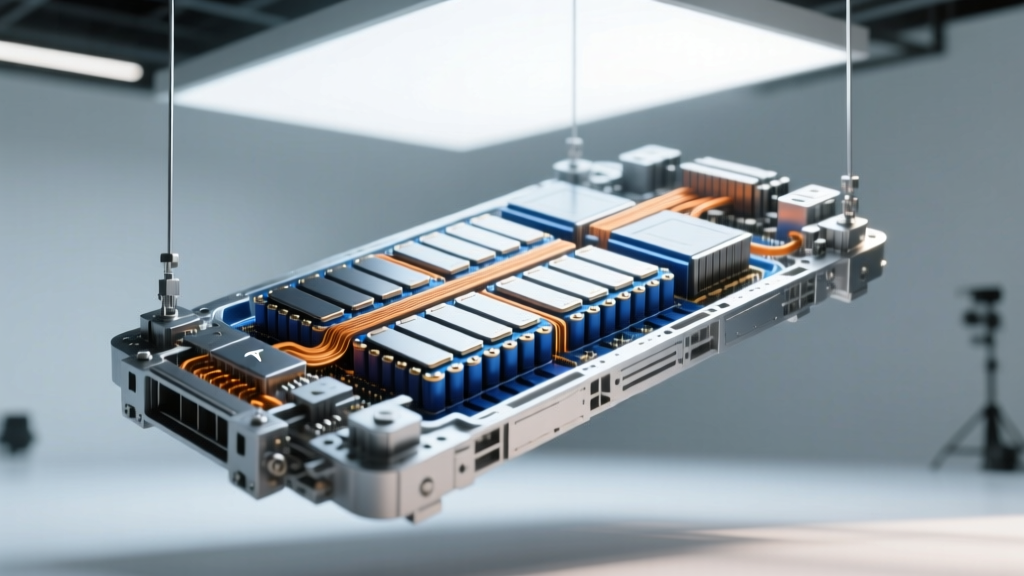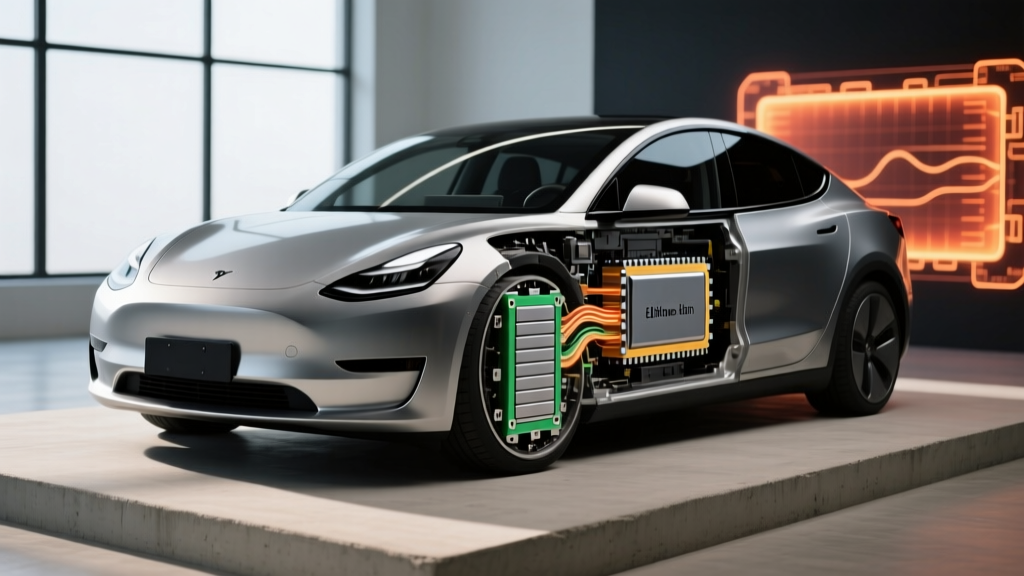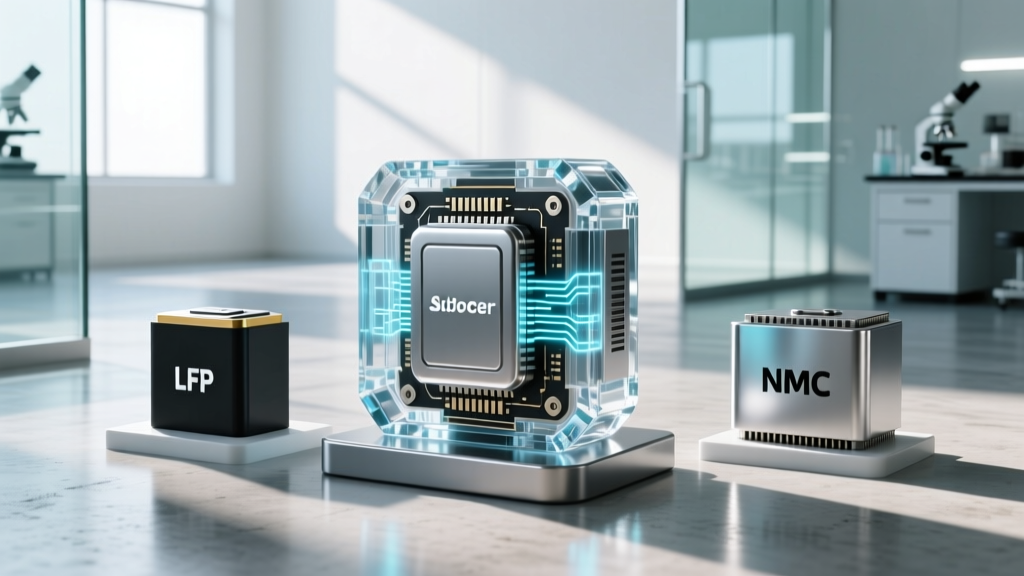
Every EV buyer eventually confronts the same question: what's actually inside the battery pack, and how long will it last? In 2026, the answer is more complex than ever. Lithium-ion chemistries like LFP (lithium iron phosphate) and NMC (nickel manganese cobalt) dominate today's production vehicles, while sodium solid state battery prototypes are generating serious attention in labs and pilot programs from CATL, HiNa, and Toyota. But headlines about next-gen cells can obscure what matters right now: the chemistry in the car you can actually buy, how it degrades, what the warranty covers, and what you can do to make it last.
This guide breaks down current EV battery technology with hard numbers — degradation curves, warranty thresholds, replacement cost ranges, and the daily habits that move the needle on longevity — before placing emerging sodium-ion and solid-state tech in realistic context.
LFP vs NMC vs NCA: Chemistry Trade-Offs That Matter
Not all lithium-ion batteries are the same. The cathode chemistry determines energy density, cycle life, thermal stability, and cost. Here's how the three mainstream options compare for the 2026 model year:
| Attribute | LFP (LiFePO₄) | NMC (811 / 622) | NCA (Ni-Co-Al) |
|---|---|---|---|
| Energy Density (cell-level) | 160–180 Wh/kg | 230–280 Wh/kg | 250–300 Wh/kg |
| Typical Cycle Life | 3,000–5,000+ cycles | 1,500–2,500 cycles | 1,200–2,000 cycles |
| Cold-Weather Performance | Moderate loss (~25–35% range reduction at 20°F) | Better low-temp conductivity (~15–25% loss at 20°F) | Similar to NMC |
| Thermal Stability | Excellent — resistant to thermal runaway | Good with active cooling; more sensitive at high SoC | Good with robust BMS |
| Cost per kWh (pack-level, 2026) | ~$90–$110 | ~$120–$145 | ~$125–$150 |
| Cobalt Content | None | Low (811) to moderate (622) | Low (~5%) |
| Example 2026 Vehicles | Tesla Model 3 RWD, BYD Seal, Ford Mustang Mach-E Select (LFP option) | Hyundai Ioniq 5, Kia EV6, VW ID.4, BMW iX | Tesla Model S/X, Rivian R1T/R1S (large pack) |
LFP wins on cycle life and cost. If you plan to keep a vehicle 10+ years and charge daily to 100% (something LFP tolerates well), it's the pragmatic pick. The trade-off is lower energy density — meaning a heavier pack for the same range, or slightly less range in a given vehicle footprint.
NMC dominates vehicles where maximizing range per kilogram matters: long-range crossovers, performance sedans, and anything towing. Its higher energy density lets automakers fit 77–84 kWh usable into mid-size platforms. But NMC cells degrade faster at sustained high SoC and elevated temperatures, which is why most manufacturers recommend daily charging to 80%.
NCA, used primarily by Tesla and Rivian in large-pack applications, offers the highest energy density but shares NMC's sensitivity to heat and high-SoC storage.
How Long Do EV Batteries Actually Last?
The short answer, backed by fleet data: most modern EV traction batteries outlast the vehicles they're installed in. But "last" requires definition — a battery doesn't suddenly fail; it gradually loses capacity.
- Year 1–2: 1–3% capacity loss (initial formation period — steepest early curve).
- Year 3–5: Roughly 1–2% per year, plateauing.
- Year 8 (median): ~88–92% State of Health (SoH) retained for liquid-cooled NMC packs; ~93–96% for LFP.
- 200,000 miles: Tesla fleet data (2025 impact report) shows Model 3/Y packs retaining ~85–90% capacity at 200k miles. Source: Tesla 2025 Impact Report.
- Taxi/high-cycle fleets: Tesla Model 3 LFP taxis in Shenzhen logging 250,000+ km (~155k miles) with ~88–90% SoH — validating LFP's cycle-life advantage.
Geotab's long-term study of 10,000+ EVs found an average annual degradation rate of 1.8% across all chemistries, meaning the average pack retains roughly 82% capacity at the 10-year mark — well above the 70% threshold most warranties guarantee. Batteries from 2020 onward with active liquid cooling consistently outperform older passive-cooled packs.
What the Battery Warranty Actually Covers
Federal law (EPA emissions warranty precedent) pushed automakers toward a de facto standard: 8 years / 100,000 miles, with a capacity retention floor. California and states adopting CARB rules often mandate 10 years / 150,000 miles. Here's how major brands structure coverage in 2026:
| Manufacturer | Warranty Period | Capacity Retention Threshold | Notes |
|---|---|---|---|
| Tesla (Model 3/Y LFP) | 8 yr / 120,000 mi | 70% | Covers defects + capacity below threshold |
| Tesla (Model S/X) | 8 yr / 150,000 mi | 70% | Longer mileage for larger packs |
| Hyundai / Kia | 10 yr / 100,000 mi | 70% | Among the longest time coverage |
| Ford (Mach-E, F-150 Lightning) | 8 yr / 100,000 mi | 70% | Covers battery + hybrid/electric components |
| VW (ID.4, ID.7) | 8 yr / 100,000 mi | 70% | Transferable to second owner |
| BMW (iX, i4) | 8 yr / 100,000 mi | 70% | Includes battery management system |
| Rivian | 8 yr / 175,000 mi | 70% | Highest mileage threshold in segment |
Critical nuance: Warranty coverage triggers only when SoH drops below the stated threshold — it does not cover normal, gradual degradation above 70%. Abuse exclusions (repeated DC fast charging to 100% in extreme heat, aftermarket modifications, flood damage) can void claims. Always read the fine print in your owner's manual.
EV Battery Replacement Costs: Reality vs. Fear
Replacement cost anxiety is the single biggest psychological barrier to EV adoption — and it's largely overblown for modern vehicles. Here's what the numbers actually look like in 2026:
| Vehicle / Pack Size | Chemistry | Battery Cost (Parts) | Labor + Total | When Typically Needed |
|---|---|---|---|---|
| Tesla Model 3 RWD (~60 kWh LFP) | LFP | $6,000–$8,000 | $8,000–$11,000 | Rarely before 250k+ mi |
| Tesla Model Y LR (~82 kWh NMC) | NMC | $10,000–$13,000 | $13,000–$17,000 | Rarely before 200k+ mi |
| Hyundai Ioniq 5 (~77.4 kWh NMC) | NMC | $9,000–$12,000 | $12,000–$16,000 | Rarely before 200k+ mi |
| Ford F-150 Lightning Ext. Range (~131 kWh NMC) | NMC | $18,000–$24,000 | $22,000–$30,000 | Rarely before 150k+ mi |
| Chevrolet Bolt EV (~65 kWh NMC) | NMC | $7,000–$9,500 | $9,500–$13,000 | Post-recall replacements largely completed |
Context that matters: By the time a pack degrades enough to warrant replacement (below 70% SoH), the vehicle is typically 12–15 years old and worth $5,000–$12,000. Most owners sell or trade before reaching that point. The more realistic concern is module-level replacement — if one cell group fails, many packs allow individual module swaps for $1,500–$4,000 rather than a full pack swap.
For reference, a gasoline vehicle's transmission replacement averages $3,500–$7,000, and engine rebuilds run $4,000–$10,000 — costs owners accept without the same anxiety.
What Kills an EV Battery Early (and What Doesn't)
Battery degradation isn't random — it follows electrochemical patterns that owners can influence.
- ✅ Daily SoC limit: Set charge ceiling to 80% for NMC/NCA; 100% is fine for LFP. Most vehicles allow scheduling this in the app.
- ✅ Avoid prolonged 0% or 100% storage: If leaving the car for weeks, store at 40–60% SoC. Calendar aging accelerates at extremes.
- ✅ Minimize DC fast charging in extreme heat: If ambient exceeds 95°F, precondition the battery (most cars do this automatically when you navigate to a charger). Sustained 150+ kW sessions in heat stress cells.
- ✅ Use Level 2 for daily charging: Overnight L2 at 7–11.5 kW is the gentlest charging profile. DC fast charging is best reserved for road trips.
- ✅ Cold-weather preconditioning: Before fast charging in sub-32°F weather, let the car warm the pack via navigation-routed preconditioning. Charging a cold pack below 0°C causes lithium plating — permanent damage.
- ❌ Don't obsess over 1–2% SoH fluctuations: BMS recalibration can cause apparent "jumps" in reported range. Track trends over months, not weeks.
- ❌ Don't drain below 5% routinely: Deep discharge cycles stress the anode copper current collector.
What does NOT meaningfully harm modern batteries: Occasional 100% charges for road trips (once a week or less), regenerative braking at any intensity (the BMS manages acceptance), and highway driving at sustained speeds (thermal management handles this well in liquid-cooled packs).
Monitoring State of Health: How to Track Your Battery
State of Health (SoH) represents remaining capacity as a percentage of the pack's original, beginning-of-life (BoL) capacity. Here's how to check it:
- In-vehicle displays: Tesla's app (Battery Health section, added in 2024 software updates) shows a degradation percentage. Hyundai/Kia's infotainment includes an EV battery diagnostics page. BMW's iDrive displays SoH under "Vehicle Status → Battery."
- OBD-II + third-party apps: Tools like TeslaFi, Scan My Tesla, Leaf Spy (Nissan), and ABRP OBD read the BMS directly and report SoH, cell voltage variance, and pack temperature.
- Dealer diagnostic reports: Request a printout during service visits — most manufacturers can pull a cell-level balance report showing module-to-module voltage spread (healthy packs show <20 mV variance).
- Manual calculation: Charge to 100%, note the displayed range, and compare to the EPA sticker. If your 310-mile EPA car shows 275 miles at 100%, that's roughly 88.7% SoH — but account for the fact that the displayed range uses a rated/ideal algorithm, not real-world driving.
Sodium-Ion and Solid-State Batteries: Where the Tech Actually Stands
The term sodium solid state battery combines two distinct innovations — and understanding them separately is key to separating marketing from reality.
Sodium-Ion (Na-ion) Batteries
Sodium-ion replaces lithium with abundant, cheap sodium. CATL began shipping first-generation sodium-ion packs (160 Wh/kg cell-level) in Chinese-market EVs in 2024–2025, notably in the Chery iCAR and select BYD commercial vehicles. Advantages:
- Raw material cost 40–60% lower than lithium carbonate.
- Superior cold-weather retention: ~90% capacity at −4°F (−20°C) vs ~70–75% for LFP.
- Excellent safety — sodium-ion cells can be discharged to 0V for transport without damage.
- Cycle life comparable to LFP (3,000+ cycles).
Limitation: Energy density remains 30–40% below NMC, making sodium-ion best suited for city cars, fleet vehicles, and energy storage — not long-range highway vehicles. As of early 2026, no sodium-ion EV is sold in the U.S. market.
Solid-State Batteries
Solid-state replaces the liquid electrolyte with a solid ceramic, polymer, or sulfide separator — enabling lithium-metal anodes and dramatically higher energy density (targeting 400–500 Wh/kg cell-level). Toyota, Samsung SDI, QuantumScape, and Solid Power are leading development.
- Toyota: Has announced a solid-state battery targeting 745 km (~463 mi) WLTP range and 10-minute 10–80% charging, with initial production planned for 2027–2028 in limited volumes. Source: Toyota Battery Strategy Briefing.
- QuantumScape: Prototype cells demonstrated 800+ cycles at >80% retention, but commercial production remains pre-revenue as of 2026.
- Samsung SDI: Targeting 2027 SOP (start of production) for automotive solid-state cells.
The Convergence: Sodium Solid State
Combining sodium chemistry with a solid-state electrolyte is a logical next step — and Chinese researchers at institutions including the Chinese Academy of Sciences have published promising lab results on sulfide-based sodium solid-state cells. However, these remain at Technology Readiness Level (TRL) 3–4 (lab validation), not TRL 7–8 (production-ready). No automaker has announced a production vehicle with a sodium solid state battery as of 2026. Realistic availability in consumer vehicles: 2030+ at the earliest, likely debuting in Chinese-market affordable EVs first.
For buyers making decisions today, the practical takeaway is this: LFP and NMC are mature, well-understood, and backed by robust warranties. The next-generation technology will be compelling when it arrives — but it won't retroactively devalue today's well-maintained EVs, which will remain cost-effective transportation for 15+ years.
Frequently Asked Questions
How long do EV batteries last in years and miles?
Modern liquid-cooled EV batteries (2020+) typically retain 85–92% capacity at 200,000 miles and 10–12 years. LFP chemistry generally outlasts NMC by 2–4 percentage points at equivalent mileage. Full pack replacement before 150,000 miles is rare outside of manufacturing defects covered under warranty.
How much does it cost to replace an EV battery?
Full pack replacement ranges from ~$8,000 (smaller LFP packs like the Tesla Model 3 RWD) to ~$30,000 (large NMC packs like the F-150 Lightning Extended Range). However, most vehicles are retired or traded before needing replacement, and module-level repairs for isolated cell failures cost $1,500–$4,000.
What does the EV battery warranty cover?
Standard coverage is 8 years / 100,000 miles (10 yr / 150,000 mi in CARB states) against defects and capacity loss below 70% of original capacity. It does not cover gradual degradation above 70%, damage from accidents, flooding, or confirmed abuse (e.g., repeated deep discharges with documented neglect).
How do I check my EV battery's State of Health?
Use your vehicle's built-in diagnostics (Tesla app, Hyundai EV diagnostics page, BMW iDrive status), an OBD-II reader with apps like TeslaFi or Leaf Spy, or request a dealer diagnostic report. Track SoH trends quarterly rather than daily — minor fluctuations are normal BMS recalibration.
Is LFP or NMC better for my needs?
Choose LFP if you plan to own the vehicle 8+ years, charge daily at home, live in a moderate climate, and don't need maximum range (LFP vehicles typically offer 230–270 mi EPA). Choose NMC if you need 300+ miles of range, tow frequently, live in a cold climate where energy density matters for winter range retention, or prioritize performance. Both chemistries are reliable — the choice is about optimizing for your usage pattern, not avoiding a "bad" option.
Should I wait for sodium solid state battery EVs?
Not unless your purchase timeline extends to 2030+. Sodium-ion and solid-state technologies are genuine advances, but neither is available in U.S.-market consumer vehicles as of 2026. Today's LFP and NMC packs, paired with proper care habits, will serve reliably for 15+ years — by which time next-gen tech will be available for your next vehicle.