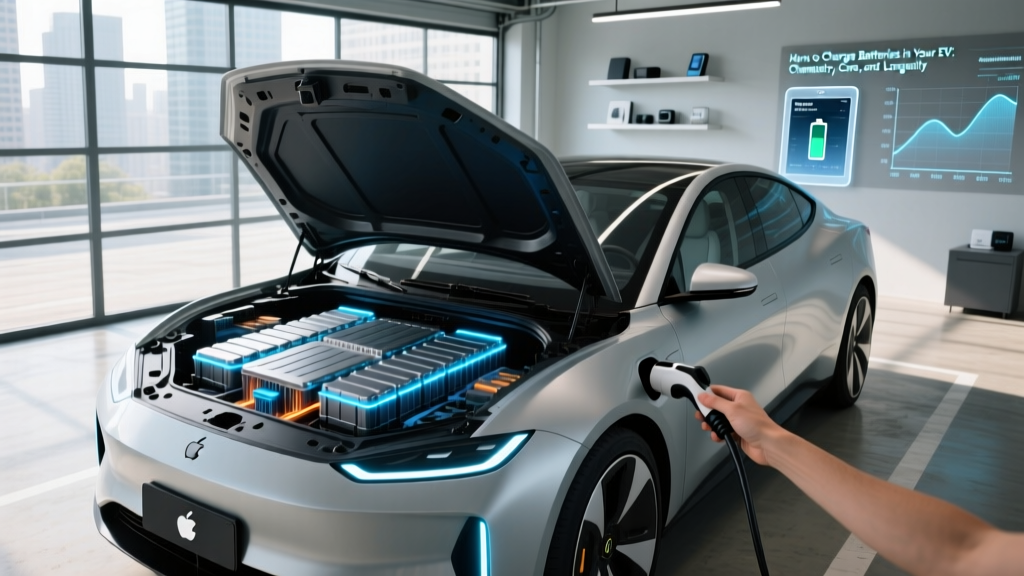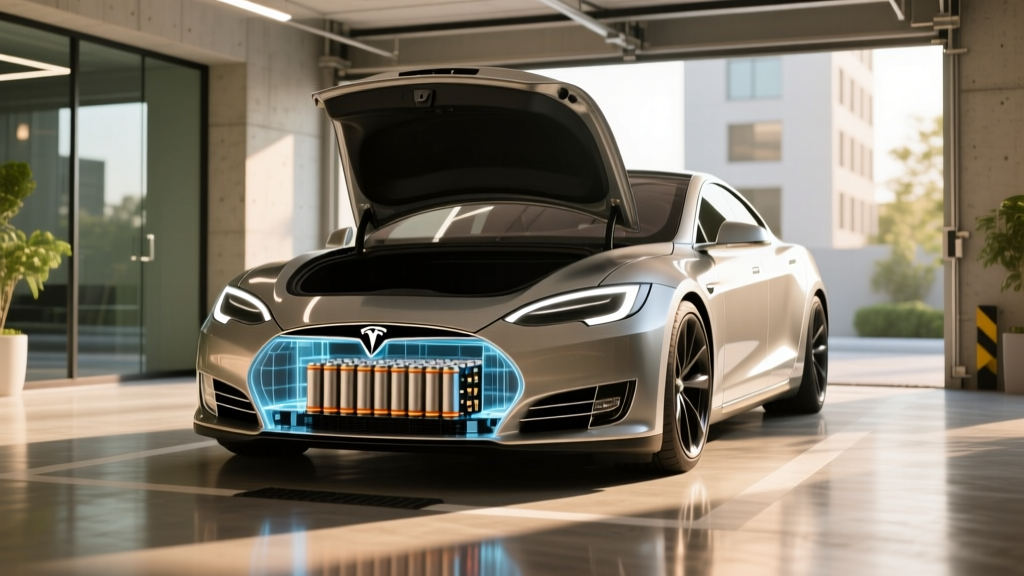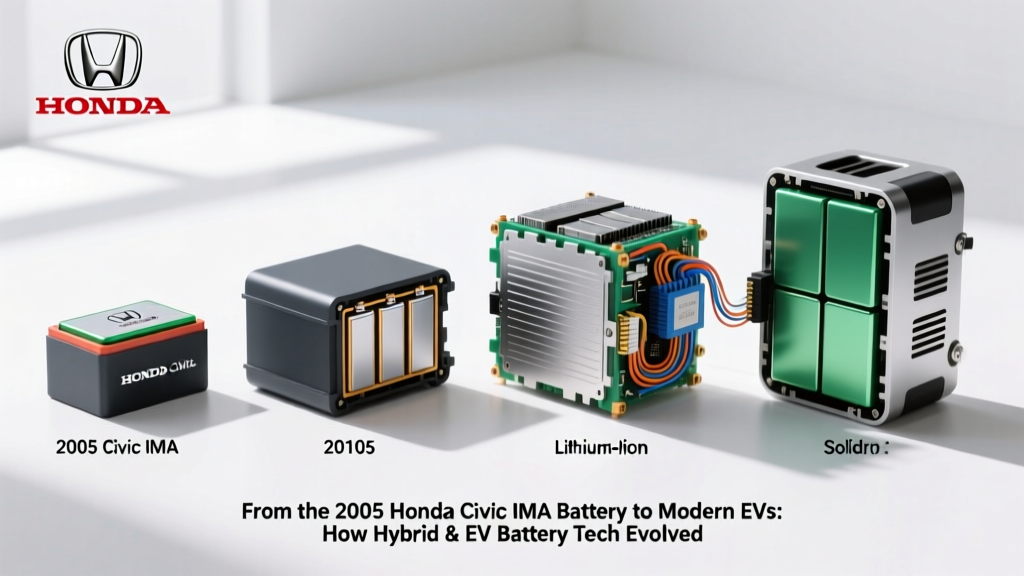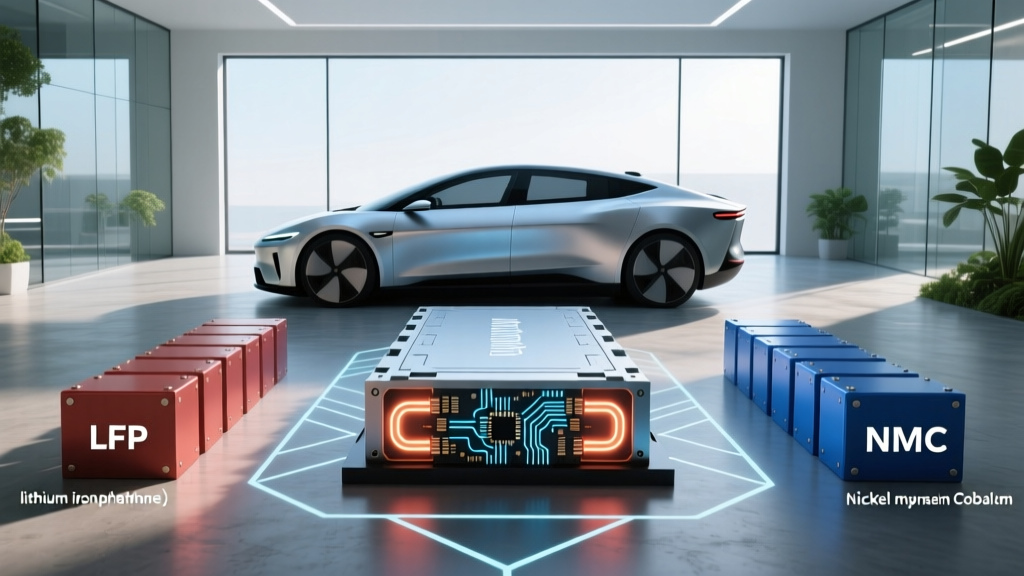
Every EV buyer eventually confronts the same question: what's actually inside the battery pack, and how long will it last? In 2026, the answer is no longer just "lithium." While nickel-manganese-cobalt (NMC) and lithium iron phosphate (LFP) chemistries dominate today's EV fleet, peak sodium ion battery development has accelerated from lab curiosity to early production vehicles, primarily from Chinese automakers like BYD, CATL, and HiNa. Sodium-ion cells won't replace lithium overnight, but they're reshaping the conversation around cost, cold-weather performance, and supply-chain resilience.
This guide breaks down every chemistry you'll encounter in a 2026 EV — including where sodium-ion fits — and gives you the exact degradation data, warranty terms, replacement costs, and daily habits that determine how your pack ages over a decade of driving.
The Chemistry Landscape: NMC, LFP, and Peak Sodium Ion Battery Cells
Understanding EV batteries starts with the cathode chemistry, which dictates energy density, cycle life, thermal stability, and raw-material cost. Here's how the three main options compare in current production:
| Attribute | NMC / NCA (Lithium) | LFP (Lithium) | Sodium-Ion (Peak Performance Cells) |
|---|---|---|---|
| Energy Density (cell-level) | 220–300 Wh/kg | 150–180 Wh/kg | 140–170 Wh/kg (peak lab: ~200 Wh/kg) |
| Typical Cycle Life | 1,000–2,000 cycles | 3,000–6,000+ cycles | 2,000–4,000 cycles |
| Cold Performance (−20°C capacity retention) | ~70–75% | ~60–65% | ~85–90% |
| Thermal Runaway Risk | Moderate (requires active cooling) | Very Low | Very Low |
| Raw Material Cost Driver | Nickel, Cobalt, Lithium | Iron, Phosphate, Lithium | Sodium (abundant), no lithium needed |
| 2026 EV Availability (US market) | Wide — Tesla, Hyundai, BMW, Rivian, Ford | Wide — Tesla Model 3 RWD, Model Y RWD, Ford Mustang Mach-E Select, BYD (global) | Limited — Chery, JAC, HiNa (China); not yet in US-market EVs |
| Estimated Cell Cost ($/kWh) | $100–$130 | $75–$95 | $50–$75 (projected at scale) |
What "peak sodium ion battery" actually means: The term refers to the upper-end performance tier of sodium-ion cells — those achieving ~170 Wh/kg energy density and demonstrating strong fast-charge acceptance. CATL's second-generation sodium-ion cells and HiNa's Natrium series represent this tier. They still trail NMC on energy density, which means a sodium-ion pack large enough for 300+ miles of range would be heavier and bulkier than an equivalent NMC pack. That's why early sodium-ion EVs are compact city cars and entry-level models with 150–200 miles of range, not long-haul SUVs.
Where sodium-ion excels: Cold-weather capacity retention is the standout advantage. At −20°C (−4°F), peak sodium ion battery cells retain roughly 85–90% of their room-temperature capacity, compared to about 70% for NMC and 60% for LFP. For EV owners in northern climates, that translates to noticeably less winter range loss — a real-world pain point that lithium chemistries still struggle to solve without aggressive pack heating.
LFP vs NMC: Which Is Better for Your Driving Pattern?
If you're buying a 2026 EV in the US, your practical choice is between NMC and LFP. Here's how to decide:
Choose NMC if:
- You need maximum range from a given pack size (higher energy density means more kWh in the same physical space).
- You regularly take long road trips and value every extra mile of EPA-rated range.
- You're buying a larger vehicle (SUV, truck) where pack weight and volume matter.
- Examples: Tesla Model Y Long Range (78.1 kWh NMC, EPA 320 mi), Hyundai Ioniq 5 Long Range (77.4 kWh NMC, EPA 305 mi), Rivian R1T Dual-Motor (141 kWh NMC, EPA 352 mi).
Choose LFP if:
- You charge at home most nights and don't need maximum range — a 60 kWh LFP pack with 250+ EPA miles covers most commutes.
- You want a pack that can routinely charge to 100% without accelerated degradation (LFP tolerates full charges far better than NMC).
- Long-term cycle life matters — you plan to keep the car 10+ years or drive high annual miles.
- You want the lowest upfront price; LFP packs are $20–$40/kWh cheaper at the cell level.
- Examples: Tesla Model 3 Rear-Wheel Drive (60 kWh LFP, EPA 272 mi), Tesla Model Y Rear-Wheel Drive (60 kWh LFP, EPA 283 mi), Ford Mustang Mach-E Select (75.7 kWh LFP, EPA 250 mi).
Neither chemistry is universally "better." NMC trades longevity and cost for range density; LFP trades range density for durability and price. Sodium-ion, once it reaches the US market, will compete most directly with LFP in cost-sensitive, cold-climate segments.
How Long Do EV Batteries Actually Last? Degradation Data
The fear of a dead battery pack at 80,000 miles persists, but real-world data from millions of EVs tells a different story. Most modern EV batteries outlast the vehicle's useful life.
Typical Degradation Curve (2020–2026 EV fleet data):
| Milestone | Average Capacity Retained | Notes |
|---|---|---|
| Year 1 / 15,000 mi | 95–97% | Initial "break-in" loss; steepest drop occurs early |
| Year 3 / 45,000 mi | 92–95% | Curve flattens significantly after year 1 |
| Year 5 / 75,000 mi | 89–93% | Most packs still well above warranty threshold |
| Year 8 / 100,000 mi | 85–90% | Warranty period ends for most brands; packs still functional |
| Year 10 / 150,000 mi | 80–88% | Noticeable range reduction but still daily-drivable |
| Year 12+ / 200,000+ mi | 75–85% | High-mileage outliers; data sparser here |
Sources: Geotab fleet battery health study, Recurrent Auto battery data reports. Figures represent fleet averages; individual results vary with climate, charging habits, and chemistry.
Key patterns from this data:
- Non-linear degradation: Most capacity loss happens in the first 12–18 months (typically 3–5%), then the curve flattens to roughly 1–2% loss per year.
- LFP degrades slower: LFP packs routinely show 93–96% retention at year 5, compared to 89–92% for NMC, largely because LFP tolerates high state-of-charge storage better.
- Sodium-ion early data: Limited fleet data from Chinese-market vehicles suggests degradation profiles similar to LFP, with potentially better calendar aging in cold climates. Long-term US-climate data doesn't yet exist.
- The 70% threshold: Most manufacturers warrant the pack to retain at least 70% of original capacity for 8 years / 100,000 miles. Very few packs actually hit this threshold within the warranty window — it's a conservative floor, not an expected outcome.
Battery Warranty Terms: What's Actually Covered
Federal law mandates a minimum 8-year / 100,000-mile warranty on EV battery packs (10 years / 150,000 miles in California and states that follow CARB standards). But the details matter:
| Automaker | Warranty Period | Mileage Cap | Capacity Threshold | Notes |
|---|---|---|---|---|
| Tesla (Model 3/Y RWD — LFP) | 8 years | 100,000 mi | 70% retention | Standard for LFP trims |
| Tesla (Model 3/Y LR — NMC) | 8 years | 120,000 mi | 70% retention | Higher mileage cap for Long Range |
| Hyundai / Kia | 10 years | 100,000 mi | 70% retention | Among the longest coverage periods |
| Ford (Mach-E, F-150 Lightning) | 8 years | 100,000 mi | 70% retention | Components covered separately |
| BMW (i4, iX) | 8 years | 100,000 mi | 70% retention | Includes battery management system |
| Rivian | 8 years | 175,000 mi | 70% retention | Higher mileage cap reflects truck use case |
| Chevrolet (Blazer EV, Equinox EV) | 8 years | 100,000 mi | 70% retention | Propulsion components also covered |
What the warranty covers: Defects in materials or workmanship, and capacity loss below the stated threshold. If your pack drops below 70% State of Health (SoH) within the warranty window, the manufacturer must repair or replace it at no cost to you.
What it doesn't cover: Damage from accidents, flooding, or improper modifications; gradual range reduction that stays above the threshold (a pack at 72% SoH at year 7 is functioning "normally" under the warranty); 12V auxiliary battery issues (that's a separate, conventional battery with its own warranty).
For the latest IRS guidance on how battery sourcing requirements affect your §30D federal tax credit eligibility, check IRS.gov clean vehicle credits.
EV Battery Replacement Cost: What to Budget (and When)
Here's the context most replacement-cost headlines omit: the vast majority of EV owners will never need a battery replacement. Packs are lasting 150,000–200,000+ miles before reaching 70% SoH, and many outlive the car's body and interior. But if you're buying used, planning a 15-year hold, or simply want the full picture, here are current replacement cost ranges:
| Vehicle / Pack Size | Battery Replacement Cost (parts + labor) | When Typically Needed |
|---|---|---|
| Tesla Model 3 RWD (60 kWh LFP) | $8,000–$12,000 | Rarely before 200,000 mi; LFP longevity is strong |
| Tesla Model Y LR (78 kWh NMC) | $12,000–$16,000 | Potentially at 150,000–200,000 mi if high DCFC use |
| Hyundai Ioniq 5 (77.4 kWh NMC) | $11,000–$15,000 | 10-year warranty reduces out-of-pocket risk significantly |
| Ford F-150 Lightning Ext. Range (131 kWh NMC) | $18,000–$25,000 | Large pack = high cost; unlikely before 150,000 mi |
| Chevrolet Bolt EV (65 kWh NMC) | $9,000–$14,000 | Recall-replaced packs have fresh warranty; original packs aging well |
| Rivian R1T (141 kWh NMC) | $20,000–$28,000 | Module-level repair may reduce cost; full pack rarely needed |
Cost-reduction trend: Battery pack prices have fallen from ~$190/kWh in 2020 to roughly $100–$130/kWh for NMC and $75–$95/kWh for LFP in 2026. Third-party EV repair shops are increasingly offering module-level repairs (replacing only degraded modules rather than the entire pack) for $3,000–$8,000, a meaningful cost reduction for out-of-warranty vehicles.
Peak sodium ion battery cost implications: If sodium-ion reaches US-market EVs by 2028–2029 (a realistic timeline given current CATL and BYD production ramp), replacement costs could be substantially lower — potentially $5,000–$9,000 for a 60 kWh pack — because sodium and iron precursors are dramatically cheaper than lithium and nickel.
What Kills an EV Battery Early: Five Degradation Accelerators
Not all miles are equal. A pack that lives in a temperate garage and charges on Level 2 at home will age far more gracefully than one that's DC fast-charged daily in Phoenix heat. Here are the five biggest factors:
- 1. Frequent DC fast charging above 150 kW: High-power DCFC generates significant heat inside the cells. Occasional road-trip fast charging is fine, but daily reliance on 150–350 kW chargers accelerates degradation by an estimated 1–3% additional loss per year versus Level 2 home charging. Preconditioning the battery (a feature most modern EVs perform automatically when you navigate to a charger) reduces this impact substantially.
- 2. Sustained high state of charge (SoC): Storing an NMC pack at 95–100% SoC for days or weeks stresses the cathode. For NMC, daily charging to 80% is the sweet spot. LFP is the exception — its flat voltage curve means the BMS needs periodic 100% charges for accurate SoC calibration, and LFP chemistry tolerates full charges well.
- 3. Extreme heat exposure: Ambient temperatures above 95°F (35°C), especially combined with high SoC, accelerate calendar aging. Parking in shade or a garage matters more than most owners realize. Packs in Phoenix and Las Vegas show measurably faster degradation than identical packs in Seattle or Minneapolis.
- 4. Deep discharge storage: Letting the pack sit at or near 0% SoC for extended periods can cause copper dissolution in the anode current collector, leading to permanent capacity loss and potential internal shorts. If storing an EV for weeks, leave it at 40–60% SoC.
- 5. Repeated cold-weather fast charging without preconditioning: Charging a frozen pack at high power can cause lithium plating on the anode — metallic lithium deposits that permanently reduce capacity and can create safety risks. Always allow the vehicle to precondition the battery before a cold-weather DCFC session.
How to Check and Monitor Your Battery's State of Health
State of Health (SoH) is the percentage of your pack's original capacity that remains usable. Here's how to track it:
Built-in vehicle tools:
- Tesla: Navigate to Service → Battery Health in the vehicle menu (2023+ software). Displays SoH percentage and estimated full-charge range compared to original.
- Hyundai/Kia: The EV menu in the infotainment system shows battery health status. The BlueLink/UVO app provides a battery condition indicator.
- Ford: The FordPass app includes a battery health check feature that estimates remaining capacity.
- BMW: iDrive includes a battery health report accessible through the vehicle settings.
OBD-II diagnostic tools: Devices like the OBDLink MX+ or Car Scanner ELM OBD2 app can read the battery management system's reported SoH directly, often with more granularity than the OEM interface. Look for the "Battery State of Health" or "SOH" PID.
Third-party testing: Services like Recurrent Auto offer battery health reports based on telematics data, and some independent EV shops can perform a full charge-discharge capacity test (the gold standard for SoH measurement, though it requires several hours).
DIY range-tracking method: Charge to 100% (for LFP) or a consistent SoC (for NMC, use 80%) and record the displayed estimated range. Compare this to the original EPA range adjusted for your SoC target. A consistent decline over months signals degradation; sudden drops may indicate a module imbalance worth investigating.
Emerging Battery Tech: Solid-State, Silicon Anode, and Beyond
While peak sodium ion battery development targets the cost-sensitive segment, other next-generation technologies aim at the performance end of the market:
Solid-state batteries: These replace the liquid electrolyte with a solid ceramic, polymer, or sulfide material, promising energy densities of 350–500 Wh/kg (roughly double current NMC) and faster charging. Toyota has announced a solid-state EV for 2027–2028, and Samsung SDI is targeting 2027 production. However, manufacturing yield, cost, and cycle-life durability remain unsolved at automotive scale. Realistic timeline for US-market vehicles: 2028–2030 at the earliest, likely in limited-run premium models first.
Silicon-dominant anodes: Replacing graphite anodes with silicon can boost energy density by 20–40%. Companies like Sila Nanotechnologies and Group14 Technologies are supplying silicon-carbon composite anodes to battery makers now. Expect incremental adoption in 2026–2028 model-year EVs, starting with premium brands. Silicon anodes pair well with both NMC and future solid-state cells.
Sodium-ion roadmap: CATL's third-generation sodium-ion cells (announced for 2027 production) target 200 Wh/kg at the cell level — approaching current LFP energy density. If achieved, this would make sodium-ion viable for mid-range EVs with 250+ miles of range, not just city cars. The critical bottleneck for US availability remains the lack of domestic sodium-ion cell manufacturing; IRA battery-sourcing requirements make Chinese-produced cells ineligible for the §30D tax credit.
None of these technologies are available in US-market EVs you can buy today. Treat any vehicle marketed as having "solid-state" or "next-gen" batteries as preliminary and verify production status through manufacturer press releases and EPA certification data at fueleconomy.gov.
Frequently Asked Questions
How long do EV batteries last in years and miles?
Based on fleet data from Geotab and Recurrent Auto, the average 2020–2026 EV battery retains 85–90% of its original capacity at year 8 / 100,000 miles, and 80–88% at year 10 / 150,000 miles. LFP packs trend toward the higher end of those ranges. Most packs remain functional well beyond 200,000 miles, though with noticeable range reduction. Complete failure (the pack becoming unusable) is rare and usually tied to manufacturing defects covered under warranty.
How much does an EV battery cost to replace?
Out-of-warranty replacement costs range from roughly $8,000 for a 60 kWh LFP pack (Tesla Model 3 RWD) to $25,000+ for a 130+ kWh NMC pack (F-150 Lightning Extended Range, Rivian R1T). However, most EV owners never need a replacement — the pack typically outlasts the vehicle. Module-level repairs at third-party shops can cost $3,000–$8,000, significantly less than a full pack swap.
What does the EV battery warranty actually cover?
Every EV sold in the US carries a minimum 8-year / 100,000-mile battery warranty (10 years / 150,000 miles in CARB states). The warranty covers defects and capacity loss below a specified threshold — typically 70% of original capacity. If your pack drops below that threshold within the warranty period, the manufacturer repairs or replaces it at no cost. The warranty does not cover accident damage, improper modifications, or the 12V auxiliary battery.
How do I check and maximize my EV battery health?
Check SoH through your vehicle's built-in battery health menu, the OEM app (Tesla, FordPass, BlueLink), or an OBD-II scanner reading BMS data. To maximize longevity: charge NMC to 80% daily and LFP to 100% periodically; minimize DC fast charging frequency; precondition before cold-weather fast charging; avoid leaving the car at very high or very low SoC for extended periods; and park in shade or a garage in hot climates.
LFP vs NMC — which battery chemistry is better?
Neither is universally superior. NMC offers higher energy density (more range per kWh of pack weight), making it the choice for long-range trims and larger vehicles. LFP offers longer cycle life (3,000–6,000+ cycles vs 1,000–2,000), lower cost ($75–$95/kWh vs $100–$130/kWh), better thermal safety, and tolerance for daily 100% charges — making it ideal for commuters who charge at home and want a pack that lasts 15+ years. Your choice depends on whether you prioritize maximum range (NMC) or maximum longevity and value (LFP).
Will sodium-ion batteries come to US-market EVs?
Possibly, but not before 2028–2029 at the earliest. Peak sodium ion battery cells from CATL, HiNa, and BYD are already powering budget EVs in China. The barriers to US adoption are domestic manufacturing capacity (the IRA's §30D tax credit requires US-sourced or FTA-partner-sourced battery components) and energy density — current sodium-ion cells at ~160 Wh/kg limit vehicles to ~200 miles of range in a practical pack size. If third-generation cells reach 200 Wh/kg and US production begins, sodium-ion could become a compelling option for affordable, cold-climate EVs.