Why Battery Chemistry Decides Your Real-World EV Experience
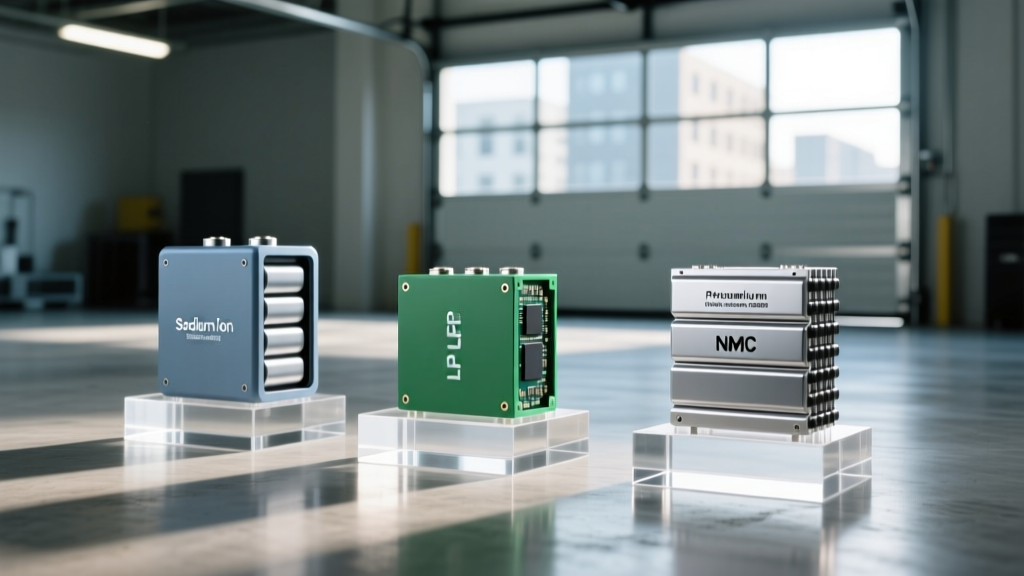
The battery pack is the single most expensive component in any electric vehicle, and the chemistry inside it dictates everything from daily range to how well the car performs in a Minnesota January. Most EVs sold in the US today use either NMC/NCA (nickel-manganese-cobalt or nickel-cobalt-aluminum) or LFP (lithium iron phosphate) cells. A third option — sodium-ion — is entering the conversation as sodium ion battery manufacturers scale production for automotive applications, though US-market availability remains limited as of 2026.
This guide breaks down what each chemistry means for your wallet, your charging habits, and how long the pack will last before degradation becomes noticeable.
LFP vs NMC/NCA vs Sodium-Ion: Chemistry Trade-Offs
Before comparing sodium ion battery manufacturers and their products against established lithium chemistries, it helps to understand the fundamental physics at play. Energy density (how much energy fits in a given weight or volume) is the primary differentiator, but it is far from the only one.
| Attribute | NMC/NCA | LFP | Sodium-Ion (Na-ion) |
|---|---|---|---|
| Energy Density (cell-level) | 250–300 Wh/kg | 160–200 Wh/kg | 120–160 Wh/kg |
| Cycle Life (to 80% SoH) | 1,000–2,000 cycles | 3,000–6,000 cycles | 2,000–5,000 cycles |
| Cold-Weather Performance | Moderate loss (~20–30% at -7°C/20°F) | Higher loss (~25–35% at -7°C/20°F) | Better low-temp retention (~15–20% loss at -7°C/20°F) |
| Raw Material Cost | High (nickel, cobalt) | Low (iron, phosphate) | Very low (sodium, abundant) |
| Thermal Stability | Moderate — requires robust BMS | High — more resistant to thermal runaway | High — inherently stable |
| Typical US Vehicles (2026) | Tesla Model 3 LR, Hyundai Ioniq 5, Ford F-150 Lightning ER | Tesla Model 3 RWD, base Chevrolet Equinox EV trims | Not yet in US-market passenger EVs (announced for commercial/micro-EV use) |
NMC and NCA chemistries dominate long-range and performance EVs because their higher energy density means more miles from a lighter, smaller pack. LFP has become the go-to for standard-range and cost-optimized models, trading some range for dramatically longer cycle life and lower material cost. Sodium-ion, championed by sodium ion battery manufacturers like CATL, HiNa Battery, and Faradion (acquired by Reliance Industries), offers even cheaper raw materials and superior cold-weather behavior — but at a significant energy-density penalty that makes it better suited to urban runabouts, energy storage, and commercial fleets than to a 300-mile highway cruiser.
How Long Do EV Batteries Actually Last?
The short answer: almost certainly longer than you will own the car. Real-world fleet data has shifted the consensus dramatically since the early 2010s.
Observed Degradation Patterns (fleet averages, multiple sources):
- Tesla Model 3/Y (NMC/NCA): ~10–12% capacity loss at 100,000 miles; ~14–18% at 200,000 miles (per Tesla's 2025 Impact Report and independent fleet tracking).
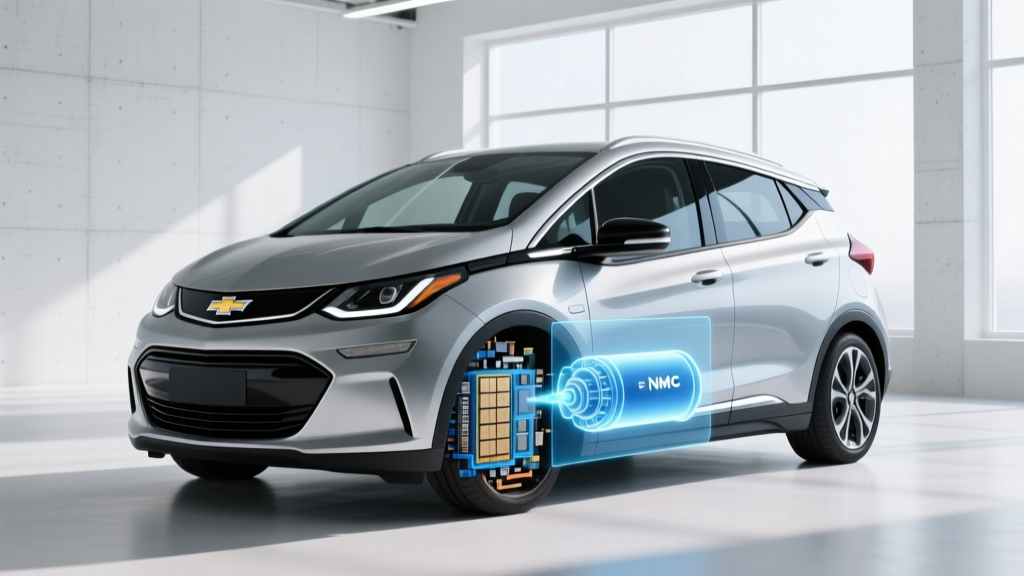
- Chevrolet Bolt EV/EUV (NMC): ~8–10% loss at 80,000 miles; many packs retain 88%+ SoH at 120,000 miles (owner-reported data via PlugShare and Bolt forums).
- Hyundai/Kia E-GMP (NMC, 77.4 kWh usable): ~7–10% loss at 60,000–80,000 miles in temperate climates; higher in hot climates without preconditioning.
- LFP-equipped Tesla Model 3 RWD: Early data suggests 5–8% loss at 60,000 miles, with a flatter degradation curve than NMC — consistent with LFP's higher cycle life.
Most lithium-ion EV batteries will deliver 150,000–250,000 miles before reaching 70–80% of original capacity — the threshold at which range reduction becomes meaningfully noticeable in daily driving. For the average US driver covering ~13,500 miles per year (FHWA data), that translates to 11–18 years of service. Full pack failure before the warranty period is rare; most outlast the vehicle itself.
What the Battery Warranty Actually Covers
Federal law mandates a minimum 8-year/100,000-mile warranty on EV battery packs, and most manufacturers exceed this. Here is how the major brands stack up in 2026:
| Manufacturer | Duration | Mileage | Capacity Retention Threshold |
|---|---|---|---|
| Tesla (Model 3/Y NMC Long Range) | 8 years | 120,000 miles | 70% of original capacity |
| Tesla (Model 3 RWD / LFP) | 8 years | 100,000 miles | 70% |
| Hyundai / Kia (E-GMP platform) | 10 years | 100,000 miles | 70% |
| General Motors (Ultium platform) | 8 years | 100,000 miles | 70% |
| Ford (F-150 Lightning, Mustang Mach-E) | 8 years | 100,000 miles | 70% |
| Rivian (R1T / R1S) | 8 years | 175,000 miles | 70% |
A few nuances matter: the warranty covers capacity falling below the stated threshold under normal use. Damage from accidents, flooding, or unauthorized modifications is excluded. Some manufacturers require you to follow prescribed charging guidelines (e.g., not routinely holding the pack at 100% SoC for NMC) to maintain coverage. Always read the specific warranty booklet for your model year. See fueleconomy.gov's EV technology overview for general guidance on battery durability standards.
EV Battery Replacement Costs: What to Budget For
Most current EV owners will never need a full battery replacement — the data above makes that clear. But if you are buying a used EV out of warranty, or planning to keep a vehicle past 200,000 miles, replacement cost is a legitimate consideration.
| Vehicle / Platform | Battery Capacity (usable kWh) | Chemistry | Estimated Replacement Cost (parts + labor) |
|---|---|---|---|
| Tesla Model 3 RWD | ~57 kWh | LFP | $8,000–$12,000 |
| Tesla Model 3 Long Range | ~75 kWh | NMC | $12,000–$16,000 |
| Hyundai Ioniq 5 / Kia EV6 | ~77.4 kWh | NMC | $12,000–$18,000 |
| Ford F-150 Lightning Extended Range | ~131 kWh | NMC | $20,000–$28,000 |
| Chevrolet Silverado EV (max pack) | ~200 kWh | NMC (Ultium) | $25,000–$35,000 |
| Rivian R1T (Large Pack) | ~128 kWh | NMC | $18,000–$25,000 |
Two trends are working in owners' favor. First, module-level repair is increasingly possible: many packs (especially GM's Ultium and Hyundai's E-GMP) allow individual module replacement rather than the full pack, cutting costs to $2,000–$6,000 for a partial repair. Second, cell-level pricing continues to decline. NMC cells averaged roughly $100–$115/kWh at the pack level in 2025 (per BloombergNEF data), down from $140/kWh in 2023. LFP cells are cheaper still, around $70–$85/kWh. Sodium-ion cells, once scaled by sodium ion battery manufacturers, are projected to undercut LFP by another 20–30%, potentially bringing sub-$50/kWh pack pricing to commercial applications — though this will take years to reach US consumer vehicles.
What Actually Kills a Battery — and What Doesn't
Not all miles are equal when it comes to pack longevity. The factors below have the most measurable impact on State of Health over time.
High-Impact Factors
- Sustained high State of Charge (NMC/NCA): Regularly storing an NMC pack at 100% SoC accelerates electrolyte decomposition. Most manufacturers recommend daily charging to 80% and only charging to 100% before long trips. LFP is an exception — it tolerates 100% SoC storage well and actually benefits from periodic full charges for BMS calibration.
- Extreme heat exposure: Ambient temperatures above 95°F (35°C) combined with high SoC is the most damaging combination for lithium-ion cells. Vehicles with active liquid cooling (Tesla, Hyundai E-GMP, GM Ultium) fare significantly better than passively cooled packs (older Nissan LEAF).
- Frequent DC fast charging without preconditioning: Repeatedly hitting a cold battery with 150+ kW generates internal stress. Always use the vehicle's built-in navigation-to-charger preconditioning feature when available — it warms the pack to ~30–35°C before you arrive, reducing lithium plating risk.
Lower-Impact Factors (Commonly Overstated)
- Occasional DC fast charging: 1–2 DCFC sessions per week on a preconditioned pack shows negligible additional degradation vs. L2-only charging in controlled studies.
- Regenerative braking: Regen current is well within safe C-rate limits and does not meaningfully accelerate degradation.
- Calendar aging: Even parked, packs lose ~1–2% capacity per year from chemical processes. This is unavoidable but minor.
Battery Longevity Checklist — Daily Habits That Matter
- Set daily charge limit to 80% (NMC/NCA) or 100% (LFP — follow your manufacturer's guidance)
- Use navigation-based preconditioning before every DC fast charge
- Avoid leaving the vehicle at 100% SoC for more than a few hours in hot weather
- Plug in during extreme cold (the BMS will use grid power for thermal management rather than draining the pack)
- Don't obsess over avoiding DCFC entirely — occasional fast charging is fine on a healthy pack
- Keep tire pressure at spec — underinflated tires increase energy consumption, which means more frequent charging cycles
How to Check and Monitor Battery Health (SoH)
State of Health (SoH) is the percentage of original capacity your pack currently holds. A new pack is 100% SoH; at 70% SoH, a 75 kWh pack effectively delivers ~52.5 kWh of usable energy. Here is how to check yours:
Built-In Vehicle Methods
- Tesla: The mobile app and in-car service menu show estimated range at 100% SoC. Divide your current 100%-charge range by the original EPA range to approximate SoH. Tesla has also begun surfacing a battery health percentage in the app for 2025+ model years.
- Hyundai/Kia: The infotainment system's EV diagnostics page displays battery condition as a percentage (under Settings → EV → Battery).
- GM (Ultium): The myChevrolet/myCadillac app includes a battery health indicator showing estimated capacity retention.
- Ford: The FordPass app provides a battery health assessment, though it is less granular than some competitors.
Third-Party Tools
- OBD-II dongles + apps: Tools like Leaf Spy (Nissan), Scan My Tesla, or Car Scanner ELM OBD2 can read the BMS-reported SoH directly from the CAN bus. This is the most accurate consumer-accessible method.
- Recurrent Auto: This service (free for many EV owners) tracks your battery's real-world range over time and provides a degradation report you can reference when selling the vehicle.
Sodium-Ion and Beyond: What's Next in Battery Tech
The battery landscape is shifting, and sodium ion battery manufacturers are part of a broader wave of next-generation chemistries. Here is where things stand with realistic timelines:
Sodium-Ion Batteries (Na-ion)
CATL began shipping first-generation sodium-ion cells in Chinese-market vehicles (Chery, JAC) in 2024–2025, with second-generation cells offering ~160 Wh/kg entering production in 2026. HiNa Battery and other sodium ion battery manufacturers are scaling gigafactory capacity. For US consumers, sodium-ion is most likely to appear first in grid energy storage and light commercial vehicles. Passenger car adoption in the US will depend on achieving energy density above 180 Wh/kg to avoid severe range penalties in larger vehicles. Expected US passenger vehicle availability: 2028–2030 at the earliest, likely in budget/urban segments.
Solid-State Batteries
Toyota, Samsung SDI, and QuantumScape have all announced solid-state or semi-solid-state cells with energy densities of 350–500 Wh/kg. Toyota targets limited production in 2027–2028, initially in low-volume models. QuantumScape's cells are in Volkswagen prototype testing. Expected broad US availability: 2029–2032. These cells promise faster charging (10–80% in under 10 minutes), higher energy density, and improved safety — but manufacturing cost and yield remain significant hurdles.
Silicon Anode Technology
Companies like Sila Nanotechnologies and Group14 are replacing graphite anodes with silicon-dominant materials, boosting cell-level energy density by 20–40%. The Mercedes G-Class EV (2025) uses Sila's silicon anode cells. This technology is already in production and will spread through premium segments over 2026–2028 before reaching mainstream pricing.
None of these technologies are available in current US-market EVs at scale. They are worth tracking, but purchasing decisions in 2026 should be based on proven LFP and NMC/NCA chemistries with established degradation data and warranty support.
Frequently Asked Questions
How long do EV batteries last in years and miles?
Most modern EV battery packs (NMC, NCA, or LFP) will deliver 150,000–250,000 miles before degrading to 70–80% of original capacity. In years, that is typically 11–18 years for the average US driver. Full pack failure within the warranty period is statistically rare.
How much does an EV battery cost to replace?
Full pack replacement ranges from roughly $8,000 for a smaller LFP pack (Tesla Model 3 RWD) to $25,000–$35,000 for large packs (Ford F-150 Lightning Extended Range, Chevrolet Silverado EV). Module-level repairs are increasingly available for $2,000–$6,000. Most owners never need a replacement.
What does the battery warranty cover?
Federal law requires at minimum 8 years/100,000 miles. Most manufacturers warrant the pack against falling below 70% of original capacity during that period. Some brands (Hyundai, Kia, Rivian) offer 10 years or higher mileage limits. Damage from accidents, abuse, or unauthorized modifications is excluded.
How do I check and maximize my EV battery health?
Check SoH through your vehicle's app, infotainment diagnostics, or an OBD-II scanner reading BMS data. To maximize longevity: set daily charge limits to 80% for NMC (100% for LFP), precondition before DC fast charging, avoid sustained high SoC in heat, and plug in during extreme cold for thermal management.
LFP vs NMC — which chemistry is better?
Neither is universally better; it depends on your priorities. Choose NMC/NCA if you need maximum range, faster highway driving, or live in a cold climate where energy density matters. Choose LFP if you prioritize longevity (3,000–6,000 cycle life vs. 1,000–2,000), lower cost, and higher thermal safety — and can accept ~30–50 fewer miles of EPA range. Sodium-ion, once sodium ion battery manufacturers reach US market scale, will offer a third option optimized for cost and cold-weather performance at the expense of range.
Will sodium-ion batteries be available in US EVs soon?
Not in the near term for passenger vehicles. Sodium ion battery manufacturers like CATL and HiNa are producing cells for Chinese-market EVs and energy storage, but the energy density (~120–160 Wh/kg) is too low for 250+ mile US vehicles without heavy, bulky packs. Expect sodium-ion to reach US commercial and budget segments around 2028–2030, with energy storage applications arriving sooner.