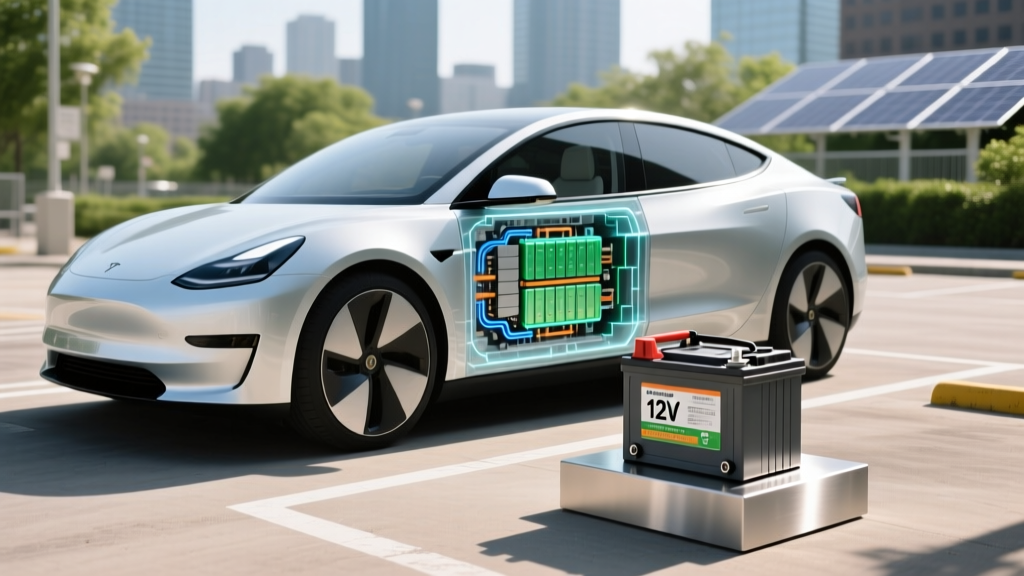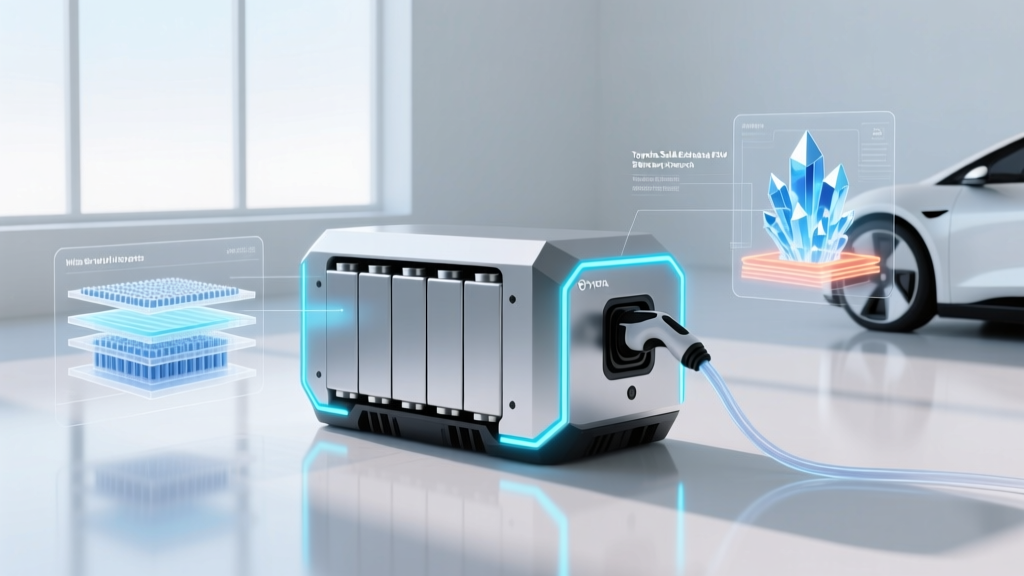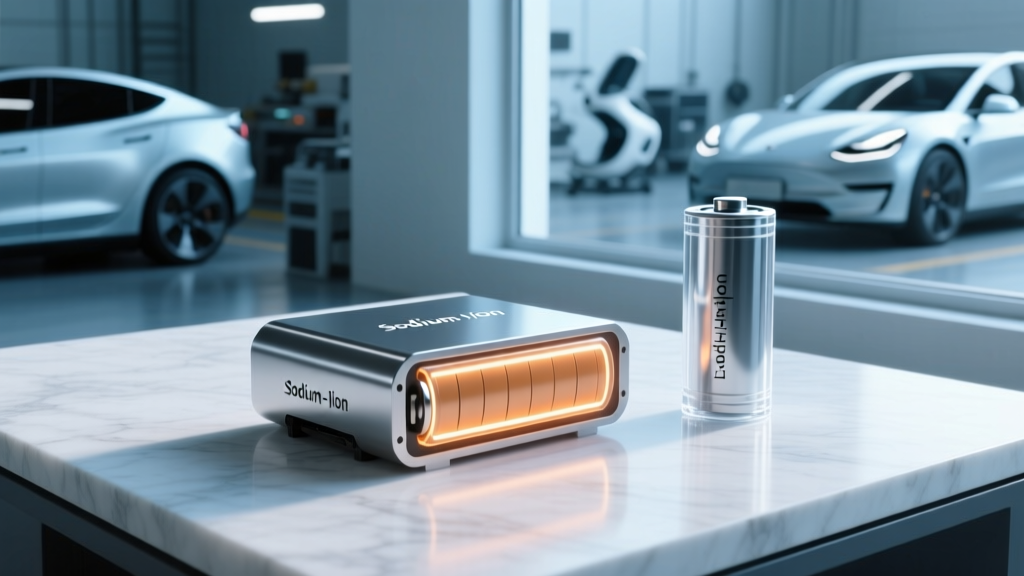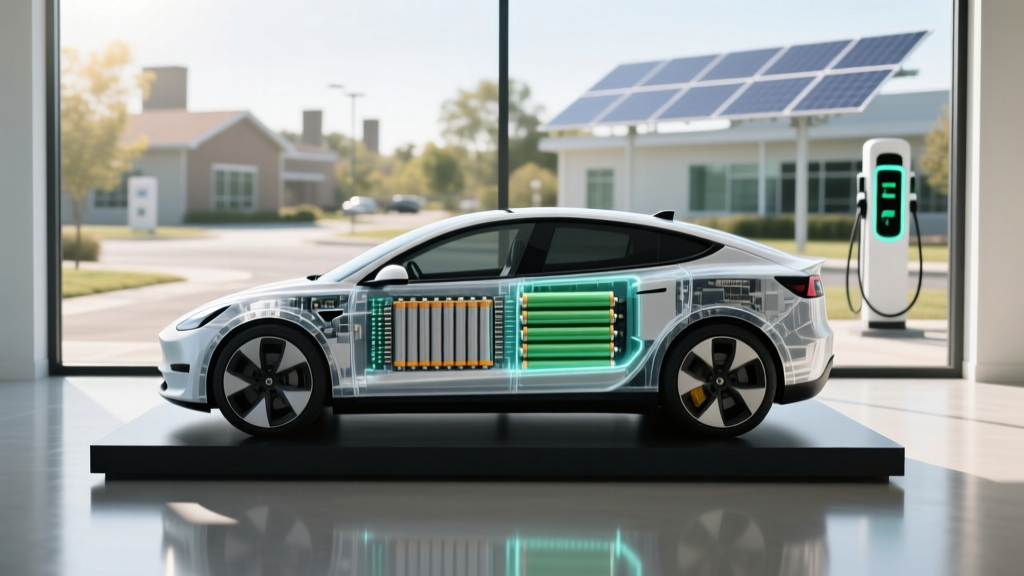
For years, the EV battery conversation has revolved around two dominant chemistries: nickel-manganese-cobalt (NMC) and lithium iron phosphate (LFP). But a third contender is moving from lab benches toward production lines — sodium-ion batteries. With lithium supply chain volatility and critical-mineral sourcing rules tightening under §30D tax credit requirements, a growing list of sodium ion battery companies in the USA and abroad are racing to commercialize a chemistry that swaps lithium for earth-abundant sodium. This guide breaks down where sodium-ion stands in 2026, how it compares to the LFP and NMC packs powering today's EVs, and everything current and prospective owners need to know about battery longevity, degradation, warranties, and replacement costs.
Current EV Battery Chemistries: LFP vs NMC/NCA Explained
Before assessing sodium-ion's promise, it helps to ground the discussion in the two chemistries that dominate the 2026 EV market. NMC (nickel-manganese-cobalt) and NCA (nickel-cobalt-aluminum) cathodes remain the go-to for long-range, performance-oriented vehicles. LFP (lithium iron phosphate) has captured the standard-range and affordable-EV segment thanks to its lower cost and longer cycle life.
| Attribute | LFP | NMC / NCA | Sodium-Ion (Emerging) |
|---|---|---|---|
| Energy Density (Wh/kg, cell-level) | 160–180 | 230–300 | 140–170 (estimated) |
| Cycle Life (to 80% SoH) | 3,000–5,000+ | 1,000–2,500 | 2,000–4,000 (lab data) |
| Cold Performance (-10°C range retention) | ~60–70% | ~65–75% | ~70–80% (lab claims) |
| Raw Material Cost Sensitivity | Moderate (lithium-dependent) | High (Ni, Co, Li) | Low (sodium, iron, manganese) |
| Thermal Stability / Safety | Excellent | Good (requires BMS management) | Excellent (inherent) |
| Current EV Availability (US, 2026) | Widely available (Tesla, Ford, Rivian standard-range) | Widely available (most long-range models) | Not yet in US-market EVs |
| Typical Cost ($/kWh, pack-level) | $100–$130 | $130–$170 | $80–$110 (projected at scale) |
Key takeaway: NMC/NCA wins on energy density — packing more kWh into a lighter, smaller battery, which is why the Tesla Model Y Long Range (81 kWh usable, NMC, EPA 320 miles) and Hyundai Ioniq 5 (84 kWh, NMC, EPA 305 miles) use it. LFP wins on longevity, safety, and cost, making it the chemistry behind the Tesla Model 3 RWD ($38,990 MSRP, 57.5 kWh LFP, EPA 272 miles) and the Ford Mustang Mach-E Select (70 kWh LFP, EPA 250 miles).
Sodium Ion Battery Companies in USA: Who's Building and What's Next
Sodium-ion batteries replace lithium in the cathode and anode with sodium-based compounds. Sodium is roughly 1,000 times more abundant than lithium and can be sourced from soda ash (sodium carbonate), virtually eliminating supply-chain bottlenecks tied to lithium, cobalt, and nickel mining.
Several sodium ion battery companies in the USA and with US operations are advancing this technology toward automotive-grade production:
- Natron Energy (Santa Clara, CA): Focused on Prussian Blue analog sodium-ion cells targeting data center UPS and industrial applications first, with potential EV applications longer-term. Their cells boast 50,000+ cycle life and ultra-fast charge/discharge, but at lower energy density (~100–130 Wh/kg) than needed for passenger EVs.
- Peak Energy (Denver, CO): Developing sodium-ion cells for grid storage and, eventually, automotive use. Their cell prototypes target 150+ Wh/kg at the cell level.
- Novo Energy (Gothenburg, Sweden, with Volvo/Northvolt backing): While European-headquartered, their sodium-ion R&D could eventually feed into US-market Volvo and Polestar models.
- CATL (China, with global supply chains): The world's largest battery maker has announced sodium-ion cells at ~160 Wh/kg and has begun integrating them into certain Chinese-market EVs. CATL's supply agreements with Tesla, Ford, and others mean sodium-ion chemistry could reach US-built vehicles if sourcing and trade regulations allow.
Realistic timeline for US-market EVs: Industry analysts project that sodium-ion packs could appear in entry-level or city-focused EVs sold in the US by 2028–2030, initially in hybrid battery architectures (sodium-ion paired with a small NMC buffer for peak power). For 2026 buyers, sodium-ion is not yet a purchasable option — it remains an emerging technology worth monitoring.
How Long Do EV Batteries Last? Degradation Data and Real-World Numbers
The most persistent question among EV shoppers is battery longevity. The short answer: most modern EV batteries are engineered to outlast the vehicle itself under normal use. But degradation is real, and understanding the numbers helps set realistic expectations.
EV battery degradation is measured by State of Health (SoH) — the percentage of original capacity remaining. A new battery starts at 100% SoH. Most manufacturers warrant that the battery will retain at least 70% of its original capacity over 8 years or 100,000 miles (whichever comes first). California-emissions states often mandate 10 years / 150,000 miles.
| Mileage | Average SoH (LFP) | Average SoH (NMC) | Real-World Range Impact (300-mi EPA pack) |
|---|---|---|---|
| New | 100% | 100% | 300 mi |
| 30,000 mi | ~97% | ~95–96% | ~285–291 mi |
| 60,000 mi | ~95% | ~92–93% | ~276–285 mi |
| 100,000 mi | ~92–93% | ~88–90% | ~264–279 mi |
| 150,000 mi | ~88–90% | ~83–87% | ~249–270 mi |
| 200,000 mi | ~85–88% | ~78–83% | ~234–264 mi |
These figures align with fleet data published by Recurrent Auto and internal analyses from manufacturers. LFP batteries consistently show slower degradation curves thanks to their more stable crystal structure. Tesla's 2025 Impact Report noted that Model 3/Y batteries retained an average of 85% capacity at 200,000 miles before retirement — well above the 70% warranty threshold.
Important caveat: Degradation is not linear. Most batteries experience a steeper initial drop (2–4% in the first year), then flatten into a slow, gradual decline. This means a 5-year-old battery may hold more capacity than a linear projection would suggest.
EV Battery Warranty Terms: What's Covered and for How Long
Federal law (under EPA and CARB guidelines adopted by most manufacturers) mandates that EV batteries carry a minimum warranty of 8 years / 100,000 miles. In practice, most automakers meet or exceed this standard.
| Vehicle | Battery Chemistry | Warranty Period | Capacity Retention Threshold |
|---|---|---|---|
| Tesla Model 3 RWD | LFP | 8 yr / 100,000 mi | ≥70% |
| Tesla Model Y Long Range | NMC | 8 yr / 120,000 mi | ≥70% |
| Hyundai Ioniq 5 | NMC | 10 yr / 100,000 mi | ≥70% |
| Ford Mustang Mach-E | LFP (Select) / NMC (Premium) | 8 yr / 100,000 mi | ≥70% |
| Rivian R1S / R1T | NMC | 8 yr / 175,000 mi | ≥70% |
| Chevrolet Equinox EV | NMC (Ultium) | 8 yr / 100,000 mi | ≥70% |
| Volkswagen ID.4 | NMC | 8 yr / 100,000 mi | ≥70% |
What the warranty covers: If your battery drops below the stated retention threshold (typically 70% SoH) within the warranty period, the manufacturer will repair or replace the battery at no cost. This covers manufacturing defects, premature cell failure, and abnormal degradation. It does not cover damage from accidents, flooding, or unauthorized modifications.
What it doesn't cover: Gradual degradation above the 70% threshold is considered normal wear. If your battery is at 72% SoH at year 7, you have a functioning battery with reduced range — not a warranty claim. Some owners find this distinction frustrating, but it aligns with how all rechargeable battery systems work.
EV Battery Replacement Cost: What to Expect and When It's Needed
The fear of a $20,000 battery replacement is one of the most cited barriers to EV adoption. Let's put that fear in perspective with actual numbers.
| Vehicle / Battery Size | Chemistry | Replacement Cost (Parts + Labor) | Typical Replacement Trigger |
|---|---|---|---|
| Tesla Model 3 RWD (57.5 kWh) | LFP | $10,000–$14,000 | Rare before 200,000+ mi |
| Tesla Model Y LR (81 kWh) | NMC | $14,000–$18,000 | Rare before 200,000+ mi |
| Hyundai Ioniq 5 (84 kWh) | NMC | $13,000–$17,000 | Rare before 180,000+ mi |
| Ford Mach-E Extended (91 kWh) | NMC | $15,000–$20,000 | Rare before 180,000+ mi |
| Chevrolet Bolt EV (65 kWh) | NMC | $9,000–$13,000 | Some early recalls; rare otherwise |
| Rivian R1T (135 kWh Max Pack) | NMC | $20,000–$28,000 | Rare before 175,000+ mi |
When is replacement actually needed? For the vast majority of EV owners, the answer is never. According to fueleconomy.gov, EV battery failures requiring full replacement within the warranty period are rare (under 1–2% of vehicles). Most batteries lose capacity gradually rather than failing catastrophically. A battery at 75% SoH still provides meaningful range — a 300-mile EPA vehicle would still deliver ~225 miles, adequate for most daily driving.
Full replacement typically becomes a consideration only at very high mileages (200,000+ miles) or if the battery is physically damaged. By that point, pack-level costs continue to decline — industry analysts at BloombergNEF project average pack prices falling below $100/kWh by 2027, which would bring a 75 kWh replacement pack to roughly $7,500–$10,000 in parts alone.
Factors That Affect EV Battery Life: What Owners Can Control
While modern battery management systems (BMS) do an excellent job protecting cells from abuse, owner habits still influence long-term degradation. Here's what the data shows:
Battery Care Best Practices
- Avoid sustained 100% SoC (NMC/NCA): For NMC batteries, daily charging to 80% is recommended. Charging to 100% is fine for road trips, but don't leave the car sitting at full charge for days. LFP batteries are more tolerant — Tesla recommends periodic 100% charges for LFP to allow the BMS to recalibrate.
- Limit DC fast charging frequency: Occasional DC fast charging (150–350 kW) is fine, but making it your daily routine accelerates degradation. Research from the Idaho National Laboratory showed that vehicles charged exclusively on DC fast chargers exhibited ~3–5% more degradation over 50,000 miles compared to Level 2-only charging. Home Level 2 charging (7–11 kW) is the gold standard for battery health.
- Precondition before fast charging: Preconditioning warms the battery to its optimal charging temperature (~25–35°C). Most EVs do this automatically when you navigate to a DC fast charger. Skipping preconditioning (e.g., plugging into a fast charger with a cold-soaked battery) causes lithium plating risk and slower charge speeds.
- Extreme temperature management: Prolonged exposure to ambient temperatures above 100°F accelerates electrolyte decomposition. If you live in hot climates, garage parking and scheduled preconditioning help. In cold climates, the battery's reduced range is temporary and recovers when temperatures rise — but repeated deep discharges in sub-zero temps without preconditioning can stress cells.
- Don't let SoC sit near 0%: Storing an EV with a near-empty battery for weeks can cause cells to drop below safe voltage thresholds. If storing for extended periods, leave the car plugged in with a 50% charge limit set.
How to Check and Monitor Your EV Battery Health
Most modern EVs provide at least some battery health visibility through the infotainment system or companion app. Here's how to check State of Health (SoH) across popular brands:
- Tesla: The Tesla app does not display a direct SoH percentage, but you can estimate it by comparing your current rated range at 100% charge to the original EPA-rated range. Third-party tools like Tessie or TeslaFi can log charge data and estimate SoH more precisely.
- Hyundai / Kia: The infotainment system's EV diagnostics menu displays battery health as a percentage. Hyundai's Bluelink app also provides SoH estimates on newer models.
- Ford: The FordPass app includes a battery health indicator on Mach-E and F-150 Lightning models, showing a Good/Fair/Needs Attention status.
- Rivian: The Rivian app provides estimated range at full charge, which can be compared to original specs. Detailed SoH data may be available through service center diagnostics on request.
- OBD-II scanners: Third-party OBD-II tools (like the OBDLink SX paired with apps such as ABRP or Car Scanner) can read battery management system data directly, including cell voltage variance, pack voltage, and estimated SoH. This is the most accurate owner-accessible method.
When to be concerned: If you notice your 100% charge range dropping more than ~3–4% per year after the initial break-in period, or if individual cell voltage variance exceeds 200 mV (readable via OBD-II), it's worth scheduling a diagnostic visit. These can be early indicators of a weak cell module that may need balancing or replacement under warranty.
Emerging Battery Technologies: Solid-State, Silicon Anode, and Beyond
Beyond sodium-ion, several next-generation battery technologies are in active development. It's important to understand their realistic timelines so you can make informed purchasing decisions today rather than waiting indefinitely for tomorrow's breakthroughs.
- Solid-state batteries: These replace the liquid electrolyte with a solid material, promising higher energy density (potentially 400+ Wh/kg at the cell level), faster charging, and improved safety. Toyota has announced a solid-state battery prototype targeting 2027–2028 production in limited models. QuantumScape (backed by Volkswagen) continues testing with OEM partners. Realistic US-market availability: 2029–2032 for mainstream vehicles. Current limitations include manufacturing scalability and cost — solid-state cells currently cost 3–5x more than conventional lithium-ion at prototype scale.
- Silicon anode batteries: Replacing graphite anodes with silicon can boost energy density by 20–40%. Companies like Sila Nanotechnologies and Group14 are supplying silicon anode materials to battery manufacturers. Some premium EVs may adopt partial silicon anodes by 2027–2028. Realistic US-market availability: 2027–2029 in select models.
- Lithium-sulfur (Li-S): Promises very high energy density (500+ Wh/kg theoretical) but faces severe cycle-life challenges (currently ~100–200 cycles in lab conditions). Realistic US-market EV availability: 2032+ at earliest.
Bottom line for 2026 buyers: Don't delay an EV purchase waiting for solid-state or sodium-ion batteries. The LFP and NMC packs in today's vehicles are proven, well-warrantied, and will serve reliably for 150,000–200,000+ miles. Next-generation chemistries will arrive incrementally, likely first in premium or fleet vehicles, before reaching mainstream pricing.
Frequently Asked Questions
How long do EV batteries last in years and miles?
Most modern EV batteries are designed to last 15–20 years or 150,000–200,000+ miles before dropping below 70% of their original capacity. Fleet data from Tesla, Hyundai, and independent analysts at Recurrent Auto consistently shows that fewer than 2% of EV batteries require full replacement within the warranty period. Many batteries continue functioning with usable (though reduced) range well beyond 200,000 miles.
How much does an EV battery cost to replace?
Out-of-warranty replacement costs range from approximately $9,000 for a smaller pack (Chevrolet Bolt, 65 kWh) to $28,000 for a large pack (Rivian R1T Max Pack, 135 kWh). Typical mid-size packs (Tesla Model Y, Hyundai Ioniq 5) fall in the $13,000–$18,000 range including labor. However, full replacement is rarely needed — most batteries degrade gradually and remain functional well past warranty expiration. Pack-level costs are also declining, with industry projections suggesting $100/kWh or less by 2027–2028.
What does the EV battery warranty actually cover?
Federal guidelines require a minimum 8-year / 100,000-mile battery warranty. Most manufacturers guarantee the battery will retain at least 70% of its original capacity during this period. The warranty covers manufacturing defects, premature cell failure, and abnormal degradation. It does not cover accident damage, flooding, unauthorized modifications, or gradual capacity loss above the 70% threshold. Some manufacturers (Hyundai, Rivian) offer extended terms of 10 years or up to 175,000 miles.
How do I check and maximize my EV battery health?
Check SoH through your vehicle's app (FordPass, Tesla app, Hyundai Bluelink) or via an OBD-II scanner reading BMS data directly. To maximize longevity: charge NMC batteries to 80% daily (100% for trips only), use Level 2 home charging over DC fast charging when possible, precondition the battery before fast charging, avoid storing the car at 0% or 100% SoC for extended periods, and garage-park in extreme heat when feasible. LFP batteries are more flexible — periodic 100% charges are recommended for BMS calibration.
LFP vs NMC — which battery chemistry is better?
Neither is universally "better" — it depends on your priorities. Choose LFP if you value lower cost, longer cycle life (3,000–5,000+ cycles to 80% SoH), superior thermal safety, and plan to keep the vehicle 10+ years. Choose NMC/NCA if you need maximum range from a smaller, lighter pack (essential for larger vehicles like trucks and SUVs), prioritize cold-weather range retention, or frequently take long road trips where every mile of EPA range matters. For most daily-driving commuters, LFP is the pragmatic choice. For frequent road-trippers and towing applications, NMC remains the standard.
Are sodium-ion batteries available in US-market EVs yet?
No. As of 2026, no US-market EVs use sodium-ion batteries. Companies like Natron Energy and Peak Energy are developing sodium-ion cells domestically, but initial applications target grid storage and industrial use. CATL has begun deploying sodium-ion packs in Chinese-market vehicles. Industry analysts project sodium-ion could appear in entry-level US-market EVs by 2028–2030, likely in city-focused models where lower energy density is acceptable and cost savings are prioritized.