The EV battery landscape is shifting fast. For years, buyers chose between two dominant lithium-ion chemistries: NMC (nickel manganese cobalt) for maximum range, and LFP (lithium iron phosphate) for longevity and lower cost. Now, a third contender is entering the conversation — sodium ion batteries — promising cheaper raw materials, better cold-weather performance, and reduced supply-chain risk. But are they ready for your next EV, and how do they stack up against proven lithium-ion options?
This guide breaks down every major EV battery chemistry available or nearing production in 2026, with hard data on degradation rates, warranty coverage, replacement costs, and the care habits that actually extend battery life. Whether you're shopping for a new EV or trying to maximize the pack in your current one, these are the numbers that matter.
EV Battery Chemistries Explained: NMC, LFP, and Sodium Ion
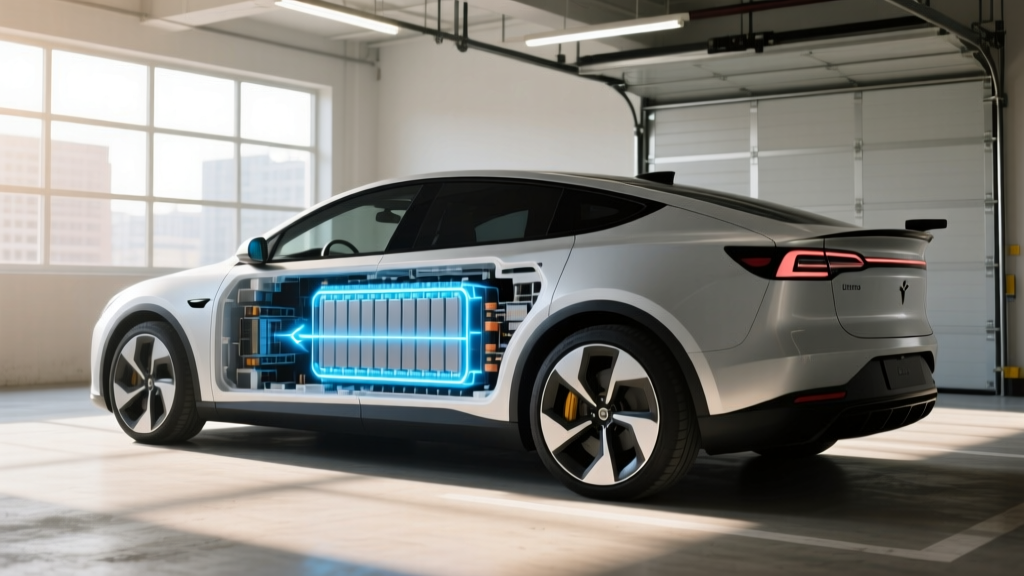
Before comparing specs, it helps to understand what's inside the pack. All three chemistries use lithium or sodium ions moving between a cathode and anode to store and release energy — measured in kWh (kilowatt-hours, the energy capacity). The cathode material is what defines the chemistry and drives the trade-offs.
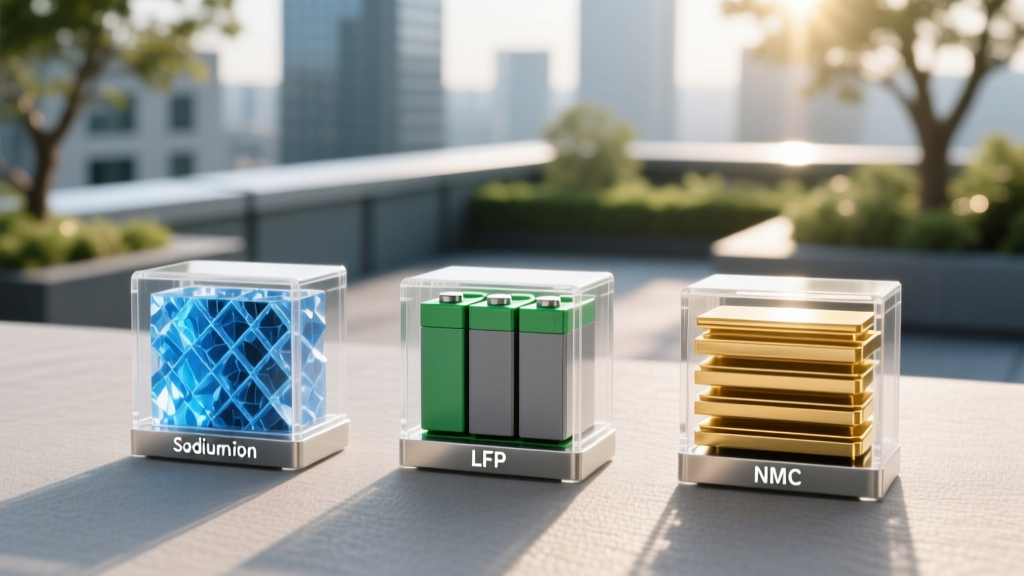
NMC (Nickel Manganese Cobalt) / NCA (Nickel Cobalt Aluminum): These cathode chemistries deliver the highest energy density — meaning more kWh packed into a lighter, smaller battery. That's why NMC dominates long-range EVs like the Hyundai Ioniq 5 (77.4 kWh usable, NMC) and the Ford F-150 Lightning Extended Range (131 kWh usable, NMC). The trade-off is higher cost, reliance on cobalt and nickel supply chains, and slightly faster degradation under heavy fast-charging use.
LFP (Lithium Iron Phosphate): LFP sacrifices roughly 15–25% energy density compared to NMC but gains dramatically in cycle life, thermal stability, and cost. Tesla shifted the Model 3 Standard Range to LFP in the US market, and BYD's Blade Battery is LFP-based. LFP cells tolerate regular 100% charging without accelerated degradation — a practical advantage for daily drivers who need full range every morning.
Sodium Ion Batteries: Instead of lithium, these cells use sodium — an element roughly 1,000 times more abundant in Earth's crust. CATL began volume production of sodium ion cells in China in 2024–2025, initially targeting small city EVs and energy storage. As of early 2026, sodium ion packs are appearing in select Chinese-market vehicles (like the Chery iCAR and JAC Yiwei models) and are expected to reach US and European markets in compact, budget-oriented EVs by 2027–2028. Energy density currently trails LFP by another 10–20%, but cold-weather performance and cycle life are strong.
| Attribute | NMC / NCA | LFP | Sodium Ion |
|---|---|---|---|
| Cell-level energy density | 220–300 Wh/kg | 150–200 Wh/kg | 120–160 Wh/kg |
| Typical pack size (US EVs) | 60–131 kWh | 50–82 kWh | 30–55 kWh (announced) |
| Cycle life (to 80% capacity) | 1,000–2,000 cycles | 3,000–6,000 cycles | 3,000–5,000 cycles (lab data) |
| Cold-weather performance (–20°C) | ~25–35% range loss | ~30–40% range loss | ~15–25% range loss |
| 100% SoC daily charging OK? | No — accelerate degradation | Yes — minimal impact | Yes — minimal impact |
| Raw material cost index | High (Ni, Co) | Medium (Li, Fe, P) | Low (Na, Fe, Mn) |
| Current US vehicle availability | Widely available | Available (Tesla, BYD imports) | Not yet in US vehicles |
| Thermal runaway risk | Moderate | Very low | Very low |
How Long Do EV Batteries Actually Last?
The short answer: almost certainly longer than you'll own the car. Real-world fleet data has shifted the consensus dramatically since the early 2010s, when buyers feared packs would need replacement at 100,000 miles.
According to long-term fleet analysis from Geotab's study of over 10,000 EVs, the average lithium-ion EV battery loses approximately 2.3% of its capacity per year under typical mixed-use driving. That translates to roughly 88% state of health (SoH) after five years and around 77% after ten years — well above the point of practical usability.
But averages mask important variation:
- Best-case (LFP, mild climate, Level 2 charging): Tesla Model 3 LFP fleet data shows packs retaining 92–95% capacity after 100,000 miles. LFP's slower degradation curve means many of these packs will outlast the vehicle's chassis.
- Typical-case (NMC, mixed charging): Hyundai Ioniq 5 and Kia EV6 owners report 90–94% SoH at 50,000 miles, with degradation slowing after the initial break-in period (the first 10,000–20,000 miles often see a 2–4% drop, then the curve flattens).
- Worst-case (frequent DC fast charging, extreme heat): Packs subjected to daily 150+ kW DC fast charging in hot climates (Arizona, Texas summers) can see 3–4% annual loss. Early Nissan Leaf models (passively cooled, NMC) showed up to 20% loss over 8 years in hot climates — a problem modern thermal management systems have largely solved.
Degradation curve pattern: EV batteries typically follow a "hockey stick" curve — a steeper initial drop of 2–4% in the first year or 15,000 miles, followed by a long, gradual linear decline of roughly 1.5–2.5% per year. LFP and sodium ion chemistries show a flatter initial drop and a slower linear phase. Most modern packs will not reach 70% SoH (the typical warranty threshold) before 200,000+ miles under normal use.
What Does the EV Battery Warranty Cover?
Federal law in the United States mandates that EV battery warranties cover a minimum of 8 years or 100,000 miles (whichever comes first). In California Air Resources Board (CARB) states — which include California, New York, Massachusetts, Oregon, Washington, and several others — that mandate extends to 10 years or 150,000 miles.
The warranty trigger is almost always a capacity-retention threshold: if the battery's state of health drops below a specified percentage (typically 70% of original capacity), the manufacturer must repair or replace it at no cost. Here's how major manufacturers structure coverage as of 2026:
| Manufacturer | Warranty Period | Capacity Threshold | Chemistry Covered |
|---|---|---|---|
| Tesla (Model 3/Y RWD) | 8 yr / 100,000 mi | 70% SoH | LFP |
| Tesla (Model 3/Y LR, S, X) | 8 yr / 120,000 mi | 70% SoH | NMC/NCA |
| Hyundai / Kia (E-GMP) | 10 yr / 100,000 mi | 70% SoH | NMC |
| Ford (Mustang Mach-E, F-150 Lightning) | 8 yr / 100,000 mi | 70% SoH | NMC |
| Chevrolet (Equinox EV, Blazer EV) | 8 yr / 100,000 mi | 60% SoH | NMC |
| BYD (where available) | 8 yr / 100,000 mi (varies by market) | 70% SoH | LFP (Blade) |
| Rivian (R1T, R1S) | 8 yr / 175,000 mi | 70% SoH | NMC |
What's typically covered: Capacity loss below the threshold, cell or module defects, thermal management system failures, and any manufacturing defect affecting the high-voltage traction battery. The warranty does not cover damage from accidents, flooding, improper modifications, or use of the vehicle as a stationary power source beyond V2L specifications.
Important note on the 12V battery: EVs also carry a conventional 12V auxiliary battery that powers lights, infotainment, and the contactors that connect the main pack. This 12V battery is covered under the standard bumper-to-bumper warranty (typically 3 yr / 36,000 mi) and is not part of the high-voltage battery warranty. If your EV won't start and the dashboard is dead, it's usually the 12V — not the traction battery — that has failed.
How Much Does an EV Battery Replacement Cost?
This is the question that generates the most anxiety — and the most misinformation. Let's anchor the discussion with a critical fact: the vast majority of EV batteries never need replacement during the vehicle's useful life. Geotab's fleet data shows fewer than 2% of EVs required a battery replacement under normal conditions, and most of those were early-model vehicles with manufacturing defects, not wear-out failures.
That said, if you're buying a used EV outside warranty, planning to keep a vehicle past 200,000 miles, or dealing with physical damage to the pack, here are current replacement cost ranges for 2026:
| Vehicle / Pack Size | Battery Chemistry | Pack Cost (Parts) | Installed Cost |
|---|---|---|---|
| Tesla Model 3 RWD (~57 kWh) | LFP | $8,000–$11,000 | $12,000–$16,000 |
| Tesla Model Y LR (~82 kWh) | NMC | $12,000–$16,000 | $16,000–$22,000 |
| Hyundai Ioniq 5 (~77.4 kWh) | NMC | $11,000–$15,000 | $15,000–$20,000 |
| Ford F-150 Lightning Ext. (~131 kWh) | NMC | $18,000–$25,000 | $25,000–$35,000 |
| Chevrolet Bolt EV (~65 kWh) | NMC | $9,000–$13,000 | $13,000–$17,000 |
| Nissan Ariya (~91 kWh) | NMC | $13,000–$17,000 | $17,000–$23,000 |
Costs are trending downward. Cell-level pricing for NMC has fallen from roughly $180/kWh in 2022 to approximately $100–$120/kWh in 2026, and LFP cells now sit around $70–$85/kWh at the pack level, according to BloombergNEF battery price surveys. Sodium ion cells, once scaled, are projected to reach $50–$65/kWh — which could bring a 50 kWh replacement pack below $5,000 in parts cost by the early 2030s.
Module-level repair: Many modern packs are designed for partial replacement. If a single module or cell group degrades disproportionately, a qualified EV service center can sometimes replace just that section for $2,000–$5,000 rather than swapping the entire pack. Tesla, Hyundai, and BMW all support module-level service on current platforms.
Sodium Ion Batteries: What Buyers Need to Know in 2026
Sodium ion batteries represent the most significant new chemistry to enter EV production since LFP went mainstream around 2020. Here's where the technology stands — and where it's headed.
Current status: CATL's first-generation sodium ion cells (announced 2021, production from 2024) deliver approximately 140–160 Wh/kg at the cell level — roughly comparable to early LFP cells a decade ago. In practice, this means a sodium ion pack large enough for a 200-mile EPA range EV would weigh noticeably more and take up more space than an equivalent LFP pack. For compact city cars and sub-300-mile range vehicles, that trade-off is acceptable given the cost savings.
The real advantages:
- Cold performance: Sodium ion cells retain approximately 90% of their capacity at –20°C (–4°F), compared to roughly 65–75% for LFP and 70–80% for NMC. For EV buyers in northern climates, this could translate to 30–50 more real-world winter miles on a compact EV.
- Charging speed at low temperatures: Sodium ion cells can accept charge at –20°C without the risk of lithium plating that limits lithium-ion charging in extreme cold. This matters for drivers who rely on DC fast charging in winter.
- Supply chain independence: Sodium is globally abundant and not concentrated in a few producing countries. This reduces geopolitical supply risk and long-term cost volatility.
- Safety: Sodium ion cells can be discharged to 0V for transport without damage — reducing shipping hazards and fire risk during logistics.
Limitations to watch:
- Lower energy density means heavier packs for the same range — a disadvantage for larger vehicles and long-range applications.
- As of early 2026, no sodium ion EV is available for purchase in the United States. CATL's AB battery pack (which combines sodium ion and LFP cells in a single pack) is in production for Chinese-market vehicles and is expected to reach global markets in the 2027–2028 timeframe.
- Long-term degradation data from real-world fleet use is not yet available at scale — lab results are promising but need validation over years of road use.
Bottom line for buyers: If you're shopping for an EV today, sodium ion is not yet an option in the US market. It's a technology to watch for budget-oriented compact EVs arriving in the next two to three years. For current purchases, the LFP vs NMC decision is the one that matters.
LFP vs NMC: Which Chemistry Should You Choose?
This is the practical decision facing most 2026 EV buyers. Here's a framework based on real ownership patterns:
Choose LFP if:
- You charge primarily at home and can charge to 100% daily without worry
- You plan to keep the vehicle 8+ years or drive 15,000+ miles per year
- You prioritize battery longevity over maximum single-charge range
- You live in a moderate or warm climate (LFP's cold-weather weakness is less relevant if you garage and precondition)
- Cost per mile over ownership matters more than 0–60 performance
Choose NMC if:
- You need maximum EPA range (300+ miles) from a single charge
- You frequently road-trip and want the longest legs between DC fast-charge stops
- You need towing range (NMC's energy density matters more when pulling a trailer)
- You're buying a larger vehicle (F-150 Lightning, Rivian R1T) where pack weight is already a constraint
- You can commit to a 20–80% daily SoC habit to minimize degradation
One nuance many buyers miss: the real-world range gap between LFP and NMC is narrower than the spec sheet suggests. An LFP Tesla Model 3 RWD (EPA 272 miles) driven at highway speeds in moderate weather will deliver approximately 230–250 real-world miles. An NMC Model 3 Long Range (EPA 341 miles) under the same conditions delivers roughly 285–310 miles. The 69-mile EPA gap compresses to about 50–60 real-world miles — meaningful, but less dramatic than marketing implies. In cold weather, the gap narrows further because NMC also suffers cold-weather losses.
Factors That Affect EV Battery Life — and What You Can Control
Not all degradation is equal. Here are the factors ranked by impact, based on fleet data and battery research:
1. Extreme temperatures (high impact): Sustained exposure to ambient temperatures above 95°F (35°C) accelerates electrolyte decomposition inside cells. Battery packs in Phoenix and Dubai degrade measurably faster than identical packs in Seattle or Boston. Modern thermal management systems (liquid cooling) mitigate this significantly, but parking in shade or a garage during summer heat waves still helps. Cold temperatures don't cause permanent degradation in the same way, but charging a cold battery without preconditioning can cause lithium plating — a permanent capacity loss mechanism.
2. High state of charge storage (moderate-to-high impact): Storing an NMC battery at 100% SoC for days or weeks — especially in heat — causes accelerated calendar aging. If you're leaving an NMC vehicle for a vacation, set the charge limit to 50–60%. LFP is far more tolerant of high-SoC storage, which is one reason Tesla recommends periodic 100% charges for LFP vehicles (it also helps the battery management system recalibrate cell balancing).
3. Frequent DC fast charging (moderate impact): Occasional DC fast charging (1–2 times per week on road trips) has minimal impact. Daily DC fast charging at 150+ kW, however, generates sustained heat inside cells and stresses the anode. Studies suggest daily DCFC use can add 1–2% additional degradation per year compared to exclusive Level 2 home charging. Most modern EVs manage this well with active cooling during charging sessions, but if you have home Level 2 access, use it as your primary method.
4. Deep discharge cycles (low-to-moderate impact): Regularly driving an EV down to 5% or below and leaving it there stresses cells. The buffer (typically 3–5% at the bottom that the BMS hides from the driver) protects against true zero, but habitually arriving at near-empty is unnecessary wear. Charge when you can; don't run it to the bottom routinely.
5. Mileage and cycle count (baseline impact): Every charge-discharge cycle causes a small, irreversible loss of active lithium (or sodium). This is the unavoidable baseline degradation — the ~2% per year that happens even with perfect care. It's the reason battery warranties have mileage limits, not just time limits.
Battery Care Checklist for Maximum Longevity
- Set a daily charge limit of 80% for NMC/NCA vehicles; 100% is fine for LFP
- Use Level 2 home charging as your primary method; reserve DCFC for road trips
- Precondition the battery before DC fast charging (most EVs do this automatically when you navigate to a charger)
- Avoid storing at 100% SoC for more than 24 hours, especially in hot weather (NMC/NCA)
- Don't let the vehicle sit below 10% SoC for extended periods — plug in if you're leaving it for more than a few days
- Park in shade or a garage during sustained heat waves when possible
- Drive normally — aggressive acceleration doesn't significantly harm the battery, but it does waste energy and reduces your practical range
How to Check Your EV's Battery State of Health
State of Health (SoH) is the metric that tells you how much capacity your battery has lost relative to when it was new. A 100% SoH means full original capacity; 90% SoH means the pack can store 90% of its original kWh. Here's how to monitor it:
In-vehicle displays: Many modern EVs show battery health data directly. Tesla vehicles display a rated range figure that updates based on actual pack capacity — comparing your current full-charge rated range to the EPA-rated range when new gives a rough SoH estimate. Hyundai and Kia's E-GMP vehicles show a battery health percentage in the EV menu of the infotainment system. BMW iX and i4 models display SoH in the iDrive EV settings.
OBD-II diagnostic tools: For more precise readings, an OBD-II dongle paired with an app like Leaf Spy (Nissan), Scan My Tesla, or Car Scanner can read the BMS-reported SoH directly from the vehicle's CAN bus. These tools typically show SoH within 1–2% accuracy and can also reveal individual cell voltage imbalances that might indicate a weak module.
Dealer diagnostics: Any authorized dealer can pull a full battery health report during a service visit. If you're buying a used EV, requesting a dealer battery health check is a smart pre-purchase step — especially if the vehicle is approaching the warranty mileage threshold.
Charging-based estimation: If you know your battery's original usable capacity (e.g., 77.4 kWh for the Ioniq 5 Long Range), you can estimate SoH by charging from a known low SoC to full and noting the kWh delivered by your Level 2 charger (accounting for ~5–8% charging losses). If a full charge from 5% to 100% delivers 70 kWh to a 77.4 kWh pack, your SoH is roughly (70 ÷ 0.95) ÷ 77.4 ≈ 95%. This method isn't lab-precise but is useful for tracking trends over time.
Emerging Battery Technologies: What's Next After Sodium Ion
Beyond sodium ion, several next-generation technologies are in development — but realistic timelines matter more than headlines.
Solid-state batteries: These replace the liquid electrolyte with a solid material (ceramic, sulfide, or polymer), potentially enabling energy densities of 400–500 Wh/kg and faster charging with lower fire risk. Toyota, Samsung SDI, and QuantumScape are all pursuing solid-state cells. Toyota has announced a 2027–2028 production target for a limited run of solid-state EVs with an estimated 620-mile (1,000 km) range, but this is a preliminary, announced target — not a vehicle you can order. Industry analysts at BloombergNEF and the International Energy Agency project solid-state EVs will remain a low-volume, premium-segment technology through at least 2032, with mass-market availability unlikely before 2033–2035.
Silicon-dominant anodes: Replacing the graphite anode with silicon can boost cell energy density by 20–40%. Companies like Sila Nanotechnologies and Group14 Technologies are supplying silicon-carbon composite anodes to battery manufacturers now, with incremental improvements appearing in 2025–2027 model-year cells. This is an evolution, not a revolution — it improves existing lithium-ion cells rather than replacing them.
Lithium-sulfur (Li-S): Promising theoretical energy densities above 500 Wh/kg at very low material cost, Li-S cells still face severe cycle-life limitations (often fewer than 200 cycles before rapid degradation). Commercial EV application is unlikely before 2035 and remains primarily a research-stage technology.
The honest assessment: incremental improvements to lithium-ion (better cathodes, silicon anodes, improved electrolytes) will deliver the bulk of range and cost gains through 2030. Sodium ion will carve out the budget segment. Solid-state is real but further away than the press releases suggest.
Frequently Asked Questions
How long do EV batteries last in years and miles?
Most modern EV batteries retain 77–90% of their original capacity after 10 years or 150,000 miles, based on fleet data. LFP chemistries tend toward the higher end of that range. Fewer than 2% of EVs in large fleet studies required battery replacement. The battery will almost certainly outlast the vehicle's body, suspension, and interior.
How much does an EV battery cost to replace?
Full pack replacement costs range from approximately $12,000 to $35,000 installed, depending on pack size and chemistry. Smaller packs (50–65 kWh) typically cost $12,000–$17,000 installed; large packs (100+ kWh) can reach $25,000–$35,000. Module-level repairs, when available, can reduce costs to $2,000–$5,000. Cell pricing continues to decline, and these costs will be lower by the early 2030s.
What does the EV battery warranty actually cover?
Federal law requires a minimum 8-year/100,000-mile warranty on the high-voltage traction battery. If the battery's state of health drops below the manufacturer's threshold (usually 70% of original capacity), the manufacturer must repair or replace it. CARB states extend this to 10 years/150,000 miles. The warranty covers defects and abnormal degradation, not physical damage from accidents or misuse.
How do I check my EV battery's health?
Many EVs display SoH or adjusted range figures in the infotainment system. For precise readings, an OBD-II diagnostic tool (Leaf Spy, Scan My Tesla, Car Scanner) can pull BMS-reported SoH data. Dealers can also provide a full battery health report during service visits. Tracking your full-charge range over time is a simple way to spot degradation trends.
Are sodium ion batteries available in US EVs yet?
No. As of early 2026, sodium ion battery EVs are in production for Chinese-market vehicles only (CATL-supplied cells in Chery, JAC, and other brands). US and European availability is expected in the 2027–2028 timeframe, initially in compact, budget-oriented models. Sodium ion is not yet a purchasing option for American EV shoppers.
Is LFP better than NMC for daily driving?
For most daily-driving use cases, yes. LFP tolerates 100% daily charging, degrades more slowly, and costs less per kWh. The trade-off is lower energy density, which means less range in the same pack size. If you need 300+ miles of EPA range or tow frequently, NMC's higher energy density still matters. For commuting, errands, and drivers who charge at home, LFP is the more practical long-term choice.
Does fast charging damage my EV battery?
Occasional DC fast charging (road trips, 1–2 times per week) has minimal impact on modern batteries with active thermal management. Daily DC fast charging at high power (150+ kW) can add roughly 1–2% extra degradation per year compared to Level 2 charging. If you have home Level 2 access, use it as your primary method and reserve DCFC for when you genuinely need it.
The EV battery technology landscape in 2026 offers buyers more chemistry choices than ever — and the data shows that all three major options (NMC, LFP, and soon sodium ion) deliver packs that will last the life of the vehicle under normal use. The right choice depends on your driving pattern, climate, and how long you plan to keep the car. With degradation rates well under 2.5% per year, warranty coverage extending to 150,000 miles in many states, and replacement costs declining annually, the battery is the least likely component on your EV to cause financial pain.