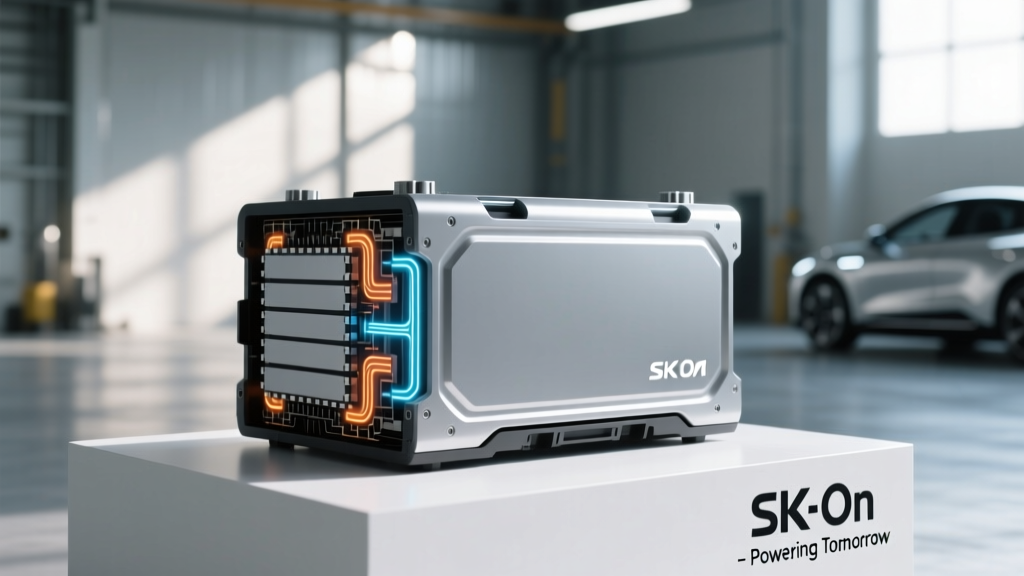
If you've researched the battery pack inside a Hyundai Ioniq 5, Kia EV6, or Ford F-150 Lightning, you've likely encountered the name SK On. As one of the world's largest lithium-ion battery cell manufacturers, SK On (a subsidiary of South Korea's SK Innovation) supplies high-voltage traction batteries to several major automakers selling in the U.S. market. But what exactly is an SK On battery, how does it hold up over time, and what should you know before buying an EV equipped with one?
This guide breaks down SK On's cell chemistries, real-world degradation data, warranty coverage, replacement economics, and the battery-care practices that maximize pack longevity — all grounded in 2026 model-year specs and published data.
What Is SK On and Which EVs Use Its Batteries?
SK On operates gigafactories in South Korea, the United States (Georgia, Kentucky, and Tennessee via joint ventures), and China. The company supplies pouch-type lithium-ion cells primarily to:
- Hyundai Motor Group — Ioniq 5, Ioniq 6, Kia EV6, Kia EV9, Genesis GV60, Genesis Electrified GV70
- Ford — F-150 Lightning (standard-range packs), Mustang Mach-E (select model years)
- Volkswagen — select models in global markets
In the U.S., SK On's joint venture with Ford — called BlueOval SK — operates battery plants in Kentucky producing cells for Ford's electric trucks and SUVs. A separate facility in Commerce, Georgia, supplies Hyundai and Kia through a partnership with LG Energy Solution's former SK contracts. This domestic manufacturing footprint matters for IRS §30D tax credit eligibility, as battery-sourcing and critical-mineral requirements increasingly favor U.S.-assembled packs.
SK On Battery Chemistry: NMC vs. LFP Trade-Offs
SK On primarily manufactures NMC (nickel-manganese-cobalt) cells, with a growing shift toward high-nickel formulations (NCMA — nickel-cobalt-manganese-aluminum) for improved energy density. The company has also announced LFP (lithium iron phosphate) cell production for cost-sensitive applications, though as of 2026, most U.S.-market EVs using SK On cells feature NMC or NCMA chemistry.
| Attribute | NMC / NCMA (SK On Primary) | LFP (Emerging SK On Line) |
|---|---|---|
| Energy Density | 250–300 Wh/kg (cell-level) | 160–200 Wh/kg (cell-level) |
| Cycle Life | ~1,000–1,500 full cycles to 80% SoH | ~2,500–4,000+ full cycles to 80% SoH |
| Cold-Weather Performance | Better low-temp discharge; less range loss below 32°F | Greater range loss in cold; benefits from preconditioning |
| Thermal Stability | Good; requires active thermal management | Excellent; inherently more stable |
| Cost per kWh | Higher (~$110–$130/kWh cell cost) | Lower (~$80–$100/kWh cell cost) |
| Typical Use | Long-range EVs (Ioniq 5, EV6, F-150 Lightning Extended) | Standard-range / cost-optimized models |
| Recommended Charge Habit | Daily charge to 80%; 100% only for trips | Can charge to 100% regularly; periodic full charges aid BMS calibration |
Which is better? It depends on your priorities. NMC/NCMA delivers more range in a lighter, smaller pack — critical for vehicles like the Ioniq 5 (77.4 kWh usable, EPA 303 mi) or the EV6 GT-Line AWD (77.4 kWh, EPA 282 mi). LFP sacrifices some energy density for dramatically longer cycle life and lower cost, making it ideal for standard-range trims or fleet use where the vehicle charges daily to full. If you drive in northern winters and need maximum cold-weather range, NMC retains an edge.
How Long Do SK On EV Batteries Last? Degradation Data
EV battery degradation follows a nonlinear curve: steeper loss in the first 1–2 years, then a long, slow decline. Based on fleet data, owner reports, and DOT/EPA battery longevity studies, here's what SK On NMC packs typically show:
| Time / Mileage | Expected Capacity Retention (SoH) | Notes |
|---|---|---|
| Year 1 / 15,000 mi | 95–97% | Initial formation loss; most noticeable early drop |
| Year 3 / 45,000 mi | 90–93% | Curve flattens; loss ~1–2% per year |
| Year 5 / 75,000 mi | 87–91% | Well within warranty threshold |
| Year 8 / 100,000 mi | 83–88% | Still above 70% warranty floor; most packs never reach threshold |
| Year 10 / 150,000 mi | 78–85% | Noticeable range reduction but still functional for daily driving |
Key context: A Hyundai Ioniq 5 with a 77.4 kWh pack at 85% SoH still holds ~65.8 kWh — enough for roughly 255 real-world miles. That's a meaningful reduction from the EPA-rated 303 miles when new, but it's not a vehicle-ending loss. The vast majority of SK On-equipped EVs will reach the end of their useful life (due to collision, corrosion, or other mechanical issues) before the traction battery fails catastrophically.
Geotab's large-scale fleet battery health study across multiple chemistries confirms that modern liquid-cooled packs (like SK On's) average roughly 2.3% annual degradation — meaning a 15-year useful life before reaching 70% capacity is realistic under normal conditions.
Battery Warranty Coverage: What SK On-Equipped EVs Guarantee
Federal law mandates a minimum 8-year / 100,000-mile warranty on EV battery packs for emissions-related compliance, but most automakers extend coverage beyond that floor. Here's how warranty terms look for major SK On-supplied vehicles:
| Vehicle | Warranty Period | Mileage Cap | Capacity Retention Threshold |
|---|---|---|---|
| Hyundai Ioniq 5 / Ioniq 6 | 10 years | 100,000 miles | 70% of original capacity |
| Kia EV6 / EV9 | 10 years | 100,000 miles | 70% of original capacity |
| Ford F-150 Lightning | 8 years | 100,000 miles | 70% of original capacity |
| Ford Mustang Mach-E | 8 years | 100,000 miles | 70% of original capacity |
| Genesis GV60 | 10 years | 100,000 miles | 70% of original capacity |
What the warranty covers: If your battery's State of Health (measured by the dealer's diagnostic tool or the vehicle's BMS) drops below 70% within the warranty window, the manufacturer will repair or replace the pack — typically by swapping failed modules rather than the entire assembly. This does not cover normal gradual degradation above 70%, damage from accidents, flooding, or unauthorized modifications.
Practical reality: Hitting the 70% threshold within 8 years / 100,000 miles is uncommon for liquid-cooled SK On packs under normal use. Warranty claims are overwhelmingly driven by manufacturing defects (bad cells, BMS faults, coolant leaks) rather than pure capacity fade.
EV Battery Replacement Cost: What You'd Actually Pay
If your battery fails outside of warranty — or if you're buying a used SK On-equipped EV and want to budget for a worst case — here's the current replacement cost landscape:
| Vehicle / Pack Size | Battery Capacity | Parts Cost (Est.) | Labor + Programming | Total Estimate |
|---|---|---|---|---|
| Hyundai Ioniq 5 (Standard Range) | 58 kWh | $7,500–$9,500 | $1,500–$2,500 | $9,000–$12,000 |
| Hyundai Ioniq 5 / Kia EV6 (Long Range) | 77.4 kWh | $10,000–$13,500 | $1,500–$2,500 | $11,500–$16,000 |
| Kia EV9 (Long Range AWD) | 100 kWh | $13,000–$17,000 | $2,000–$3,000 | $15,000–$20,000 |
| Ford F-150 Lightning (Standard Range) | 98 kWh | $12,000–$15,000 | $2,000–$3,000 | $14,000–$18,000 |
| Ford F-150 Lightning (Extended Range) | 131 kWh | $16,000–$20,000 | $2,000–$3,500 | $18,000–$23,500 |
When is replacement actually needed? Catastrophic battery failure is rare. Most "replacements" under warranty are module-level repairs — swapping 2–4 degraded modules out of 16–24 total, at a fraction of the full-pack cost. Full pack replacement is typically only necessary after physical damage (bottom impact, flood submersion) or severe manufacturing defects.
Cell pricing continues to decline. BloombergNEF's 2025 battery price survey reported average pack-level costs around $115/kWh and falling, meaning a 77.4 kWh pack that cost $15,000 to replace in 2023 may cost $10,000–$12,000 by 2028. If you're buying a used SK On-equipped EV, the odds of needing a full out-of-pocket replacement during your ownership are low.
Factors That Accelerate (or Preserve) SK On Battery Life
Battery longevity isn't just about chemistry — your habits matter significantly. Here's what the data shows:
Practices That Preserve Battery Health
- Charge to 80% daily (NMC packs): Set your vehicle's charge limit to 80% for routine driving. Reserve 100% charges for road trips. Sustained high SoC accelerates electrolyte decomposition in NMC cells.
- Use Level 2 (home) charging as your primary method: Slow, steady AC charging at 7–11 kW generates far less heat than DC fast charging. Heat is the primary degradation driver.
- Precondition before fast charging: The Ioniq 5 and EV6 can precondition the battery when you navigate to a DC fast charger. This brings cells to the optimal ~35°C temperature window, reducing stress and improving charge speed.
- Avoid prolonged storage at 0% or 100% SoC: If storing the vehicle for weeks, leave it at ~50% SoC. Both extremes stress cell chemistry.
- Park in shade or a garage in hot climates: Sustained battery temperatures above 40°C (104°F) accelerate calendar aging, even when not driving.
Practices That Accelerate Degradation
- Exclusive DC fast charging: Vehicles that rely solely on 150–350 kW DC fast charging show measurably higher degradation — studies suggest 1–2% additional annual loss compared to primarily Level 2 charging.
- Frequent 100% charges on NMC: Charging to full every day on an NMC pack can add ~0.5–1% extra annual degradation versus an 80% daily limit.
- Deep discharges to 0%: Regularly draining the pack below 10% stresses cells and can trigger protective shutdowns that require dealer resets.
- Heavy towing in extreme heat: Sustained high-current draw (towing a 7,000-lb trailer with an F-150 Lightning in 100°F+ weather) generates significant pack heat. Use the vehicle's battery thermal preconditioning features aggressively.
How to Monitor Your SK On Battery's State of Health
Knowing your battery's State of Health (SoH) — the percentage of original capacity remaining — is essential for used-EV buyers and long-term owners. Here's how to check it:
In-Vehicle Displays
Hyundai and Kia vehicles do not show a direct SoH percentage on the dashboard, but the EV battery status screen displays estimated range at full charge. Compare your current full-charge range estimate to the EPA sticker: if your Ioniq 5 shows 285 miles at 100% instead of 303, that suggests roughly 94% SoH (adjusting for temperature and driving style).
OBD-II Diagnostic Tools
Third-party apps like Car Scanner ELM OBD2 or A Better Routeplanner's OBD integration can read the BMS-reported SoH value directly from the vehicle's CAN bus. A $30–$50 Bluetooth OBD-II dongle paired with a smartphone gives you dealer-level battery data.
Dealer Diagnostic Check
Any Hyundai, Kia, or Ford dealer can run a full battery health report. This is especially valuable when buying a used SK On-equipped EV — request the printout before purchase. The report shows individual module voltage variance (a sign of cell imbalance) alongside overall SoH.
Third-Party Battery Health Reports
Services like Recurrent Auto offer battery health reports based on connected-vehicle data. If the previous owner enrolled, you may be able to access historical degradation curves — powerful evidence of how the pack was treated.
What's Next for SK On: Solid-State and Beyond
SK On has publicly demonstrated solid-state battery prototypes and partnered with research institutions on silicon-anode technology. However, it's important to separate announcements from production reality:
- Solid-state cells: SK On has shown prototype pouch cells with solid electrolyte, targeting >500 Wh/kg energy density. The company has stated a goal of mass production by 2028–2029, but industry timelines for solid-state have consistently slipped. Expect first commercial applications in premium, low-volume vehicles no earlier than 2029.
- Silicon-anode enhancement: Adding silicon to the graphite anode can boost energy density 10–20%. SK On is integrating incremental silicon content into next-generation NMC cells — a more near-term improvement likely appearing in 2027–2028 model-year vehicles.
- LFP expansion: SK On has announced plans to begin LFP cell production at its U.S. facilities, driven by demand for lower-cost standard-range packs. This would broaden the chemistry options available in Hyundai/Kia and Ford models.
None of these next-generation technologies are available in vehicles you can buy today. Current SK On NMC/NCMA packs represent mature, well-proven technology with predictable degradation curves and robust warranty backing.
Frequently Asked Questions
How long do SK On EV batteries last in real-world use?
Based on fleet data and owner reports, SK On NMC packs in vehicles like the Ioniq 5 and EV6 typically retain 83–88% of original capacity after 8 years / 100,000 miles. Most packs remain functional well beyond 150,000 miles, though with noticeable range reduction. Catastrophic failure before 200,000 miles is uncommon for liquid-cooled packs under normal use.
How much does it cost to replace an SK On battery?
Full pack replacement ranges from approximately $9,000 for a 58 kWh standard-range pack to $23,500 for the 131 kWh F-150 Lightning extended-range pack, including parts and labor. However, most warranty claims involve module-level repairs at a fraction of that cost, and full replacements outside warranty are rare. Cell prices continue to decline, so future replacement costs will be lower.
What does the battery warranty actually cover?
Hyundai and Kia cover their SK On-equipped vehicles for 10 years / 100,000 miles against capacity loss below 70%. Ford covers 8 years / 100,000 miles at the same 70% threshold. The warranty covers cell degradation and manufacturing defects but not damage from accidents, flooding, or unauthorized modifications. Normal gradual degradation above 70% is not warrantable.
Is LFP or NMC better for daily driving?
For daily commuting with home charging, LFP offers a compelling advantage: you can charge to 100% regularly without the degradation concerns that apply to NMC. LFP also delivers 2–4× longer cycle life. However, NMC provides higher energy density (more range in a lighter pack) and better cold-weather performance. If you live in a cold climate or need maximum range, NMC remains the stronger choice. SK On currently produces mostly NMC for U.S.-market vehicles, with LFP expanding.
Does frequent DC fast charging damage SK On batteries?
Exclusive reliance on DC fast charging (150–350 kW) does measurably increase degradation — roughly 1–2% additional annual capacity loss compared to primarily Level 2 home charging. Occasional fast charging on road trips is not a concern; the battery management system and liquid cooling handle it well. The risk comes from daily fast-charging without ever using slower AC charging. Preconditioning the battery before fast charging (a feature built into the Ioniq 5 and EV6) significantly reduces thermal stress.
Can I check my SK On battery health myself?
Yes. While Hyundai and Kia don't display a direct SoH percentage on the dash, you can use an OBD-II Bluetooth dongle ($30–$50) with apps like Car Scanner to read BMS-reported SoH. You can also compare your full-charge range estimate to the original EPA rating as a rough proxy. For a definitive reading, request a battery health report from your dealer — this is especially important when purchasing a used SK On-equipped EV.