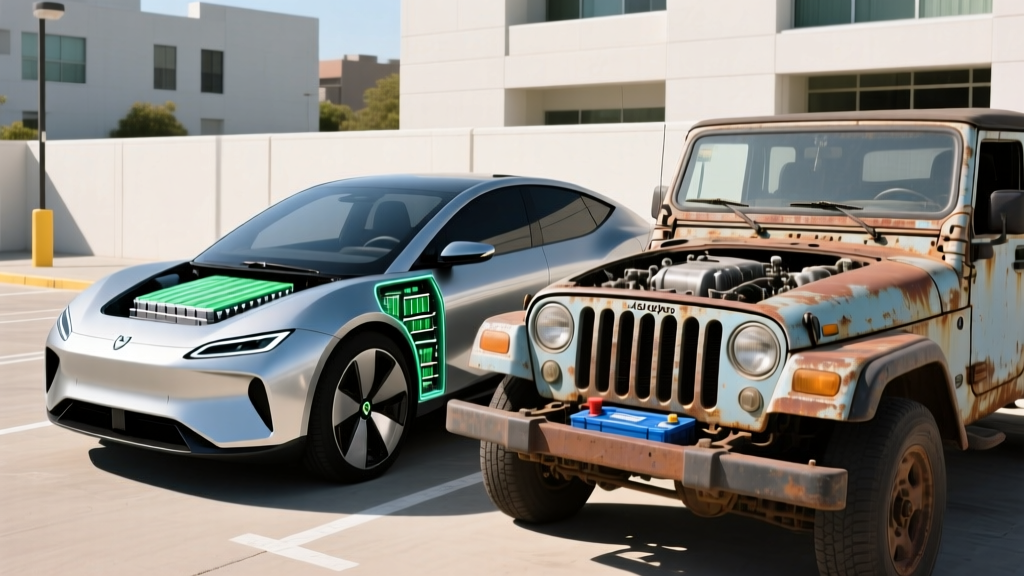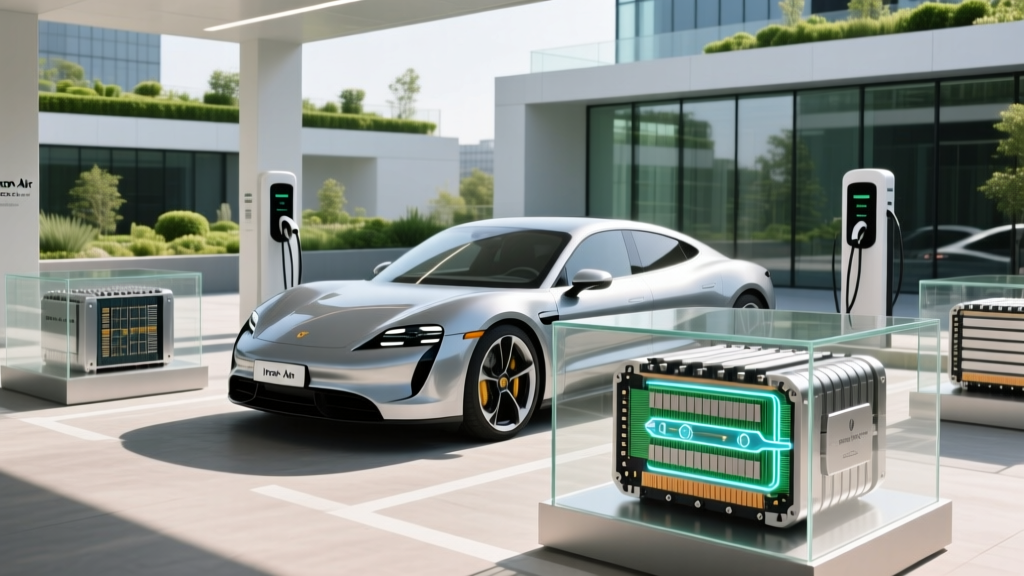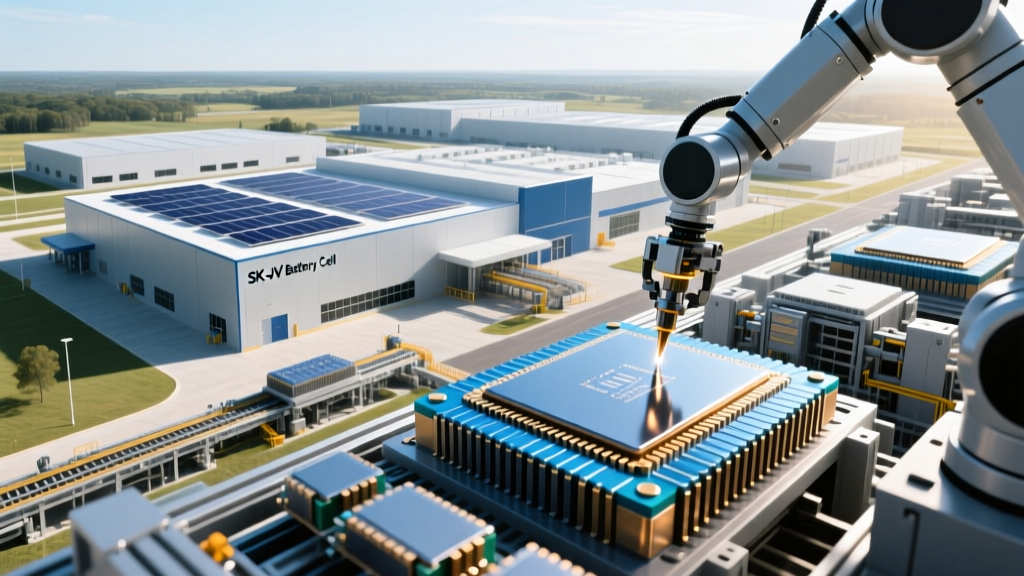
The push to localize EV battery manufacturing in the United States has produced several landmark joint ventures, but few carry the scale and strategic weight of the SK-JV battery cell Georgia project. Operated through SK On's partnerships — most notably the BlueOval SK joint venture with Ford and standalone SK Battery America facilities in Commerce, Georgia — this manufacturing corridor is reshaping which chemistries reach American driveways, how much replacement packs cost, and whether buyers can count on a domestic supply chain for warranty replacements.
For EV shoppers and current owners, the Georgia project matters because it directly influences the cells inside vehicles like the Ford F-150 Lightning, Hyundai Ioniq 5, and Kia EV6. Understanding what those cells are made of, how they age, what the warranty actually covers, and what replacement costs look like in 2026 is essential before signing a purchase agreement.
What the SK-JV Battery Cell Georgia Project Actually Produces
SK Battery America's Commerce, Georgia campus operates two major plants. Plant 1 began production in 2022 with a stated capacity of roughly 9.8 GWh annually, enough to supply approximately 130,000 EVs per year. Plant 2, which ramped through 2023–2024, approximately doubles that figure. The BlueOval SK joint venture facilities in Kentucky and Tennessee supplement this output with dedicated Ford supply, but the Georgia site remains the hub for Hyundai Motor Group and other OEM customers.
The cells produced are predominantly NMC (nickel-manganese-cobalt) pouch-type formats, which offer high energy density suited to long-range vehicles. However, as of 2025–2026, SK On has also signaled LFP (lithium iron phosphate) production plans for standard-range models, reflecting the industry-wide shift toward offering both chemistries across trim levels.
This domestic production directly affects §30D federal tax credit eligibility. Vehicles using Georgia-manufactured cells are more likely to satisfy the IRS's battery-component and critical-mineral sourcing requirements under current-year rules, though buyers should always verify eligibility on irs.gov before purchasing, as sourcing thresholds tighten annually.
LFP vs NMC Chemistry: What Georgia-Built Cells Mean for Your EV
The single most consequential decision an EV buyer makes — often without realizing it — is which battery chemistry sits under their floor. The SK-JV battery cell Georgia project produces both types, and the trade-offs are substantial.
| Attribute | LFP (Lithium Iron Phosphate) | NMC/NCA (Nickel-Manganese-Cobalt / Nickel-Cobalt-Aluminum) |
|---|---|---|
| Energy Density | ~160–180 Wh/kg (lower) | ~230–300 Wh/kg (higher) |
| Typical Cycle Life | 3,000–5,000+ cycles | 1,000–2,000 cycles |
| Cold-Weather Performance | More range loss below 32°F; slower charge acceptance | Better low-temp discharge; preconditioning helps |
| Cost per kWh | ~$80–100/kWh (lower) | ~$110–140/kWh (higher) |
| Recommended SoC Range | Can charge to 100% regularly | Best kept 20–80% for longevity |
| Typical Vehicle Use | Standard-range trims, fleet, urban commuting | Long-range, performance, towing trims |
| Thermal Stability | Higher (less prone to thermal runaway) | Lower (requires robust BMS/cooling) |
Which is better? Neither is universally superior. If you drive 40 miles round-trip, charge at home nightly, and live in a mild climate, LFP's longevity and 100% charging tolerance make it the smarter long-term bet — and it's cheaper. If you need 300+ miles of EPA range, tow a trailer, or regularly road-trip through cold weather, NMC's energy density is worth the trade-off in cycle life. The SK-JV Georgia facilities supply both, meaning buyers of Hyundai, Kia, and Ford models increasingly get a chemistry choice at the trim level.
How Long Do EV Batteries Actually Last? Degradation Data
The fear that EV batteries "need replacing every few years" is not supported by fleet data. Modern liquid-cooled packs from manufacturers like SK On typically lose capacity gradually, not catastrophically.
Typical NMC Degradation Curve (Liquid-Cooled, 75–100 kWh Pack):
- Year 1 / 15,000 mi: ~2–4% capacity loss (initial "break-in" drop)
- Year 3 / 45,000 mi: ~6–9% total loss
- Year 5 / 75,000 mi: ~9–12% total loss
- Year 8 / 120,000 mi: ~12–17% total loss
- Year 10 / 150,000 mi: ~15–20% total loss (varies heavily by use pattern)
LFP packs generally show slower degradation, often retaining 90%+ capacity at 100,000 miles in moderate climates, based on fleet data from Tesla Model 3 Standard Range and BYD vehicles using similar chemistry.
Real-world data from fueleconomy.gov and long-term fleet studies (Recurrent Auto, Geotab) confirm that most modern EV batteries outlast the vehicle's body and suspension components. The median pack in 2026 is engineered for 200,000+ miles before reaching 70% State of Health — the typical warranty threshold.
Battery Warranty Terms: What's Actually Covered
Federal law mandates a minimum 8-year / 100,000-mile warranty on EV battery packs (10 years / 150,000 miles in California and states adopting CARB standards). Most OEMs meet or exceed this baseline. Here is how the major brands sourcing from Georgia-area production structure coverage:
| Manufacturer | Duration | Mileage | Capacity Retention Threshold | Chemistry Covered |
|---|---|---|---|---|
| Hyundai / Kia | 10 years | 100,000 mi | 70% SoH | NMC (Ioniq 5/6, EV6, EV9) |
| Ford | 8 years | 100,000 mi | 70% SoH | NMC (F-150 Lightning, Mustang Mach-E) |
| Tesla | 8 years | 100,000–120,000 mi (varies by model) | 70% SoH | NMC / LFP (Model 3/Y) |
| Volkswagen | 8 years | 100,000 mi | 70% SoH | NMC (ID.4) |
What the warranty covers: Defects in materials/workmanship and excessive capacity loss below the stated threshold. If your 84 kWh pack drops below ~59 kWh within the warranty window, the manufacturer must repair or replace it — typically with a refurbished or new module set, not necessarily a brand-new full pack.
What it does not cover: Damage from collisions, flooding, or improper charging equipment; capacity loss from consistently ignoring manufacturer charging guidelines (though this is rarely enforced); and cosmetic concerns. The warranty also does not guarantee a specific range — only a capacity floor.
EV Battery Replacement Cost: What to Budget For
Most current EV owners will never pay for an out-of-warranty battery replacement. The packs are outliving the cars. But for buyers planning 15-year ownership or purchasing used EVs nearing warranty expiration, the numbers matter.
| Vehicle / Pack Size | Battery kWh | Estimated Replacement Cost | Typical Replacement Timeline |
|---|---|---|---|
| Hyundai Ioniq 5 (Long Range) | 77.4 kWh (NMC) | $12,000–$16,000 | Rarely before 200,000 mi |
| Ford F-150 Lightning (Extended Range) | 131 kWh (NMC) | $20,000–$28,000 | Rarely before 180,000 mi |
| Kia EV6 GT-Line (Long Range) | 77.4 kWh (NMC) | $12,000–$16,000 | Rarely before 200,000 mi |
| Tesla Model 3 (Standard Range, LFP) | 60 kWh (LFP) | $8,000–$12,000 | Rarely before 250,000 mi |
| VW ID.4 (Pro S) | 82 kWh (NMC) | $14,000–$18,000 | Rarely before 200,000 mi |
These figures include the pack and labor but can vary by $3,000–$5,000 depending on dealership vs. independent EV shop pricing. Domestic production from the SK-JV battery cell Georgia project is expected to exert downward pressure on replacement costs over the 2026–2030 window as cell supply increases and logistics shorten. LFP packs are consistently cheaper to replace due to lower material costs.
When is replacement typically needed? For most vehicles, not until 150,000–250,000 miles — and even then, "replacement" often means swapping degraded modules rather than the entire pack. Complete pack failures from defects are rare and covered under warranty.
Factors That Accelerate Battery Degradation (and How to Avoid Them)
Battery aging is not purely a function of time or mileage. How you charge, where you park, and how hard you drive all shift the degradation curve.
- DC Fast Charging Frequency: Occasional fast charging (1–2 times per week) has minimal impact. Daily 150–350 kW DC sessions accelerate degradation by an estimated 1–3% additional loss over 5 years vs. Level 2-only charging. Use DC fast charging for road trips; rely on Level 2 at home for daily needs.
- State of Charge Habits (NMC): Consistently charging to 100% and letting the pack sit at full SoC stresses NMC cathodes. Set your charge limit to 80% for daily use; charge to 100% only before long trips. LFP packs tolerate 100% SoC and benefit from periodic full charges for BMS calibration.
- Extreme Temperatures: Sustained exposure to ambient temperatures above 95°F accelerates calendar aging. Parking in shade or a garage matters. In sub-20°F conditions, always precondition the battery before charging or driving hard — cold lithium plating is a real degradation mechanism.
- Deep Discharge: Letting the pack sit below 10% SoC for extended periods (days/weeks) causes copper dissolution in the anode current collector. If storing an EV, leave it at ~50% SoC and plugged in if possible.
- High-Performance Driving: Frequent hard acceleration and sustained high-speed driving generate internal pack heat. Vehicles with active liquid cooling (all Georgia-sourced SK packs) handle this well, but sustained track use will age any pack faster.
How to Check and Monitor Your Battery's State of Health
State of Health (SoH) is the percentage of original capacity your pack retains. A new 77.4 kWh pack at 93% SoH holds ~72 kWh of usable energy. Here is how to track it:
In-Vehicle Displays
Most 2024–2026 EVs display a battery health indicator in the settings menu. Hyundai/Kia vehicles show a percentage under EV settings → Battery. Ford's SYNC 4 includes a battery health screen. Tesla provides estimated range at 100% SoC, which you can compare to the original EPA figure to approximate SoH.
OBD-II Diagnostic Tools
Apps like Car Scanner, Leaf Spy (Nissan), or Scan My Tesla read the BMS directly via an OBD-II dongle (~$30–$50 for the hardware). These give precise SoH percentages, cell voltage variance, and pack temperature — far more granular than the in-dash display.
Third-Party Battery Health Reports
Services like Recurrent Auto and Altelium offer battery health certificates that are increasingly used in used-EV transactions. A certified SoH report adds buyer confidence and can affect resale value by $1,000–$3,000 on a 3-year-old vehicle.
Dealer Diagnostics
Any authorized dealer can pull a full BMS report during a service visit. Request this specifically — it is not always part of a standard multi-point inspection. If you suspect warranty-level degradation (below 70% SoH within the warranty window), this report is your documentation.
Emerging Battery Tech: Solid-State, Silicon Anode, and What's Realistic
The battery industry is advancing rapidly, but buyers should separate announced milestones from showroom availability.
Solid-State Batteries: These replace the liquid electrolyte with a solid ceramic or polymer, promising 30–50% higher energy density and faster charging. Toyota, Samsung SDI, and QuantumScape have demonstrated prototype cells, but mass production for consumer vehicles is not expected before 2028–2030 at the earliest. No vehicle currently on sale in the US uses a solid-state traction battery. SK On has announced solid-state R&D but has not committed to a production timeline.
Silicon Anode Technology: Replacing graphite anodes with silicon-dominant composites can increase energy density by 20–40%. Companies like Sila Nanotechnologies and Group14 are supplying early-production silicon anode materials, with limited deployment in 2025–2026 model-year vehicles (notably certain Mercedes-Benz and Porsche applications). Expect broader adoption by 2027–2028 as manufacturing scales.
Sodium-Ion Batteries: CATL has begun limited sodium-ion production in China for low-cost urban EVs. These offer lower energy density (~140 Wh/kg) but eliminate lithium and cobalt entirely. US-market availability is unlikely before 2028 and would initially target fleet and budget segments.
For buyers in 2026, NMC and LFP remain the proven, warrantied, and widely available chemistries — and the SK-JV battery cell Georgia project ensures a growing domestic supply of both.
Frequently Asked Questions
How long do EV batteries last in years and miles?
Modern liquid-cooled EV batteries from manufacturers like SK On typically retain 80–85% of original capacity at 150,000 miles and 8–10 years of service. Most packs outlast 200,000 miles before approaching the 70% SoH warranty threshold. LFP chemistries often exceed 250,000 miles with proper care. Complete failure is rare; gradual capacity loss is the norm.
How much does it cost to replace an EV battery?
Out-of-warranty replacement costs range from approximately $8,000 for a 60 kWh LFP pack to $28,000 for a 131 kWh NMC pack (such as the F-150 Lightning Extended Range). Most owners never pay this — the battery typically remains under warranty or the vehicle is retired before replacement is needed. Module-level repairs (replacing individual degraded cells or groups) cost $2,000–$6,000 and are increasingly common.
What does the EV battery warranty actually cover?
Federal minimum is 8 years / 100,000 miles (10/150k in CARB states). The warranty covers defects and capacity loss below a stated threshold — typically 70% State of Health. If your pack drops below that floor within the warranty period, the manufacturer repairs or replaces it at no cost. It does not cover collision damage, water intrusion from flooding, or damage from non-approved charging equipment.
How do I check my EV battery health?
Use the in-vehicle battery health screen (found in EV settings on most 2024–2026 models), an OBD-II diagnostic app like Car Scanner or Scan My Tesla for precise SoH percentages, or request a full BMS report from your dealer during service. Third-party services like Recurrent also provide battery health certificates useful for resale.
LFP vs NMC — which battery chemistry should I choose?
Choose LFP if you prioritize longevity (5,000+ cycle life), lower cost, the ability to charge to 100% daily, and superior thermal safety — and if your daily driving is under 200 miles. Choose NMC if you need maximum range (300+ EPA miles), better cold-weather performance, faster DC charging acceptance in winter, or towing capability. Both chemistries are produced domestically through facilities like the SK-JV Georgia project, ensuring supply and warranty support.
Does the SK-JV Georgia project affect my tax credit eligibility?
Potentially yes. Vehicles using battery cells manufactured at SK's Georgia facilities may more easily satisfy the §30D battery-component and critical-mineral sourcing requirements. However, eligibility also depends on MSRP caps ($55,000 sedans / $80,000 SUVs/trucks), buyer income limits, and final assembly location. Always verify current-year rules at irs.gov and confirm with your tax professional before purchasing.
Understanding what powers your EV — from the chemistry inside the cells to the factory where they were built — is the foundation of confident ownership. The SK-JV battery cell Georgia project is not just an industrial headline; it is the reason your next Hyundai, Kia, or Ford EV will carry a domestically sourced, warrantied, and increasingly affordable battery pack. Pair that knowledge with smart charging habits and realistic longevity expectations, and the battery question stops being a source of anxiety and becomes a solved engineering problem.