Every few years, an alternative battery chemistry surfaces with the promise of outperforming lithium-ion. Silver-zinc batteries — long used in aerospace, military, and hearing-aid applications — periodically re-enter the EV conversation thanks to their impressive energy density and safety profile. But as of 2026, lithium-ion variants (LFP and NMC/NCA) remain the undisputed standard in every production electric vehicle sold in the United States.
This guide examines what silver-zinc batteries actually offer, why they haven't displaced lithium-ion in EVs, and what chemistry trade-offs matter most for buyers evaluating today's EVs. We'll also cover battery degradation data, warranty structures, replacement costs, and care practices grounded in real ownership experience.
What Are Silver-Zinc Batteries and Why Do They Matter?
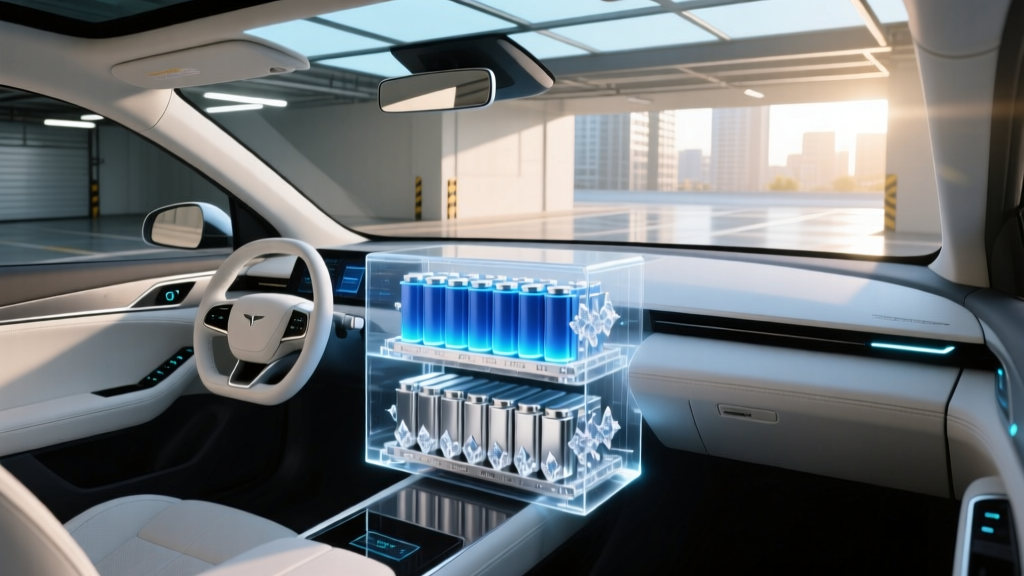
Silver-zinc (AgZn) batteries use a silver oxide cathode and a zinc anode. They offer several theoretical advantages:
- High specific energy: Silver-zinc cells can achieve 130–150 Wh/kg at the cell level, competitive with some NMC formulations.
- Safety: Aqueous electrolyte chemistry eliminates the thermal runaway risk inherent in lithium-ion cells. No flammable organic solvents means no fire propagation in a crash.
- Recyclability: Both silver and zinc are highly recyclable with established supply chains.
- High discharge rates: Silver-zinc cells can deliver high current without significant voltage sag, useful for performance applications.
However, silver-zinc chemistry faces critical limitations that have kept it out of EV battery packs:
- Cycle life: Traditional silver-zinc cells degrade rapidly — often 100–300 cycles before significant capacity loss. Even advanced formulations from companies like ZincFive and Enzinc have demonstrated only 500–1,000 cycles in lab conditions, far below the 1,500–3,000+ cycles expected from automotive-grade LFP.
- Cost: Silver is a precious metal (~$25–30/oz in 2026). A pack-sized quantity of silver would add thousands of dollars to battery cost, making it economically nonviable for consumer vehicles.
- Zinc dendrite formation: During charging, zinc tends to form dendrites that penetrate separators and cause short circuits — a problem that has resisted durable, scalable solutions.
- Energy density at pack level: While cell-level specific energy is respectable, pack-level integration (thermal management, structural housing, BMS) erodes the advantage versus modern CTP (cell-to-pack) lithium-ion designs.
Bottom line: Silver-zinc batteries remain a niche chemistry for specialized applications (military, aerospace, backup power) where cost is secondary to safety and power density. No automaker has announced a production EV using silver-zinc cells as of 2026.
The Chemistries That Actually Power Today's EVs: LFP vs. NMC
For EV buyers in 2026, the real chemistry decision is between lithium iron phosphate (LFP) and nickel manganese cobalt (NMC) or nickel cobalt aluminum (NCA). Here's how they compare on the metrics that matter:
| Attribute | LFP (Lithium Iron Phosphate) | NMC/NCA (Nickel-Based) |
|---|---|---|
| Cell energy density | 160–180 Wh/kg | 220–300 Wh/kg |
| Cycle life (to 80% capacity) | 2,000–5,000+ cycles | 1,000–2,500 cycles |
| Thermal stability | Excellent — no oxygen release at high temp | Good — requires robust BMS and cooling |
| Cold-weather performance | Moderate — more range loss below 32°F | Better — retains more capacity in cold |
| Cost per kWh (cell level) | ~$70–90/kWh | ~$100–130/kWh |
| Cobalt/nickel dependency | None | Significant (supply chain risk) |
| Recommended charging habit | Can charge to 100% regularly | Best kept at 80% daily; 100% for trips |
| Notable 2026 vehicles | Tesla Model 3 RWD, Model Y RWD, Ford Mustang Mach-E Select, Rivian R1S (Standard) | Tesla Model 3 LR, Hyundai Ioniq 5, BMW iX, Cadillac Lyriq, VW ID.4 |
Which is better? It depends on your use case. LFP wins on longevity, cost, and safety — ideal for daily commuters who charge at home and don't need maximum range. NMC wins on energy density and cold-weather performance — better for road-trippers, cold-climate drivers, and vehicles where pack weight matters (trucks, large SUVs). Neither is universally superior.
How Long Do EV Batteries Last? Real Degradation Data
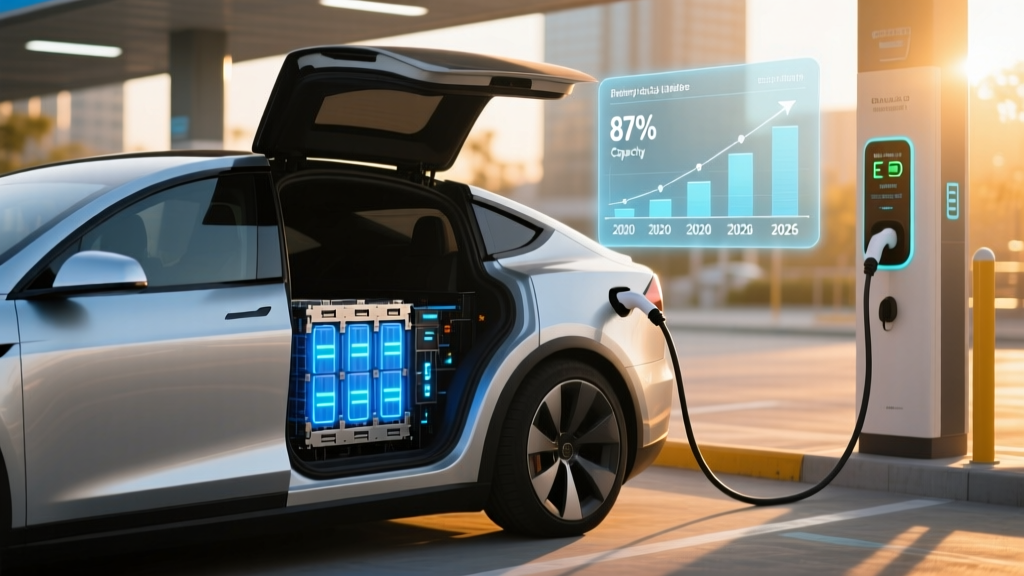
The fear of a dead battery pack at 80,000 miles persists, but real-world data tells a more reassuring story. Most EV batteries outlast the vehicles they're installed in.
- Year 1 / 15,000 mi: 2–4% capacity loss (initial formation loss)
- Year 3 / 45,000 mi: 5–8% total loss
- Year 5 / 75,000 mi: 8–12% total loss
- Year 8 / 120,000 mi: 10–18% total loss (varies by chemistry and usage)
- Year 10 / 150,000 mi: 12–22% total loss
Sources: Geotab fleet data (6,000+ EVs), Recurrent Auto battery health reports, manufacturer warranty claims data.
Key observations from fleet and owner data:
- LFP batteries tend to degrade more slowly over time. Tesla's 2025 Impact Report noted Model 3 RWD (LFP) packs retaining ~92% capacity at 100,000 miles.
- NMC batteries show slightly steeper early degradation but have improved significantly with modern thermal management. Hyundai/Kia's 84 kWh NMC packs in the Ioniq 5 show ~90% retention at 60,000 miles in owner-reported data.
- Outliers exist: Frequent DC fast charging in extreme heat, consistent 100% SoC storage, and high-mileage ride-share use accelerate degradation. But even in these cases, catastrophic failure before 150,000 miles is rare.
What Does the Battery Warranty Cover?
Federal law mandates that EV batteries carry a minimum warranty of 8 years or 100,000 miles (whichever comes first) in most states. California Air Resources Board (CARB) states require 10 years or 150,000 miles. Here's how major manufacturers structure coverage in 2026:
| Manufacturer | Warranty Period | Capacity Threshold | Notes |
|---|---|---|---|
| Tesla (Model 3/Y RWD — LFP) | 8 yr / 100,000 mi | 70% retention | 120,000 mi for LR/Performance (NMC) |
| Hyundai / Kia | 10 yr / 100,000 mi | 70% retention | Among the longest coverage |
| Ford (Mach-E, F-150 Lightning) | 8 yr / 100,000 mi | 70% retention | Covers battery and hybrid/electric components |
| GM (Ultium platform) | 8 yr / 100,000 mi | 70% retention | Covers module-level replacement |
| Rivian | 8 yr / 175,000 mi | 70% retention | Higher mileage cap — best in class |
| BMW | 8 yr / 80,000 mi | 70% retention | Lower mileage cap than competitors |
What triggers a warranty claim? If your battery's usable capacity drops below the threshold (typically 70% of original) within the warranty period, the manufacturer will repair or replace it. Most warranties cover defects and excessive degradation — not damage from accidents, flooding, or unauthorized modifications. Some manufacturers replace individual modules rather than the full pack, reducing cost and downtime.
How Much Does an EV Battery Replacement Cost?
Out-of-warranty battery replacement is the scenario that generates anxiety. Here's what it actually costs in 2026, based on manufacturer parts pricing and independent shop data:
| Vehicle / Pack Size | Battery Cost (Parts) | Labor | Total Estimate |
|---|---|---|---|
| Tesla Model 3 RWD (~60 kWh LFP) | $8,000–$11,000 | $1,500–$2,500 | $9,500–$13,500 |
| Tesla Model Y LR (~82 kWh NMC) | $12,000–$16,000 | $1,500–$2,500 | $13,500–$18,500 |
| Hyundai Ioniq 5 (~84 kWh NMC) | $11,000–$15,000 | $2,000–$3,000 | $13,000–$18,000 |
| Ford F-150 Lightning Ext. Range (~131 kWh) | $18,000–$25,000 | $2,500–$4,000 | $20,500–$29,000 |
| Chevrolet Bolt EV (~65 kWh NMC) | $9,000–$12,000 | $1,500–$2,500 | $10,500–$14,500 |
Context that matters: The vast majority of EV owners never replace their battery pack. Data from Recurrent Auto shows fewer than 2% of EVs in their 15,000-vehicle study required battery replacement under 150,000 miles — and most of those were covered by warranty. Cell prices have dropped roughly 90% since 2010 (per BloombergNEF), and third-party refurbishment services are emerging as a lower-cost alternative to OEM packs.
When replacement is needed, it's typically at 150,000–250,000+ miles — a point where many vehicles have already been retired or traded. For buyers planning to own an EV for 8–12 years and under 150,000 miles, the warranty effectively eliminates financial risk.
What Kills EV Batteries? Factors That Accelerate Degradation
Battery degradation is inevitable, but the rate varies significantly based on how you use and store your EV. Here are the primary factors, ranked by impact:
- Avoid sustained 100% SoC (NMC only): For NMC/NCA packs, set daily charge limit to 80%. Charge to 100% only when departing on a trip. LFP packs can and should be charged to 100% regularly — Tesla recommends this for calibration.
- Minimize DC fast charging in extreme heat: Charging at 150+ kW when ambient temps exceed 95°F stresses cells. Precondition the battery (most EVs do this automatically when a charger is navigated to) and charge during cooler hours when possible.
- Don't store at low SoC: Leaving an EV at 5–10% SoC for weeks accelerates degradation. If storing for extended periods, set SoC to ~50%.
- Use Level 2 for daily charging: Home Level 2 (7–11 kW) generates far less heat than DC fast charging and is the gentlest way to charge daily. A 240V/48A Level 2 charger adds ~30–40 miles per hour of charging.
- Let thermal management do its job: Don't disable preconditioning. Modern EVs actively heat or cool the pack before and during charging. Plugging in allows the car to use grid power (not battery) for thermal management.
- Cold weather doesn't permanently damage batteries: Range loss in winter (15–30% below ~25°F) is temporary and recovers when temperatures rise. However, charging a frozen battery at high power without preconditioning can cause lithium plating — always precondition.
How to Check Your EV's Battery Health (State of Health)
State of Health (SoH) represents your battery's current maximum capacity as a percentage of its original capacity. Monitoring SoH helps you track degradation and anticipate warranty claims.
Methods for checking SoH:
- In-vehicle displays: Some EVs (Tesla, Rivian, BMW iX) show battery health or degradation percentage in settings menus or service screens. Tesla's service mode provides detailed cell-level data.
- Manufacturer apps: The Tesla app, Hyundai Bluelink, FordPass, and myChevrolet apps provide varying levels of battery health information. Hyundai's Bluelink, for example, reports battery condition during diagnostic scans.
- OBD-II tools: Third-party devices like the OBDLink SX paired with apps such as EV Battery Health or LeafSpy (Nissan Leaf) can read BMS data including SoH, cell voltage variance, and temperature.
- Third-party services: Companies like Recurrent Auto offer free battery health reports that benchmark your pack against their fleet database. Some dealerships can run a full battery diagnostic on request.
- Manual calculation: Charge to 100% (LFP) or a known SoC, note the displayed range, and compare to the EPA sticker range adjusted for your typical efficiency. This gives a rough SoH estimate.
A healthy battery at 3 years / 40,000 miles should show 92–96% SoH. If your SoH drops below 85% within the warranty period, contact your dealer for a diagnostic — you may qualify for module or pack replacement under warranty.
Emerging Battery Technologies: What's Next After Lithium-Ion?
While silver-zinc remains a niche chemistry for EVs, several next-generation technologies are in active development. None are available in production vehicles as of 2026, but timelines are becoming clearer:
Solid-state batteries: Replace the liquid electrolyte with a solid material (sulfide, oxide, or polymer), enabling lithium metal anodes for dramatically higher energy density (potentially 400–500 Wh/kg at cell level). Toyota has announced solid-state EVs for 2027–2028 with 750 km (~466 mi) range and 10-minute fast charging, but production scale and cost remain unproven. Samsung SDI and QuantumScape are targeting similar timelines. Expect initial deployment in premium vehicles at significant cost premiums.
Silicon anode batteries: Replacing graphite anodes with silicon can boost energy density by 20–40%. Companies like Sila Nanotechnologies and Group14 are supplying silicon anode materials to battery manufacturers now. Mercedes-Benz's EQG (G-Wagen EV) uses silicon anode cells from Sila. Expect broader adoption in 2026–2028 model-year vehicles, primarily as an incremental improvement to existing lithium-ion architecture rather than a full chemistry change.
Sodium-ion batteries: Use abundant sodium instead of lithium, offering lower cost and good cycle life at the expense of lower energy density (~120–160 Wh/kg). CATL and BYD are producing sodium-ion cells for small, affordable EVs in China. U.S. availability in passenger vehicles is likely 2028+ at earliest, initially in entry-level models where range requirements are modest.
These technologies will eventually complement — not immediately replace — today's LFP and NMC chemistries. For buyers purchasing an EV in 2026, current lithium-ion technology is mature, well-warrantied, and economically rational. Waiting for solid-state is a choice, but it means delaying an EV purchase by 3–5+ years based on current production timelines.
Frequently Asked Questions
Will silver-zinc batteries ever be used in electric cars?
It's unlikely for mainstream EVs. The cost of silver, limited cycle life, and zinc dendrite issues make it impractical for automotive-scale battery packs. Silver-zinc will likely remain confined to niche applications where safety and power density outweigh cost concerns — military vehicles, aerospace, and grid backup systems.
How long do EV batteries last in years and miles?
Most modern EV batteries retain 70–85% of original capacity at 150,000 miles and 10+ years. Based on fleet data from Geotab and Recurrent Auto, the average EV battery loses 1–2% capacity per year under normal use. Full pack failure before 200,000 miles is uncommon. Many EVs will reach end-of-life (due to other mechanical or economic factors) before their battery becomes unusable.
Is it better to buy an EV with LFP or NMC?
Choose LFP if you want maximum longevity, lower cost, and don't need the longest possible range. LFP is ideal for daily commuting, home charging, and warmer climates. Choose NMC if you need maximum range per charge, live in a cold climate, or tow frequently. NMC packs are lighter for a given capacity, which matters in larger vehicles.
Does fast charging damage my EV battery?
DC fast charging generates more heat than Level 2 charging, and heat accelerates degradation. However, modern EVs have sophisticated thermal management that actively cools the pack during fast charging. Occasional DC fast charging (road trips, 1–2 times per week) causes minimal additional degradation. Daily DC fast charging in hot climates without preconditioning will accelerate wear. For daily use, Level 2 home charging is optimal.
What happens if my battery degrades below 70% while under warranty?
Contact your dealer for a battery diagnostic. If the test confirms capacity below the warranty threshold (typically 70%), the manufacturer will repair or replace the battery at no cost. Many manufacturers now replace individual modules rather than the full pack, which is faster and less disruptive. Keep records of your charging habits and mileage to support your claim.
Can I upgrade my EV's battery to a larger capacity later?
In most cases, no. Battery packs are structurally integrated into the vehicle chassis, and upgrading requires compatible hardware, software, and high-voltage architecture. Some older vehicles (early Nissan Leafs, Renault Zoes) had limited upgrade paths, but modern EVs are not designed for battery swaps or capacity upgrades. The battery you buy is the battery you keep.