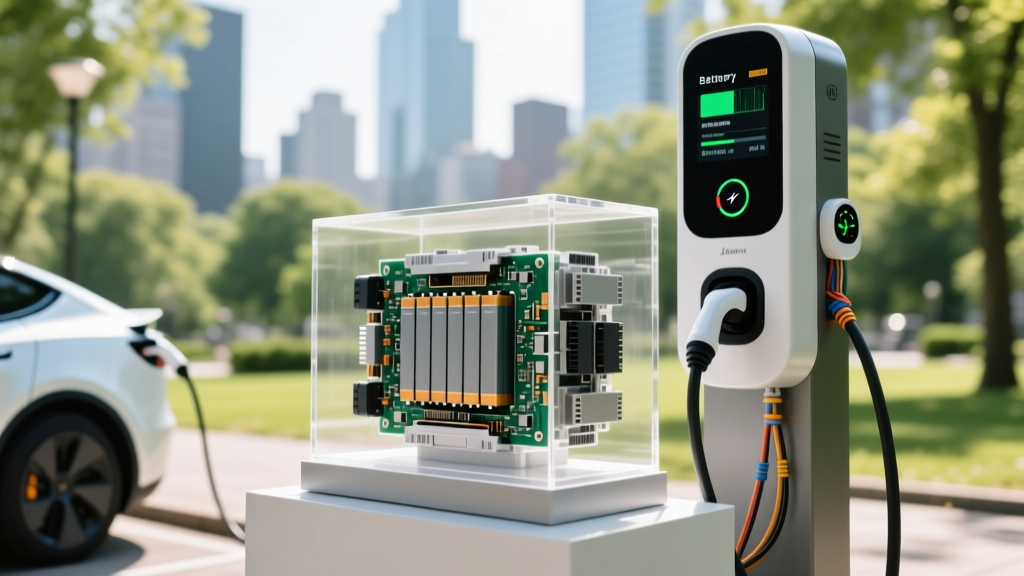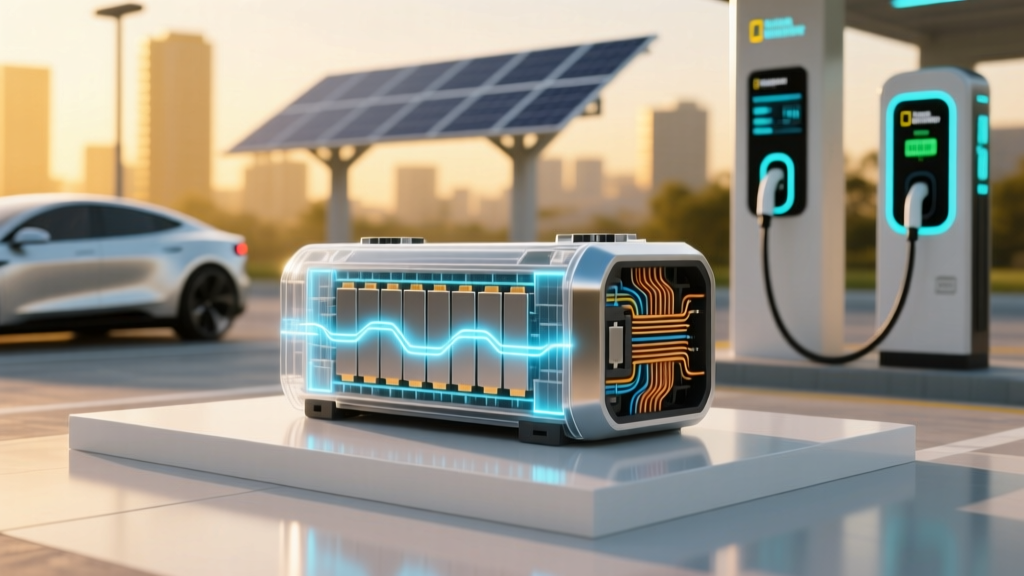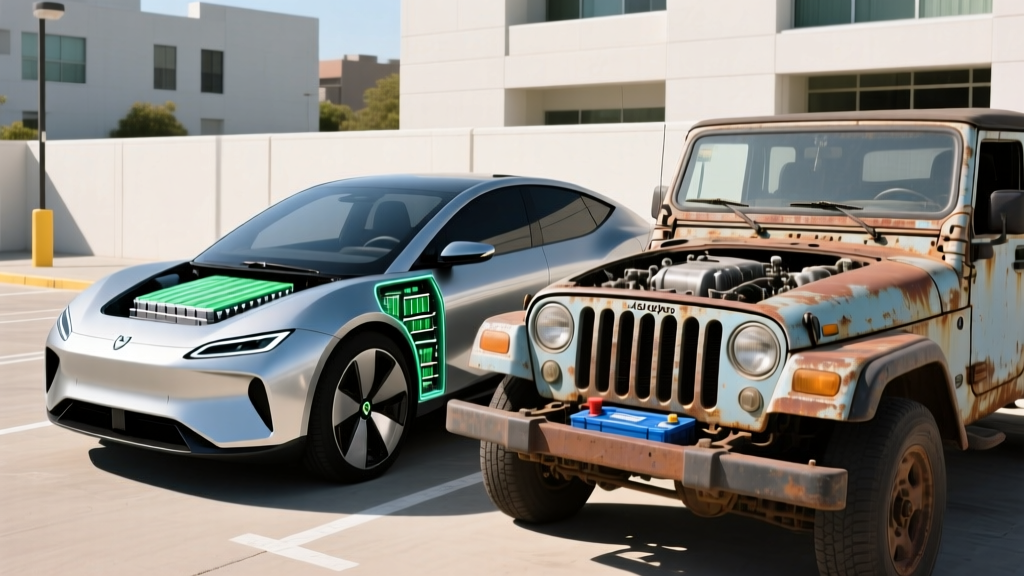
If you have been following battery research headlines, you may have encountered silver zinc batteries touted as a next-generation energy storage breakthrough. The chemistry promises high energy density and safer operation than conventional lithium-ion cells. But for electric vehicle buyers in 2026, the practical question is whether silver zinc batteries will actually end up in the car sitting in your driveway — and what you should buy instead.
The short answer: silver zinc batteries remain confined to niche applications in aerospace, medical devices, and military equipment. No production EV uses them, and no automaker has announced a silver zinc traction battery program for consumer vehicles. The reasons are rooted in cost, cycle life, and manufacturing scale. This guide explains why, then gives you the data you actually need about the lithium-ion chemistries powering today's EVs — LFP and NMC/NCA — including degradation figures, warranty terms, replacement costs, and care strategies.
What Are Silver Zinc Batteries and Why Don't EVs Use Them?
Silver zinc (Ag-Zn) batteries use a silver oxide cathode and a zinc anode. The chemistry delivers an impressive specific energy — historically 100–150 Wh/kg at the cell level, competitive with older lithium-ion formulations — and operates without the flammable organic electrolytes found in lithium-ion cells. That makes them inherently safer in thermal runaway scenarios.
However, silver zinc batteries suffer from three fundamental problems that disqualify them from mainstream EV traction packs:
- Cost: Silver is a precious metal trading at roughly $25–35 per troy ounce. A 75 kWh EV battery pack using silver zinc chemistry would require kilograms of silver, pushing material costs to prohibitive levels — easily 5–10x the cost of an equivalent NMC pack.
- Cycle life: Silver zinc cells historically deliver 100–300 charge-discharge cycles before significant capacity loss. An EV owner charging daily would exhaust that cycle life in under a year. Modern lithium-ion cells deliver 1,500–3,000+ cycles depending on chemistry and usage patterns.
- Zinc dendrite formation: During charging, zinc tends to form dendritic structures that can pierce separators and cause short circuits — a problem that has plagued rechargeable silver zinc designs for decades despite ongoing research.
Companies like ZincFive have commercialized silver zinc batteries for data center UPS systems and military applications, where cost-per-cycle matters less than safety and power density. But translating this to a 2,000-pound EV battery pack that must survive 15 years and 200,000 miles of daily cycling is a fundamentally different engineering challenge. As of 2026, no credible pathway exists.
The Chemistries That Actually Power EVs: LFP vs NMC/NCA
Every production EV sold in the US in 2026 uses one of two lithium-ion cathode chemistries: LFP (lithium iron phosphate) or NMC/NCA (nickel manganese cobalt / nickel cobalt aluminum). Understanding the trade-offs between them is the single most important battery decision you will make as an EV buyer.
| Attribute | LFP (Lithium Iron Phosphate) | NMC / NCA (Nickel-Based) |
|---|---|---|
| Energy density (cell-level) | 160–200 Wh/kg | 230–300 Wh/kg |
| Typical cycle life (to 80% SoH) | 3,000–5,000+ cycles | 1,500–2,500 cycles |
| Cold-weather performance | Moderate — reduced charge acceptance below 32°F | Better — maintains charge rate in cold |
| Thermal stability | Excellent — onset of thermal runaway ~518°F (270°C) | Lower — onset ~410°F (210°C) for high-nickel variants |
| Cost per kWh (pack-level, 2026) | ~$80–100/kWh | ~$110–140/kWh |
| Cobalt / nickel content | None — iron and phosphate only | Contains cobalt and/or nickel (supply chain and ethical concerns) |
| Recommended daily SoC ceiling | 100% — LFP tolerates full charge well | 80% — reduces degradation at high SoC |
| Notable 2026 applications | Tesla Model 3/Y RWD, Ford Mustang Mach-E Select, many BYD models | Hyundai Ioniq 5, Rivian R1T, Chevrolet Silverado EV, Porsche Taycan |
The practical takeaway: LFP wins on longevity, safety, and cost. NMC wins on energy density and cold-weather range. If you drive in Phoenix and charge at home nightly, LFP is nearly ideal. If you live in Minnesota and need every mile of EPA range on a January highway trip, NMC's energy density and cold tolerance matter more.
How Long Do EV Batteries Actually Last? Real Degradation Data
The fear that an EV battery will fail prematurely is one of the most persistent barriers to adoption. The data tells a different story. Most modern EV batteries are engineered to outlast the vehicle's useful economic life.
- Year 1: 2–5% capacity loss (initial formation loss is normal)
- Years 2–4: ~1–2% loss per year with moderate use
- Year 5 (100,000 miles): 88–93% State of Health (SoH) typical for NMC; 93–97% for LFP
- Year 8 (150,000 miles): 82–90% SoH typical for NMC; 90–95% for LFP
- Year 10+ (200,000 miles): 75–85% SoH for NMC; 85–93% for LFP
Sources: Geotab fleet data (10,000+ EVs), Tesla Impact Reports, Recurrent Auto battery health database.
A critical nuance: degradation is not linear. Most lithium-ion batteries experience a steeper drop in the first year or two (the "formation" period), then settle into a slow, nearly linear decline. This means your 5-year-old EV battery is likely in better shape than a naive linear projection would suggest.
Tesla's 2024 Impact Report noted that Model 3/Y batteries retain approximately 85% of original capacity at 200,000 miles. Hyundai's Ioniq 5 fleet data shows similar trajectories. LFP-equipped vehicles — particularly Teslas with CATL-sourced LFP packs — have shown even slower degradation curves, with some fleet vehicles exceeding 95% SoH at 100,000 miles.
What Does the EV Battery Warranty Actually Cover?
Federal law in the United States mandates that EV batteries carry a minimum warranty of 8 years or 100,000 miles (whichever comes first). California and states that follow CARB (California Air Resources Board) standards extend this to 10 years or 150,000 miles. Nearly every major automaker exceeds the federal minimum.
| Manufacturer | Warranty Period | Mileage Cap | Capacity Retention Threshold |
|---|---|---|---|
| Tesla (Model 3/Y RWD — LFP) | 8 years | 100,000 mi | 70% |
| Tesla (Model 3/Y LR/AWD — NMC) | 8 years | 120,000 mi | 70% |
| Hyundai / Kia | 10 years | 100,000 mi | 70% |
| Ford (Mustang Mach-E) | 8 years | 100,000 mi | 70% |
| Chevrolet (Blazer EV, Silverado EV) | 8 years | 100,000 mi | 60% (some trims 70%) |
| Rivian | 8 years | 175,000 mi | 70% |
| BMW | 8 years | 100,000 mi | 70% |
Key detail: The warranty guarantees the battery will retain a minimum percentage of its original capacity — typically 70%. If your 82 kWh pack degrades to below 57.4 kWh (70% of 82) within the warranty period, the manufacturer must repair or replace it at no cost. In practice, very few owners hit this threshold. The vast majority of claims involve defective modules or manufacturing anomalies, not gradual degradation.
Source: fueleconomy.gov EV technology overview, manufacturer warranty documentation.
EV Battery Replacement Cost: What You'll Actually Pay
When an out-of-warranty battery does need replacement, the cost is significant but declining. Here is what owners are paying in 2026:
| Vehicle | Battery Capacity | Chemistry | Replacement Cost Range |
|---|---|---|---|
| Tesla Model 3 RWD | 60 kWh | LFP | $7,000–$10,000 |
| Tesla Model Y Long Range | 75 kWh | NMC | $10,000–$14,000 |
| Hyundai Ioniq 5 | 77.4 kWh | NMC | $9,000–$13,000 |
| Ford Mustang Mach-E ER | 91 kWh | NMC | $12,000–$18,000 |
| Chevrolet Bolt EV (legacy) | 65 kWh | NMC | $8,000–$12,000 |
| Rivian R1T (Large Pack) | 128 kWh | NMC | $16,000–$22,000 |
| Porsche Taycan | 93.4 kWh | NMC | $18,000–$28,000 |
Two important context points. First, most EV batteries never need full replacement. Modular pack designs allow technicians to replace individual defective modules (typically $1,000–$3,000 per module) rather than the entire pack. Second, pack-level costs have fallen roughly 80% since 2013 (from ~$700/kWh to ~$100–140/kWh in 2026, per BloombergNEF data), and this trend continues. By the time a 2026 EV actually needs an out-of-warranty replacement in the late 2030s, costs will likely be substantially lower.
Five Factors That Accelerate Battery Degradation (and How to Minimize Them)
Not all miles and charge cycles are equal. The following factors have the largest measurable impact on long-term State of Health:
- Avoid sustained high SoC (NMC only): If your EV has an NMC/NCA battery, set the daily charge limit to 80%. Reserve 100% for road trips. LFP batteries tolerate 100% daily charging and actually benefit from periodic full charges for cell balancing.
- Minimize DC fast charging frequency: Occasional fast charging is fine. But daily reliance on 150–350 kW DC fast chargers accelerates degradation by roughly 1–3% over 100,000 miles compared to Level 2 home charging. Use Level 2 (7–11 kW) as your primary charging method.
- Precondition before fast charging: Cold batteries charged at high power suffer lithium plating — a permanent degradation mechanism. Always use your EV's built-in preconditioning feature (navigating to a charger in Tesla, Hyundai, Ford, etc. triggers this automatically).
- Avoid extreme heat exposure: Parking in direct sun in 110°F+ climates for extended periods accelerates calendar degradation. Garage parking or shaded spots measurably extend SoH.
- Don't store at 0% or 100%: If leaving your EV unused for weeks (vacation, travel), set SoC to 50–60%. Storage at extremes of charge accelerates capacity loss in both LFP and NMC chemistries.
A 2025 study by Recurrent Auto, analyzing data from over 15,000 EVs, confirmed that vehicles charged primarily on Level 2 with 80% daily SoC limits showed 2–4% better capacity retention at 100,000 miles versus those frequently DC fast-charged to 100%.
How to Check Your EV Battery's State of Health (SoH)
State of Health (SoH) is expressed as a percentage of your battery's original usable capacity. A new 77.4 kWh Ioniq 5 battery at 92% SoH effectively holds ~71.2 kWh. Here is how to monitor it:
- In-vehicle displays: Tesla provides a battery health readout in the service menu (Software → Service Mode on newer versions). Hyundai/Kia offers SoH data via the dealer diagnostic tool, accessible during service visits.
- OBD-II dongles and apps: Tools like OBDeleven (VW/Hyundai/Kia), Scan My Tesla, and LeafSpy (Nissan) read the BMS (Battery Management System) directly and report SoH, cell voltage spread, and degradation curves.
- Dealer diagnostics: Any authorized service center can pull a full battery health report. Request this during routine service — it takes minutes and is typically free.
- Third-party services: Companies like Recurrent and Geotab offer fleet and individual battery health tracking via telematics data.
What to watch for: A sudden jump in degradation (e.g., dropping from 93% to 87% SoH in a few months) may indicate a defective cell module. This is exactly the scenario where warranty coverage matters. Normal gradual decline of 1–2% per year is not a concern.
What's Coming Next: Solid-State, Silicon Anodes, and Realistic Timelines
Silver zinc is not the only alternative chemistry generating research interest. The two technologies closest to production EV deployment are:
Solid-state batteries: These replace the liquid electrolyte with a solid ceramic, polymer, or sulfide conductor, enabling lithium metal anodes and energy densities of 350–500 Wh/kg at the cell level. Toyota has announced a solid-state battery for a limited-production vehicle in 2027–2028, targeting 750 km (~466 miles) of range. Samsung SDI and QuantumScape are pursuing similar timelines. However, manufacturing yield, cost, and scale-up challenges mean widespread solid-state adoption in mainstream EVs is not expected before 2030–2032. These should be considered forward-looking, not imminent.
Silicon anode batteries: Replacing graphite anodes with silicon can boost energy density by 20–40%. Companies like Sila Nanotechnologies and Group14 are supplying silicon anode materials to battery manufacturers now. The Mercedes-Benz G-Class EV (announced) uses a silicon anode pack from Sila. Expect incremental adoption through 2026–2029, primarily in premium vehicles, before the technology reaches mainstream price points.
Neither technology changes the advice for buyers today: LFP and NMC lithium-ion batteries are mature, well-understood, and backed by extensive real-world data. Waiting for solid-state means waiting years and paying a premium when it arrives.
Frequently Asked Questions
Could silver zinc batteries ever be used in electric vehicles?
It is theoretically possible but economically improbable for consumer EVs. Silver's cost (~$30/oz) and the chemistry's poor cycle life (100–300 cycles) make it fundamentally unsuitable for a vehicle that must be charged thousands of times over a 15-year lifespan. Silver zinc will likely remain confined to aerospace, defense, and specialty UPS applications where cost is secondary to safety and power density.
How long do EV batteries last in years and miles?
Most modern EV batteries (2020–2026 model years) are designed to retain 70–85% of original capacity at 200,000 miles or 10–15 years. LFP batteries tend toward the higher end of that range. Catastrophic failure is rare; most degradation is gradual and manageable. Data from Geotab's fleet study of over 10,000 EVs confirms average annual degradation of roughly 1.8% per year across all chemistries.
How much does it cost to replace an EV battery?
Full pack replacement ranges from approximately $7,000 for a compact LFP pack (Tesla Model 3 RWD) to $28,000 for a large premium NMC pack (Porsche Taycan). Most replacements fall in the $10,000–$16,000 range for mainstream vehicles. However, most batteries never need full replacement — defective modules can be swapped individually for $1,000–$3,000, and costs continue to decline.
What does the EV battery warranty cover?
Federal minimum is 8 years/100,000 miles. CARB states extend to 10 years/150,000 miles. The warranty guarantees a minimum capacity retention threshold — typically 70% of original capacity. If your battery falls below this threshold within the warranty period, the manufacturer repairs or replaces it at no cost. Some manufacturers (Hyundai, Rivian) offer more generous terms.
LFP vs NMC — which battery chemistry is better for me?
Choose LFP if you prioritize longevity, lower cost, and plan to charge at home nightly (you can safely charge to 100% daily). Choose NMC if you need maximum range per charge, drive frequently in cold climates, or take regular long road trips where energy density matters. Neither is universally "better" — the right choice depends on your climate, driving patterns, and charging access.
Does fast charging damage my EV battery?
Occasional DC fast charging (1–2 times per week) causes negligible additional degradation. Daily fast charging can accelerate capacity loss by 1–3% over 100,000 miles. The bigger risk is fast charging a cold battery without preconditioning, which can cause lithium plating — a permanent degradation mechanism. Always enable your vehicle's preconditioning feature before fast charging.
How do I check my battery's health at home?
Use an OBD-II Bluetooth dongle paired with an app like Scan My Tesla (Tesla), OBDeleven (VW group/Hyundai/Kia), or LeafSpy (Nissan). These read the BMS directly and report State of Health percentage, individual cell voltages, and degradation history. Alternatively, request a battery health report during your next dealer service visit.