What Is a Silver Battery — and Is It Ready for Your Next EV?
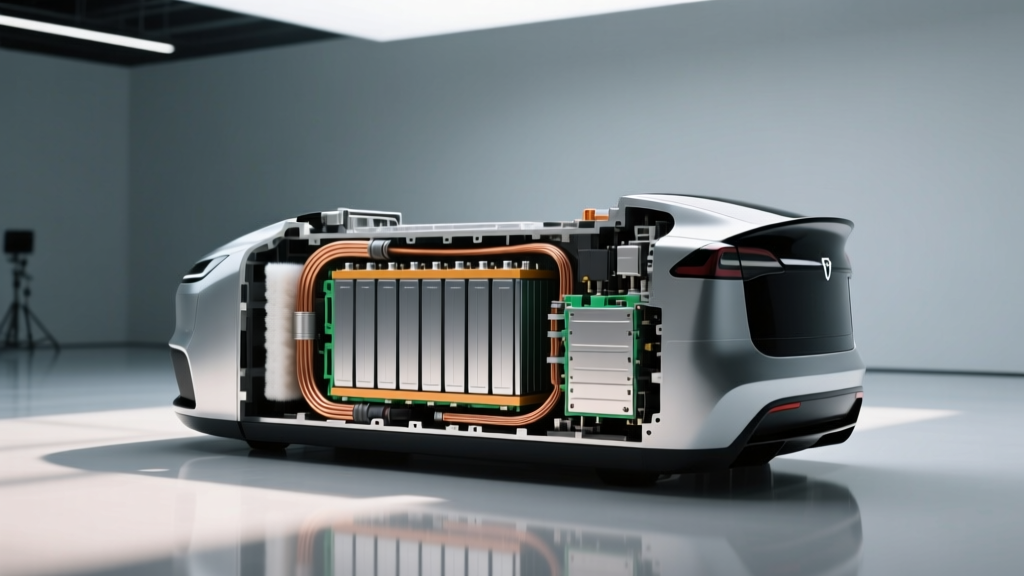
If you have been scanning EV forums and battery-tech headlines, you have likely encountered the term silver battery. Depending on the source, it might refer to silver-zinc primary cells used in aerospace, silver-oxide button cells in watches, or — increasingly — experimental silver-doped cathodes and silver-zinc secondary chemistries being researched for automotive traction packs. The reality in 2026: no mass-production passenger EV ships with a silver-based traction battery. The dominant chemistries remain NMC (nickel-manganese-cobalt), NCA (nickel-cobalt-aluminum), and LFP (lithium iron phosphate).
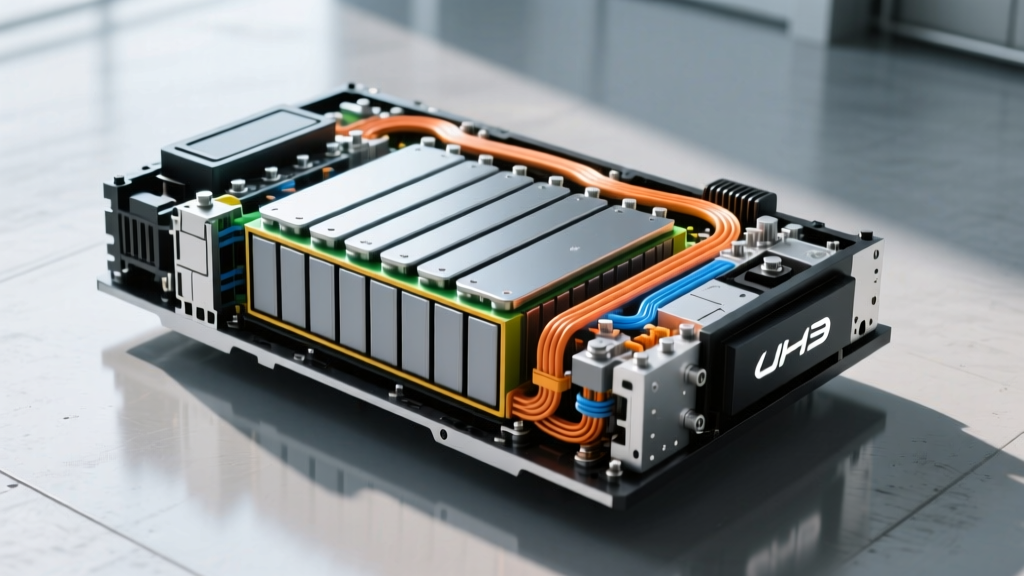
That does not mean silver battery research is irrelevant to EV buyers. Silver's exceptional electrical conductivity (the highest of any element) makes it attractive as a cathode additive, current-collector coating, and dendrite-suppression layer in next-generation lithium-metal and solid-state cells. Companies like DOE-funded battery labs and startups have explored silver-carbon anodes and silver-stabilized lithium-metal interfaces. But translating lab results to a 75–100 kWh automotive pack with 1,500+ cycle life, sub-$100/kWh cost, and 10-year durability is a multi-year engineering challenge.
This guide breaks down where silver-based battery tech stands, then gives you the actionable data you need today: how LFP and NMC compare, what degradation actually looks like across 100,000+ miles, what warranties cover, what a replacement costs, and how to maximize the pack you already have.
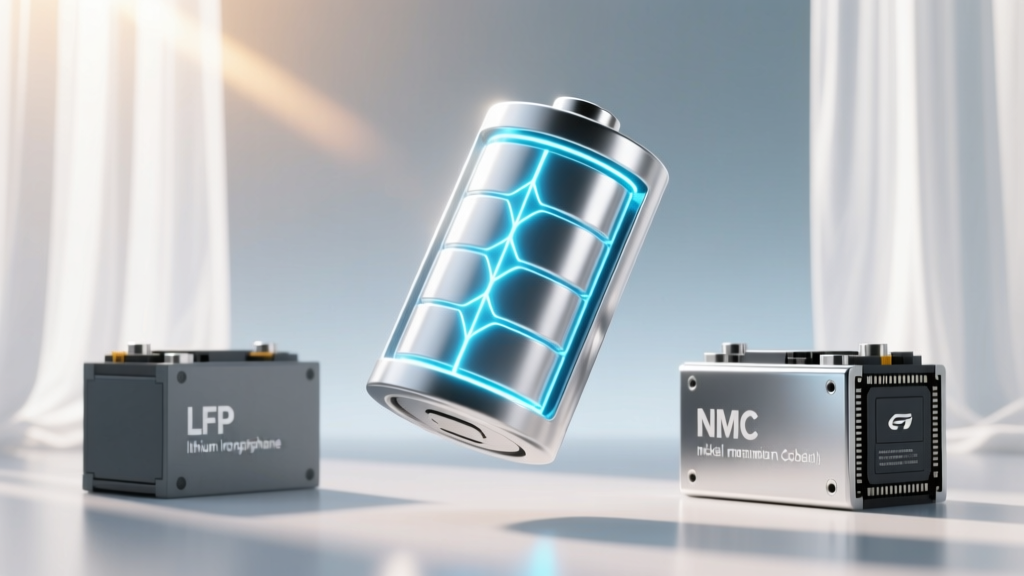
LFP vs NMC vs NCA: The Chemistry Decision That Matters Today
Before speculating on silver-enhanced chemistries, it helps to understand the trade-offs in the batteries powering current-model EVs. Every major EV sold in the US in 2026 uses one of three lithium-ion cathode families:
| Attribute | LFP (LiFePO₄) | NMC (NiMnCo) | NCA (NiCoAl) |
|---|---|---|---|
| Energy Density (cell-level) | 160–200 Wh/kg | 230–300 Wh/kg | 250–320 Wh/kg |
| Typical Cycle Life | 3,000–5,000+ cycles | 1,000–2,000 cycles | 800–1,500 cycles |
| Cold-Weather Performance | Moderate (greater range loss below 32°F) | Better low-temp discharge | Better low-temp discharge |
| Cost per kWh (pack-level, 2026) | ~$85–$100 | ~$110–$140 | ~$115–$145 |
| Cobalt Content | None | Low–moderate | Low |
| Recommended Charge Habit | OK to charge to 100% daily | 80% daily, 100% for trips | 80% daily, 100% for trips |
| Common 2026 Applications | Tesla Model 3/Y RWD, BYD, standard-range Fords | Hyundai Ioniq 5/6, BMW iX, long-range models | Tesla Model S/X, Rivian, Lucid |
Where silver fits in research: Silver-doped NMC cathodes and silver-coated current collectors have shown lab-level improvements in conductivity and cycle stability, potentially reducing internal resistance by 5–15%. However, silver's cost (~$900–$1,000/kg in 2026) makes it viable only in thin coatings or trace additives, not as a primary cathode material for automotive-scale packs.
How Long Do EV Batteries Actually Last?
The short answer: far longer than most buyers assume. Data from fleet operators, manufacturer warranty claims, and independent testing shows that modern lithium-ion traction batteries routinely outlast the vehicles they power.
Real-World Degradation Data Points
- Tesla Model 3/Y (NCA/NMC, 2018–2023 fleets): Average capacity loss of ~5–8% after 100,000 miles, stabilizing to roughly 10–12% loss at 200,000 miles. Tesla's 2024 Impact Report cited a fleet average of ~88% retained capacity at 200,000 miles.
- Chevrolet Bolt EV/EUV (NMC, 2017–2023): Early 60 kWh packs showed 5–10% degradation at 80,000 miles; GM's recall and battery replacement program for fire-risk units reset many fleets to new.
- Nissan Leaf (LMO/NMC, 2011–2025): Earlier passively cooled 24–40 kWh packs degraded 15–25% over 8–10 years in hot climates. The 62 kWh Leaf Plus with improved thermal management shows ~8–12% loss at 80,000 miles.
- Hyundai Ioniq 5 (NMC, 2022–2026): Early fleet data indicates ~4–6% loss at 50,000 miles with typical Level 2 home charging.
- LFP-equipped Tesla Model 3 RWD: Reported degradation of ~3–5% over 60,000 miles, consistent with LFP's superior cycle life.
Typical lifespan expectation: A well-maintained 2026 EV battery should retain 75–90% of its original capacity at 150,000 miles and 10–15 years of service. Most packs will outlive the vehicle's economic life before reaching the 70% capacity threshold that triggers warranty replacement.
What Does the EV Battery Warranty Actually Cover?
Federal law (EPA emissions warranty requirements) effectively mandates that manufacturers warrant EV batteries for a minimum of 8 years or 100,000 miles (whichever comes first). In California Air Resources Board (CARB) states, that extends to 10 years or 150,000 miles. Most manufacturers exceed these minimums.
| Vehicle | Battery Warranty | Capacity Threshold | Notes |
|---|---|---|---|
| Tesla Model 3 RWD (LFP) | 8 yr / 100,000 mi | 70% retention | Long Range & Performance: 8 yr / 120,000 mi |
| Tesla Model Y LR (NCA) | 8 yr / 120,000 mi | 70% retention | Includes drive unit coverage |
| Hyundai Ioniq 5 (NMC) | 10 yr / 100,000 mi | 70% retention | Among the longest terms |
| Ford Mustang Mach-E (NMC) | 8 yr / 100,000 mi | 70% retention | Battery components covered separately |
| Chevrolet Equinox EV (NMC) | 8 yr / 100,000 mi | 60% retention | GM Ultium platform standard |
| BMW iX xDrive50 (NMC) | 8 yr / 80,000 mi | 70% retention | Shorter mileage cap than rivals |
| Rivian R1T / R1S (NMC) | 8 yr / 175,000 mi | 70% retention | Class-leading mileage limit |
Key warranty details to understand:
- The warranty covers capacity loss below the stated threshold — not cosmetic issues or damage from accidents, flooding, or unauthorized modifications.
- "Retention" is measured against the original usable capacity (not total cell capacity, which includes the buffer).
- Some manufacturers replace with a new pack; others may use a refurbished or remanufactured unit with equivalent capacity.
- DC fast-charging habits generally do not void the warranty, but evidence of abuse (repeated 100% storage in extreme heat, aftermarket tuning) could be grounds for denial.
EV Battery Replacement Cost: What to Budget and When
Battery replacement is the single largest fear among prospective EV buyers — and the most commonly overstated cost. Here is what the data shows for 2026:
| Vehicle / Pack Size | Battery Capacity | Replacement Cost Range | Notes |
|---|---|---|---|
| Tesla Model 3 RWD (LFP) | ~60 kWh | $10,000–$14,000 | LFP packs cheaper per kWh |
| Tesla Model Y LR (NCA) | ~75 kWh | $13,000–$18,000 | Structural pack complicates labor |
| Hyundai Ioniq 5 (NMC) | ~77.4 kWh | $14,000–$20,000 | E-GMP platform, modular service |
| Ford F-150 Lightning Ext. Range | ~131 kWh | $22,000–$32,000 | Largest consumer pack available |
| Chevrolet Bolt EV (NMC) | ~65 kWh | $9,000–$14,000 | Older platform, parts availability varies |
| Rivian R1T Max Pack (NMC) | ~149 kWh | $25,000–$35,000 | Skateboard architecture, specialized labor |
| Lucid Air Grand Touring (NMC) | ~112 kWh | $20,000–$28,000 | Wunderbox architecture |
Context that matters:
- Pack-level costs have declined from ~$200/kWh in 2020 to approximately $110–$140/kWh in 2026 for NMC, and ~$85–$100/kWh for LFP, per BloombergNEF lithium-ion battery price survey data.
- The vast majority of EV batteries never need full replacement. Out-of-warranty replacements are typically needed only after 150,000–250,000 miles or 15+ years, and often involve individual module swaps ($2,000–$5,000) rather than full packs.
- By the time a replacement is needed, third-party and refurbished packs are often available at 40–60% of OEM new-pack pricing.
What Kills an EV Battery — and How to Maximize Its Life
Lithium-ion degradation is driven by a combination of calendar aging (time) and cycle aging (charge/discharge events). The following factors accelerate capacity loss:
Battery Care Checklist for Maximum Longevity
- Avoid sustained 100% SoC: For NMC/NCA packs, set your daily charge limit to 80%. Reserve 100% for road trips. LFP packs tolerate 100% better and manufacturers often recommend periodic full charges for cell balancing.
- Minimize deep discharges below 10%: Regularly running the pack to near-zero stresses cells. Try to plug in before dropping below 15–20%.
- Limit DC fast-charging frequency: Occasional DC fast charging (road trips) is fine. Daily reliance on 150–350 kW DC charging adds thermal stress. Data from Recurrent Auto shows vehicles that fast-charge more than 3x per week exhibit ~1–3% additional degradation over 100,000 miles compared to primarily Level 2 charging.
- Precondition before fast charging: Most 2026 EVs automatically precondition the battery when you navigate to a DC fast charger. This brings the pack to optimal temperature (roughly 77–95°F / 25–35°C), enabling faster charging and reducing lithium plating risk.
- Avoid prolonged high-temperature storage: Parking in 100°F+ heat at high SoC accelerates calendar aging. If storing for weeks, aim for 50% SoC in a cool garage.
- Use Level 2 home charging as your default: A 7–11 kW Level 2 charger adds minimal thermal stress and keeps the pack in its comfort zone. This is the single highest-impact habit for long-term health.
How to Monitor Battery Health (State of Health — SoH)
State of Health (SoH) is the percentage of a battery's original usable capacity that remains available. Here is how to check it:
- In-vehicle displays: Tesla's service menu (under Software → Battery Health on newer firmware), Hyundai/Kia's EV diagnostic screens, and BMW's iDrive system provide estimated SoH readings.
- OBD-II diagnostic tools: Devices like the OBDLink SX paired with apps such as Leaf Spy (Nissan), Scan My Tesla, or ABRP-linked tools can read pack voltage, cell imbalance, and estimated SoH.
- Dealer diagnostics: Any authorized service center can run a full battery health report, typically during warranty inspections. Request one if you suspect abnormal degradation.
- Third-party services: Companies like Recurrent Auto offer free battery health reports that compare your pack's degradation to a fleet of identical vehicles.
Emerging Battery Tech: Silver, Solid-State, and Silicon Anodes
While silver battery technology is not in today's EVs, several next-generation chemistries are moving from lab to pilot production. Here is a realistic timeline assessment:
Silver-enhanced lithium-metal anodes: Samsung SDI and academic labs have demonstrated silver-carbon composite anodes that suppress lithium dendrite growth, potentially enabling energy densities above 900 Wh/L. However, cycle-life targets for automotive use (1,000+ cycles with <20% loss) remain unmet at scale. Realistic timeline: pilot cells by 2028–2029, production vehicles unlikely before 2031–2033.
Solid-state batteries: Toyota, QuantumScape, and Solid Power have all announced prototype packs with energy densities of 350–500 Wh/kg at the cell level. Toyota has targeted limited production in select models by 2027–2028, but cost and manufacturing yield remain barriers to mass-market availability. Realistic timeline: low-volume premium EVs by 2028–2030, mainstream availability 2032+.
Silicon-dominant anodes: Already in limited production (GM's Ultium packs incorporate silicon-containing anode materials; startups like Sila Nanotechnologies supply Mercedes and Panasonic). Silicon offers 10x the theoretical capacity of graphite but swells during lithiation, requiring nano-engineering solutions. Realistic timeline: increasing adoption through 2026–2030 as an additive, silicon-dominant anodes in premium packs by 2028–2030.
For buyers making a decision in 2026, these technologies are forward-looking context — not reasons to delay a purchase. Today's LFP and NMC packs, paired with proper care habits, will deliver reliable service well into the 2030s.
Frequently Asked Questions
How long do EV batteries last in years and miles?
Based on fleet data through 2026, modern EV traction batteries typically retain 75–90% of original capacity at 150,000 miles and 10–15 years. Many packs reach 200,000+ miles before dropping below the 70% warranty threshold. LFP-equipped vehicles often exceed 300,000 miles of usable life due to superior cycle chemistry.
How much does it cost to replace an EV battery?
Out-of-warranty replacement costs range from ~$9,000 for a 60 kWh LFP pack (e.g., Tesla Model 3 RWD) to $25,000–$35,000 for large packs like the Rivian R1T Max (149 kWh) or Ford F-150 Lightning Extended Range (131 kWh). However, full replacement is rarely needed — most degradation-related service involves individual module swaps at $2,000–$5,000. By the time a pack needs full replacement, refurbished options often cost 40–60% less than new OEM packs.
What does the EV battery warranty cover?
Federal minimums require 8 years/100,000 miles of coverage (10 years/150,000 miles in CARB states). Warranties guarantee the battery will retain a specified percentage of original capacity — typically 70% (some manufacturers set 60%). Coverage includes defects, abnormal degradation, and component failures. It does not cover damage from accidents, floods, or unauthorized modifications. Check your specific owner's manual for exact terms, as they vary by manufacturer and model year.
How do I check my EV's battery health?
You can monitor State of Health (SoH) through your vehicle's built-in diagnostics screen, OBD-II scanner apps (Leaf Spy, Scan My Tesla, Car Scanner), dealer diagnostic reports, or third-party fleet-comparison services like Recurrent Auto. A SoH reading of 90%+ is normal for vehicles under 50,000 miles; below 80% at low mileage warrants a dealer inspection.
LFP vs NMC — which battery chemistry is better?
Neither is universally better; the right choice depends on your priorities. Choose LFP if you want maximum cycle life (3,000–5,000+ cycles), lower cost, cobalt-free sourcing, and the convenience of charging to 100% daily — and you can accept slightly lower energy density and greater cold-weather range loss. Choose NMC/NCA if you need maximum range per charge (higher energy density means bigger packs in the same space), better cold-weather performance, and faster DC charging speeds — and you are willing to manage an 80% daily charge limit for longevity.
Is silver battery technology available in EVs today?
No. As of 2026, no production passenger EV uses a silver-based traction battery. Silver is being researched as a conductivity-enhancing additive and dendrite-suppression coating in next-generation lithium-metal and solid-state cells. Commercial availability in automotive packs is estimated at 2031+ at the earliest. Today's EVs use proven LFP, NMC, or NCA chemistries with extensive real-world track records.
Does frequent DC fast charging damage my battery?
Occasional DC fast charging has minimal impact. However, data from Recurrent Auto's fleet studies indicates that vehicles relying on DC fast charging more than three times per week show approximately 1–3% additional degradation over 100,000 miles compared to those primarily using Level 2 home charging. Preconditioning your battery before fast charging (automatic in most 2026 EVs when navigating to a charger) significantly mitigates thermal stress.