What Are Silver Batteries — and Are They in EVs You Can Buy?
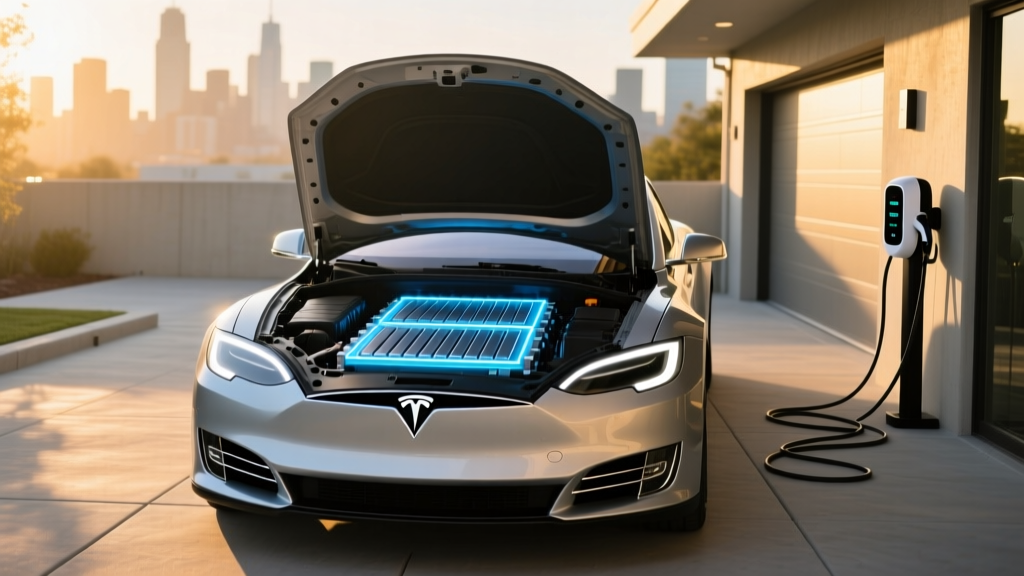
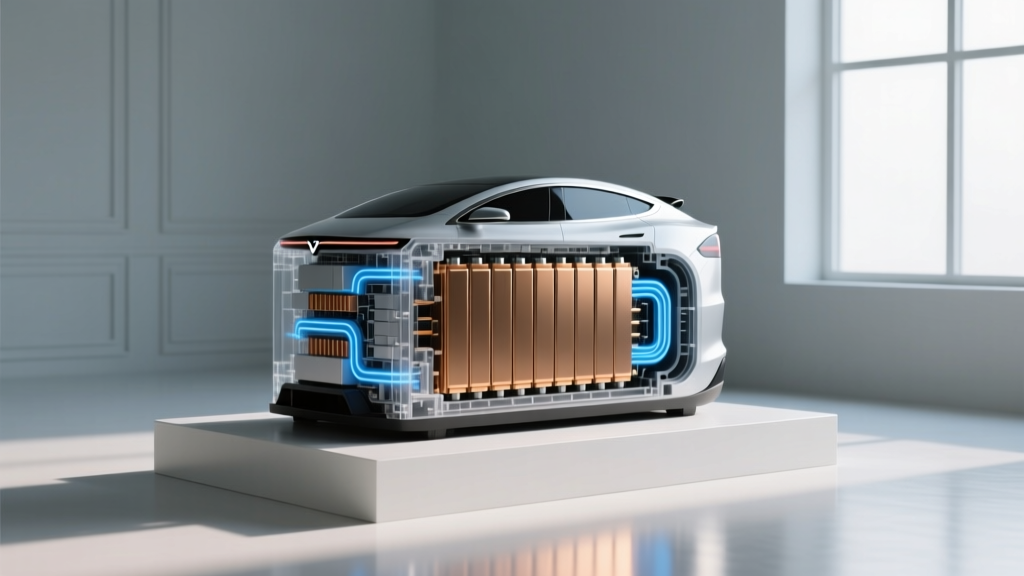
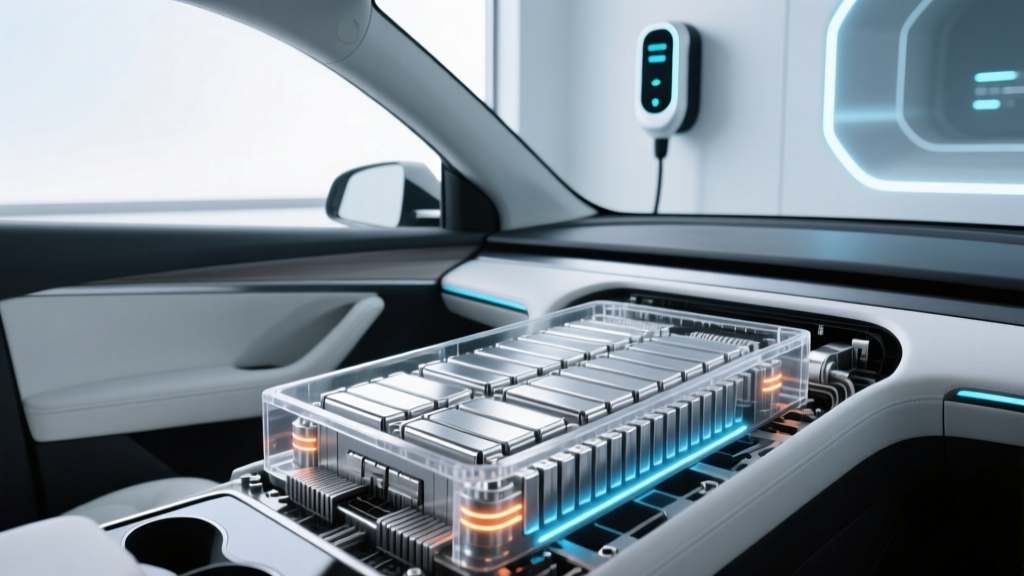
If you've searched for next-generation EV battery tech, you've likely encountered the term silver batteries. Depending on the source, this can refer to several distinct chemistries: silver-zinc (Ag-Zn), silver oxide, or — most relevant to the EV conversation — silver-based cathode materials being researched for solid-state and lithium-metal cells. None of these power a mass-market EV you can drive off a dealer lot today. But understanding where silver fits into the broader battery landscape, and how it compares to the LFP and NMC chemistries dominating 2026 production vehicles, helps you evaluate the hype and plan your next electrified purchase with clear eyes.
This guide covers the chemistries actually in your EV right now (LFP and NMC/NCA), how long they last, what replacement costs, and where silver-based and other emerging technologies realistically sit on the timeline.
The Chemistries Actually Powering 2026 EVs: LFP vs NMC vs NCA
Every EV sold in the U.S. today uses one of three lithium-ion cathode chemistries: LFP (lithium iron phosphate), NMC (nickel manganese cobalt), or NCA (nickel cobalt aluminum). Silver is not part of any of these formulations. Here's how the incumbent chemistries compare on the metrics that matter to owners:
| Attribute | LFP (LiFePO₄) | NMC (NMC 811 / 9½½) | NCA |
|---|---|---|---|
| Energy Density (cell-level) | ~160–180 Wh/kg | ~220–260 Wh/kg | ~250–280 Wh/kg |
| Cycle Life (to 80% SoH) | 3,000–5,000+ cycles | 1,000–2,000 cycles | 800–1,500 cycles |
| Cold-Weather Performance | Moderate; slower charge in cold | Better low-temp conductivity | Good; similar to NMC |
| Cost (per kWh, pack-level) | ~$90–$110 | ~$120–$150 | ~$125–$155 |
| Cobalt Content | None | Low (5–10% in NMC 811) | Moderate (~5%) |
| Typical 2026 Applications | Tesla Model 3/Y RWD, Ford Mustang Mach-E Select (LFP pack), BYD, Rivian Standard | Hyundai Ioniq 5/6, VW ID.4 Pro, BMW iX, long-range trims | Tesla Model S/X, older Panasonic cells |
| Recommended Daily Charge Limit | 100% (regular full charges are fine) | 80% for daily; 100% for trips | 80% for daily; 100% for trips |
The LFP vs NMC decision in 2026: If you charge at home nightly and don't need maximum range, LFP is the durability and cost winner — Tesla's standard-range vehicles and an expanding set of competitors use it. If you need 320+ miles of EPA range or frequently road-trip in cold weather, NMC/NCA's higher energy density still earns its place. Neither chemistry contains silver.
Where Silver Actually Shows Up in Battery Research
Silver's role in electrochemistry is real but narrow, and it's important to separate what's in a lab from what's in a car:
- Silver-zinc (Ag-Zn) batteries: Used in military, aerospace, and hearing-aid applications for decades. Exceptional power density but very short cycle life (100–300 cycles) and high silver cost make them impractical for EV traction packs.
- Silver as a cathode additive or current-collector coating: Some solid-state battery prototypes use thin silver layers to improve interface conductivity between solid electrolyte and lithium metal anodes. Samsung SDI and others have published research on Ag-C (silver-carbon) composite anodes for solid-state cells.
- Silver oxide: Common in watch batteries and button cells — entirely unrelated to EV traction batteries.
If a headline promises "silver batteries will revolutionize EVs," it's almost always referring to the solid-state research pathway. That technology is not in any 2026 production vehicle, and realistic volume production timelines from Toyota, Samsung SDI, and QuantumScape point to 2028–2030 for limited initial deployment, with broad availability likely post-2030. Treat any claim of current availability with skepticism.
How Long Do EV Batteries Actually Last?
The fear that EV batteries need replacement every few years is not supported by fleet data. Most modern packs will outlast the vehicle's useful economic life.
Real-world degradation data points (aggregated from fleet telemetry and owner reports):
- Tesla Model 3/Y (NMC, 2020–2023): ~5–7% capacity loss at 100,000 miles; ~8–12% at 150,000 miles (Tesla Impact Report)
- Chevrolet Bolt EV/EUV (NMC, 2017–2023): ~6–10% loss at 80,000 miles; some early 2017 models affected by LG cell recall (replaced under warranty)
- Hyundai Ioniq 5 (NMC, 2022–2025): Early fleet data suggests ~3–5% loss at 50,000 miles
- LFP packs (Tesla Model 3 RWD, BYD): Slower degradation curves; ~2–4% loss at 60,000 miles projected based on cycle-life chemistry advantages
- Nissan LEAF (passive air cooling, older generations): Higher degradation, especially in hot climates — 15–25% loss at 80,000 miles was not uncommon on 2011–2017 models
Rule of thumb for 2026 buyers: Expect a modern liquid-cooled NMC pack to retain ~85–90% of original capacity at 100,000 miles and ~75–85% at 150,000 miles. LFP packs should retain more. The vehicle is more likely to be retired for body, suspension, or interior wear before the traction battery becomes unusable.
What Does the EV Battery Warranty Cover?
Federal law (via EPA/CARB emissions component definitions) effectively mandates that manufacturers warranty the high-voltage battery for a minimum of 8 years / 100,000 miles in most states, and 10 years / 150,000 miles in California and states adopting CARB rules (including NY, MA, WA, OR, CO, and others).
| Manufacturer | Warranty Term | Capacity Retention Threshold | Notes |
|---|---|---|---|
| Tesla | 8 yr / 120,000 mi (Model 3/Y); 8 yr / 150,000 mi (S/X) | 70% | Covers defects + degradation below 70% |
| Hyundai / Kia | 10 yr / 100,000 mi | 70% (varies by model) | Among the longest terms in the U.S. |
| Ford (Mach-E, F-150 Lightning) | 8 yr / 100,000 mi | 70% | Standard across BEV lineup |
| GM (Ultium-based: Equinox EV, Blazer EV, Silverado EV) | 8 yr / 100,000 mi | 70% (stated); some models 60% for certain components | Check specific model terms |
| Rivian | 8 yr / 175,000 mi (Max pack) | 70% | Longest mileage coverage for large-pack trims |
| BMW | 8 yr / 100,000 mi | 70% | Covers i4, iX, i7 |
| Volkswagen (ID.4) | 8 yr / 100,000 mi | 70% | Standard for MEB-platform vehicles |
Critical detail: The warranty threshold matters. A 70% threshold means the manufacturer replaces or repairs the pack only if it degrades below 70% of original capacity within the term. A pack at 72% SoH at 95,000 miles is still functioning within warranty tolerance — you'll notice reduced range but the car remains drivable. Always read the specific warranty booklet, not just the marketing summary.
How Much Does an EV Battery Replacement Cost?
Out-of-warranty traction battery replacement is the single biggest financial risk in EV ownership — but it's also one most owners never face. Here's the current cost landscape:
| Vehicle / Pack Size | Battery Capacity | Estimated Replacement Cost (parts + labor) | Typical Replacement Trigger |
|---|---|---|---|
| Nissan LEAF (40 kWh) | 40 kWh | $8,000–$12,000 | Severe degradation in hot climates; age-related |
| Chevrolet Bolt EV (65 kWh) | 65 kWh | $14,000–$18,000 | Post-recall, most replaced under warranty |
| Tesla Model 3/Y (75–82 kWh) | ~75–82 kWh | $13,000–$18,000 | Rare before 200k miles; mostly cell-module failures |
| Ford F-150 Lightning (Extended, 131 kWh) | 131 kWh | $22,000–$30,000 | No widespread data yet; early vehicles under warranty |
| Hyundai Ioniq 5 (77.4 kWh) | 77.4 kWh | $15,000–$20,000 | Theoretical; limited out-of-warranty data |
| Porsche Taycan (93.4 kWh) | 93.4 kWh (Performance Battery Plus) | $25,000–$35,000 | Premium segment; labor-intensive pack architecture |
Context that matters: The vast majority of EVs on the road today are still within their 8–10 year battery warranty. Full pack replacements outside of recalls are uncommon. When they do occur, it's often due to individual cell-module failures or physical damage rather than gradual degradation. Refurbished and remanufactured packs are increasingly available from third-party suppliers at 30–50% below OEM new-pack pricing, and this market will mature through the late 2020s as first-generation EVs age out of warranty.
What Actually Degrades an EV Battery — and How to Maximize Life
Battery degradation is driven by electrochemical stress. The factors you control have a measurable impact on State of Health (SoH) over a 5–10 year ownership period:
Battery Care Checklist for Maximum Longevity:
- Avoid sustained 100% SoC: For NMC/NCA packs, set your daily charge limit to 80%. Charge to 100% only when departing on a trip. LFP packs are the exception — Tesla and BYD recommend periodic 100% charges for cell balancing.
- Minimize DC fast charging frequency: Occasional road-trip fast charging is fine. Daily reliance on 150+ kW DCFC accelerates degradation. A DOE/EPA study found that exclusive DCFC use over 4 years showed measurably higher degradation vs. Level 2 charging, though the difference was single-digit percentage points on modern thermal-managed packs.
- Precondition before fast charging: Most 2026 EVs automatically precondition the battery when you navigate to a charger. If yours doesn't, manually activate preconditioning or drive for 15–20 minutes before plugging into DCFC. Cold batteries charge slowly and accept charge unevenly, stressing cells.
- Avoid prolonged storage at extreme SoC: Don't leave the car at 5% or 100% for weeks. If storing for vacation, set SoC to ~50% and leave it plugged into Level 1 or Level 2 with a charge limit.
- Park in shade or a garage in extreme heat: Sustained high battery temperatures (>95°F ambient, especially with a hot soak) accelerate calendar degradation. Active thermal management mitigates this, but it's not zero-cost.
- Don't fear regen braking: Regenerative deceleration puts charge current back into the pack, but at rates well within safe C-rates. It does not meaningfully harm battery health.
How to Check Your Battery's State of Health (SoH)
State of Health (SoH) is the percentage of original capacity your pack retains. A new battery is 100% SoH; a degraded pack at 85% SoH holds 85% of its original kWh. Here's how to monitor it:
- In-vehicle displays: Some 2026 models (notably Tesla, Hyundai/Kia, and BMW) show a battery health or degradation estimate in the settings menu. Tesla's "Battery Health" screen shows a percentage and a projected range at 100% SoC compared to original.
- OBD-II diagnostic tools: Devices like the OBDLink MX+ paired with apps such as LeafSpy (Nissan LEAF), Scan My Tesla, or Car Scanner ELM OBD2 can read the battery management system's (BMS) reported SoH, cell voltage deltas, and pack temperature.
- Dealer/service center readouts: A service visit can pull a full battery health report. Request this if you're buying a used EV — it's the most reliable SoH verification.
- Manual calculation: Charge to 100%, note the displayed range, and compare to the original EPA sticker. Adjust for temperature (cold weather reduces displayed range temporarily, not permanently). A sustained 100% displayed range that's 15% below original suggests ~85% SoH, though the BMS buffer and temperature compensation make this an approximation.
For used-EV buyers: always verify SoH before purchase. A 2021 Model 3 Long Range showing 280 miles at 100% (original EPA: 353 miles) likely has ~80–83% SoH — still functional but approaching the warranty threshold.
Emerging Battery Tech: Solid-State, Silicon Anodes, and Silver's Role
The next generation of EV batteries will likely move beyond today's liquid-electrolyte lithium-ion cells. Here's where the major pathways stand as of 2026:
- Solid-state batteries: Toyota has announced limited production deployment in select 2028–2029 models, targeting 750+ km (466+ mi) range and 10-minute 10–80% charging. Samsung SDI's solid-state prototype uses a silver-carbon (Ag-C) composite anode layer — this is the most direct connection between "silver batteries" and EV futures. However, manufacturing cost, scalability, and supply-chain readiness remain unsolved for volume production. Not available in any 2026 vehicle.
- Silicon-dominant anodes: Companies like Sila Nanotechnologies and Group14 are supplying silicon-anode materials to manufacturers (Mercedes has used Sila's tech in limited G-Class applications). Silicon anodes increase energy density 15–25% over graphite. Expect broader adoption in 2027–2029 model-year vehicles.
- Sodium-ion (Na-ion): CATL and BYD are deploying sodium-ion packs in lower-cost Chinese-market EVs. Lower energy density (~140–160 Wh/kg) limits them to city cars and budget segments, but they eliminate lithium and cobalt entirely. U.S. availability is uncertain and likely post-2028.
- LFP evolution: LMFP (lithium manganese iron phosphate) adds manganese to boost energy density ~15–20% while retaining LFP's cost and cycle-life advantages. CATL and Gotion are shipping LMFP cells; expect U.S.-market vehicles with LMFP packs by 2027–2028.
Bottom line on silver: Silver may play a niche role as an interface material in some solid-state designs, but it is not a cathode chemistry you'll select when configuring your next EV. The purchasing decision in 2026 remains LFP vs NMC/NCA — and both are mature, well-understood, and backed by robust warranty coverage.
Are silver batteries available in any EV I can buy today?
No. No mass-production EV sold in the U.S. in 2026 uses silver-zinc, silver oxide, or silver-cathode chemistry in its traction battery. All current EVs use LFP, NMC, or NCA lithium-ion chemistries. Silver's role in EV batteries is confined to early-stage solid-state research (e.g., Samsung SDI's Ag-C anode layer), which is not expected in production vehicles before 2028–2030.
How long do EV batteries last in years and miles?
Modern liquid-cooled EV batteries (NMC or LFP) typically retain 85–90% of original capacity at 100,000 miles and 75–85% at 150,000 miles. In years, most packs outlast the 8–10 year warranty period without falling below the 70% capacity threshold. LFP packs generally show slower degradation due to superior cycle life (3,000–5,000+ cycles vs 1,000–2,000 for NMC). Real-world fleet data from Tesla, Hyundai, and GM supports these figures.
How much does it cost to replace an EV battery?
Out-of-warranty replacement costs range from ~$8,000 for a 40 kWh pack (e.g., Nissan LEAF) to $25,000–$35,000 for large premium packs (Porsche Taycan, Ford F-150 Lightning Extended Range). Mid-size packs (Tesla Model 3, Hyundai Ioniq 5) typically cost $13,000–$20,000. However, most EVs never need a full pack replacement — individual module repairs, refurbishment, and warranty coverage handle the vast majority of cases. Third-party refurbished packs are reducing costs as the first-generation EV fleet ages.
What does the EV battery warranty actually cover?
Standard battery warranties cover defects in materials/workmanship and capacity degradation below a stated threshold (typically 70% of original capacity) for 8 years/100,000 miles (or 10 years/150,000 miles in CARB states). They do not cover damage from accidents, flooding, improper modifications, or use of non-approved charging equipment. Read the specific warranty booklet for your model — thresholds and exclusions vary by manufacturer. See EPA vehicle emissions standards for the federal baseline.
LFP vs NMC — which battery chemistry is better?
Neither is universally better; it depends on your use case. Choose LFP if you charge at home nightly, want maximum cycle life and longevity, prefer charging to 100% daily without worry, and can accept slightly less range (LFP's lower energy density means ~10–15% less range for the same pack weight). Choose NMC/NCA if you need maximum EPA range (320+ miles), frequently road-trip in cold weather (better low-temperature performance), or want the highest performance trims. For most home-charging commuters in 2026, LFP is the pragmatic longevity choice.
How do I check my EV battery's State of Health?
Use your vehicle's built-in battery health screen (available on Tesla, Hyundai/Kia, BMW, and others), connect an OBD-II reader with EV-compatible software (LeafSpy, Scan My Tesla, Car Scanner), or request a battery health report from a dealer service department. Compare your 100% displayed range to the original EPA figure, adjusting for temperature. For used-EV purchases, a dealer SoH readout is the most reliable verification method.
Will solid-state batteries with silver make current EVs obsolete?
Not in the near term. Solid-state batteries remain in pre-production or limited-prototype stages as of 2026. Toyota targets 2028–2029 for initial deployment in select models; Samsung SDI and QuantumScape have similar timelines. Even after launch, solid-state packs will debut in premium vehicles at high cost before reaching mainstream pricing — a process likely spanning 2028–2035. Current LFP and NMC EVs will remain practical, well-supported, and cost-competitive for years. Buying a 2026 EV does not mean buying obsolete technology.