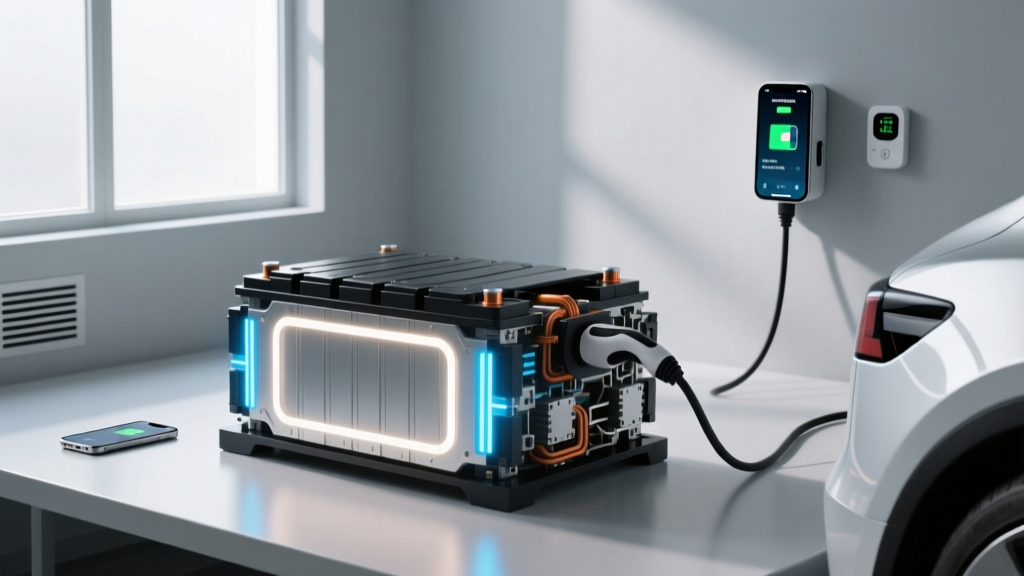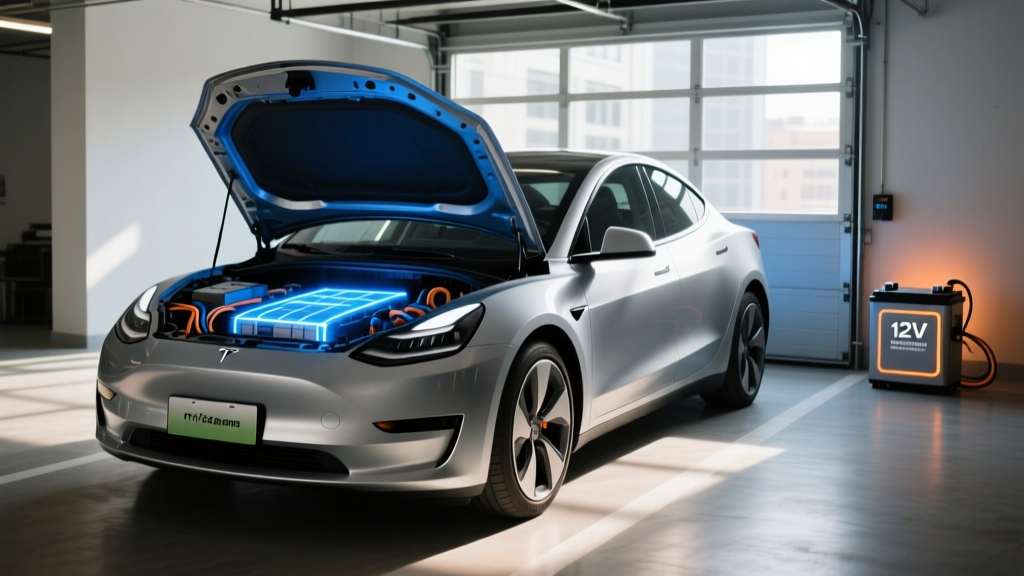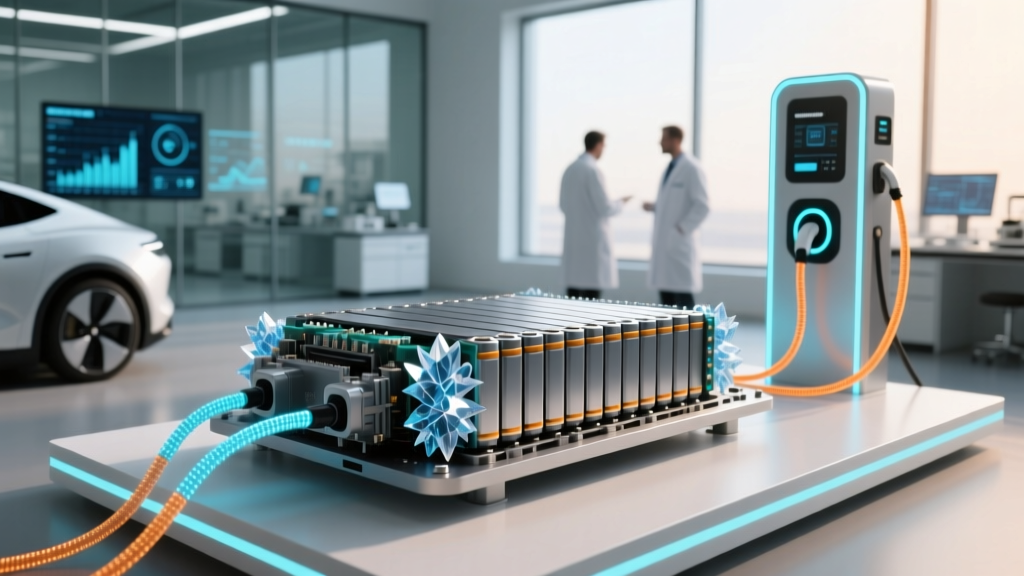
For the past decade, lithium-ion EV batteries have relied on graphite anodes. That is starting to change. Silicon content anodes battery technology has moved from lab curiosity to production vehicles, with automakers like Porsche, Mercedes-Benz, and GM integrating silicon-dominant or silicon-composite anodes into 2025 and 2026 model-year packs. The promise is significant: higher energy density, faster charging, and more range from the same physical battery volume. But how much of this is real for buyers today, and what does it mean alongside established LFP and NMC chemistries?
This guide breaks down where silicon anode technology stands, how it compares to the chemistries already in your driveway, and everything you need to know about EV battery longevity, degradation, warranties, and replacement costs in the current market.
Silicon Anodes Explained: Why Graphite Is Getting a Partner
In a conventional lithium-ion cell, the anode (negative electrode) is made of graphite. Lithium ions intercalate — essentially slide between — graphite layers during charging. Graphite is stable, cheap, and well-understood, but it has a theoretical energy density ceiling of about 372 mAh/g (milliamp-hours per gram of anode material).
Silicon's theoretical capacity is roughly 4,200 mAh/g — more than 10 times higher. The problem has always been volume expansion: silicon swells up to 300% when it absorbs lithium ions, causing the anode to crack, pulverize, and degrade rapidly over charge cycles.
The breakthrough in silicon content anodes battery technology through 2025 and into 2026 has been engineering solutions to that expansion:
- Silicon-carbon composites: Silicon nanoparticles embedded in a carbon matrix that buffers expansion. This is what Group14 Technologies supplies to Porsche for the Taylan and what Sila Nanotechnologies provides to Mercedes-Benz for the G-Class EV (announced for 2025 production).
- Silicon oxide (SiOx) blends: Used in small percentages (typically 5-10% silicon content) in many NMC cells already — including cells from Panasonic and LG Energy Solution — to boost energy density without major swelling issues.
- Silicon-dominant anodes: Companies like Amprius have demonstrated cells with near-100% silicon anodes using nanowire structures, though these remain in early production for specialty applications, not mass-market EVs.
The practical result in 2025-2026 production vehicles: cells with silicon-enhanced anodes deliver roughly 10-20% higher energy density at the cell level compared to equivalent graphite-anode NMC cells. That translates to either more range in the same pack size, or a smaller, lighter pack for the same range.
LFP vs NMC vs Silicon-Enhanced: Chemistry Trade-Offs
Before silicon anodes become widespread, the primary chemistry decision for EV buyers remains LFP (lithium iron phosphate) versus NMC (nickel manganese cobalt) / NCA (nickel cobalt aluminum). Silicon anode technology is being applied primarily to NMC-type cathodes, so it enhances rather than replaces that chemistry choice.
| Attribute | LFP (LiFePO4) | NMC / NCA | NMC + Silicon Anode |
|---|---|---|---|
| Energy density (cell-level) | ~160-180 Wh/kg | ~220-260 Wh/kg | ~250-300 Wh/kg |
| Cycle life | 3,000-5,000+ cycles | 1,000-2,000 cycles | 1,000-2,000 cycles (under validation) |
| Cold-weather performance | Moderate — more range loss below freezing | Better low-temp discharge | Similar to NMC baseline |
| Fast-charge capability | Good (CATL Shenxing: 10-80% in ~10 min) | Very good (250-350 kW peak) | Excellent — silicon anodes accept lithium faster, enabling higher C-rates |
| Cost ($/kWh at cell level) | ~$60-80/kWh | ~$90-120/kWh | ~$100-140/kWh (premium) |
| Cobalt/nickel content | None | Significant | Significant (cathode unchanged) |
| Recommended SoC for daily use | 100% is fine | 80% preferred | 80% preferred (NMC cathode) |
| Current production examples | Tesla Model 3 RWD, BYD Seal, Ford Mustang Mach-E Select | Hyundai Ioniq 5, BMW iX, most long-range EVs | Mercedes G 580 EQ, Porsche Taycan (2025 refresh), upcoming GM Ultium cells |
Which is better? It depends on your priorities. If you want maximum cycle life, lower cost, and don't mind slightly less range per kilogram, LFP is the pragmatic choice — especially for daily commuting. If you need maximum range, faster charging, or live in a cold climate, NMC (and increasingly NMC with silicon-enhanced anodes) delivers. Silicon anodes don't change the LFP-vs-NMC cathode decision; they make NMC cells better at what NMC already does well.
How Long Do EV Batteries Actually Last?
The short answer: almost certainly longer than you'll own the car. Data from fleet operators, manufacturer reports, and independent testing consistently shows that modern EV batteries retain usable capacity well beyond 150,000 miles.
Here is what the degradation data actually shows:
Degradation Data Points (Real-World Sources)
- Tesla Model 3/Y (NMC/NCA, 2018-2023): Average ~12% capacity loss at 150,000 miles, per Tesla's 2023 Impact Report. Fleet data from Recurrent Auto shows median 90% State of Health (SoH) at 100,000 miles.
- Nissan Leaf (LMO/NMC, air-cooled): Higher degradation — early 24 kWh models showed 20-25% loss at 80,000 miles, largely due to passive thermal management. Newer liquid-cooled packs (Leaf Plus, 62 kWh) perform significantly better.
- Chevrolet Bolt EV (NMC, LG cells): ~8-10% loss at 100,000 miles per Recurrent data. The 2017-2019 battery recall for fire risk was a manufacturing defect, not a degradation issue.
- LFP-equipped vehicles (Tesla Model 3 RWD, BYD): Degradation data is still maturing (LFP entered mass Western-market use around 2021-2022), but laboratory cycle testing suggests 5% or less loss over 200,000 miles equivalent.
- Hyundai/Kia E-GMP platform (Ioniq 5, EV6): Early data (2022-2025 models) shows ~5-7% loss at 60,000 miles, consistent with modern NMC811 cells with active thermal management.
Sources: Recurrent Auto, Tesla Impact Report, manufacturer fleet data.
The key takeaway: degradation is not linear. Most batteries lose 3-5% capacity in the first year or two (the "break-in" phase), then degradation slows significantly to roughly 1-2% per year under normal use. A battery reaching 70% capacity — the typical warranty threshold — at 200,000+ miles is the norm, not the exception, for liquid-cooled packs.
What Does the Battery Warranty Actually Cover?
Federal law in the United States mandates that EV batteries carry a minimum warranty of 8 years / 100,000 miles. In California Air Resources Board (CARB) states, that extends to 10 years / 150,000 miles. Most automakers meet or exceed these minimums.
| Manufacturer | Warranty Period | Capacity Threshold | Notes |
|---|---|---|---|
| Tesla | 8 yr / 120,000 mi (Model 3/Y LR); 8 yr / 100,000 mi (RWD) | 70% retention | Covers defects + capacity below threshold |
| Hyundai / Kia | 10 yr / 100,000 mi | 70% retention | Among the longest coverage in the industry |
| GM (Ultium) | 8 yr / 100,000 mi | 70% retention (60% for Bolt-era) | Ultium packs use modular design for partial replacement |
| Ford | 8 yr / 100,000 mi | 70% retention | Mach-E, F-150 Lightning |
| BMW | 8 yr / 100,000 mi | 70% retention | iX, i4, i7 |
| Mercedes-Benz | 10 yr / 155,000 mi (EQS/EQE) | 70% retention | Among the most generous mileage limits |
What's covered: Manufacturing defects, cell failures, and capacity loss below the stated threshold (typically 70% of original capacity). If your 80 kWh pack drops below 56 kWh usable within the warranty period, the manufacturer must repair or replace it.
What's typically NOT covered: Damage from accidents, improper charging equipment, flooding, or modifications. Normal gradual degradation above the threshold (e.g., going from 100% to 78% over 8 years) is expected behavior, not a warranty claim.
EV Battery Replacement Cost: Numbers and Context
This is the question that generates the most anxiety — and the most misleading headlines. Yes, a full battery pack replacement is expensive. But the context matters enormously.
| Vehicle / Pack Size | Full Pack Replacement (Parts + Labor) | Module-Level Repair | Typical Need Timeline |
|---|---|---|---|
| Tesla Model 3 (75 kWh, NMC) | $13,000 - $16,000 | $3,000 - $5,000 (per module group) | Rarely needed before 200,000+ mi |
| Tesla Model 3 RWD (60 kWh, LFP) | $10,000 - $13,000 | N/A (CTP design, harder to segment) | Very unlikely within vehicle lifespan |
| Hyundai Ioniq 5 (77.4 kWh, NMC) | $14,000 - $18,000 | $4,000 - $6,000 | Rarely needed before 200,000+ mi |
| Ford F-150 Lightning (131 kWh, extended) | $20,000 - $28,000 | $5,000 - $8,000 | Large pack = slower degradation rate |
| Chevrolet Bolt EV (65 kWh, NMC) | $14,000 - $16,000 | $3,500 - $5,500 | Post-recall replacement packs performing well |
| Mercedes EQS (107.8 kWh, NMC) | $22,000 - $30,000 | $6,000 - $9,000 | 10yr/155k warranty reduces owner risk |
The honest context: According to data from Recurrent Auto and fleet operators, fewer than 5% of EV batteries require full replacement during the warranty period, and the vast majority of packs outlast the vehicle's economic life. A 2022 study by the National Renewable Energy Laboratory (NREL) found that modern lithium-ion packs in liquid-cooled systems retain approximately 85-90% capacity at 150,000 miles.
Additionally, costs are declining. Battery pack prices fell below $140/kWh at the industry level in 2024 (per BloombergNEF), and continue to trend downward. By the time most current EVs actually need a replacement pack (if ever), prices will likely be substantially lower than today's figures.
Factors That Affect EV Battery Life (and What You Can Control)
Not all miles are equal when it comes to battery degradation. Here are the factors that matter most, ranked by impact:
Battery Longevity Factors
- Extreme heat exposure (high impact): Sustained battery temperatures above 104°F (40°C) accelerate chemical degradation. This is why liquid-cooled packs (Tesla, Hyundai, GM, Ford, BMW) dramatically outperform passively cooled ones (early Nissan Leaf). Action: Park in shade/garage when possible; precondition while plugged in.
- High State of Charge storage (moderate-high impact for NMC): Storing an NMC battery at 100% SoC for extended periods stresses the cathode. Action: Set daily charge limit to 80% for NMC; LFP can be charged to 100% daily without penalty.
- Frequent DC fast charging (moderate impact): Repeated use of 150+ kW DCFC generates heat and stresses cells. Occasional road-trip fast charging is fine; daily DCFC as your primary charge method accelerates degradation by an estimated 1-3% over the pack's life. Action: Use Level 2 home charging as your daily routine.
- Deep discharge cycles (moderate impact): Regularly running the battery below 10% SoC stresses cells. Action: Charge before dropping below 15-20% when practical.
- Cold-weather charging without preconditioning (low-moderate impact): Charging a frozen battery (below 32°F / 0°C) at high power can cause lithium plating on the anode. Modern BMS systems limit charge rate when cold, but preconditioning is better. Action: Always precondition in winter before charging.
- Calendar aging (low, unavoidable): Batteries degrade slightly with time regardless of use. Expect ~1-2% loss from calendar aging alone over 8-10 years.
How to Check and Monitor Your Battery's State of Health
State of Health (SoH) is the percentage of your battery's original capacity that remains usable. A new 80 kWh pack at 95% SoH has approximately 76 kWh of usable capacity.
Here is how to check it:
- Tesla: The in-car service menu (hold the model name on the "Software" screen for 3 seconds, enter "service") shows battery health data. Third-party tools like TeslaFi or Stats provide ongoing SoH tracking via the vehicle's API.
- Hyundai/Kia: The dealer can pull SoH via the diagnostic scan tool. Some owners use OBD-II dongles with apps like Car Scanner ELM OBD2 to read battery management system (BMS) data directly.
- GM (Ultium platform): The myChevrolet/myCadillac app shows estimated battery health. OnStar diagnostics also provide SoH data on request.
- Universal method: An OBD-II reader paired with an EV-specific app (EVNotify, ABRP OBD, Car Scanner) can read BMS-reported SoH, cell voltages, and pack temperature on most modern EVs.
- Recurrent Auto: This free service (available for Tesla, Ford, Hyundai, and others) connects to your vehicle's telematics and provides ongoing SoH reports benchmarked against similar vehicles.
When to be concerned: If SoH drops below 85% within the first 50,000 miles, or if you notice sudden range drops inconsistent with temperature, have the pack evaluated under warranty. Gradual, linear decline is normal; step-function drops can indicate a faulty module.
Silicon Anodes, Solid-State, and What's Next: A Realistic Timeline
Silicon content anodes battery technology is the most commercially advanced "next-gen" battery improvement available in 2025-2026 production vehicles. But it is part of a broader evolution, not a standalone revolution.
Where Silicon Anodes Stand Now
- In production: Sila Nanotechnologies' silicon-composite anode material is in the 2025 Mercedes G 580 EQ. Group14's SCC55 silicon-carbon composite is in Porsche's 2025 Taycan battery cells. These are real, purchasable vehicles.
- Near-term (2026-2028): GM has announced plans to integrate silicon-dominant anode technology into next-generation Ultium cells, targeting 2027-2028 production. Toyota's bZ-series EVs are expected to adopt silicon-enhanced cells by 2027.
- Benefits being validated: Faster charging (silicon anodes accept lithium ions more readily, reducing charge time by 15-25% at equivalent C-rates) and 10-20% energy density gains at the cell level.
- Open questions: Long-term cycle life data for silicon-dominant anodes in automotive applications is still being accumulated. Early results are promising but not yet equivalent to decades of graphite-anode data.
Solid-State Batteries: Still Forward-Looking
Solid-state batteries — which replace the liquid electrolyte with a solid conductor — remain announced and in limited pilot production, not in mass-market vehicles as of 2026. Toyota has stated it will introduce solid-state cells in limited production by 2027-2028, with volume production not expected before 2030. Samsung SDI, QuantumScape (backed by Volkswagen), and Solid Power (backed by BMW and Ford) are all in pilot or A-sample stages.
Solid-state promises include higher energy density (potentially 400+ Wh/kg at cell level), faster charging, and improved safety (no flammable liquid electrolyte). But manufacturing cost and yield challenges remain significant. Buyers should not delay a purchase waiting for solid-state; it will debut in low-volume, premium applications first.
Frequently Asked Questions
How long do EV batteries last in years and miles?
Based on fleet data from Recurrent Auto and manufacturer reports, modern liquid-cooled EV batteries retain 85-90% of original capacity at 150,000 miles and 80-85% at 200,000 miles. In calendar years, expect 15-20+ years of usable service life before capacity drops to the 70% warranty threshold. Most EV batteries will outlast the vehicle's economic life.
How much does an EV battery cost to replace?
Full pack replacement costs range from approximately $10,000 (smaller LFP packs) to $30,000 (large premium packs like the Mercedes EQS). Module-level repairs — replacing only degraded sections — typically cost $3,000-$9,000. However, fewer than 5% of EV batteries require full replacement during the warranty period, and costs are declining annually as cell prices fall.
What does the battery warranty cover?
EV battery warranties cover manufacturing defects and capacity loss below a specified threshold (typically 70% of original capacity) for 8 years/100,000 miles minimum (10 years/150,000 miles in CARB states). They do not cover accident damage, improper charging, or normal gradual degradation above the threshold. Check your specific manufacturer's warranty terms, as details vary.
How do I check and maximize my EV battery's health?
Check State of Health (SoH) through your vehicle's diagnostic menu, dealer scan tools, OBD-II apps, or services like Recurrent Auto. To maximize longevity: charge NMC batteries to 80% for daily use (100% is fine for LFP), use Level 2 home charging as your primary method, precondition the battery before fast charging in cold weather, avoid prolonged storage at 100% or below 10% SoC, and park in shade when possible in hot climates.
LFP vs NMC — which battery chemistry is better?
Neither is universally better; they serve different needs. LFP offers longer cycle life (3,000-5,000+ cycles), lower cost, no cobalt, and can be charged to 100% daily — making it ideal for daily commuting and budget-conscious buyers. NMC provides higher energy density (more range per kg), better cold-weather performance, and faster charging — better for road trips, cold climates, and long-range needs. Silicon-enhanced NMC anodes (available in select 2025-2026 models) further improve NMC's energy density and charge speed without changing the fundamental trade-off.
Is silicon anode technology safe compared to traditional batteries?
Yes. Silicon anode materials replace graphite in the anode only — the cathode, electrolyte, and safety systems remain the same proven NMC architecture. The silicon-carbon composite structures used by Sila Nanotechnologies and Group14 have passed standard automotive safety testing (UN38.3, UN ECE R100, USABC abuse testing). There is no additional fire or safety risk compared to conventional NMC cells.
Will silicon anode batteries be more expensive?
Currently, yes — silicon-enhanced cells carry a cost premium of roughly 10-25% over equivalent graphite-anode NMC cells, which is why they appear in premium vehicles first (Mercedes G-Class, Porsche Taycan). As manufacturing scales through 2027-2029, costs are expected to converge with conventional NMC, making the technology accessible to mid-market vehicles.
This article reflects data and pricing available as of early 2026. Battery technology, pricing, and warranty terms are subject to change. Consult fueleconomy.gov for official EPA range and efficiency data, and your vehicle manufacturer for current warranty terms.