Why Silicon Anode Batteries Are the Next Big Shift in EV Energy Density
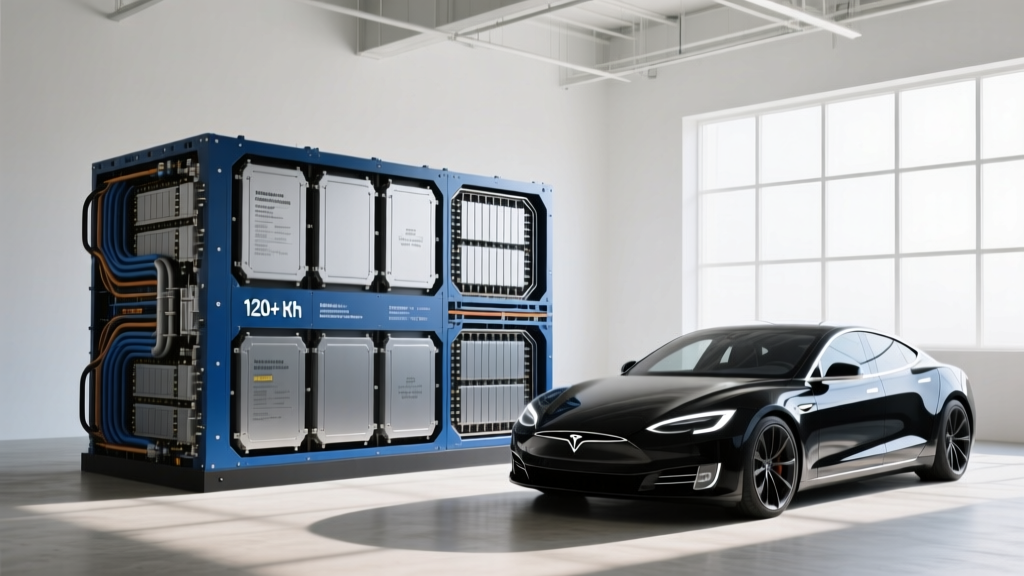
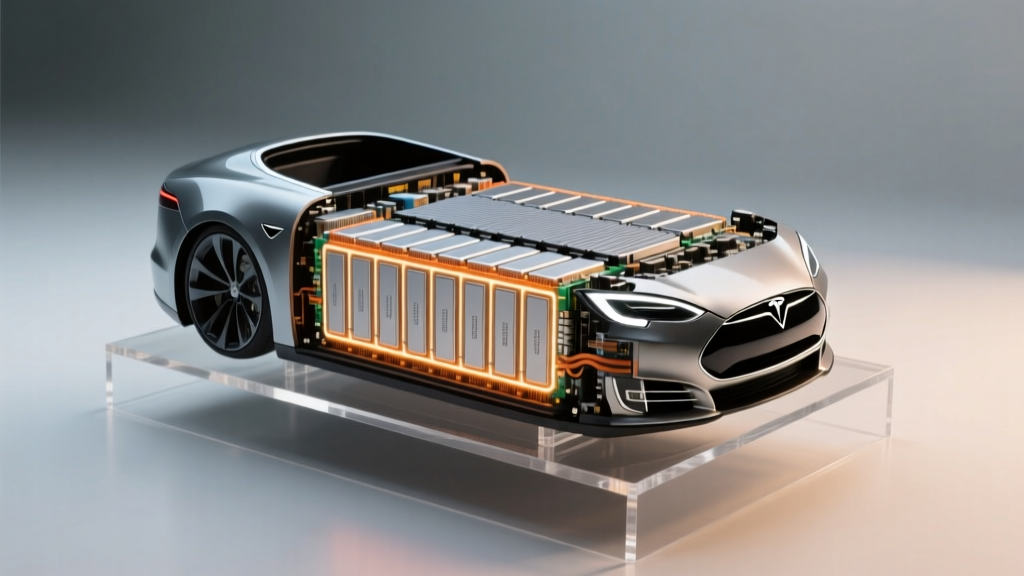
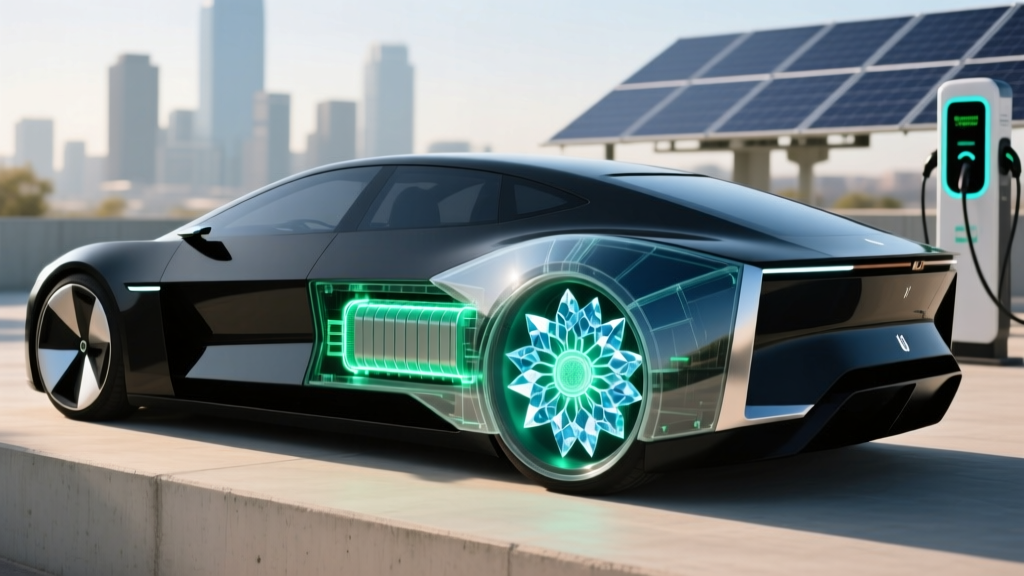
For the past decade, lithium-ion EV batteries have relied on graphite anodes — a mature, reliable technology, but one that is approaching its theoretical energy-density ceiling. Enter the silicon anode battery: a cell design that replaces some or all of the graphite anode with silicon, unlocking substantially more energy storage per kilogram. In 2026, silicon-anode cells are beginning to appear in limited production vehicles and are widely expected to reshape the EV landscape through the end of the decade.
Silicon can theoretically store roughly 10 times more lithium ions than graphite by weight. In practice, current commercial silicon-dominant and silicon-carbon composite anodes deliver a 20–40% improvement in cell-level energy density over conventional graphite-anode NMC cells, according to data from cell manufacturers including Sila Nanotechnologies and Enovix. That translates directly into longer range without increasing battery pack weight or volume — or the same range in a lighter, more efficient pack.
But silicon anodes come with engineering challenges. Silicon expands up to 300% by volume during lithiation (charging), which historically caused cracking, loss of electrical contact, and rapid capacity fade. Companies like Sila, Group14 Technologies, and Amprius have developed nanostructured silicon composites and specialized binders to manage this swelling, and their cells are now passing automotive-grade cycle-life testing.
Realistic timeline: As of early 2026, silicon-anode cells are in low-volume production for premium and specialty applications. The Mercedes-Benz G-Class EV (announced) uses Sila-produced silicon-anode cells. Broader mainstream adoption — where silicon anodes appear in $35,000–$50,000 EVs — is expected between 2027 and 2029, as manufacturing scales and per-kWh costs approach parity with graphite-anode cells. This is forward-looking technology, not something you can order at a dealership today in most models.
Current vs. Emerging Anode Technology
| Feature | Graphite Anode (Current Standard) | Silicon-Carbon Composite Anode | Silicon-Dominant Anode |
|---|---|---|---|
| Cell Energy Density | 250–300 Wh/kg | 320–380 Wh/kg | 400–500+ Wh/kg (lab) |
| Volume Expansion | ~10% | 20–40% (managed) | Up to 300% (requires novel architecture) |
| Cycle Life | 1,500–3,000 cycles | 800–1,500 cycles (improving) | 500–1,000 cycles (current) |
| Cost (per kWh, cell level) | $90–$110 | $120–$160 (2026) | $180+ (low volume) |
| Production Status | Mass production | Limited production, scaling | Prototype / pilot line |
LFP vs NMC vs NCA: Which Chemistry Should You Choose Today?
While silicon anodes represent the future, today's EV buyers choose between two dominant cathode chemistries: LFP (lithium iron phosphate) and NMC/NCA (nickel manganese cobalt / nickel cobalt aluminum). The anode in both is typically graphite, though silicon blends are beginning to appear in NMC cells.
Here is how they compare on the metrics that matter most to owners:
| Metric | LFP (e.g., Tesla Model 3 RWD, BYD Blade) | NMC/NCA (e.g., Hyundai Ioniq 5, Ford Mustang Mach-E ER) |
|---|---|---|
| Energy Density (cell) | 160–200 Wh/kg | 250–300 Wh/kg |
| Typical Pack Size | 50–65 kWh | 72–100 kWh |
| EPA Range Examples | 272 mi (Model 3 RWD) | 320 mi (Ioniq 5 Long Range AWD) |
| Cycle Life | 3,000–6,000+ cycles | 1,500–3,000 cycles |
| Cold-Weather Performance | More range loss (~30–40% at 20°F) | Better cold retention (~20–30% loss at 20°F) |
| Charging to 100% Regularly | Recommended (BMS calibration needs it) | Not recommended daily (80% daily, 100% for trips) |
| Cost per kWh (pack level) | $100–$120 | $130–$160 |
| Cobalt Content | None | Some (NMC) / None (NCA) |
Choose LFP if: You want maximum battery longevity, plan to keep the vehicle 10+ years, mostly charge at home, live in a moderate climate, and prioritize lower upfront cost over maximum range.
Choose NMC/NCA if: You need the longest possible range per charge, regularly drive in cold climates, want faster DC charging speeds (NMC cells typically accept higher peak kW), or need the energy density for a larger vehicle like an SUV or truck.
How Long Do EV Batteries Actually Last?
The short answer: longer than most buyers expect. Modern EV traction batteries are engineered to outlast the useful life of the vehicle itself in most cases.
According to data aggregated by fueleconomy.gov and long-term fleet studies, the average lithium-ion EV battery loses approximately 5–10% of its original capacity over the first 100,000 miles, with degradation slowing significantly after the initial break-in period (roughly the first 20,000–30,000 miles).
Typical Degradation Curve (NMC 75 kWh Pack)
| Mileage | Approx. Capacity Retained | Real-World Range Impact (from 300 mi EPA) |
|---|---|---|
| New | 100% | ~300 mi |
| 30,000 mi | 94–96% | ~282–288 mi |
| 60,000 mi | 91–94% | ~273–282 mi |
| 100,000 mi | 88–92% | ~264–276 mi |
| 150,000 mi | 84–89% | ~252–267 mi |
| 200,000 mi | 80–86% | ~240–258 mi |
Note: LFP batteries typically degrade more slowly, retaining 90–95% at 100,000 miles. Real-world degradation varies significantly based on climate, charging habits, and DC fast-charging frequency.
Tesla's 2025 Impact Report stated that their fleet data shows an average of 12% degradation at 200,000 miles across Model 3/Y vehicles with NMC/NCA packs, and even less for LFP-equipped vehicles. Hyundai, GM, and Ford report similar figures for their current-generation packs with advanced thermal management.
What Does the Battery Warranty Actually Cover?
Federal law (enforced by the EPA and CARB in California-emissions states) mandates a minimum EV battery warranty of 8 years / 100,000 miles. In California-emissions states (which include CA, CO, CT, ME, MD, MA, NJ, NY, OR, RI, VT, WA, and others adopting CARB rules), the mandate is 10 years / 150,000 miles.
Most manufacturers exceed these minimums. Here is what the major brands offer as of the 2026 model year:
| Manufacturer | Battery Warranty | Capacity Retention Threshold |
|---|---|---|
| Tesla (Model 3/Y NMC) | 8 yr / 120,000 mi | 70% |
| Tesla (Model 3 RWD LFP) | 8 yr / 100,000 mi | 70% |
| Hyundai / Kia | 10 yr / 100,000 mi | 70% |
| Ford (Mach-E, F-150 Lightning) | 8 yr / 100,000 mi | 70% |
| GM (Ultium-based) | 8 yr / 100,000 mi | 70% |
| BMW | 8 yr / 100,000 mi | 70% |
| Rivian | 8 yr / 175,000 mi | 70% |
Key detail: The warranty triggers only if your battery's usable capacity drops below the stated threshold (typically 70% of original). If your 80 kWh pack degrades to 58 kWh (72.5%), you have not yet met the warranty threshold — even though you have lost noticeable range. This is why most owners never file a battery warranty claim: gradual degradation rarely crosses the 70% line within the warranty period under normal use.
How Much Does an EV Battery Replacement Cost?
This is the question that generates the most anxiety — and the most misinformation. Let's put real numbers to it.
| Vehicle / Pack Size | Out-of-Warranty Replacement Cost (Parts + Labor) | Typical When Needed |
|---|---|---|
| Nissan Leaf (40–62 kWh) | $6,500–$9,000 | 150,000+ mi (early models with passive cooling degraded faster) |
| Tesla Model 3 (50–82 kWh) | $10,000–$16,000 | 200,000+ mi (rarely needed; most packs outlast the car) |
| Chevy Bolt EV/EUV (65 kWh) | $9,000–$14,000 | Post-recall replacements covered by GM through 2028 |
| Ford Mustang Mach-E (70–91 kWh) | $12,000–$18,000 | 200,000+ mi (projected) |
| Ford F-150 Lightning (98–131 kWh) | $18,000–$28,000 | 200,000+ mi (projected) |
| Mercedes EQS (108 kWh) | $22,000–$32,000 | 200,000+ mi (projected) |
| Rivian R1T/R1S (106–149 kWh) | $20,000–$30,000 | 200,000+ mi (projected) |
Context that matters: Battery replacement at these prices is exceedingly rare for liquid-cooled packs manufactured after 2019. The vast majority of EVs will be retired, sold, or totaled in an accident before the battery needs replacement. Pack prices continue to decline — down roughly 14% since 2023 — and third-party repair shops increasingly offer module-level repairs (replacing only the degraded cells or modules) for $2,000–$5,000 rather than a full pack swap.
Factors That Accelerate (or Prevent) Battery Degradation
Not all miles are equal when it comes to battery wear. Here are the five factors with the most measurable impact on long-term State of Health (SoH):
Battery Longevity Checklist
- Avoid sustained high State of Charge (SoC): For NMC/NCA batteries, daily charging to 80% (not 100%) significantly reduces calendar aging. Reserve 100% charges for road trips. LFP batteries are the exception — manufacturers recommend periodic 100% charges for BMS calibration.
- Minimize DC fast charging when possible: Frequent use of 150+ kW DC fast charging generates heat that accelerates degradation. Studies show that EVs charged primarily on Level 2 (home/work) retain 2–5% more capacity at 100,000 miles than those relying heavily on DCFC. Use fast charging for road trips, not daily top-ups.
- Precondition in cold weather: Charging a cold battery (below 32°F / 0°C) without preconditioning causes lithium plating — a permanent, irreversible form of degradation. Always use your vehicle's preconditioning feature (scheduled departure or app-initiated) before charging in winter.
- Avoid deep discharges: Regularly driving below 10% SoC stresses the cells. Most modern EVs have a buffer (typically 2–5 kWh below the displayed 0%), but habitual deep discharges still accelerate wear. Plug in when you reach 15–20%.
- Manage heat exposure: Parking in extreme heat (above 100°F / 38°C) for extended periods with a high SoC accelerates calendar degradation. If you live in a hot climate, charge to 80% or less for long-term parking and use shaded or garaged parking when possible.
How to Monitor Your Battery's State of Health (SoH)
State of Health (SoH) is the percentage of your battery's original usable capacity that remains available. A new battery is 100% SoH; at 85% SoH, an 80 kWh pack effectively delivers ~68 kWh of usable energy.
Built-in methods:
- Tesla: The Service menu (accessed via the touchscreen) displays battery health. The Tesla app also shows rated range vs. original, which lets you calculate SoH manually.
- Hyundai / Kia: The EV-specific menu in the instrument cluster or infotainment system shows a battery health percentage on most 2023+ models.
- Ford: The FordPass app and SYNC system display battery health metrics on Mach-E and F-150 Lightning.
- GM (Ultium): The myChevrolet / myCadillac app includes a battery health indicator for Bolt, Equinox EV, Blazer EV, and Silverado EV.
Third-party tools: OBD-II dongles paired with apps like LeafSpy (Nissan Leaf), Scan My Tesla, or ABRP (A Better Route Planner) with OBD integration can read detailed cell-level data including individual cell voltages, pack impedance, and calculated SoH. For a one-time check, many dealerships will run a battery health report during routine service at no charge.
DIY SoH calculation: Charge to 100% (on an LFP vehicle, or an NMC vehicle occasionally) and note the displayed range. Divide by the original EPA-rated range. For example, if your 2023 Model 3 LR (original 358 mi EPA) now shows 322 mi at 100%, your estimated SoH is approximately 90%. This method is approximate because displayed range is also affected by temperature and recent driving patterns, but it provides a useful trend line over time.
Silicon Anode Batteries vs. Solid-State: What's Coming and When
Silicon anode technology is sometimes confused with solid-state batteries, but they address different parts of the cell. Silicon anodes improve the anode (negative electrode); solid-state batteries replace the liquid electrolyte with a solid material (ceramic, sulfide, or polymer), enabling the use of lithium-metal anodes and offering even greater energy-density gains.
| Technology | Energy Density Gain vs. Current Li-ion | Expected Mainstream Availability | Key Challenge |
|---|---|---|---|
| Silicon-Carbon Composite Anode | +20–40% | 2026–2028 (limited); 2028–2030 (broad) | Scaling production, managing expansion over 1,500+ cycles |
| Silicon-Dominant Anode | +40–70% | 2029–2032 (estimated) | Cycle life, manufacturing yield |
| Solid-State (Sulfide/Ceramic) | +50–100% | 2030–2035 (estimated) | Interface stability, manufacturing cost, dendrite suppression |
What this means for buyers today: If you are shopping for an EV in 2026, you are choosing between LFP and NMC/NCA cells with graphite anodes. Silicon-anode EVs will begin appearing in meaningful volumes around 2028, likely first in premium segments (Mercedes, Porsche, BMW). Solid-state batteries remain a longer-term bet, with Toyota, Samsung SDI, and QuantumScape targeting limited production in the 2030–2032 window. Neither technology is a reason to delay a purchase today — current batteries already deliver 250–400 miles of EPA range with excellent longevity.
Frequently Asked Questions
How long do EV batteries last in years and miles?
Modern liquid-cooled EV batteries (2020 and newer) are designed to retain 70–85% of original capacity at 150,000–200,000 miles, which typically corresponds to 12–20 years of average driving (12,000–15,000 miles/year). LFP batteries often exceed these figures, with some fleet data showing 90%+ retention at 200,000 miles. Most EVs are retired for other reasons before the battery reaches end of life.
How much does an EV battery cost to replace?
Full pack replacement costs range from roughly $6,500 for a Nissan Leaf to $28,000+ for a large-pack vehicle like the F-150 Lightning or Rivian R1T. However, full replacements are rare for modern liquid-cooled packs. Module-level repairs (replacing individual degraded sections) cost $2,000–$5,000. Most batteries outlast the vehicle, and prices continue to decline year over year.
What does the EV battery warranty cover?
Federal law requires a minimum 8-year/100,000-mile warranty (10-year/150,000-mile in CARB states). The warranty covers defects and excessive capacity loss — typically defined as dropping below 70% of original capacity. It does not cover damage from accidents, improper modifications, or use outside manufacturer specifications. Some brands, like Rivian, extend coverage to 175,000 miles.
How do I check and maximize my EV battery health?
Check SoH through your vehicle's built-in battery health display, the manufacturer's mobile app, or an OBD-II diagnostic tool. To maximize longevity: charge NMC/NCA to 80% daily (100% only for trips), charge LFP to 100% periodically, minimize DC fast charging, precondition before winter charging, avoid deep discharges below 15%, and park in shade when possible in hot climates.
LFP vs NMC — which battery chemistry is better?
Neither is universally better; they serve different needs. LFP offers superior cycle life (3,000–6,000+ cycles), lower cost, no cobalt, and tolerance for daily 100% charging — but with lower energy density and worse cold-weather performance. NMC/NCA delivers higher energy density (more range per kWh), better cold-weather range retention, and faster peak DC charging — but with shorter cycle life and a recommendation to limit daily charge to 80%. For budget-minded, high-mileage, moderate-climate drivers, LFP is ideal. For maximum range and cold-climate performance, NMC/NCA is the better fit.
Will silicon anode batteries make current EVs obsolete?
Not immediately. Silicon anode cells will first appear in premium vehicles and will take 3–5 years to reach mainstream price points. Current EVs with graphite-anode LFP and NMC packs already deliver excellent range (250–400 mi EPA) and longevity (150,000–200,000+ mi). When silicon-anode EVs arrive at scale, they will offer more range in the same package — but today's EVs will remain practical and competitive for years to come, much as a 2020 EV remains a compelling used purchase today.