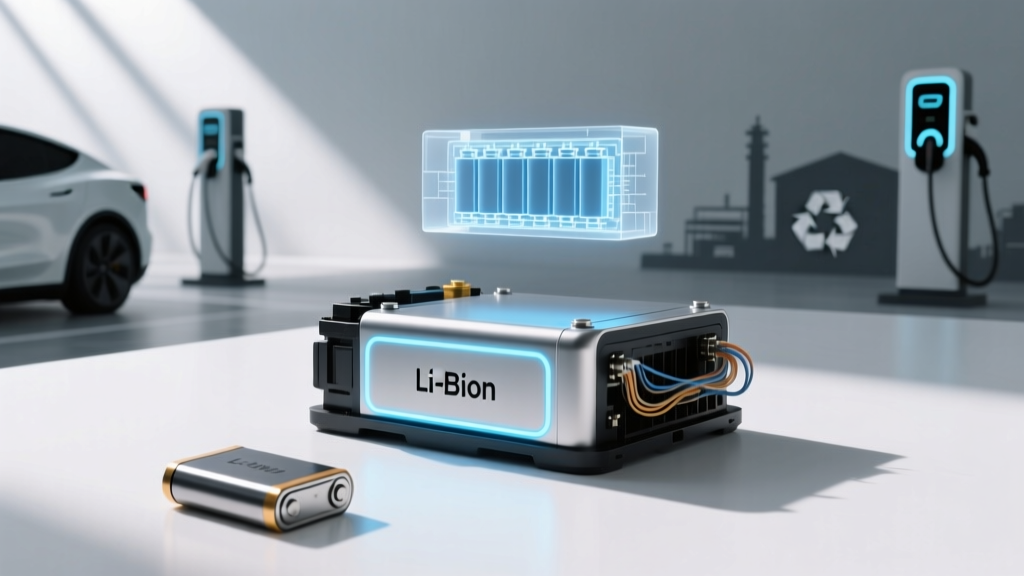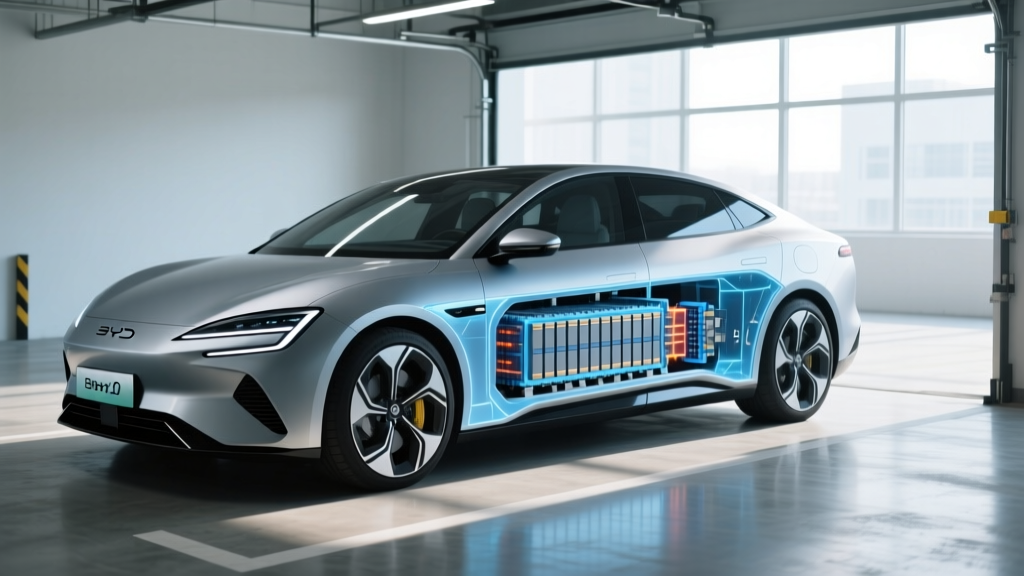
The push to localize EV supply chains has placed small industrial hubs squarely in the national spotlight. Shelbyville, Tennessee — home to growing battery component and cell-assembly operations — exemplifies how domestic battery manufacturing is reshaping what goes into the EVs we drive. For buyers and owners, the relevance is direct: where and how your EV's battery is built influences its chemistry, its cost trajectory, its eligibility for federal tax credits, and ultimately how long it will last on the road.
This guide breaks down the battery technology behind vehicles rolling off lots in 2026, using the Shelbyville manufacturing corridor as a lens to understand the broader shift. We cover chemistry trade-offs, real degradation data, warranty specifics, replacement economics, and what emerging tech actually means for your next purchase.
Why Shelbyville Battery Manufacturing Matters for EV Buyers
Shelbyville and the greater Middle Tennessee region have attracted battery material processing, electrode coating, and cell-assembly investments as automakers scramble to meet IRS §30D critical-mineral and battery-component sourcing requirements. Vehicles with cells or modules produced in North American facilities are more likely to clear the battery-sourcing thresholds that unlock up to $7,500 in federal EV tax credits — subject to MSRP caps ($80,000 for SUVs/pickups/vans, $55,000 for sedans), buyer income limits ($300K joint / $150K single), and annual critical-mineral requirements that tighten each year.
Beyond incentives, localized manufacturing shortens the supply chain, which historically translates to lower logistics costs and faster iteration on cell chemistry. For owners, this means the batteries in 2026-model EVs benefit from manufacturing refinements — tighter quality control, improved electrode uniformity, and better electrolyte formulations — that directly slow degradation.
LFP vs NMC: The Chemistry Choice That Defines Your Battery
The two dominant lithium-ion chemistries in 2026 passenger EVs are LFP (lithium iron phosphate) and NMC/NCA (nickel manganese cobalt / nickel cobalt aluminum). Your EV's chemistry is fixed at purchase and determines its energy density, cycle life, cold-weather behavior, and cost profile.
| Attribute | LFP (LiFePO₄) | NMC / NCA |
|---|---|---|
| Energy Density | ~160–180 Wh/kg (cell level) | ~230–280 Wh/kg (cell level) |
| Typical Cycle Life | 3,000–5,000+ full cycles | 1,000–2,000 full cycles |
| Cold-Weather Performance | Moderate loss; slower charge acceptance below 32°F | Better low-temp charge/discharge; heat-pump mitigated |
| Cost (per kWh, cell) | ~$75–$95 | ~$100–$130 |
| State of Charge Flexibility | Can be held at 100% SoC regularly without significant harm | Best kept 20–80% for daily use; 100% for trips only |
| Thermal Stability | Excellent — higher runaway threshold (~270°C) | Good — lower thermal runaway threshold (~210°C) |
| Common 2026 Applications | Tesla Model 3/Y RWD, Ford Mustang Mach-E Select (LFP trims), base Chevy Equinox EV | Hyundai Ioniq 5 Long Range, Kia EV6 GT-Line, BMW i4, most AWD/performance trims |
Which is better? There is no universal winner. If you prioritize maximum range per charge and live in a cold climate, NMC delivers higher energy density and better winter charge acceptance. If you want maximum calendar life, lower cost, and plan to own the vehicle for 10+ years, LFP's cycle-life advantage and tolerance for 100% daily charging make it the practical choice. Manufacturing hubs like Shelbyville are increasingly producing both chemistries, giving automakers flexibility to source domestically regardless of pack type.
How Long Do EV Batteries Actually Last?
The short answer: most high-voltage traction batteries outlast the vehicle they're installed in. But "last" requires definition — a battery is considered at end-of-automotive-life when it degrades to roughly 70–80% of its original capacity, at which point range is noticeably reduced but the car remains fully drivable.
- Tesla fleet data (2025 impact report): Model 3/Y packs retain ~88% capacity at 150,000 miles — roughly 12% loss over the median ownership period.
- Geotab analysis (aggregated fleet, 2024–2025): Average EV battery degradation is ~1.8% per year across 6,000+ vehicles, equating to ~82% retention at 10 years.
- Recurrent Auto (2025 dataset): LFP-equipped vehicles show slower degradation curves than NMC counterparts when charged to 100% daily — approximately 1.2%/year vs 2.0%/year.
- High-mileage outliers: Multiple documented cases of Tesla Model S packs exceeding 300,000 miles on original batteries with 75–80% capacity retention.
Translation: a 2026 EV with an EPA-rated 310-mile range and an NMC pack will realistically deliver ~270–280 miles at year five and ~250–260 miles at year ten under typical use. An LFP-equipped vehicle with a 270-mile EPA rating may hold ~245+ miles at the ten-year mark. These figures assume moderate climate, mixed driving, and reasonable charging habits.
What the Battery Warranty Actually Covers
Federal law mandates a minimum 8-year/100,000-mile warranty on EV battery packs for emissions-related compliance, and most manufacturers meet or exceed this baseline. The warranty covers capacity loss below a specified threshold — typically 70% of original capacity — plus defects in materials and workmanship.
| Manufacturer | Warranty Period | Mileage Cap | Capacity Retention Threshold |
|---|---|---|---|
| Tesla (Model 3/Y) | 8 years | 100,000–120,000 mi (varies by trim) | 70% |
| Hyundai / Kia | 10 years | 100,000 mi | 70% |
| Ford (Mach-E, F-150 Lightning) | 8 years | 100,000 mi | 70% |
| General Motors (Ultium platform) | 8 years | 100,000 mi | 70% (60% on some commercial) |
| BMW | 8 years | 100,000 mi | 70% |
| Volkswagen (ID.4) | 8 years | 100,000 mi | 70% |
What's not covered: Gradual degradation above the threshold (e.g., losing 15% capacity over 6 years is "normal"), damage from accidents, flooding, or unauthorized modifications, and 12V auxiliary battery failures (a separate, much smaller battery that powers electronics and is not part of the traction pack warranty). Always read the specific warranty booklet — terms like "defect" vs. "capacity loss" have distinct claim paths.
EV Battery Replacement: Real Costs and When It's Needed
The fear of a $20,000+ battery swap is the single biggest psychological barrier to EV adoption. Context matters: the vast majority of EV batteries never need full replacement during the vehicle's usable life. When replacement is required — typically due to a manufacturing defect, physical damage, or extreme degradation well past the warranty period — costs have declined substantially.
| Vehicle / Pack Size | Approximate Replacement Cost (Parts + Labor) | Typical Replacement Trigger |
|---|---|---|
| Tesla Model 3 RWD (~60 kWh LFP) | $10,000–$13,000 | Out-of-warranty defect; rare before 200K+ mi |
| Tesla Model Y LR (~82 kWh NMC) | $14,000–$18,000 | Module-level failure more common than full pack |
| Hyundai Ioniq 5 (~77.4 kWh) | $13,000–$17,000 | Cell imbalance; often covered under 10yr warranty |
| Ford F-150 Lightning Ext. Range (~131 kWh) | $20,000–$28,000 | Physical damage or extreme out-of-warranty degradation |
| Chevy Equinox EV (~85 kWh) | $12,000–$16,000 | Ultium module replacement (partial pack swap possible) |
Key nuance: Many modern packs are modular — technicians can replace individual modules (a fraction of the full pack) rather than the entire battery. A single-module swap on a GM Ultium or Hyundai E-GMP pack may cost $2,000–$5,000, not the full-pack figure. Cell-level manufacturing improvements from facilities like those in the Shelbyville corridor are reducing module-to-module variance, which means fewer modules fail prematurely.
According to fueleconomy.gov, the average EV battery retains sufficient capacity to remain functional well beyond 150,000 miles, and replacement is rarely needed within the first 10 years of ownership for vehicles operated under normal conditions.
Factors That Accelerate (or Preserve) Battery Health
Not all miles are created equal when it comes to battery wear. The following factors have the most measurable impact on long-term State of Health (SoH):
- Limit DC fast charging to road trips. Frequent 150+ kW sessions stress cells thermally. One or two fast charges per week is fine; daily reliance accelerates degradation by ~0.3–0.5%/year vs. Level 2 home charging.
- Maintain 20–80% SoC for NMC daily driving. LFP owners can charge to 100% regularly without penalty. Set your charge limit in the vehicle app accordingly.
- Precondition before fast charging. Most EVs do this automatically when a charger is set as a navigation destination. A cold battery charged at high kW suffers lithium plating — permanent capacity loss.
- Avoid prolonged storage at 100% or 0% SoC. If leaving the car for 2+ weeks, set SoC to ~50%.
- Park in shade or a garage in hot climates. Sustained battery temps above 95°F accelerate calendar degradation. A heat pump helps, but ambient heat still soaks into the pack.
- Don't baby it too much. Moderate regenerative braking settings are fine; there's no evidence that max regen meaningfully harms battery life in modern thermal-managed packs.
Cold weather deserves specific mention: LFP packs lose more range in sub-freezing temperatures than NMC (roughly 30–40% range reduction vs. 20–30% for NMC at 20°F), but this is temporary range loss, not permanent degradation. Once the pack warms, full capacity returns. Preconditioning via the vehicle's app before departure recovers most of this loss.
How to Monitor Your Battery's State of Health
State of Health (SoH) is a percentage representing your battery's current maximum capacity relative to its original capacity. A brand-new pack is 100% SoH; a pack that can only hold 85 kWh of its original 100 kWh is at 85% SoH.
Built-in methods:
- Tesla: The service menu (accessible via the software screen) displays battery health percentage. The mobile app also shows rated range vs. original, from which SoH can be calculated.
- Hyundai/Kia: The EV settings menu includes a battery health indicator on newer model years (2024+). Dealership diagnostic tools provide precise SoH readings.
- GM (Ultium): The myChevrolet/myCadillac app surfaces battery health metrics; OnStar diagnostics include SoH in vehicle health reports.
- Ford: FordPass displays estimated range trends; the dealership can pull a full battery health report via their diagnostic system.
Third-party tools: Apps like Recurrent, TeslaFi (Tesla-specific), and OBD-II dongles paired with apps like ABRP (A Better Routeplanner) or LeafSpy (Nissan) can track SoH trends over time by comparing actual energy drawn during full charges against the pack's nameplate kWh capacity.
DIY calculation: Charge from a known low SoC (e.g., 10%) to your charge limit (e.g., 80%) using a metered Level 2 charger that reports kWh delivered. If 55 kWh went in to cover a 70% SoC swing on a 77.4 kWh pack, your usable capacity is approximately 55 ÷ 0.70 = 78.6 kWh, or ~98.5% SoH at the pack level (accounting for charging losses of ~5–8%).
What's Next: Solid-State, Silicon Anodes, and Realistic Timelines
Manufacturing hubs across the Southeast — including Shelbyville-area suppliers feeding into larger cell-assembly operations — are investing in next-generation battery processes. Here is where the technology actually stands in 2026:
Solid-state batteries: Toyota, Samsung SDI, and QuantumScape have all demonstrated prototype cells with solid electrolytes that promise 20–40% higher energy density and improved safety. Toyota has announced limited production in select 2027–2028 models, but these remain preliminary and low-volume. Widespread solid-state availability in mainstream US-market EVs is realistically a 2029–2031 timeline. Manufacturing challenges — particularly achieving consistent solid-electrolyte layer uniformity at scale — remain unsolved for mass production.
Silicon-dominant anodes: Companies like Sila Nanotechnologies and Group14 Technologies are shipping silicon-blend anode materials to cell manufacturers now. These anodes increase energy density by 15–25% over traditional graphite and are appearing in select 2026 model-year vehicles (notably the Mercedes G-Class electric and Porsche's updated Taycan cells). This is real, available technology — but it's a cell-level improvement, not a paradigm shift.
Sodium-ion batteries: CATL and BYD are producing sodium-ion cells for entry-level EVs in China. These use no lithium or cobalt, dramatically lowering cost, but with 30–40% lower energy density than LFP. US-market availability is not expected before 2028 and would likely target fleet/commercial applications first.
For 2026 buyers: today's LFP and NMC chemistries, manufactured with increasing domestic content from facilities like those in the Shelbyville corridor, represent mature, well-understood technology with proven longevity. Waiting for solid-state means waiting 3–5 years for limited, premium-priced availability.
Frequently Asked Questions
How long do EV batteries last in years and miles?
Most 2026 EV batteries are designed to retain 70–85% of original capacity at 150,000–200,000 miles or 10–15 years. Fleet data from Tesla, Geotab, and Recurrent consistently shows average degradation of 1.2–2.0% per year depending on chemistry and usage patterns. Full replacement within the first decade is uncommon.
How much does it cost to replace an EV battery?
Full pack replacement ranges from approximately $10,000 for a smaller LFP pack (e.g., Tesla Model 3 RWD) to $20,000–$28,000 for a large pack like the F-150 Lightning Extended Range. However, many repairs involve individual module replacement at $2,000–$5,000. Most batteries never need replacement during typical ownership.
What does the EV battery warranty cover?
Federal minimum is 8 years/100,000 miles (Hyundai/Kia extend to 10 years). Warranties cover capacity loss below ~70% of original and manufacturing defects. They do not cover normal gradual degradation above the threshold, accident damage, or the separate 12V auxiliary battery.
How do I check my EV battery health?
Use your vehicle's built-in battery health indicator (Tesla service menu, Hyundai EV settings, GM app diagnostics), third-party apps like Recurrent or TeslaFi, or calculate SoH manually by measuring kWh delivered during a known SoC range on a metered charger. Dealerships can pull detailed SoH reports during service visits.
LFP vs NMC — which battery chemistry should I choose?
Choose LFP if you want maximum cycle life (3,000–5,000 cycles), lower cost, can accept ~10–15% less range per charge, and live in a moderate climate. Choose NMC if you need maximum range, live in a cold climate, or want a performance/AWD trim. Both chemistries will comfortably outlast a typical ownership period with proper care.
Sources: fueleconomy.gov — EV Technology, IRS §30D Clean Vehicle Credits, manufacturer warranty documentation (Tesla, Hyundai, Ford, GM).