Why Selling a Used EV Battery Is Now a Real Transaction
By 2026, the secondary market for high-voltage traction batteries has matured from a niche scrap play into a structured channel involving refurbishers, second-life energy-storage firms, and licensed recyclers. If you're researching how to sell your used EV batteries, you are likely dealing with one of three scenarios: a salvaged vehicle after a collision, an out-of-warranty pack you've replaced, or a fleet teardown. The payout depends on chemistry, state of health (SoH), kWh capacity, and whether the pack is intact or damaged.
Before you contact a buyer, it helps to understand what makes a used pack valuable, what it typically costs to replace one, and how the underlying battery chemistry shapes its residual worth.
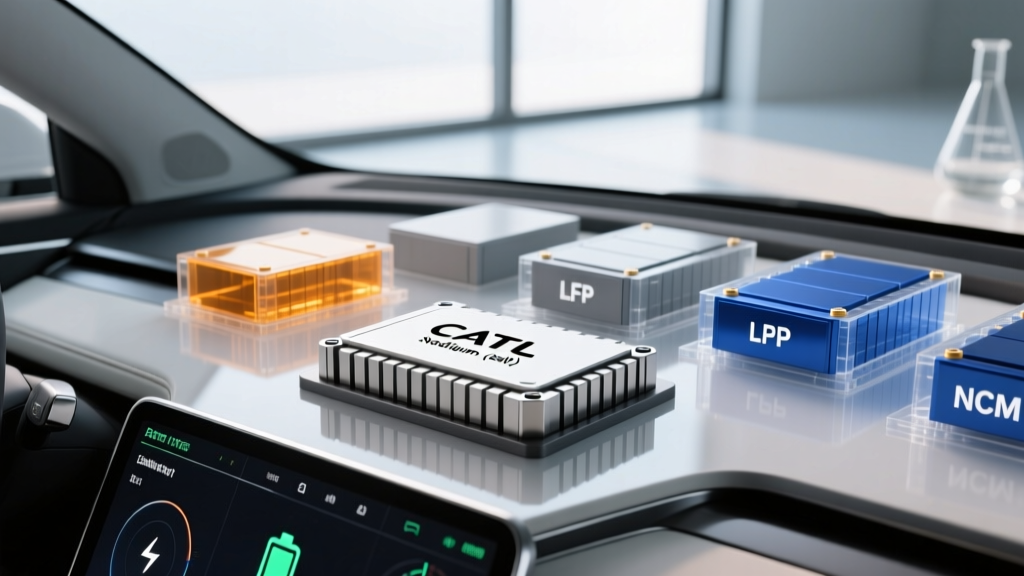
LFP vs NMC/NCA: Chemistry Drives Residual Value
Not all EV batteries are equal on the resale market. Buyers pay close attention to cathode chemistry because it determines cycle life, safety profile, and suitability for second-life applications like stationary storage.
| Attribute | LFP (Lithium Iron Phosphate) | NMC / NCA (Nickel-based) |
|---|---|---|
| Energy Density | Lower (~160 Wh/kg cell) | Higher (~250-300 Wh/kg cell) |
| Cycle Life | 3,000-5,000+ cycles to 80% SoH | 1,000-2,000 cycles to 80% SoH |
| Cold-Weather Performance | Weaker below 32°F; slower charging | Better low-temp output |
| Thermal Stability | Excellent — less prone to thermal runaway | Good, but requires robust BMS |
| Cost per kWh (2026) | ~$90-$110/kWh at pack level | ~$120-$150/kWh at pack level |
| Common 2026 Applications | Tesla Model 3/Y RWD, Ford Mustang Mach-E Select (LFP option), BYD models | Long-range AWD trims, Hyundai Ioniq 5/6, Rivian, GM Ultium vehicles |
| Second-Life Resale Appeal | High — long cycle life suits stationary storage | Moderate — higher energy density, but shorter remaining life |
For sellers, an intact LFP pack with verified high SoH often commands a premium per usable kWh on the second-life market because refurbishers can deploy it in solar-plus-storage or commercial applications for many more years. NMC/NCA packs with high remaining capacity still sell well for vehicle refurbishment, but their shorter cycle life limits stationary-use ROI.
How Long Do EV Batteries Actually Last?
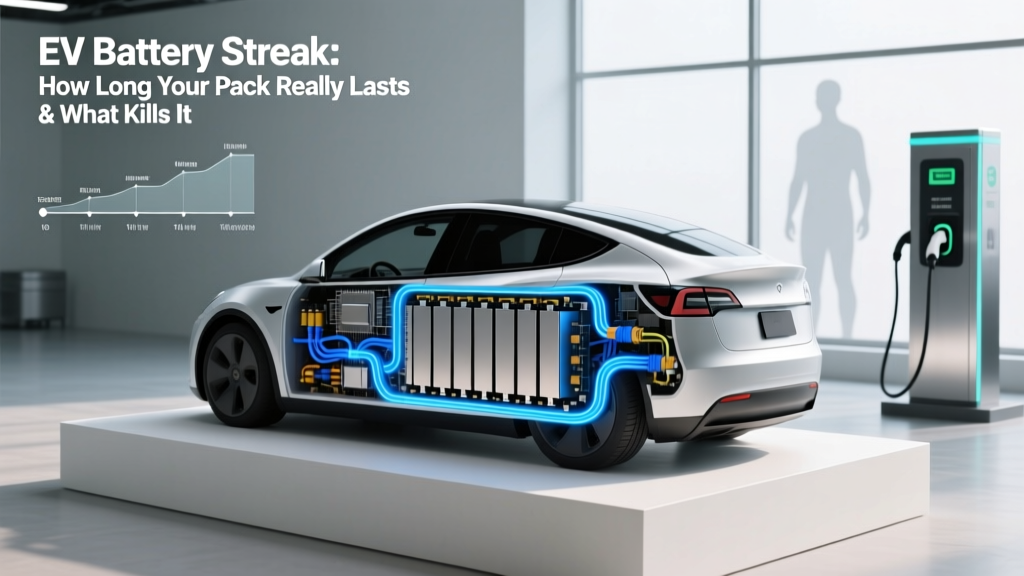
The fear that EV batteries need frequent replacement is outdated. Data from fleet operators, manufacturer reports, and independent testing shows most modern packs outlast the vehicles they're installed in.
Typical Degradation Benchmarks (2026 Data):
- Year 1-2: 2-5% capacity loss (initial formation loss, then plateau)
- Year 5 / ~75,000 miles: 5-10% total loss (90-95% SoH typical)
- Year 8 / ~100,000 miles: 8-15% total loss (85-92% SoH)
- Year 10 / ~150,000 miles: 10-20% total loss (80-90% SoH)
Tesla's 2025 Impact Report noted that Model 3/Y batteries retained an average of 85% capacity after 200,000 miles. Hyundai/Kia's 8-year data on the Kona Electric and Niro EV shows similar trajectories, with most packs staying above 80% SoH through the warranty period. Recurrent, an independent EV battery analytics firm, publishes ongoing fleet data confirming that catastrophic failures are rare — fewer than 2% of packs across studied models required full replacement outside of collision damage.
This means the packs you might sell are overwhelmingly removed for reasons other than end-of-life: collision salvage, vehicle conversion projects, or fleet upgrades where the battery is still functional.
Battery Warranty Coverage: What's Protected and What Isn't
Understanding warranty terms matters whether you're the original owner considering a replacement or a buyer evaluating a used pack's provenance.
| Manufacturer | Warranty Period | Capacity Retention Threshold | Notes |
|---|---|---|---|
| Federal Minimum (EPA/CARB) | 8 years / 100,000 miles | Varies by state | CARB states: 10 yr / 150,000 mi for PZEV |
| Tesla | 8 years / 100,000-120,000 miles (trim dependent) | 70% minimum retention | Long Range/Performance: 120k mi |
| Hyundai / Kia | 8 years / 100,000 miles | 70% minimum retention | 10 yr / 100k mi in some states |
| GM (Ultium) | 8 years / 100,000 miles | 70% minimum retention | Covers battery and drive components |
| Ford | 8 years / 100,000 miles | 70% minimum retention | Covers high-voltage battery pack |
| Rivian | 8 years / 120,000 miles (Standard) or 175,000 (Max) | 70% minimum retention | Varies by pack size |
A warranty-covered replacement means the manufacturer absorbs the cost — but if you've already sold or salvaged the vehicle, the old pack may have clear-title complications. Always confirm the pack isn't flagged as OEM-recalled or warranty-encumbered before listing it for sale.
EV Battery Replacement Costs: What Buyers and Sellers Should Know
Replacement cost sets the ceiling on what a used pack is worth. If a new 82 kWh NMC pack costs $14,000 installed, a used pack at 85% SoH won't sell for $12,000 — buyers factor in labor, risk, and remaining life.
| Vehicle / Pack Size | Chemistry | Replacement Cost Range | When Typically Needed |
|---|---|---|---|
| Tesla Model 3 RWD (60 kWh) | LFP | $8,000 - $12,000 | Rarely before 200k+ miles |
| Tesla Model Y Long Range (82 kWh) | NMC | $12,000 - $16,000 | Rarely before 150k+ miles |
| Hyundai Ioniq 5 (77.4 kWh) | NMC | $11,000 - $15,000 | Rarely before 150k+ miles |
| Ford F-150 Lightning Extended (131 kWh) | NMC | $18,000 - $28,000 | Fleet use: 120k-180k miles |
| Chevrolet Bolt EV (65 kWh) | NMC | $9,000 - $14,000 | Post-recall packs lasting well |
| Rivian R1T Max Pack (149 kWh) | NMC | $22,000 - $30,000 | Rarely before 175k+ miles |
For sellers pricing a used pack: the market typically values a functional, tested pack at 30-50% of new replacement cost, depending on verified SoH, documentation, and whether modules can be individually harvested. A 77 kWh Ioniq 5 pack at 88% SoH with full diagnostic logs might fetch $4,000-$6,500 from a refurbisher.
Factors That Affect Battery Life and Resale Value
Buyers evaluating your used EV battery will ask about its history. Here's what shapes degradation — and what you should disclose for maximum resale value.
- DC Fast Charging Frequency: Exclusive reliance on 150+ kW DC fast charging accelerates degradation by an estimated 2-5% over 5 years versus predominantly Level 2 home charging. Occasional road-trip fast charging has negligible impact.
- State of Charge Habits: Regularly charging NMC packs to 100% and leaving them at full SoC stresses the cathode. LFP packs tolerate 100% SoC better and manufacturers (including Tesla) recommend periodic full charges for LFP calibration.
- Extreme Temperature Exposure: Repeated operation in sustained 100°F+ ambient heat without active thermal management accelerates electrolyte breakdown. Cold climates cause less permanent damage but reduce usable range temporarily.
- Deep Discharge Events: Letting the pack sit at 0% SoC for extended periods can cause copper dissolution in the anode current collector, permanently reducing capacity.
- Mileage and Calendar Age: Batteries degrade from both cycling and time. A 6-year-old pack with 30,000 miles may show similar SoH to a 3-year-old pack with 80,000 miles.
Sellers who can provide charging history logs (from apps like Tesla's in-car data, Recurrent reports, or telematics exports) demonstrating moderate SoC habits and predominantly Level 2 charging will command higher offers.
How to Check Battery State of Health Before Selling
State of Health (SoH) is the single most important metric for pricing your used EV battery. It represents the current maximum capacity as a percentage of original factory capacity.
Methods to Verify SoH
OBD-II Diagnostic Tools: Devices like the OBDLink MX+ paired with apps such as Leaf Spy (Nissan), Scan My Tesla, or Car Scanner can read the battery management system's reported SoH directly. This is the most reliable consumer method.
Manufacturer Service Centers: A dealer or certified EV shop can perform a full-capacity discharge test, which measures actual kWh delivered from 100% to 0%. This is more accurate than BMS-reported SoH but takes several hours.
Third-Party Battery Reports: Services like Recurrent provide battery health scores based on real-world range data. Some used-EV marketplaces now integrate these reports into listings.
Manual Range Test: Fully charge the vehicle, drive a measured route under consistent conditions, and compare the energy consumed (kWh) to the pack's nominal capacity. This gives a rough SoH estimate but is less precise than OBD-II data.
For maximum buyer confidence, provide an OBD-II SoH screenshot, the vehicle's lifetime energy consumption data, and any available service records. Packs with verified SoH above 85% sell fastest and at the highest per-kWh rates.
Emerging Battery Technologies: What It Means for Used-Pack Values
Sellers should be aware that advancing battery tech may shift the value landscape over the next few years — though none of these technologies are available in production vehicles as of early 2026.
Solid-State Batteries: Companies including Toyota, Samsung SDI, and QuantumScape are targeting limited production between 2027-2029. Solid-state cells promise higher energy density (potentially 400+ Wh/kg), faster charging, and improved safety. If commercialized at scale, they could reduce demand for used NMC packs as new vehicles offer dramatically better range and longevity.
Silicon-Dominant Anodes: Firms like Sila Nanotechnologies and Group14 are working to replace graphite anodes with silicon composites, boosting energy density by 20-40%. Early applications are expected in premium models by 2027-2028.
Sodium-Ion Batteries: CATL and BYD have announced sodium-ion cells for low-cost, lower-range applications. These use no lithium or cobalt, potentially reducing raw-material costs but offering lower energy density. They may create a new low-cost tier that further segments the used-battery market.
For sellers today, these timelines mean current LFP and NMC packs remain relevant and saleable for at least 3-5 more years. Second-life demand for stationary storage is growing faster than new-vehicle battery tech can disrupt it.
Where and How to Sell Your Used EV Battery
The secondary market operates through several channels, each with different pricing and logistics:
Licensed Recyclers: Companies like Redwood Materials, Li-Cycle, and Cirba Solutions purchase end-of-life packs for material recovery. Pricing is based on commodity metal content (lithium, nickel, cobalt, copper). Expect $80-$200/kWh for damaged or low-SoH packs, depending on chemistry — NMC packs with higher nickel/cobalt content fetch more.
Refurbishers and Second-Life Buyers: Firms that test, recondition, and redeploy packs for energy storage or vehicle repair pay more — typically $150-$400/kWh for packs above 75% SoH with intact modules and clean history.
Direct-to-Consumer (Enthusiast/Conversion Market): EV conversion builders, off-grid solar enthusiasts, and DIY energy-storage projects buy individual modules or full packs through platforms like eBay Motors, Facebook EV groups, and specialized forums. Prices vary widely but can exceed $300/kWh for well-documented, high-SoH LFP modules.
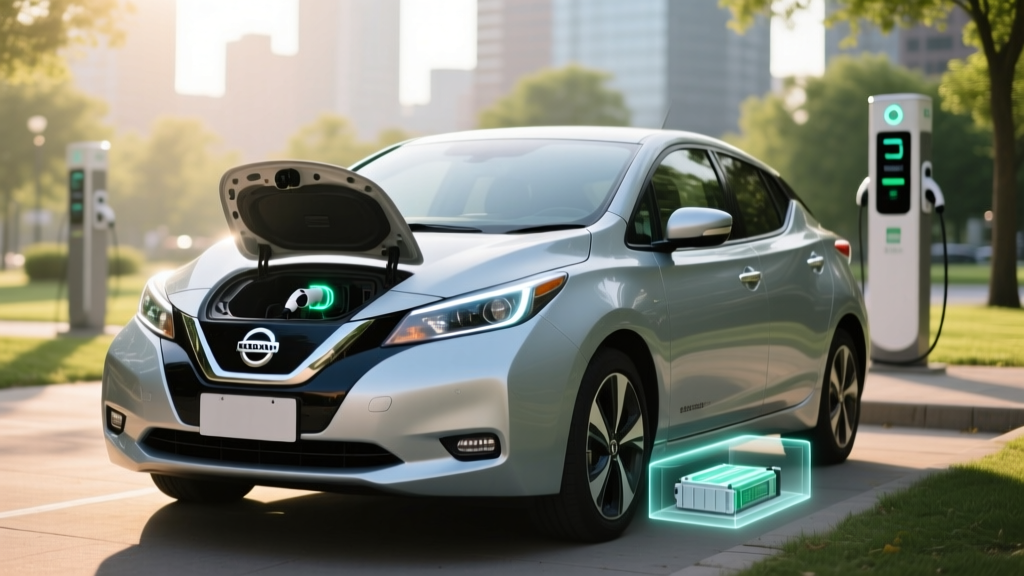
OEM Take-Back Programs: Some manufacturers (notably Nissan with its Leaf battery exchange program) offer trade-in credit toward a replacement pack. The old pack goes to the OEM's recycling or refurbishment partner.
Regardless of channel, buyers will require: the pack's chemistry, total kWh capacity, SoH percentage, vehicle compatibility, VIN of the donor vehicle, and confirmation the pack isn't subject to an active recall or warranty lien.
Frequently Asked Questions
How long do EV batteries last in years and miles?
Most modern EV batteries (2020 and newer) are designed to last 15-20 years or 200,000+ miles before dropping below 70% capacity. Real-world fleet data from Tesla, Hyundai, and independent analysts like Recurrent shows average degradation of 1-2% per year under normal use. Catastrophic failure requiring replacement is rare — under 2% of packs across major models.
How much does it cost to replace an EV battery in 2026?
Replacement costs range from approximately $8,000 for a 60 kWh LFP pack (Tesla Model 3 RWD) to $28,000+ for a 131 kWh NMC pack (Ford F-150 Lightning Extended Range), including parts and labor. Most owners never need a replacement during the vehicle's life, as degradation is gradual and warranty coverage extends to 8 years / 100,000 miles minimum.
What does the EV battery warranty actually cover?
Federal law mandates a minimum 8-year / 100,000-mile warranty on high-voltage EV batteries (10 years / 150,000 miles in CARB states). Coverage includes capacity loss below a specified threshold (typically 70% of original capacity), manufacturing defects, and BMS failures. Warranties do not cover damage from collisions, flooding, aftermarket modifications, or improper charging equipment.
How do I check my EV battery's State of Health?
Use an OBD-II scanner with EV-compatible software (OBDLink MX+ with Scan My Tesla, Leaf Spy, or Car Scanner) to read SoH directly from the battery management system. For a more precise measurement, a dealer can perform a full-capacity discharge test. Third-party services like Recurrent also provide health scores based on real-world driving data.
LFP vs NMC — which battery chemistry is better for resale value?
LFP packs generally offer better second-life resale value due to their longer cycle life (3,000-5,000 cycles vs 1,000-2,000 for NMC), superior thermal stability, and growing demand in stationary energy storage. NMC packs have higher energy density and better cold-weather performance, making them preferred for vehicle-to-vehicle resale. Both are actively purchased by recyclers and refurbishers — the better deal depends on your pack's SoH, documentation, and the buyer's intended use.
Can I sell a damaged or low-SoH EV battery?
Yes. Licensed recyclers like Redwood Materials and Li-Cycle purchase damaged, end-of-life, and low-SoH packs for material recovery. Even a pack at 50% SoH contains valuable lithium, nickel, cobalt, and copper. Expect lower per-kWh pricing ($80-$200/kWh depending on chemistry and condition), but the transaction is straightforward with proper hazmat shipping compliance.
Do I need special shipping to sell a used EV battery?
Yes. High-voltage EV battery packs are classified as Class 9 hazardous materials for transport. Shipping requires UN3480/UN3481 compliance, proper packaging, labeling, and often a licensed hazmat carrier. Most professional buyers arrange and pay for pickup, which simplifies the process for individual sellers.