Why Your Tesla's Battery Health Matters More Than You Think
Searches for how to save battery on Tesla usually mean one of two things: squeezing more miles out of a single charge, or preserving the long-term health of the high-voltage traction battery so it doesn't degrade prematurely. Both matter, but the second has far bigger financial implications. A Tesla Model Y Long Range packs roughly 75 kWh of usable energy in its NMC (nickel manganese cobalt) pack; a base Model 3 Rear-Wheel Drive uses a ~57.5 kWh LFP (lithium iron phosphate) battery. How you charge, store, and drive those chemistries determines whether you see 5% degradation or 15% over 100,000 miles.
This guide covers the data behind Tesla battery degradation, the chemistry split across the current 2026 lineup, warranty protections, realistic replacement costs, and the daily habits that measurably slow capacity loss.
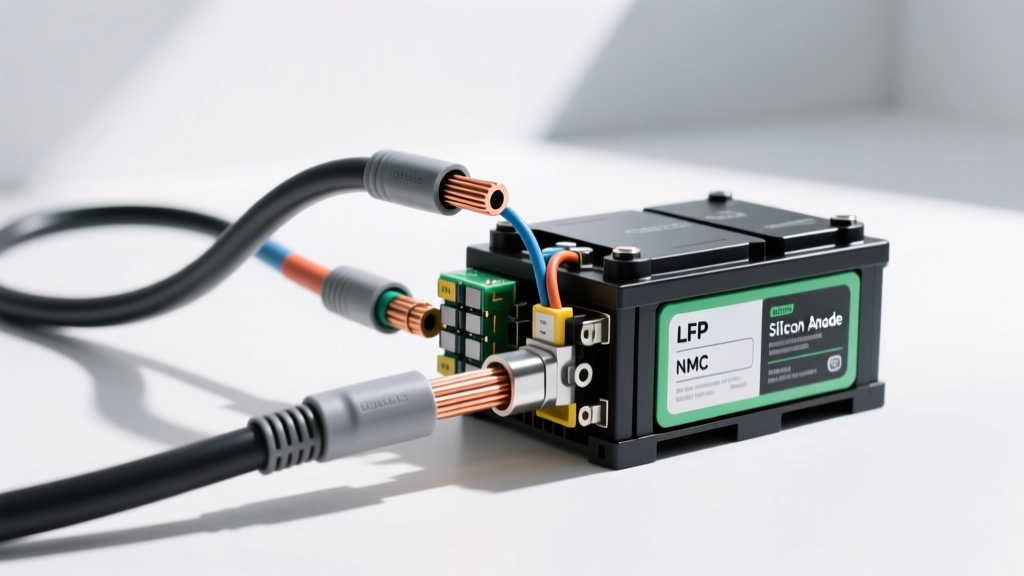
LFP vs NMC: Which Tesla Battery Chemistry Do You Have?
Tesla uses two distinct battery chemistries across its 2026 consumer fleet, and knowing which one sits under your floor is the first step to optimizing its life.
| Attribute | LFP (Lithium Iron Phosphate) | NMC / NCA (Nickel-based) |
|---|---|---|
| Found in | Model 3 RWD, Model Y RWD (base trims) | Model 3 Long Range / Performance, Model Y Long Range / Performance, Model S, Model X, Cybertruck |
| Energy density | Lower (~160 Wh/kg cell-level) | Higher (~250–270 Wh/kg cell-level) |
| Typical usable capacity | ~57.5 kWh (Model 3 RWD) | ~75–100 kWh depending on model |
| Cycle life | 3,000+ full cycles before 80% SoH | 1,000–2,000 full cycles before 80% SoH |
| Daily charge recommendation | 100% OK — Tesla recommends periodic full charges | 80% daily; 100% only for trips |
| Cold-weather performance | More range loss in freezing temps (~30–40%) | Better cold resilience (~20–30% loss) |
| Cost per kWh | Lower — no cobalt or nickel | Higher — commodity-sensitive materials |
| State of Charge estimation | Flat voltage curve makes SoC harder to estimate; needs periodic 100% calibration | More linear voltage curve; SoC estimation is more accurate |
The practical takeaway: If you own a base Model 3 or Model Y with LFP, charging to 100% regularly is not just acceptable — it's recommended for accurate range estimation and cell balancing. If you own a Long Range or Performance variant with NMC, holding daily charges at 80% and only pushing to 100% before road trips measurably slows degradation.
How Long Do Tesla Batteries Actually Last? Real Degradation Data
Tesla's 2024 Impact Report (the most recent comprehensive dataset published) showed that Model 3 and Model Y batteries retain approximately 85% of original capacity after 200,000 miles. That's roughly 15% degradation over a distance that exceeds what most owners will drive in a decade. But averages hide variation — your habits determine where you fall on the curve.
Typical Tesla Battery Degradation Curve
| Mileage | Average Capacity Retained (NMC) | Average Capacity Retained (LFP) | Notes |
|---|---|---|---|
| 0–10,000 mi | ~95–97% | ~97–98% | Initial break-in loss; steepest part of the curve |
| 30,000 mi | ~92–94% | ~95–96% | Loss rate begins to flatten |
| 60,000 mi | ~90–92% | ~93–95% | Most owners notice ~10% range drop from new |
| 100,000 mi | ~88–91% | ~91–94% | Degradation rate is now very gradual |
| 150,000 mi | ~85–89% | ~89–92% | Approaching warranty threshold territory |
| 200,000 mi | ~82–87% | ~87–91% | Tesla fleet data shows ~85% avg for NMC at this point |
Sources: Tesla Impact Report fleet data, tesla.com/impact; independent aggregation by Recurrent Auto.
The key insight: degradation is non-linear. You lose the most capacity in the first 10,000–20,000 miles, then the curve flattens significantly. An owner who sees their Model Y Long Range drop from an EPA-rated 310 miles to ~290 miles in the first year should not panic — that's typical initial settling, not a sign of a defective pack.
What Does the Tesla Battery Warranty Actually Cover?
Tesla's high-voltage battery warranty is one of the strongest in the industry, but the details matter. Here's the breakdown for 2026 models:
| Model | Battery Warranty | Minimum Capacity Retention | Drive Unit Warranty |
|---|---|---|---|
| Model 3 RWD (LFP) | 8 years / 100,000 miles | 70% | 8 years / 100,000 miles |
| Model 3 Long Range / Performance | 8 years / 120,000 miles | 70% | 8 years / 120,000 miles |
| Model Y (all trims) | 8 years / 120,000 miles | 70% | 8 years / 120,000 miles |
| Model S / Model X | 8 years / 150,000 miles | 70% | 8 years / 150,000 miles |
| Cybertruck | 8 years / 120,000 miles | 70% | 8 years / 120,000 miles |
The 70% retention threshold is the trigger: if your battery falls below 70% of its original capacity within the warranty period (verified by Tesla's diagnostic tools), Tesla will replace or refurbish the pack at no cost. In practice, very few packs hit this threshold under normal use. The fleet data above shows average retention well above 70% even at 200,000 miles.
Important caveat: the warranty covers defects and abnormal degradation. It does not cover damage from accidents, flooding, or modifications. And cosmetic range loss from normal aging (say, dropping to 72% at year 9) is not a warranty claim — it's just ownership.
How Much Does a Tesla Battery Replacement Cost?
This is the question that dominates EV forums, and honest numbers are hard to find. Here's the current reality for out-of-warranty replacements:
| Model / Pack Size | Battery Pack Cost (parts) | Labor | Total Estimated Range | When Typically Needed |
|---|---|---|---|---|
| Model 3 RWD (~57.5 kWh LFP) | $8,000–$12,000 | $2,000–$3,500 | $10,000–$15,500 | Rarely before 200,000+ mi |
| Model 3/Y Long Range (~75 kWh NMC) | $12,000–$16,000 | $2,500–$4,000 | $14,500–$20,000 | Rarely before 200,000+ mi |
| Model S/X (~100 kWh NMC) | $18,000–$25,000 | $3,000–$5,000 | $21,000–$30,000 | Older high-mileage vehicles |
| Cybertruck (~123 kWh NMC) | $20,000–$28,000 | $3,000–$5,000 | $23,000–$33,000 | Too new for real-world data |
Context that matters: The vast majority of Tesla owners will never pay these costs. Packs routinely outlast 200,000 miles with usable capacity above 80%. If you plan to own your Tesla for 8–10 years and 100,000–150,000 miles, the warranty covers you through that entire period. The replacement-cost fear, while understandable given the headline numbers, does not match the ownership reality for most drivers.
Tesla also uses refurbished packs for warranty replacements, which keeps costs lower than new-pack pricing suggests. And as battery manufacturing scales, per-kWh costs continue to trend downward — a replacement in 2032 will likely cost less than one in 2026.
How to Save Battery on Tesla: Daily Habits That Actually Work
These are the practices with measurable impact on long-term State of Health, ranked by effect size:
High-Impact Habits
- Set the right charge limit for your chemistry. NMC owners: 80% daily, 100% only before trips. LFP owners: charge to 100% at least once a week for cell balancing and accurate SoC calibration.
- Minimize DC fast charging when Level 2 is available. Supercharging at 250 kW is convenient on road trips, but exclusive reliance on DCFC accelerates degradation. Data from Recurrent Auto shows that EVs that fast-charge more than 90% of the time show slightly faster degradation than those that primarily use Level 2 — though the difference is smaller than many assume (a few percentage points over 100,000 miles).
- Avoid prolonged storage at extreme SoC. Don't leave an NMC pack at 100% for days in a hot garage. Don't leave any pack near 0% for extended periods. If storing for weeks, set to ~50% and enable Tesla's built-in storage mode.
- Precondition in cold weather. Use Scheduled Departure or precondition via the Tesla app before driving in freezing temps. This warms the battery, reduces regen limitation, and improves efficiency by 10–15% in sub-30°F conditions. It also reduces the mechanical stress of charging a cold pack.
Moderate-Impact Habits
- Use Scheduled Charging to hit your target SoC just before departure. This minimizes time spent at high voltage states, which is when NMC chemistry degrades fastest.
- Enable regenerative braking (Standard mode). Regen reduces brake wear and recaptures energy, but more importantly for battery health, it encourages smoother driving that generates less heat in the pack.
- Keep tires at recommended PSI. Underinflated tires increase rolling resistance, forcing the battery to work harder and generate more heat. Check monthly — tire pressure drops ~1 PSI per 10°F temperature decrease.
- Reduce unnecessary weight and drag. Roof boxes, heavy cargo, and aggressive driving all increase kWh/mile consumption, which means more charge cycles over the same mileage.
How to Check Your Tesla's Battery Health (State of Health)
Tesla does not surface a direct "State of Health" percentage in the vehicle UI the way some competitors do. Here's how to assess your pack:
Method 1: The Range Comparison Method
Charge your Tesla to 100% (for LFP, do this regularly; for NMC, do it once specifically for this test). Note the displayed range. Compare it to the EPA-rated range for your model when new:
- Model 3 RWD: EPA 272 miles
- Model 3 Long Range: EPA 363 miles
- Model Y Long Range: EPA 310 miles
- Model S: EPA 402 miles
If your 100% displayed range is 280 miles on a Model Y LR (EPA 310), that's roughly 90% SoH. This method isn't perfect — displayed range varies with recent driving style and temperature — but it's a solid baseline.
Method 2: Third-Party Apps
Apps like Tessie, Stats, or TeslaFi pull data from Tesla's API and can calculate SoH by comparing actual energy added during charges against the battery's original capacity. These give a more precise number than the range method, especially when averaged over multiple charge sessions.
Method 3: Tesla Service Diagnostic
If you suspect abnormal degradation (e.g., your pack dropped below 70% within the warranty period), Tesla Service can run a full battery health diagnostic remotely or at a service center. This is the official measurement used for warranty claims.
Looking Ahead: Solid-State and Silicon Anode Batteries
Next-generation battery technologies promise step-change improvements in energy density and charge speed, but timelines matter:
- Silicon anode batteries (used in limited form already, e.g., by startups like Sila Nanotechnologies) offer 20–40% energy density improvements. These are beginning to appear in niche applications and will likely reach mainstream EV production by 2027–2029.
- Solid-state batteries replace the liquid electrolyte with a solid conductor, enabling faster charging and higher energy density. Toyota, Samsung SDI, and others have announced pilot production, but commercial-scale solid-state packs for consumer vehicles remain 2028–2030 at the earliest. Tesla has not announced a solid-state roadmap.
- Sodium-ion batteries are emerging as a low-cost alternative for entry-level EVs, particularly in China. CATL and BYD are shipping sodium-ion packs in Chinese-market vehicles. US availability is not yet confirmed.
For current Tesla owners: these technologies are forward-looking and will not affect your current vehicle. Your NMC or LFP pack, properly maintained, will remain the best battery your car ever has.
Frequently Asked Questions
How long do Tesla batteries last in years and miles?
Based on Tesla's fleet data, Model 3 and Model Y batteries retain approximately 85% capacity at 200,000 miles. In years, most packs will outlast 12–15 years of average driving (13,500 miles/year per FHWA data). Full pack failure before 150,000 miles is rare and typically covered under the 8-year warranty.
Is it bad to Supercharge my Tesla every day?
Exclusive reliance on DC fast charging does correlate with slightly faster degradation — Recurrent Auto's research shows a few percentage points more loss over 100,000 miles compared to primarily Level 2 charging. However, the difference is not catastrophic. If Supercharging is your only option, it's still far better than not owning an EV. Just don't stress about the occasional road-trip Supercharge session.
Should I charge my Tesla LFP battery to 100%?
Yes. Tesla explicitly recommends charging LFP-equipped vehicles (Model 3 RWD, Model Y RWD) to 100% at least once per week. LFP's flat voltage curve means the battery management system needs full-charge calibration events to accurately estimate remaining range. Storing at 100% is also less harmful to LFP chemistry than it is to NMC.
Does cold weather permanently damage my Tesla battery?
No. Cold weather causes temporary range loss (20–40% depending on temperature and chemistry) due to increased internal resistance and reduced regenerative braking. This range returns when the battery warms up. Permanent damage comes from charging a frozen battery at high rates, which Tesla's thermal management system actively prevents by preconditioning and limiting charge speed until the pack is warm.
How much does it cost to replace a Tesla battery out of warranty?
Out-of-warranty replacement costs range from roughly $10,000–$15,500 for a Model 3 RWD LFP pack to $21,000–$30,000 for a Model S/X 100 kWh pack, including labor. However, the vast majority of Tesla packs never need replacement during normal ownership. The 8-year/100,000–150,000-mile warranty covers most owners through their entire time with the vehicle.
What voids the Tesla battery warranty?
According to Tesla's warranty documentation, coverage is voided by: physical damage (accidents, flooding, fire), unauthorized modifications to the battery or high-voltage system, use of the vehicle as a stationary power source (unless using approved Powerwall/V2H equipment), and failure to install required software updates. Normal driving, Supercharging, and aftermarket accessories that don't touch the HV system do not void the warranty.
Does Sentry Mode or cabin overheat protection drain the battery long-term?
These features draw from the 12V auxiliary system and the high-voltage pack to maintain monitoring and climate control. The energy consumed is small (roughly 1–3 kWh per day for Sentry Mode), but if the car sits unplugged for extended periods, it can cycle the battery through deeper discharges. For long parking sessions, plug in and set a charge limit. This is a convenience consideration, not a meaningful degradation factor.