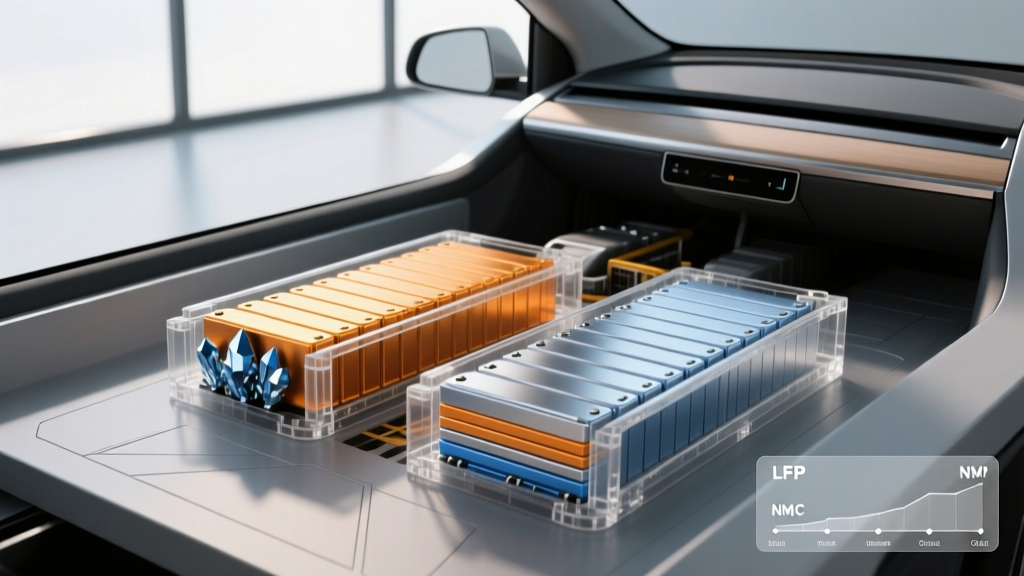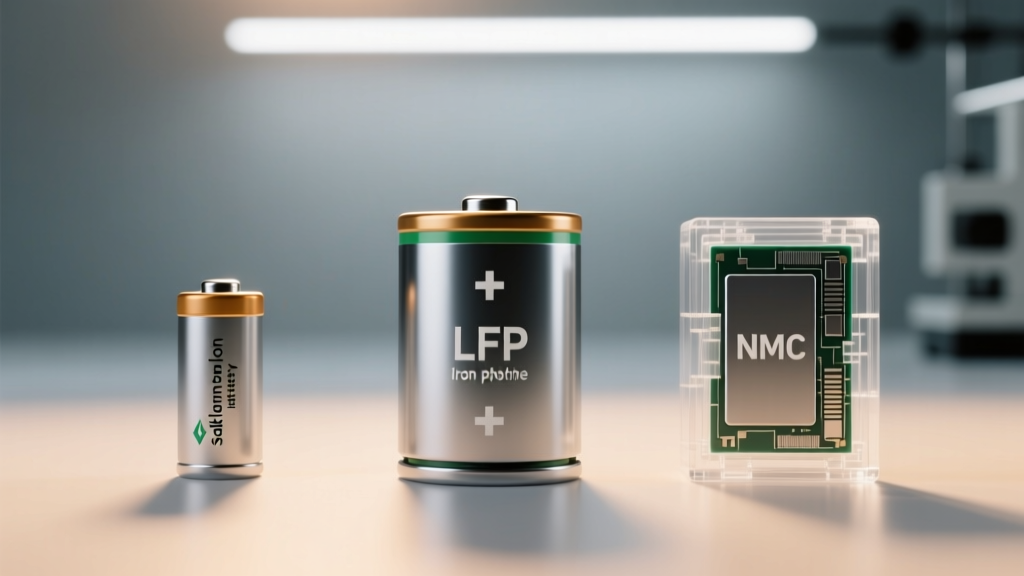
If you have been following EV battery headlines, you have likely encountered the term a salt battery — more formally known as a sodium-ion (Na-ion) battery. With major manufacturers like CATL, BYD, and HiNa investing heavily in sodium-ion production lines, the question for EV buyers is no longer whether sodium-ion will reach production vehicles, but when and in what form. Meanwhile, today's EVs rely on two dominant lithium-ion chemistries — LFP (lithium iron phosphate) and NMC/NCA (nickel manganese cobalt / nickel cobalt aluminum) — each with distinct trade-offs in energy density, longevity, cold-weather performance, and cost.
This guide covers every chemistry relevant to EV buyers in 2026, including sodium-ion as the emerging "salt battery" contender, with hard data on degradation, warranty coverage, replacement costs, and the care habits that determine whether your pack lasts 150,000 miles or 300,000.
What Is a Salt Battery (Sodium-Ion) and How Does It Compare?
A salt battery in the EV context refers to a sodium-ion battery, which uses sodium ions as the charge carrier instead of lithium ions. Sodium is roughly 1,000 times more abundant than lithium in the Earth's crust and can be sourced from soda ash and common salt — eliminating the geopolitical and supply-chain vulnerabilities tied to lithium, cobalt, and nickel mining.
As of 2026, sodium-ion packs have begun appearing in select Chinese-market micro-EVs and energy storage systems. CATL's first-generation sodium-ion cells deliver approximately 160 Wh/kg at the cell level, compared to roughly 170–180 Wh/kg for LFP and 250–300 Wh/kg for NMC/NCA. That energy-density gap means a sodium-ion pack would need to be heavier or larger to match the range of a lithium-ion pack — a significant constraint for long-range sedans and SUVs but less problematic for city cars and commercial fleet vehicles.
| Attribute | NMC/NCA (Lithium-Ion) | LFP (Lithium-Ion) | Sodium-Ion ("Salt Battery") |
|---|---|---|---|
| Cell Energy Density | 250–300 Wh/kg | 170–180 Wh/kg | 140–160 Wh/kg |
| Typical Cycle Life | 1,000–2,000 cycles | 3,000–5,000+ cycles | 2,000–4,000 cycles (est.) |
| Cold Performance (–20°C) | Moderate loss (~20–30%) | Significant loss (~30–40%) | Better retention (~10–15% loss) |
| Raw Material Cost | High (Ni, Co, Li) | Moderate (Fe, P, Li) | Low (Na, Fe, Mn) |
| Thermal Stability | Lower — requires robust BMS | High — very resistant to thermal runaway | High — inherently stable |
| Current EV Availability (US) | Widely available | Widely available (Tesla, Ford, Rivian base trims) | Not yet in US-market vehicles |
The standout advantage of sodium-ion is cold-weather performance. Where LFP packs can lose 30–40% of their usable range at –20°C (–4°F), sodium-ion cells retain significantly more capacity in the same conditions. For buyers in northern climates, this is a meaningful differentiator — once the packs reach sufficient energy density for mainstream vehicles.
LFP vs NMC/NCA: Which Chemistry Should You Choose Today?
While sodium-ion remains on the horizon, the immediate choice for US EV buyers is between LFP and NMC/NCA. Here is how they stack up in real-world ownership:
NMC/NCA: Maximum Range, Higher Cost
NMC and NCA chemistries dominate long-range EVs because their higher energy density lets automakers pack more kWh into a smaller, lighter enclosure. The Tesla Model 3 Long Range (82 kWh usable, NMC), Hyundai Ioniq 5 (77.4 kWh, NMC), and Ford F-150 Lightning Extended Range (131 kWh, NMC) all use these chemistries to achieve EPA ranges above 300 miles. The trade-off is a shorter cycle life (typically 1,000–2,000 full cycles before reaching 80% capacity) and greater sensitivity to high state-of-charge storage and elevated temperatures.
LFP: Longevity Champion, Cold-Weather Caveat
LFP chemistry powers the Tesla Model 3 RWD (60 kWh, LFP), Ford Mustang Mach-E Select (70 kWh, LFP), and Rivian R1S/R1T Standard packs (95 kWh, LFP). LFP cells routinely achieve 3,000–5,000+ cycles before meaningful degradation, and Tesla explicitly recommends LFP owners charge to 100% at least weekly — something you should never do routinely with NMC. The penalty is lower energy density (meaning more weight for the same range) and worse cold-weather performance.
The verdict: Choose NMC/NCA if you need maximum range in a lighter package (frequent road trips, towing, cold-climate highway driving). Choose LFP if you prioritize long-term durability, plan to keep the vehicle 8+ years, and can charge to 100% regularly without anxiety.
How Long Do EV Batteries Actually Last?
The short answer: far longer than most buyers expect. Data from fleet operators, manufacturer reports, and independent analyses consistently show that modern EV traction batteries outlast the vehicles they power in most cases.
Typical Degradation Curve (Lithium-Ion, Combined Fleet Data):
| Milestone | Average Capacity Retained | Notes |
|---|---|---|
| Year 1 / 15,000 mi | 95–97% | Initial "break-in" loss; steepest part of the curve |
| Year 3 / 45,000 mi | 92–95% | Plateau phase; slow, linear decline |
| Year 5 / 75,000 mi | 89–93% | Most owners report negligible daily range difference |
| Year 8 / 120,000 mi | 85–90% | Approaching warranty threshold; still very usable |
| Year 10 / 150,000 mi | 82–88% | LFP typically outperforms NMC here by 3–5% |
| Year 15 / 200,000+ mi | 75–85% | Taxi/fleet data (e.g., Tesla Model S/3 high-mileage) |
Sources: fueleconomy.gov, Geotab fleet battery health reports, manufacturer warranty disclosures. Individual results vary based on climate, charging habits, and chemistry.
Geotab's analysis of over 10,000 EVs across multiple brands found an average annual degradation rate of just 1.8% — meaning after 10 years, the average pack retains roughly 82% of original capacity. LFP-equipped vehicles consistently outperform this average. Tesla's own impact report disclosed that Model S/X batteries retain approximately 88% capacity at 200,000 miles.
The critical takeaway: a "degraded" battery at 80% capacity does not mean the car is unusable. An EV with a 300-mile EPA range at new will still deliver roughly 240 miles at 80% — enough for the vast majority of daily driving and road-trip needs.
What Does the Battery Warranty Cover?
Federal law mandates that EV battery warranties cover a minimum of 8 years / 100,000 miles (10 years / 150,000 miles in CARB states including California, New York, Massachusetts, and others). However, the specific capacity-retention threshold — the point at which the manufacturer must repair or replace the pack — varies by brand.
| Manufacturer | Warranty Period | Capacity Threshold | Chemistry (Common Trims) |
|---|---|---|---|
| Tesla (Model 3/Y RWD) | 8 yr / 120,000 mi | 70% retention | LFP |
| Tesla (Model 3/Y LR, S, X) | 8 yr / 120,000 mi | 70% retention | NMC/NCA |
| Hyundai / Kia | 10 yr / 100,000 mi | 70% retention | NMC |
| Ford (Mach-E, F-150 Lightning) | 8 yr / 100,000 mi | 70% retention | NMC / LFP (Select) |
| Rivian | 8 yr / 120,000 mi | 70% retention | LFP (Standard) / NMC (Max) |
| GM (Ultium platform) | 8 yr / 100,000 mi | 70% retention | NMC |
| BMW | 8 yr / 100,000 mi | 70% retention | NMC |
Always verify current warranty terms on the manufacturer's official site or your purchase agreement — terms can change by model year.
The 70% threshold is significant: it means you would need to lose more than 30% of your battery's original capacity before the warranty triggers. Given the degradation data above, hitting 70% within the warranty period is exceptionally rare under normal use. Most warranty claims involve manufacturing defects (bad cells, BMS faults, coolant leaks) rather than gradual degradation.
How Much Does an EV Battery Replacement Cost?
This is the question that generates the most anxiety — and the most misleading headlines. Here are the real numbers as of 2026:
| Vehicle / Pack Size | New OEM Pack | Remanufactured Pack | Typical Replacement Trigger |
|---|---|---|---|
| Tesla Model 3 RWD (60 kWh, LFP) | $12,000–$15,000 | $8,000–$10,000 | Collision damage, rare cell failure |
| Tesla Model Y LR (82 kWh, NMC) | $15,000–$20,000 | $10,000–$14,000 | Collision damage, coolant intrusion |
| Hyundai Ioniq 5 (77.4 kWh, NMC) | $14,000–$18,000 | $9,000–$13,000 | Warranty-covered in most cases |
| Ford F-150 Lightning Ext. (131 kWh) | $25,000–$35,000 | $18,000–$24,000 | Collision; very few out-of-warranty replacements |
| Chevy Bolt EV/EUV (65 kWh, NMC) | $14,000–$16,000 | $9,000–$11,000 | Post-recall replacements mostly warranty-covered |
Costs include parts and labor. Prices vary by region and service provider. Remanufactured packs use tested, re-balanced cells and are a growing market segment.
The context that headlines omit: the vast majority of EV owners will never need a battery replacement. Out-of-warranty replacements are overwhelmingly the result of collision damage or environmental events (flooding), not degradation. Among vehicles that do reach end-of-life for their pack, most are 12–15+ years old — at which point the vehicle's residual value is low enough that the pack cost is comparable to a transmission replacement on a gas car at similar age.
Battery prices have also continued to fall. Average pack-level costs have dropped from approximately $1,200/kWh in 2010 to roughly $110–$130/kWh in 2026 (BloombergNEF data), and sodium-ion packs are expected to undercut LFP by an additional 20–30% once they reach US-market scale production.
Factors That Accelerate (or Preserve) Battery Life
Not all miles are equal when it comes to battery wear. The following factors have the most measurable impact on long-term State of Health (SoH):
Battery Care Best Practices
- Daily charging limit: Set to 80% for NMC/NCA; 100% is fine for LFP. Avoid leaving any chemistry at 100% SoC for extended periods (days) in hot weather.
- DC fast charging frequency: Occasional road-trip fast charging has minimal impact. Daily DCFC use (especially at 150+ kW) accelerates degradation by approximately 0.5–1.0% additional per year compared to Level 2 home charging, per Geotab fleet data.
- Extreme heat exposure: Sustained ambient temperatures above 95°F (35°C) with a high SoC is the single worst combination for lithium-ion longevity. Garage parking and preconditioning help.
- Extreme cold charging: Charging a cold-soaked battery (below 20°F / –7°C) without preconditioning can cause lithium plating on NMC cells. Always use the vehicle's preconditioning feature before fast charging in winter.
- Storage: If storing the vehicle for weeks, aim for 50–60% SoC. Never store at 100% or below 10%.
- Regenerative braking settings: Moderate regen is fine. Maximum regen in cold weather can stress the battery if it is not warmed up — most modern BMS systems limit regen automatically when cold.
How to Check and Monitor Your Battery's State of Health
State of Health (SoH) is the percentage of your battery's original capacity that remains usable. Monitoring it is easier than most owners realize:
Built-In Vehicle Tools
Most 2024+ EVs include a battery health indicator in the infotainment system or companion app. Tesla displays estimated range at 100% charge (compare to the original EPA figure). Hyundai/Kia's Bluelink and Ford's FordPass provide SoH percentage readouts. GM's Ultium-platform vehicles include a battery health screen in the driver information center.
Third-Party Diagnostics
Services like Recurrent, Geotab, and independent EV shops can perform a full SoH assessment using OBD-II dongles and standardized charge-discharge analysis. A growing number of used-EV listings include a certified SoH report — and if you are buying used, you should demand one.
The Manual Check
Charge to 100% (or your chemistry's recommended max) and note the displayed range. Compare it to the EPA-rated range when new. If your 300-mile EV now shows 265 miles at full charge after 50,000 miles, your SoH is approximately 88% — well within normal expectations.
Emerging Battery Tech: Solid-State, Silicon Anode, and Sodium-Ion Timelines
While today's LFP and NMC chemistries are mature and proven, several next-generation technologies are in advanced development. None are available in US-market consumer EVs as of 2026, but timelines are becoming clearer:
Sodium-Ion ("Salt Battery")
Status: Limited production in China (micro-EVs, energy storage). CATL's second-generation cells target 200 Wh/kg. BYD and HiNa are scaling production. US-market timeline: 2028–2030 for initial fleet/commercial vehicles; 2030+ for mainstream consumer EVs. Energy density must improve to compete with LFP in full-size vehicles.
Solid-State Batteries
Status: Toyota, Samsung SDI, and QuantumScape have demonstrated prototype cells with 350–500 Wh/kg energy density and 10-minute fast-charge capability. US-market timeline: Toyota has announced a 2027–2028 target for limited production in Japan; US availability is estimated at 2029–2032 at earliest, initially in premium vehicles. Manufacturing cost and scalability remain significant hurdles. Do not delay an EV purchase waiting for solid-state.
Silicon Anode
Status: Sila Nanotechnologies and Group14 are supplying silicon-dominant anode materials to battery manufacturers, offering 20–40% energy density improvement over graphite anodes. US-market timeline: Already appearing in limited applications (Porsche has announced silicon-anode cells for upcoming models). Expect broader adoption by 2027–2029.
The realistic advice: today's LFP and NMC packs are excellent, proven technologies. Next-gen chemistries will arrive incrementally and at premium prices before reaching mainstream affordability.
Frequently Asked Questions
How long do EV batteries last in years and miles?
Modern EV batteries (both LFP and NMC) typically retain 85–90% of original capacity at 8 years / 120,000 miles and 80–85% at 10 years / 150,000 miles. Fleet data from Tesla, Geotab, and taxi operators shows many packs reaching 200,000+ miles before approaching the 70% warranty threshold. LFP chemistries generally outlast NMC by 3–5 percentage points at equivalent mileage.
How much does it cost to replace an EV battery?
Replacement costs range from approximately $12,000 for a 60 kWh LFP pack (Tesla Model 3 RWD) to $35,000 for a 131 kWh NMC pack (F-150 Lightning Extended Range), including labor. Remanufactured packs are 30–40% less. However, most owners never need a replacement — out-of-warranty failures are rare, and most replacements are due to collision damage, not degradation.
What does the EV battery warranty actually cover?
Federal law requires a minimum of 8 years / 100,000 miles (10 years / 150,000 miles in CARB states). Coverage triggers when capacity drops below the manufacturer's threshold — typically 70% of original capacity. Manufacturing defects (cell failures, BMS faults, coolant leaks) are also covered. The warranty does not cover damage from collisions, flooding, or unauthorized modifications.
How do I check my EV battery health?
Use your vehicle's built-in battery health display (available on most 2024+ models), compare your 100% displayed range to the original EPA figure, or request a third-party SoH report from services like Recurrent or a certified EV service center. If buying used, always verify SoH before purchase.
LFP vs NMC — which is better for me?
Choose LFP if you want maximum longevity (3,000–5,000+ cycles), can charge to 100% regularly, live in a moderate climate, and plan to own the vehicle 8+ years. Choose NMC/NCA if you need maximum range per pound, frequently drive in extreme cold, tow heavy loads, or take regular road trips where the higher energy density translates to fewer charging stops.
Is a salt battery (sodium-ion) available in EVs I can buy today?
Not in the US market. Sodium-ion batteries are in limited production for Chinese-market micro-EVs and stationary energy storage. US-market consumer vehicles with sodium-ion packs are not expected before 2028–2030 at the earliest. For now, LFP and NMC remain the practical choices.
Does frequent DC fast charging ruin my battery?
"Ruin" is too strong, but daily DCFC use does accelerate degradation slightly — approximately 0.5–1.0% additional capacity loss per year compared to exclusive Level 2 home charging, according to Geotab fleet analysis. For road trips, fast charging is perfectly fine. The concern is using 150+ kW DCFC as your primary daily charging method. Most EV owners who home-charge on Level 2 see minimal degradation impact.
The Bottom Line for EV Buyers
Battery technology in 2026 is mature enough that pack longevity should not be a primary purchase barrier. LFP and NMC chemistries both deliver well over 150,000 miles of usable service, backed by 8–10 year warranties that rarely need to be invoked. Sodium-ion — the "salt battery" generating so much interest — offers genuine advantages in cost and cold-weather performance but remains 2–4 years from US-market consumer vehicles.
The highest-impact decision you can make is matching the chemistry to your use case (LFP for longevity and daily commuting; NMC for range and cold weather) and following basic care practices: moderate SoC for NMC, preconditioning in cold weather, and Level 2 home charging as your daily norm. Do those three things and your battery will very likely outlast your ownership of the vehicle.