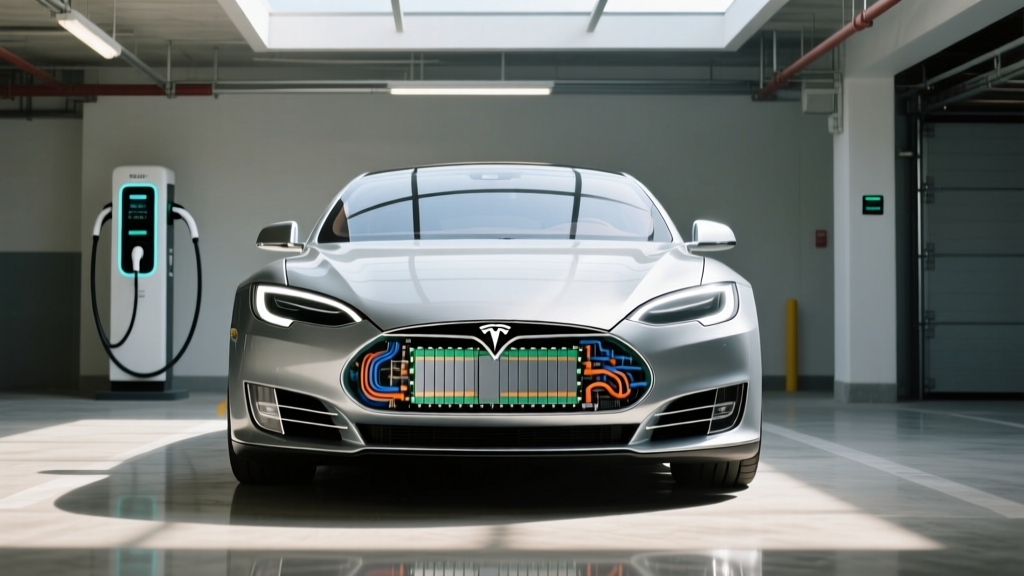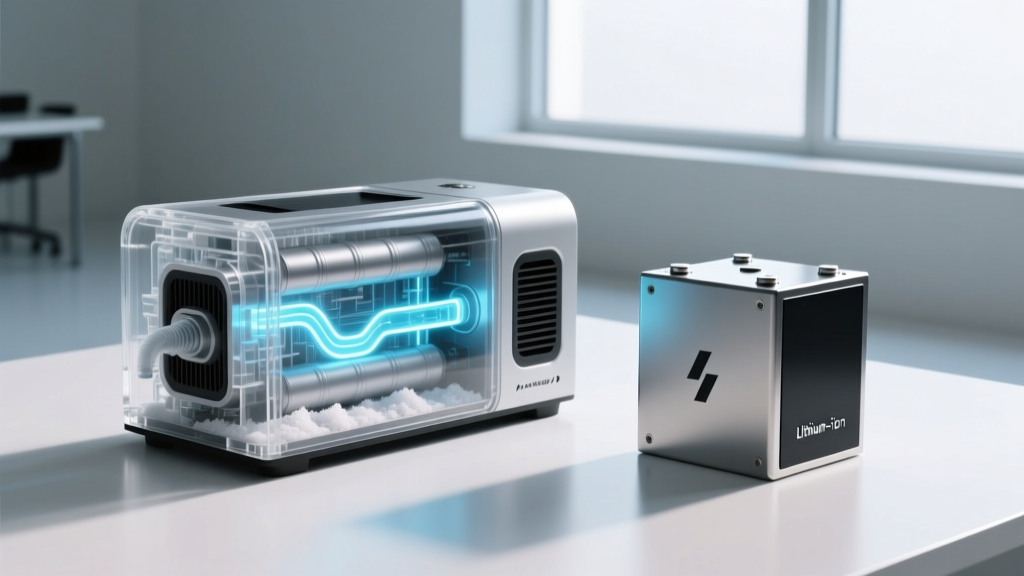
Search for "salt-and-air battery" and you will find a swirl of lab breakthroughs, startup press releases, and social-media hype about a chemistry that could supposedly upend the lithium-ion dominance of electric vehicles. The core idea is compelling: use sodium (table salt's key element) and oxygen from ambient air as the reactive materials inside a battery cell, theoretically yielding cheap, earth-abundant energy storage.
But as an EV buyer or owner in 2026, the practical question is not what might exist in a decade — it is what is in the pack under your seat today, how long it will last, and what it will cost if something goes wrong. This guide puts salt-and-air concepts in context alongside the lithium-ion chemistries that actually power every mainstream EV on the road, and gives you the hard numbers on degradation, warranties, replacement costs, and care habits that matter right now.
What Is a Salt-and-Air Battery, Really?
A salt-and-air (more precisely, sodium-air or sodium-oxygen) battery uses a sodium metal anode and draws oxygen from the surrounding air as the cathode reactant. In theory this yields a very high specific energy because oxygen is essentially free and unlimited — you do not have to pack it inside the cell. Researchers have demonstrated proof-of-concept cells in labs at institutions like MIT and several Chinese universities, and a few startups have floated sodium-air as a path to ultra-low-cost grid storage.
The reality in 2026: sodium-air cells remain a laboratory-stage technology. Cycle life is measured in tens to low hundreds of cycles in published papers, not the thousands required for a vehicle. Recharge efficiency is poor, moisture and CO2 contamination of the air cathode degrades performance rapidly, and no automaker has announced a production vehicle using sodium-air chemistry. If you see a headline promising a salt-and-air EV "next year," treat it the same way you would treat a solid-state timeline — with deep skepticism until a production-spec pack is in a shipping car.
What is real and shipping today is sodium-ion (Na-ion) batteries — a different chemistry that uses sodium in both electrodes without an air-breathing cathode. BYD, CATL, and HiNa have begun volume production of Na-ion cells for small Chinese-market EVs and energy-storage systems. These are legitimate, but their energy density (~140–160 Wh/kg at the cell level) trails even LFP, making them better suited to city cars and stationary storage than to a 300-mile crossover.
The Chemistries That Actually Power Today's EVs
Every mainstream EV sold in the U.S. in 2026 uses a lithium-ion variant. The two dominant families are NMC/NCA (nickel-rich cathodes) and LFP (lithium iron phosphate). Understanding the trade-offs is the single most important battery-knowledge gap for shoppers.
| Attribute | LFP (LiFePO₄) | NMC / NCA (Nickel-rich) |
|---|---|---|
| Energy density (cell-level) | ~160–180 Wh/kg | ~220–300 Wh/kg |
| Typical pack size (U.S. EVs) | 58–82 kWh usable | 72–131 kWh usable |
| Cycle life to 80% SoH | ~3,000–6,000 cycles | ~1,500–2,500 cycles |
| Cold-weather range loss (20°F) | ~30–40% loss | ~25–35% loss |
| Recommended daily SoC ceiling | 100% (no penalty) | 80% for daily, 100% for trips |
| Cobalt / nickel content | None | Yes — supply-chain and ESG factor |
| Cost per kWh (pack-level, 2026) | ~$95–115 | ~$115–145 |
| Examples in U.S. market | Tesla Model 3 RWD, Model Y RWD, Ford Mustang Mach-E Select (LFP option) | Hyundai Ioniq 5, Tesla Model S/X, Ford F-150 Lightning Extended, Rivian R1T |
Which is better? Neither is universally superior. NMC/NCA wins on energy density — essential for trucks, long-range sedans, and anything towing. LFP wins on longevity, cost, and the convenience of charging to 100% daily without accelerating wear. For a commuter who charges at home and rarely road-trips 300+ miles in a day, an LFP pack is the more durable, lower-stress choice.
How Long Do EV Batteries Actually Last?
The fear that an EV battery will "die" like a laptop battery at year four is not supported by fleet data. The most cited large-scale study remains Geotab's analysis of over 10,000 EVs, which found an average capacity loss of roughly 2.3% per year across all chemistries — meaning a typical pack retains about 88% of its original capacity after five years and roughly 80% after ten.
Real-world data points worth anchoring to:
- Tesla 2025 Impact Report: Model 3/Y packs retain ~88% capacity at 200,000 miles on average.
- Nissan Leaf (passive-cooled, early NMC): Higher degradation, often 15–25% loss by year 8 in hot climates — a cautionary tale for thermal management.
- Chevy Bolt EV/EUV (NMC, active liquid cooling): Commonly 5–8% loss at 100,000 miles per owner forums and Recurrent data.
- Tesla Model 3 RWD (LFP): Early fleet data suggests ~2–3% loss after 50,000 miles, with the curve flattening.
Degradation curve shape: Battery wear is not linear. Expect a steeper 3–5% drop in the first 12–18 months (formation losses), then a long, slow linear decline of roughly 1–2% per year thereafter. A pack that loses 5% in year one is not on track to lose 50% in year ten — this is the single biggest misconception new EV owners have when they see their first range drop.
So how long do EV batteries last in practice? The high-voltage traction pack in a liquid-cooled 2026 EV is engineered to outlast the vehicle's economic life — typically 15–20 years or 200,000+ miles before reaching the 70–80% capacity threshold where range becomes noticeably reduced. Most EVs will be scrapped or recycled for other reasons before the pack fails catastrophically.
What Does the Battery Warranty Actually Cover?
Federal law (EPA emissions-warranty rules applied to zero-emission vehicles) effectively mandates an 8-year / 100,000-mile minimum on the high-voltage battery. California's CARB rules push it to 10 years / 150,000 miles for PZEV/TZEV vehicles, and many manufacturers match that voluntarily nationwide. Here is what the major brands commit to as of 2026:
| Manufacturer | Warranty Term | Capacity Retention Threshold |
|---|---|---|
| Tesla (Model 3/Y LFP) | 8 yr / 100,000 mi | 70% |
| Tesla (Model 3/Y Long Range, S, X) | 8 yr / 120,000 mi | 70% |
| Hyundai / Kia (E-GMP: Ioniq 5, EV6, EV9) | 10 yr / 100,000 mi | 70% |
| Ford (Mustang Mach-E, F-150 Lightning) | 8 yr / 100,000 mi | 70% |
| Rivian (R1T, R1S) | 8 yr / 175,000 mi | 70% |
| GM (Ultium: Equinox EV, Blazer EV, Silverado EV) | 8 yr / 100,000 mi | 70% (60% on some commercial) |
| Volkswagen (ID.4) | 8 yr / 100,000 mi | 70% |
| BMW (i4, iX, i7) | 8 yr / 100,000 mi | 70% |
The threshold matters: a warranty that triggers below 70% capacity means you would need to lose more than 30% of your pack before the manufacturer is obligated to repair or replace. In practice, very few liquid-cooled packs hit that threshold within the warranty window. The warranty is a safety net, not a forecast.
Important caveat: warranties typically exclude damage from improper charging (e.g., repeated DC fast-charging above manufacturer-recommended rates if flagged), flood, accident, or aftermarket modifications. Read the fine print in your owner's manual — it is binding.
How Much Does an EV Battery Replacement Cost?
This is the number that generates the most anxiety, and it deserves honest context. Yes, a full high-voltage pack replacement is expensive. No, it is not a routine ownership event for the vast majority of EVs.
| Vehicle / Pack Size | Battery (Parts) | Labor | Total Estimate |
|---|---|---|---|
| Tesla Model 3 RWD (57.5 kWh LFP) | $8,000–11,000 | $2,000–3,500 | $10,000–14,500 |
| Tesla Model Y Long Range (75 kWh NMC) | $11,000–15,000 | $2,500–4,000 | $13,500–19,000 |
| Hyundai Ioniq 5 (77.4 kWh NMC) | $12,000–16,000 | $2,500–4,000 | $14,500–20,000 |
| Ford F-150 Lightning Extended (131 kWh NMC) | $20,000–28,000 | $3,500–5,500 | $23,500–33,500 |
| Chevrolet Bolt EV (65 kWh NMC) | $9,000–13,000 | $2,000–3,500 | $11,000–16,500 |
| Rivian R1T Large Pack (128.9 kWh NMC) | $18,000–25,000 | $3,000–5,000 | $21,000–30,000 |
When is replacement typically needed? Almost never within the first decade. Most out-of-warranty replacements occur on early-generation, passively-cooled EVs (2011–2017 Nissan Leafs, early Chevy Sparks) in hot climates, or on vehicles with manufacturing defects that surface late. Module-level repair — replacing a single degraded module rather than the full pack — is increasingly available at independent EV shops for $2,000–6,000 and should be explored before committing to a full swap.
Pack pricing is also falling. BloombergNEF's 2025 battery price survey pegged average lithium-ion pack cost at roughly $115/kWh, down from $140/kWh in 2023. By the time a 2026 EV actually needs a replacement pack in the late 2030s, expect prices to be materially lower than today's estimates.
Five Factors That Actually Affect Battery Life
Not all miles are created equal. These are the variables with the largest measured impact on long-term State of Health:
- Charging to 100% and sitting there. For NMC/NCA packs, sustained high SoC accelerates calendar degradation. Charge to 80% daily, 100% only when you will drive it down within a few hours. LFP owners can ignore this — charge to 100% freely and actually should do so periodically for BMS calibration.
- Exclusive DC fast-charging. Occasional Supercharging or Electrify America sessions are fine. But packs that DC fast-charge 90%+ of the time show measurably higher wear — Recurrent's fleet data suggests ~2–3% additional loss over 100,000 miles versus predominantly Level 2 home charging. Heat is the mechanism; fast charging generates it.
- Extreme heat exposure. Sustained ambient temperatures above 95°F, especially with a full pack, accelerate electrolyte decomposition. Garage your EV in hot climates if you can. Preconditioning (cooling the pack before a fast-charge session) is your friend.
- Extreme cold without preconditioning. Charging a frozen pack at high rates can cause lithium plating on the anode — permanent, irreversible capacity loss. Always precondition before DC fast-charging in sub-30°F weather; most modern EVs do this automatically when you navigate to a charger.
- Deep discharges to 0%. Occasional is fine; habitual is not. Keep a 20% buffer as your practical floor for daily use. The BMS reserves a top-and-bottom buffer (typically 3–5% on each end) that you never see — but repeatedly hitting the displayed 0% still stresses the cells.
How to Check and Monitor Battery Health (SoH)
State of Health is expressed as a percentage of original capacity. A new pack is 100% SoH; at 70% SoH you have lost 30% of your range and are at the typical warranty threshold. Here is how to check it:
- In-car displays: Tesla's Service Mode (accessible via the software screen) shows a SoH percentage. Hyundai/Kia's infotainment includes an EV battery-condition readout on newer models. BMW iDrive exposes SoH in the service menu.
- OBD-II dongles + apps: Devices like the OBDLink SX paired with apps such as Car Scanner or Leaf Spy (for Nissan) pull SoH directly from the BMS. This works on most EVs and is the most reliable owner-accessible method.
- Third-party reports: Services like Recurrent and some dealerships generate range-vs.-mileage battery health reports. Useful when buying used.
- Manual calculation: Fully charge to 100% (after a BMS-balancing session on NMC), note the displayed range, and compare to the original EPA figure adjusted for the car's rated Wh/mi. Crude but directionally useful.
Check SoH every 6–12 months and before any used-EV purchase. A 3-year-old EV showing 94% SoH is healthy; one showing 85% at 30,000 miles warrants investigation.
What Comes After Lithium-Ion — and When?
Salt-and-air is one of several next-generation chemistries vying for attention. Here is where each actually stands, stripped of startup PR:
- Sodium-ion (Na-ion): Shipping now in Chinese-market micro-EVs and stationary storage. Energy density limits it to short-range applications. Possible U.S. market entry for fleet/city vehicles by 2028–2029.
- Solid-state batteries: Toyota, Samsung SDI, and QuantumScape have announced 2027–2028 limited production timelines. Expect initial deployment in low-volume, high-price vehicles with 500+ mile range claims. Mass-market solid-state is realistically 2030+.
- Silicon-anode lithium-ion: Incremental improvement already shipping. Tesla, Rivian, and others use silicon-blended anodes to boost energy density 5–15% without changing the fundamental cell format. This is the near-term gain story.
- Sodium-air / metal-air: Lab-stage. No announced production vehicle. If it reaches commercial viability, grid storage is the far more likely first application than passenger EVs, due to weight and air-management complexity.
- Lithium-sulfur (Li-S): Promising specific energy (~500 Wh/kg demonstrated), but cycle life remains in the low hundreds. Aviation is the likely first market, not cars. Timeline: 2030s, if at all.
None of these change the buying calculus for a 2026 EV purchase. The lithium-ion pack in a current-model vehicle is mature, well-understood, warrantied, and almost certain to outlast your ownership.
Frequently Asked Questions
Is a salt-and-air battery in any EV I can buy today?
No. Sodium-air (salt-and-air) cells exist only in laboratory settings as of 2026. No automaker has announced a production vehicle using this chemistry. The closest commercially available sodium-based technology is sodium-ion, currently limited to small Chinese-market EVs and stationary storage.
LFP vs NMC — which should I choose?
Choose LFP if you want maximum cycle life, lower cost, and plan to charge to 100% daily at home for commuting. Choose NMC/NCA if you need the longest single-charge range, tow frequently, or drive a large truck/SUV where pack weight and volume matter. Neither is fragile; both will outlast the car's economic life with basic care.
How long do EV batteries last in years and miles?
Fleet data from Geotab, Recurrent, and Tesla's own impact reports show modern liquid-cooled packs retaining 80–88% of original capacity at 10 years / 150,000–200,000 miles. Most packs will function acceptably for 15–20 years before falling below the 70% warranty threshold.
How much does it cost to replace an EV battery?
Out-of-warranty replacement ranges from roughly $11,000 for a Chevy Bolt to $33,000+ for an F-150 Lightning Extended Range pack, including labor. However, full pack replacement is rare — most liquid-cooled EVs never need one within their first 15 years. Module-level repair ($2,000–6,000) is an increasingly viable middle option.
What does the EV battery warranty cover?
Typically 8 years / 100,000 miles (10 years / 100,000–150,000 for Hyundai/Kia and in CARB states) against the pack falling below 70% of original capacity. Defect coverage is included. Damage from accidents, floods, or unauthorized modifications is excluded.
How do I maximize my EV battery's lifespan?
For NMC/NCA: charge to 80% daily, avoid habitual DC fast-charging, precondition in cold weather, and do not store at 100% for extended periods. For LFP: charge to 100% freely, precondition in cold, and fast-charge without special concern. For both: avoid leaving the car at 0% SoC, and garage in extreme heat when possible.
Can I check my battery's health myself?
Yes. Many EVs display SoH in service menus (Tesla, Hyundai/Kia, BMW). An OBD-II adapter with apps like Car Scanner or Leaf Spy can read SoH from the BMS on most models. Check every 6–12 months and always before purchasing a used EV.
The bottom line: salt-and-air batteries are a legitimate area of materials-science research but have no bearing on any EV you can buy, order, or test-drive in 2026. The lithium-ion chemistries in today's vehicles — LFP and NMC/NCA — are mature, well-warrantied, and backed by fleet data showing 15+ year functional lifespans. Buy the car that fits your range and budget needs, follow the basic SoC and thermal care habits outlined above, and let the battery engineers worry about what comes next.