The S-JV battery cell Georgia project — a joint-venture manufacturing initiative aimed at producing next-generation lithium-ion cells on U.S. soil — has become a flashpoint for conversations about where EV batteries are headed. But beyond the headlines and ribbon-cutting announcements, what does this project actually mean for the battery pack sitting under your EV? And more importantly, what should you know about the battery chemistry, degradation, warranty coverage, and replacement economics of the cells powering today's electric vehicles?
This guide breaks down the practical realities of EV battery technology in 2026, using the S-JV Georgia project as a lens to examine the chemistries being manufactured, the data on long-term degradation, the real cost of replacement, and the habits that will maximize your pack's lifespan.
Why the S-JV Battery Cell Georgia Project Matters for EV Buyers
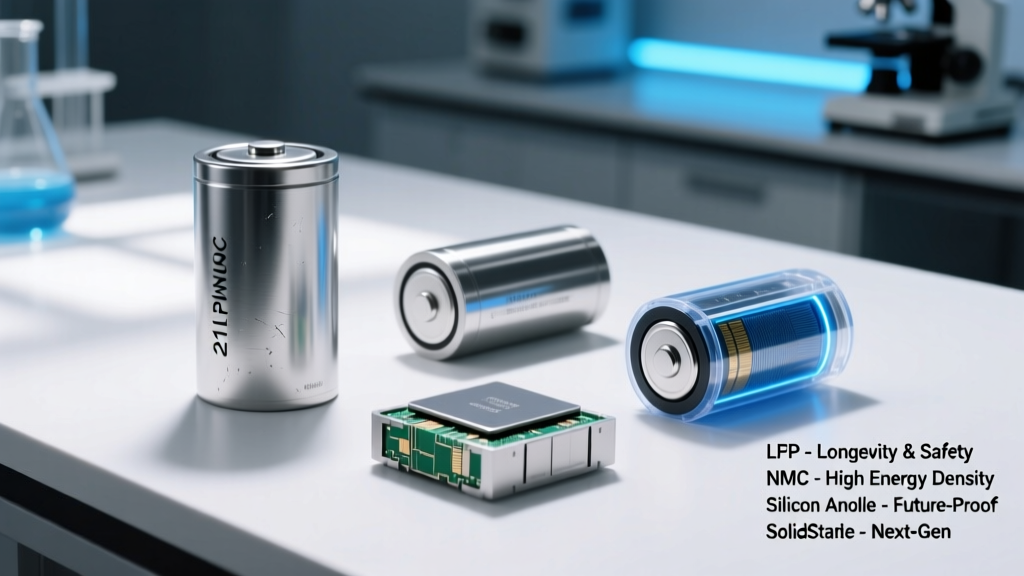
The S-JV battery cell Georgia project represents a broader shift in EV battery supply chains: moving cell production closer to where vehicles are assembled, reducing reliance on imported cells, and potentially lowering pack costs through localized manufacturing. Joint-venture battery plants like this one typically produce either NMC (nickel-manganese-cobalt) or LFP (lithium iron phosphate) cells — the two dominant chemistries in the current EV market.
For buyers, the significance is twofold. First, domestically produced cells may improve eligibility for the federal §30D clean vehicle tax credit, which includes battery-sourcing and critical-mineral requirements. Second, increased U.S. cell production capacity drives competition that can push down per-kWh costs — a factor that directly affects replacement pricing and overall vehicle MSRP.
Before evaluating any vehicle tied to a specific battery supply chain, it's essential to understand the two chemistries that dominate the market and how they differ in real-world ownership.
LFP vs NMC/NCA: The Chemistry Trade-Offs Explained
Every EV battery pack uses one of several lithium-ion chemistries. In 2026, the two you'll encounter most often are LFP and NMC (sometimes NCA — nickel-cobalt-aluminum, used primarily by Tesla and a few others). Each has distinct strengths and weaknesses that affect range, longevity, cost, and cold-weather performance.
| Attribute | LFP (Lithium Iron Phosphate) | NMC/NCA (Nickel-Based) |
|---|---|---|
| Energy Density | Lower (~160–180 Wh/kg cell-level) | Higher (~220–300 Wh/kg cell-level) |
| Typical Vehicle Range | Shorter for same pack weight; used in standard-range trims | Longer range per kg; used in long-range/performance trims |
| Cycle Life | 3,000–5,000+ cycles to 80% capacity | 1,000–2,000 cycles to 80% capacity |
| Cold-Weather Performance | Greater range loss in freezing temps (15–30% reduction common) | Better cold-weather retention (~10–20% reduction) |
| Cost per kWh | Lower ($90–$110/kWh at cell level in 2026) | Higher ($110–$140/kWh at cell level in 2026) |
| Thermal Stability | Excellent — less prone to thermal runaway | Good but requires more active thermal management |
| Charging to 100% SoC | Recommended periodically for BMS calibration | Generally advised to stay below 90% for daily use |
| Critical Mineral Concerns | No cobalt or nickel — fewer supply-chain and ethical issues | Requires nickel and cobalt — sourcing scrutiny higher |
| Common In 2026 Models | Tesla Model 3/Y RWD, Ford Mustang Mach-E Select, BYD models | Hyundai Ioniq 5/6 Long Range, Tesla Model 3/Y LR, Rivian, BMW iX |
Which is better? It depends on your use case. If you prioritize maximum range, drive in cold climates, or want the longest single-charge trips, NMC/NCA is the stronger choice. If you want lower cost, exceptional cycle life, and don't mind slightly less range per charge, LFP is increasingly compelling — and it's the chemistry that many new U.S. cell plants, including ventures like the S-JV Georgia project, are evaluating for high-volume production.
How Long Do EV Batteries Actually Last? Degradation Data
The single most common fear among prospective EV buyers is that the battery will need a costly replacement within a few years. The data tells a different story: most modern EV batteries are designed to outlast the useful life of the vehicle itself.
Typical Degradation Trajectory (NMC and LFP packs, 2020–2026 data):
- Year 1 / 15,000 miles: 2–4% capacity loss (initial formation loss, normal for all lithium-ion cells)
- Year 3 / 45,000 miles: 5–8% total capacity loss
- Year 5 / 75,000 miles: 8–12% total capacity loss
- Year 8 / 120,000 miles: 10–18% total capacity loss (most packs retain 82–90% SoH)
- Year 10 / 150,000 miles: 12–22% total capacity loss; some NMC packs approach 70–75% SoH
Sources: Recurrent Auto battery degradation studies, Geotab fleet data analysis, and manufacturer warranty thresholds. Real-world data from fueleconomy.gov confirms that EPA range estimates hold within 5–10% for most vehicles in the first 100,000 miles.
Key observations from fleet and consumer data:
- LFP packs generally show slower degradation curves than NMC, often retaining 90%+ capacity at 100,000 miles.
- Vehicles with active liquid thermal management (Tesla, Hyundai/Kia E-GMP, GM Ultium) degrade more slowly than passively cooled packs.
- The degradation curve is non-linear: the steepest drop occurs in the first year, then flattens significantly.
- Catastrophic battery failure (sudden cell death) is extremely rare in modern packs — less than 1% of vehicles experience it within warranty.
What Does the EV Battery Warranty Actually Cover?
Federal law mandates that EV batteries carry a minimum warranty of 8 years or 100,000 miles (whichever comes first). In California Air Resources Board (CARB) states, that extends to 10 years / 150,000 miles. Most manufacturers exceed the federal minimum.
| Manufacturer | Warranty Period | Capacity Retention Threshold | Notes |
|---|---|---|---|
| Tesla (Model 3/Y LFP) | 8 yr / 100,000 mi | 70% minimum SoH | Below 70% triggers warranty replacement |
| Tesla (Model 3/Y LR NMC) | 8 yr / 120,000 mi | 70% minimum SoH | Higher mileage threshold for LR/Performance |
| Hyundai / Kia (E-GMP) | 10 yr / 100,000 mi | 70% minimum SoH | Among the longest duration in the industry |
| GM (Ultium platform) | 8 yr / 100,000 mi | 70% minimum SoH | Covers Bolt EV/EUV, Blazer EV, Equinox EV, Silverado EV |
| Ford (Mach-E, F-150 Lightning) | 8 yr / 100,000 mi | 70% minimum SoH | Standard across BEV lineup |
| Rivian (R1T, R1S) | 8 yr / 120,000 mi | 70% minimum SoH | Higher mileage for larger pack vehicles |
| BMW (iX, i4, i7) | 8 yr / 100,000 mi | 70% minimum SoH | Includes battery conditioning system coverage |
What's covered: Capacity loss below the stated threshold, manufacturing defects, and cell/module failures. The warranty typically replaces only the defective modules, not the entire pack — though in practice, many dealers replace the full pack if degradation is widespread.
What's NOT covered: Damage from accidents, improper charging equipment, flooding, or modifications. Normal degradation above the threshold (e.g., losing 15% capacity over 8 years but staying above 70%) is considered expected wear and is not warrantable.
EV Battery Replacement Cost: What to Expect in 2026
Battery replacement is the scenario most EV skeptics point to — but it's also the least likely to occur during typical ownership. Here's what the numbers look like if you do need one, based on 2026 pricing.
| Vehicle / Platform | Pack Size (kWh) | Chemistry | Replacement Cost Range | When Typically Needed |
|---|---|---|---|---|
| Tesla Model 3 RWD | 60 kWh | LFP | $8,000–$11,000 | Rare before 200,000+ mi |
| Tesla Model Y Long Range | 82 kWh | NMC | $12,000–$16,000 | Rare before 180,000+ mi |
| Hyundai Ioniq 5 Long Range | 77.4 kWh | NMC | $11,000–$15,000 | Rare before 180,000+ mi |
| Ford Mustang Mach-E Extended Range | 91 kWh | NMC | $14,000–$18,000 | Rare before 170,000+ mi |
| Ford F-150 Lightning Extended Range | 131 kWh | NMC | $18,000–$25,000 | Rare before 150,000+ mi |
| Chevrolet Equinox EV | 85 kWh | NMC (Ultium) | $12,000–$16,000 | Rare before 180,000+ mi |
| Rivian R1T (Large Pack) | 135 kWh | NMC | $20,000–$28,000 | Rare before 150,000+ mi |
Several factors are working in buyers' favor:
- Cell-level prices have dropped roughly 80% since 2013, and domestic manufacturing initiatives like the S-JV battery cell Georgia project are expected to continue that trend through localized supply chains.
- Most replacements involve individual module swaps rather than full-pack replacements, which can cost 30–50% less than the figures above.
- The growing EV salvage and refurbishment market offers remanufactured packs at 40–60% of new-pack pricing for out-of-warranty vehicles.
- In practice, fewer than 5% of EVs require any battery service outside of warranty coverage during the first 10 years of ownership.
Factors That Affect EV Battery Lifespan
Not all miles are created equal when it comes to battery wear. Here are the factors that measurably accelerate or slow degradation, based on fleet telemetry and consumer data:
Battery Care Best Practices
- Daily charging limit: Set to 80% for NMC/NCA packs; LFP packs can and should be charged to 100% periodically (weekly) for accurate BMS state-of-charge calibration.
- DC fast charging frequency: Occasional DC fast charging (1–2x per week) has minimal impact. Daily DC fast charging at 150+ kW can add 1–3% additional degradation per year versus Level 2 home charging. The charge curve tapers above 80% SoC specifically to protect cells — let it taper rather than unplugging at 80% and re-plugging.
- Extreme heat exposure: Prolonged parking in 100°F+ ambient heat without thermal management active accelerates calendar aging. Garage parking or shaded charging helps. Vehicles with active liquid cooling (most 2022+ EVs) handle this far better than passively cooled packs.
- Extreme cold: Cold doesn't permanently damage batteries, but charging a cold pack without preconditioning causes lithium plating on the anode — a permanent degradation mechanism. Always use your vehicle's preconditioning feature before charging in sub-freezing temperatures.
- State of charge storage: If storing the vehicle for weeks, leave the pack at 40–60% SoC. Storing at 100% for extended periods accelerates calendar degradation; storing below 10% risks cell damage from over-discharge.
- Regenerative braking settings: High regen doesn't meaningfully affect battery longevity — the charge currents involved are well within safe C-rates for modern packs.
How to Monitor Your EV Battery's State of Health (SoH)
State of Health (SoH) is the metric that tells you how much of your battery's original capacity remains. A new pack starts at 100% SoH; a pack with 85% SoH holds 85% of its original energy. Here's how to check it:
In-Vehicle Displays
Some manufacturers provide SoH readouts directly in the infotainment system or instrument cluster. Tesla's mobile app shows estimated range degradation over time. Hyundai/Kia provides a battery health indicator in the EV settings menu on 2024+ models. GM's Ultium vehicles display battery health percentage in the myChevrolet/myCadillac app.
Third-Party Tools and Services
- Recurrent Auto: A free service that connects to your vehicle's telematics and provides ongoing SoH tracking, comparing your pack against a database of thousands of identical vehicles. Highly recommended for long-term ownership monitoring.
- OBD-II EV scanners: Devices like the OBDLink MX+ paired with apps such as ABRP (A Better Routeplanner) or LeafSpy (Nissan Leaf-specific) can pull raw BMS data including cell voltages, pack SoH, and individual module balance.
- Dealer diagnostics: Any authorized dealer can run a full battery health report. Request one during routine service visits, especially as you approach the warranty mileage threshold — if SoH is near the 70% warranty line, you want documentation.
What to Watch For
A sudden drop in SoH (more than 2–3% in a single month) or a significant imbalance between cell modules (visible in OBD data as one module group consistently reading 50+ mV lower than others) may indicate a failing module. This is a warrantable issue in most cases and should be addressed promptly.
Emerging Battery Technology: What's Next Beyond the S-JV Georgia Project
The S-JV battery cell Georgia project and similar domestic manufacturing ventures are primarily producing current-generation lithium-ion cells. But several next-generation technologies are in development that could reshape the battery landscape — with important caveats on timing.
Solid-State Batteries
Solid-state cells replace the liquid electrolyte with a solid material, promising higher energy density (potentially 400+ Wh/kg at the cell level), faster charging, and improved safety. Toyota, Samsung SDI, and QuantumScape are among the companies with announced programs.
Realistic timeline: Limited production in select premium vehicles beginning 2027–2028, with broad commercial availability not expected before 2030. Early solid-state packs will likely carry a significant cost premium and appear first in luxury or performance segments. Do not delay a 2026 EV purchase waiting for solid-state — the technology is still years from mass-market pricing.
Silicon Anode Cells
Replacing graphite anodes with silicon can increase energy density by 20–40%. Companies like Sila Nanotechnologies and Group14 are supplying silicon-dominant anode materials to cell manufacturers.
Realistic timeline: Silicon-blend anodes are already in limited use in 2025–2026 vehicles. Higher silicon-content anodes are expected to reach scale production by 2027–2028, offering meaningful range improvements without the manufacturing challenges of full solid-state cells.
Sodium-Ion Batteries
Sodium-ion chemistry uses abundant, inexpensive materials and shows promise for lower-cost, shorter-range EVs and stationary storage. CATL and other manufacturers have begun production in China.
Realistic timeline: U.S. market vehicles with sodium-ion packs are not expected before 2028 at the earliest, and the chemistry's lower energy density limits it to urban/short-range applications.
Frequently Asked Questions
How long do EV batteries last in years and miles?
Most modern EV batteries (2022+ production) retain 80–90% of their original capacity at 100,000 miles and 8 years of use. Based on current degradation data, a typical NMC pack will last 180,000–250,000 miles before falling below 70% SoH. LFP packs often exceed 250,000+ miles at that threshold. In practical terms, the battery will likely outlast other major vehicle components.
How much does it cost to replace an EV battery?
Full-pack replacement costs range from approximately $8,000 for a smaller LFP pack (e.g., Tesla Model 3 RWD, 60 kWh) to $25,000+ for large NMC packs (e.g., F-150 Lightning Extended Range, 131 kWh). However, most replacements involve individual modules at 30–50% of full-pack cost, and fewer than 5% of EVs need battery service outside warranty in the first decade. Check IRS §30D guidelines for whether battery replacement components qualify for any tax treatment.
What does the EV battery warranty cover?
Federal law requires a minimum 8-year / 100,000-mile battery warranty (10/150,000 in CARB states). The warranty covers capacity loss below a specified threshold (typically 70% SoH), manufacturing defects, and cell failures. It does not cover accident damage, improper charging, or normal degradation above the threshold. Hyundai/Kia leads the industry with a 10-year / 100,000-mile warranty.
How do I check and maximize my EV battery health?
Monitor SoH through your vehicle's app, third-party services like Recurrent Auto, or OBD-II scanners. Maximize lifespan by: limiting NMC packs to 80% daily SoC, using DC fast charging sparingly (not daily), preconditioning the battery before cold-weather charging, avoiding prolonged storage at 100% or below 10% SoC, and parking in shade or garages during extreme heat.
LFP vs NMC — which battery chemistry is better for me?
Choose NMC/NCA if you need maximum range per charge, drive frequently in cold climates, or take regular long road trips. Choose LFP if you want lower upfront cost, plan to keep the vehicle 10+ years (superior cycle life), mostly drive in moderate climates, and have reliable home charging for daily top-ups. LFP is increasingly common in standard-range trims from Tesla, Ford, and others, and is a key chemistry being evaluated for domestic production at facilities like the S-JV battery cell Georgia project.
Will the S-JV battery cell Georgia project lower EV prices?
Domestic cell manufacturing reduces logistics costs, may improve §30D tax credit eligibility through battery-sourcing compliance, and increases supply competition. While no single project determines pricing, the cumulative effect of U.S. cell production capacity — including the S-JV Georgia project and similar ventures — is expected to contribute to a gradual decline in per-kWh pack costs through 2028.