The Rivian R2 is shaping up to be one of the most anticipated electric SUVs in the compact segment, targeting a sub-$45,000 starting price and a mid-2026 production start. But for buyers researching the Rivian R2 battery capacity and long-term ownership viability, hard specs have been trickling out in stages rather than all at once. This guide consolidates what Rivian has confirmed about the R2's battery pack, contextualizes it against real-world degradation data from the broader EV fleet, and explains what the chemistry choice means for your daily driving and long-term wallet.
What We Know About the Rivian R2 Battery Capacity
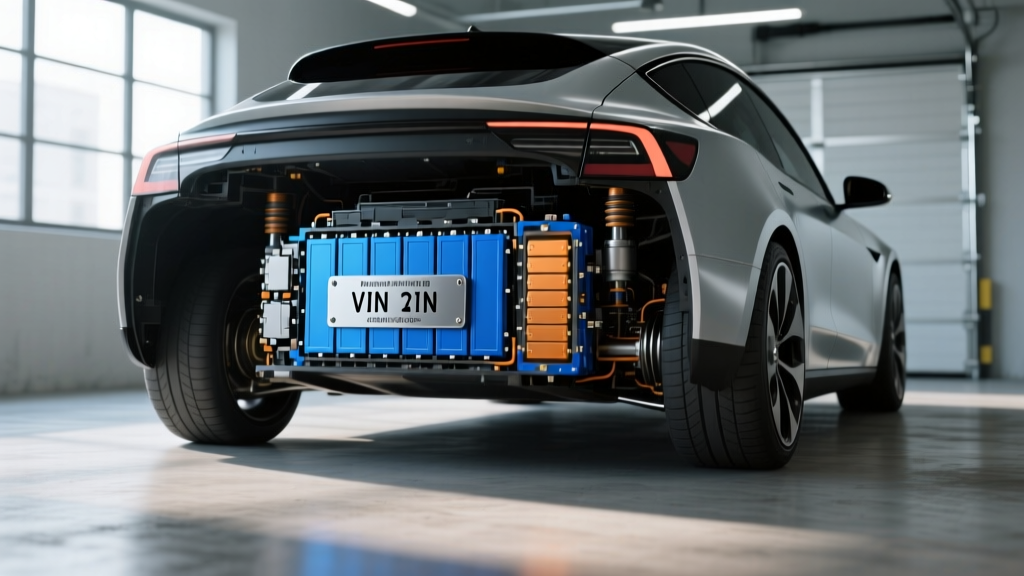
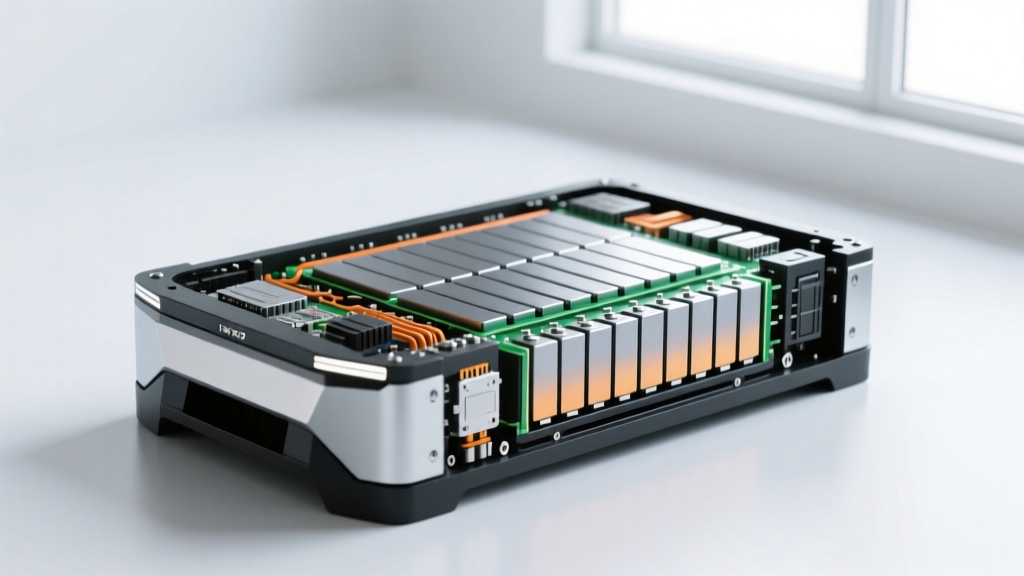
Rivian has indicated the R2 will use a battery pack in the 75–85 kWh usable range, targeting an EPA-estimated range of approximately 300+ miles on the standard dual-motor configuration. The exact kWh figure has not been published on a finalized spec sheet as of early 2026 — Rivian has historically confirmed precise capacity figures closer to delivery — but CEO RJ Scaringe and engineering presentations have pointed to a mid-80s gross capacity with usable capacity somewhat lower due to buffer management.
For context, the larger R1S and R1T Gen 2 models use packs ranging from 92 kWh (Standard) to 149 kWh (Max). The R2 rides on a new, smaller platform designed from the ground up for cost efficiency, which means a physically smaller pack and a deliberate shift in chemistry.
If the R2 achieves a 310-mile EPA sticker, plan for approximately 250–270 miles in sustained 75 mph highway driving, and 210–240 miles in freezing temperatures (below 32°F). Cold weather reduces lithium-ion efficiency and increases cabin heating load — this is physics, not a defect.
LFP vs. NMC: Why Rivian Chose LFP for the R2
Rivian has confirmed that the R2 will use lithium iron phosphate (LFP) cathode chemistry for its standard battery pack. This is a significant departure from the R1 vehicles, which use NMC (nickel manganese cobalt) cells supplied primarily by Samsung SDI. The shift to LFP is an industry-wide trend driven by cost, durability, and supply-chain independence from cobalt and nickel.
Here is how the two dominant EV battery chemistries compare on the metrics that matter to owners:
| Metric | LFP (Lithium Iron Phosphate) | NMC/NCA (Nickel-based) |
|---|---|---|
| Energy Density | Lower (~160–180 Wh/kg cell-level) | Higher (~220–300 Wh/kg cell-level) |
| Cycle Life | 3,000–5,000+ full cycles | 1,000–2,000 full cycles |
| Cold-Weather Performance | More range loss in extreme cold (~35–40% reduction) | Moderate cold loss (~25–30% reduction) |
| Cost per kWh | Lower ($80–100/kWh cell-level, 2025–2026) | Higher ($110–140/kWh cell-level) |
| Recommended Charge Habit | Can charge to 100% regularly without significant harm | Best kept 20–80% for daily use; 100% for trips only |
| Thermal Stability | Excellent — less prone to thermal runaway | Good, but requires more active thermal management |
| Cobalt/Nickel Content | None — iron and phosphate only | Contains cobalt and/or nickel |
What this means for R2 buyers: The LFP choice sacrifices some energy density (meaning the pack is physically heavier for a given kWh) but gains massively in cycle life and daily-use flexibility. You can charge the R2 to 100% every night on a Level 2 home charger without the degradation anxiety that NMC owners manage. For a vehicle aimed at daily commuters and families, this trade-off is well-justified.
The cold-weather penalty is real, however. If you live in Minnesota, Maine, or Colorado and regularly drive in sub-freezing temperatures, expect a larger range hit than you would with an NMC pack. Preconditioning the battery before departure (a feature Rivian includes via scheduled departure times in the app) mitigates some of this loss by warming the cells while still plugged in.
EV Battery Degradation: What the Data Actually Shows
Battery degradation — the gradual loss of usable capacity over time — is the single biggest long-term ownership concern for EV buyers. The good news: modern EV batteries, and LFP packs in particular, are degrading far more slowly than early-generation cells.
Here is what real-world fleet data tells us about capacity retention:
- Year 1 / 15,000 miles: ~2–4% capacity loss (initial formation loss)
- Year 3 / 45,000 miles: ~5–8% total loss
- Year 5 / 75,000 miles: ~8–12% total loss
- Year 8 / 120,000 miles: ~10–15% total loss (NMC); ~7–10% (LFP)
- Year 10 / 150,000 miles: ~12–18% total loss (NMC); ~8–12% (LFP)
Sources: Geotab fleet study (6,300+ EVs), Recurrent Auto battery health reports. LFP-specific data from Tesla Model 3 Standard Range and BYD fleet analyses.
For the R2's LFP pack, the degradation outlook is favorable. LFP chemistry's flatter voltage curve and inherent structural stability mean the cells lose capacity more slowly per charge cycle. If you drive 12,000 miles per year — the U.S. average according to the FHWA — you could reasonably expect the R2 to retain 90–93% of its original capacity at 100,000 miles, which translates to roughly 280 miles of range from a 310-mile sticker.
That said, degradation is not purely linear. The most rapid loss occurs in the first year (calendar aging and initial SEI layer formation), after which the curve flattens considerably. Heavy DC fast-charging usage and extreme heat exposure accelerate the process — more on that below.
Rivian Battery Warranty: What's Covered and for How Long
Rivian's current battery warranty for the R1 series provides a strong baseline for what R2 buyers should expect. The company has not published a separate R2 warranty document as of early 2026, but industry norms and Rivian's existing terms point to the following structure:
| Component | Coverage Period | Capacity Retention Threshold |
|---|---|---|
| High-voltage battery pack | 8 years / 175,000 miles (R1 current); expected 8 yr / 100,000–175,000 mi for R2 | 70% of original capacity minimum |
| Battery management system (BMS) | Included in battery warranty | Defect coverage |
| Drive unit(s) / motors | 8 years / 175,000 miles (R1 current) | Defect coverage |
| Thermal management system | 5 years / 60,000 miles (general warranty) or 8 years if classified as battery-adjacent | Defect coverage |
The 70% capacity retention threshold is the industry standard used by nearly every major EV manufacturer, including Tesla, Hyundai/Kia, and Ford. It means Rivian will repair or replace the battery if its usable capacity drops below 70% of the original kWh figure within the warranty period. For a hypothetical 80 kWh usable R2 pack, that threshold is 56 kWh — a level of degradation that fleet data suggests is extremely unlikely within 8 years of normal use for an LFP pack.
One important nuance: warranty coverage applies to defects and abnormal degradation, not to gradual capacity loss that remains above the threshold. If your R2 retains 78% capacity at year 8, that is considered normal wear and is not a warranty claim.
Battery Replacement Cost: What R2 Owners Should Budget For
This is the question that generates the most anxiety — and the most misinformation. Let's ground it in actual numbers.
| Vehicle / Pack Size | Estimated Full Replacement Cost | Typical Replacement Timeline |
|---|---|---|
| Rivian R1 (128–149 kWh, NMC) | $18,000–$25,000+ | Rarely needed; 15+ years expected life |
| Rivian R2 (~80 kWh, LFP) — projected | $10,000–$15,000 (based on current LFP cell pricing + labor) | Rarely needed; 15–20+ years expected life |
| Tesla Model 3 Std Range (~60 kWh, LFP) | $12,000–$16,000 | Very rare under warranty |
| Hyundai Ioniq 5 (77.4 kWh, NMC) | $14,000–$20,000 | Rare; 10-year/100k-mi warranty |
The critical context: the vast majority of EV batteries never need full replacement during the vehicle's usable life. According to data from Recurrent Auto, fewer than 1.5% of EVs in their studied fleet required battery replacement, and most of those were covered under warranty. LFP packs, with their 3,000–5,000+ cycle life, are even less likely to need replacement. At one full cycle per day, 3,000 cycles equals over 8 years of daily 0–100% charging — and most owners charge far less aggressively than that.
When replacements do occur outside warranty, they typically happen at 12–15+ years of age, at which point the vehicle's residual value is low and many owners opt to sell or recycle rather than invest in a new pack. Cell-level module replacement (swapping only degraded modules rather than the entire pack) is also becoming more common, reducing out-of-pocket costs to $3,000–$7,000 depending on the number of modules affected.
By 2030–2032, when R2 owners might realistically face out-of-warranty battery service, LFP cell prices are projected to drop below $60/kWh at the pack level, further reducing replacement costs.
Factors That Affect R2 Battery Life — and How to Minimize Them
While LFP chemistry is inherently robust, how you use and charge the R2 will influence its long-term health. Here are the variables with the largest measurable impact:
- Charging to 100% is fine on LFP. Unlike NMC, LFP cells do not suffer accelerated degradation at high states of charge. In fact, Rivian and Tesla both recommend periodic 100% charges on LFP vehicles so the BMS can recalibrate cell balancing.
- Minimize DC fast charging when Level 2 is available. Occasional DC fast charging (road trips) is not harmful, but daily use of 150+ kW charging generates sustained heat that accelerates electrolyte decomposition. Plan to fast-charge no more than 2–3 times per week if possible.
- Use preconditioning. Set a scheduled departure time in the Rivian app so the battery warms to optimal temperature before you drive — especially critical in cold climates. This preserves range and reduces stress on cold cells during regenerative braking.
- Avoid prolonged storage at 0% or 100% in extreme heat. If leaving the R2 parked for weeks in 95°F+ weather, aim for a 50–70% state of charge. Calendar aging accelerates at high SoC + high temperature.
- Don't baby it too much. The biggest degradation risk for LFP is actually chronic underuse — letting the vehicle sit for months without driving. Regular use with regular charging keeps cells balanced and the BMS calibrated.
One factor often overlooked: regenerative braking intensity. In cold weather, the R2 will limit regen power when the battery is cold and near full charge. This is a protective measure, not a malfunction — pushing high current into cold cells causes lithium plating, which is irreversible capacity loss. Rivian's thermal management system handles this automatically, but understanding why regen feels weaker on a 25°F morning helps set expectations.
How to Monitor Your R2's Battery Health (State of Health)
State of Health (SoH) is the metric that tells you what percentage of the battery's original capacity remains usable. Here is how R2 owners can track it:
- Rivian App & In-Vehicle Display: Rivian's software provides estimated range based on recent driving efficiency, which indirectly reflects capacity. A more direct SoH readout may be available through the service menu or future OTA updates, as Rivian has expanded diagnostics visibility over successive software versions.
- OBD-II Dongles & Third-Party Tools: Devices like the OBDLink SX paired with apps such as EV Battery Health or Car Scanner can read the BMS-reported SoH value directly from the CAN bus. This is the most accurate owner-accessible method.
- Manual Calculation: Charge the R2 to 100%, record the kWh delivered by your Level 2 charger (most smart chargers display this), and compare it to the pack's rated usable capacity. If your 80 kWh pack accepts only 72 kWh from near-zero to 100%, your SoH is approximately 90%. Account for charging losses (~5–8% for Level 2 efficiency).
- Rivian Service Centers: During scheduled service visits, Rivian technicians can pull a full battery health report including individual cell group voltages, internal resistance, and SoH percentage. Request this report if you're approaching a warranty threshold.
For LFP packs specifically, SoH estimation is slightly trickier than with NMC because the voltage curve is very flat — the BMS has less voltage data to estimate remaining capacity. This is why periodic 100% charges are recommended: they give the BMS a full voltage reference point for recalibration.
What's Next: Solid-State, Silicon Anodes, and Future Battery Tech
The battery technology landscape is evolving rapidly, and R2 buyers may wonder whether waiting for next-generation tech makes sense. Here is a realistic timeline assessment:
- Silicon-dominant anodes: Companies like Sila Nanotechnologies and Group14 are producing silicon-carbon composite anode materials that boost energy density by 20–40% over graphite. These are entering production in 2025–2027 for premium applications (Mercedes G-Class EV, select consumer electronics). Expect broader automotive adoption by 2028–2030. This tech could appear in a future R2 pack refresh but is not in the launch configuration.
- Semi-solid-state batteries: Toyota, Samsung SDI, and QuantumScape have demonstrated prototype solid-state and semi-solid cells with 500+ mile range potential and 10-minute fast charging. However, manufacturing scale-up remains the bottleneck. Realistic mass-production timelines are 2028–2032 for premium vehicles, with affordable compact SUVs like the R2 unlikely to receive solid-state packs before 2032–2035.
- Sodium-ion batteries: CATL and BYD are producing sodium-ion cells for lower-range, ultra-budget EVs in China. Energy density is too low (~120–140 Wh/kg) for a 300-mile U.S. SUV, but sodium-ion could serve as a secondary, lower-cost R2 variant in the future if Rivian pursues it.
Bottom line: The LFP pack in the 2026–2027 R2 is not a placeholder for imminent breakthrough technology. It is a mature, cost-effective, and highly durable chemistry that will serve the vehicle well through its expected 15+ year lifespan. Waiting for solid-state means waiting 5+ years and paying a significant premium when it arrives.
Frequently Asked Questions
How long do EV batteries actually last in years and miles?
Modern EV batteries, particularly LFP packs, routinely last 15–20 years and 150,000–200,000+ miles before degrading to the 70% capacity threshold. Fleet data from Geotab and Recurrent Auto shows median NMC packs retaining 85–90% capacity at 100,000 miles. LFP packs perform even better, with some Tesla Model 3 Standard Range fleets showing 93%+ retention at 80,000 miles. The battery will very likely outlast the rest of the vehicle's mechanical components.
How much does an EV battery cost to replace?
For a mid-size LFP pack like the one expected in the R2 (~80 kWh), full replacement costs are projected at $10,000–$15,000 based on 2026 cell pricing plus labor. NMC packs of similar size cost $14,000–$20,000. However, fewer than 1.5% of EVs ever need out-of-warranty replacement, and module-level repair can reduce costs to $3,000–$7,000. By the early 2030s, pack-level pricing is expected to drop further as LFP cell costs continue to decline.
What does the Rivian battery warranty cover?
Based on Rivian's current R1 warranty structure, expect the R2 battery to be covered for 8 years with a mileage limit of 100,000–175,000 miles (Rivian's R1 warranty uses 175,000 miles; the R2 may differ). The warranty guarantees the pack will retain at least 70% of its original usable capacity. Defects in the BMS, thermal management, and related high-voltage components are also covered. Normal gradual degradation above the 70% threshold is not a warranty claim.
How do I check and maximize my R2 battery health?
Monitor SoH through the Rivian app, OBD-II diagnostic tools, or by comparing kWh accepted during a full charge to the rated pack capacity. To maximize longevity: charge to 100% regularly (this is recommended for LFP), minimize daily DC fast charging, use preconditioning in cold weather, and avoid leaving the vehicle parked at 0% or 100% SoC in extreme heat for extended periods.
LFP vs. NMC — which battery chemistry is better for the R2?
For the R2's mission as an affordable, daily-use family SUV, LFP is the better choice. It offers superior cycle life (3,000–5,000+ cycles vs. 1,000–2,000 for NMC), lower cost, the ability to charge to 100% daily, and better thermal safety. The trade-offs — lower energy density (more weight for the same kWh) and worse cold-weather range retention — are acceptable for a vehicle in this price segment. If Rivian offers a future long-range R2 variant, it may use NMC for the additional energy density needed to push range above 350 miles.
Does the Rivian R2 qualify for the federal EV tax credit?
The IRS §30D clean vehicle credit provides up to $7,500 for qualifying new EVs, subject to MSRP caps ($80,000 for SUVs), buyer income limits ($300,000 joint / $150,000 single modified AGI), and battery critical-mineral and component sourcing requirements. The R2's sub-$50,000 starting price clears the MSRP cap easily. However, the battery sourcing requirements are stringent and change annually. Because the R2 uses LFP chemistry — which relies heavily on Chinese-processed iron phosphate — its credit eligibility depends on how Rivian structures its supply chain for the production year. Check the fueleconomy.gov listing for the specific model year before purchasing, and consult a tax professional for your personal eligibility. The credit can be transferred to the dealer as a point-of-sale discount if all requirements are met.