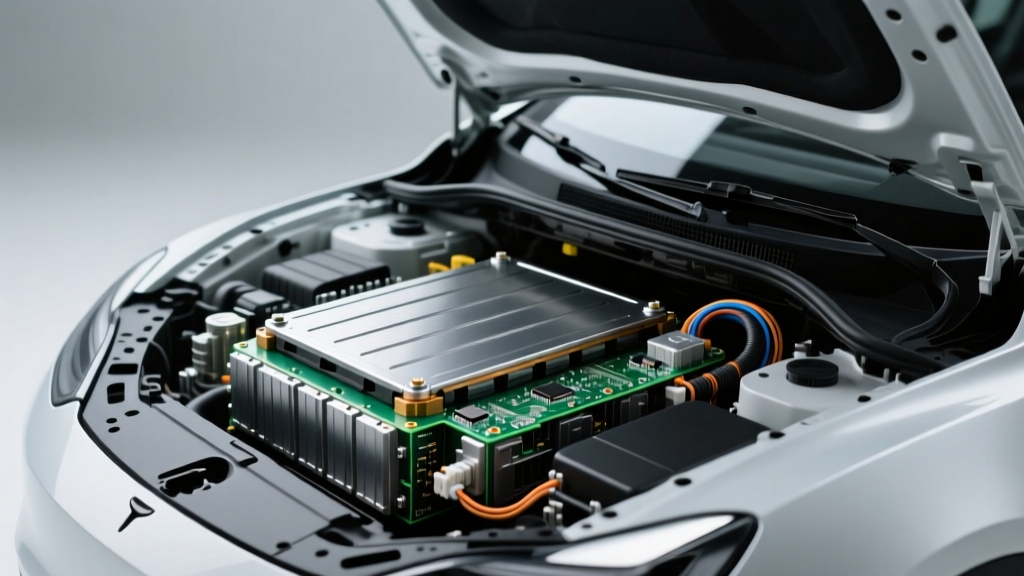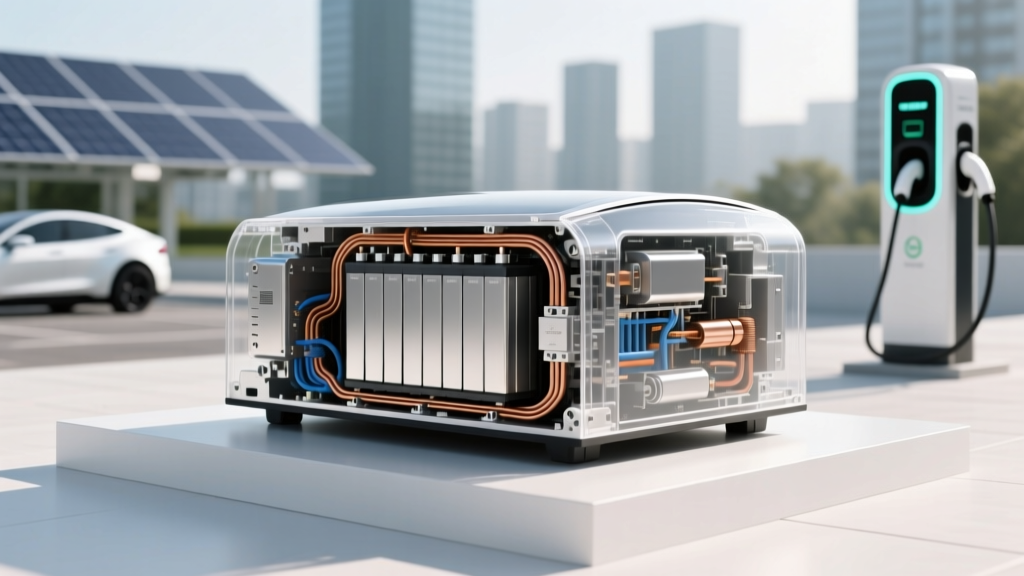
If you own a Rivian R1T or R1S — or you're deep into research before buying — the high-voltage traction battery is the single most expensive component in the vehicle. Understanding what's inside it, how it degrades, what the warranty actually covers, and what replacement would cost is essential for long-term ownership confidence. This guide breaks down everything you need to know about the Rivian battery pack, grounded in manufacturer data, real-world owner reports, and industry testing.
Rivian Battery Pack Specs: Capacity, Chemistry, and Architecture
Rivian offers multiple battery pack options across the R1T pickup and R1S SUV lineup. As of the 2026 model year, the available packs are:
- Standard Pack: ~95 kWh usable capacity (LFP chemistry on newer Gen 2 models)
- Large Pack: ~128 kWh usable capacity (NMC lithium-ion)
- Max Pack: ~149 kWh usable capacity (NMC lithium-ion)
All packs use a structural skateboard architecture with the battery integrated into the vehicle floor. Rivian designs its own battery modules and packs in-house at its Normal, Illinois facility, sourcing cylindrical cells from suppliers including Samsung SDI. The Gen 2 platform (introduced for 2025 model-year vehicles) brought the LFP Standard Pack into production, reducing cost and shifting the chemistry trade-off calculus for buyers who don't need maximum range.
For reference, the EPA rates the R1T Dual-Motor Large Pack at 352 miles of combined range, while the Max Pack variant pushes past 400 miles. Real-world highway driving at 75 mph in moderate temperatures typically yields 85-90% of EPA figures — expect roughly 300-320 highway miles from the Large Pack before needing to charge.
LFP vs NMC: Which Battery Chemistry Is in Your Rivian?
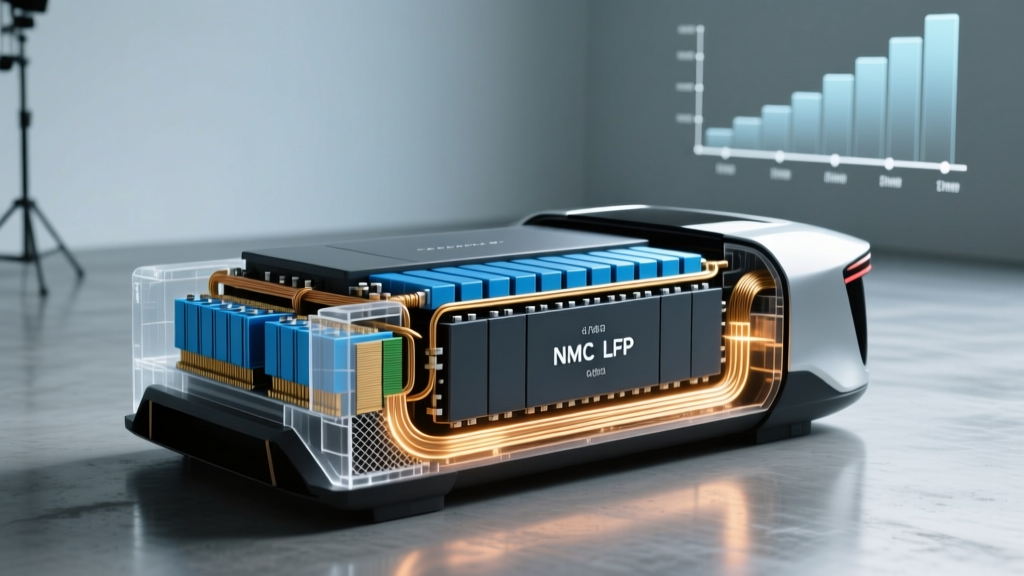
Rivian's introduction of LFP (lithium iron phosphate) cells alongside traditional NMC (nickel manganese cobalt) means buyers now face a chemistry choice. Here's how the two compare on the metrics that matter for daily ownership:
| Attribute | LFP (Standard Pack) | NMC (Large / Max Pack) |
|---|---|---|
| Energy Density | Lower (~160 Wh/kg cell-level) | Higher (~250 Wh/kg cell-level) |
| Typical Cycle Life | 3,000–5,000+ cycles | 1,000–2,000 cycles |
| Cold-Weather Performance | Reduced; slower charge acceptance below 32°F | Better low-temp conductivity |
| Cost per kWh | Lower (no cobalt or nickel) | Higher (commodity-linked metals) |
| State of Charge Recommendation | Can charge to 100% daily | Best kept 20–80% for daily use |
| Thermal Stability | Excellent; higher runaway threshold | Good; requires more active management |
| Weight (pack-level) | Heavier for same energy | Lighter for same energy |
The practical takeaway: If you commute daily, charge at home, and don't regularly need 350+ miles between stops, the LFP Standard Pack offers superior cycle life and the convenience of daily 100% charging without degradation anxiety. If you tow, road-trip frequently, or live in a cold climate where every mile of range matters, the NMC Large or Max Pack gives you the energy density advantage — at the cost of more careful SoC management.
Rivian Battery Degradation: What the Data Shows
EV batteries don't suddenly fail — they gradually lose capacity over time and charge cycles. The rate of that loss depends on chemistry, thermal management, charging habits, and climate.
Based on aggregated fleet data from early R1T and R1S owners (2022–2024 model years) and industry-wide NMC degradation studies, here's what Rivian owners can reasonably expect:
| Timeframe / Mileage | Expected Capacity Retention (NMC) | Expected Capacity Retention (LFP) |
|---|---|---|
| Year 1 / ~15,000 mi | 96–98% | 98–99% |
| Year 3 / ~45,000 mi | 92–95% | 95–97% |
| Year 5 / ~75,000 mi | 88–92% | 93–96% |
| Year 8 / ~100,000 mi | 83–88% | 90–94% |
| Year 10 / ~150,000 mi | 78–84% | 87–92% |
These figures align with broader industry data. A Geotab fleet study of over 6,000 EVs found average annual degradation of roughly 1.8% across all chemistries, with NMC packs averaging slightly higher and LFP packs showing slower fade. Rivian's active liquid thermal management system — which heats and cools the pack as needed — helps keep degradation toward the better end of these ranges.
Key insight: the most rapid degradation occurs in the first 12-18 months (the so-called "initial drop"), after which the curve flattens significantly. An R1T Large Pack owner who sees a 3-4% loss in year one shouldn't panic — subsequent annual losses typically slow to 1-1.5% per year with normal use.
Rivian Battery Warranty: What's Covered and for How Long
Rivian provides a high-voltage battery warranty that is competitive with the broader EV industry. Here are the terms as of 2026:
| Coverage Item | Term |
|---|---|
| Battery Pack (capacity & defects) | 8 years / 175,000 miles (whichever comes first) |
| Minimum Capacity Retention | 70% of original usable capacity |
| Drive Unit (motor) | 8 years / 175,000 miles |
| What Triggers a Claim | Capacity drops below 70% or a manufacturing defect is confirmed via diagnostics |
| Remedy | Repair, module replacement, or full pack replacement at Rivian's discretion |
| Transferable? | Yes — warranty follows the vehicle, not the original owner |
The 70% threshold is standard across most automakers (Tesla, Ford, and Hyundai use similar benchmarks). In practical terms, a Large Pack R1T starting at ~128 kWh usable would need to drop below ~90 kWh usable to trigger a warranty claim — which, based on the degradation data above, would be highly unusual within the warranty period under normal ownership.
One nuance: Rivian's warranty covers defects and capacity loss but does not cover damage from accidents, flooding, improper modifications, or use outside the vehicle's rated specifications (e.g., sustained operation in ambient temperatures far beyond rated limits). Always review your specific warranty booklet for exclusions.
Rivian Battery Replacement Cost: What You'd Actually Pay
This is the question that generates the most anxiety — and the most misinformation. Let's ground it in real numbers.
| Pack | Estimated Replacement Cost (Parts + Labor) | When Replacement Is Typically Needed |
|---|---|---|
| Standard Pack (~95 kWh, LFP) | $12,000–$16,000 | Rarely within vehicle lifetime; LFP cycle life exceeds 3,000 cycles |
| Large Pack (~128 kWh, NMC) | $18,000–$24,000 | Typically 150,000–200,000+ miles if degraded beyond usability |
| Max Pack (~149 kWh, NMC) | $22,000–$28,000 | Same as Large; often outlasts the vehicle's economic life |
Important context: these are out-of-warranty estimates based on current cell pricing (~$110–$140/kWh at the pack level for NMC, ~$80–$100/kWh for LFP) plus labor for removal and installation. Battery cell prices have fallen roughly 80% since 2013 and continue to trend downward, meaning a replacement in 2034 will likely cost significantly less than today's estimate.
Critically, full pack replacement is rare. Rivian's modular pack architecture allows for individual module replacement in many failure scenarios. If one or two modules develop faults, a service center can swap those modules rather than replacing the entire pack — bringing costs down to $2,000–$5,000 depending on the number of modules affected.
For the vast majority of owners, the battery will retain sufficient capacity (above 80%) through 200,000+ miles. At that point, the vehicle's resale value and the cost of replacement enter a total-loss-style economic calculation — similar to a transmission replacement on a high-mileage gas vehicle.
Factors That Affect Rivian Battery Longevity
Not all miles are created equal when it comes to battery wear. Here are the factors that meaningfully accelerate or slow degradation in Rivian packs:
Charging Habits
- NMC packs: Keep daily SoC between 20–80%. Reserve 100% charges for road trips. Rivian's app lets you set a custom charge limit — use it.
- LFP packs: Charge to 100% at least once per week. LFP cells benefit from full charges for cell balancing and accurate SoC estimation.
- Avoid frequent DC fast charging above 150 kW when a Level 2 home charger is available. Occasional fast charging is fine; daily 200 kW sessions generate cumulative heat stress.
Temperature Management
- Rivian's thermal management system actively cools the pack during fast charging and heats it in cold weather. Always precondition the battery before DC fast charging in cold weather (the vehicle does this automatically when you navigate to a charger).
- Prolonged exposure to extreme heat (above 100°F / 38°C) while parked at high SoC accelerates degradation. If you live in Phoenix or Las Vegas, try to park in shade and avoid leaving the pack at 100% for extended periods.
- Cold weather reduces available range (expect 20–30% loss at 20°F) but does not permanently damage the battery — the loss is temporary and recovers as temperatures rise.
Driving Patterns
- Aggressive driving with frequent hard acceleration draws high current from the pack, generating heat. Moderate driving is easier on the cells.
- Regenerative braking set to high reduces brake wear and generates moderate charge current, which is well within the pack's design tolerance.
- Towing at maximum capacity (11,000 lbs for the R1T) generates sustained high discharge rates. This is within design limits but will produce more heat — the thermal management system handles it, but expect accelerated wear if you tow heavy loads frequently in hot climates.
Monitoring Your Rivian Battery's State of Health
Rivian provides battery health information through the vehicle's infotainment system and the Rivian mobile app. Here's how to stay informed:
- In-app range estimate: The app displays your current estimated range based on recent driving patterns and battery condition. A gradual decline in this number over months (not days) indicates normal degradation.
- Energy consumption screen: The vehicle's trip computer shows kWh/mi efficiency. If your efficiency remains stable but your range estimate drops, that's a capacity indicator.
- Service diagnostics: Rivian service centers can run a full State of Health (SoH) diagnostic that reports exact capacity retention as a percentage. Request this during any service visit, especially as you approach the 8-year / 175,000-mile warranty threshold.
- OBD-II third-party tools: Some EV-focused apps (such as those using OBD-II dongles) can read battery management system data including cell voltage variance, pack temperature, and estimated SoH. Compatibility with Rivian's CAN bus protocol varies by tool and model year.
A practical benchmark: if your Large Pack R1T shows less than 90% capacity retention after three years of normal use, it's worth scheduling a diagnostic check — that rate would be above the expected degradation curve and could indicate a module imbalance or thermal management issue that Rivian should investigate under warranty.
Looking Ahead: Solid-State and Silicon Anode Batteries
Next-generation battery technologies are in active development across the industry, and Rivian has acknowledged evaluating multiple advanced chemistries for future platforms:
- Solid-state batteries: These replace the liquid electrolyte with a solid material, promising higher energy density (~400+ Wh/kg at the cell level), faster charging, and improved safety. Companies like QuantumScape, Solid Power, and Toyota are targeting limited production in the 2028–2030 timeframe. Realistic volume production for consumer vehicles is likely 2030 or later. Rivian has not announced a specific solid-state timeline.
- Silicon anode batteries: By incorporating silicon into the anode (replacing or supplementing graphite), these cells offer 20–40% higher energy density than current NMC. Sila Nanotechnologies and Group14 are already supplying early silicon-anode cells. Expect incremental adoption in the 2027–2029 window.
- Sodium-ion batteries: A lower-cost alternative to lithium for standard-range applications. CATL and other suppliers are scaling production. These are most likely to appear in entry-level EVs where cost matters more than range density.
For current Rivian owners: these technologies won't be retrofittable into existing vehicles. They matter primarily if you're planning your next vehicle purchase in the 2029–2032 timeframe. Today's NMC and LFP packs are mature, well-understood, and sufficient for the vehicle's usable life.
Frequently Asked Questions
How long do Rivian batteries last in years and miles?
Based on current NMC degradation data, a Rivian Large or Max Pack should retain 80%+ capacity through 150,000–200,000 miles, which translates to roughly 10–15 years of average driving (12,000–15,000 miles per year). LFP Standard Packs, with their superior cycle life, may retain 85%+ capacity over the same period. Most EV batteries outlast the economic life of the vehicle they're installed in.
How much does a Rivian battery cost to replace?
Full pack replacement ranges from approximately $12,000 (Standard LFP) to $28,000 (Max NMC) including labor at current pricing. However, full replacement is rare — Rivian's modular architecture allows individual module swaps at $2,000–$5,000 in many failure cases. Battery prices continue to decline, so future replacements will likely cost less.
What does the Rivian battery warranty cover?
Rivian covers the high-voltage battery for 8 years or 175,000 miles against defects and capacity loss below 70% of original usable capacity. The warranty is transferable to subsequent owners. It does not cover accident damage, flooding, or modifications. If your pack drops below the 70% threshold within the warranty period, Rivian will repair or replace it at no cost.
How do I check my Rivian battery health?
Monitor estimated range trends in the Rivian app over months, track kWh/mi efficiency on the trip computer, and request a formal State of Health diagnostic at any Rivian service visit. Third-party OBD-II tools may provide additional cell-level data depending on compatibility.
LFP vs NMC — which Rivian battery is better for me?
Choose LFP (Standard Pack) if you prioritize longevity, daily home charging convenience (100% SoC is fine), and lower cost — and you don't regularly need 300+ miles of range. Choose NMC (Large or Max Pack) if you need maximum range for road trips or towing, live in a cold climate where energy density matters, and you're willing to manage SoC between 20–80% for daily driving. Neither is universally "better" — they serve different use cases.
Does frequent DC fast charging hurt my Rivian battery?
Occasional DC fast charging is well within the pack's design parameters and will not meaningfully accelerate degradation. However, daily reliance on high-power DC fast charging (150+ kW) generates more cumulative thermal stress than Level 2 home charging. If you have access to Level 2 charging at home or work, use it for routine top-ups and reserve DC fast charging for road trips.
Will cold weather permanently damage my Rivian battery?
No. Cold temperatures temporarily reduce available range and slow charging speeds — expect 20–30% range loss at 20°F and longer charge times — but this is fully reversible. Rivian's thermal management system actively heats the pack during preconditioning and driving. Once temperatures normalize, full capacity returns. Permanent damage from cold is not a concern with modern liquid-cooled/heated packs.
Sources: EPA fuel economy data via fueleconomy.gov; Rivian owner's manual and warranty documentation; Geotab EV Battery Degradation Study; U.S. Department of Energy battery cost tracking.