Do You Ever Actually Need to Remove a Battery From an EV?
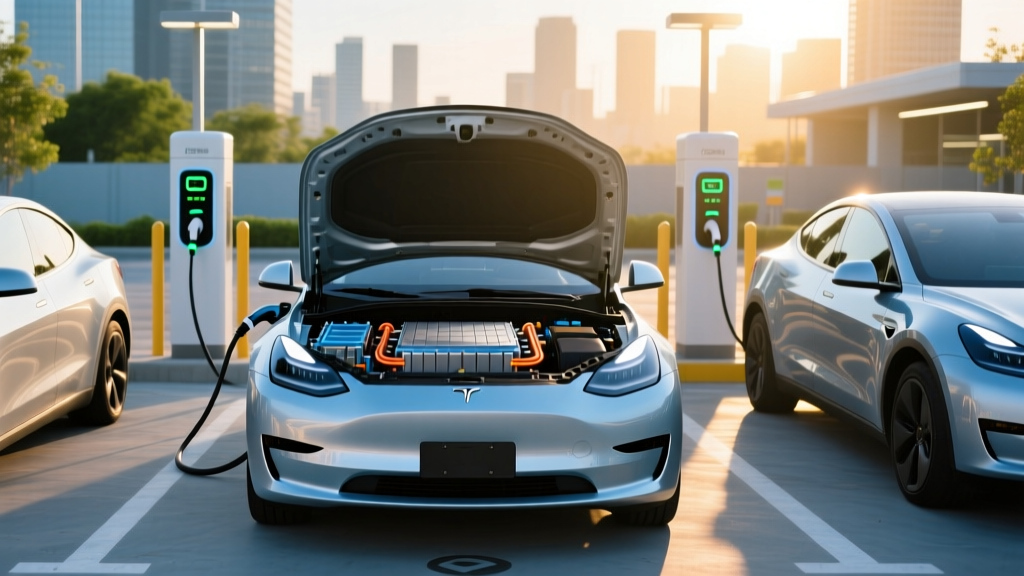
For most electric-vehicle owners, the high-voltage traction battery is a sealed, liquid-cooled unit designed to outlast the car itself. Unlike a 12V auxiliary battery that you might swap every four to five years, the main EV battery pack isn't a routine maintenance item. In fact, data aggregated by Recurrent Auto across tens of thousands of vehicles shows that the vast majority of EV batteries retain over 90% of their original capacity after 100,000 miles.
So when would you actually need to remove a battery from an EV? There are three realistic scenarios:
- Catastrophic failure outside warranty — rare, but it happens on high-mileage vehicles or those with manufacturing defects that surface late.
- Collision damage — if the pack enclosure is compromised, insurers and repair shops will pull and replace the entire unit.
- Module-level repair — some packs (like older Nissan Leafs or BMW i3s) allow individual module replacement rather than a full pack swap, which requires partial disassembly.
This guide covers what happens when a battery does need to come out, how long you can realistically expect yours to last, what it costs to replace, and the chemistry-specific care habits that keep degradation low.
How Long Do EV Batteries Actually Last?
The short answer: far longer than most buyers assume. Federal law mandates that EV batteries carry a minimum warranty of 8 years or 100,000 miles (10 years/150,000 miles in California and states that follow CARB rules). But real-world data consistently shows packs lasting well beyond those thresholds.
Typical Degradation Curve (NMC and LFP Packs, 2020–2026 Model Years)
| Milestone | Average Capacity Retained | Notes |
|---|---|---|
| Year 1 / 15,000 mi | 97–98% | Initial calibration drop; steepest early loss |
| Year 3 / 45,000 mi | 93–96% | Curve flattens significantly |
| Year 5 / 75,000 mi | 90–94% | Most packs still well above warranty threshold |
| Year 8 / 100,000 mi | 87–92% | Warranty floor is typically 70%; most exceed it by ~20 points |
| Year 10 / 150,000 mi | 83–90% | Data from early Tesla Model 3/Y, Chevy Bolt cohorts |
Sources: Recurrent Auto fleet data, fueleconomy.gov owner reports, manufacturer warranty filings.
The degradation curve is non-linear: you'll see the fastest drop in the first 12–18 months as the solid electrolyte interphase (SEI) layer stabilizes, then a long, slow taper. LFP (lithium iron phosphate) packs tend to degrade even more slowly than NMC, which is a key reason Tesla shifted standard-range Model 3 and Model Y production to LFP chemistry.
LFP vs NMC vs NCA: Which Chemistry Is in Your Pack?
Before you can optimize battery care, you need to know what's inside. Most 2024–2026 EVs use one of three lithium-ion chemistries:
| Attribute | LFP (Lithium Iron Phosphate) | NMC (Nickel Manganese Cobalt) | NCA (Nickel Cobalt Aluminum) |
|---|---|---|---|
| Energy Density | Lower (~160 Wh/kg cell-level) | Higher (~220–260 Wh/kg) | Highest (~260–280 Wh/kg) |
| Cycle Life | 3,000–5,000+ cycles | 1,000–2,000 cycles | 1,000–1,500 cycles |
| Cold-Weather Performance | Moderate; more range loss below 32°F | Better low-temp discharge | Good low-temp discharge |
| Cost per kWh | Lower (no cobalt or nickel) | Higher | Highest |
| Recommended Daily Charge Limit | 100% (manufacturer-recommended) | 80–90% for daily use | 80–90% for daily use |
| Common In (2026 Models) | Tesla Model 3/Y RWD, Ford Mustang Mach-E Select, BYD, Rivian standard | Hyundai Ioniq 5/6, Kia EV6/EV9, VW ID.4, Chevy Equinox EV | Tesla Model S/X, Lucid Air |
The practical takeaway: LFP wins on longevity and cost but sacrifices some energy density and cold-weather range. NMC/NCA packs deliver more range per pound and charge faster in cold conditions, but they degrade faster if you habitually charge to 100% or let them sit at high state of charge in heat. If you plan to keep your EV for 10+ years and 150,000+ miles, LFP's cycle-life advantage becomes significant.
What Does the Battery Warranty Actually Cover?
Every new EV sold in the US includes a federally mandated battery warranty, but the details vary by manufacturer. Here's how the major brands structure coverage for 2025–2026 models:
| Manufacturer | Warranty Term | Capacity Retention Threshold | Notes |
|---|---|---|---|
| Tesla | 8 yr / 120,000 mi (Model 3/Y LR); 8 yr / 100,000 mi (RWD) | 70% | Includes labor; module replacement where possible |
| Hyundai / Kia | 10 yr / 100,000 mi | 70% | Among the longest in the industry |
| Ford | 8 yr / 100,000 mi | 70% | Covers battery and hybrid/EV components |
| GM (Chevy/Cadillac) | 8 yr / 100,000 mi | 70% (60% for Bolt EV/EUV older models) | Ultium packs covered; module-level repair available |
| Volkswagen | 8 yr / 100,000 mi | 70% | ID.4 and ID.7 |
| Rivian | 8 yr / 175,000 mi (R1T/R1S) | 70% | Higher mileage cap than most competitors |
Key nuance: The warranty threshold (usually 70%) is a minimum. If your pack drops to 69% capacity within the warranty period, the manufacturer will repair or replace it — typically with a refurbished pack of equivalent capacity, not a brand-new one. Most owners never approach this threshold. Also, warranties cover defects and abnormal degradation, not damage from accidents, flooding, or aftermarket modifications.
EV Battery Replacement Cost: What You'd Actually Pay
If your battery fails outside warranty, replacement is the single most expensive repair an EV can require. Costs vary enormously by pack size, chemistry, and whether you go OEM or refurbished:
| Vehicle / Pack Size | OEM New Pack | Refurbished / Remanufactured | Module-Level Repair |
|---|---|---|---|
| Chevy Bolt EV (65 kWh) | $14,000–$16,000 | $9,000–$11,000 | $2,500–$4,500 (per module set) |
| Tesla Model 3 RWD LFP (~60 kWh) | $12,000–$15,000 | $8,000–$10,000 | Limited module availability |
| Tesla Model Y LR (82 kWh NMC) | $16,000–$20,000 | $11,000–$14,000 | $3,000–$5,500 |
| Ford Mustang Mach-E ER (91 kWh) | $18,000–$22,000 | $12,000–$15,000 | $3,500–$6,000 |
| Hyundai Ioniq 5 (77.4 kWh) | $15,000–$18,000 | $10,000–$13,000 | $3,000–$5,000 |
| Rivian R1T (Large 135 kWh) | $22,000–$28,000 | $15,000–$19,000 | Not widely available yet |
Context that matters: Battery pack prices have fallen roughly 10–15% since 2022, according to BloombergNEF, and refurbished packs from certified recyclers like Redwood Materials are becoming more accessible. For most owners, a full pack replacement outside warranty is unlikely — the vehicle will typically be retired, sold, or traded before the battery reaches end-of-life. But if you're buying a used EV with 120,000+ miles and no remaining warranty, budget for this possibility or purchase an extended powertrain warranty.
Five Factors That Accelerate (or Slow) Battery Degradation
Battery chemistry sets the ceiling, but your habits determine where on the curve you land. Here are the five biggest factors, ranked by impact:
1. State of Charge Habits (Highest Impact)
- For NMC/NCA: Avoid sitting at 100% SoC for extended periods. Charge to 80–90% daily; use 100% only for road trips.
- For LFP: Charge to 100% at least once per week — LFP's voltage curve is so flat that the BMS needs a full charge to recalibrate cell balancing.
- Avoid letting any pack sit below 10% SoC for more than a few days.
2. DC Fast-Charging Frequency
- Occasional DC fast charging (1–2 times per week) has minimal impact on modern packs with active thermal management.
- Daily DC fast charging, especially at 200+ kW without preconditioning, accelerates degradation by an estimated 2–4% over 100,000 miles compared to Level 2 home charging.
- Always precondition the battery before fast charging — most EVs do this automatically when you navigate to a charger.
3. Extreme Temperatures
- Sustained exposure to ambient temperatures above 95°F accelerates electrolyte decomposition. Garage parking in hot climates helps.
- Cold weather doesn't permanently degrade the battery, but charging a cold pack without preconditioning can cause lithium plating — a permanent capacity loss mechanism.
- Heat pumps (standard on most 2025–2026 EVs) reduce cabin-heating load and indirectly reduce thermal stress on the pack.
4. Depth of Discharge
- Shallow cycles (e.g., 40%–80%) are gentler than deep cycles (10%–100%). If your commute uses only 20% of the pack, you're in the ideal zone.
5. Calendar Aging
- Even a parked EV battery degrades over time. A pack stored at 50% SoC in moderate temperatures loses roughly 1–2% capacity per year from calendar aging alone.
- If storing an EV for 30+ days, set the charge limit to 50–60% and keep it plugged in so the BMS can manage thermal and voltage balance.
How to Check Your EV's Battery Health (State of Health)
State of Health (SoH) is the percentage of original capacity your battery currently holds. Unlike a gas car's compression test, you can check SoH without a shop visit:
- In-vehicle displays: Tesla shows battery health in the Service menu (available since 2024 OTA updates). Hyundai/Kia provides SoH via the dealer diagnostic tool — ask for a printout at your next service visit.
- OBD-II apps: Tools like Scan My Tesla, Leaf Spy (for Nissan), and ABRP OBD read the BMS directly and report SoH, cell voltage variance, and cycle count.
- Third-party reports: Recurrent Auto offers free battery health reports that compare your pack's degradation to a fleet of identical vehicles.
- Dealer certification: If you're selling or buying a used EV, request a battery health certificate from the manufacturer's dealer network. BMW, Hyundai, and Tesla all offer these.
When to worry: If your SoH drops below 85% within the first five years or 60,000 miles, or if you see sudden range loss of more than 10% in a single month, schedule a dealer diagnostic. These can signal a defective module or BMS issue covered under warranty.
What's Next: Solid-State and Silicon-Anode Batteries
Looking ahead, two technologies promise to reshape EV batteries — but neither is ready for your next purchase:
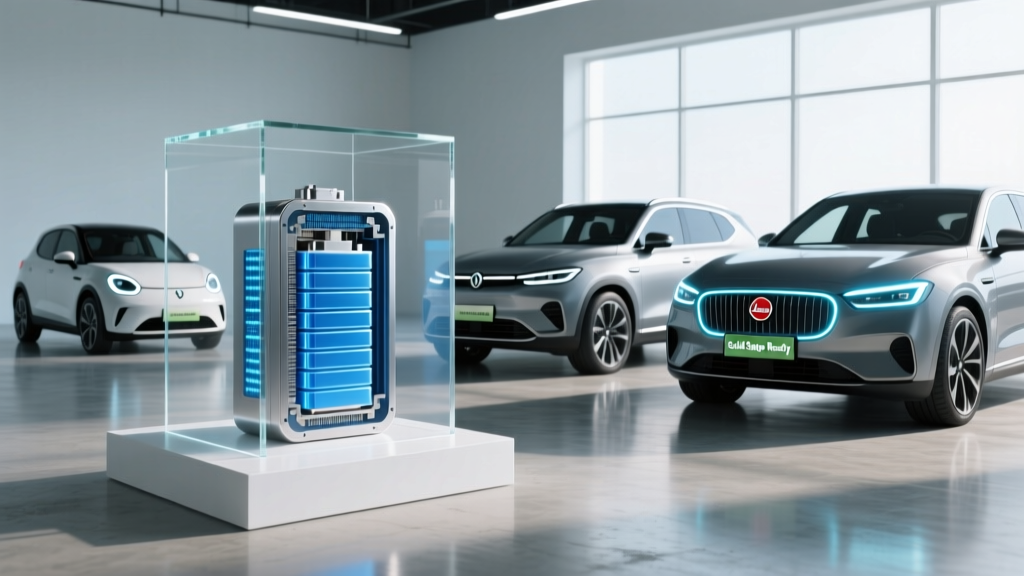
- Solid-state batteries replace the liquid electrolyte with a solid ceramic or polymer, enabling higher energy density (~400 Wh/kg projected), faster charging, and reduced fire risk. Toyota has announced a 2027–2028 production timeline for a limited run; Samsung SDI targets 2028. Realistically, broad market availability at scale is 2029–2031. No 2026 production EV uses solid-state cells.
- Silicon-anode batteries (from companies like Sila Nanotechnologies and Group14) increase energy density by 20–40% over graphite anodes. These are beginning to appear in premium applications — Mercedes-Benz's next-gen EQ models are expected to use silicon-dominant anodes by 2027–2028. This is an incremental evolution, not a revolution, and it will arrive in high-end models first.
Bottom line: These technologies are real but not imminent. If you need an EV today or within the next two years, current LFP and NMC packs are mature, well-understood, and backed by strong warranties. Waiting for solid-state means waiting at least 3–5 years for meaningful availability.
Frequently Asked Questions
Can I remove an EV battery myself?
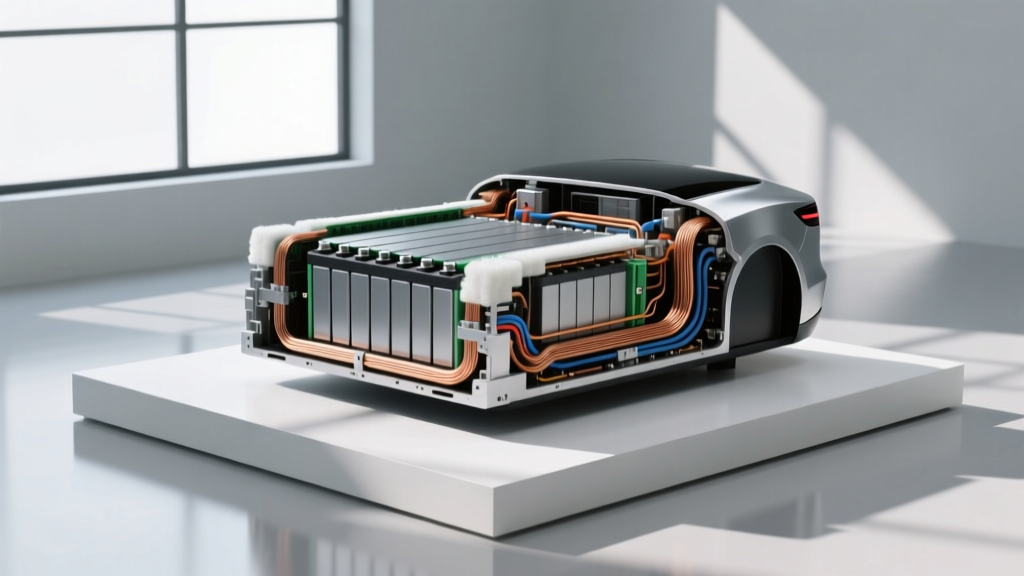
No. High-voltage EV battery packs operate at 400V (or 800V in Hyundai/Kia/Porsche/Lucid architectures) and can deliver lethal current even when disconnected. Removal requires certified high-voltage training, insulated tools, a battery lift table, and manufacturer-specific software to disable the contactors. This is strictly a job for a certified EV technician or dealer service center.
Is the 12V battery the same as the main EV battery?
No. Every EV also has a 12V auxiliary battery (or, in newer Teslas and some 2025+ models, a 12V lithium-iron-phosphate auxiliary pack) that powers the lights, infotainment, door locks, and the contactor relay that connects the main pack. The 12V battery is user-replaceable and costs $150–$400. The high-voltage traction battery is the large, expensive unit discussed in this guide.
Does fast charging ruin my battery?
Not in normal use. Modern EVs with active liquid cooling (virtually all 2022+ models) manage thermal load during DC fast charging effectively. Data from Recurrent shows that vehicles that fast-charge frequently lose only 2–4% more capacity over 100,000 miles compared to those that primarily use Level 2. The bigger risk is fast-charging a cold battery without preconditioning.
What happens to an EV battery after it's removed?
Retired EV batteries typically enter one of three pathways: (1) Second-life storage — repurposed for stationary grid storage at 70–80% capacity; (2) Remanufacturing — good modules are harvested and rebuilt into replacement packs; (3) Recycling — companies like Redwood Materials and Li-Cycle recover 95%+ of critical minerals (lithium, nickel, cobalt) for new cell production. Federal and state regulations require proper handling; you cannot dispose of an EV battery in regular waste.
How do I maximize my EV battery's lifespan?
Charge NMC/NCA to 80–90% daily; charge LFP to 100% weekly. Precondition before fast charging. Avoid prolonged storage above 90% or below 10% SoC. Park in shade or a garage in hot climates. Use Level 2 home charging as your primary method. And keep your EV's software updated — manufacturers regularly refine BMS algorithms to improve longevity.