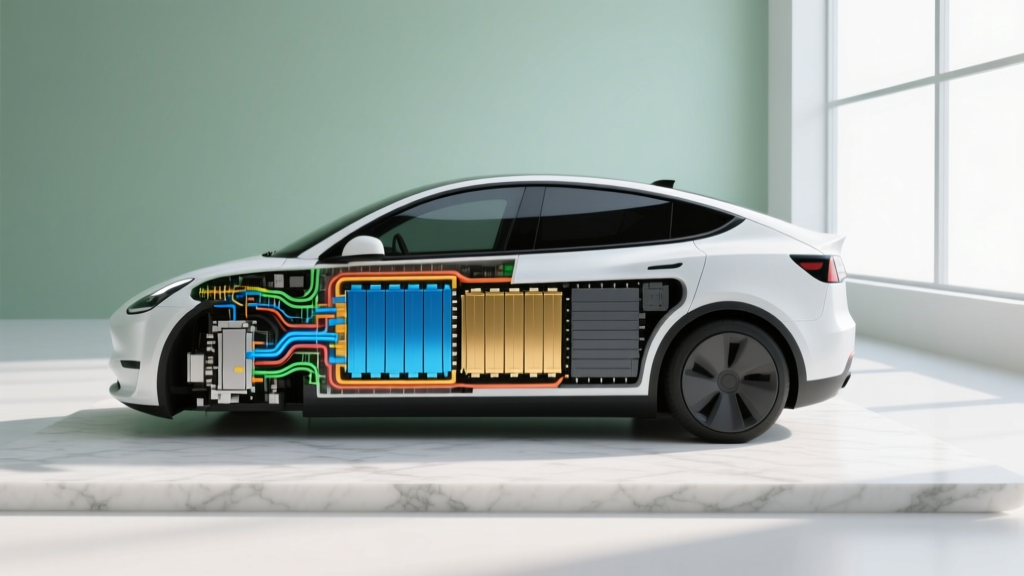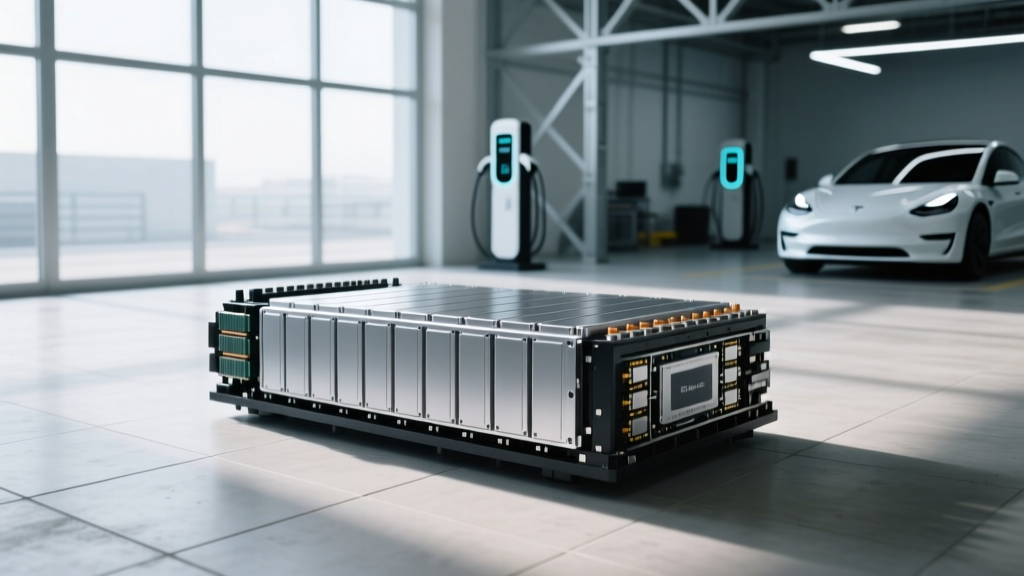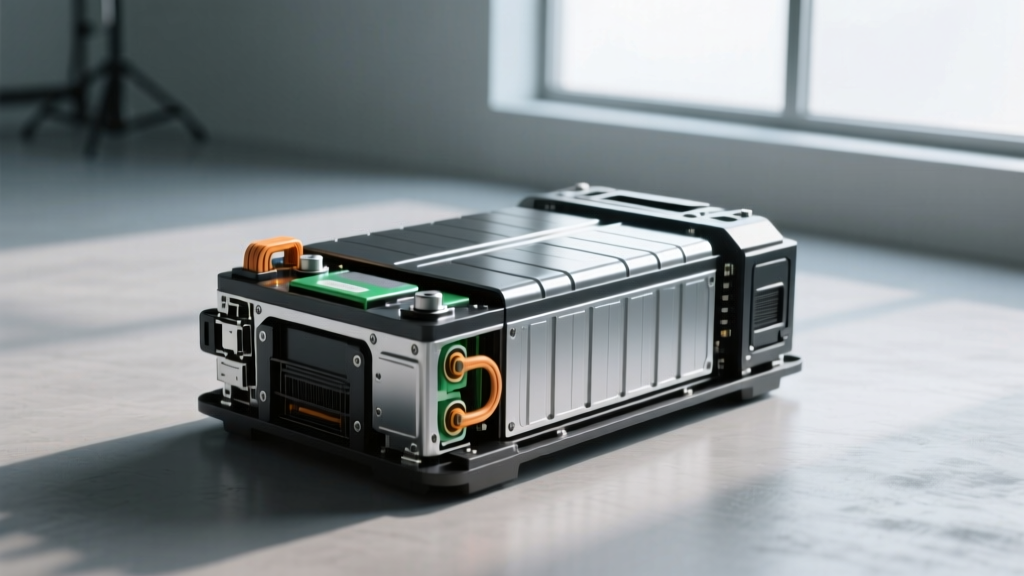
If you're searching for when or how to remove a battery from an electric car, you're likely facing one of three scenarios: your EV's high-voltage traction battery has degraded below usable capacity, a module has failed out of warranty, or you're evaluating a used EV and want to understand the financial risk of a future swap. The good news, backed by fleet data from Tesla, Geotab, and Consumer Reports, is that most modern EV batteries outlast the vehicles they power. But when replacement is needed, the costs, chemistry choices, and warranty rules matter enormously.
This guide walks through the real numbers on EV battery longevity, degradation curves, replacement pricing across popular models, and the chemistry trade-offs that determine how your pack ages. We'll also cover how to monitor State of Health (SoH) and what emerging tech like solid-state cells might mean for future replacements.
How Long Do EV Batteries Actually Last?
The short answer: most EV batteries are engineered to last 15–20 years or 200,000+ miles before reaching 70–80% of their original capacity. Data from Geotab's fleet study of over 10,000 EVs shows an average annual degradation rate of roughly 2.3% per year across all chemistries, meaning a typical pack retains about 88% capacity after five years.
Real-world longevity varies based on chemistry, thermal management, and owner habits. Tesla's 2024 Impact Report noted that Model S and Model X vehicles showed approximately 15% battery degradation at 150,000 miles. Nissan Leaf owners (especially early 24 kWh and 30 kWh models without active liquid cooling) have seen steeper curves — some reporting 20–25% loss by 100,000 miles in hot climates.
Typical Degradation Trajectory (NMC, liquid-cooled):
- Year 1: ~3–5% loss (initial "break-in" drop)
- Years 2–5: ~1.5–2.5% per year (linear phase)
- Years 6–10: ~1–2% per year (plateau phase)
- Year 10 expected SoH: ~80–88% depending on climate and charging habits
The critical threshold for most owners is around 70% State of Health — the point where range reduction becomes noticeably limiting for daily driving and the battery typically qualifies for warranty replacement.
LFP vs NMC/NCA: Which Chemistry Ages Better?
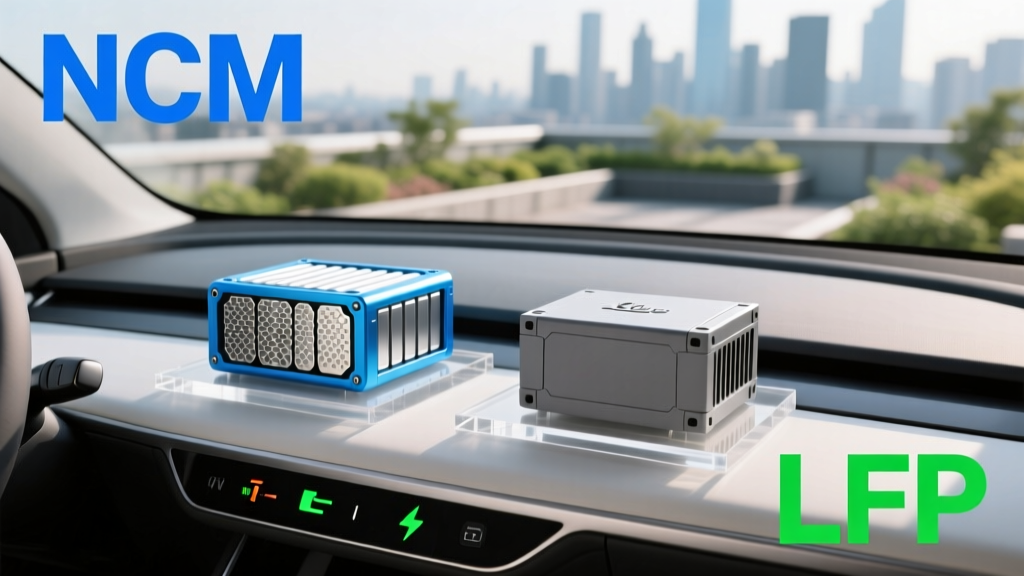
The chemistry inside your battery pack is the single biggest determinant of how it degrades and whether you'll ever need to remove it. Two chemistries dominate the 2026 EV market:
| Factor | LFP (Lithium Iron Phosphate) | NMC/NCA (Nickel Manganese Cobalt / Nickel Cobalt Aluminum) |
|---|---|---|
| Energy Density | Lower (~160 Wh/kg cell-level) | Higher (~250–300 Wh/kg cell-level) |
| Cycle Life | 3,000–5,000+ cycles | 1,000–2,000 cycles typical |
| Degradation Rate | Slower; flatter curve | Faster initial drop, then moderate |
| Cold-Weather Performance | Weaker below 32°F; slower charging | Better low-temp discharge and regen |
| Cost per kWh | ~$90–$110 (2026 cell pricing) | ~$120–$150 (2026 cell pricing) |
| Recommended SoC for Daily Use | 100% (no penalty) | 80% for daily; 100% only for trips |
| Common In (2026 Models) | Tesla Model 3/Y RWD, Ford Mustang Mach-E Select SR, BYD models | Tesla Long Range, Hyundai Ioniq 5/6, Kia EV6/EV9, Rivian, GM Ultium LR |
Which is better? It depends on your use case. LFP packs are the clear winner for longevity and cost — they tolerate daily 100% charging and have dramatically longer cycle life, making battery removal far less likely over the vehicle's life. NMC/NCA packs deliver more range in a lighter package and perform better in cold climates, but they're more sensitive to high SoC storage and frequent DC fast charging.
What Does the EV Battery Warranty Actually Cover?
Federal law mandates a minimum battery warranty of 8 years / 100,000 miles (10 years / 150,000 miles in California and states that follow CARB standards). Most manufacturers exceed these minimums. Here's how major brands structure coverage in 2026:
| Manufacturer | Warranty Period | Capacity Retention Threshold |
|---|---|---|
| Tesla (Model 3/Y LFP) | 8 yr / 120,000 mi | 70% SoH |
| Tesla (Model S/X) | 8 yr / 150,000 mi | 70% SoH |
| Hyundai / Kia | 10 yr / 100,000 mi | 70% SoH |
| GM (Ultium vehicles) | 8 yr / 100,000 mi | 70% SoH |
| Ford | 8 yr / 100,000 mi | 70% SoH |
| Rivian | 8 yr / 175,000 mi | 70% SoH |
| BMW | 8 yr / 80,000 mi | 70% SoH |
Key warranty details owners often miss:
- Threshold matters: If your battery drops to 72% SoH at year 7, you won't qualify for replacement — even though you've lost over a quarter of your range.
- "Defect" vs "degradation": Warranties cover failure and excessive degradation below the threshold. Normal, gradual capacity loss above the threshold is considered wear.
- Module vs full pack: Some manufacturers (GM, BMW) may replace individual modules rather than the entire pack, which is less disruptive and less costly for them.
- Transferability: Most factory battery warranties transfer to second owners, which matters for resale value.
- The IRS §30D tax credit has no bearing on warranty coverage, but battery sourcing rules affect whether a new vehicle qualifies for the credit in the first place.
How Much Does It Cost to Remove and Replace an EV Battery?
Out-of-warranty battery replacement remains one of the most expensive repairs in the EV world, but the cost picture has improved significantly since the early 2010s. Cell prices have fallen from over $1,000/kWh in 2010 to roughly $100–$130/kWh at the pack level in 2026, according to BloombergNEF data. Still, labor, diagnostics, and dealer markup add substantially to the final invoice.
| Vehicle (Representative) | Battery Size | Estimated Replacement Cost (Parts + Labor) |
|---|---|---|
| Tesla Model 3 RWD (LFP) | ~60 kWh | $8,000–$12,000 |
| Tesla Model Y Long Range | ~75 kWh | $12,000–$16,000 |
| Hyundai Ioniq 5 (Long Range) | ~77.4 kWh | $11,000–$15,000 |
| Ford F-150 Lightning (Extended) | ~131 kWh | $18,000–$25,000+ |
| Chevrolet Bolt EV/EUV (older 65 kWh) | 65 kWh | $6,500–$9,000 (recall-adjusted pricing) |
| Nissan Leaf (40/62 kWh) | 40–62 kWh | $6,500–$10,000 |
| Rivian R1T / R1S (Large Pack) | ~135 kWh | $18,000–$22,000+ |
| BMW iX xDrive50 | ~105 kWh usable | $16,000–$22,000 |
When is replacement typically needed? For most vehicles, it isn't. Data from Consumer Reports and fueleconomy.gov suggests fewer than 5% of EVs require a full battery replacement during their first 15 years. When it does happen, it's usually due to:
- A manufacturing defect that manifests within the warranty period (covered).
- Physical damage from a collision or road debris impact (insurance claim).
- Extreme degradation in early-generation packs without active thermal management (e.g., 2011–2017 Nissan Leaf in hot climates).
- Catastrophic cell or BMS failure in high-mileage vehicles beyond the warranty window.
Module-level repair: Many shops now offer individual module replacement for $1,500–$4,000, addressing a single weak cell group rather than swapping the entire pack. This option is increasingly viable for NMC packs with modular architectures (GM Ultium, some BMW and VW MEB platforms).
Factors That Accelerate Battery Degradation
Not all EV miles are created equal. The following habits and conditions have measurable, documented effects on battery lifespan:
- Frequent DC fast charging above 150 kW: Studies show that packs charged primarily via DCFC degrade 1–2% faster per year than those charged predominantly on Level 2. The heat generated at high C-rates stresses cell chemistry.
- Sustained high State of Charge: Storing an NMC pack at 100% SoC for extended periods (days or weeks) accelerates electrolyte decomposition. LFP is far more tolerant of 100% storage.
- Extreme heat exposure: Ambient temperatures above 95°F combined with high SoC create the worst-case degradation scenario. Active liquid cooling mitigates this substantially.
- Extreme cold charging without preconditioning: Charging below 25°F without warming the battery can cause lithium plating on the anode — a permanent capacity loss mechanism.
- Deep cycling (0–100%): Regularly draining to near-zero and recharging to full stresses cells more than partial cycles (20–80%).
- High-performance driving: Sustained high-current discharge (track use, heavy towing in hot weather) generates internal heat that compounds degradation.
Battery Longevity Checklist for EV Owners:
- ☐ Set daily charge limit to 80% for NMC/NCA packs; 100% is fine for LFP
- ☐ Use Level 2 home charging as your primary method; reserve DCFC for road trips
- ☐ Enable battery preconditioning before fast charging (most EVs do this automatically when a Supercharger/DCFC is navigated to)
- ☐ Avoid leaving the vehicle at 100% SoC for more than 24 hours
- ☐ In extreme heat, park in shade or a garage when possible
- ☐ In sub-freezing climates, plug in overnight to allow the thermal management system to maintain pack temperature
- ☐ Minimize repeated 0% discharges — charge before the pack drops below 10%
How to Check Your EV Battery's State of Health
State of Health (SoH) is a percentage representing your battery's current maximum capacity relative to its original capacity. A new pack is 100% SoH; a pack that originally held 75 kWh and now holds 63.75 kWh is at 85% SoH.
Methods to check SoH:
- In-vehicle display: Tesla provides a battery health readout in the service menu. Some Hyundai/Kia models show degradation data in the EV diagnostics screen. BMW's iDrive includes a battery health indicator.
- OBD-II dongles and apps: Tools like LeafSpy (Nissan Leaf), Scan My Tesla, or Car Scanner ELM OBD2 can read BMS-reported SoH, cell voltage deltas, and pack temperature data directly.
- Dealer diagnostic check: Any authorized service center can run a full battery health report. Request this during routine service or before purchasing a used EV.
- Third-party inspection services: Companies like Recurrent Auto provide battery health reports based on telematics data, often available to prospective buyers.
What to look for: Cell voltage imbalance (any cell group more than 50 mV below the pack average at similar SoC) can indicate a failing module. Rapid SoH drops (more than 3–4% in a single year after the initial break-in period) warrant a dealer inspection.
Can You Remove an EV Battery Yourself?
The short answer: technically yes, practically no — and almost certainly not safely without professional equipment. High-voltage EV battery packs operate at 400V (most vehicles) or 800V (Hyundai/Kia E-GMP, Porsche Taycan, GM Ultium). Contact with live bus bars or damaged cells can be lethal.
Professional removal requires:
- A high-voltage-certified technician (SAE J2990 / OEM-specific training)
- Insulated tools rated for the pack voltage
- A vehicle lift capable of supporting 1,000–2,000+ lbs of battery weight
- Proper lockout/tagout procedures to isolate the high-voltage system
- Environmental compliance for coolant drainage and cell disposal/recycling
If you're considering DIY removal to save on labor costs, the risk-to-savings ratio is extremely unfavorable. Labor for a professional battery swap typically runs $1,500–$3,500 — a small fraction of the total replacement cost and a worthwhile investment in safety and warranty preservation.
What's Next: Solid-State, Silicon Anodes, and Future Replacements
Emerging battery technologies promise to change the replacement calculus, but realistic timelines matter:
- Solid-state batteries: Toyota, Samsung SDI, and QuantumScape are targeting limited production in 2027–2029 vehicles. These cells promise 2x energy density and potentially 5,000+ cycle life, but mass-market availability is not expected before 2030. Not currently available in any production vehicle.
- Silicon-dominant anodes: Companies like Sila Nanotechnologies and Group14 are already supplying silicon-carbon anode materials to manufacturers. These improve energy density by 20–40% and are appearing in select 2025–2026 models (Mercedes G-Class EV, certain Panasonic cells). Degradation characteristics are still being evaluated at scale.
- Sodium-ion batteries: CATL and BYD have begun production of sodium-ion cells for lower-cost, shorter-range EVs. These offer excellent cycle life and cold performance but lower energy density. Expect them in budget city EVs, not long-range models.
For current EV owners, these technologies won't affect your existing battery. But they may influence the availability and cost of replacement packs 10–15 years from now, as next-gen cells could potentially be adapted to existing pack form factors through aftermarket or OEM refurbishment programs.
Frequently Asked Questions
Do EV batteries need to be replaced regularly like a gas car's 12V battery?
No. The high-voltage traction battery is fundamentally different from the small 12V auxiliary battery (which does need replacement every 3–5 years, like any car battery). The traction battery is designed to last the life of the vehicle in most cases, with fewer than 5% requiring replacement in the first 15 years of ownership.
Will my EV battery suddenly stop working?
Catastrophic, overnight failure is extremely rare. Degradation is a gradual process — you'll notice range decreasing over years, not days. Sudden failures are usually tied to manufacturing defects (covered under warranty), physical damage, or BMS faults, all of which typically trigger warning lights and limp-home modes before the vehicle becomes inoperable.
Is it worth replacing the battery on an older EV?
It depends on the vehicle's value and your attachment to it. For a 2018 model worth $15,000, a $12,000 battery replacement may not make financial sense. For a well-maintained vehicle you plan to keep another decade, or a model with high sentimental or utility value, it can be worthwhile. Module-level repairs often offer a middle ground at $1,500–$4,000.
Does fast charging ruin my EV battery?
"Ruin" is too strong, but frequent exclusive use of DC fast charging does measurably accelerate degradation — roughly 1–2% additional loss per year compared to primarily Level 2 charging. Occasional fast charging on road trips has negligible impact. The key is making Level 2 home or workplace charging your daily routine.
How do I maximize my EV battery's lifespan?
Follow the battery care checklist above: charge to 80% daily (NMC) or 100% (LFP), avoid extreme SoC storage, precondition before fast charging, minimize deep discharges, and park in moderate temperatures when possible. These habits can add 3–5% SoH retention over a decade of ownership.
What happens to old EV batteries after removal?
Removed EV batteries are increasingly repurposed for stationary energy storage ("second life" applications) before eventual recycling. Companies like Redwood Materials, Li-Cycle, and Cirba Solutions recover 95%+ of critical minerals (lithium, cobalt, nickel) through hydrometallurgical processes. Most manufacturers have take-back programs, and disposal is regulated under EPA and state hazardous waste rules.