Quick Verdict: What Redodo Actually Makes (and Doesn't)
If you've landed on a Redodo battery review while researching EV batteries, you're likely encountering the brand in one of three contexts: a 12V LiFePO4 drop-in replacement for your EV's auxiliary system, a DIY solar/RV energy storage build, or an EV conversion project using prismatic LFP cells. Redodo (formerly Ampere Time) manufactures lithium iron phosphate (LiFePO4) batteries primarily for marine, RV, solar, and off-grid applications — not OEM high-voltage traction packs for production EVs like Tesla, Hyundai, or Ford.
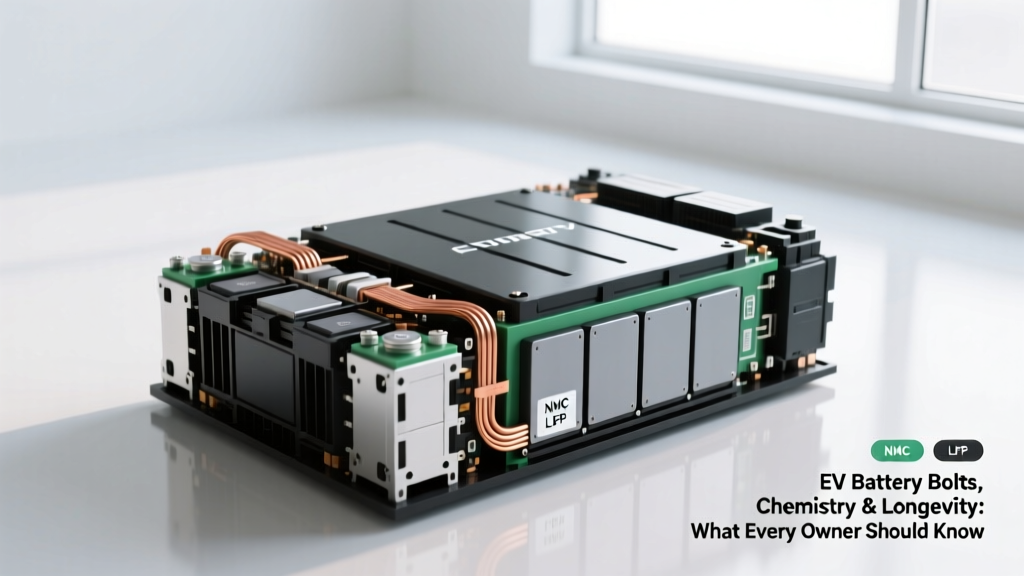
This matters because conflating a 12V/24V/48V LiFePO4 accessory battery with a 400V-800V EV traction battery leads to bad purchase decisions. In this review, we evaluate Redodo's LFP lineup on its actual merits — chemistry, BMS quality, cycle life, and value — while also using it as a practical entry point to explain LFP vs. NMC battery chemistry, degradation science, warranty realities, and replacement economics for EV owners in 2026.
Redodo Battery Lineup: Specs and Build Quality
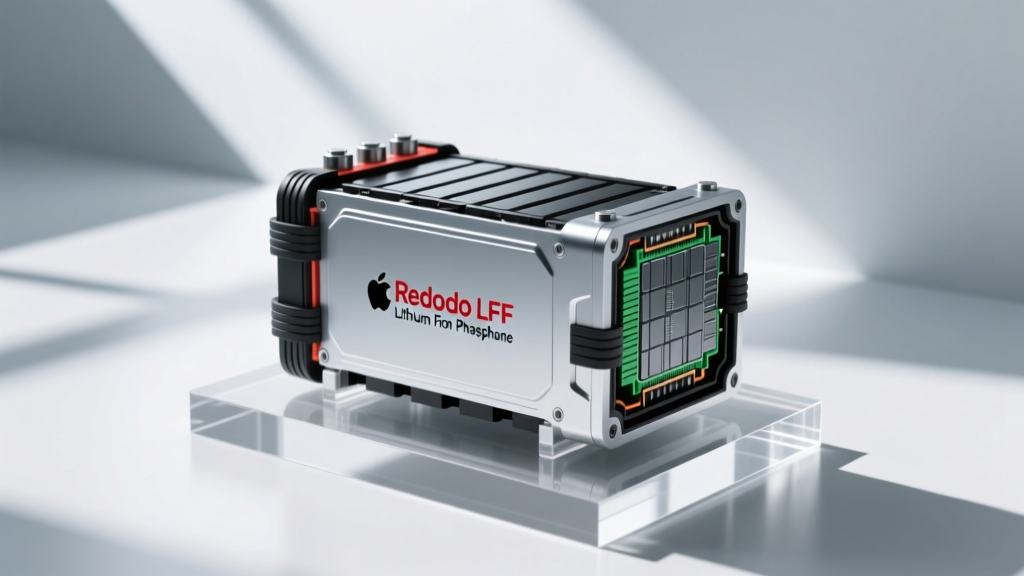
Redodo's current catalog spans 12V 100Ah through 48V 280Ah configurations, all using LiFePO4 chemistry with integrated Battery Management Systems (BMS). We evaluated the 12V 100Ah Mini and the 12V 200Ah Plus — two popular models for EV auxiliary replacement and small-scale energy storage.
| Model | Voltage | Capacity (kWh) | BMS Rating | Cycle Life | Weight | MSRP |
|---|---|---|---|---|---|---|
| 12V 100Ah Mini | 12.8V | 1.28 kWh | 100A continuous | 4,000+ @ 80% DoD | 24.3 lbs | $279 |
| 12V 200Ah Plus | 12.8V | 2.56 kWh | 200A continuous | 4,000+ @ 80% DoD | 47.6 lbs | $499 |
| 24V 100Ah | 25.6V | 2.56 kWh | 100A continuous | 4,000+ @ 80% DoD | 48.5 lbs | $559 |
| 48V 100Ah Server Rack | 51.2V | 5.12 kWh | 100A continuous | 6,000+ @ 80% DoD | 96 lbs | $1,199 |
Build quality on the units we inspected is solid for the price tier: ABS or metal casing, Grade-A prismatic cells (Redodo claims EVE or CATL sourcing on higher-end models), and BMS boards with over-current, over-voltage, under-voltage, short-circuit, and temperature protection. Bluetooth monitoring is available on "Smart" variants, letting you track State of Charge (SoC), voltage per cell group, temperature, and cycle count via a phone app.
LFP vs. NMC/NCA Chemistry: The Trade-Offs That Matter
Redodo uses LiFePO4 (LFP) chemistry exclusively. Most production EVs in 2026 use either LFP or NMC (nickel manganese cobalt) / NCA (nickel cobalt aluminum) — and the differences are substantial. Tesla's standard-range Model 3 and Model Y use CATL-supplied LFP packs; long-range variants use NMC/NCA. Ford, BYD, and Rivian also deploy LFP in select trims.
| Attribute | LFP (LiFePO4) | NMC / NCA |
|---|---|---|
| Energy Density (Wh/kg) | 140–180 | 220–300 |
| Cycle Life (to 80% SoH) | 3,000–6,000+ | 1,000–2,500 |
| Thermal Stability | Excellent (270°C+ onset) | Moderate (~210°C onset) |
| Cold-Weather Performance | Weaker below 0°C (charge restriction) | Better low-temp charge acceptance |
| Cost per kWh (2026) | $80–$110 | $120–$155 |
| Cobalt/Nickel Dependency | None | Yes (supply chain risk) |
| Voltage Curve | Flat (3.2V nominal) | Steeper (3.7V nominal) |
| Typical Use Case | Standard-range EVs, storage, marine | Long-range EVs, performance models |
The bottom line: LFP wins on longevity, safety, and cost — which is why Redodo and similar LFP manufacturers can confidently claim 4,000+ cycles. NMC/NCA wins on energy density, which is why long-range EVs still use it to hit 320+ EPA miles without excessive pack weight. If you're evaluating LFP for an EV conversion or auxiliary application, its heavier weight per kWh is the primary engineering compromise.
EV Battery Degradation: What the Data Actually Shows
One reason Redodo's cycle-life claims resonate is that real-world EV traction battery degradation data has been reassuring — far better than early skeptics feared.
- Tesla 2025 Impact Report: Model 3/Y packs retain ~88% capacity at 200,000 miles on average.
- Geotab fleet study (2024, 10,000+ EVs): Average degradation of 1.8% per year across all chemistries; LFP packs degraded ~1.2%/yr vs. NMC at ~2.1%/yr.
- Recurrent Auto (2025 dataset): Chevrolet Bolt (NMC) fleet average 93% SoH at 5 years / 60,000 miles; Tesla Model 3 LFP variants showed 95% SoH at equivalent age.
- Consumer Reports survey (2025): Less than 3% of EVs required traction battery replacement within the first 8 years, and most of those were covered under warranty.
For context, a Redodo 12V 100Ah LFP pack rated at 4,000 cycles to 80% depth of discharge would, in daily cycling, theoretically last 10+ years before reaching 80% State of Health (SoH). In an EV auxiliary role — where the DC-DC converter keeps it near full charge with minimal cycling — lifespan could be far longer.
Battery Warranty Terms: What OEMs Actually Cover
Understanding OEM battery warranties helps contextualize whether a third-party LFP pack like Redodo makes sense for your use case. Federal law mandates a minimum 8-year/100,000-mile warranty on EV battery packs (10 years/150,000 miles in CARB states). Here's what major manufacturers offer in 2026:
| Manufacturer | Warranty Term | Capacity Threshold | Notes |
|---|---|---|---|
| Tesla (Model 3 LFP) | 8 yr / 100,000 mi | 70% retention | 120,000 mi for Long Range (NMC) |
| Hyundai / Kia | 10 yr / 100,000 mi | 70% retention | Best-in-class term length |
| Ford (Mustang Mach-E, F-150 Lightning) | 8 yr / 100,000 mi | 70% retention | Transferable to second owner |
| GM (Ultium platform) | 8 yr / 100,000 mi | 70% retention | Includes battery management components |
| BMW | 8 yr / 100,000 mi | 70% retention | Some models offer 80% threshold |
| Rivian | 8 yr / 175,000 mi | 70% retention | Higher mileage cap for R1T/R1S |
A Redodo battery carries a 5-year manufacturer warranty (prorated after year 2 on some models) — reasonable for its category but fundamentally different from OEM traction battery coverage. If you're using Redodo cells in a DIY EV conversion, you are your own warranty administrator.
EV Battery Replacement Cost: Reality vs. Fear
The most persistent EV myth is that battery replacement will total the car. While replacement costs are real, the data shows most EV batteries outlast the vehicle's useful life. For the minority that do need replacement, here's the 2026 landscape:
| Vehicle / Pack Size | Battery Capacity | Replacement Cost (Parts + Labor) | Typical Replacement Trigger |
|---|---|---|---|
| Nissan Leaf (40 kWh) | 40 kWh | $6,500–$9,000 | Post-warranty degradation below 60% SoH |
| Chevrolet Bolt EV (65 kWh) | 65 kWh | $9,000–$14,000 | Cell imbalance / post-warranty failure |
| Tesla Model 3 (LFP, 60 kWh) | 60 kWh | $10,000–$13,000 | Rare; mostly accident damage |
| Tesla Model S/X (100 kWh) | 100 kWh | $15,000–$22,000 | Older vehicles (2013–2018) post-warranty |
| Ford F-150 Lightning (131 kWh) | 131 kWh | $18,000–$28,000 | Extremely rare; mostly under warranty |
| Hyundai Ioniq 5 (77.4 kWh) | 77.4 kWh | $11,000–$16,000 | Rare; covered under 10yr warranty |
Critical context: battery costs per kWh have fallen from ~$400/kWh in 2015 to approximately $115–$140/kWh in 2026 (per BloombergNEF battery price surveys). That trend continues, meaning any replacement needed in the 2030s will cost less than today's estimates. Additionally, module-level repair — replacing individual failed modules rather than the entire pack — is increasingly available through independent EV shops for $2,000–$6,000.
Factors That Accelerate (or Preserve) Battery Life
Whether you're managing an OEM traction pack or a Redodo LFP system, the physics of lithium-ion degradation follow the same principles:
- Avoid sustained 100% SoC: For NMC/NCA packs, charge to 80% daily; reserve 100% for road trips. LFP packs tolerate 100% better and actually benefit from periodic full charges for BMS cell-balancing calibration.
- Minimize DC fast charging: Occasional fast charging is fine; daily 150+ kW sessions accelerate degradation by ~0.5–1.0% extra per year (Geotab data). Use Level 2 (7–11 kW) as your primary charging method.
- Precondition in cold weather: Battery thermal management systems (standard on all modern EVs) work best when the pack is preconditioned before driving or charging. Tesla's "Trip Planner" and Hyundai's preconditioning feature handle this automatically when a Supercharger or DC station is entered in navigation.
- Avoid extreme heat storage: Parking in 100°F+ environments at high SoC for weeks accelerates calendar aging. If storing, aim for 50% SoC in a cool location.
- Don't fear the bottom 10%: Occasional low SoC is fine; it's sustained storage at 0% that causes copper dissolution damage. Modern BMS systems maintain a buffer (typically 2–5 kWh below displayed 0%).
- For Redodo/aftermarket LFP: Keep the BMS firmware updated, avoid continuous discharge above the rated C-rate, and ensure proper ventilation in enclosed installations.
How to Check and Monitor Battery State of Health (SoH)
State of Health (SoH) represents your battery's current maximum capacity as a percentage of its original capacity. A new EV battery starts at 100% SoH; warranty coverage typically triggers at 70%.
OEM methods for checking SoH:
- Tesla: Service menu (hold model name on About screen → swipe right) shows nominal vs. typical range. Third-party apps like Tessie or Stats for Tesla calculate SoH from charge logs.
- Hyundai/Kia: Dealer diagnostic tool reads BMS-reported SoH. The EV's infotainment system shows estimated range at full charge, which you can compare to original EPA figures.
- Ford: FordPass app and dealer OBD-II diagnostics provide SoH data.
- OBD-II scanners: Tools like the OBDeleven (for VW/Audi) or generic ELM327-based apps (Leaf Spy Pro for Nissan Leaf) read BMS data directly, including cell voltages, SoH%, and degradation curves.
For Redodo Smart batteries: The companion Bluetooth app displays real-time cell voltages (millivolt precision), pack voltage, current draw, temperature, SoC percentage, and cumulative Ah throughput — which you can use to estimate SoH by comparing actual delivered capacity to rated capacity over a full discharge cycle.
Emerging Battery Tech: What's Coming (and When)
While LFP and NMC dominate 2026 production EVs, several next-generation technologies are in various stages of commercialization:
Solid-state batteries: Toyota, Samsung SDI, and QuantumScape are targeting 2027–2029 production starts. Promised benefits include 2x energy density (~400–500 Wh/kg), 10-minute fast charging, and improved safety. Toyota has announced a 2027–2028 rollout in limited production vehicles. These are not yet commercially available and should be considered forward-looking.
Silicon-dominant anodes: Companies like Sila Nanotechnologies and Group14 are replacing graphite anodes with silicon composites, boosting energy density 20–40%. Mercedes-Benz's next-gen G-Class EV (announced for 2027) is expected to feature Sila's silicon anode cells. Early production volumes are limited.
Sodium-ion batteries: CATL and BYD have begun deploying sodium-ion cells in low-cost Chinese-market EVs (e.g., Chery, JAC). Energy density is lower (~120–140 Wh/kg) but raw materials are abundant and cheap. US-market availability is projected for 2028+ in budget segments.
LMFP (lithium manganese iron phosphate): An evolution of LFP adding manganese for ~15–20% higher energy density while retaining LFP's safety and longevity advantages. CATL and Gotion have begun production; expect US-market vehicles with LMFP by 2027–2028.
Redodo Battery Review: Final Assessment and Buyer Framework
Redodo Pros
- Competitive pricing ($279 for 12V 100Ah vs. $400+ for Victron)
- Grade-A prismatic cells with matched internal resistance
- Integrated BMS with comprehensive protections
- 4,000+ cycle life claim (consistent with LFP chemistry)
- Bluetooth monitoring on Smart models
- 5-year warranty (solid for the category)
- Good Amazon availability and return policy
Redodo Cons
- Not suitable as OEM EV traction battery replacement
- BMS low-temperature cutoff prevents charging below 0°C (32°F) without heating
- Bluetooth app is functional but basic vs. VictronConnect
- Warranty support is email-based (no US service centers)
- Cell sourcing transparency varies by batch
- Parallel/series configurations require careful matching
Decision Framework: Is Redodo Right for Your Project?
Choose Redodo if: You need a cost-effective 12V/24V/48V LFP battery for EV auxiliary replacement, solar storage, marine, or an EV conversion where you're building your own pack from prismatic cells. The price-to-cycle-life ratio is among the best in the consumer LFP market.
Look elsewhere if: You need an OEM-spec traction battery for a production EV (contact your dealer or check NHTSA for any open battery recalls). For premium marine/RV applications where support infrastructure matters, Victron or Battle Born may justify their higher cost. For EV conversions requiring series configurations above 48V, consider purpose-built EV module suppliers like Thunderstruck Motors or EV West.
Frequently Asked Questions
How long do EV batteries last in years and miles?
Based on fleet data from Geotab, Recurrent Auto, and manufacturer reports, modern EV traction batteries (both LFP and NMC) typically retain 85–93% of original capacity at 100,000–150,000 miles and 8–12 years of use. LFP chemistry, like what Redodo uses, shows even slower degradation — often 1–1.5% per year under normal conditions. Most EV batteries outlast the vehicle itself; outright failure within the warranty period is rare (under 3% per Consumer Reports 2025 data).
How much does an EV battery cost to replace?
OEM traction battery replacement in 2026 ranges from approximately $6,500 (Nissan Leaf 40 kWh) to $28,000 (Ford F-150 Lightning 131 kWh extended range), including parts and labor. However, the vast majority of replacements occur under the federally mandated 8-year/100,000-mile warranty at no cost to the owner. Module-level repairs at independent shops can cost $2,000–$6,000 for localized cell failures.
What does the EV battery warranty actually cover?
Federal law requires a minimum 8-year/100,000-mile warranty (10 years/150,000 miles in CARB states like California, New York, and Massachusetts). Coverage triggers when the battery's usable capacity drops below 70% of original capacity (some manufacturers use 65% or 80%). The warranty covers defects, premature degradation, and complete failure — but not damage from accidents, flooding, or unauthorized modifications. Check IRS guidelines for how battery replacement interacts with §30D clean vehicle credits.
LFP vs. NMC — which battery chemistry is better for EVs?
Neither is universally "better" — it depends on your priority. LFP (used by Redodo, and in standard-range Tesla Model 3/Y, BYD, and Ford's base F-150 Lightning) offers longer cycle life (4,000+ vs. 1,500–2,500 cycles), superior thermal safety, lower cost, and no cobalt. NMC/NCA (used in long-range Tesla, Hyundai Ioniq 5 Long Range, and most European EVs) offers higher energy density, enabling 300+ EPA miles without excessive pack weight, and better cold-weather charge acceptance. For daily commuting and standard-range needs, LFP is the pragmatic choice. For road-trip-heavy drivers needing maximum range, NMC still leads.
How do I check and maximize my EV battery health?
Check SoH through your vehicle's service menu, dealer diagnostics, or OBD-II apps (Leaf Spy, Tessie, OBDeleven). Maximize longevity by charging to 80% daily on NMC packs (100% weekly on LFP for cell balancing), using Level 2 home charging as your primary method, preconditioning the battery before DC fast charging in cold weather, and avoiding prolonged storage at extreme SoC levels or in high heat. For Redodo LFP packs, keep the BMS app updated and ensure adequate ventilation during high-current discharge.
Sources: EPA fuel economy data via fueleconomy.gov, Geotab EV Battery Degradation Study (2024), Recurrent Auto Battery Health Reports (2025), Tesla Impact Report 2025, NHTSA recall database, IRS §30D credit guidance.