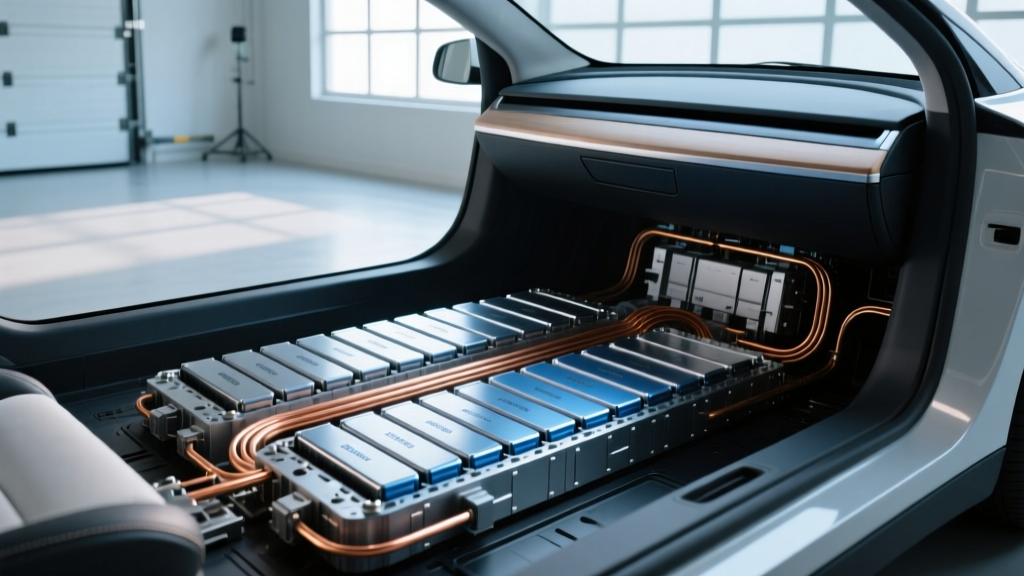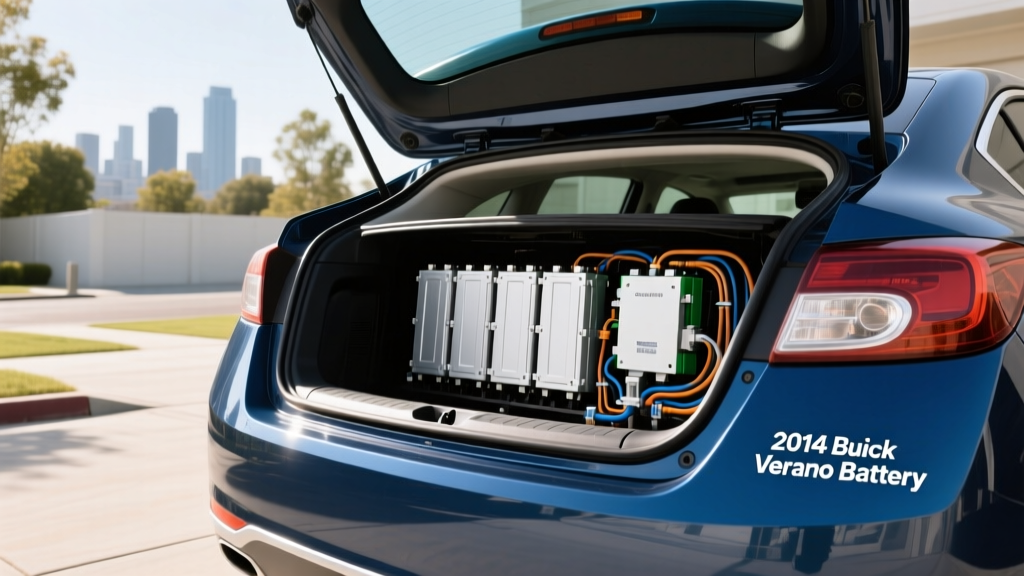
The average electric vehicle battery pack is engineered to outlast the car it powers. But eventually, every pack reaches the end of its automotive life — whether at 150,000 miles, 200,000 miles, or beyond. That raises a question more buyers are asking in 2026: what happens when these massive lithium-ion packs retire? The answer involves a rapidly maturing recycling car batteries industry, second-life applications, and a supply chain being rebuilt around recovered materials.
Before we get to end-of-life, though, you need to understand what's inside your EV, how it degrades, and what you can do to keep it healthy for the long haul. This guide covers the full battery lifecycle — from chemistry and degradation to warranty, replacement, and recycling.
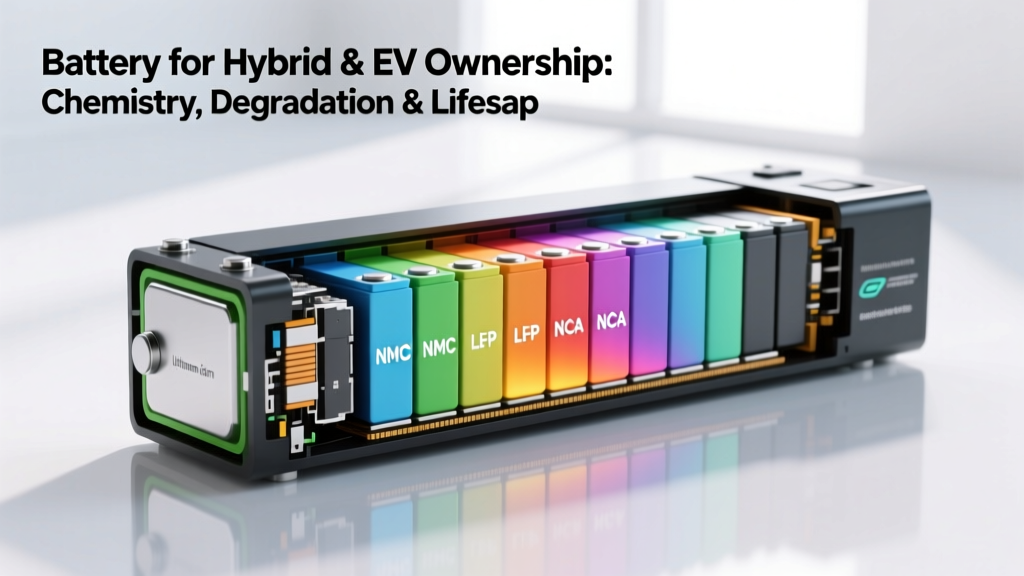
LFP vs NMC: The Two Chemistries Dominating EV Batteries
Not all EV batteries are the same. The two dominant lithium-ion chemistries in 2026 — lithium iron phosphate (LFP) and nickel manganese cobalt (NMC/NCA) — differ in energy density, longevity, cold-weather behavior, and cost. Which one your EV uses affects everything from real-world range to how recyclable the pack is at end-of-life.
| Attribute | LFP (Lithium Iron Phosphate) | NMC/NCA (Nickel Manganese Cobalt / Nickel Cobalt Aluminum) |
|---|---|---|
| Energy Density | Lower (~160–180 Wh/kg cell-level) | Higher (~220–260 Wh/kg cell-level) |
| Cycle Life | 3,000–5,000+ full cycles | 1,000–2,000 full cycles |
| Cold-Weather Performance | Moderate loss; slower charge acceptance below freezing | Better low-temp performance with active thermal management |
| Cost per kWh | Lower — no cobalt or nickel | Higher — commodity-priced nickel and cobalt |
| Recyclability | Lower material recovery value (iron, phosphate) | Higher recovery value (nickel, cobalt, manganese) |
| Common 2026 Applications | Tesla Model 3/Y RWD, Ford Mustang Mach-E Select, BYD models | Hyundai Ioniq 5/6, Rivian R1T/R1S, Chevrolet Silverado EV, long-range trims |
The trade-off in plain terms: LFP packs are cheaper, last more charge cycles, and avoid conflict minerals — but they're heavier for the same energy capacity, which limits range in smaller vehicles. NMC packs pack more energy per kilogram, enabling 300+ mile ranges in mid-size sedans and SUVs, but they degrade faster and cost more to manufacture. Neither is universally "better" — it depends on your driving pattern and budget.
How Long Do EV Batteries Actually Last?
The short answer: far longer than most first-time EV buyers expect. Based on fleet data and manufacturer reports through 2025–2026, the median EV battery retains roughly 85–90% of its original capacity after 100,000 miles and 75–85% after 150,000 miles. Many packs continue functioning well past 200,000 miles, albeit with reduced range.
Typical EV Battery Degradation Curve (NMC Chemistry, Liquid-Cooled):
- Year 1 / ~12,000 mi: 2–4% capacity loss (initial "break-in" drop)
- Year 3 / ~36,000 mi: 5–8% total loss
- Year 5 / ~60,000 mi: 8–12% total loss
- Year 8 / ~100,000 mi: 10–15% total loss
- Year 10+ / ~150,000 mi: 15–25% total loss (varies heavily by climate and charging habits)
LFP packs tend to lose capacity more slowly after the initial break-in period, with some fleet data showing under 10% loss at 100,000 miles. Tesla's 2024 Impact Report noted their fleet averaged roughly 12% degradation at 200,000 miles for NMC packs, though real-world results vary by thermal management quality and driver habits.
Degradation is not linear. Most packs experience a steeper drop in the first 12–18 months, then settle into a slow, nearly flat decline for years. The battery doesn't suddenly "die" — it gradually holds less energy, which means less range.
What the Battery Warranty Actually Covers
Federal law mandates that EV battery warranties cover a minimum of 8 years or 100,000 miles (whichever comes first) in most states, with California Air Resources Board (CARB) states requiring 10 years / 150,000 miles. Most manufacturers exceed the minimum.
| Manufacturer | Warranty Period | Capacity Retention Threshold | Notes |
|---|---|---|---|
| Tesla (Model 3/Y) | 8 yr / 120,000 mi (LFP RWD); 8 yr / 120,000 mi (LR/AWD) | 70% | LFP warranty matches NMC on current trims |
| Hyundai / Kia | 10 yr / 100,000 mi | 70% | Among the longest coverage in the industry |
| Ford (Mach-E, F-150 Lightning) | 8 yr / 100,000 mi | 70% | Covers battery and hybrid/electric components |
| Chevrolet (Blazer EV, Equinox EV) | 8 yr / 100,000 mi | 60–70% (varies by model) | Verify specific trim terms on window sticker |
| Rivian (R1T/R1S) | 8 yr / 175,000 mi | 70% | Higher mileage cap reflects truck use case |
| BMW (i4/i5/iX) | 8 yr / 100,000 mi | 70% | Includes thermal management system |
Key detail: The warranty triggers when capacity drops below the stated threshold — typically 70% of original capacity. If your 80 kWh pack can only hold 54 kWh, you'd qualify for a warranty repair or replacement. In practice, very few owners hit this threshold within the warranty window, which is why replacement anxiety is largely overblown for first owners.
EV Battery Replacement Costs: What You'd Actually Pay
If you're buying used, keeping an EV well past the warranty period, or experience a catastrophic failure outside warranty coverage, replacement costs are real — but context matters. Most original owners never replace the battery. When they do, it's usually between 150,000 and 250,000 miles.
| Vehicle / Pack Size | Battery Capacity | Estimated Replacement Cost (Parts + Labor) | Typical Replacement Timeline |
|---|---|---|---|
| Tesla Model 3 RWD (LFP) | ~60 kWh | $10,000–$14,000 | 200,000+ mi (if needed) |
| Tesla Model Y Long Range (NMC) | ~75 kWh | $13,000–$18,000 | 180,000+ mi |
| Hyundai Ioniq 5 (NMC) | 77.4 kWh | $14,000–$20,000 | 175,000+ mi |
| Ford F-150 Lightning Extended Range | ~131 kWh | $22,000–$30,000 | 150,000+ mi |
| Chevrolet Bolt EV (NMC, older models) | 65 kWh | $9,000–$14,000 | 150,000+ mi |
| Rivian R1T Max Pack | ~149 kWh | $25,000–$35,000 | 175,000+ mi |
These costs have been declining steadily. In 2020, pack-level pricing averaged roughly $140/kWh; by 2026, industry analysts at BloombergNEF estimate average pack costs near $100–$115/kWh for NMC and below $80/kWh for LFP. Refurbished or remanufactured packs — using tested modules from retired packs — are increasingly available at 30–50% below new-pack pricing for common models.
Factors That Accelerate (or Slow) Battery Degradation
Battery lifespan isn't just about mileage — it's about how you use and store the pack. The following factors have measurable impacts on long-term State of Health (SoH):
Habits That Preserve Battery Health:
- Charge to 80% daily, 100% only for road trips. Sustained high SoC stresses NMC cathodes. LFP is more tolerant of 100% SoC and Tesla recommends periodic full charges for LFP calibration.
- Use Level 2 (AC) charging for daily needs. DC fast charging generates more heat; occasional use is fine, but daily 150+ kW sessions accelerate wear.
- Precondition the battery before fast charging. Most EVs do this automatically when you navigate to a charger. Cold batteries resist charge and can suffer lithium plating.
- Park in shade or a garage in extreme heat. Sustained 95°F+ ambient temperatures degrade cells faster, even when parked.
- Don't leave the car at 0% or 100% SoC for days. Store at 40–60% if the vehicle will sit unused for a week or more.
Habits That Accelerate Degradation:
- Frequent DC fast charging in hot weather without preconditioning
- Regularly draining below 10% SoC
- Leaving the vehicle at 100% SoC in high heat for extended periods
- Aggressive track use or sustained high-speed driving that overheats the pack
- Ignoring thermal management system warnings or coolant service intervals
How to Check Your Battery's State of Health
State of Health (SoH) is a percentage representing your battery's current maximum capacity relative to its original capacity. A new pack is 100% SoH; a pack that can only hold 72 kWh of its original 80 kWh is at 90% SoH.
Built-in tools: Most 2026 EVs display SoH or a range-estimate trend in the vehicle settings menu. Tesla shows projected range at full charge, which you can compare to the original EPA figure. Hyundai/Kia's infotainment system includes a battery condition screen. Ford's SYNC system provides battery health metrics under the EV settings.
Third-party diagnostics: Services like Recurrent offer battery health reports based on telematics data. Independent EV shops with OBD-II scanners can pull detailed cell-voltage and capacity data. For used-EV buyers, a pre-purchase battery health check (typically $100–$200) is strongly recommended — it's the single most important inspection item.
What to look for: Cell voltage imbalance (any individual cell group more than 0.1V below the pack average at full charge) can signal a weak module. A healthy pack at 50,000 miles should typically show 90–95% SoH. If a used EV at 60,000 miles shows 82% SoH, ask why — it may indicate heavy fast-charging use or exposure to extreme heat.
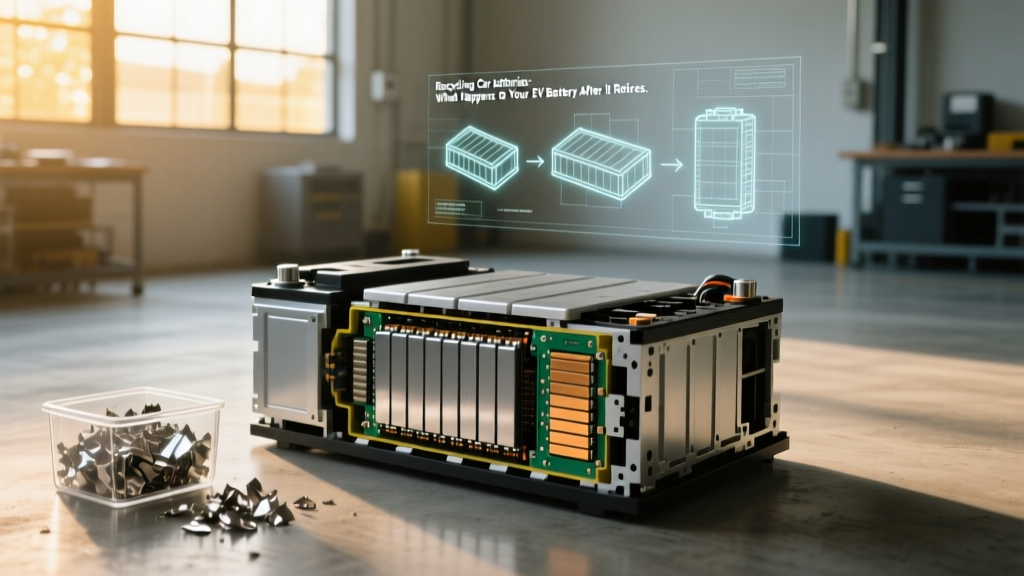
Recycling Car Batteries: Where Retired Packs Actually Go
When an EV battery drops below roughly 70–75% capacity, it may no longer satisfy a driver's range needs — but it still holds enormous value. The recycling car batteries ecosystem in 2026 operates across three tiers:
1. Second-Life Applications (70–80% SoH): Retired packs are refurbished and deployed in stationary energy storage — grid-scale battery farms, commercial building backup systems, and residential solar storage. A 75 kWh EV pack at 75% SoH still stores ~56 kWh, enough to power an average US home for nearly two days. Companies like Betteries and Redwood Materials repurpose modules for these applications, extending pack life by another 5–10 years.
2. Hydrometallurgical Recycling (below 70% SoH or damaged packs): This is where the real material recovery happens. Shredded battery cells are processed through chemical baths to extract lithium, nickel, cobalt, manganese, copper, and aluminum. Leading recyclers like Redwood Materials, Li-Cycle, and BlueOval SK report recovery rates of 90–95%+ for critical metals. According to the US Department of Energy, recycled materials from a single EV battery can supply enough recovered metals for a new pack — closing the loop.
3. Direct Recycling (emerging): A newer process that preserves cathode crystal structure rather than breaking it down to raw elements. Direct recycling could cut costs and energy use significantly, but it's still scaling from pilot to commercial production as of 2026.
The economics favor recycling: a single NMC pack contains $1,500–$3,000+ worth of recoverable nickel and cobalt at 2026 commodity prices. LFP packs have lower material value but are still recycled for lithium and aluminum. As the first large wave of EVs from 2018–2021 reaches retirement age, recycling capacity is expanding rapidly — the US had fewer than five major lithium-ion recycling facilities in 2020; by 2026, there are over a dozen operational or under construction.
What's Next: Solid-State, Silicon Anodes, and Recyclability by Design
Looking ahead, two technologies could reshape both battery longevity and recycling economics:
Solid-state batteries replace the liquid electrolyte with a solid ceramic or polymer, promising higher energy density (potentially 350+ Wh/kg), faster charging, and improved safety (no flammable electrolyte). Toyota, Samsung SDI, and QuantumScape have announced pilot production lines, but commercial availability in consumer EVs remains expected for 2028–2030, not 2026. When they arrive, solid-state packs may be simpler to recycle due to fewer hazardous materials.
Silicon-dominant anodes (replacing graphite) can increase energy density by 20–40% at the cell level. Companies like Sila Nanotechnologies and Group14 are supplying early-production silicon anode materials for select 2026–2027 models. These don't fundamentally change recycling processes but do reduce the total number of cells — and thus raw material — needed per pack.
Design for recycling: Automakers and battery suppliers are increasingly engineering packs for easier disassembly. Ford and Hyundai have joined the Global Battery Alliance, which promotes standardized module designs and material passports — digital records of each cell's chemistry and origin that streamline sorting at recycling facilities. This "design for recycling" approach could push recovery rates above 98% and make LFP recycling more economically viable.
Frequently Asked Questions
How long do EV batteries last in years and miles?
Most modern liquid-cooled EV batteries last 150,000–250,000 miles before dropping below 70% capacity, which typically translates to 12–20 years of average use. LFP packs often exceed 200,000 miles with slower degradation curves. Very few first owners need a replacement.
How much does it cost to replace an EV battery?
Replacement costs range from roughly $9,000 for a smaller pack (Chevrolet Bolt, ~65 kWh) to $30,000+ for a large truck pack (F-150 Lightning Extended Range, ~131 kWh). Most owners never pay this — the battery is covered under warranty for 8–10 years, and many packs outlast the vehicle. Refurbished packs are increasingly available at 30–50% below new pricing.
What does the EV battery warranty cover?
Battery warranties cover capacity loss below a defined threshold (usually 70% of original capacity) and defects in materials or workmanship. Coverage typically runs 8 years / 100,000 miles federally, or 10 years / 150,000 miles in CARB states. Warranties do not cover gradual, normal degradation above the threshold, or damage from accidents or improper modifications.
How do I check and maximize my EV battery's health?
Check SoH through your vehicle's built-in battery health screen or via a third-party diagnostic service. To maximize lifespan: charge to 80% for daily use (100% for LFP calibration occasionally), use Level 2 charging when possible, precondition before DC fast charging, avoid leaving the car at extreme SoC levels in high heat, and keep up with coolant system maintenance.
LFP vs NMC — which battery chemistry is better?
Neither is universally superior. LFP wins on cycle life (3,000–5,000 cycles vs 1,000–2,000), cost, and ethical sourcing (no cobalt). NMC wins on energy density, enabling longer range in the same physical space, and better cold-weather charge acceptance. If you prioritize longevity and lower cost, LFP is ideal. If you need maximum range in a mid-size vehicle, NMC remains the practical choice.
Are recycled EV battery materials actually used in new batteries?
Yes. Redwood Materials, the largest US-based lithium-ion recycler, supplies recovered copper, nickel, cobalt, and lithium directly to battery cell manufacturers including Panasonic. As of 2026, roughly 5–10% of new battery cathode material in the US supply chain comes from recycled sources, and that share is projected to reach 20–30% by 2030 as more first-generation EVs retire.
Can I recycle my EV battery myself?
No. High-voltage EV battery packs contain 400–800V systems that are lethal if mishandled. End-of-life packs must be removed by a certified technician and sent to a licensed recycling or second-life facility. Dealerships and independent EV shops handle removal and coordinate with recyclers. Never attempt to open, puncture, or disassemble a traction battery.