The Short Answer: Yes, But With Important Limits
If you're an EV owner planning air travel, you've likely wondered: can I take a rechargeable battery on a plane? Whether you're carrying portable power banks, spare lithium-ion batteries for a camera, or simply curious about the safety profile of the massive lithium battery pack sitting under your car's floor, the answer hinges on watt-hour (Wh) ratings, Federal Aviation Administration (FAA) regulations, and the specific type of battery you're dealing with.
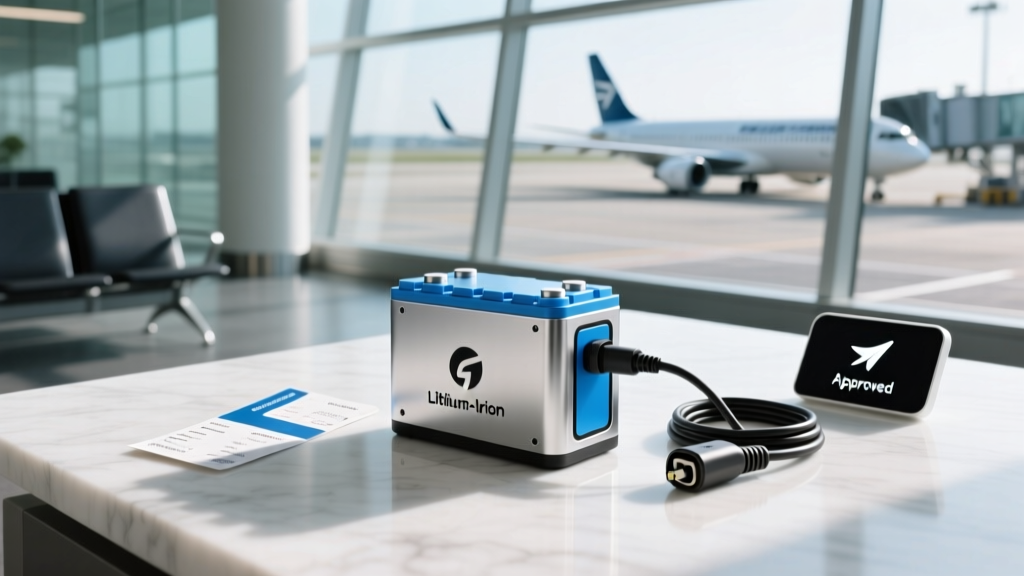
Here's the critical distinction: portable lithium-ion batteries under 100 watt-hours are allowed in carry-on luggage on commercial flights. Batteries between 100 and 160 Wh require airline approval. Anything over 160 Wh is generally prohibited in passenger aircraft. Your EV's traction battery — typically 60 to 100+ kilowatt-hours (kWh) — is in an entirely different category and stays firmly on the ground.
This guide covers FAA battery rules for travelers, explains why EV batteries operate under completely different safety frameworks, and walks you through everything you need to know about your EV's battery chemistry, longevity, and health monitoring — so you can fly with peace of mind and return to a well-maintained vehicle.
FAA Rules for Rechargeable Batteries in Carry-On and Checked Luggage
The FAA's lithium battery regulations are specific and worth understanding before you pack:
FAA Battery Rules at a Glance
- Under 100 Wh: Allowed in carry-on bags. No limit on the number of batteries for personal use. Common examples: smartphones (~15 Wh), laptops (~50-90 Wh), most power banks.
- 100–160 Wh: Allowed in carry-on only, with airline approval. Maximum of two spare (uninstalled) batteries. Examples: large laptop batteries, professional camera batteries, some high-capacity power banks.
- Over 160 Wh: Prohibited on passenger aircraft in both carry-on and checked luggage. This includes most e-bike batteries and all EV traction battery modules.
- Installed batteries: Devices with batteries installed (laptops, phones) may go in checked luggage if the device is completely powered off and protected from accidental activation. However, the FAA and most airlines strongly recommend keeping all lithium-powered devices in carry-on.
- Spare (loose) lithium batteries: Must be in carry-on only. Terminals must be protected from short circuits (original packaging, tape over terminals, or individual plastic bags).
A typical EV battery pack contains 60 to 130 kWh of energy — that's 60,000 to 130,000 watt-hours. Even a single module from a Tesla Model Y's structural battery pack would vastly exceed the 160 Wh limit. These batteries are classified as Class 9 hazardous materials for shipping purposes and require specialized freight handling, UN-certified packaging, and cargo-only aircraft when transported separately.
Why EV Batteries Are a Different Safety Category
The FAA restricts loose lithium batteries in passenger aircraft because of thermal runaway risk — a chain reaction where a damaged or defective cell overheats, ignites, and can propagate to adjacent cells. In the confined, pressurized environment of an aircraft cabin or cargo hold, a lithium battery fire is extremely difficult to suppress.
EV battery packs address this risk through engineering that portable batteries simply don't require:
- Cell-level containment: Modern EV packs use fire-resistant barriers between cells or modules. The Tesla Model Y, for example, uses structural adhesive and thermal barriers to prevent cell-to-cell propagation.
- Active thermal management: Liquid cooling loops maintain cells within optimal temperature ranges (typically 20–40°C). This is fundamentally different from the passive cooling in a laptop or power bank.
- Battery Management System (BMS): Every EV pack includes a sophisticated BMS that monitors individual cell voltages, temperatures, and current flow thousands of times per second, disconnecting the pack if anomalies are detected.
- Structural protection: Battery enclosures are designed to withstand significant impact forces — the NHTSA includes specific battery integrity tests in its crash safety evaluations.
When you fly, your EV is sitting in a parking garage or driveway — not on the tarmac. The safety considerations that drive FAA portable battery rules simply don't apply to your parked vehicle.
EV Battery Chemistry: LFP vs NMC Explained
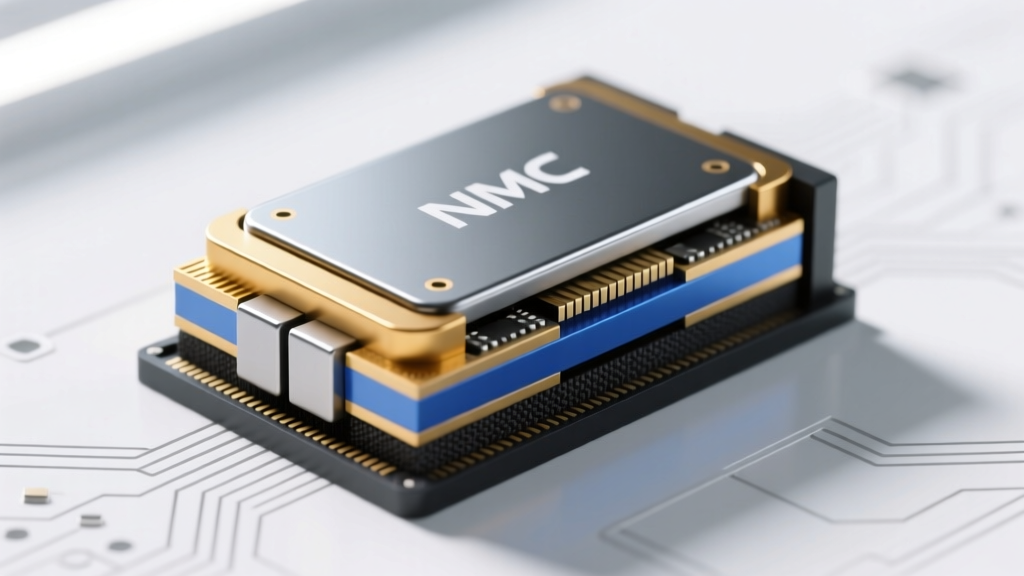
Understanding your EV's battery chemistry matters for longevity, charging habits, and real-world range. Two chemistries dominate the 2026 EV market:
| Attribute | LFP (Lithium Iron Phosphate) | NMC / NCA (Nickel Manganese Cobalt / Nickel Cobalt Aluminum) |
|---|---|---|
| Energy Density | Lower (~160–180 Wh/kg cell-level) | Higher (~220–300 Wh/kg cell-level) |
| Cycle Life | 3,000–5,000+ cycles to 80% SoH | 1,000–2,000 cycles to 80% SoH |
| Cold Performance | Weaker — greater range loss below freezing (~35-45% reduction) | Better — ~25-35% range loss in cold |
| Charging to 100% | Recommended periodically for BMS calibration | Generally advised to charge to 80-90% for daily use |
| Cost | Lower — no cobalt or nickel | Higher — commodity-sensitive pricing |
| Common In 2026 Models | Tesla Model 3 RWD, BYD vehicles, Ford Mustang Mach-E Select (Standard Range) | Tesla Model Y Long Range, Hyundai Ioniq 5, BMW i4, Rivian R1T/R1S |
| Thermal Stability | Higher — less prone to thermal runaway | Good with proper BMS, but inherently less stable |
The practical takeaway: If your daily commute is under 200 miles and you have reliable home charging, an LFP-equipped vehicle offers exceptional longevity and lower cost. If you need maximum range for road trips or live in a cold climate, NMC/NCA chemistry delivers better energy density and cold-weather performance. Neither is universally "better" — the right choice depends on your driving profile.
How Long Do EV Batteries Last? Real Degradation Data
EV battery degradation follows a non-linear curve: the most rapid capacity loss occurs in the first year or two, after which degradation slows significantly. Here's what the data shows:
Typical EV Battery Degradation Curve
| Timeframe | Typical Capacity Retention (NMC) | Typical Capacity Retention (LFP) | Real-World Example |
|---|---|---|---|
| Year 1 / 15,000 mi | 94–97% | 96–98% | New Model Y LR: EPA 330 mi → ~315 mi real |
| Year 3 / 45,000 mi | 89–93% | 93–96% | Noticeable but modest range reduction |
| Year 5 / 75,000 mi | 85–90% | 90–94% | A 330-mi EPA vehicle may show ~280–295 mi |
| Year 8 / 120,000 mi | 80–87% | 86–91% | Warranty threshold territory for NMC |
| Year 10+ / 150,000+ mi | 75–85% | 83–90% | Still functional; most owners report satisfaction |
Data from Recurrent Auto's fleet analysis of over 15,000 EVs shows that the median EV battery retains approximately 90% of its original capacity at 100,000 miles. Catastrophic battery failures (requiring full replacement under warranty) occur in fewer than 2–3% of vehicles, concentrated in early-production models with manufacturing defects rather than normal wear.
For context, the average American drives 13,500 to 14,000 miles per year. A modern EV battery should comfortably last 150,000+ miles before reaching 80% capacity — often outlasting the vehicle's other major components.
What the Battery Warranty Actually Covers
Federal law mandates a minimum EV battery warranty of 8 years or 100,000 miles (whichever comes first) for vehicles certified as Partial Zero Emission Vehicles (PZEV), which covers essentially all EVs sold in the U.S. California and states adopting CARB standards require 10 years/150,000 miles. Most manufacturers exceed these minimums:
| Manufacturer | Warranty Period | Capacity Threshold | Notes |
|---|---|---|---|
| Tesla (Model 3/Y) | 8 yr / 120,000 mi (LR/AWD); 8 yr / 100,000 mi (RWD) | 70% retention | Includes drive unit coverage |
| Hyundai / Kia | 10 yr / 100,000 mi | 70% retention | Among the longest coverage terms |
| Ford (Mach-E, F-150 Lightning) | 8 yr / 100,000 mi | 70% retention | Transferable to second owner |
| General Motors (Ultium-based) | 8 yr / 100,000 mi | 70% retention (60% for commercial) | Covers battery and electric drive components |
| BMW | 8 yr / 100,000 mi | 70% retention | Module-level replacement available |
| Rivian | 8 yr / 175,000 mi | 70% retention | Best-in-class mileage coverage |
Key warranty nuances: The warranty covers capacity below the threshold, not normal degradation above it. If your battery retains 72% at year 8, you're not eligible for replacement. The warranty also typically excludes damage from accidents, flooding, improper charging equipment, or unauthorized modifications. Always review your specific warranty booklet — terms vary by model year and trim.
EV Battery Replacement Cost: What to Budget
Battery replacement is the single largest potential repair cost for an EV, but it's rarely needed during the vehicle's useful life. When it is required — typically due to a manufacturing defect, physical damage, or extreme degradation well past the warranty period — costs vary dramatically by pack size and chemistry:
| Vehicle / Pack Size | Battery Cost (Parts) | Labor + Diagnostics | Estimated Total |
|---|---|---|---|
| Tesla Model 3 RWD (~60 kWh LFP) | $7,000–$9,000 | $1,500–$3,000 | $8,500–$12,000 |
| Tesla Model Y LR (~75 kWh NMC) | $10,000–$14,000 | $2,000–$3,500 | $12,000–$17,500 |
| Hyundai Ioniq 5 (~77 kWh NMC) | $11,000–$15,000 | $2,000–$4,000 | $13,000–$19,000 |
| Ford F-150 Lightning Ext. Range (~131 kWh) | $18,000–$25,000 | $3,000–$5,000 | $21,000–$30,000 |
| Chevrolet Silverado EV (~200 kWh) | $25,000–$35,000 | $4,000–$6,000 | $29,000–$41,000 |
Several factors are driving these costs downward. Battery pack prices have fallen from over $1,200/kWh in 2010 to approximately $110–$130/kWh at the cell level in 2026, according to BloombergNEF. Additionally, some manufacturers (notably BMW and Hyundai) are moving toward module-level replacement, where only the degraded modules are swapped rather than the entire pack — potentially cutting replacement costs by 50–70%.
The realistic context: fewer than 5% of EVs will need a battery replacement during their first 10 years. Most batteries will outlast the vehicle's economic life, and the vehicle will be retired for other reasons before the pack fails catastrophically.
Maximizing Battery Health: What Actually Works
Whether you're leaving your EV parked for a week while you travel or optimizing daily habits for long-term health, these practices are backed by battery science:
Evidence-Based Battery Care Checklist
- Daily charging limit: Set to 80% for NMC/NCA batteries; LFP batteries should be charged to 100% at least once per week for accurate BMS state-of-charge calibration.
- DC fast charging: Minimize frequent use of DC fast charging (150+ kW). Occasional road-trip fast charging is fine, but daily use accelerates degradation by an estimated 1–3% over 100,000 miles compared to Level 2 charging.
- Temperature management: Avoid leaving your EV at very high or very low states of charge in extreme temperatures. A car sitting at 100% SoC in 100°F+ heat is the single worst condition for lithium-ion cells.
- Long-term parking (travel prep): If leaving your EV for 1–4 weeks, set the charge limit to 50–60% and leave it plugged into a Level 2 charger so the thermal management system can maintain battery temperature. Most EVs allow you to set a departure charge target remotely via their app.
- Preconditioning: Use your EV's preconditioning feature before fast charging in cold weather. This warms the battery to optimal charging temperature (~30–35°C), enabling faster charge rates and reducing stress on cells.
- Regenerative braking: Standard regen settings cause no meaningful extra battery wear. The BMS manages charge acceptance to prevent over-current conditions.
How to Check Your Battery's State of Health (SoH)
Most 2026-model EVs provide battery health information through one or more of these methods:
- In-vehicle display: Some manufacturers (Hyundai, Kia, BMW) show a battery SoH percentage directly in the infotainment or instrument cluster settings.
- Manufacturer app: Tesla, Ford, and GM provide battery health estimates through their companion apps, often under vehicle health or battery details sections.
- OBD-II diagnostic tools: Third-party tools like the OBDeleven adapter or dedicated EV diagnostic readers can pull detailed BMS data, including individual cell voltages and pack-level SoH calculations.
- Range tracking: The simplest method — track your vehicle's estimated full-charge range over time. A new Model Y Long Range showing 330 miles EPA when fully charged that drops to 300 miles after three years indicates approximately 91% SoH. Account for seasonal temperature effects when comparing.
- Dealer diagnostic: Request a battery health report during scheduled service. Dealerships can run full-capacity tests that measure actual kWh delivered versus original capacity.
Emerging Battery Tech: Solid-State and Silicon Anodes
The battery landscape is evolving rapidly, but it's important to separate announced timelines from showroom availability:
Solid-state batteries replace the liquid electrolyte in current lithium-ion cells with a solid material (ceramic, sulfide, or polymer), promising higher energy density (potentially 400+ Wh/kg), faster charging, and improved safety. Toyota has announced a solid-state battery targeting 2027–2028 production in limited volumes, initially in hybrid vehicles. Samsung SDI and QuantumScape are also targeting 2027–2029 production timelines. However, manufacturing scale-up remains a significant challenge, and solid-state batteries will likely debut in premium vehicles at significant price premiums before reaching mainstream models.
Silicon anode technology — which replaces or supplements graphite anodes with silicon to increase lithium storage capacity — is closer to market. Companies like Sila Nanotechnologies and Group14 Technologies are supplying silicon-dominant anode materials to battery manufacturers for 2026–2027 model-year vehicles. Expect 10–20% energy density improvements in cells using these materials, with no change to charging behavior or ownership experience.
Sodium-ion batteries are emerging as a low-cost alternative for shorter-range, budget EVs. CATL has begun production of sodium-ion cells with ~160 Wh/kg energy density — lower than LFP, but cheaper and free of lithium, cobalt, and nickel. These may appear in entry-level EVs by 2027–2028.
None of these technologies are currently available in production vehicles sold in the U.S. as of early 2026. Buyers should base purchase decisions on current chemistry performance, not announced future breakthroughs.
Frequently Asked Questions
Can I take a rechargeable battery on a plane if it's over 100 Wh?
Batteries between 100 and 160 Wh are allowed in carry-on luggage with airline approval, limited to two spare batteries. Anything over 160 Wh is prohibited on passenger aircraft. Check your battery's Wh rating — it's usually printed on the label or calculable from voltage × amp-hours.
Can I ship my EV battery by air freight?
EV traction batteries are classified as Class 9 dangerous goods and can only be shipped on cargo-only aircraft with UN-certified packaging, proper labeling, and trained handlers. This is not something individual consumers can arrange — it's handled by manufacturers and specialized logistics companies during vehicle transport or warranty replacements.
Will leaving my EV parked at the airport for a week damage the battery?
No. Modern EVs have minimal parasitic drain (typically 1–2% SoC per week when parked). Leave the vehicle at 50–70% charge, ideally plugged into a Level 2 charger with a scheduled departure charge. The thermal management system will protect the battery even in extreme weather. Avoid leaving it at 100% or below 10% for extended periods.
How long do EV batteries last in years and miles?
Based on fleet data, the median EV battery retains approximately 85–90% capacity at 100,000 miles (roughly 7–8 years of average driving). Most batteries will remain functional well past 150,000 miles with 75–85% capacity remaining. LFP chemistries typically degrade more slowly than NMC.
How much does an EV battery cost to replace?
Out-of-warranty replacement costs range from approximately $8,500 for a smaller LFP pack (Tesla Model 3 RWD) to over $30,000 for large packs (Ford F-150 Lightning Extended Range). However, fewer than 5% of EV batteries require replacement during the vehicle's useful life, and most are covered under the 8-year/100,000-mile federal warranty mandate.
What does the EV battery warranty actually cover?
The federal minimum requires coverage for 8 years or 100,000 miles against capacity loss below a specified threshold (typically 70% of original capacity). This covers manufacturing defects and abnormal degradation. It does not cover damage from accidents, flooding, improper charging, or unauthorized modifications. Check your manufacturer's specific warranty terms for exact thresholds and exclusions.
LFP vs NMC — which battery chemistry is better?
Neither is universally superior. LFP offers longer cycle life (3,000–5,000+ cycles), lower cost, better thermal stability, and tolerates 100% charging — but has lower energy density and worse cold-weather performance. NMC/NCA delivers higher energy density (more range per kWh of battery weight) and better cold performance — but degrades faster and costs more. Choose LFP for daily commuting with home charging; choose NMC for maximum range and cold-climate driving.
How do I check my EV battery's State of Health?
Check your vehicle's app or infotainment system for a battery health percentage, use an OBD-II diagnostic tool to read BMS data, track your full-charge range over time, or request a battery health report from your dealer during service. The simplest method is comparing your current full-charge range to the original EPA estimate, adjusting for seasonal temperature effects.
Whether you're packing a 50 Wh power bank for your flight or planning a decade of EV ownership, understanding battery safety rules and health management puts you in control. Your portable batteries follow FAA watt-hour limits; your EV's traction battery follows an entirely different engineering and regulatory framework designed for ground-vehicle safety. Fly with your power bank in your carry-on, leave your EV plugged in at 60%, and return to a vehicle that will keep delivering reliable electric miles for years to come.