The Disconnect Between EPA Estimates and Real-World Driving
One of the most common frustrations for new electric vehicle (EV) owners is the discrepancy between the advertised range and the actual distance they can travel on a single charge. When you purchase a new EV, the window sticker proudly displays an EPA-estimated range. However, once you hit the highway, climb a mountain pass, or drive through a winter storm, your vehicle's onboard range estimator—affectionately known by enthusiasts as the "Guess-O-Meter" (GOM)—may tell a very different story. Understanding why this gap exists and how to accurately predict your real-world range is critical for effective trip planning, minimizing range anxiety, and optimizing your total cost of ownership.
The EPA range estimate is a standardized benchmark, not a guaranteed maximum distance. It is designed to allow consumers to compare different vehicles on a level playing field. However, real-world driving introduces a chaotic mix of variables that laboratory testing simply cannot replicate. By understanding the methodology behind these estimates and the physics governing battery efficiency, drivers can transform their EV from a source of anxiety into a highly predictable and efficient machine.
How the EPA Actually Tests EV Range
To understand why your EV might fall short of its sticker range, you must first understand how the EPA arrives at its numbers. The EPA does not simply drive the car on a road until the battery dies. Instead, vehicles are placed on a dynamometer (a treadmill for cars) and run through standardized driving cycles, including city and highway simulations. According to the official testing guidelines detailed by fueleconomy.gov, the results from these laboratory tests are then adjusted to account for real-world factors like air conditioning usage, cold weather, and varying road conditions.
Historically, the EPA applied a 0.7 adjustment factor to the raw dynamometer results to simulate real-world driving. While modern testing procedures have evolved to include more aggressive driving cycles and higher speed simulations, the fundamental limitation remains: a controlled laboratory environment cannot perfectly capture the aerodynamic drag of a 75 mph headwind, the rolling resistance of wet asphalt, or the energy required to heat a cabin in sub-zero temperatures. Consequently, the EPA estimate is best viewed as a comparative baseline rather than an absolute promise.
The Physics of Range Loss: Speed, Wind, and Weight
The most significant factor affecting real-world EV range is aerodynamic drag. Unlike internal combustion engine (ICE) vehicles, which operate at peak thermal efficiency at higher highway speeds, electric motors are incredibly efficient across almost all RPM ranges. Therefore, the primary energy drain at highway speeds is pushing the vehicle through the air. Aerodynamic drag increases with the square of your velocity. This means that increasing your speed from 65 mph to 75 mph does not just increase energy consumption by 15%; it can increase it by over 30%, drastically reducing your overall range.
Payload and rolling resistance also play vital roles. A fully loaded SUV with a roof cargo box will experience a massive penalty in efficiency compared to a sleek, unloaded sedan. The Alternative Fuels Data Center notes that battery weight and vehicle aerodynamics are the primary engineering hurdles for maximizing EV efficiency. When planning a long road trip, removing unnecessary cargo and avoiding roof-mounted storage boxes can easily reclaim 10 to 15 miles of real-world range.
Temperature Effects on Lithium-Ion Chemistry
Lithium-ion batteries are highly sensitive to temperature extremes. The ideal operating temperature for an EV battery pack is typically between 68°F and 86°F (20°C to 30°C). When temperatures drop below 40°F (4°C), the chemical reactions inside the battery cells slow down, increasing internal resistance. This means the battery cannot discharge energy as efficiently, and regenerative braking is severely limited or disabled entirely to protect the cells from lithium plating.
Cold weather impacts range in two distinct ways: reduced battery efficiency and increased cabin heating demands. According to the EPA Green Vehicles myth-busting guidelines, extreme cold can reduce an EV's range by 20% to 40%. If your vehicle uses a traditional Positive Temperature Coefficient (PTC) resistive heater, it can draw upwards of 3,000 to 5,000 watts of power to warm the cabin—energy that is pulled directly from the traction battery. Vehicles equipped with modern heat pumps are significantly more efficient, often cutting cabin heating energy consumption by half, but a noticeable range drop in winter is an unavoidable reality of current battery chemistry.
Real-World vs. EPA Range Comparison Table
To illustrate the gap between laboratory estimates and real-world highway driving, consider the following comparison of popular EV models. Real-world highway range assumes a constant speed of 70 mph in mild weather (65°F) with light HVAC usage. Note that high-speed driving consistently yields lower results than the EPA combined estimate.
| Vehicle Model | EPA Est. Range | Real-World Hwy (70mph) | Efficiency Variance |
|---|---|---|---|
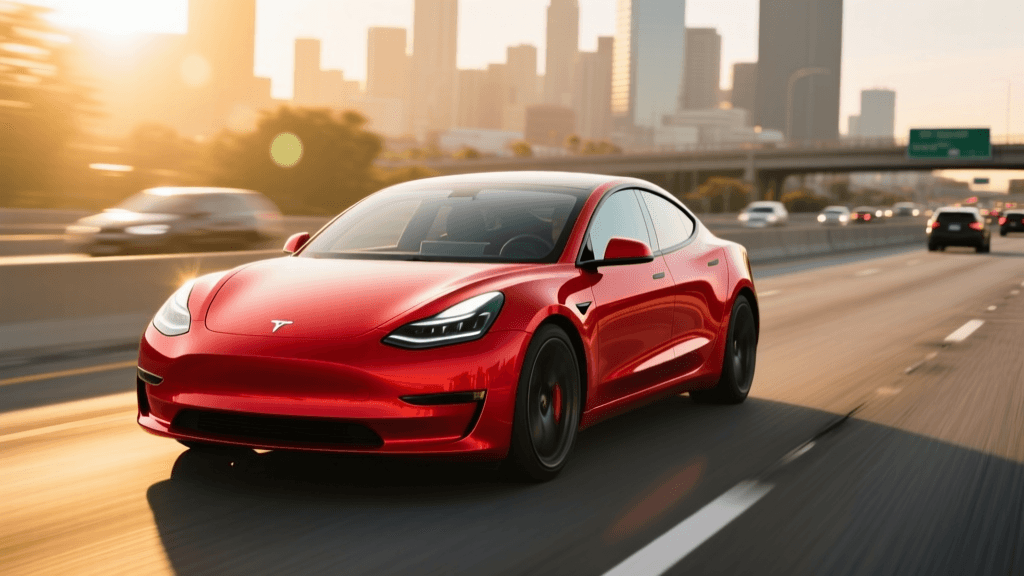
| Tesla Model 3 Long Range AWD | 341 miles | ~305 miles | -10.5% |
| Ford Mustang Mach-E Ext. Range | 312 miles | ~275 miles | -11.8% |
| Hyundai Ioniq 5 AWD | 256 miles | ~225 miles | -12.1% |
| Rivian R1T Dual Motor Large | 328 miles | ~270 miles | -17.6% |
| Lucid Air Grand Touring | 516 miles | ~450 miles | -12.7% |
Note: Real-world highway ranges are approximations based on independent automotive testing and user-reported data. Variances will increase significantly in cold weather, mountainous terrain, or heavy headwinds.
Expert Best Practices for Maximizing and Predicting Range
As an EV owner, you have direct control over many of the variables that dictate your vehicle's efficiency. By adopting the following expert best practices, you can narrow the gap between your GOM and reality, ensuring you reach your destination with battery to spare.
1. Master the Art of Preconditioning
Preconditioning is the single most effective habit for preserving winter range. By setting a departure time in your vehicle's mobile app while the car is still plugged into your home charger, the vehicle uses grid electricity—not battery power—to warm the battery pack and the cabin. A warm battery operates at peak efficiency and allows for aggressive regenerative braking the moment you pull out of the driveway. Furthermore, if you are using a DC fast charger on a road trip, always input the charger as your navigation destination. The car will automatically precondition the battery to the optimal temperature for rapid charging, saving you 15 to 30 minutes at the plug.
2. Optimize Climate Control Strategies
Heating the air in a large cabin is incredibly energy-intensive. To maximize range in cold weather, rely on heated seats and a heated steering wheel. These features use conductive heating, typically drawing less than 100 watts combined, compared to the 3,000+ watts required for a PTC cabin heater. In the summer, use the "vent" or "eco" climate modes, and consider pre-cooling the cabin while plugged in. Tinting your windows with high-quality ceramic tint can also drastically reduce solar heat gain, lowering the load on your air conditioning compressor during highway driving.
3. Calibrate Your Regenerative Braking
Regenerative braking captures kinetic energy and converts it back into stored electrical energy. In city and suburban driving, maximizing regen (often called "one-pedal driving") can improve your efficiency by 10% to 15%. However, on the open highway, coasting is actually more efficient than accelerating and braking. If your vehicle allows you to adjust regen levels, set it to low or use "coast" mode on flat, high-speed highways. This prevents the energy losses associated with the double-conversion process (kinetic to electrical, then electrical back to kinetic) and allows the vehicle's momentum to carry it forward with minimal drag.
4. Strategic Route and Charging Planning
Never rely solely on the vehicle's native GOM for long-distance trip planning. The GOM calculates range based on your recent driving history. If you just drove 10 miles up a steep mountain at 80 mph, your GOM might show a terrifyingly low range, even though your efficiency will rebound on the descent. Instead, use dedicated EV routing apps like A Better Routeplanner (ABRP) or PlugShare. These tools factor in elevation changes, real-time wind speeds, ambient temperature, and vehicle-specific degradation curves to provide a highly accurate prediction of your state of charge (SOC) upon arrival. Always plan to arrive at your next charging stop with a minimum 10% to 15% SOC buffer to account for unexpected detours, charger outages, or sudden weather shifts.
Long-Term Battery Health and Range Retention
Finally, it is crucial to understand that your EV's maximum range will slowly decrease over time due to battery degradation. Most modern lithium-ion packs are designed to retain 70% to 80% of their original capacity after 100,000 to 150,000 miles. To minimize long-term degradation and preserve your real-world range, avoid habitually charging to 100% for daily use. For daily commuting, set your charge limit to 80%. Reserve 100% charges strictly for long road trips where you will be driving the vehicle immediately after reaching a full state of charge. By combining smart charging habits with an expert understanding of real-world efficiency variables, you will master your EV's range and enjoy the full economic and environmental benefits of electric driving.