Understanding the Ram eTorque System and Its 48V Battery
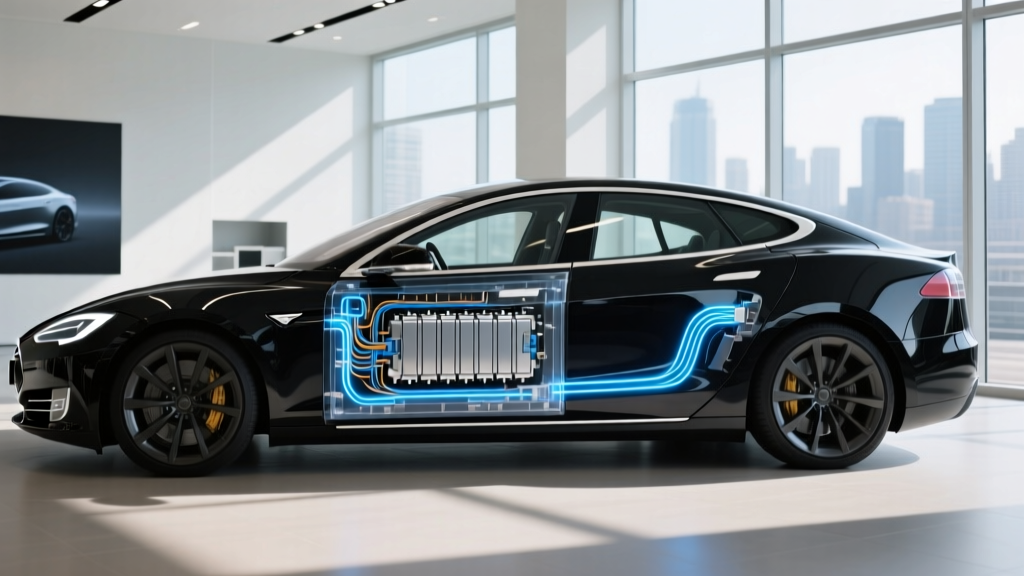
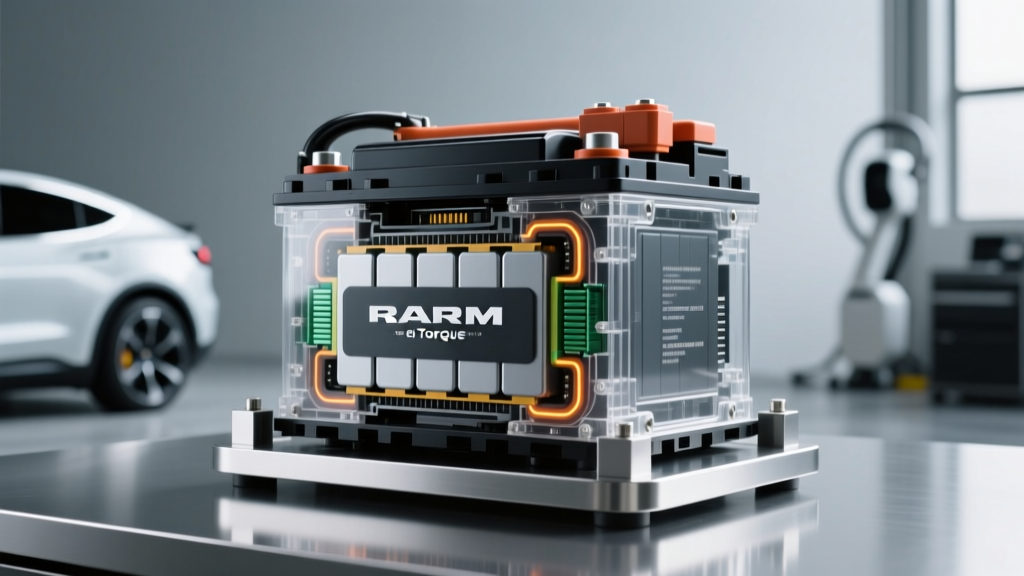
The Ram 1500 eTorque system is not a full hybrid like a Toyota Prius or a plug-in hybrid like the Chrysler Pacifica PHEV. It is a mild-hybrid (MHEV) system built around a 48-volt lithium-ion battery pack and a belt-driven motor-generator unit (MGU). The eTorque system cannot propel the truck on electric power alone. Instead, it supplements the 3.6L Pentastar V6 or 5.7L HEMI V8 with up to 130 lb-ft of brief electric torque assist during acceleration, enables smoother stop-start operation, and captures energy during regenerative braking.
Because the 48V battery is relatively small — roughly 0.4 to 0.5 kWh of usable capacity — it operates under fundamentally different stress conditions than the 60–100+ kWh traction batteries found in full battery-electric vehicles. This distinction matters enormously when evaluating replacement cost, degradation patterns, and warranty coverage.
If you own or are considering a used 2019–2024 Ram 1500 with eTorque, the battery is likely the component you are researching. Here is what the data shows about lifespan, failure modes, and what you will actually pay if replacement becomes necessary.
Ram eTorque Battery Replacement Cost: What Owners Actually Pay
The most common question from Ram eTorque owners is straightforward: how much does a replacement cost? Based on dealer parts pricing, independent shop data, and owner reports through 2025–2026, here is the current range:
| Cost Component | Dealer (OEM) | Independent / Aftermarket |
|---|---|---|
| Battery pack (part only) | $1,800 – $2,500 | $1,100 – $1,800 |
| Labor (1.5 – 3 hours) | $250 – $500 | $150 – $350 |
| Programming / calibration | $100 – $200 | $75 – $150 |
| Total estimated cost | $2,150 – $3,200 | $1,325 – $2,300 |
Several factors influence where you land in this range:
- Model year: 2019–2020 eTorque batteries were subject to multiple recalls (including fire-risk recalls for certain build dates). If your truck falls within a recall campaign, replacement may be fully covered regardless of mileage or warranty status.
- V6 vs. V8 eTorque: The 48V battery pack is physically the same across eTorque applications, but V8-equipped trucks may require slightly more labor for access.
- OEM vs. aftermarket: Mopar OEM packs carry the full factory warranty remainder. Third-party remanufactured packs are increasingly available at 30–40% savings but may carry shorter warranties (12–24 months).
- Geographic labor rates: Dealer labor rates in 2026 range from roughly $130/hr in rural markets to $220+/hr in major metro areas.
For context, this is dramatically less expensive than a full EV traction battery replacement, which can run $8,000–$20,000+ for vehicles with 75–130 kWh packs. The eTorque's small 48V system is closer in cost to replacing a conventional 12V AGM battery — just at a higher voltage and with more complex integration.
eTorque Battery Degradation: What the Data Shows
The eTorque 48V battery is a lithium-ion pack (NMC chemistry) designed for high cycle count but low total energy throughput. Unlike a full EV battery that cycles through 60–100 kWh daily, the eTorque pack typically cycles through only fractions of its 0.4–0.5 kWh capacity hundreds of times per day — during every stop-start event, every torque-assist pulse, and every regenerative braking event.
This high-frequency, shallow-cycling pattern produces a specific degradation profile:
Typical eTorque 48V Battery Degradation Timeline:
- Years 1–3 (0–45,000 miles): Minimal measurable degradation. Most owners report no change in stop-start behavior or torque-assist function. Capacity retention typically above 92–95%.
- Years 4–6 (45,000–90,000 miles): Early signs of capacity loss. Stop-start events may become slightly less smooth; torque assist may feel marginally reduced. Capacity retention approximately 85–90%.
- Years 7–9 (90,000–135,000 miles): Noticeable performance decline in some units. The battery management system (BMS) may limit stop-start frequency in extreme temperatures. Capacity retention approximately 75–85%.
- Years 10+ (135,000+ miles): Significant fraction of packs will require replacement or show warning indicators. Capacity below 70% triggers reduced system functionality.
Importantly, eTorque battery failures are often sudden rather than gradual. Unlike EV traction batteries that slowly lose range over time, a 48V mild-hybrid pack may function normally until a cell group fails, at which point the entire system throws a diagnostic code and disables eTorque functionality. The truck remains drivable on the gas engine alone, but you lose stop-start smoothing, torque assist, and regenerative braking benefits.
Several owner forums and repair databases (including CarComplaints.com) have logged clusters of eTorque battery failures around the 60,000–80,000 mile mark for 2019–2021 model-year trucks, with later model years showing improved cell-balancing firmware and thermal management.
Ram eTorque Battery Warranty: What Is Covered
Stellantis (Ram's parent company) provides specific warranty coverage for the eTorque 48V battery system. Here are the standard terms:
| Warranty Type | Duration | Coverage Details |
|---|---|---|
| Basic / Bumper-to-Bumper | 3 years / 36,000 miles | Full coverage of eTorque system including battery, MGU, and related electronics |
| Powertrain Warranty | 5 years / 60,000 miles | eTorque battery and motor-generator covered as powertrain components |
| Hybrid/EV Component Warranty | 8 years / 80,000 miles (CARB states: 10 yr / 150,000 mi) | 48V battery pack covered against defects and capacity loss below functional threshold |
Critical note for CARB-state residents: If your Ram is registered in California, New York, Massachusetts, Connecticut, Maine, Maryland, New Jersey, Oregon, Rhode Island, Vermont, Washington, or Colorado (which adopted CARB standards), the hybrid-component warranty extends to 10 years / 150,000 miles. This can make a significant difference for a 2019–2020 model-year truck that might otherwise be outside standard warranty coverage.
The warranty typically covers replacement if the battery fails to maintain sufficient capacity to perform its intended functions (stop-start, torque assist, regen). It does not cover damage from accidents, flooding, or unauthorized modifications. Check your specific VIN against Stellantis recall campaigns at the Mopar recall portal — several eTorque-related recalls have been issued that provide free replacement regardless of warranty status.
Battery Chemistry: LFP vs. NMC and Where eTorque Fits
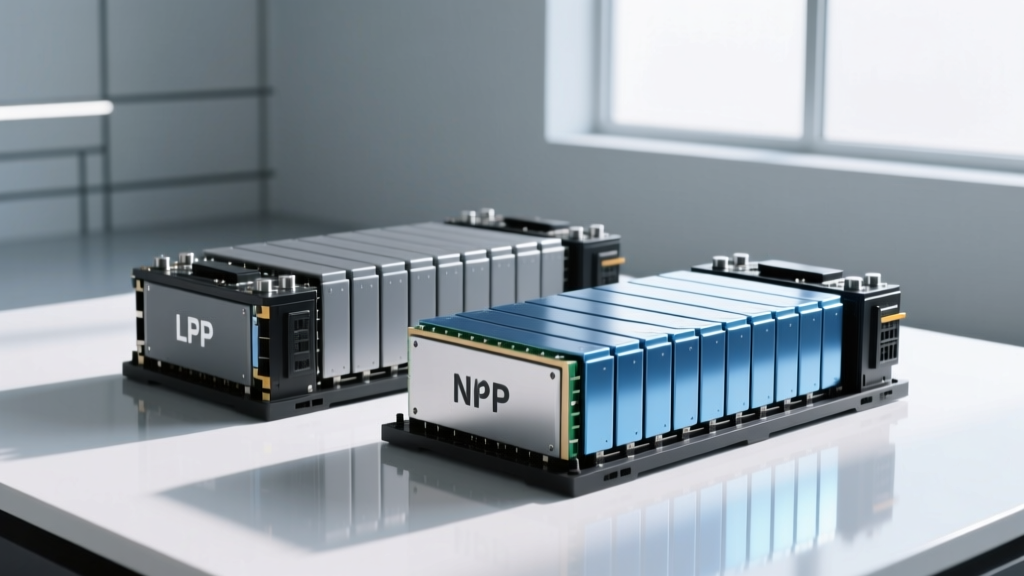
Understanding battery chemistry is essential whether you drive a mild-hybrid Ram or a full battery-electric vehicle. The two dominant lithium-ion chemistries in the automotive market are NMC (Nickel Manganese Cobalt) and LFP (Lithium Iron Phosphate). The Ram eTorque system uses NMC cells, which is the standard choice for 48V mild-hybrid applications.
| Characteristic | LFP (Lithium Iron Phosphate) | NMC (Nickel Manganese Cobalt) |
|---|---|---|
| Energy density | Lower (~160–180 Wh/kg) | Higher (~220–300 Wh/kg) |
| Cycle life | Excellent (3,000–6,000+ cycles) | Good (1,000–2,500 cycles) |
| Cold-weather performance | Poor (significant power loss below 32°F) | Better (maintains performance to ~0°F) |
| Thermal stability / safety | Excellent (very resistant to thermal runaway) | Good (requires more active thermal management) |
| Cost per kWh | Lower (~$80–100/kWh at cell level) | Higher (~$110–140/kWh at cell level) |
| State of charge estimation | Difficult (flat voltage curve) | Easier (sloping voltage curve aids BMS) |
| Common applications | Tesla Model 3/Y RWD, Ford Mustang Mach-E SR, BYD models | Most long-range EVs, 48V mild hybrids (including eTorque), PHEVs |
Why does eTorque use NMC? The 48V system prioritizes power density (quick bursts of torque assist and regen absorption) and cold-weather reliability over raw energy storage. NMC cells deliver better power-to-weight ratios at low temperatures — critical for a truck that may see sub-zero starts. LFP's superior cycle life is less relevant here because the pack cycles through such small fractions of its capacity that cycle count is rarely the limiting factor.
For full BEV buyers, the LFP vs. NMC choice carries more weight: LFP batteries tolerate daily 100% charging without accelerated degradation, while NMC batteries benefit from an 80% daily charge limit. This distinction matters less for eTorque owners because the truck's BMS manages the small pack automatically.
Factors That Accelerate eTorque Battery Wear
While the eTorque battery requires far less owner management than a full EV pack, several factors can shorten its service life:
- Extreme heat exposure: Trucks regularly parked outdoors in desert climates (Arizona, Texas, Nevada) experience higher battery temperatures. The 48V pack is located under the rear seat area, and sustained cabin temperatures above 120°F accelerate cell degradation. This is the single largest environmental factor.
- Frequent deep discharges: While the BMS prevents true deep cycling, extended idling with accessories running (A/C, infotainment) while the engine is off via stop-start can stress the pack. The eTorque system is designed for brief stops, not extended engine-off periods.
- Towing and heavy payloads: Sustained high-load driving increases regen energy throughput and torque-assist demand, raising average battery temperature and cycle intensity.
- Infrequent driving: Trucks driven fewer than 5,000 miles per year may experience calendar-age degradation without the benefit of regular cycling that keeps cells balanced. Lithium-ion batteries degrade with time regardless of use.
- Aftermarket electrical accessories: High-draw aftermarket lighting, winches, or audio systems that tap into the 12V system (which the 48V pack charges via a DC-DC converter) can increase load on the eTorque battery indirectly.
How to Check and Maximize eTorque Battery Health
Unlike full EVs that offer detailed State of Health (SoH) readouts through the infotainment system or mobile app, the Ram eTorque system provides limited direct battery health visibility to the owner. Here is what you can do:
- OBD-II diagnostic scan: A professional scan tool (or a capable consumer tool like an OBDLink MX+ paired with apps such as AlfaOBD or FORScan) can read the 48V battery's reported State of Health percentage, cell voltage balance, and temperature data. Request this during any dealer service visit.
- Stop-start behavior as a proxy: If your truck's stop-start system begins disabling itself frequently (outside of normal conditions like extreme cold or low battery), this often indicates the 48V pack is losing capacity. The BMS will prevent stop-start operation when battery health drops below a functional threshold.
- Dashboard warnings: A "Service eTorque System" message or hybrid-system warning light indicates a fault that should be diagnosed immediately. Do not ignore these — early intervention can sometimes save individual cell groups rather than requiring a full pack replacement.
- Maintain regular driving patterns: Regular use (at least 2–3 drives per week of 15+ minutes) keeps the cells balanced and the BMS calibration accurate. Extended storage is harder on the 48V pack than regular use.
- Park in shade or garages when possible: Reducing peak battery temperature is the most impactful thing an owner can control. A garage-parked truck in Phoenix will see measurably longer 48V battery life than one parked on asphalt in direct sun.
- Keep up with software updates: Stellantis has issued multiple BMS firmware updates through dealer service campaigns that improve cell balancing and thermal management. Ensure your truck has the latest calibration.
Emerging Battery Technology: What Is on the Horizon
While the eTorque system uses mature NMC lithium-ion technology, the broader automotive battery landscape is evolving rapidly. Here is what is realistic for the near future — and what remains speculative:
Silicon-dominant anodes (2025–2028): Companies like Sila Nanotechnologies and Group14 are producing silicon-carbon composite anode materials that increase energy density by 20–40% compared to graphite anodes. These are entering production in select EVs now and could eventually trickle down to 48V applications, though cost remains a barrier for mild-hybrid packs where energy density is not the primary constraint.
Solid-state batteries (2028–2032+): Toyota, Samsung SDI, and QuantumScape are targeting commercial solid-state battery production, with initial applications in premium EVs. Solid-state cells promise higher energy density, faster charging, and improved safety. However, these are unlikely to appear in 48V mild-hybrid applications before the early 2030s due to cost. For Ram eTorque owners, solid-state is not relevant to your current or near-future replacement decisions.
Sodium-ion batteries (2025–2028): CATL and BYD are producing sodium-ion cells for lower-cost EV applications. Sodium-ion chemistry offers lower energy density but excellent cycle life and low-temperature performance at reduced cost. This chemistry could theoretically suit 48V mild-hybrid applications well, but no automotive 48V sodium-ion packs are currently in production.
None of these technologies change the calculus for a current eTorque owner needing a replacement today. NMC lithium-ion remains the only practical option, and aftermarket availability is improving as the 2019–2021 fleet ages out of warranty.
Frequently Asked Questions
How long does a Ram eTorque battery last?
Based on owner data and repair trends, most eTorque 48V batteries last between 80,000 and 120,000 miles (roughly 6–9 years) before requiring replacement. Some units fail earlier — particularly 2019–2020 model-year trucks — while others exceed 150,000 miles without issues. Heat exposure and driving patterns are the primary variables.
Can I drive my Ram with a failed eTorque battery?
Yes. When the eTorque system detects a 48V battery fault, it disables the mild-hybrid functions (stop-start, torque assist, regen) but the truck operates normally on the gasoline engine alone. You will see a warning message, and fuel economy may decrease slightly (typically 1–2 MPG), but the vehicle is safe to drive to a service facility.
Is the eTorque battery covered under recall campaigns?
Several recalls have been issued for 2019–2021 Ram 1500 eTorque trucks, including fire-risk recalls related to the 48V battery system. Check your VIN at the NHTSA recall database or the Mopar recall portal. If your truck is included in an open recall, the battery replacement is performed at no cost regardless of mileage or warranty status.
Does the eTorque battery affect my fuel economy significantly?
The eTorque system contributes approximately 1–2 MPG improvement over the non-eTorque version of the same powertrain, per EPA data on fueleconomy.gov. When the 48V battery fails and eTorque is disabled, you lose this benefit. The effect is modest but measurable over a year of driving.
Should I replace the eTorque battery with OEM or aftermarket?
If your truck is still under the 8-year/80,000-mile hybrid component warranty (or 10-year/150,000-mile in CARB states), pursue warranty replacement through a dealer first. For out-of-warranty trucks, aftermarket remanufactured packs offer 30–40% savings with acceptable quality from reputable suppliers. OEM Mopar packs provide the best warranty continuation but at a premium.
Is eTorque the same as a full hybrid system?
No. The eTorque system cannot drive the truck on electric power alone. It is a mild-hybrid system that provides torque assist, smooths stop-start events, and captures regenerative braking energy. A full hybrid (like the Toyota Tundra i-FORCE MAX or Ford F-150 PowerBoost) can move the vehicle at low speeds on electric power and delivers significantly larger fuel-economy gains. The eTorque battery is correspondingly smaller and less expensive to replace.