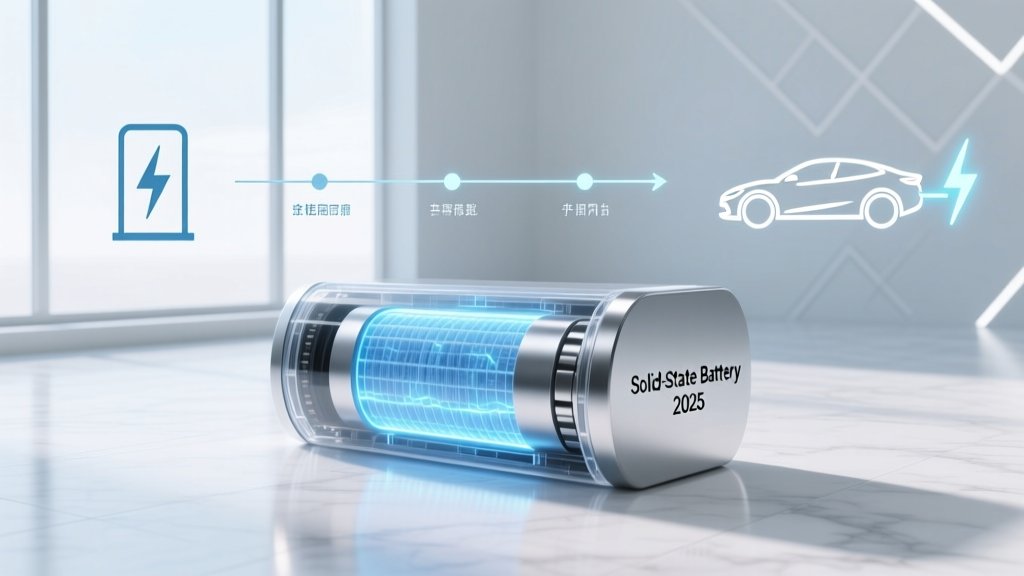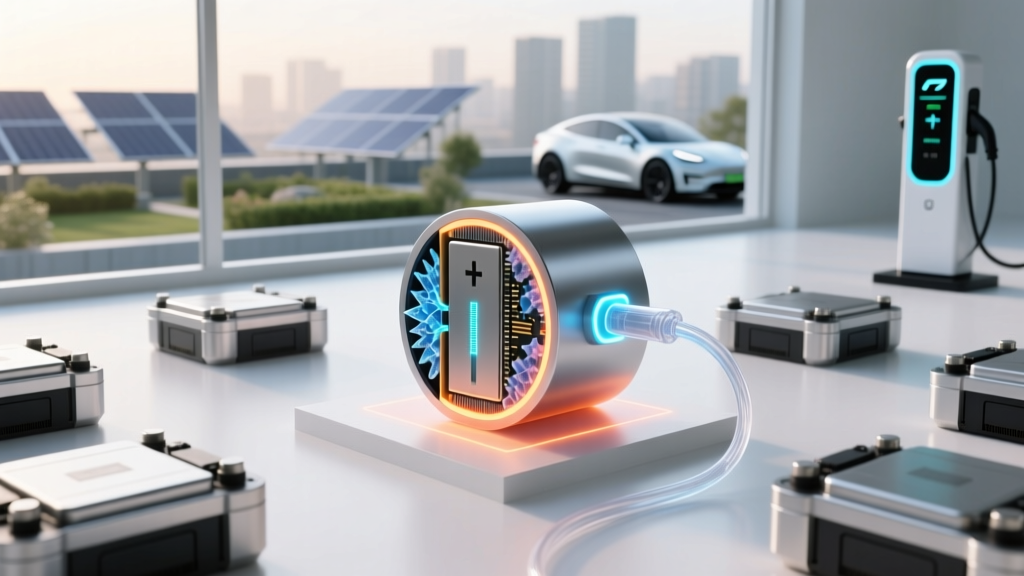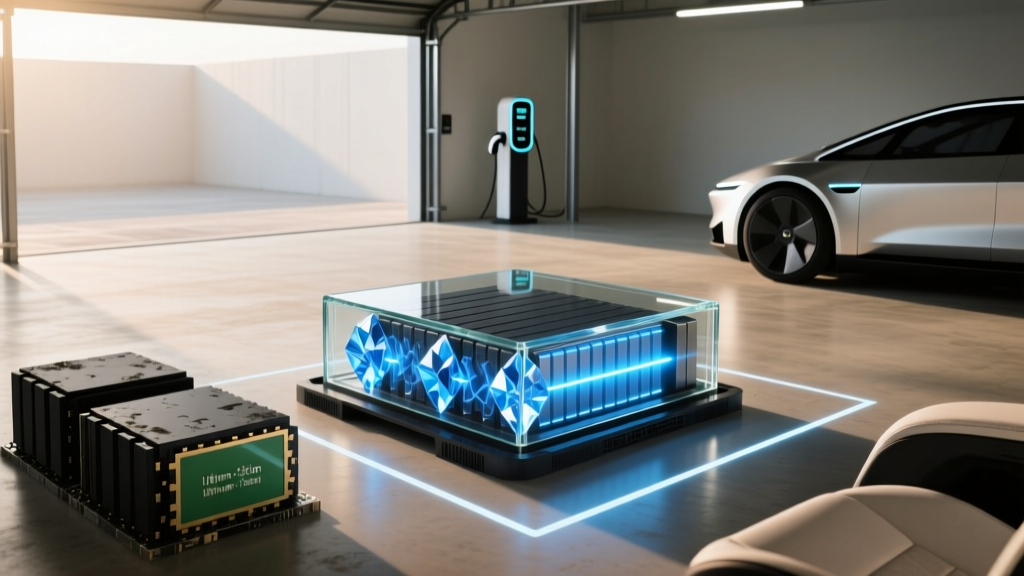
Every few months, a headline declares that solid-state batteries will "revolutionize" electric vehicles. QuantumScape, backed by Volkswagen and listed on the NYSE, is among the most visible players in this space. But for anyone shopping for an EV in 2026, the practical question isn't what's coming in 2030 — it's how today's lithium-ion cells actually perform, how long they last, and what ownership really costs.
This guide covers the current battery landscape — LFP versus NMC chemistry, real degradation data, warranty protections, replacement economics — and places the QuantumScape solid-state battery in realistic context so you can make an informed decision now without betting on vaporware.
Today's EV Battery Chemistry: LFP vs NMC vs NCA
Every EV sold in the U.S. in 2026 uses one of three lithium-ion cathode chemistries. Understanding the trade-offs is the single most important factor in predicting how your battery will age and perform.
| Attribute | LFP (Lithium Iron Phosphate) | NMC (Nickel Manganese Cobalt) | NCA (Nickel Cobalt Aluminum) |
|---|---|---|---|
| Energy Density (Wh/kg, cell-level) | ~160–180 | ~220–270 | ~250–290 |
| Cycle Life (to 80% capacity) | 3,000–5,000+ | 1,000–2,000 | 800–1,500 |
| Cold-Weather Performance | Moderate — greater range loss below 32°F | Better — heat pumps mitigate loss | Better — similar to NMC |
| Thermal Stability | Excellent — highly resistant to thermal runaway | Good — requires active management | Good — requires active management |
| Cost ($/kWh, pack-level est.) | ~$90–$110 | ~$120–$150 | ~$130–$160 |
| Common in (2026 models) | Tesla Model 3/Y RWD, Ford Mustang Mach-E Select (base), Rivian Standard | Hyundai Ioniq 5/6, Kia EV6/EV9, BMW i4/iX, most long-range trims | Tesla Model S/X, some Panasonic-supplied packs |
| Recommended SoC for Daily Use | 100% OK (periodic full charges encouraged) | 80% daily; 100% for trips only | 80% daily; 100% for trips only |
Which is better? Neither is universally superior. LFP wins on longevity, cost, and safety — making it ideal for daily commuting and high-mileage drivers. NMC and NCA win on energy density, which translates directly to more EPA-rated range per pound of battery. If you need 320+ miles of range in a midsize sedan, you'll likely end up with NMC. If you prioritize a battery that will outlast the car itself and don't mind 260–270 miles of range, LFP is the pragmatic choice.
How Long Do EV Batteries Actually Last?
The short answer: almost certainly longer than you'll own the car. The long answer requires looking at real fleet data rather than manufacturer claims.
- Tesla Model 3/Y (NMC/NCA, 2018–2023 fleets): ~5–7% capacity loss at 100,000 miles, based on aggregated owner telemetry reported by Tesla's Impact Report and third-party analyses from Recurrent Auto.
- Tesla Model 3 RWD (LFP, 2021–2024): ~3–5% loss at 80,000 miles; LFP's slower degradation curve is consistent across multiple fleet studies.
- Hyundai Ioniq 5 (NMC, 2022–2024): ~4–6% loss at 60,000 miles per Recurrent Auto fleet data; Hyundai's thermal management system keeps cells in the optimal 68–95°F window.
- Nissan Leaf (passive air cooling, 2013–2017): 15–25% loss at 80,000 miles — the cautionary tale of inadequate thermal management.
- Chevrolet Bolt EV (NMC, 2017–2022): Post-recall replacement packs showing <3% degradation at 40,000 miles; original packs varied widely (5–12% at 80k) depending on fast-charge habits.
The pattern is clear: modern liquid-cooled packs from major OEMs lose roughly 1–2% per year under normal use. At that rate, a battery will retain 85–90% of its original capacity at 10 years — well above the warranty threshold. The days of a Nissan Leaf losing a quarter of its range in five years are behind us, provided the pack has active thermal management.
Battery Warranties: What's Covered and What Isn't
Federal law mandates a minimum 8-year/100,000-mile warranty on EV batteries for emissions-related compliance, but most manufacturers exceed this. Here's what the major warranties look like for 2026 model-year vehicles:
| Manufacturer | Warranty Term | Capacity Retention Threshold | Notes |
|---|---|---|---|
| Tesla (Model 3/Y) | 8 yr / 120,000 mi (Long Range) 8 yr / 100,000 mi (RWD) | 70% | Covers defects and capacity below threshold |
| Hyundai / Kia | 10 yr / 100,000 mi | 70% | Among the longest in the industry |
| Ford (Mach-E, F-150 Lightning) | 8 yr / 100,000 mi | 70% | Covers battery and electric drive components |
| GM (Ultium platform) | 8 yr / 100,000 mi | 70% (estimated; varies by model) | Modular pack design may allow partial replacement |
| Rivian | 8 yr / 175,000 mi | 70% | Higher mileage cap reflects adventure-use positioning |
| BMW | 8 yr / 100,000 mi | 70% | Covers high-voltage battery only |
What's covered: Manufacturing defects, cell failures, and capacity loss below the stated threshold (typically 70% of original capacity). If your 82 kWh pack drops below ~57 kWh usable within the warranty period, the manufacturer must repair or replace it at no cost.
What's typically excluded: Damage from accidents, flooding, or improper modification; capacity loss from consistently ignoring charging guidelines (though this is rarely enforced); and the 12V auxiliary battery, which is covered under a separate, shorter warranty (usually 3 years/36,000 miles). The 12V battery is a completely separate component that powers lights, infotainment, and computers — it is not part of the high-voltage traction system.
EV Battery Replacement Cost: Numbers and Context
This is where fear-mongering runs rampant, so let's ground the discussion in actual figures and likelihood.
| Vehicle / Pack Size | Battery Cost (Parts) | Labor | Total Estimated Range | Typical Replacement Trigger |
|---|---|---|---|---|
| Tesla Model 3 RWD (~60 kWh, LFP) | $8,000–$12,000 | $1,500–$3,000 | $9,500–$15,000 | Post-warranty, 200k+ miles or physical damage |
| Hyundai Ioniq 5 (~77.4 kWh, NMC) | $12,000–$18,000 | $2,000–$3,500 | $14,000–$21,500 | Post-warranty, 180k+ miles |
| Ford F-150 Lightning Ext. Range (~131 kWh) | $20,000–$30,000 | $3,000–$5,000 | $23,000–$35,000 | Post-warranty or accident damage |
| Chevrolet Silverado EV (~200 kWh) | $30,000–$42,000 | $3,500–$5,000 | $33,500–$47,000 | Large packs command premium; modular replacement may reduce cost |
The critical context: The vast majority of EV owners will never pay for a battery replacement. According to Recurrent Auto's fleet studies, fewer than 1.5% of EVs in their dataset of over 15,000 vehicles required an out-of-warranty battery replacement. Most batteries outlast the vehicle's economic life. When replacements do occur, they're often due to physical damage (collision, flood) rather than degradation — and those are covered by insurance.
Additionally, pack-level pricing continues to decline. BloombergNEF's 2025 battery price survey reported average pack prices at approximately $115/kWh, down from $140/kWh in 2023. By the time a 2026 EV actually needs a replacement (likely 2038–2042), costs will be substantially lower.
What QuantumScape's Solid-State Battery Actually Promises
QuantumScape's technology replaces the liquid electrolyte in conventional lithium-ion cells with a proprietary solid-state ceramic separator. This enables the use of a lithium-metal anode, which theoretically doubles the energy density compared to today's graphite-anode NMC cells. Here's what the company has publicly demonstrated and what it means in practical terms:
- Energy density (cell-level): QuantumScape claims ~800 Wh/L volumetric, versus ~500–700 Wh/L for today's best NMC cells. In practice, this could mean a 400-mile pack that weighs what today's 280-mile pack weighs.
- Charging speed: Demonstrated 10–80% in under 15 minutes on prototype cells, with less degradation from rapid charging due to the absence of liquid electrolyte breakdown.
- Cycle life: QuantumScape has published data showing >800 cycles with >80% retention on single-layer cells — promising but not yet validated at multi-layer production scale.
- Safety: Solid-state cells are inherently less flammable — no liquid electrolyte to ignite in a thermal runaway event.
The realistic timeline: QuantumScape has a joint venture with Volkswagen's PowerCo for production, and the company has begun delivering prototype "QSE-5" cells to automotive partners. However, as of early 2026, no production vehicle is available with QuantumScape cells. Volkswagen has signaled a possible first deployment in a limited production vehicle around 2027–2028, with broader availability unlikely before 2029–2030. Toyota, Samsung SDI, and Solid Power (backed by BMW and Ford) are pursuing competing solid-state approaches with similar timelines.
What this means for today's buyer: Waiting for solid-state is not a practical strategy. The technology is real, the physics are sound, but the manufacturing scale-up from lab prototypes to millions of cells per year is a multi-year engineering challenge. Buy the EV that meets your needs today; by the time solid-state reaches mainstream pricing, your current EV will have years of useful life remaining.
Factors That Accelerate (or Preserve) Battery Health
Battery degradation isn't random. It follows predictable electrochemical patterns driven by how you charge, what temperatures you expose the pack to, and how deeply you cycle it.
- Daily charging limit: Set to 80% for NMC/NCA. LFP owners can (and should) charge to 100% at least once per week for cell balancing.
- DC fast charging: Use sparingly — once or twice a week at most. Frequent 150+ kW sessions accelerate electrolyte decomposition. A fueleconomy.gov-efficient driving pattern with overnight Level 2 charging is ideal.
- Preconditioning: Always enable preconditioning before fast charging in cold weather. A cold battery (below 50°F) forced to accept 150 kW will experience lithium plating on the anode — permanent capacity loss.
- Extreme heat: Avoid leaving the car at 100% SoC in 95°F+ heat for extended periods. The combination of high state-of-charge and high temperature is the single worst condition for lithium-ion chemistry.
- Long-term storage: If storing for 2+ weeks, leave the battery at ~50% SoC in a cool, shaded location.
- Avoid 0%: Don't regularly run the battery to zero. The low-voltage cutoff exists to protect cells, but repeated deep discharges stress the chemistry.
How to Check and Monitor Your Battery's State of Health
State of Health (SoH) is expressed as a percentage of the battery's original usable capacity. A new EV has 100% SoH; a pack at 85% SoH that originally held 77 kWh now holds ~65 kWh, which translates to proportionally less range.
OEM apps: Most manufacturers provide a battery health indicator in the vehicle's infotainment system or companion app. Tesla's service menu shows estimated range at 100% SoC, which you can compare to the original EPA figure. Hyundai's Bluelink app displays battery state of health as a percentage. BMW's iDrive system includes a battery health screen under vehicle settings.
Third-party tools: Apps like Battery Health for Tesla (iOS) and Scan My Tesla (via OBD-II adapter) pull detailed cell-level data including individual cell voltages, pack impedance, and degradation estimates. For non-Tesla EVs, OBD-II tools like OBDeleven (VW/Hyundai/Kia) can read high-voltage battery parameters from the BMS (Battery Management System).
Dealer diagnostics: During scheduled service, dealerships can run a full pack diagnostic that measures actual capacity versus nameplate. If the result falls below the warranty threshold (e.g., 70%), you're entitled to a repair or replacement under warranty. Request this in writing and keep records.
Other Emerging Battery Technologies Beyond Solid-State
QuantumScape isn't the only advanced chemistry in development. Several technologies are closer to production than solid-state and may appear in 2026–2028 model-year vehicles:
- Silicon-dominant anodes: Companies like Sila Nanotechnologies and Group14 are replacing graphite anodes with silicon composites, boosting energy density 15–25%. Sila's materials are already in the Mercedes G-Class EV (2025). This is the most commercially mature "next-gen" technology.
- Sodium-ion batteries: CATL and BYD have begun producing sodium-ion cells for lower-cost, shorter-range EVs in China. Energy density is ~20–30% lower than LFP, but cost is substantially lower and cold-weather performance is superior. U.S. availability is uncertain due to supply chain and IRA sourcing rules.
- Lithium manganese iron phosphate (LMFP): An evolution of LFP that adds manganese for ~15–20% higher energy density while retaining LFP's cycle-life and safety advantages. CATL and Gotion are ramping LMFP production; expect it in mid-range trims by 2027–2028.
Frequently Asked Questions
How long do EV batteries last in years and miles?
Modern liquid-cooled EV batteries from major manufacturers typically retain 85–92% of original capacity at 10 years or 150,000 miles under normal use. LFP chemistries often outperform this, with some fleet data showing 95%+ retention at 100,000 miles. Most packs will outlast the vehicle's practical service life.
How much does an EV battery cost to replace?
Out-of-pocket replacement costs range from approximately $9,500 for a Tesla Model 3 RWD (60 kWh LFP) to $35,000+ for a Ford F-150 Lightning extended-range pack (131 kWh NMC). However, fewer than 1.5% of EVs require out-of-warranty battery replacement. Most failures within the warranty period (8 years/100,000 miles minimum) are covered by the manufacturer.
What does the EV battery warranty actually cover?
EV battery warranties cover manufacturing defects and capacity loss below a stated threshold — typically 70% of original capacity — for 8 to 10 years and 100,000 to 175,000 miles, depending on the manufacturer. They do not cover the 12V auxiliary battery, physical damage from accidents, or damage from unauthorized modifications.
How do I check my EV battery's health?
Check the battery health indicator in your vehicle's settings menu or companion app. For detailed cell-level data, use third-party OBD-II tools or apps that query the Battery Management System. Dealerships can perform a full capacity diagnostic during service visits — request written documentation.
LFP vs NMC — which battery chemistry should I choose?
Choose LFP if you want maximum cycle life, lower cost, and don't mind 250–270 miles of EPA range. Choose NMC if you need 300+ miles of range, better cold-weather efficiency, or are buying a larger vehicle where energy density matters. Neither is inherently "better" — they optimize for different priorities. Refer to the chemistry comparison table above for specific trade-offs.
Will QuantumScape's solid-state battery be in cars I can buy soon?
Not in the near term. As of 2026, QuantumScape is delivering prototype cells to automotive partners, with Volkswagen's PowerCo as the lead collaborator. A limited production vehicle may arrive around 2027–2028, but mainstream availability across multiple models and price points is unlikely before 2029–2030. Current LFP and NMC batteries are mature, well-understood, and backed by extensive warranty protections.
Does fast charging damage my EV battery?
Occasional DC fast charging (1–2 times per week) has a minimal impact on modern batteries with active thermal management. However, daily use of 150+ kW chargers accelerates degradation by ~1–3% additional capacity loss over 100,000 miles compared to Level 2 home charging. The biggest risk is fast charging a cold battery without preconditioning — this can cause lithium plating and permanent damage.
The battery in your EV is not a ticking time bomb. It's the most engineered, most monitored, and most warrantied component in the vehicle. Whether you choose LFP for its marathon cycle life or NMC for its range density, today's cells will very likely serve you well for the life of the car. QuantumScape's solid-state technology and other next-generation chemistries will eventually push the envelope further — but they're a reason to be optimistic about your next EV, not a reason to delay buying your current one.