The recent QuantumScape Murata battery deal has reignited interest in solid-state battery technology and what it could mean for the next generation of electric vehicles. While solid-state cells remain years away from mass-market vehicles, understanding where battery technology stands today — and where it is headed — is essential for anyone buying or owning an EV in 2026. This guide unpacks the QuantumScape-Murata partnership, breaks down current lithium-ion battery chemistries, and provides the hard data on degradation, warranties, replacement costs, and health monitoring that every EV owner needs.
The QuantumScape Murata Battery Deal: What Actually Happened
QuantumScape, the San Jose-based solid-state battery developer backed by Volkswagen, announced a commercial licensing and manufacturing partnership with Murata Manufacturing, the Japanese electronic components giant known for its materials science expertise and high-volume ceramic production. The deal positions Murata as a key manufacturing partner for QuantumScape's lithium-metal solid-state cells, leveraging Murata's existing ceramic processing infrastructure — a natural fit since QuantumScape's cells use a proprietary ceramic separator.
The partnership targets automotive-grade production scaling, with sample cells already being tested by OEM partners. QuantumScape's prototype cells have demonstrated over 800 charge cycles while retaining approximately 80% of original capacity, and the company claims energy density figures above 800 Wh/L at the cell level — roughly double that of current NMC lithium-ion cells.
However, realistic timelines matter. Solid-state batteries at automotive scale are expected no earlier than 2028–2030 for premium applications, with mainstream adoption likely in the 2030s. If you are buying an EV today or in the next few years, you will be driving a conventional lithium-ion battery — which makes understanding current chemistry, degradation, and care all the more important.
Current EV Battery Chemistry: LFP vs NMC vs NCA
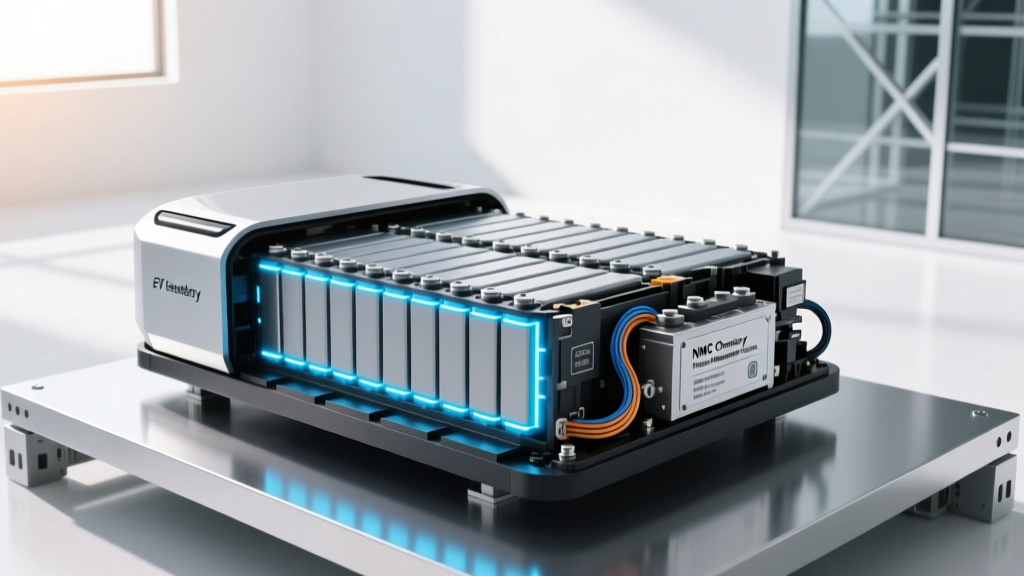
Every EV sold in 2026 uses one of three primary cathode chemistries: Lithium Iron Phosphate (LFP), Nickel Manganese Cobalt (NMC), or Nickel Cobalt Aluminum (NCA). Each has distinct trade-offs that affect your real-world ownership experience.
| Attribute | LFP (Lithium Iron Phosphate) | NMC (Nickel Manganese Cobalt) | NCA (Nickel Cobalt Aluminum) |
|---|---|---|---|
| Energy Density (cell-level) | ~160–180 Wh/kg | ~220–260 Wh/kg | ~250–280 Wh/kg |
| Typical Cycle Life | 3,000–5,000+ cycles | 1,500–2,500 cycles | 1,200–2,000 cycles |
| Cold-Weather Performance | Moderate (more range loss below 32°F) | Good | Good |
| Cost per kWh (pack-level) | ~$95–$115 | ~$125–$155 | ~$130–$160 |
| Recommended Charge Habit | Can charge to 100% daily | Best kept 20–80% daily | Best kept 20–80% daily |
| Cobalt Content | None | Moderate | Moderate |
| Common 2026 Applications | Tesla Model 3/Y RWD, Ford Mustang Mach-E Select, BYD models | Hyundai Ioniq 5/6, VW ID.4, most premium trims | Tesla Model S/X, some Rivian configs |
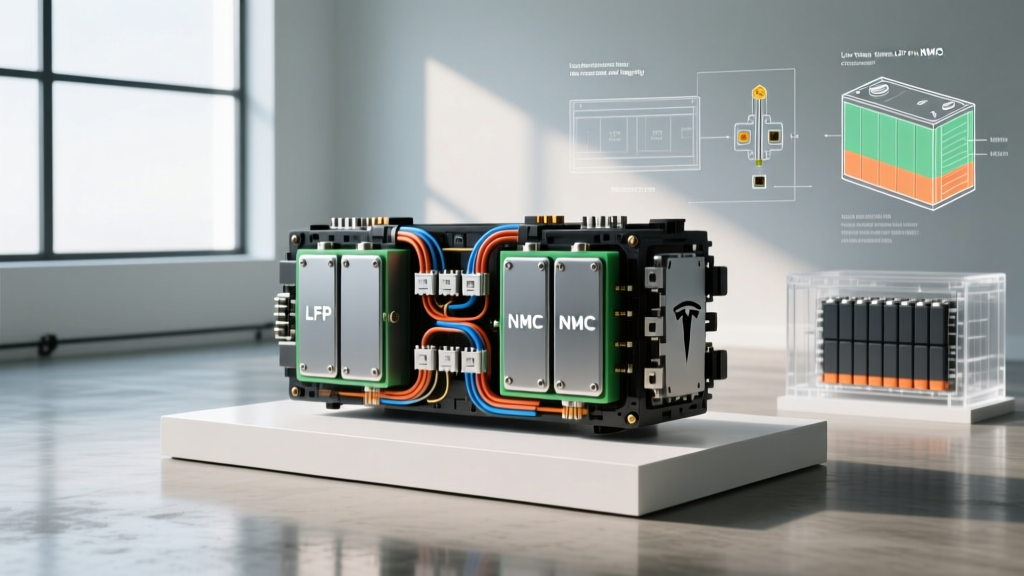
LFP vs NMC — which is better? Neither is universally superior. LFP wins on longevity, cost, and ethical sourcing (no cobalt), and owners can charge to 100% without accelerating degradation — making it ideal for daily commuting. NMC and NCA win on energy density, giving more range in a smaller, lighter pack, which matters for long-range and performance trims. If your priority is maximum range per charge, NMC/NCA is the better choice. If your priority is a battery that will outlast the car with minimal care, LFP is compelling.
How Long Do EV Batteries Actually Last?
The data on EV battery longevity has matured significantly. Based on fleet data, manufacturer reports, and independent testing from sources like Geotab's large-scale battery health study, here is what real degradation looks like:
- Year 1–2: ~1–3% capacity loss (initial formation period)
- Year 3–5: ~1–2% per year (steady-state degradation)
- Year 6–10: ~1% per year (plateau phase for most chemistries)
- Average loss at 100,000 miles: ~8–12% for NMC/NCA; ~5–8% for LFP
- Average loss at 200,000 miles: ~15–20% for NMC/NCA; ~10–14% for LFP
To put this in perspective: a 2026 Hyundai Ioniq 5 Long Range with a 77.4 kWh NMC battery and an EPA range of 305 miles would likely retain roughly 265–280 miles of range at 100,000 miles — still entirely practical for daily driving and road trips. LFP-equipped vehicles like the Tesla Model 3 RWD show even slower degradation, with many fleet examples exceeding 150,000 miles with under 8% loss.
The takeaway: most EV batteries will outlast the vehicle's economic life. Catastrophic failure is rare; gradual capacity loss is normal and manageable.
EV Battery Warranty Terms: What Is Covered
Federal law mandates a minimum 8-year/100,000-mile warranty on EV battery packs (10 years/150,000 miles in CARB states). Most manufacturers meet or exceed this baseline. Here is how major warranties compare for 2026 model-year vehicles:
| Manufacturer | Warranty Period | Capacity Retention Threshold | Notes |
|---|---|---|---|
| Tesla (Model 3/Y) | 8 yr / 120,000 mi (LR/AWD); 8 yr / 100,000 mi (RWD) | 70% | Includes drive unit |
| Hyundai / Kia | 10 yr / 100,000 mi | 70% | Among the longest coverage |
| Ford (Mach-E, F-150 Lightning) | 8 yr / 100,000 mi | 70% | Covers battery and electric components |
| Volkswagen (ID.4) | 8 yr / 100,000 mi | 70% | Transferable to second owner |
| Rivian | 8 yr / 175,000 mi | 70% | Higher mileage cap |
| GM (Ultium-based) | 8 yr / 100,000 mi | 70% | Some models offer extended plans |
The critical detail is the capacity retention threshold — typically 70%. If your battery degrades below 70% of its original capacity within the warranty period, the manufacturer will repair or replace it. In practice, very few batteries fall below this threshold under normal use. According to fueleconomy.gov data and owner surveys, reaching 70% capacity typically requires 200,000+ miles on most NMC packs and well over 300,000 miles on LFP.
EV Battery Replacement Cost: What to Expect
If a battery does need replacement — whether from rare manufacturing defect, physical damage, or end-of-life degradation beyond warranty — costs remain significant but have been declining.
| Vehicle / Pack Size | Battery Capacity | Estimated Replacement Cost (Parts + Labor) |
|---|---|---|
| Tesla Model 3 RWD (LFP) | ~60 kWh | $10,000–$14,000 |
| Tesla Model Y Long Range | ~75 kWh | $13,000–$17,000 |
| Hyundai Ioniq 5 | 77.4 kWh | $14,000–$18,000 |
| Ford F-150 Lightning (Extended) | ~131 kWh | $20,000–$28,000 |
| Chevrolet Silverado EV | ~200 kWh | $28,000–$38,000 |
These figures include the battery pack and dealer installation labor but not potential ancillary work (coolant flush, software recalibration). Costs have dropped roughly 15–20% since 2022 as pack-level pricing has fallen below $130/kWh for NMC and below $100/kWh for LFP at the manufacturing level. Third-party repair shops and refurbished pack options are increasingly available, often cutting costs by 30–40%.
When is replacement typically needed? For the vast majority of owners, it is not. Battery replacement outside of warranty-covered defects or collision damage is uncommon before 200,000+ miles. The more likely scenario is that you sell or trade the vehicle while the battery still has 80–90% of its original capacity.
Factors That Affect Battery Life and How to Maximize Health
Battery degradation is not purely a function of time — your habits and environment play a measurable role. Here are the primary factors and actionable strategies:
- State of Charge (SoC) habits: For NMC/NCA batteries, keeping daily charge between 20% and 80% reduces stress on the cathode. LFP batteries tolerate 100% daily charging well and actually benefit from periodic full charges for cell balancing.
- DC fast-charging frequency: Occasional DC fast charging (1–2 times per week) has minimal impact. Daily exclusive fast-charging can add 1–3% additional degradation over 100,000 miles compared to Level 2 home charging. Preconditioning the battery before fast-charging — a feature built into most 2026 EVs — significantly reduces stress by warming the cells to optimal temperature.
- Extreme temperatures: Sustained exposure to ambient temperatures above 95°F accelerates electrolyte decomposition. In cold climates, charging a frozen battery without preconditioning can cause lithium plating. Garage parking and preconditioning mitigate both.
- Depth of discharge: Shallow cycles (e.g., charging from 40% to 70%) are gentler than deep cycles (10% to 100%). However, modern battery management systems (BMS) include top and bottom buffers — typically 3–5% of gross capacity — that protect the cells even when the display reads 0% or 100%.
- Calendar aging: Batteries degrade even when not driven. Storing at ~50% SoC in moderate temperatures minimizes calendar aging. Avoid leaving the car at 100% SoC for extended periods.
How to Check Battery State of Health (SoH)
Most 2026 EVs provide battery health data through the vehicle's infotainment system or companion app. Tesla displays estimated range degradation directly. Hyundai's Bluelink and Ford's FordPass apps show battery health indicators. For more granular data, third-party OBD-II tools like the OBD2 scanner with EV-specific software (e.g., Car Scanner, ABRP-linked dongles) can read the BMS-reported SoH percentage, cell voltage variance, and historical charge data.
A healthy battery typically shows cell voltage variance under 30 mV at rest. Variance exceeding 50–100 mV may indicate an imbalanced or degrading module worth investigating under warranty.
Solid-State and Silicon Anode: The Road Ahead
The QuantumScape Murata battery deal is one of several partnerships pushing solid-state technology toward production. Solid-state batteries replace the liquid electrolyte with a solid ceramic, polymer, or sulfide material, enabling lithium-metal anodes that can theoretically double energy density while improving safety (no flammable electrolyte).
Other players include Toyota (targeting 2027–2028 limited production), Samsung SDI (sulfide-based cells in testing), and Solid Power (partnered with BMW and Ford). Silicon-anode batteries — a nearer-term evolution using silicon-dominant anodes to boost energy density by 20–40% — are already appearing in limited applications, with companies like Sila Nanotechnologies and Group14 Technologies supplying materials for 2026–2027 model-year vehicles.
Realistic timeline expectations:
- 2026–2027: Silicon-anode cells in limited premium applications (5–10% energy density gain)
- 2028–2030: First-generation solid-state in low-volume premium EVs
- 2032+: Solid-state at mainstream scale and pricing
None of these technologies are available in production vehicles today. If you are shopping now, current lithium-ion chemistries — properly cared for — offer excellent longevity and value.
Frequently Asked Questions
How long do EV batteries last in years and miles?
Most EV batteries retain 80–90% of their original capacity at 100,000 miles and 75–85% at 200,000 miles. In years, expect 15–20+ years of usable service under normal driving conditions. LFP batteries typically outlast NMC equivalents by a significant margin in cycle life.
How much does it cost to replace an EV battery?
Replacement costs range from approximately $10,000 for smaller packs (60 kWh LFP) to $38,000 for the largest truck packs (200 kWh NMC). However, the vast majority of EV batteries never need replacement during typical ownership. Warranty coverage handles most premature failures.
What does the EV battery warranty actually cover?
Federal minimum is 8 years/100,000 miles. Coverage applies if the battery degrades below a specified capacity threshold (usually 70% of original). It covers defects, premature degradation, and module failures. It does not cover damage from accidents, flooding, or aftermarket modifications.
How can I check and maximize my EV battery health?
Use your vehicle's built-in health display or an OBD-II EV scanner for detailed SoH data. Maximize longevity by keeping NMC/NCA batteries between 20–80% for daily use, using Level 2 home charging as your primary method, preconditioning before DC fast charging, and avoiding prolonged storage at extreme SoC levels or temperatures.
LFP or NMC — which should I choose?
Choose LFP if you want maximum cycle life, can charge to 100% daily without worry, and prioritize lower cost and cobalt-free sourcing. Choose NMC/NCA if you need maximum range per charge (longer road trips) and are willing to manage daily charge limits. Both chemistries will comfortably outlast a typical ownership period.
Will the QuantumScape Murata deal affect EVs I can buy today?
Not directly. The QuantumScape-Murata partnership targets solid-state production scaling for the late 2020s and 2030s. Current 2026 EVs use proven lithium-ion technology. The deal signals that the industry is investing heavily in next-generation batteries, which should eventually bring longer range, faster charging, and improved safety — but those benefits are still several years away from showroom floors.