Why the Battery Separator Is the Bottleneck Holding EVs Back
The lithium-ion battery in your EV is a sandwich of cathode, anode, electrolyte, and a thin polymer membrane called the separator. That separator — typically 12 to 25 microns of polyethylene or polypropylene — prevents the anode and cathode from touching while letting lithium ions pass through. It sounds simple, but it's the single component most responsible for limiting energy density, charge speed, and thermal safety in today's cells.
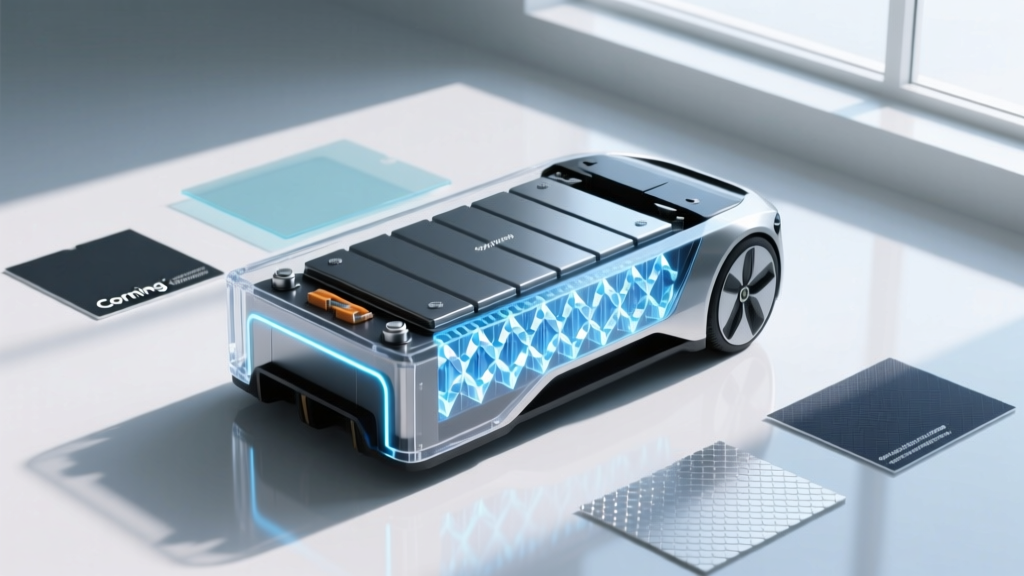
This is exactly where the phrase QuantumScape Corning EV battery separator tech enters the conversation. QuantumScape, the solid-state battery developer backed by Volkswagen, uses a proprietary ceramic separator instead of a polymer one. Corning, the specialty glass and ceramics company, supplies advanced materials and manufacturing know-how that could help scale that ceramic separator from lab volumes to automotive production volumes. Together, they represent one of the most closely watched partnerships in the race to commercialize solid-state batteries.
But solid-state cells are not in your dealership today. So this guide covers both the forward-looking separator technology and everything you need to know about the batteries you can buy right now — chemistry trade-offs, degradation realities, warranty coverage, replacement costs, and how to maximize the pack you've got.
Today's Chemistry Showdown: LFP vs NMC/NCA
Every EV sold in 2026 uses one of two dominant cathode chemistries: lithium iron phosphate (LFP) or nickel-manganese-cobalt / nickel-cobalt-aluminum (NMC/NCA). The separator material is similar in both, but the performance profiles diverge sharply.
| Attribute | LFP (e.g., Tesla Model 3 RWD, BYD Seal) | NMC/NCA (e.g., Hyundai Ioniq 5, Ford F-150 Lightning) |
|---|---|---|
| Energy Density (cell-level) | ~160–180 Wh/kg | ~230–300 Wh/kg |
| Typical Pack Size | 55–65 kWh usable | 72–100+ kWh usable |
| EPA Range (common trims) | 240–280 mi | 280–340+ mi |
| Cycle Life (to 80% SoH) | 3,000–5,000+ cycles | 1,000–2,000 cycles |
| Cold-Weather Range Loss | ~30–40% at 20 °F | ~20–30% at 20 °F |
| Peak DC Fast Charge | 150–170 kW (typically) | 200–350 kW (architecture dependent) |
| 10–80% DCFC Time | ~25–35 min | ~18–28 min (800V packs faster) |
| Recommended Daily SoC | 100% (no penalty) | 80% (for longevity) |
| Cobalt Content | None | Yes (supply-chain/ethical concern) |
| Relative Cell Cost (2026) | ~$85–100/kWh | ~$110–140/kWh |
Which is better? Neither is universally superior. LFP wins on longevity, cost, and daily-charging convenience — ideal for commuters and urban drivers who don't need 320+ miles. NMC/NCA wins on range, cold-weather performance, and charge speed — better for road-trippers, cold-climate owners, and heavy vehicles like trucks and large SUVs. If you drive under 40 miles a day and charge at home, LFP is arguably the smarter long-term bet.
How Long Do EV Batteries Actually Last?
The short answer: far longer than most buyers fear. Data aggregated from fleet operators, manufacturer reports, and owner-tracking platforms like Recurrent Auto shows that the median EV battery retains roughly 90–94% of its original capacity after 5 years / 75,000 miles. Degradation is front-loaded — you'll typically see a 2–5% drop in year one as the solid electrolyte interphase (SEI) layer stabilizes, then a slow linear decline of roughly 1–2% per year afterward.
Typical Degradation Curve (NMC Pack, Moderate Climate)
- Year 1 / 15k mi: ~95–97% State of Health (SoH)
- Year 3 / 45k mi: ~91–94% SoH
- Year 5 / 75k mi: ~89–93% SoH
- Year 8 / 120k mi: ~85–90% SoH
- Year 10 / 150k mi: ~80–87% SoH
LFP packs tend to run 3–6 percentage points higher on the same timeline, which is why Tesla offers LFP-equipped Model 3 RWD owners the option to charge to 100% daily without long-term penalty.
"Battery death" — defined as falling below 70% SoH — is rare before 200,000 miles on a properly maintained pack. Most EVs will be retired for other reasons (body damage, electronics obsolescence, owner preference) before the battery needs replacement.
What Does the Battery Warranty Actually Cover?
Federal law mandates a minimum 8-year / 100,000-mile warranty on EV battery packs (10 years / 150,000 miles in California and states that follow CARB rules). But the details matter enormously.
| Vehicle | Warranty Term | Capacity Threshold | Chemistry |
|---|---|---|---|
| Tesla Model 3 RWD (LFP) | 8 yr / 100,000 mi | 70% retention | LFP |
| Tesla Model Y Long Range | 8 yr / 120,000 mi | 70% retention | NMC |
| Hyundai Ioniq 5 | 10 yr / 100,000 mi | 70% retention | NMC |
| Ford F-150 Lightning (Std Range) | 8 yr / 100,000 mi | 70% retention | NMC |
| Chevrolet Equinox EV | 8 yr / 100,000 mi | 60% retention | NMC |
| BMW iX xDrive50 | 8 yr / 100,000 mi | 70% retention | NMC |
Critical fine print: The warranty covers capacity loss below the stated threshold, not cosmetic degradation. If your 80 kWh pack drops to 58 kWh (72.5% SoH) at year 7, you're still above the 70% line and the manufacturer owes you nothing. Also, warranties typically exclude damage from improper charging, accidents, or aftermarket modifications. Always read the specific warranty booklet for your model year — terms can shift annually.
EV Battery Replacement Cost: The Real Numbers
Out-of-warranty battery replacement is the single biggest fear among prospective EV buyers. Here's what it actually costs in 2026, based on manufacturer parts pricing and independent shop data:
| Vehicle | Pack Size | Chemistry | Estimated Cost |
|---|---|---|---|
| Nissan Leaf (40 kWh) | 40 kWh | NMC | $6,500–$9,000 |
| Tesla Model 3 RWD | ~57 kWh | LFP | $8,000–$12,000 |
| Tesla Model Y LR | ~75 kWh | NMC | $12,000–$16,000 |
| Hyundai Ioniq 5 | 77.4 kWh | NMC | $11,000–$15,000 |
| Ford F-150 Lightning (Ext Range) | ~131 kWh | NMC | $18,000–$25,000 |
| Chevrolet Silverado EV | ~200 kWh | NMC | $25,000–$35,000 |
Context matters here. According to fueleconomy.gov, the average American drives ~14,000 miles per year. At that rate, reaching 200,000 miles takes over 14 years. Given current degradation data, most packs will still hold 75–85% capacity at that mileage. The battery will almost certainly outlast the vehicle's economic life for the first owner, and likely the second.
Module-level repair is also increasingly common: rather than replacing the entire pack, shops can swap individual degraded modules for $1,500–$4,000 depending on the vehicle. This is an area where independent EV service centers are gaining ground over dealer-only repairs.
QuantumScape, Corning, and the Ceramic Separator Promise
Now back to the technology that prompted this guide. In a conventional lithium-ion cell, the polymer separator is soaked in liquid electrolyte. This works, but it creates three problems:
- Flammability: Liquid electrolyte is organic-solvent-based and can ignite if the separator is breached (thermal runaway).
- Dendrite formation: During fast charging, lithium can plate onto the anode as needle-like dendrites that pierce the separator, causing short circuits.
- Energy density ceiling: Polymer separators limit how much energy you can pack per kilogram because they can't safely handle lithium-metal anodes, which offer roughly 10× the theoretical capacity of graphite.
QuantumScape's approach replaces the polymer separator with a proprietary ceramic solid-state separator. This ceramic material is non-flammable, mechanically rigid enough to resist dendrite penetration, and compatible with a lithium-metal anode. The result, in laboratory and early prototype testing, is cells that offer:
- ~80% higher volumetric energy density than today's NMC cells
- 10–80% charge in under 15 minutes (sustained, not peak-only)
- 800+ cycle life with <10% degradation
- Elimination of flammable liquid electrolyte
Where does Corning fit? Corning brings decades of expertise in advanced ceramics, glass-ceramic materials, and — critically — high-volume precision manufacturing. Scaling a ceramic separator from thousands of lab cells to millions of automotive-grade cells per year requires manufacturing processes that don't exist at that scale today. Corning's role involves developing the material formulations and production methods that could make QuantumScape's separator economically viable at gigawatt-hour scale.
Realistic timeline (forward-looking, not available today): QuantumScape has been shipping prototype cells to automotive partners, with Volkswagen's PowerCo conducting validation testing. As of early 2026, the company targets initial commercial production in the 2027–2028 window, likely in limited-volume premium vehicles first. Mass-market availability at competitive pricing is more realistically a 2029–2031 prospect. Solid-state batteries are not vaporware, but they are not in showrooms yet. Any vehicle listing "solid-state" as a 2026 model-year feature is misrepresenting the technology's readiness.
Other solid-state players — Toyota (sulfide-based electrolyte), Samsung SDI, Solid Power (now part of SK On) — are pursuing different separator/electrolyte chemistries. The separator approach is not monolithic, and QuantumScape's ceramic path is one of several being validated in parallel.
Factors That Actually Kill Your Battery (and How to Avoid Them)
Based on fleet data and battery research, here are the factors that accelerate degradation, ranked by impact:
Battery Longevity Checklist
- Avoid sustained 100% SoC (NMC/NCA only): Store and daily-charge at 80%. LFP owners can ignore this — charge to 100% freely.
- Minimize DC fast charging above 150 kW when unnecessary: Occasional road-trip DCFC is fine; daily 350 kW sessions accelerate SEI growth and electrolyte decomposition. Use Level 2 (7–11.5 kW) for routine home charging.
- Precondition before fast charging: Cold batteries charged at high power suffer lithium plating. Always use the vehicle's navigation-based preconditioning (route to a charger in Tesla, Hyundai, Ford) or manually precondition via the app.
- Avoid extreme SoC storage: Don't leave the car at 100% or below 10% for weeks. If storing for vacation, set to 50–60%.
- Manage thermal exposure: Park in shade or a garage when possible. Sustained battery temperatures above 104 °F (40 °C) accelerate degradation. Vehicles with active liquid thermal management (Tesla, Hyundai E-GMP, GM Ultium) handle this better than passively cooled packs (older Nissan Leaf).
- Don't obsess over avoiding regen: Standard regenerative braking does not meaningfully harm battery health. The current draw is well within design limits.
How to Check Your Battery's State of Health (SoH)
State of Health is the percentage of original capacity your pack currently holds. A new 75 kWh pack at 92% SoH effectively has ~69 kWh usable. Here's how to check it:
- In-vehicle displays: Tesla shows battery health in the service menu (or via the app on newer software). Nissan Leaf displays capacity bars on the dash (each bar ≈ 6–7% of capacity). Hyundai/Kia offers SoH readout through the infotainment engineering menu on some models.
- OBD-II dongles + apps: Tools like OBDeleven, Leaf Spy (Nissan), or Scan My Tesla pull SoH data directly from the battery management system (BMS). These are the most accurate consumer-accessible readings.
- Dealer diagnostic reports: Any authorized service center can run a full pack health report. Request one before buying a used EV — it's the single most important pre-purchase check.
- Manual calculation: Charge to 100% (LFP) or your normal limit, note the displayed range, and compare it to the EPA sticker when new, adjusting for the SoC percentage. If your 310-mile EPA Ioniq 5 shows 265 miles at 100% SoC, that's roughly 85% SoH — consistent with normal aging.
What Solid-State Means for Future Battery Replacement and Costs
If QuantumScape-Corning ceramic separator technology reaches mass production, the implications for replacement economics shift significantly:
- Longer-lasting packs: 800+ cycles at <10% degradation means a 100 kWh pack could deliver 400,000+ miles before hitting 90% SoH. Replacement becomes a near-non-issue for first and second owners.
- Higher initial cost, lower lifetime cost: Solid-state cells will debut at a premium — likely $150–200/kWh initially vs. today's $85–140/kWh. But the total cost of ownership could be lower due to vastly extended lifespan and reduced cooling-system complexity.
- Faster charging reduces battery stress trade-offs: If 10–80% in under 15 minutes is sustained without accelerated degradation, the current tension between convenience and battery health largely disappears.
Until then, today's lithium-ion packs — whether LFP or NMC — are already remarkably durable. The data simply doesn't support the "I'll need a $20,000 battery in 5 years" fear that still circulates in online forums.
Frequently Asked Questions
How long do EV batteries last in years and miles?
Most EV batteries retain 80–90% of their original capacity at 150,000–200,000 miles (10–15 years at average US driving). LFP packs tend to last longer — 3,000–5,000 charge cycles vs. 1,000–2,000 for NMC. At 250 miles per full charge, that's 250,000–500,000 lifetime miles for LFP before reaching 80% SoH.
How much does an EV battery cost to replace?
Between $6,500 and $35,000 depending on pack size and vehicle. A 57 kWh Tesla Model 3 LFP pack runs roughly $8,000–$12,000; a 131 kWh F-150 Lightning extended-range pack costs $18,000–$25,000. Module-level repairs can reduce costs to $1,500–$4,000. Most owners never need a replacement.
What does the battery warranty cover?
Manufacturer warranties cover capacity loss below a specified threshold (usually 70% retention) over 8–10 years / 100,000–150,000 miles. They do not cover gradual degradation above the threshold, accident damage, or improper use. California and CARB states mandate 10 yr / 150,000 mi minimums.
How do I maximize my EV battery's health?
For NMC/NCA packs: charge to 80% daily, avoid unnecessary 350 kW DC fast charging, precondition before fast charging in cold weather, and don't store at 100% or below 10%. For LFP packs: charge to 100% regularly (the BMS needs it for cell balancing), and follow the same thermal and storage guidelines.
LFP vs NMC — which is better and why?
LFP is better for daily commuters who want maximum cycle life, lower cost, and the convenience of 100% daily charging. NMC/NCA is better for drivers who need maximum range, faster DC charging, and better cold-weather performance. Neither is universally superior — the right choice depends on your driving pattern and climate.
Is QuantumScape's solid-state battery available in any 2026 vehicle?
No. QuantumScape is in the prototype validation and early manufacturing scale-up phase. The earliest realistic production timeline is 2027–2028 for limited-volume vehicles, with broader availability expected around 2029–2031. The Corning partnership focuses on scaling the ceramic separator manufacturing process. No 2026 model-year vehicle on sale uses solid-state battery technology.
Does fast charging really damage my battery?
Occasional DC fast charging (road trips, a few times a month) causes negligible additional degradation. Daily use of high-power (150+ kW) DCFC does accelerate capacity loss over time — studies show roughly 2–4% additional loss over 100,000 miles compared to Level 2-only charging. Preconditioning the battery and avoiding charging above 80% SoC on DCFC minimizes this effect.